

DashClicks Blog
The industry's top experts offer their best advice, research, how-tos, and insights—all in the name of helping you level-up your business and online marketing skills.
Join Us!
.svg)
.svg)
.svg)
.svg)
.svg)

How Agencies Can Adapt Facebook Ads to Different Stages of the Customer Journey
Prospects rarely interact with a brand from the same starting point. On any given day, an agency might be advertising to someone who has never heard of the client, someone who recognises a problem but is not ready to buy, someone who visited the website last week, someone who interacted with a previous ad, someone who is ready to convert, and someone who has already purchased.
Showing all these people the same creative, offer, and call-to-action creates a disconnect. A first-time viewer needs a very different message from a shopper who abandoned their cart.
The central idea is simple. Effective Facebook Ads strategies should reflect where a prospect is in the customer journey, not simply who the prospect is.
A useful way to structure this is the funnel: Awareness → Interest → Consideration → Conversion → Retention. Each stage should influence six elements together: audience, message, creative, offer, CTA, and optimization.
The reach is certainly there. Facebook ads reached 2.28 billion users globally in January 2025, according to DataReportal's analysis of Meta advertising data. Scale alone does not guarantee results, but it does mean prospects at every stage are reachable.
Applying this framework across a handful of client accounts is where things get complicated. That is where scalable execution becomes a real concern for agencies, which is why Facebook ads outsourcing has become part of many agency operating models.
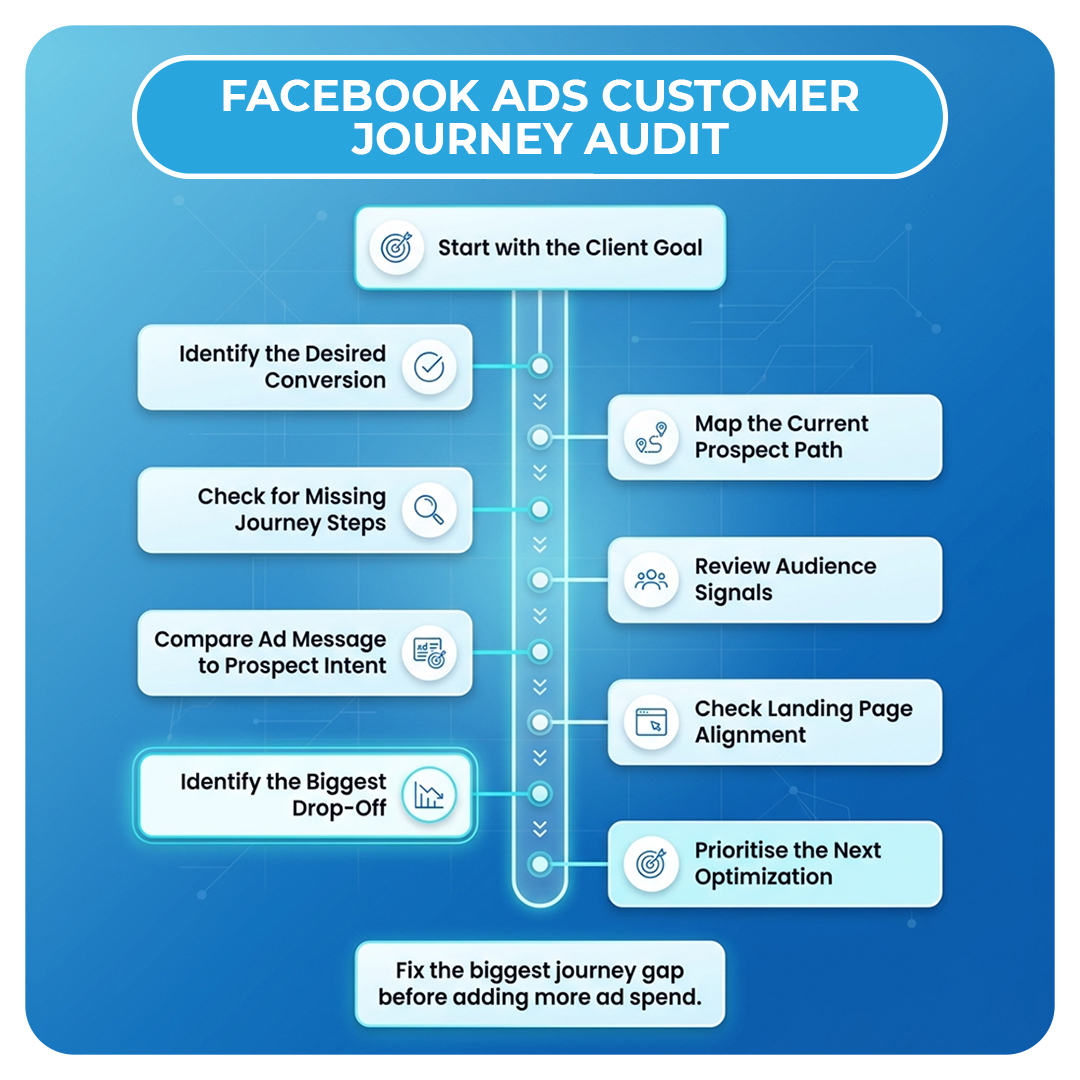
Map Facebook Ads to the Client's Customer Journey
The five-stage funnel gives you a shared language for every account you manage. Here is how the stages line up.
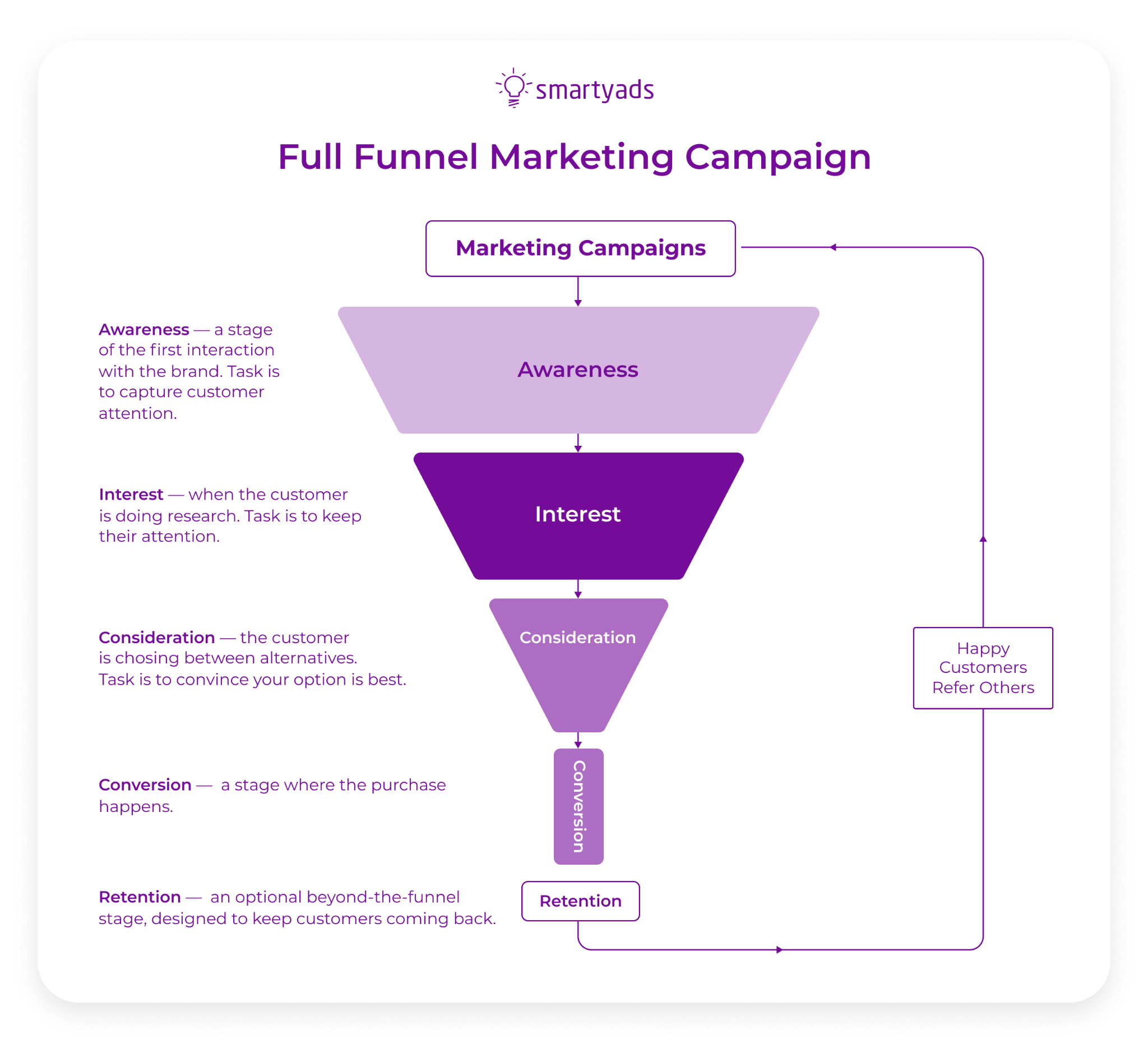
Image Source: SmartyAds
- Awareness: At this stage, the prospect does not know the brand exists. The job is to introduce the brand and surface a problem worth solving.
- Interest: The prospect now recognises a problem. Your ads should help them understand that problem better and hint at possible solutions.
- Consideration: Here the prospect is comparing options. This is the moment for evidence, education, comparisons, demonstrations, and proof.
- Conversion: The prospect is ready to act. Your job is to remove objections and encourage the desired action.
- Retention: The prospect has already bought. Now you reconnect with existing customers and encourage repeat purchases, upgrades, or complementary services.
The takeaway matters more than the labels. The customer journey should influence more than targeting. It should shape the entire advertising strategy.
Adapt Targeting and Messaging as Customer Intent Increases
Intent changes everything. As a prospect moves closer to a decision, your targeting narrows, and your messaging sharpens.
Awareness: Reach People Who Don't Know the Brand
Cold audiences call for a wider net and a lighter ask. Focus on:
- Broad audiences
- Relevant interests where they genuinely apply
- Problem-focused messaging
- Educational content
- Attention-driven creative
Awareness campaigns do not always need to push an immediate sale. Pushing a hard offer at someone who just met the brand usually wastes budget.
Compare these two messages. Instead of: "Book Your Free Consultation"
An awareness ad might use: "5 Signs Your Business Is Losing Leads Without Realising It"
The second message respects where the prospect actually is. It opens a conversation about a problem rather than demanding a commitment. The first line only makes sense once someone already trusts the brand.
Interest and Consideration: Help Prospects Evaluate the Solution
These audiences have shown some intent. You can retarget people based on signals such as:
- Video views
- Social engagement
- Website visits
- Previous ad interactions
- Content engagement
The messaging should follow a natural progression: Problem → Solution → Benefits → Proof.
Creative that works well here includes:
- Educational ads
- Demonstrations
- Testimonials
- FAQs
- Comparisons
- Case-study-style content
The goal is confidence. You are helping the prospect believe this solution fits their situation.
Conversion: Focus on High-Intent Prospects
Conversion audiences have signalled they are close. Think about people who:
- Viewed a product or service page
- Started a form
- Added a product to cart
- Visited pricing information
- Repeatedly interacted with the brand
For these audiences, lean into:
- Stronger offers
- Clear CTAs
- Social proof
- Objection handling
- Appropriate urgency
As a reference point, WordStream's 2025 benchmark found that 726 U.S. Facebook/Meta lead campaigns averaged a 7.72% conversion rate. Treat this as a benchmark, not a universal target. Performance varies by industry, campaign objective, offer, audience, and conversion process, so one client's healthy number could be another client's warning sign.
Match Creative and Offers to Each Stage
Changing your targeting is not enough on its own. If the creative and offer do not match the prospect's level of intent, even a perfectly built audience will underperform.
Here is a quick reference for creative and CTA by stage:
Awareness:
Creative: Hooks, problems, educational content
CTA: Learn More
Interest
Creative: Educational videos, guides, solution explanations
CTA: Explore / Learn More
Consideration
Creative: Testimonials, demonstrations, comparisons, benefits
CTA: See How It Works / Get Details
Conversion
Creative: Offers, proof, urgency, objection handling
CTA: Book / Buy / Get a Quote
Retention
Creative: New products, complementary services, upgrades
CTA: Shop / Upgrade / Learn More
The pattern is clear. The further a prospect moves through the customer journey, the more specific the advertising can become.
Plan for Creative Fatigue
Even great creativity wears out. When the same audience sees an ad too many times, performance slips and costs climb. Agencies need a repeatable process for this, covering:
- Monitoring creative performance
- Identifying fatigue early
- Refreshing messaging
- Testing new formats
- Leaving well enough alone when a campaign is still performing
That last point is easy to forget. Refreshing a winning campaign too soon can do more harm than good.
Build Different Facebook Ad Strategies for Different Clients
Here is where many agencies slip. The five-stage framework is universal, but the journey underneath it is not. You cannot copy one client's campaign structure onto another and expect it to fit.
Look at how three common client types differ.
1. Local Service Business
Journey: Awareness → Problem Recognition → Service Research → Lead → Sales Call
The focus is local reach and lead generation. Ads often drive form fills or calls within a defined service area, and the sales call closes the deal.
2. Ecommerce
Journey: Discovery → Product View → Cart → Purchase → Repeat Purchase
Here you lean on product discovery, remarketing to cart abandoners, direct purchase conversion, and repeat-purchase campaigns for existing buyers.
3. B2B
Journey: Awareness → Education → Lead → Qualification → Sales → Customer
B2B journeys tend to run longer and add a qualification step. A lead is rarely a customer straight away, so nurturing and sales involvement matter more.
Several factors reshape the journey from client to client:
- Sales cycle length
- Average order value
- Purchase frequency
- Decision complexity
- Number of decision-makers
- The client's sales process
- The actual conversion goal
The lesson is worth stating plainly. The framework can be standardised. The customer journey cannot. Agencies need a repeatable methodology without forcing every client into an identical campaign structure.
Use Performance Data to Refine the Customer Journey Strategy
A funnel is not something you build once and leave alone. It needs regular review, because prospect behaviour and market conditions shift.
Ask these questions on a recurring basis:
- Which audiences are progressing?
- Where are prospects dropping off?
- Which creative generates qualified actions?
- Which stage has the highest cost per acquisition (CPA)?
- Which audiences need additional retargeting?
- Which campaigns deserve more budget?
- Which campaigns should be reduced or replaced?
Different stages call for different KPIs. Judging an awareness campaign by conversions makes little sense.
Awareness
- Reach
- Impressions
- Video views
Interest / Consideration
- Engagement
- Landing-page views
- Content interactions
- Leads
Conversion
- Conversions
- CPA
- Conversion rate
- Return on ad spend (ROAS)
Retention
- Repeat purchases
- Customer value
- Repeat conversion rate
Campaign objectives also shape what "good" looks like. WordStream's 2025 data shows Facebook traffic campaigns averaged a 1.71% click-through rate (CTR), while Facebook lead campaigns averaged 2.59%. Comparing a traffic campaign against a lead-campaign benchmark would give you a misleading picture. Use benchmarks for context, not as automatic pass or fail thresholds.
The Challenge of Managing Full-Funnel Facebook Ads Across Multiple Clients
Strategy is one thing. Executing it across a full client roster is another.
Picture an agency with four clients:
- Client A: Awareness plus lead generation
- Client B: Ecommerce plus retargeting
- Client C: B2B lead generation plus nurturing
- Client D: Local service plus lead generation and remarketing
No two of these accounts share the same setup. Each one demands different:
- Audiences
- Campaign structures
- Creative
- Testing
- Optimization
- Reporting
At this point, the challenge stops being about understanding Facebook Ads. The real question becomes whether you have enough specialist execution capacity to do the work well.
That pressure shows up in several ways:
- More campaign management
- More creative testing
- More optimization
- More reporting
- More account coordination
- More client communication
- Greater risk of inconsistent execution
Costs move too. WordStream's 2025 data found Facebook lead campaign cost per lead (CPL) rose 20.94% overall to $27.66, with performance varying substantially by industry. This does not prove that agencies must outsource. It does show why campaigns need ongoing monitoring and adjustment rather than a set-it-and-forget-it approach.
How White Label Facebook Ads Helps Agencies Manage Full-Funnel Campaigns?
When execution capacity becomes the bottleneck, white label Facebook ads services offer a way forward. The point is to solve a complexity problem, not simply to cut costs.
1. Add Fulfillment Capacity
Agencies can take on more Facebook Ads work without hiring a new specialist for every account. This makes it easier to say yes to new clients without overloading the existing team.
2. Support Different Customer Journey Stages
A capable partner can support the full range of campaign types, including:
- Awareness campaigns
- Retargeting
- Lead generation
- Conversion campaigns
- Customer re-engagement
3. Access Specialist Execution
Practical support often covers:
- Campaign setup
- Audience targeting
- Retargeting
- Creative testing
- Campaign optimization
- Performance monitoring
4. Maintain Client Ownership
Clear boundaries keep the relationship clean.
The Agency Owns:
- Strategy
- Client goals
- Communication
- Approvals
- The overall account relationship
The Fulfillment Partner Supports:
- Campaign execution
- Optimization
- Monitoring
- Recurring PPC tasks
Put simply, white label fulfillment allows agencies to standardise how campaigns are executed without standardising how every client's customer journey is marketed. That balance is exactly why many teams choose to outsource Facebook Ads execution while keeping strategy in-house.

How DashClicks Supports Facebook Ads Fulfillment for Agencies?
DashClicks is one example of a white label Facebook Ads fulfillment model built with this operating structure in mind.
Its relevant capabilities map closely to the challenges covered above:
- White label Facebook Ads fulfillment
- Campaign management
- Audience targeting
- Retargeting
- Campaign optimization
- Creative support
- Performance monitoring
- Quality assurance (QA)
- White-label reporting
Taken together, these support agencies run several different customer journeys at once. An awareness build for one client, a retargeting sequence for another, and a B2B lead-nurture setup for a third can all move forward without stretching a single in-house specialist across every task.
The division of responsibility stays intact throughout. DashClicks can help maintain execution capacity while the agency retains ownership of client strategy, client communication, approvals, and the overall relationship.
For agencies weighing up the best white label Facebook ads support for their roster, the deciding factor should be execution reliability across varied account types, not promises about specific outcomes. Fulfillment support is about capacity and consistency, not guaranteed leads, revenue, or ROAS.
The Right Message at the Right Stage
Not every prospect needs the same ad. Customer intent should influence targeting, messaging, creative, offers, CTAs, and optimization together, not one element in isolation.
Awareness audiences need a lighter, problem-first message, while high-intent prospects respond to proof, offers, and clear next steps. On top of that, different client types follow different journeys, so a local service business, an ecommerce store, and a B2B firm each need their own structure.
None of this works without ongoing attention. Performance data should feed back into the funnel so campaigns keep improving. Run this across many accounts at once and the execution load grows fast, which is where white label fulfillment can add capacity without forcing you to build a bigger in-house team overnight.
The main point is this. The best Facebook Ads strategy isn't simply about reaching the right audience. It's about understanding where that audience is in the customer journey and giving them the right message at the right stage. Getting there at scale is as much an operations problem as a marketing one.
More clients bring more campaign complexity, and more complexity raises your fulfillment requirements. If your roster is growing faster than your team, it may be worth exploring how DashClicks' white label Facebook Ads fulfillment can add execution capacity while you keep full ownership of strategy, communication, and client relationships.

How Agencies Can Build Local SEO Strategies for Clients Expanding Into New Cities
A client sends a message that sounds simple enough: "We're expanding into Dallas. Can you get us ranking there?" On the surface, it feels like a straightforward request. In practice, it opens up a series of harder questions.
The agency now has to determine several things at once:
- Whether Dallas is actually worth pursuing
- How much SEO investment the market requires
- Which resources should be redirected
- What happens to the client's existing markets
- How much additional fulfillment the expansion will require
The real challenge is not simply doing local SEO in another city. It is expanding the campaign without weakening what is already working. That distinction shapes every decision that follows.
Local search matters here because customer behaviour supports it. According to BrightLocal's 2026 Consumer Search Behavior research, 84% of consumers searched for a local business in the past three months. That figure does not prove any single market will succeed. It simply shows why visibility deserves attention when a business enters a new area.
This blog walks through a practical framework agencies can reuse across clients: market evaluation, strategy, resource allocation, existing SEO equity, first wins, protection of existing markets, KPIs, a 90-day roadmap, and finally the decision to scale or adjust.
1. Determine Whether the New City Deserves SEO Investment
Entering a new market should begin with business opportunity, not simply keyword volume. A city can look attractive in a keyword tool and still be a weak commercial bet.
Keep this distinction in mind:
SEO opportunity does not always equal business opportunity.
Agencies should evaluate several factors before committing resources:
- Existing demand for the client's services
- Local competition
- Client brand recognition
- Physical presence or service coverage
- Revenue potential
- Expected SEO investment
- Difficulty of competing
- The client's ability to serve new demand
Evaluate the Business Case First
A market with high search volume can still be a poor target. If competition is extreme, the cost of gaining visibility may outweigh the return. If the client cannot serve customers well in that area, rankings alone will not help. Traffic without fulfillment capacity on the client side creates a poor experience and wasted effort.
Assess Existing Market Conditions
Before creating work, look closely at the market itself - a data extraction platform like Apify can pull local competitor listings, reviews, and contact data in minutes. Review:
- Competitor visibility
- Search intent
- Local SERPs
- Service availability
- Existing brand presence
Local search is a meaningful share of what people do online. BrightLocal found that 39% of consumers estimated that at least 41% of their searches are dedicated to finding information about local businesses. This is a useful context. It does not guarantee that a specific city will be profitable for a specific client.
The point is simple. Decide whether the market deserves investment before creating a large volume of new SEO work.
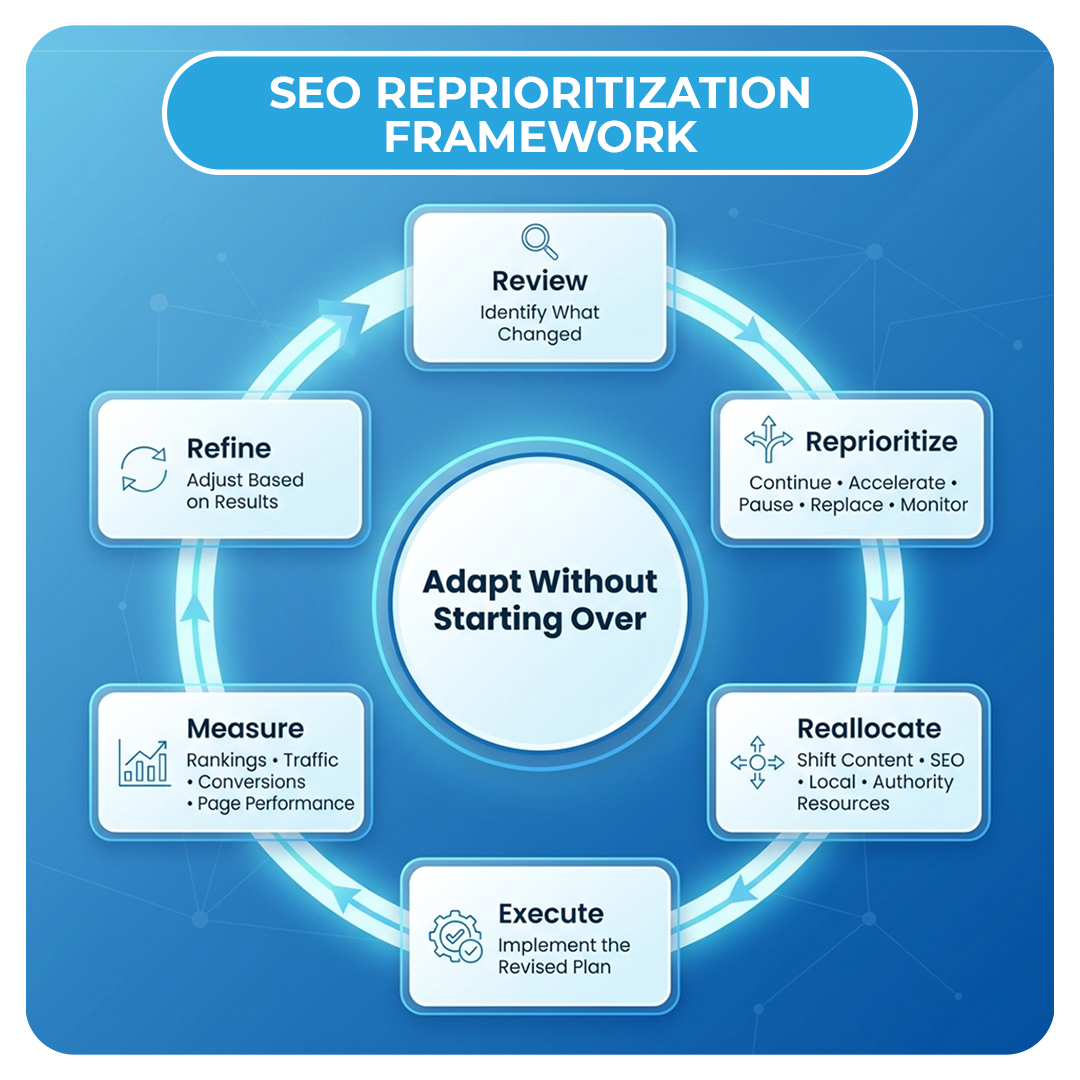
2. Decide What Should Change and What Should Stay the Same
Entering a new city does not mean rebuilding the client's entire SEO strategy. Much of the existing work should continue untouched. The goal is to add a market, not reset the campaign.
It helps to sort the work into three categories.
Protect
These are assets that already produce results:
- Existing high-performing pages
- Strong rankings
- Established locations
- Valuable backlinks
- Existing organic traffic
- Existing conversion-generating pages
Expand
These are the new opportunities the expansion creates:
- New city opportunities
- New commercial search terms
- New local content
- New service-location combinations
- Additional local authority opportunities
Adapt
These are elements that adjust to support both old and new markets:
- Internal linking
- Content priorities
- Local targeting
- Authority-building resources
- Reporting structure
The principle is this: expansion should extend the existing SEO strategy, not unnecessarily disrupt it.
3. Build a Market-Entry Strategy Instead of a Location Page Strategy
A common mistake is treating local expansion as a simple sequence:
New city, create location page, add keywords, wait for rankings.
That approach rarely produces steady results. A single page competing in a fresh market usually lacks the signals to rank well. A better model treats the work as market entry, built in stages.
Stage 1: Establish Presence
Make the website relevant to the new market. This includes local content, clear service-area signals, and technical elements that tell search engines the client now serves this city.
Stage 2: Capture Existing Demand
Prioritise realistic, commercially valuable searches. Focus on terms where the client can compete and convert, rather than the broadest, most competitive phrases.
Stage 3: Build Authority
Strengthen signals around the new market over time. This includes relevant links, citations, and content that supports the client's presence in the area.
Stage 4: Expand Coverage
Once initial traction exists, widen the scope. Consider:
- Additional services
- Supporting topics
- Neighbourhood-level searches where relevant
- Additional commercial search opportunities
A useful way to remember the sequence:
Enter Narrow, Prove Demand, Expand.
Search habits support a focused approach. BrightLocal research found that 45% of consumers default to Google for local searches, while another 15% use Google Maps as their first choice. These figures help explain why local and map visibility deserve early attention. They are context, not a promise of results.
4. Create a Resource Allocation Model for the New Market
Every agency works with limited SEO resources. So the central question is direct: Where should the agency's limited SEO resources go?
The table below shows how effort can be split between existing and new markets.
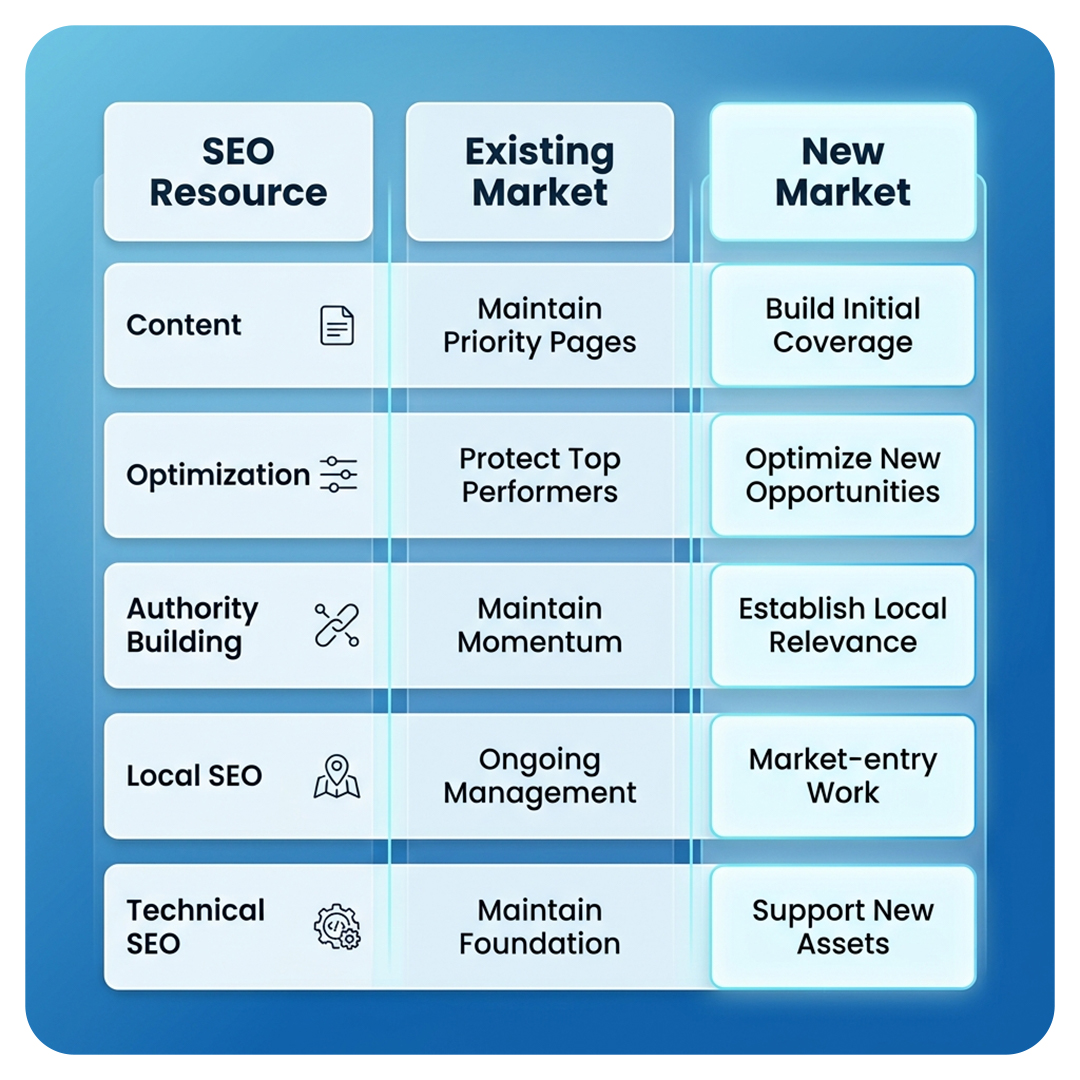
A few points guide this model:
- Expansion should not automatically double the SEO workload.
- Incremental effort should go where business potential is strongest.
- Existing markets still need enough attention to hold their position.
The goal is a deliberate split, not an even one.
5. Use Existing SEO Equity to Enter the New Market
A new city is not necessarily starting from zero. The client's website already carries value that can support the expansion. So ask a practical question: What does the client already have that can support the expansion?
Existing assets often include:
- Domain authority
- Strong service pages
- Existing topical authority
- Relevant content
- Existing backlinks
- Brand recognition
- Internal linking opportunities
- Existing organic visibility
Agencies can put these assets to work. Internal links from strong pages can support new-market pages. Existing service content can be adapted for the new location. Established topical authority can help new pages gain traction faster than a brand-new site would.
Keep this in mind throughout planning:
A new market may be new geographically, but the client's website does not necessarily start with zero SEO equity.
6. Identify the First-Win Opportunities
Agencies should not try to dominate an entire city immediately. Early, achievable wins are more useful than a broad push that spreads resources thin. This is where Enter Narrow, Prove Demand, Expand becomes practical.
Look for first-win opportunities such as:
- Lower-competition commercial searches
- Specific services rather than every service at once
- Underserved areas within the city
- Long-tail searches with clear intent
- Existing pages already receiving impressions
- Queries where the client ranks on page two or three
- Existing content that can be adapted to the new market
Early wins do more than build momentum. They give the agency evidence. When certain searches respond well, that signals where additional investment is justified. When others do not move, that is useful information too.
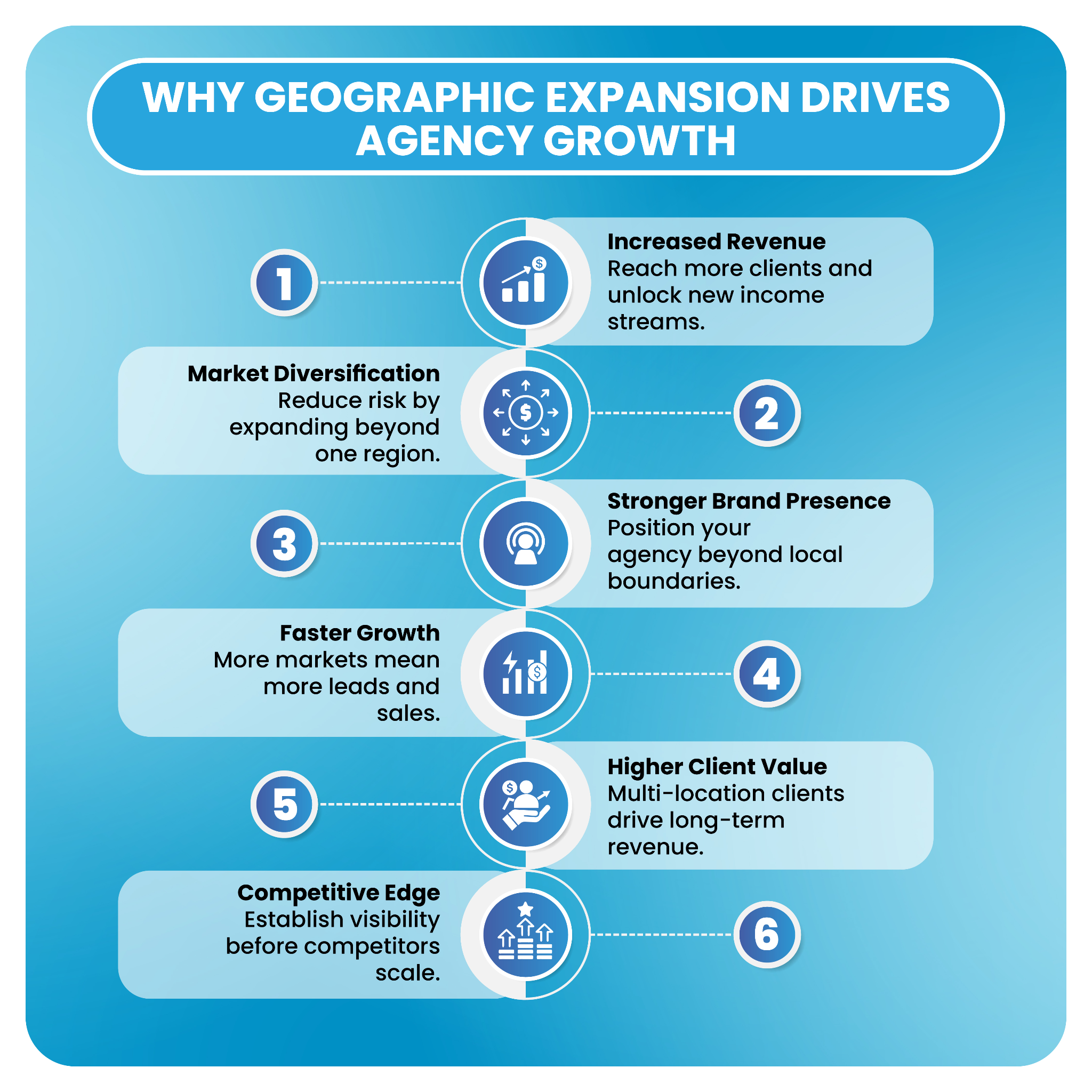
7. Prevent the New Market From Cannibalising Existing Priorities
New-market work can quietly consume resources that established markets depend on. It can absorb:
- Content resources
- Optimisation capacity
- Link-building resources
- Specialist time
- Account-manager attention
Meanwhile, existing markets still require maintenance. If that maintenance slips, the agency can win a new city while losing ground in a proven one.
Protect Existing Performance
Set protected resource allocations for existing markets. Decide, in advance, the minimum ongoing work each established market needs. Treat that allocation as fixed, so expansion draws from spare capacity rather than from essential maintenance.
Add Incremental Capacity Where Needed
When the expansion needs more than current capacity allows, decide how to add it. Options include:
- Reallocation of existing resources
- Additional internal resources
- Temporary fulfillment support
- Permanent hiring
- White label fulfillment
The guiding principle stays the same: expansion should add opportunity, not create unnecessary SEO instability.
8. Establish Market-Specific KPIs Instead of Using the Overall Report
Overall organic traffic can hide whether the new city is actually gaining traction. A strong established market can mask a struggling new one. This is why a new-market baseline matters.
Set a clear baseline when the expansion begins, then track:
- Visibility growth
- Rankings for priority queries
- Organic clicks
- Leads
- Conversion rate
- New-market landing-page performance
- Local search visibility
- Branded vs. non-branded growth
A simple side-by-side view helps here: Existing Market Performance vs. New Market Performance. Reporting the new market separately gives the agency, and the client, a clearer view of progress. It also makes it easier to justify continued investment or a change in direction.
Include Local Consumer Behaviour
Rankings are only part of the picture. Reputation and local visibility matter alongside them. Two findings from BrightLocal's 2025 Local Consumer Review Survey are useful context:
- 74% of consumers use two or more websites when reading reviews before deciding to use a local business.
- 81% of consumers said they used Google to find reviews in 2025.
These figures do not prove SEO success on their own. They explain why local visibility and reputation deserve monitoring alongside traditional ranking metrics.
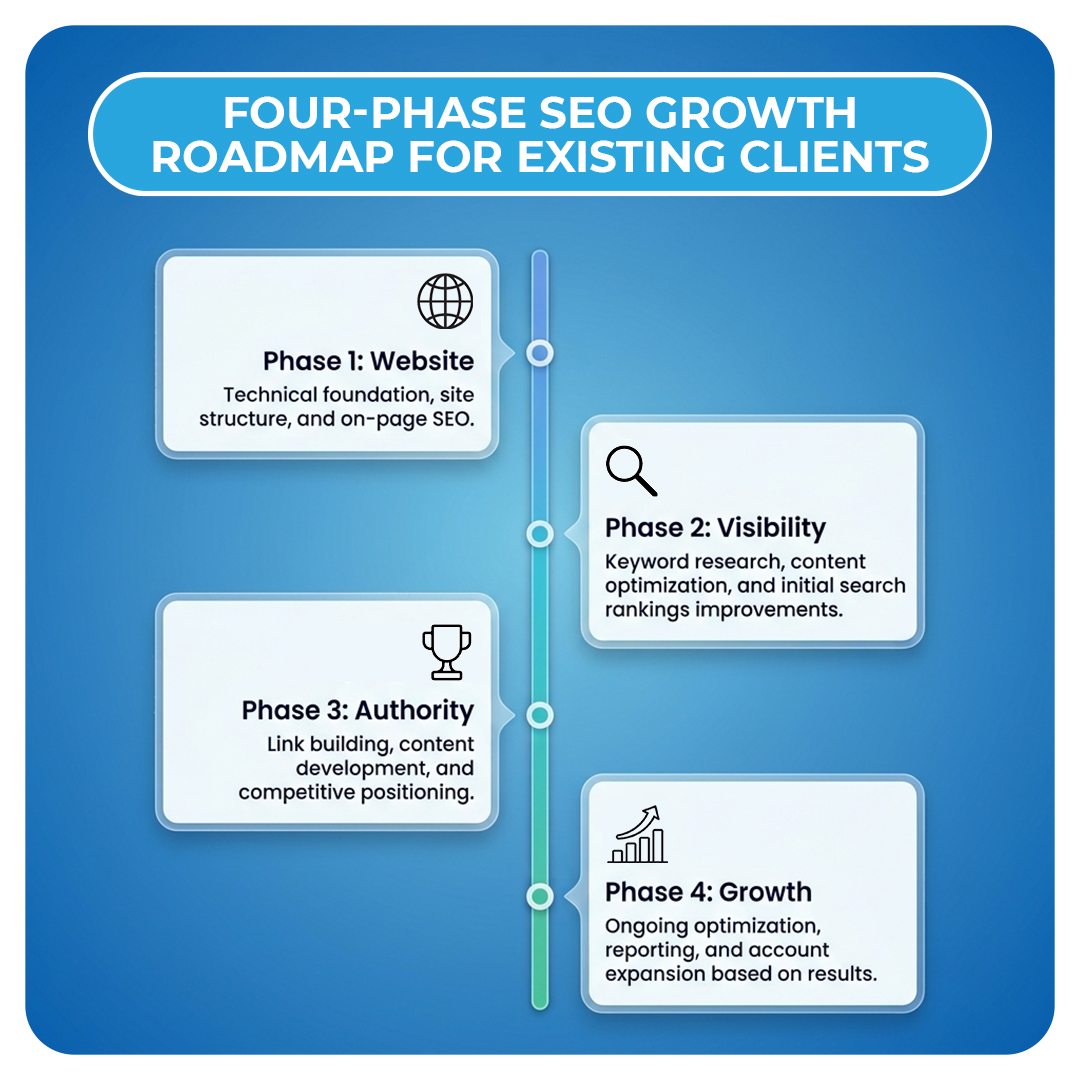
9. Build a 90-Day SEO Expansion Roadmap
A SEO roadmap gives the expansion structure. It also prevents the agency from pouring unlimited resources into a market before there is evidence of traction.
Days 1 to 30: Market Entry
- Research the opportunity
- Evaluate competitors
- Establish priorities
- Identify existing assets
- Define initial targets
- Address technical or structural requirements
Days 31 to 60: Build and Strengthen
- Develop priority assets
- Strengthen internal links
- Expand relevant content
- Begin authority-building activities
- Monitor early visibility
Days 61 to 90: Evaluate and Expand
- Identify early winners
- Reallocate resources toward what works
- Expand successful areas
- Drop low-potential targets
- Establish next-quarter priorities
This structure keeps investment tied to evidence. By day 90, the agency should know whether the market is worth deeper commitment.
Further Reading: Building a Client-Facing SEO Roadmap Using White Label SEO Services
10. Know When to Scale the New Market and When to Stop
Not every new city deserves unlimited SEO investment. Some markets earn more resources. Others should be paused. A simple decision framework helps the agency stay objective.
- Scale: Strong demand, positive performance, and clear business alignment. This market has earned more investment.
- Continue: Positive traction, but more time is needed before a bigger commitment. Hold the current pace.
- Adjust: The opportunity exists, but the current strategy is not producing enough progress. Change the approach before adding the budget.
- Pause: Low opportunity, poor business alignment, or insufficient commercial potential. Redirect resources elsewhere.
The key is to use actual market data. Do not assume every expansion deserves the same level of investment.
The Operational Challenge: Expanding SEO Across Multiple Clients
The framework above is manageable for one client. The pressure builds when several clients expand at once.
Picture an agency with five clients expanding into new markets at the same time. One client needs two new cities. Another needs five new service areas. A third wants to enter a completely new state.
The workload grows quickly across many areas:
- Research
- Content
- On-page SEO
- Local SEO
- Technical SEO
- Authority building
- Reporting
- Client communication
Here is the practical reality: the strategic plan may be clear, but execution capacity can become the bottleneck. Strategy is not usually the limiting factor. Fulfillment often is.
How White Label SEO Helps Agencies Scale Client Expansion?
White label local SEO services give agencies a way to add capacity when clients expand into new markets. Instead of hiring for every expansion, the agency can extend fulfillment as demand rises.
1. Add Fulfillment Capacity When Clients Expand
A white label local SEO firm can absorb additional work without the agency hiring a new specialist for each client's expansion. That flexibility matters when several markets open up at once.
2. Keep Existing Campaigns Moving
Extra fulfillment capacity protects established markets. New-market work draws from the partner's resources rather than from the team already maintaining proven accounts.
3. Access Multiple SEO Specialties
A single market expansion can require several types of work:
- Local SEO
- Technical SEO
- Content
- On-page optimisation
- Authority building
- Google Business Profile support
- Citation management
White label local SEO services agencies rely on can cover these areas without building each skill in-house.
4. Standardise Execution Without Standardising Strategy
This distinction matters: the workflow can be standardised, but the SEO strategy should remain specific to each client's market, services, and business objectives. SOPs make execution repeatable. Strategy stays tailored to each client.
5. Keep Client Relationships In-House
Outsourcing execution does not mean handing over the relationship. The agency remains responsible for:
- Strategy
- Prioritisation
- Communication
- Client relationship
- Business objectives
The fulfillment partner supports execution behind the scenes. This is added capacity, not a replacement for agency expertise.
How DashClicks Supports Agencies With SEO Market Expansion?
DashClicks offers white label local SEO services built for agencies managing client expansion into new cities. The value lies in matching fulfillment capacity to the operational problem, not in adding a list of features.
DashClicks supports agencies with:
- White label SEO fulfillment
- Dedicated specialists
- Local SEO support
- Content and on-page optimisation
- Technical SEO
- Google Business Profile support
- Citation management
- White label reporting and client dashboards
- Scalable fulfillment
Consider a practical flow. A client expands into three new cities. The agency needs additional local SEO execution to cover the extra work. Fulfillment capacity supports that workload, while the agency keeps control of strategy and client communication.
The core benefit is this: as clients enter new markets, agencies can increase fulfillment capacity without rebuilding their internal SEO team for every expansion. DashClicks does not guarantee rankings, traffic, or revenue. It provides the execution support agencies need to deliver their own strategy at scale.
SEO Expansion Works Better When It Builds on What Already Works
Expanding into a new city is a strategic decision, not a reflex. The agencies that handle it well treat it as an extension of existing work rather than a fresh start.
The main principles are consistent:
- A new city should not automatically mean starting from scratch.
- Evaluate the business opportunity first.
- Use existing SEO equity wherever possible.
- Do not let new-market work undermine established markets.
- Identify first-win opportunities before expanding aggressively.
- Use market-specific KPIs to measure real progress.
- Build a 90-day roadmap to create structure around the expansion.
- Keep enough fulfillment capacity to execute the strategy consistently.
Here is the core message worth holding onto. A new city should not mean starting an SEO campaign from scratch. It should mean intelligently extending what already works, protecting existing performance, and allocating additional resources where the new market presents the strongest opportunity.
For agencies, executing that expansion at scale matters as much as having the right strategy. White label SEO fulfillment can provide the additional capacity needed to expand client campaigns without putting existing accounts at risk.

Google Ads Strategies Agencies Can Use to Drive More Holiday Sales
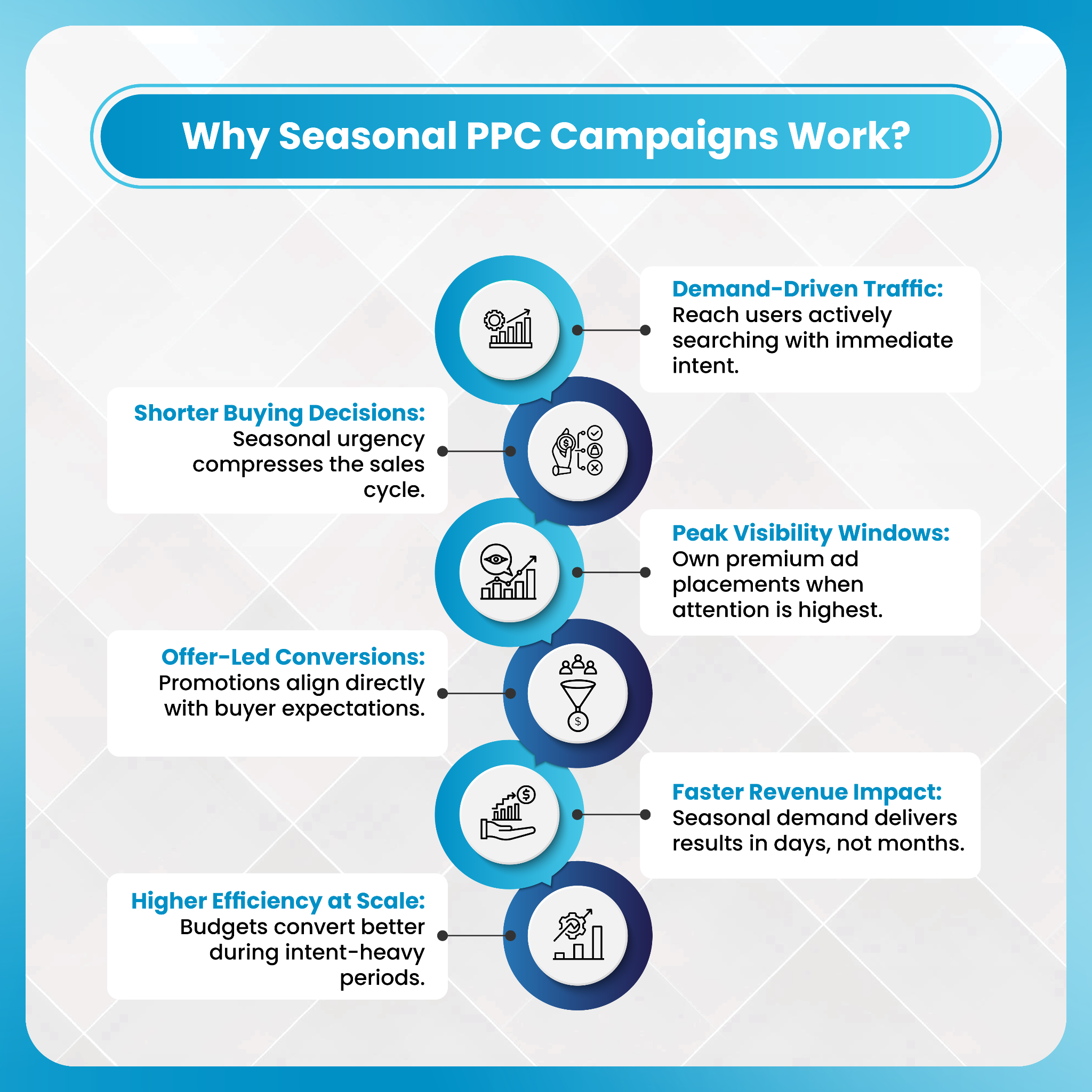
Holiday shopping compresses months of purchase intent into a few short weeks. Buyers search more often, competition intensifies, and clients expect their agency to capture every bit of relevant demand. The pressure is real, and it arrives fast.
Many agencies respond by simply raising Google Ads budgets. That approach rarely works on its own. Higher spend without the right structure, targeting, and timing tends to waste money rather than win sales. Holiday success depends on adjusting campaign structure, offers, bidding, landing pages, and optimization around how people actually shop during the season.
There is also a second challenge that agencies feel acutely: fulfillment pressure. When several clients need changes at the same time, execution becomes the bottleneck. A great strategy means little if the team cannot implement it quickly across every account.
This blog covers practical holiday Google Ads strategies you can apply, along with a realistic look at how agencies can manage the extra workload. We will also explore how white label Google Ads management can add execution capacity during seasonal spikes without forcing you to expand your internal PPC team overnight.
The central idea is simple. Strong holiday performance depends on planning for changing demand while maintaining consistent execution.
Why Holiday Sales Require a Different Google Ads Strategy?
Running your usual campaigns with bigger budgets ignores everything that makes the holiday period unique. Demand behaves differently, and so should your approach.
Several factors change during the holidays:
- Seasonal search demand rises sharply within a short window.
- Competition for valuable keywords increases across most industries.
- Consumer search behaviour shifts toward gifts, deals, and fast delivery.
- Promotional windows are limited, so timing matters more than usual.
- CPCs often climb as more advertisers compete for attention.
- Clients make more frequent requests and expect faster responses.
Holiday campaigns also leave less room for slow, gradual optimization. When a promotion runs for five days, you cannot spend two weeks testing your way toward the right settings. Decisions need to happen quickly and with confidence.
The Key Takeaway: holiday campaigns require more deliberate planning and closer optimization, not simply more ad spend.
1. Identify the Holiday Opportunities That Matter Most
Before you touch a single campaign, decide where the strongest opportunities actually exist. Not every client, product, or keyword deserves equal attention during a compressed selling season.
Start by asking practical questions about each client:
- Which products or services have genuine seasonal demand?
- Which clients have compelling holiday offers ready to go?
- Which products have enough inventory to support increased spend?
- Which services experience predictable seasonal interest?
- Which keywords show strong commercial intent?
- Which existing campaigns already produce reliable conversions?
To turn these answers into decisions, use a simple prioritisation framework:
Demand → Profitability → Competition → Conversion Potential
- Demand: Is there real seasonal interest in the product or service?
- Profitability: Does the margin justify aggressive spend, or will discounts erode returns?
- Competition: How crowded is the auction, and can the client compete effectively?
- Conversion Potential: Has the campaign or landing page proven it can convert traffic?
Opportunities that score well across all four deserve your budget and attention first. This keeps your effort focused where it can produce results, rather than spread thin across accounts that lack the demand or margin to justify it.
2. Build Campaigns Around High-Intent Holiday Searches
During the holidays, the gap between browsing and buying narrows. Your campaigns should prioritise searches that signal a strong intent to purchase.
High-intent searches tend to fall into these categories:
- Commercial searches (best gift for, top-rated)
- Transactional searches (buy, order, shop)
- Product-specific searches with clear model or variant names
- Service plus holiday searches (holiday cleaning, festive catering)
- Promotional searches (discount code, sale, deal)
- Brand searches from people ready to buy
- Long-tail seasonal searches with specific intent
The difference between high-intent and informational searches is important. Someone typing "how do LED string lights work" is learning. Someone typing "buy warm white LED string lights" is closer to a purchase. Holiday budgets stretch further when they favour the second type.
That said, do not automatically abandon your evergreen campaigns when holiday campaigns launch. Evergreen campaigns often carry historical conversion data, established Quality Score, and steady baseline performance. Pausing them can disrupt account signals and cost you demand that exists year-round.
The right balance between holiday and evergreen campaigns depends on the client's business model, available budget, historical data, and conversion goals. Some clients need an aggressive seasonal push, while others simply need a modest holiday layer on top of stable evergreen activity.
3. Create Holiday-Specific Ad Copy and Offers
Holiday intent should show up clearly in your messaging. Generic ad copy running through peak season is a missed opportunity.

Reflect the season in your ads through elements like:
- Seasonal promotions and themed language
- Limited-time offers
- Specific discounts (20% off, save $50)
- Free shipping where relevant
- Gift-focused messaging (perfect gift for, ready to unwrap)
- Genuine urgency tied to real deadlines
- Clear offer deadlines
- Promotional assets and sitelinks that reinforce the deal
Make the offer and its deadline obvious, but avoid manufacturing false urgency. Countdown language only works when the deadline is real. Misleading urgency damages trust and can create compliance problems.
Agency Workflow Angle
Across multiple clients, ad copy becomes a repeatable process rather than a one-off creative task. Establish a clear sequence your team follows every time:
- Collect client offers early, ideally before the season begins.
- Confirm promotional details, including exact discounts and dates.
- Write ad variations for each offer and audience.
- Get client approval on copy and claims.
- Schedule campaigns to align with promotional start dates.
- Update or pause ads promptly when promotions end.
Step six matters more than most agencies expect. Ads promoting expired offers frustrate shoppers and waste spend. A defined process for retiring old promotions protects both performance and reputation.
4. Adjust Google Ads Budgets Around Peak Demand
Increasing every client's budget by the same percentage is inefficient. Some campaigns can absorb more spend profitably, while others cannot.
Approach budget adjustments with these considerations:
- Identify each client's specific peak shopping periods.
- Review historical conversion data to find what has worked before.
- Allocate additional budget to campaigns with a proven track record.
- Monitor impression share to spot where demand outpaces budget.
- Protect spend for high-converting campaigns during peak days.
- Adjust budgets as demand rises and falls through the season.
- Reduce or reallocate spend once promotional periods end.
Budget allocation should follow performance and opportunity, not simply the calendar.
Budget pacing deserves close attention during peak periods. A campaign that exhausts its daily budget by noon may miss valuable afternoon and evening demand. On the other hand, a campaign underspending during its best days signals a targeting or bidding issue worth investigating. Watching pacing daily during peaks helps you catch these problems while they still matter.
5. Optimize Bidding and Conversion Goals for Holiday Performance
Bidding strategy deserves careful review as demand changes, but it also rewards restraint. Sudden, drastic changes during a critical window can do more harm than good.
Work through bidding decisions methodically:
- Review existing conversion volume before making major bidding changes.
- Monitor CPA and ROAS against realistic seasonal expectations.
- Review conversion value where that data is available.
- Adjust targets only when supported by enough data.
- Watch for shifts in conversion behaviour as the season progresses.
- Avoid unnecessary changes during your most critical days.
- Give automated bidding enough quality data to operate effectively.
Automated bidding does not remove the need for human oversight. Smart Bidding relies on accurate conversion tracking and sufficient volume. During volatile holiday periods, it still needs someone watching for anomalies and stepping in when signals go wrong.
One principle protects you more than any other: avoid making several major changes at the same time during a critical promotional period, unless there is a strong reason. Simultaneous changes make it impossible to know what caused a result, and they can destabilise campaigns right when stability matters most.
6. Optimize Performance Max and Shopping Campaigns
For ecommerce clients, Performance Max and Shopping campaigns often need extra attention during the holidays. These campaign types depend heavily on accurate product data.
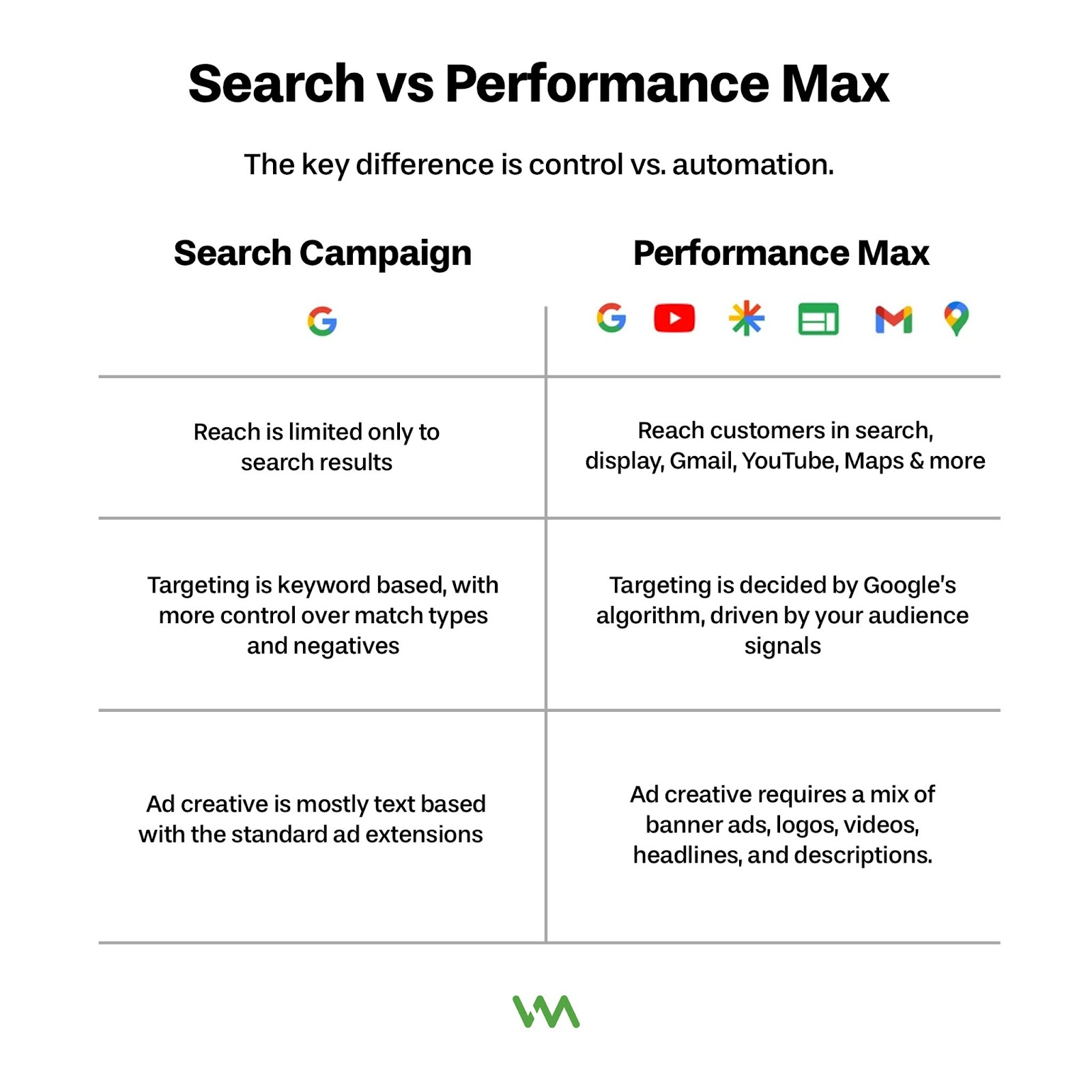
Image Source: Verde Media
Run a checklist across each ecommerce account:
- Product feed accuracy and completeness
- Correct pricing, especially for discounted items
- Product availability and stock status
- Promotional information reflected in the feed
- Product-level performance trends
- Budget allocation across product groups
- ROAS by product or category
- Creative assets used within Performance Max
- Top-performing products worth prioritising
- Underperforming products to review or exclude
Confirm that product information stays accurate whenever promotions, prices, or inventory change. A price mismatch between the feed and the landing page can cause disapprovals or lost trust at the worst possible time.
Feed and product issues can undermine performance even when the campaign itself is set up perfectly. Many agencies focus on bids and budgets while ignoring the feed, only to discover that a data error quietly capped results throughout the season.
7. Align Landing Pages With Holiday Search Intent
Winning the click is only half the job. If the landing page does not match the promise of the ad, conversions suffer regardless of how well the campaign performs.
Review landing pages for these elements:
- Message match between the ad and the page
- Clearly displayed holiday offers
- Visible promotion expiration dates
- A strong mobile experience, since holiday traffic skews mobile
- Simple, short conversion paths
- Accurate product or service availability
- Relevant, action-focused CTAs
Sending holiday traffic to an outdated evergreen landing page weakens conversion performance. A shopper who clicks a "30% off holiday sale" ad and lands on a generic homepage with no mention of the offer will often leave immediately.
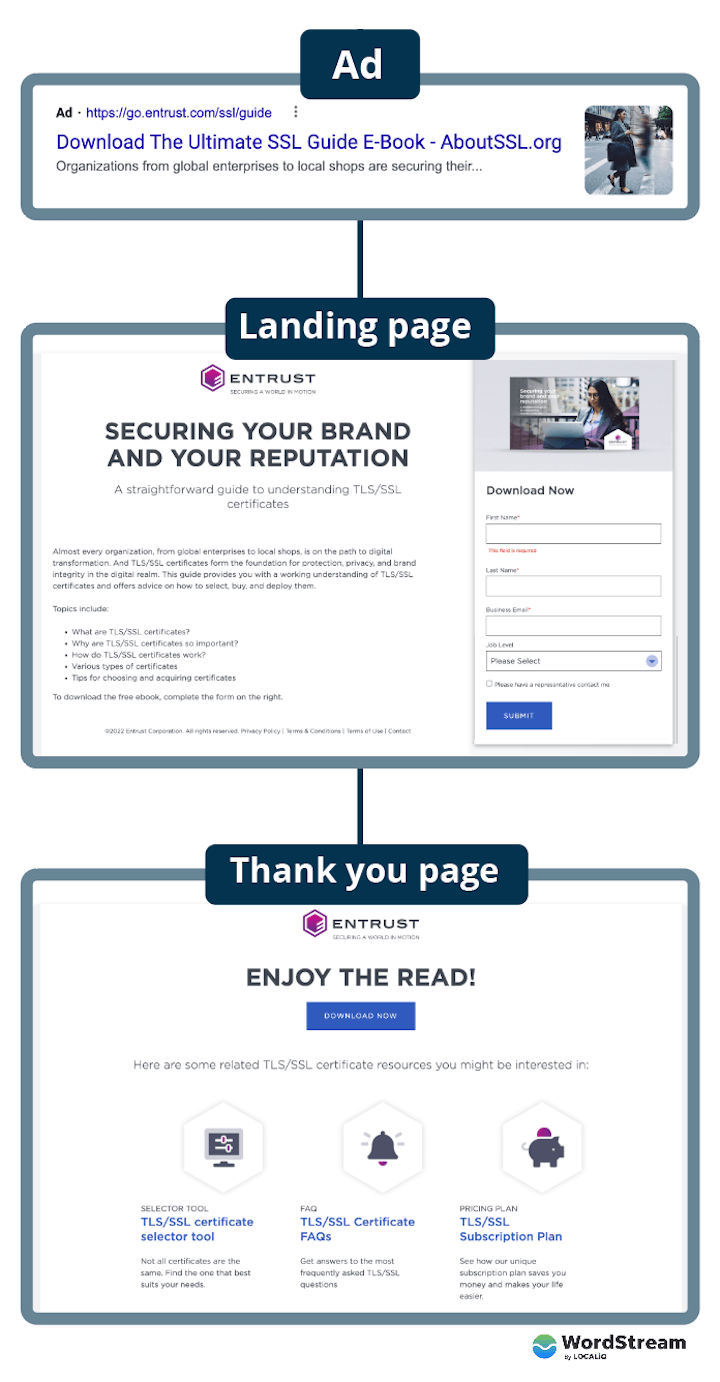
Image Source: WordStream
Aim for a clean, consistent journey:
Holiday ad → Holiday offer → Relevant landing page → Clear CTA
The landing page should deliver exactly what the ad promised. Consistency between the two builds confidence and reduces the friction that costs you sales.
8. Use Remarketing to Capture Returning Holiday Shoppers
Few shoppers convert on their first visit, especially when comparing gifts across several stores. Remarketing helps you stay present while they decide.
Useful holiday audiences include:
- Previous website visitors
- Product viewers who did not purchase
- Cart abandoners
- Previous customers likely to buy again
- High-intent visitors to key landing pages
Remarketing Ads lets you reconnect with people who showed interest but were not ready to buy. During a season defined by comparison shopping, a well-timed reminder can bring a hesitant buyer back.
Adapt your messaging to where the user sits in the buying journey. A cart abandoner might respond to free shipping or a reminder that the offer ends soon, while a past customer might respond to a loyalty-style deal. Matching the message to the moment makes remarketing far more effective than a single generic ad.
9. Monitor Campaign Performance More Closely During Peak Periods
Holiday campaigns leave little room for delayed reactions. A problem that goes unnoticed for a week can waste a meaningful share of the season's budget.
Watch these metrics more frequently than usual:
- Conversions
- Conversion value
- ROAS
- CPA
- CPC
- CTR
- Impression share
- Budget utilisation
- Product-level performance
- Service-level performance
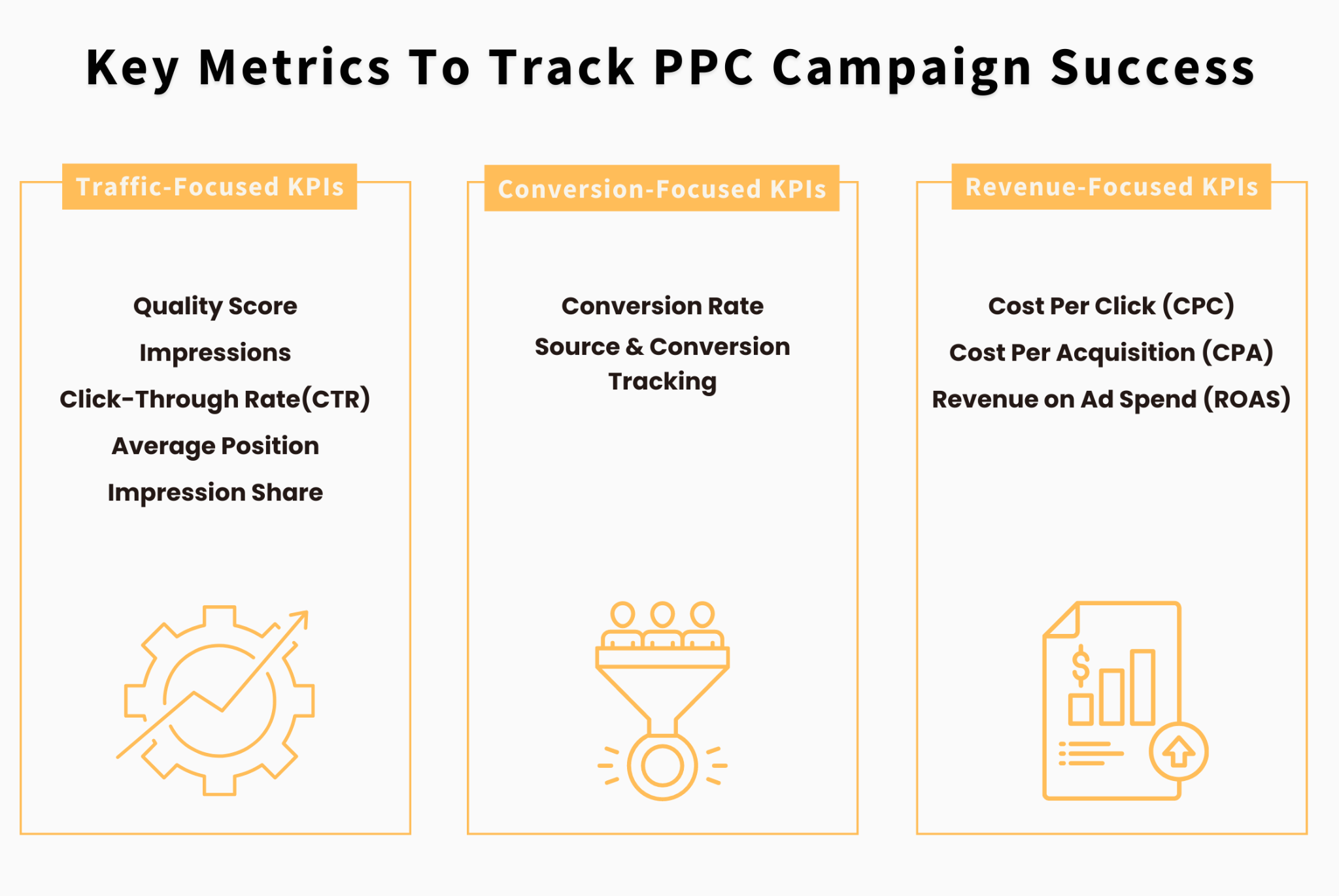
There is an important difference between monitoring and reporting. Reporting looks backward and explains what happened. Monitoring is active and should lead to action while the campaign is still running.
To keep monitoring purposeful, define your approach before the season starts:
- What you are watching, and which metrics matter most
- How often you review each account
- Which changes require immediate attention
- Which changes require more data before you act
Clear rules prevent both overreaction and inaction. Your team knows when to intervene and when to hold steady, which is exactly the clarity you need during a busy peak.
10. Prepare for Last-Minute Client Changes
The operational reality of holiday PPC is that clients rarely stay still. Requests arrive suddenly, often at the busiest moments.
During the season, clients may:
- Change an offer
- Increase a budget
- Extend a promotion
- Pause a product
- Launch a new promotion
- Request new ad copy
- Change a landing page
- Adjust inventory availability
These requests create fulfillment pressure, particularly when several clients ask for changes at once. A single specialist cannot rewrite ad copy for one account, update a Shopping feed for another, and increase budgets for two more all within the same hour. For agencies handling repeated creative requests, an AI ad generator can help draft fresh ad concepts while specialists focus on approvals, testing, and performance checks.
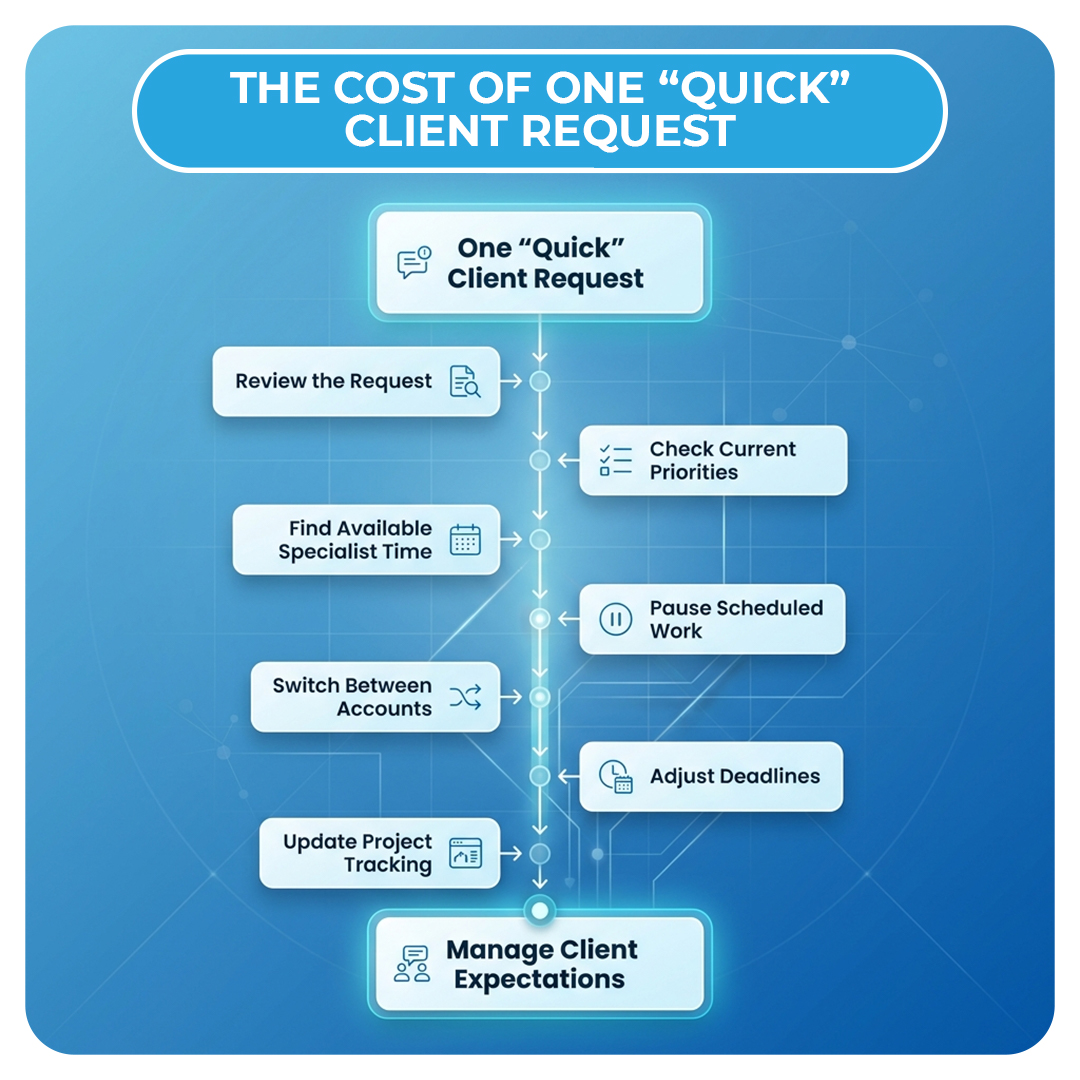
Recommend a simple workflow
A defined process keeps last-minute requests from turning into chaos:
Client request → Agency review → Approval → Fulfillment assignment → Execution → QA → Launch/update → Monitoring
Decide who approves changes and who executes them before the holiday period begins. When roles are clear in advance, urgent requests move through the process quickly instead of stalling while everyone figures out who is responsible.
How White Label Google Ads Helps Agencies Handle Holiday Campaign Work?
Holiday PPC creates a temporary surge in workload. For many agencies, that surge lasts a few weeks and then fades. Hiring permanent staff to cover a short-lived spike often does not make sense, yet the work still needs to get done.
White label Google Ads management offers one way to add execution capacity for that period without permanently expanding your team.
1. Add Fulfillment Capacity Without Immediate Hiring
A white label Google Ads agency can provide additional execution support without requiring you to recruit, hire, and train new PPC specialists right when you are busiest. That support can span:
- Campaign setup
- Ongoing campaign management
- Optimization
- Keyword research
- Ad copy creation
- Conversion tracking
- Reporting
- Budget management
This does not mean outsourcing automatically improves campaign performance. Results still depend on strategy, offers, and the quality of execution. What a fulfillment partner provides is capacity, giving your team room to handle more work during a demanding stretch.
2. Support Multiple Client Campaigns
Holiday workload usually hits several accounts at once. Picture a typical peak week:
- Client A needs a new promotional campaign built.
- Client B needs a budget increase implemented and monitored.
- Client C needs Shopping feed updates before a sale.
- Client D needs fresh ad copy for a limited-time offer.
Handling all four internally often means pulling your specialist away from work already in progress. A Google Ads outsourcing agency can absorb some of these tasks, so existing campaigns keep receiving attention while new requests get handled in parallel.
3. Access Specialised PPC Expertise
Not every agency has every PPC specialty represented on staff. A fulfillment partner can bring experience across areas such as:
- Search campaigns
- Shopping campaigns
- Performance Max
- Campaign optimization
- Keyword research
- Ad copy
- Conversion tracking
- Budget management
For an agency that is strong in strategy but thin in a specific technical area, this access can fill a practical gap during a season when there is no time to develop that skill internally.
4. Maintain the Agency's Client Relationship
A well-run white label model keeps a clear line between ownership and execution. The agency stays responsible for:
- Client communication
- Strategy
- Business objectives
- Prioritisation
- Approvals
- The overall client relationship
The fulfillment partner supports:
- Campaign execution
- Ongoing optimization
- Technical PPC tasks
- Reporting support
- Recurring campaign management
Good white label Google Ads management works behind the scenes. Your clients continue to see your brand and deal with your team, while the execution happens quietly in the background.
5. Scale Seasonal Work Without Permanent Headcount
This distinction matters most during the holidays. A temporary workload increase does not always justify a permanent hire.
Permanent Hiring = Ongoing Headcount and Long-Term Cost
White Label Fulfillment = Additional Execution Capacity That Flexes with Demand
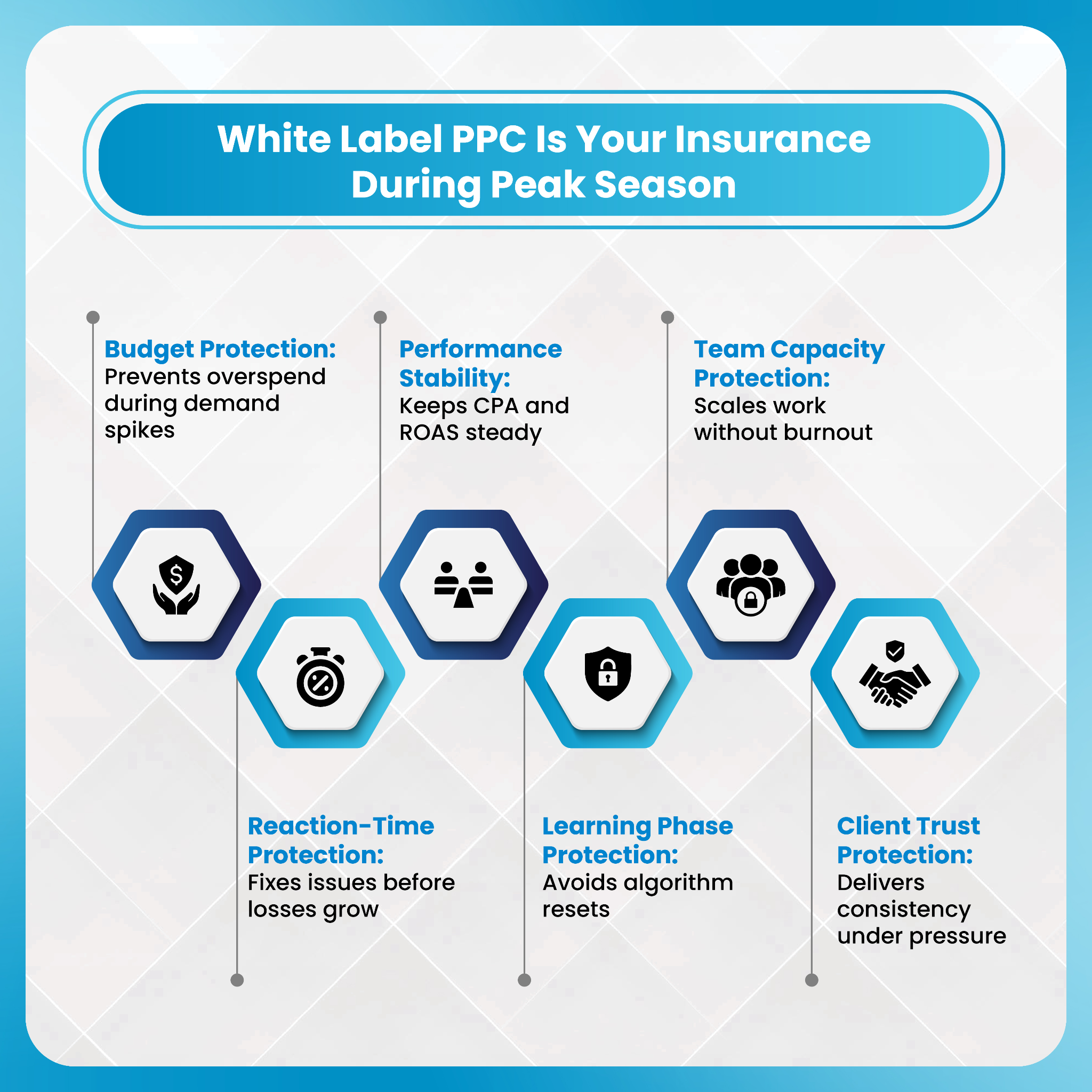
Outsourcing is not universally better than hiring. The right choice depends on your workload, your internal expertise, and your long-term plans. If you consistently need more PPC capacity throughout the year, hiring may be the better investment. If the pressure is genuinely seasonal, flexible fulfillment often fits the need more closely.
A Holiday Google Ads Workflow Agencies Can Repeat
A repeatable workflow keeps holiday execution consistent across every client. A simple structure works well:
Plan → Build → Launch → Monitor → Optimize → Report
Plan
Map out the season before you build anything:
- Seasonal opportunities worth pursuing
- Confirmed client offers
- Budget allocations
- Client priorities
- Promotional start and end dates
Build
Prepare every element the campaign needs:
- Campaign structure
- Keywords
- Ads
- Assets and extensions
- Product feeds
- Landing pages
- Conversion tracking
Launch
Activate campaigns before peak demand arrives, not at the last minute. Early launches give algorithms time to gather data and let you catch setup issues before they cost you during the busiest days.
Monitor
Keep a close eye on the metrics that signal performance and pacing:
- Spend
- Conversions
- ROAS
- CPA
- Budget pacing
- Product and service performance
Optimize
Shift budget and attention toward the strongest opportunities based on actual results. Optimization during the holidays is less about experimentation and more about doubling down on what is clearly working.
Report
Show clients a clear picture of the season:
- What changed
- What performed well
- What was optimized
- What should happen next
This workflow connects naturally to SOPs and standardised fulfillment processes. When each stage is documented, your team and any fulfillment partner can execute it the same way across every account, which is exactly what keeps quality steady during a hectic period.
Common Holiday Google Ads Mistakes Agencies Should Avoid
A few recurring mistakes undermine holiday performance more than others:
- Waiting until peak demand to launch campaigns: Late launches miss learning time and early sales.
- Increasing every client's budget equally: Uniform increases ignore where the real opportunity sits.
- Ignoring landing-page readiness: Great ads fail when the page does not match the offer.
- Using outdated promotional messaging: Expired offers waste spend and frustrate shoppers.
- Neglecting conversion tracking: Broken tracking blinds both you and automated bidding.
- Making too many changes at once: Simultaneous changes make results impossible to read.
- Failing to monitor budget pacing: Early budget exhaustion misses valuable demand.
- Ignoring product feed issues: Feed errors quietly cap Shopping and Performance Max results.
- Treating every client's holiday strategy the same: Different businesses need different approaches.
- Underestimating the fulfillment workload: Strategy fails without the capacity to execute it.
How DashClicks Supports Agencies During Holiday Google Ads Campaigns?
DashClicks helps agencies handle seasonal Google Ads workloads by providing white label fulfillment capacity without requiring every task to be managed in-house.
- White Label Fulfillment: Handle Google Ads management under your agency’s brand while you retain control of strategy and client relationships.
- Campaign Setup and QA: Support for campaign setup, quality assurance, approvals, launches, and ongoing maintenance helps keep holiday campaigns on track.
- Ongoing Optimization: Continued monitoring and optimization help campaigns adapt as demand, competition, and performance change throughout the season.
- Branded Client Experience: Use white label reporting while keeping client communication and the overall experience under your agency’s brand.
DashClicks gives agencies additional execution capacity during seasonal peaks while allowing them to stay focused on strategy and client relationships.
Planning Beats Spending Every Holiday Season
Holiday Google Ads demand rewards agencies that prepare rather than react. The strongest results come from identifying the highest-value opportunities early and building around them deliberately.
The fundamentals hold every season. Align campaigns with search intent and seasonal offers. Let budgets follow opportunity and performance rather than the calendar. Review landing pages, product feeds, conversion tracking, and bidding before peak periods arrive. Then monitor campaigns closely through limited promotional windows so you can act while it still counts.
Do not underestimate the operational side. Last-minute client requests create real fulfillment pressure, and several arriving at once can overwhelm a small team. White label Google Ads fulfillment gives agencies a way to add execution capacity during these seasonal spikes without committing to permanent headcount.
Strong holiday PPC performance is not just about spending more. It is about preparing earlier, prioritising intelligently, responding quickly, and having enough fulfillment capacity to execute the strategy across every client account.

9 Website Problems That Make Client SEO Harder to Scale
As agencies grow their client portfolios, website complexity can increase SEO workload just as much as staffing limitations. From architecture gaps to migration debt, nine common website problems consistently slow SEO fulfillment. Scalable agencies address these systematically rather than case by case.
Scaling SEO is not purely a staffing challenge. As portfolios expand, each website’s CMS, technical debt, and stakeholder requirements determine how much time an account demands.
BrightEdge research shows organic search accounts for 53.3% of trackable website traffic, while its 2025 research indicates that organic search continues to drive strong referral and conversion outcomes. This makes website SEO issues an operational concern, affecting both client performance and the manual effort required from fulfillment teams.
One problematic website may be manageable. Repeated issues across dozens or hundreds of accounts create significant fulfillment friction.
Agencies that scale efficiently are not simply hiring faster. They are building repeatable processes that work across different websites, CMS configurations, technical constraints, and client requirements.
This article explores nine common website problems that slow SEO delivery and explains how agencies can address them systematically.
1. Website Architecture That Becomes Harder to Expand
Some websites function well at their current size but become difficult to expand when clients grow. Adding new services, locations, product categories, or supporting content can become operationally complex when the site has no clear structure to accommodate it.
Common architecture problems include:
- Flat page structures with no logical hierarchy
- Important pages buried several clicks from the homepage
- No consistent relationship between core service pages and supporting content
- New pages being added without a clear organizational framework
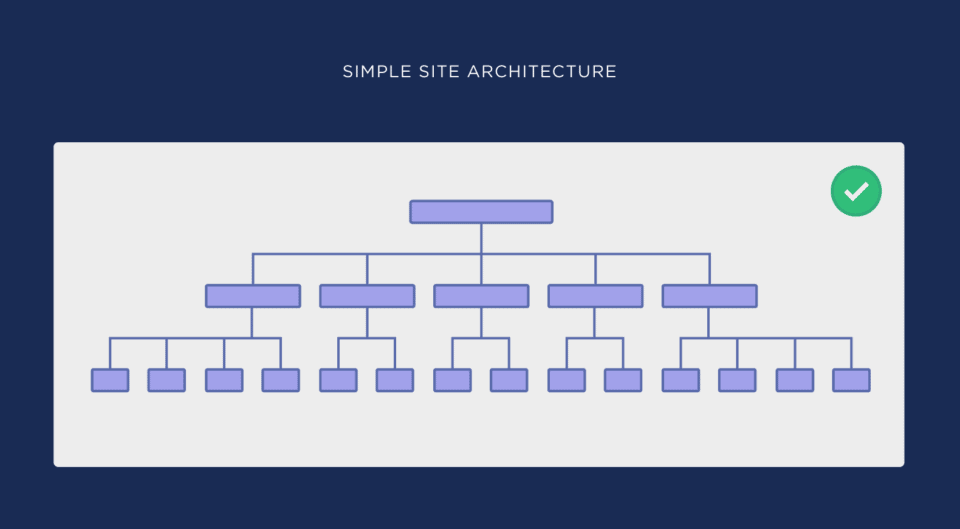
Image Source: Backlinko
Why It Makes SEO Harder to Scale?
Every new page addition may require manual decisions. Where does this page fit? Which existing pages should link to it? How does it relate to the site's core topics? Without a scalable architecture, these decisions accumulate. Google uses links to discover pages and assess relevance, so the absence of a coherent structure has direct crawling and ranking implications.
What Agencies Should Check
- Can new pages be added without restructuring the site?
- Is there a logical relationship between core and supporting pages?
- Are important pages reachable within a few clicks?
- Can internal linking be expanded systematically as the site grows?
2. Website Templates That Create SEO Problems Across Entire Page Groups
Template-level SEO issues are disproportionately impactful because a single problem can affect dozens or hundreds of URLs simultaneously. Common template problems include:
- Identical or near-identical metadata patterns across large page groups
- Thin location-page templates with minimal unique content
- Product page templates generating weak or duplicate pages at scale
- Missing heading structures or important on-page elements
- Duplicate content patterns across service or category page types
Why It Makes SEO Harder to Scale
There is a significant operational difference between fixing one URL-level issue and fixing one template issue that affects 100 URLs. Agencies that audit at the URL level rather than the template level will spend significantly more time identifying and addressing problems that share a common root cause.
What Agencies Should Check
- Are similar pages using the same problematic template?
- Are metadata patterns scalable and distinct across page groups?
- Are important SEO elements included consistently across templates?
- Are location, service, or product templates generating thin pages at scale?
One template-level fix can sometimes resolve dozens of URL-level problems.
3. CMS Limitations That Restrict SEO Changes
An agency may know exactly what needs to change but lack the ability to implement changes efficiently because of CMS constraints. This is one of the most common sources of fulfillment delay.
Typical CMS limitations include:
- Restricted title tag and meta description editing
- Difficult or locked template structures
- Limited canonical tag controls
- Poor internal linking controls
- No bulk optimization capability
- Dependency on developer resources for routine SEO changes
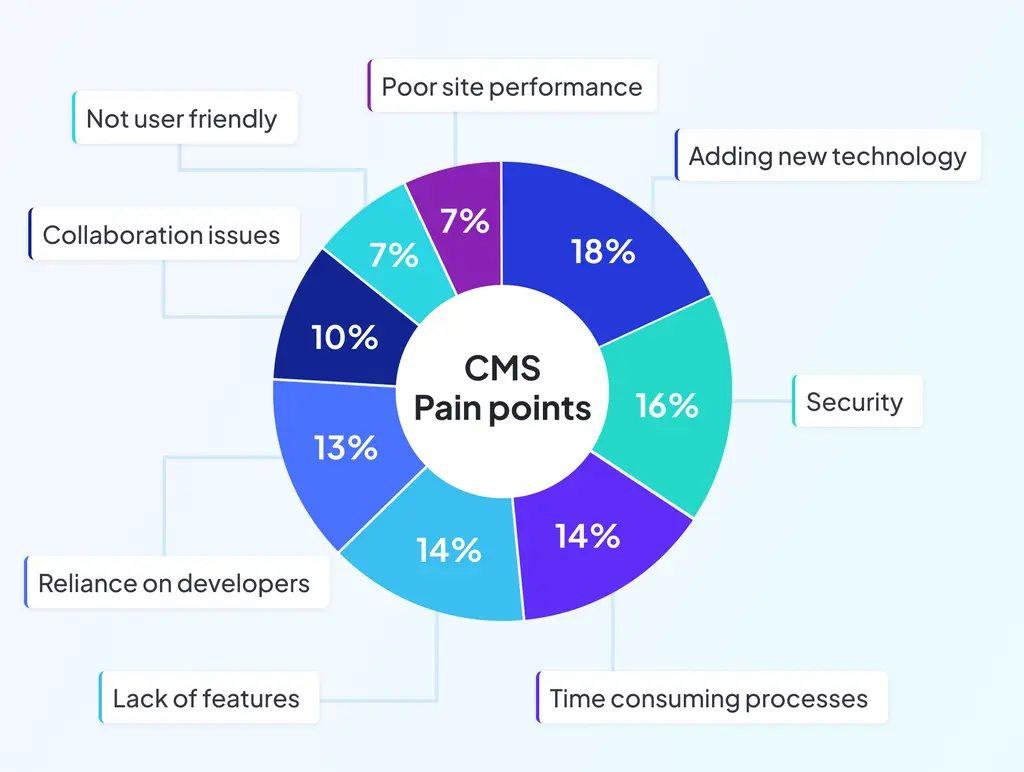
Image Source: Edge of the Web
Why It Makes SEO Harder to Scale
A simple on-page optimization can become a multi-step process:
SEO recommendation → Developer ticket → Approval → Implementation → Review → Follow-up
When that process repeats across many accounts, it consumes fulfillment capacity disproportionate to the actual complexity of the change.
What Agencies Should Check
Before onboarding a new client, assess:
- What can the SEO team change directly?
- What requires developer involvement?
- Are bulk edits possible for title tags, meta descriptions, or headings?
- Can templates be modified without a full development cycle?
- Are technical SEO controls accessible to non-developer team members?
4. JavaScript-Dependent Content That Search Engines May Not Process as Expected
Websites built with heavy JavaScript frameworks may load important content, navigation, links, or page elements in ways that depend on browser rendering. If search engine crawlers cannot access that content reliably, the SEO implications can be significant.
Why It Makes SEO Harder to Scale
Google processes JavaScript through a three-stage pipeline: crawling, rendering, and indexing. JavaScript-powered websites can have rendering delays and processing limitations, meaning content that appears to users may not be immediately accessible to crawlers. Agencies often need additional validation steps to confirm that important content and links are reaching search engines as intended, which adds time to every audit.
What Agencies Should Check
- Is important content available in the initial HTML before rendering?
- Are navigation links and internal links crawlable without JavaScript execution?
- Does the page behave differently for users and for crawlers?
- Are critical JavaScript files accessible and not blocked by robots.txt?
5. URL Structures That Generate Unnecessary Complexity
CMS platforms, faceted navigation, filters, sorting functions, search features, and dynamic parameters can generate large volumes of URLs that serve user interaction but do not represent valuable SEO landing pages.
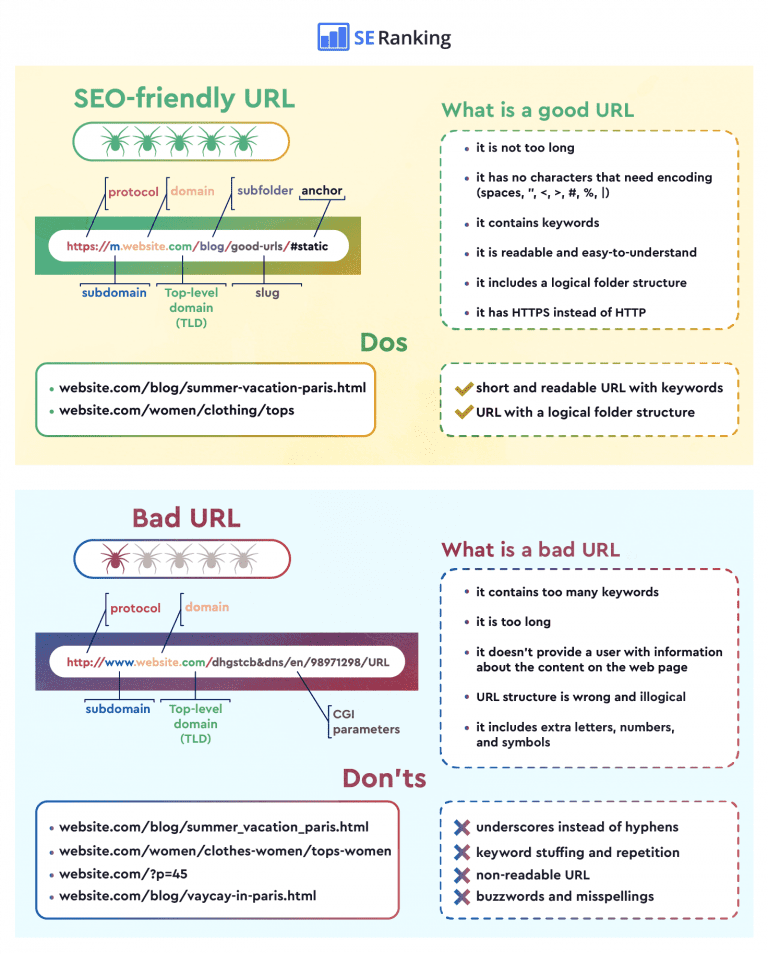
Image Source: SE Ranking
Why It Makes SEO Harder to Scale
Agencies must then determine which URLs should be crawled, indexed, consolidated, canonicalized, or excluded. That analysis is not a one-time task. As the site grows, new parameter combinations and filter variations continue to appear. Google's guidance on faceted navigation explicitly notes that large URL spaces can cause unnecessary crawl budget consumption and indexation problems.
What Agencies Should Check
- Parameter-generated URLs
- Filter and sorting combinations
- Session-based URLs
- Duplicate URL variations from trailing slashes, uppercase, or subdomain differences
- URLs created by internal search features
Further Reading: How to Create SEO-Friendly URLs: A Complete Guide
6. Website Migrations That Leave SEO Debt Behind
Website redesigns, CMS migrations, domain changes, URL restructuring, and replatforming projects all carry SEO risk. The challenge is that problems often do not surface immediately after launch. Rankings and traffic may appear stable for weeks before underlying issues become visible.
Common SEO Problems Left by Migrations
- Missing or incomplete redirect maps
- Changed URL structures with no redirects in place
- Lost internal links pointing to old URLs
- Outdated XML sitemaps referencing retired pages
- Redirect chains created by layered migrations
- External backlinks pointing to URLs that no longer exist
Why It Makes SEO Harder to Scale
Agencies may inherit significant migration-related cleanup work before they can begin the planned SEO roadmap. Google's guidance on site moves recommends maintaining redirects for at least one year and updating all internal links to point to the new URLs. If neither was done properly, the cleanup becomes part of the agency's ongoing workload.
What Agencies Should Check
- Has a full redirect map been implemented and tested?
- Do internal links point to current URLs?
- Has the XML sitemap been updated to reflect the new structure?
- Are there redirect chains that need to be collapsed?
- Are external links to retired URLs being captured by redirects?
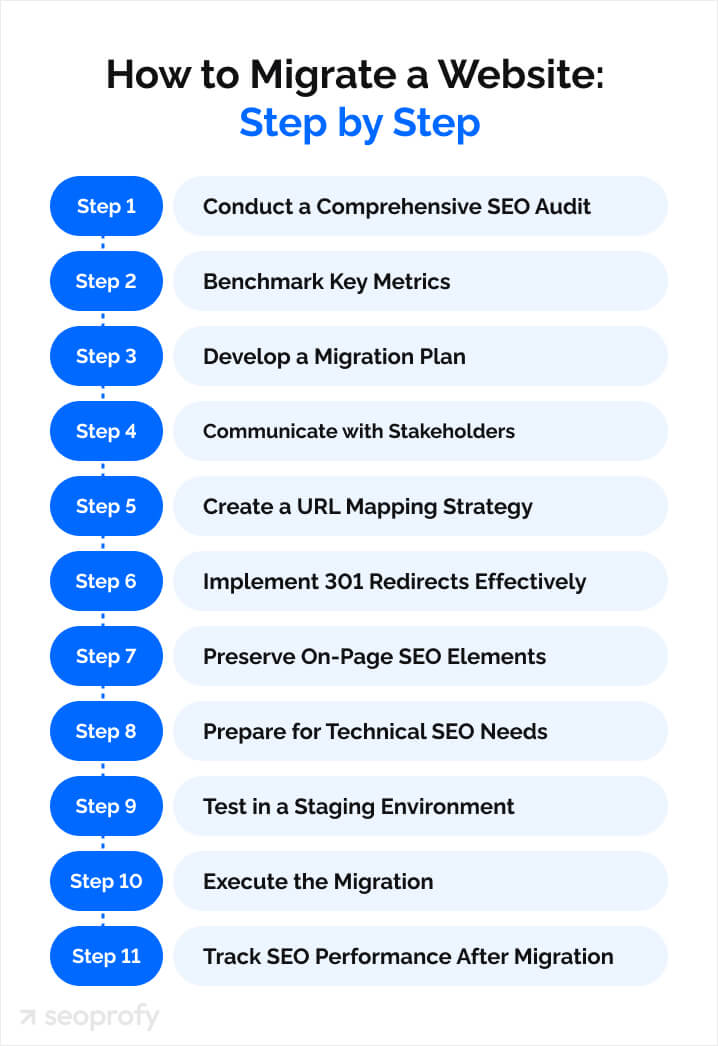
Image Source: SEOProfy
7. Poorly Controlled Duplicate or Near-Duplicate Page Systems
As websites grow, they often accumulate pages that target similar or overlapping search intent. This can happen through deliberate expansion (service and location combinations) or through CMS-generated duplication.
Common sources include:
- Service pages paired with multiple location variations
- Similar service descriptions split across multiple URLs
- Product variation pages with minimal unique content
- Old pages that were never removed or redirected
- Multiple URLs with equivalent or near-equivalent content
Why It Makes SEO Harder to Scale
The agency must determine whether each page should be improved, consolidated, redirected, canonicalized, or removed. Google's guidance on canonical URLs explains how search engines cluster duplicate pages and select a representative URL. Without agency-level management, this clustering may not favor the intended page.
Before creating another page, does the website already have a page competing for the same search intent? That question, applied consistently during content planning, can prevent significant deduplication work later.
8. Website Performance Problems That Affect Entire Client Experiences
Performance problems frequently originate at the theme, plugin, script, or template level. A slow-loading component added globally to a template can affect every page that uses it. The same performance issue can appear across hundreds of URLs because of a single implementation decision.
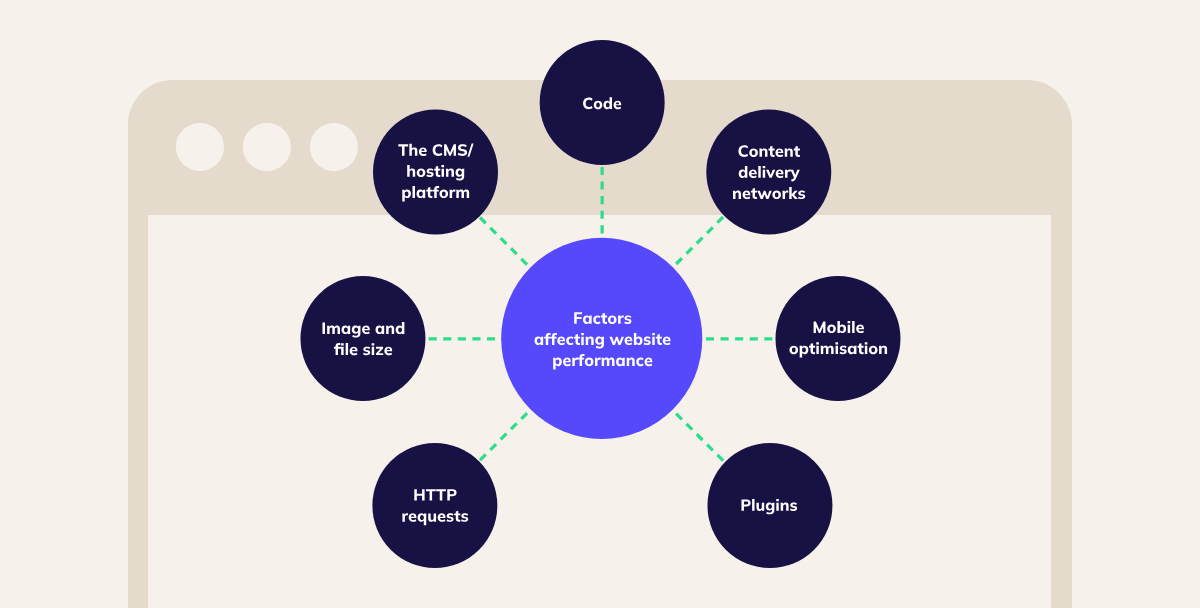
Image Source: Blend
Why It Makes SEO Harder to Scale
Agencies may repeatedly identify the same performance problem across audits but lack direct control over the underlying cause. Implementation changes may require developer resources or client decisions, creating recurring delays between identification and resolution.
What Agencies Should Check
Google's current Core Web Vitals thresholds provide a consistent performance benchmark:
- LCP (Largest Contentful Paint): 2.5 seconds or less
- INP (Interaction to Next Paint): under 200 milliseconds
- CLS (Cumulative Layout Shift): 0.1 or less
Beyond Core Web Vitals, agencies should assess:
- Mobile performance and usability
- Heavy or render-blocking scripts
- Third-party resource loading
- Layout instability caused by late-loading elements
- HTTPS implementation and intrusive interstitials, which are part of Google's broader page experience factors
9. Websites That Do Not Support the SEO Strategy Being Sold
Sometimes the website itself is not structured to support the SEO strategy the agency is proposing. This is less about technical SEO and more about whether the site can capture and convert the search demand being targeted.
Examples include:
- A local business with no scalable location page structure
- A service business without dedicated individual service pages
- A B2B website with no informational content architecture to support top-of-funnel search demand
- High-value services underrepresented or buried within the site
- Organic traffic landing on pages that do not support conversions
Why It Makes SEO Harder to Scale
Agencies may achieve rankings and traffic growth but find it difficult to translate those gains into client outcomes the client can actually see. When the website structure does not align with the strategy, agencies spend time explaining limitations rather than delivering results.
Does the website have the structure needed to capture and convert the search demand being targeted? That question is worth answering before the engagement begins, not several months into the roadmap.
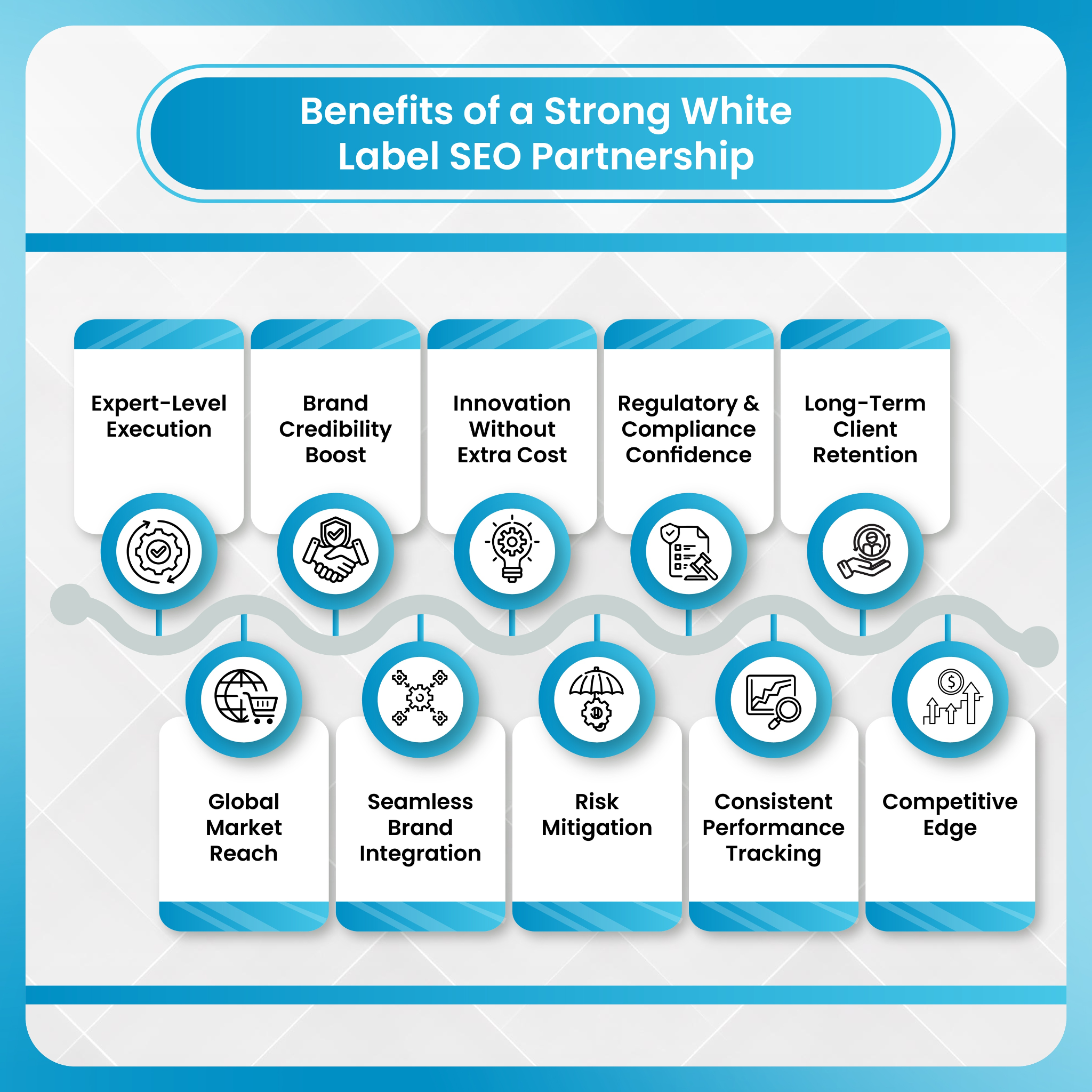
How White Label SEO Services Help Agencies Scale Client SEO?
Working across clients with varying levels of website complexity is operationally demanding. A scalable fulfillment model addresses the execution workload so agencies can maintain quality without absorbing every task internally.
- Add SEO Fulfillment Capacity Without Immediate Hiring: Partnering with a white label SEO firm allows agencies to support additional accounts, absorb demand spikes, and handle technically complex work without immediately expanding internal headcount. This is particularly relevant when client volume grows faster than hiring can respond.
- Standardize SEO Fulfillment: Scalable white label SEO for agencies is built around repeatable workflows, documented SOPs, defined QA processes, and clear task assignment. When multiple specialists work across multiple websites, standardization determines whether output is consistent or variable.
- Reduce the Internal Burden of Website Problems: Technical audits, on-page optimization, implementation tasks, and recurring SEO work can be delegated to fulfillment teams. Agencies retain client communication, strategy, and priorities. Fulfillment teams support execution behind the scenes.
- Scale Without Making Fulfillment the Bottleneck: More clients typically means more permanent internal workload. A flexible fulfillment model separates growth from fixed internal capacity. As account volume increases, fulfillment capacity adjusts without requiring proportional permanent hiring decisions.
Create a Repeatable Website-Issue Workflow
When agencies encounter the nine problems described in this article, a consistent workflow reduces the time between identification and resolution:
- Identify the problem
- Assess its impact and scope
- Prioritize the fix within the client's roadmap
- Assign fulfillment resources
- Implement the optimization
- Perform QA
- Monitor results post-implementation
- Report findings back to the client
White label SEO is not simply about outsourcing individual tasks. It can provide the fulfillment infrastructure needed to manage more complex websites without allowing website problems to become a scalability constraint.
How DashClicks' White Label SEO Services Help Agencies Scale?
DashClicks offers a white label SEO fulfillment model designed specifically for agencies managing multiple client accounts. Rather than replacing the agency's role, the platform functions as a fulfillment partner working behind the scenes.
Agencies can use white label SEO services to support additional client accounts without immediately expanding their internal SEO team. Fulfillment is structured around documented workflows, repeatable processes, and quality control, which matters significantly when delivery needs to be consistent across a varied client portfolio.
The fulfillment partner handles recurring SEO execution, including technical audits, on-page optimization, and implementation support, allowing internal teams to focus on client communication, strategy, and account management.
As the number and complexity of client websites increase, agencies need fulfillment capacity that can grow with the workload. DashClicks is structured to support that kind of scaling. Agencies maintain their own client-facing brand and relationships throughout the process.
White label SEO services can give agencies additional fulfillment capacity without requiring them to build every specialist function internally.
SEO Scales When Both the Process and the Websites Support It
An agency's SEO capacity is not determined solely by the number of specialists it employs. The websites those specialists work with play an equally important role in shaping how much time and effort each account requires.
A website with structural gaps, CMS restrictions, unresolved migration debt, or misaligned architecture can turn routine SEO work into repeated manual troubleshooting. Multiply that across a growing client portfolio, and the operational impact becomes difficult to manage through individual effort alone.
A scalable website, combined with a scalable fulfillment model, makes SEO easier to standardize, repeat, delegate, monitor, and improve over time.
Agencies that build consistent workflows around these nine problems, rather than addressing each instance as a new challenge, are better positioned to grow their SEO operations without fulfillment becoming the constraint.
SEO scales more effectively when both the fulfillment process and the websites being optimized are built to support growth.

How Agencies Fix Facebook Ads Campaigns That Spend but Don’t Convert
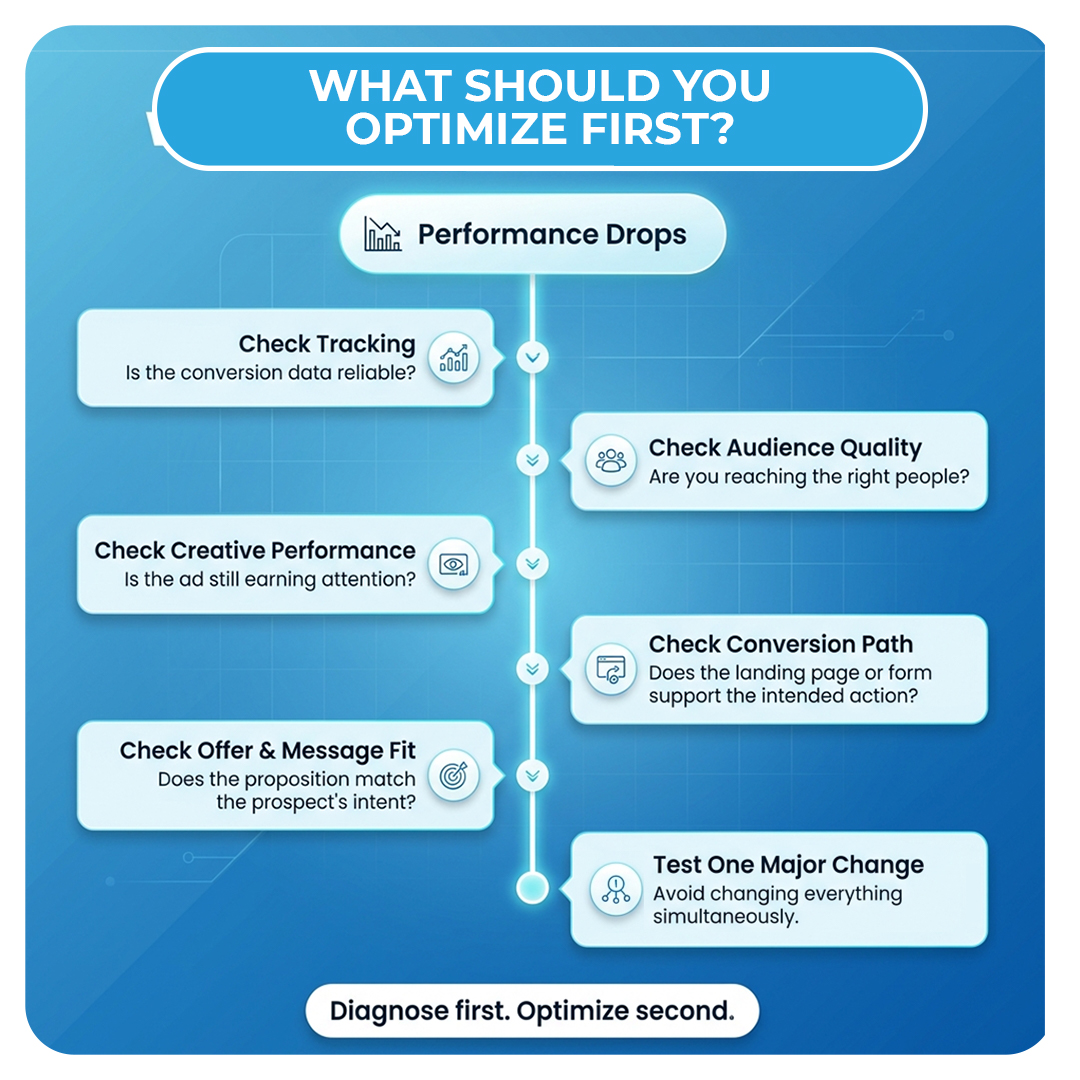
When a Facebook Ads campaign spends consistently but fails to produce conversions, the answer is diagnosis before optimization. Agencies need to identify where the conversion funnel is breaking before changing the campaign.
A client campaign may be spending, generating impressions and clicks, yet producing few conversions. The instinct is often to swap the creative, increase the budget, or pause the campaign. But these actions may not address the actual problem.
For example, changing the creative will not fix a landing page that fails to convert. Increasing the budget will not solve poor audience quality. Pausing the campaign will not correct inaccurate conversion tracking.
The funnel should be evaluated stage by stage:
Ad → Click → Landing Page → Lead → Qualified Lead → Customer
Each stage can create a different bottleneck, so agencies should use the data to identify the problem before deciding what to change.
WordStream's 2025 benchmark data found that Facebook lead campaigns averaged a 7.72% conversion rate, $27.66 cost per lead, and 2.59% CTR. These figures provide useful directional context, but they should not be treated as universal targets. Performance varies by industry, campaign objective, offer, audience, conversion event, and funnel structure.
The key principle is simple: find the stage causing the problem, verify the data, and make targeted changes based on evidence rather than pressure.
Why Facebook Ads Spend Without Producing Conversions?
Spending without conversions does not automatically mean a Facebook Ads campaign is failing. It means something in the path from impression to outcome isn't working as expected. There are several distinct reasons a campaign may continue spending without generating meaningful results:
- Ads are attracting attention but not purchase intent
- Audience targeting does not match the offer
- Ad messaging and landing page messaging are not aligned
- Conversion tracking is incorrectly configured
- The campaign is optimizing toward an action that does not represent business value
- The offer is not compelling enough to drive action
- Leads are being generated but are not qualified
- The campaign does not yet have enough meaningful data to exit the learning phase
Traffic Problem vs. Conversion Problem
One of the most important distinctions an agency can make early in the diagnostic process is whether the campaign has a traffic problem or a conversion problem. These require completely different responses.
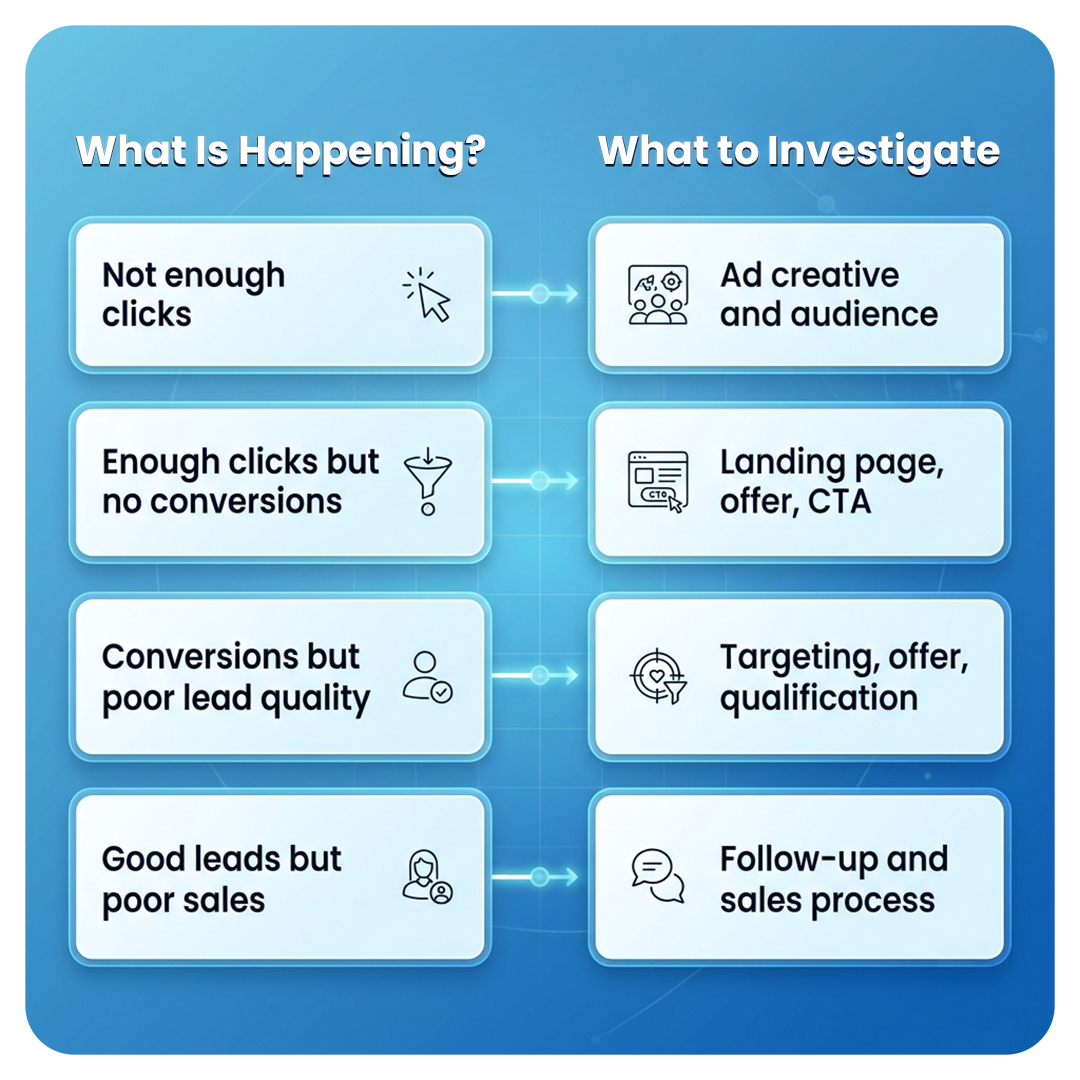
This framework prevents agencies from automatically blaming creative performance when the real issue sits downstream. A technically solid ad can feed a broken funnel. The table above is the starting point for every underperforming account review.
Don't treat every conversion problem as an ad problem. First, identify where the funnel is breaking.
Diagnose Where the Conversion Funnel Is Breaking
Before making any meaningful campaign changes, agencies should audit each stage of the funnel in sequence.
Ad → Click → Landing Page → Lead → Qualified Lead → Customer
Reviewing each stage individually allows agencies to isolate the bottleneck rather than changing multiple variables at once.
1. Ad to Click
The first question is whether the ad is generating meaningful engagement from the intended audience. If click-through rates are weak, the issue likely sits at the ad level.
Review the following:
- CTR relative to industry and objective benchmarks
- Creative engagement (video views, hook retention, interaction rate)
- Message relevance to the audience being targeted
- Audience alignment with the offer
- Hook strength within the first three seconds for video, or the opening line for static ads
According to WordStream's 2025 benchmark data, Facebook lead campaigns averaged a 2.59% CTR, while traffic campaigns averaged 1.71% CTR. These figures provide useful context for evaluating whether an ad is generating expected engagement, but they should not function as hard pass/fail thresholds. Account for the specific industry, objective, and audience before drawing conclusions.
2. Click to Landing Page
If clicks are arriving but conversions remain weak, the post-click experience is likely the problem. Review:
- Message match between the ad and the landing page
- Page load speed, particularly on mobile
- Mobile usability and responsive layout
- CTA visibility and placement
- Form friction and length
- Offer consistency between the ad and the page
- Trust signals such as reviews, credentials, and guarantees
An ad can generate strong engagement, but the landing page can prevent users from completing the desired action. Both elements need to work together.
3. Landing Page to Lead
A high click volume has limited value if visitors are not taking the intended action. At this stage, evaluate:
- Overall conversion rate on the landing page
- Form completion rate
- CTA engagement
- Offer strength and specificity
- Whether the form is asking for more information than necessary
- Trust elements that reduce hesitation
If the page is receiving traffic but not generating completions, the friction exists somewhere between the user arriving and the user submitting.
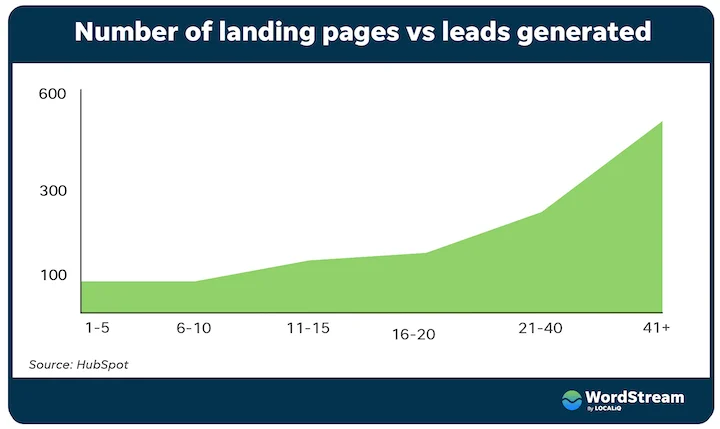
Image Source: WordStream
4. Lead to Qualified Lead
Cost-per-lead alone creates a misleading picture of campaign performance. Agencies need to look beyond volume and evaluate quality. Review:
- Lead qualification rate
- Lead source and how it correlates to quality
- Lead-to-opportunity rate
- Service area alignment
- Whether leads match the client's customer profile
- Direct client feedback on lead relevance
Ten inexpensive leads are not necessarily better than three qualified leads that have a realistic chance of becoming customers. CPL is a useful metric, but it is not the endpoint of the analysis.
5. Qualified Lead to Customer
If qualified leads are reaching the client but sales remain weak, the Facebook campaign may not be the primary problem. At this stage, investigate:
- Speed-to-lead (how quickly the client follows up)
- Follow-up process and consistency
- Sales qualification approach
- Appointment attendance rates
- Close rate by lead source
This is where the agency conversation often needs to shift from campaign performance to the client's sales process.
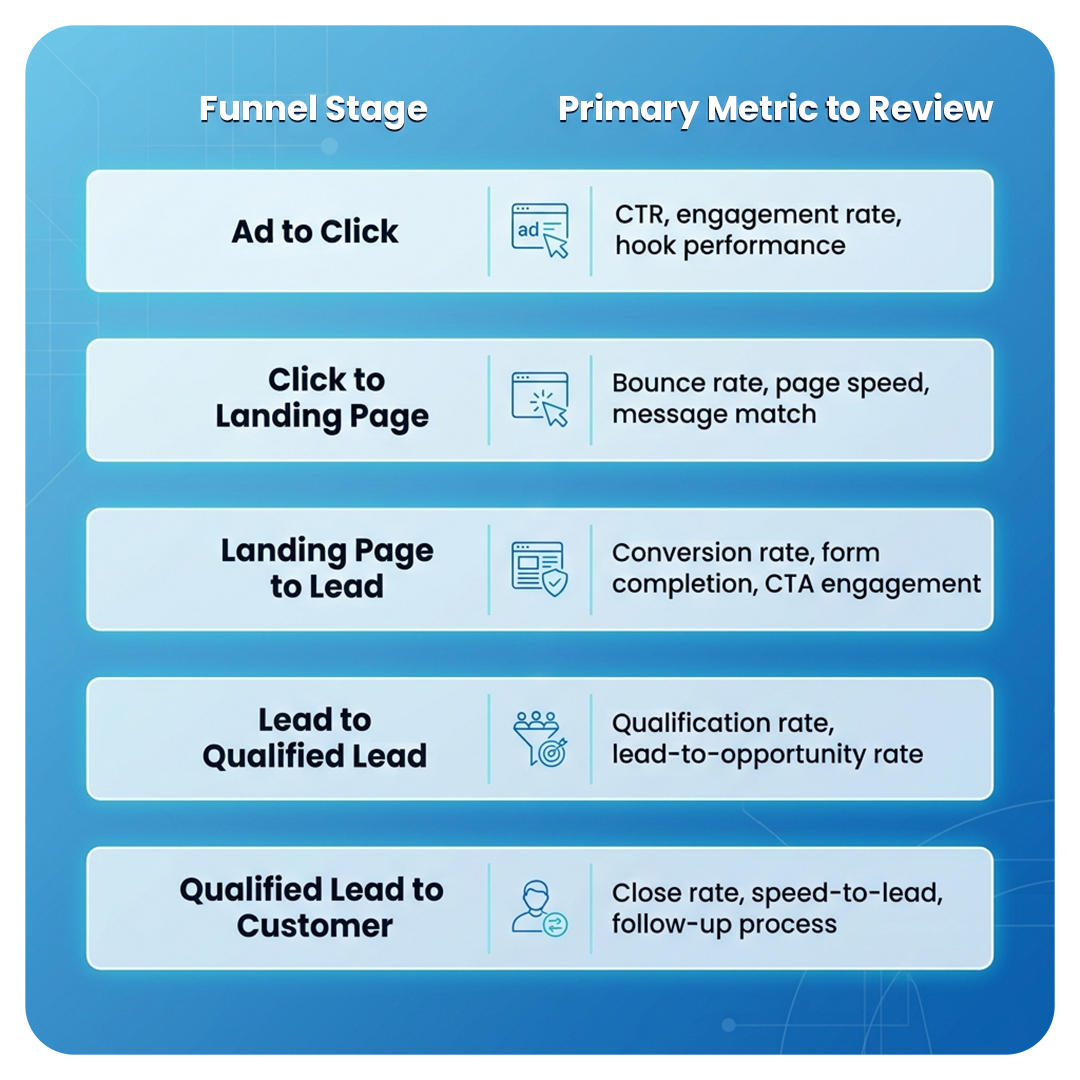
Check the Data Before Changing the Campaign
Diagnosis is only useful if the underlying data is accurate. Before acting on any platform metrics, agencies should confirm that what they are seeing is reliable.
1. Verify Conversion Tracking
Unreliable tracking means unreliable optimization signals. Check:
- Meta Pixel implementation and correct page placement
- Conversion events and whether they reflect real business actions
- Event configuration for accuracy
- Deduplication where server-side and browser-side events overlap
- CRM data versus platform-reported conversions
- Website analytics data as a cross-reference
- Whether the reported conversion event represents a meaningful business outcome
Meta's Conversions API can create a more reliable connection between marketing data and Meta's systems, and it supports measurement across different customer touchpoints. It does not resolve every measurement discrepancy, but it strengthens data quality when implemented correctly alongside the Pixel.
2. Compare Platform Data With Business Data
Platform metrics and business results need to be reviewed together. Pull the full picture:
- Clicks, CTR, CPC, and impressions from Meta
- Leads reported in Meta versus leads recorded in the CRM
- Qualified opportunities from the client
- Appointments scheduled and attended
- Sales closed and revenue generated where available
Discrepancies between platform data and business data often reveal tracking gaps or lead quality issues that wouldn't be visible from Meta Ads Manager alone.
3. Avoid Overreacting to Short-Term Fluctuations
A few weak days do not automatically justify a campaign restructure. Before making significant changes, look for:
- Meaningful trends across a relevant time period
- Sufficient data volume to identify a pattern
- Consistent changes in conversion behavior
- External factors that may have influenced short-term results
Agencies that restructure campaigns based on two or three days of data often introduce new variables before the previous change has had time to produce reliable signals.
4. Use the Right KPI
Low CPC does not automatically equal campaign success. For lead generation, the progression that matters is:
Cost-per-lead → Cost-per-qualified-lead → Opportunity-rate → Customer-acquisition-cost → Revenue
Optimizing toward cost per lead without accounting for lead quality can drive down CPL while reducing the number of leads that actually convert into customers.
Fix the Problem Based on What the Data Shows
Once the bottleneck is identified and tracking is confirmed, the response should be targeted and specific to the diagnosed issue.
If the Problem Is the Audience
Review:
- Audience relevance to the offer
- Targeting structure and segmentation
- Exclusions to filter out irrelevant traffic
- Geographic targeting accuracy
- Retargeting setup and audience overlap
- Lead quality by audience segment
If the Problem Is the Ad
Review:
- Hook strength within the first moment of engagement
- Creative format and whether it suits the placement
- Messaging clarity and offer positioning
- CTA relevance and specificity
- Signs of creative fatigue in frequency and engagement trends
- Whether the message aligns with the audience's actual interests
Do not recommend creative changes simply because conversion volume is low. First confirm that the ad is the actual bottleneck. Changing creative when the landing page is the problem wastes time and removes potentially useful ad data from the account.
If the Problem Is the Offer
Review:
- Clarity and specificity of the value proposition
- Whether the offer is compelling to the target audience
- Friction in the process of claiming the offer
- Urgency or lack thereof
- Alignment between the offer and the audience's needs
If the Problem Is the Landing Page
Review:
- Message match between the ad and the page
- Page speed on mobile
- Mobile layout and usability
- Form length relative to what the offer justifies
- CTA placement and visibility
- Trust signals and social proof
- Distractions that pull attention away from the conversion action
If the Problem Is Lead Quality
Ask:
- Are leads located within the client's service area?
- Do they match the client's ideal customer profile?
- Are they requesting the correct service or product?
- Are they reachable after submission?
- Are they converting to appointments?
- Are they becoming qualified opportunities?
Fix the stage causing the bottleneck, not the campaign as a whole.
Know When to Optimize, Wait, or Rebuild
Not every underperforming campaign requires the same response. Agencies need a clear decision framework.
Optimize When
- The campaign is generating useful signals from sufficient data
- The bottleneck is isolated to a specific funnel stage
- Conversion tracking is reliable
- There is enough data to identify a consistent pattern
- A targeted change could address the identified problem
Wait When
- Tracking is unreliable, and optimization signals cannot be trusted
- Spend continues without generating any meaningful data
- The audience is clearly misaligned with the offer
- The offer is fundamentally unsuitable for the platform or audience
- A structural issue is preventing the campaign from learning
Rebuild When
- The campaign objective does not match the business goal
- The audience is fundamentally wrong for the offer
- The offer has changed significantly since launch
- The conversion event is incorrect or misaligned with what the client values
- Multiple campaign components are failing at the same time
When a rebuild is the right call, don't change everything simultaneously. If the agency changes audience, creative, landing page, offer, and campaign structure all at once, it becomes impossible to determine which change actually moved the needle. Isolate variables where possible, even during a significant restructure.
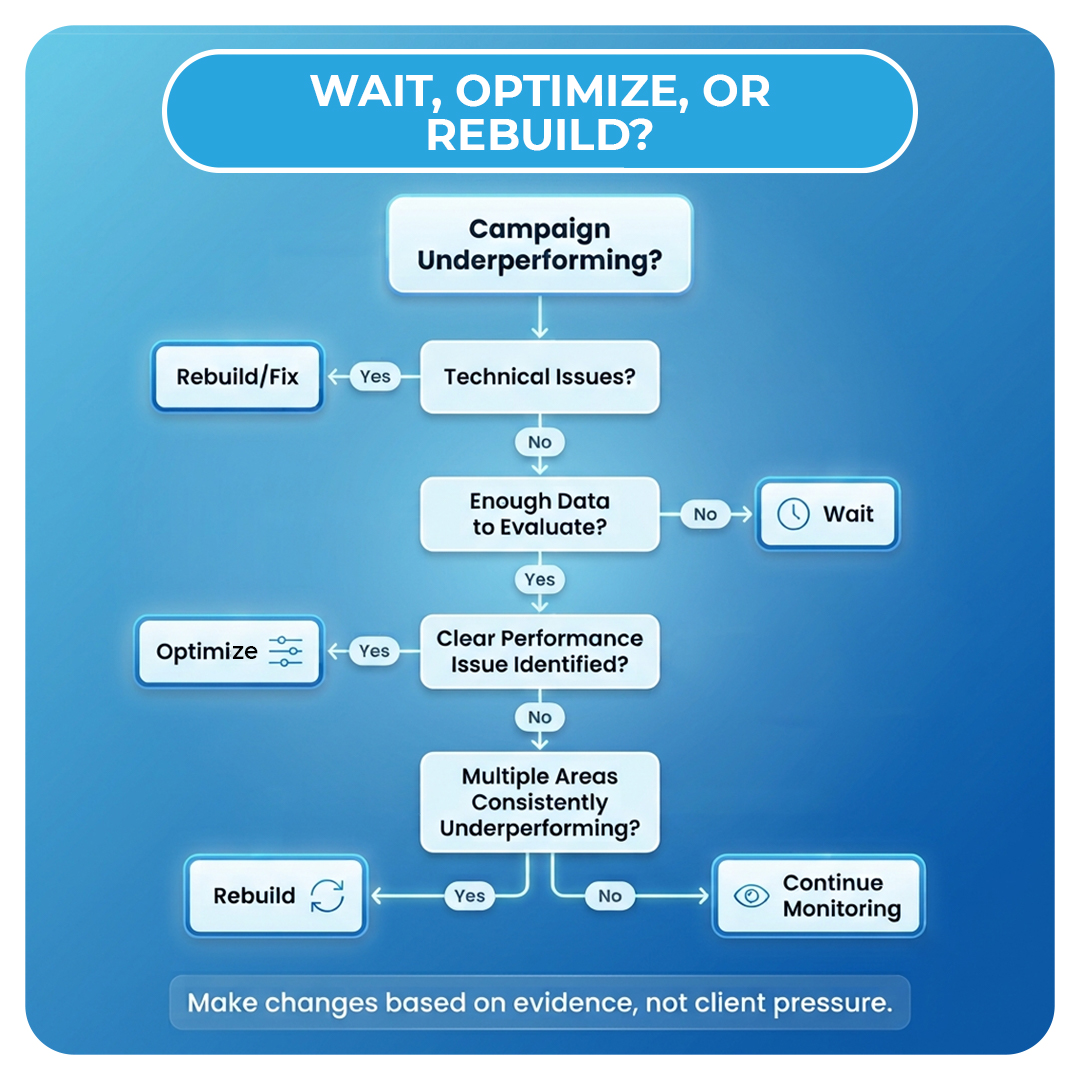
Create a Repeatable Recovery Process for Client Campaigns
Moving from troubleshooting one account to running a consistent process across many accounts requires a structured approach. Agencies that treat every struggling campaign as a unique problem spend more time per account and produce less consistent results.
The six-step recovery framework:
- Diagnose: Identify which stage of the funnel is underperforming using the Ad to Customer framework.
- Verify: Confirm tracking accuracy and data quality before drawing conclusions from platform metrics.
- Prioritize: Determine which issue is most likely causing the largest impact on results.
- Fix: Make the smallest meaningful change that directly addresses the diagnosed issue.
- Monitor: Allow enough time and data to accumulate before evaluating the impact of the change.
- Report: Communicate clearly with the client, covering what happened, what the data showed, what was changed, why it was changed, and what will be monitored going forward.
Build an Internal Campaign Recovery Checklist
Standardizing the recovery process allows account teams to move faster without missing steps. Include:
- Scheduled performance review cadence
- Tracking QA at account setup and ongoing
- Funnel-stage analysis template
- Documentation of optimizations and rationale
- Structured creative testing process
- Lead quality review process with the client
- Client communication standards for performance conversations
When the process is consistent, struggling accounts don't become completely custom troubleshooting projects. The framework applies, the steps are followed, and the agency can move faster at scale.
How DashClicks' White Label Facebook Ads Help Agencies Scale Fulfillment?
Agencies managing multiple client accounts need more than a good diagnostic process. They need consistent execution capacity. Building a full internal paid-media team to support growth is expensive and time-consuming. White label Facebook ads fulfillment is how many agencies add structured execution support without expanding headcount at the same pace as revenue.
- Specialist Execution: DashClicks provides support for campaign setup, optimization, and ongoing account management without requiring agencies to expand their internal team.
- Structured Campaign Workflow: A defined fulfillment process helps ensure important steps, from setup and quality checks to launch and maintenance, are completed consistently.
- Ongoing Optimization Visibility: Agencies receive visibility into campaign performance, optimization activity, and account progress while remaining focused on client strategy.
- White Label Client Experience: Fulfillment operates behind the agency's brand, allowing the agency to retain ownership of client communication and relationships.
- Scalable Fulfillment: As campaign volume grows, agencies can access additional execution capacity without creating internal resource bottlenecks.
Diagnose First. Then Optimize.
Spending without conversions is a symptom, not a diagnosis. The cause could sit at the ad level, on the landing page, in lead quality, in the follow-up process, or in how the campaign is tracking results in the first place.
Agencies that move straight to optimization without identifying the bottleneck often make changes that don't address the actual problem. Verifying tracking accuracy, mapping the full funnel, and making targeted changes based on what the data shows produces more consistent results than a reactive creative swap or budget adjustment.
Building a standardized recovery process across accounts, supported by reliable fulfillment when internal resources are stretched, is what allows agencies to manage performance at scale without every struggling campaign consuming a disproportionate share of the team's time.
The best Facebook Ads optimization decisions don't start with "What should we change?" They start with "Where is the funnel breaking, and what does the data actually tell us?"

How Agencies Use White Label SEO to Absorb Unexpected Client Work?
Agencies rarely get to work in ideal conditions. Monthly SEO deliverables are planned, specialists are assigned to specific accounts, tasks are scheduled, and deadlines are set. Then a client calls.
Maybe they just launched a new service page that needs optimising. Maybe they noticed a sharp traffic drop over the weekend and want answers. Maybe they have 20 new location pages that need to go live next week, or they have discovered an indexing issue that has gone unnoticed for months.
One unexpected request is manageable. Three or four arriving at the same time, across different accounts, during a week when the internal team is already at capacity, is a different problem entirely. At that point, the question is not whether the agency can complete the work. It is whether completing the work will require moving existing tasks, delaying other client deliverables, or asking specialists to absorb hours they do not have.
White label SEO fulfillment provides a practical answer to this problem. Instead of pulling internal specialists away from committed work, agencies can route additional execution through a fulfillment partner while keeping existing roadmaps intact.
Scalable agencies do not avoid unexpected work. They build enough fulfillment flexibility to absorb it without compromising existing commitments.
Why Unexpected Client Work Disrupts SEO Delivery?
Unexpected requests create disproportionate operational pressure because they arrive outside of any planned schedule. The issue is not the request itself but the fact that internal capacity has already been allocated elsewhere.
Several operational factors can turn one additional request into a much larger scheduling problem.
Recurring SEO work requires careful planning to understand why this creates pressure in the first place. Monthly deliverables typically cover a defined set of activities.
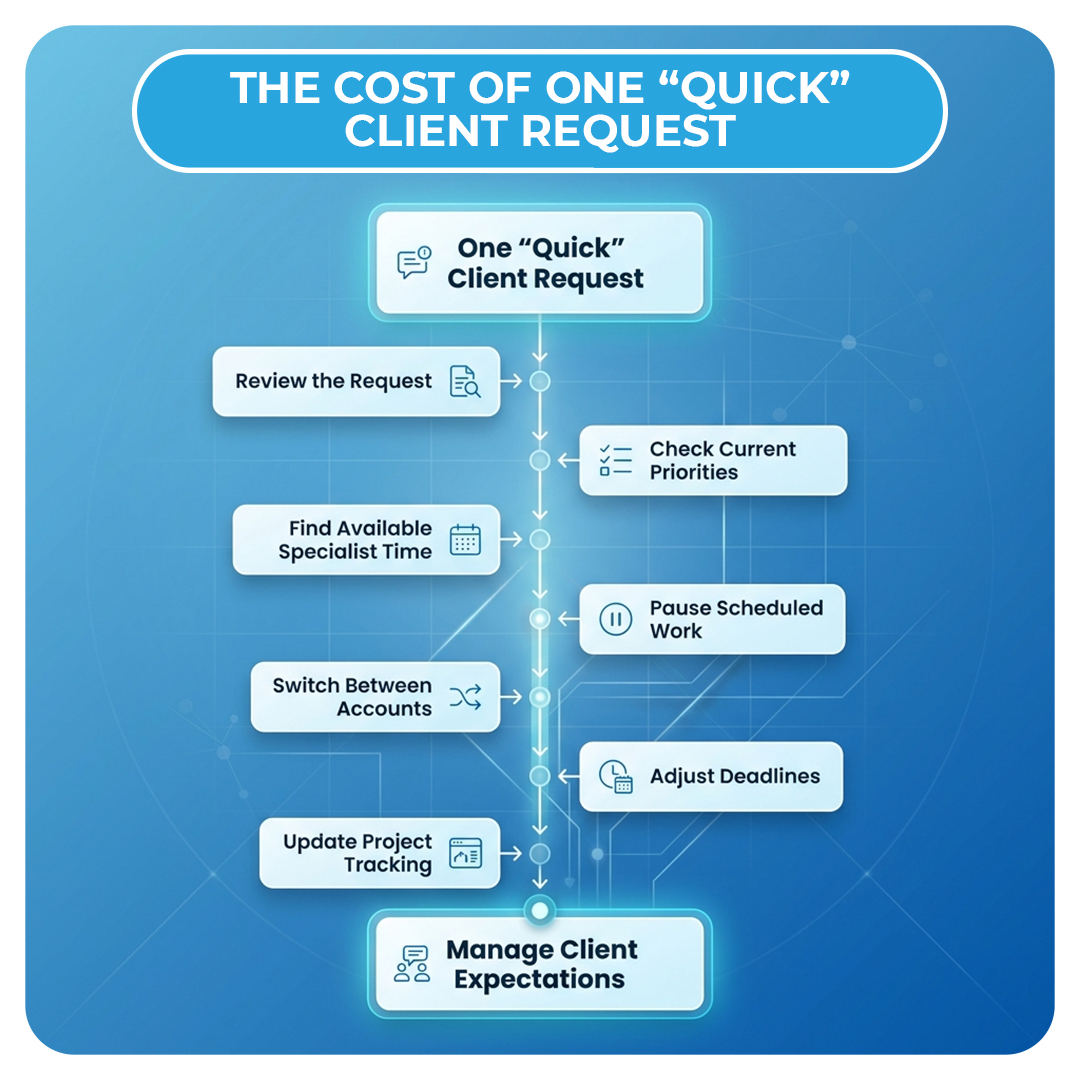
1. Monthly SEO Work Is Already Planned
Most agency SEO engagements involve recurring deliverables that are scoped and scheduled in advance. These might include technical optimisation, content production, on-page improvements, link building, local SEO work, and monthly reporting.
Each of these tasks consumes a defined amount of specialist time. When that time is already accounted for across multiple clients, there is little room to absorb additional execution without something else being delayed.
When the team is stretched across many accounts, even a small addition becomes complicated.
2. Specialists Often Manage Multiple Accounts
SEO specialists in agency environments are rarely assigned to a single client. Most manage several accounts simultaneously, which means their monthly capacity is already distributed across competing priorities.
Databox research of 241 eligible agency respondents found that more than half managed 10 to 30 clients, while 17.8% managed 31 to 50 clients. While every agency operates differently, this illustrates the scale of workload that many teams are already managing. Adding one more task to a specialist who is balancing 15 accounts is not always straightforward.
Beyond workload volume, the act of switching between unrelated tasks introduces its own inefficiencies.
3. Unexpected Requests Create Context Switching
When a specialist needs to stop planned work and investigate an unrelated client issue, they must mentally shift context entirely. They may need to review a different website, analyse an unfamiliar account, communicate initial findings, and then return to the original task later.
This kind of context switching reduces workflow efficiency. The time lost is not always obvious, but across a team, it can add up quickly.
Compounding this is the fact that delays in SEO work rarely stay contained.
4. Delays Can Affect Other Deliverables
SEO has natural dependencies. A keyword research delay can push back a content brief, which delays content creation, which delays on-page optimisation, which delays publishing and internal linking updates, all of which affect what can be reported at the end of the month.
Disrupting one task mid-cycle can shift multiple downstream deliverables.
When deliverables slip, the impact moves beyond the SEO team.
5. Account Managers May Need to Renegotiate Timelines
Unexpected work does not only affect specialists. Account managers may need to reprioritise deliverables, explain delays to clients, adjust timelines, and manage expectations across several accounts simultaneously.
The challenge is not simply completing an extra task. It is completing it without creating a domino effect across the agency's existing client workload.
Determine What Work Actually Needs to Be Absorbed
Not every unexpected client request requires an immediate response. Before routing work through additional fulfillment capacity or reallocating internal resources, agencies should assess whether the request is genuinely urgent, important but schedulable, or something that can wait.
This triage step is often skipped under time pressure, but it is one of the most useful things an agency can do to protect its delivery model.
Some SEO issues do require immediate attention, and understanding which ones they are helps avoid unnecessary disruption.
1. Urgent SEO Work
Certain issues have the potential to cause meaningful harm if left unaddressed. These typically include major indexing problems, critical technical errors, site migration issues, significant organic traffic drops, broken redirects, and anything affecting crawlability or site accessibility.
Google Search Central guidance acknowledges that significant site changes, including migrations, can cause temporary ranking fluctuations while Google recrawls and reindexes affected pages. This reinforces why certain technical issues warrant prompt investigation rather than being added to the next available planning cycle.
Other requests are genuinely important but carry less time pressure.
2. Important but Schedulable Work
Not every request classified as "urgent" by a client is operationally urgent from an SEO standpoint. New service page optimisation, content refreshes, additional keyword research, new location optimisation, and internal linking improvements are all valuable tasks. They can usually be given a defined place in the existing roadmap without requiring an immediate interruption.
Scheduling these properly is better than rushing them.
Some requests carry even less urgency.
3. Non-Urgent Requests
Minor on-page recommendations, future content ideas, cosmetic page changes, and low-impact improvements can often wait until the next planned cycle. Telling a client "we will include this in next month's roadmap" is not the same as saying no. It is managing scope and protecting the quality of delivery across all accounts.
White Label SEO Is Not a Reason to Say Yes to Everything?
Access to white label SEO outsourcing does not mean every incoming request should be automatically accepted and routed to fulfillment. The goal is to use additional capacity selectively: for work that is important enough to require action but cannot be absorbed internally without disrupting committed deliverables.
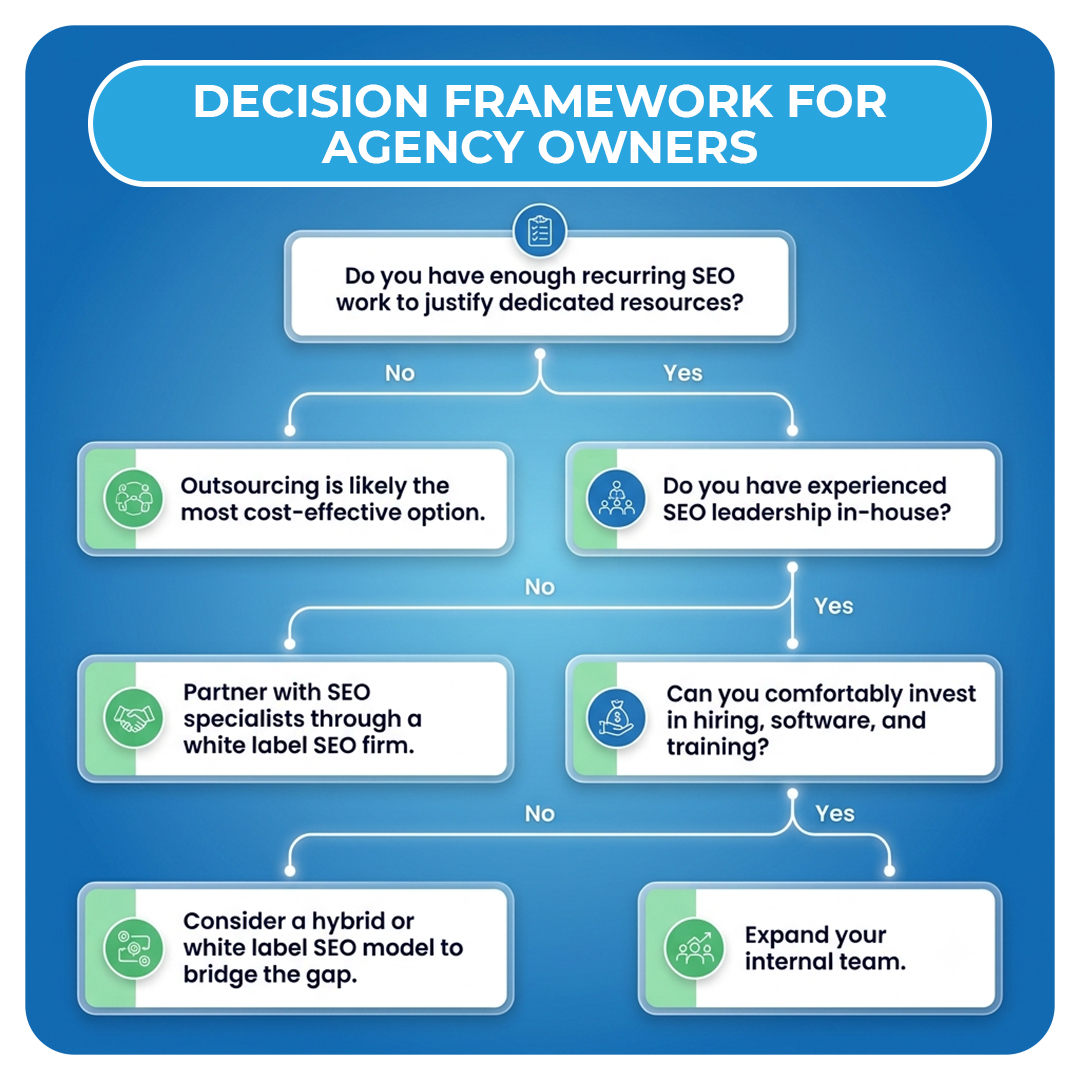
How White Label SEO Gives Agencies Extra Fulfillment Capacity?
This is where white label SEO changes the agency's operating model. Rather than treating internal capacity as a fixed ceiling, agencies that work with a white label SEO firm gain an additional execution layer they can draw on when demand exceeds what the internal team can absorb.
The difference between these two models is straightforward.
Without additional fulfillment capacity, the process typically looks like this: an unexpected request arrives, the internal team reprioritises, existing work gets delayed, and monthly deliverables become compressed. Specialists are pulled between tasks, account managers manage fallout, and client satisfaction can suffer.
The white label model changes this dynamic.
With White Label SEO Fulfillment
When white label SEO outsourcing is available, the process shifts. An unexpected request arrives, the agency assesses its priority, the additional work is routed to the fulfillment partner, and the existing roadmap remains protected. The internal team continues executing committed deliverables without interruption.
This additional layer applies across several types of SEO work.
Technical SEO is one area where fulfillment support adds clear value.
Technical SEO and Implementation
When internal specialists are already committed to planned work, technical SEO tasks including audits, implementation, structured data, redirect management, and crawlability fixes can be handled through fulfillment. This is particularly useful when a client's technical issue requires immediate investigation but no internal bandwidth is available.
Content and on-page work is another area where fulfillment capacity helps.
Content and On-Page Optimisation
Additional fulfillment support can cover content creation, content optimisation, metadata updates, on-page improvements, and internal linking. These are often the tasks most vulnerable to delay when specialists are pulled toward urgent technical issues.
Local SEO represents a distinct category of fulfillment need.
Local SEO
For agencies managing clients with multiple locations, unexpected local SEO requests can arrive frequently. Fulfillment support can assist with Google Business Profile work, citation management, and location page optimisation, particularly when a client launches new locations or requires updates across existing ones.
Research and audit work is also something that can be handled through white label SEO services.
SEO Research and Audits
Keyword research, competitor analysis, SEO audits, and opportunity analysis all require specialist time. When internal capacity is already committed, routing this work through a fulfillment partner ensures it gets completed without displacing planned deliverables.
DashClicks is one example of a white label SEO agency fulfillment model designed to address this kind of capacity challenge.
DashClicks as a Fulfillment Example
DashClicks provides white label SEO services through dedicated fulfillment specialists working to documented SOPs. Agencies can use DashClicks to handle SEO execution under their own brand, access white label reporting, and give clients visibility through a client dashboard.
The practical value here is not the feature list. It is that agencies can scale their SEO delivery capabilities without immediately adding full-time employees. When a month brings more work than usual, the fulfillment layer absorbs the overflow. When workload normalises, the agency is not carrying additional headcount it no longer needs.
White label SEO gives agencies another layer of fulfillment capacity when the internal team is already committed.
How Agencies Can Use White Label SEO Without Losing Control
One concern agencies often raise about outsourcing execution is whether it creates distance between the agency and the client. Done correctly, it does not. A well-structured white label SEO model separates execution from ownership. The agency remains fully in control of the client relationship.
Understanding where those boundaries sit is important for any agency considering this model.
The Agency Owns the Client Relationship
The agency should remain responsible for client communication, strategy, prioritisation, scope decisions, approvals, quality control, and all client-facing recommendations. These are the functions that define the agency's relationship with its clients. They should not be delegated to a fulfillment partner.
The fulfillment partner's role is fundamentally different.
The Fulfillment Partner Handles Execution
A fulfillment partner executes agreed SEO tasks, handles specialist implementation, produces documentation, supports reporting, and delivers recurring fulfillment work. Critically, this execution happens against the agency's direction. The partner is not redefining client strategy or communicating independently with clients.
A clear workflow keeps both sides aligned.
Use a Clear Workflow
A structured process protects both the agency and the client outcome. The workflow should move through these stages: client request received, agency assessment, scope and priority check, fulfillment assignment, SEO execution, quality assurance, agency review, and client delivery.
Each stage has a defined owner. The agency manages everything the client sees. The fulfillment partner manages everything behind the scenes.
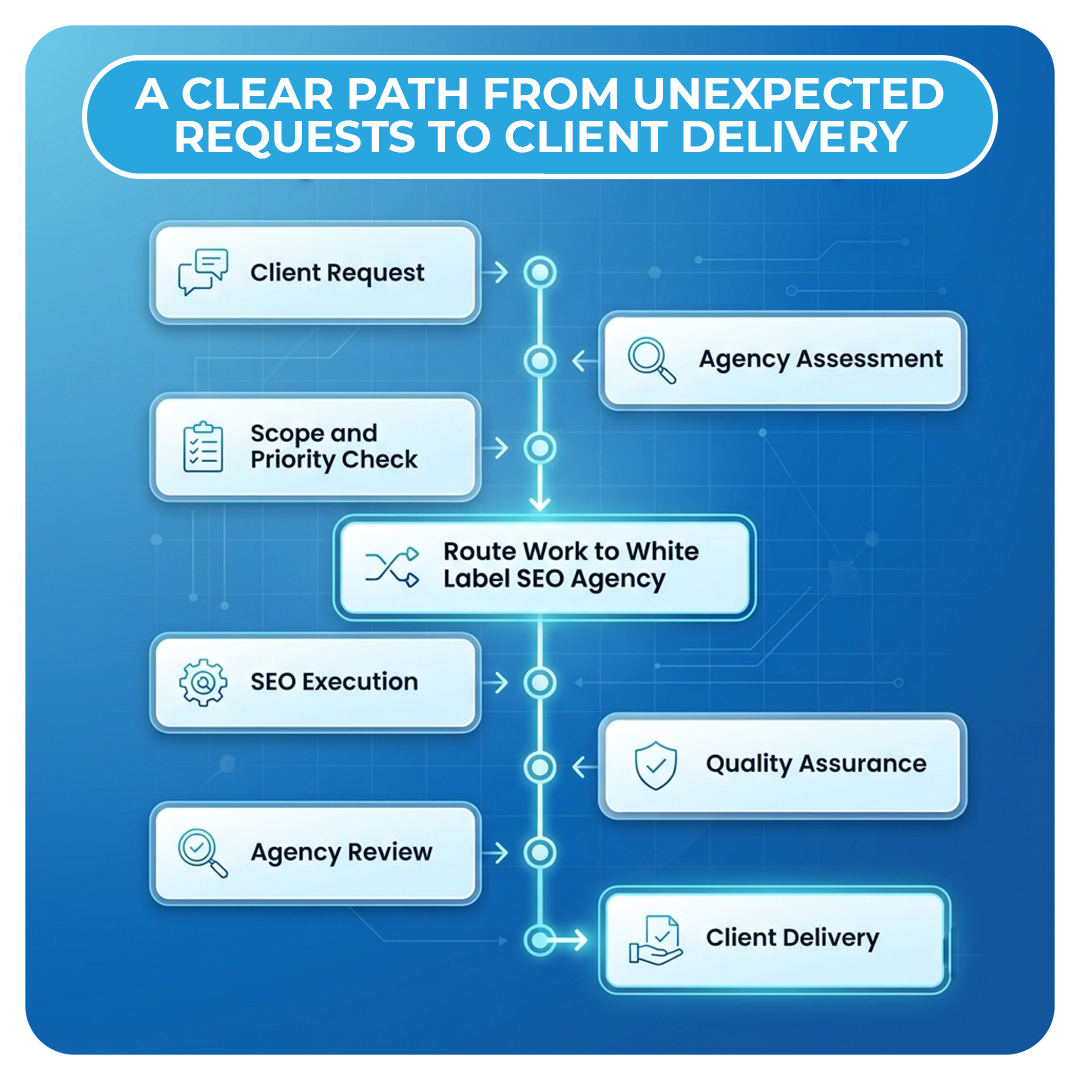
Data supports why client communication should stay with the agency throughout this process. Databox research found that 73.03% of agencies determine KPIs collaboratively with clients. This reinforces why goal-setting, priority decisions, and client expectations should remain the agency's responsibility, even when execution is handled externally.
DashClicks supports this model through SOP-driven fulfillment, white label reporting, and a client dashboard that gives agencies visibility over delivery without exposing the fulfillment relationship to the client.
How White Label SEO Helps Agencies Handle Workload Spikes
Demand rarely arrives at a predictable pace. A single week can bring multiple unexpected requests from different clients, and when that happens, the pressure on internal teams compounds quickly.
Consider this example. An agency receives four unexpected requirements in the same week: Client A needs a technical SEO fix, Client B has just launched a new service, Client C requests 20 new location pages, and Client D needs additional content produced. The internal team might reasonably absorb one or two of these. Absorbing all four while keeping existing monthly deliverables on schedule is a different challenge entirely.
White label SEO fulfillment helps agencies manage these periods in several ways.
Temporary spikes in demand are one of the clearest use cases for additional fulfillment capacity.
Absorbs Temporary Workload Increases
When multiple unexpected requests arrive simultaneously, white label SEO services can provide the additional execution capacity needed to handle the overflow without permanently expanding the internal team.
Certain periods predictably generate higher demand.
Supports Busy Months
Seasonal campaigns, new client onboarding, large project launches, website redesigns, and employee absences can all create short-term capacity gaps. Having a fulfillment resource available during these periods means the agency is not choosing between new work and existing commitments.
Protecting the existing roadmap is often as important as completing new work.
Protects Existing Monthly Deliverables
When additional work is routed through fulfillment, internal specialists can continue executing committed deliverables without interruption. This reduces the risk of delays cascading across client accounts.
Not every unexpected request requires the same skill set.
Provides Specialist Capacity
Some requests require specific expertise that may not be available internally at the right moment. White label SEO fulfillment can provide access to specialists in technical SEO, local SEO, content, or research without requiring the agency to hire for a short-term need.
One note of caution: workload management should always be anchored to realistic timelines. White label SEO agency fulfillment provides additional capacity, but it does not mean every unexpected request can be completed immediately. Agencies should communicate honest timelines to clients regardless of where the work is being executed.
The Databox research showing that many agencies manage portfolios of 10 to 50 clients illustrates why flexible fulfillment becomes increasingly useful as client volume grows. Managing that volume sustainably requires more than good intentions.
DashClicks can function as a fulfillment resource during these peaks, providing agencies with scalable SEO services when internal demand temporarily exceeds what the team can absorb.
Turn Unexpected Requests Into a Scalable SEO Delivery System
The strongest agencies do not simply react to unexpected work. Over time, they identify patterns in the unexpected requests they receive and build processes around them. What starts as a disruption can eventually become a standard service.
The foundation of this approach is an organised triage process.
Establish an Unexpected-Work Triage Process
Agencies should classify incoming requests based on urgency, business impact, technical risk, required effort, and existing commitments before acting. This prevents reactive decisions and ensures that fulfillment capacity is used where it actually matters.
Keeping internal capacity at sustainable levels is equally important.
Maintain a Fulfillment Capacity Buffer
Agencies that plan internal capacity at 100% utilisation have no room to absorb anything unexpected. A modest buffer, even 10 to 15% of available specialist time, creates space to handle legitimate requests without immediately disrupting planned deliverables.
Repeated unexpected requests often signal an opportunity.
Create SOPs for Recurring Requests
When the same type of request keeps appearing across multiple clients, the agency should consider converting it into a defined process with documented steps. This reduces the time spent figuring out how to handle it each time it arrives.
Tracking patterns over time reveals where those opportunities are.
Track Which Requests Keep Appearing
If the same type of request appears repeatedly across different accounts, it may indicate an unmet client need that the agency could formalise into a service offering.
Turning that insight into a defined service creates predictable, scalable delivery.
Create Add-On Services
For example, if clients regularly ask for new pages to be optimised as they launch, the agency could create a defined New-Page SEO Optimisation Service with a standard process, fixed scope, and a clear fulfillment path. The result is a predictable delivery model: standard service, defined process, white label fulfillment, reliable output.
DashClicks can serve as the fulfillment infrastructure behind this kind of service expansion, allowing agencies to grow their SEO delivery capabilities without building every specialist function internally.
The real value of white label SEO is not just handling emergencies. It is giving agencies a scalable fulfillment system that can flex with client demand.
Build Flexibility Into Your SEO Fulfillment Model
Unexpected SEO requests are a normal part of agency life. The question is not whether they will arrive but whether the agency has the operational flexibility to handle them without disrupting everything else.
Growing agencies cannot continually interrupt planned work every time a client makes an unscheduled request. Not every request requires immediate action, and triage should always come before fulfillment. Agencies that assess urgency, scope, effort, and capacity before committing will make better decisions about when to use additional resources.
White label SEO outsourcing provides that additional execution layer when the internal team is already committed. Used well, it can help agencies protect monthly deliverables, reduce workload pressure on internal specialists, handle temporary spikes in demand, support more client needs without sacrificing quality, and expand service capacity without immediately growing headcount.
The agencies best equipped for growth are not those that never encounter unexpected client work. They are the ones with the fulfillment infrastructure to absorb it without letting one new request disrupt everything else.

No results found.
Please try different keywords.
Get Started with
DashClicks Today
Get found online, convert leads faster, generate more revenue, and improve your reputation with our all-in-one platform.
.svg)
Unlimited Sub-Accounts
Unlimited Users
All Apps
All Features
White-Labeled
Active Community
Mobile App
Live Support
100+ Tutorials
Unlimited Sub-Accounts
Unlimited Users
All Apps
All Features
White-Labeled
Active Community
Mobile App
Live Support
100+ Tutorials
Unlimited Sub-Accounts
Unlimited Users
All Apps
All Features
White-Labeled
Active Community
Mobile App
Live Support
100+ Tutorials


