

.svg)

.svg)
.svg)
.svg)
.svg)
.svg)
Search behavior has changed how businesses grow. Today, organic search drives about 53% of all website traffic, according to BrightEdge. Another BrightEdge study reports that 68 percent of online experiences begin with a search engine. That means most buying journeys start with a query typed into Google.
For agencies, this creates both opportunity and pressure. Clients expect measurable growth from search. They want rankings, traffic, leads, and revenue. At the same time, agencies face hiring costs, talent shortages, fulfillment bottlenecks, and the constant challenge of maintaining quality at scale.
Many firms turn to white label SEO services to expand capacity. It makes sense. Outsourcing execution can help an agency take on more clients without building a large in-house team. But there is a common mistake: outsourcing tasks without building a clear, client-facing roadmap.
Without structure, agencies risk:
- Client confusion about what is being done
- Unrealistic ranking expectations
- Profit margins are shrinking over time
- Brand authority weakening
The agencies that scale sustainably are not just outsourcing execution. They are building a structured, client-facing SEO roadmap while strategically integrating a white label SEO agency behind the scenes. They keep control of strategy, communication, and brand positioning.
The real struggle is not outsourcing. It is packaging and communicating SEO in a way that clients understand and trust.
Why Most SEO Roadmaps Fail?
Before you can design a roadmap that inspires confidence and delivers results, you have to understand why so many fall apart. The issue is rarely effort. It is rarely even a capability. Most failures come down to structure, communication, and managing client expectations.
SEO is long-term by nature. But many agencies package it like a short-term service. That disconnect creates frustration on both sides.
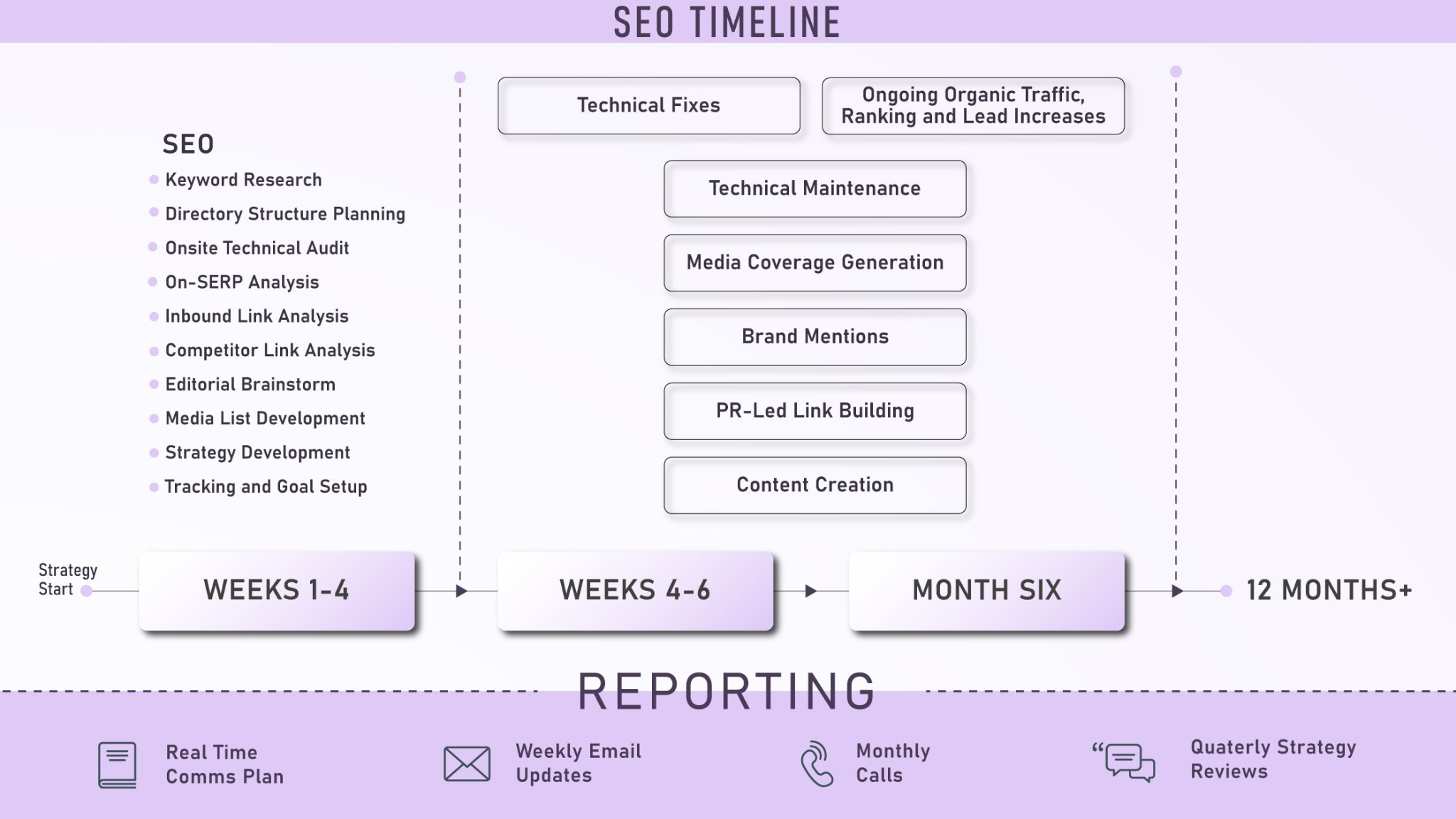
1. Selling “Monthly SEO” Instead of Strategic Milestones
A common pattern in the industry is selling SEO as a flat monthly retainer with a checklist of deliverables. The proposal often sounds like this:
- “10 backlinks per month”
- “4 blog posts”
- “On-page optimization”
- “Technical fixes”
On the surface, that feels concrete. Clients see activity. Agencies show output. But what is missing is progression.
There is no phased plan. No clear roadmap. No explanation of how month one supports month three, or how month three supports month six. Everything feels repetitive instead of cumulative.
When SEO is sold as recurring tasks instead of structured milestones, clients struggle to see momentum. They do not understand why the first two months focus heavily on technical improvements or why link acquisition ramps up later. Without context, it feels like the same work repeated over and over.
That is where doubt begins.
Many agencies report churn spikes between months three and six. This is not random. It is the period when clients expect visible ranking shifts. If those shifts are not dramatic, confidence drops.
The problem is rarely that SEO is failing. The problem is that clients do not understand how SEO builds over time.
Search growth is cumulative:
- Technical fixes improve crawl efficiency and indexation.
- Optimized pages improve relevance.
- Content clusters build topical authority.
- Backlinks strengthen domain trust.
- Rankings rise as authority compounds.
This sequence does not happen instantly. According to Ahrefs, competitive keywords often take three to six months or longer to gain noticeable traction. In highly competitive industries, it can take even longer. Without that explanation upfront, clients assume a lack of progress.
Another issue is that agencies often focus on rankings alone. Rankings are important, but they are not the only signal of progress. Indexed page growth, improvements in page speed, increased impressions in Search Console, and expanded keyword coverage are all early indicators that momentum is building.
When those signals are not communicated clearly, clients default to a simple question: “Are we on page one yet?”
If the answer is no, they assume nothing is happening.
Clients rarely cancel because SEO is technically ineffective. They cancel because the process feels unclear or slow. When they do not understand the logic behind the work, patience disappears.
This issue becomes more complex when agencies layer white label SEO into an already vague structure. Execution still occurs. Content gets written. Links get built. Technical updates are implemented. But without a visible strategic framework, it feels mechanical rather than intentional.
Reports become task-based:
- X number of backlinks acquired
- X number of pages optimized
- X number of articles published
What is missing is the narrative:
- Why these keywords?
- Why this content cluster?
- Why this link strategy?
- How does this connect to revenue goals?
When strategy is not visible, even strong execution can feel random.
2. Execution Without Strategic Control
Another major failure point is losing control of the strategy when outsourcing.
Outsourcing itself is not the issue. The problem arises when agencies hand over too much decision-making authority. Instead of leading the campaign, they become intermediaries passing information back and forth.
Common mistakes include:
- Letting the provider dictate keyword strategy without business alignment
- Sending raw dashboards directly to clients without interpretation
- Promising ranking timelines without understanding competition and domain strength
- Accepting link placements without reviewing quality and relevance
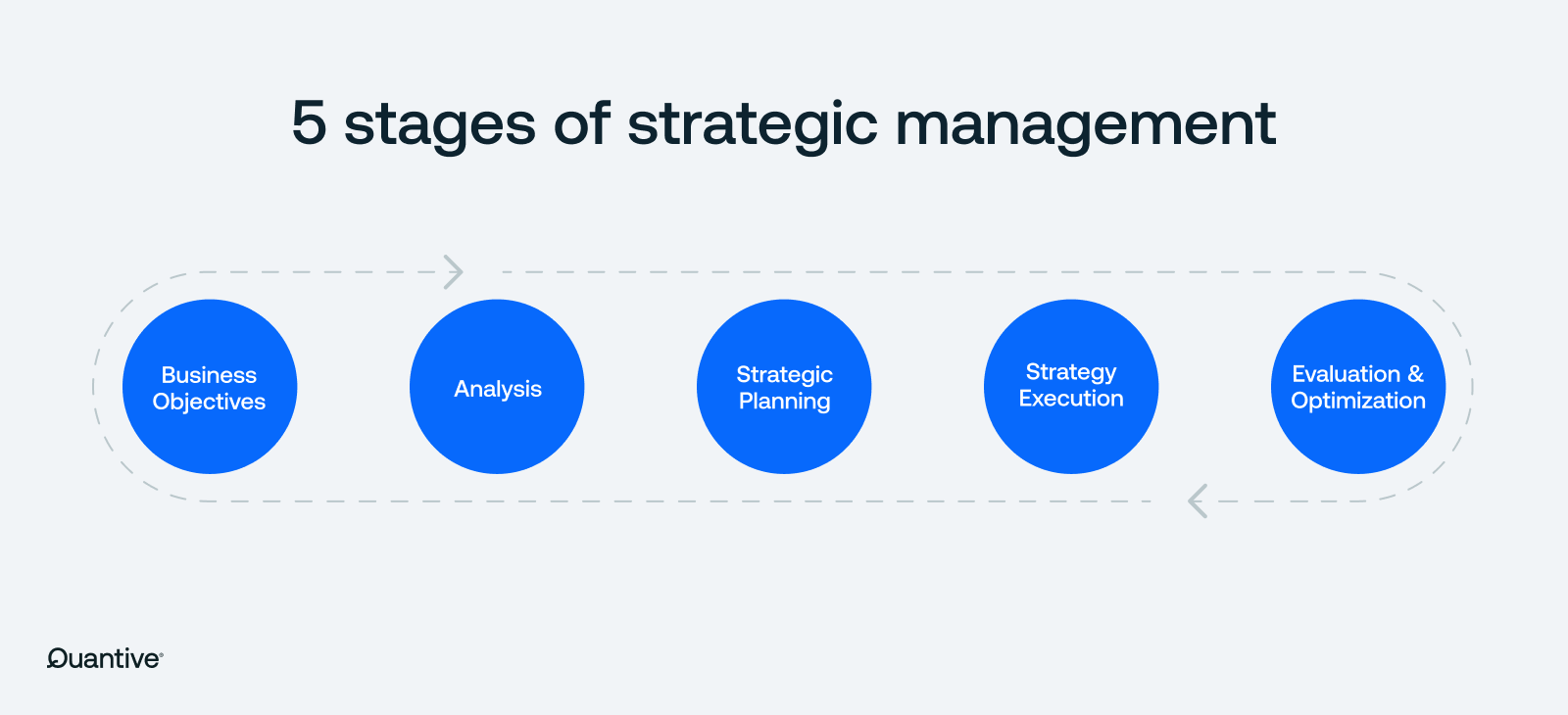
Image Source: Quantive
When a vendor determines keyword targets without deep knowledge of the client’s revenue model, mismatches occur. Traffic may increase, but it may not convert. The campaign looks active, but does not drive meaningful results.
Another risk is reporting without context. Raw dashboards can overwhelm clients. They see graphs, percentages, and ranking tables, but lack interpretation. Without explanation, fluctuations look alarming even when they are normal.
Timelines are another common trap. Agencies sometimes promise quick page-one rankings to close deals. In reality, ranking velocity depends on competition, domain authority, content depth, and link profile strength.
Backlink research shows that the top-ranking result in Google earns roughly 27 percent of clicks on average. That position is valuable because it reflects authority. Authority is not built overnight. It requires:
- Technical stability
- Consistent content depth
- High-quality referring domains
- Strong internal linking
- User engagement signals
If agencies set unrealistic expectations at the beginning, outsourced execution will not solve retention issues. The gap between promise and reality becomes too wide.
Another overlooked issue is brand dilution. When agencies rely heavily on a vendor’s reports or language, their unique positioning weakens. Clients start to perceive the agency as a middle layer rather than a strategic partner.
That perception affects pricing power and long-term retention.
The core problem is not outsourcing. It is outsourcing without structure and oversight.
When execution operates independently from strategy, the roadmap collapses. Clients feel disconnected. Agencies feel reactive. Vendors operate in isolation.
The solution is integration.
White label SEO can be extremely powerful when placed inside a structured, transparent roadmap. Agencies must define the vision, control the direction, and translate technical work into business impact.
In other words:
- Strategy stays with the agency.
- Execution is supported by the vendor.
- Communication remains clear and outcome-driven.
When these roles are defined properly, outsourcing strengthens authority instead of weakening it.
A roadmap fails when it is built around tasks instead of transformation. It fails when it focuses on activity instead of progression. And it fails when agencies lose strategic control in pursuit of convenience.
Fix those three areas, and the foundation for scalable, client-facing SEO becomes far stronger.
Building a Structured Client-Facing SEO Roadmap
A strong roadmap makes SEO visible. It shows clients where they are, where they are going, and how each step contributes to business growth.
1. Start With Business Outcomes, Not SEO Tasks
Most SEO proposals begin with tasks. A better approach begins with revenue.
Instead of saying, “We will increase rankings,” frame the conversation around outcomes.
For example: “To generate 30 new leads per month, and assuming your site converts at 3 percent, we need approximately 1,000 targeted organic sessions monthly.”
From there, reverse engineer the strategy.
Break it down:
- Required leads per month
- Conversion rate
- Required traffic
- Target keyword volume
- Competition level
This creates a direct line between SEO and revenue.
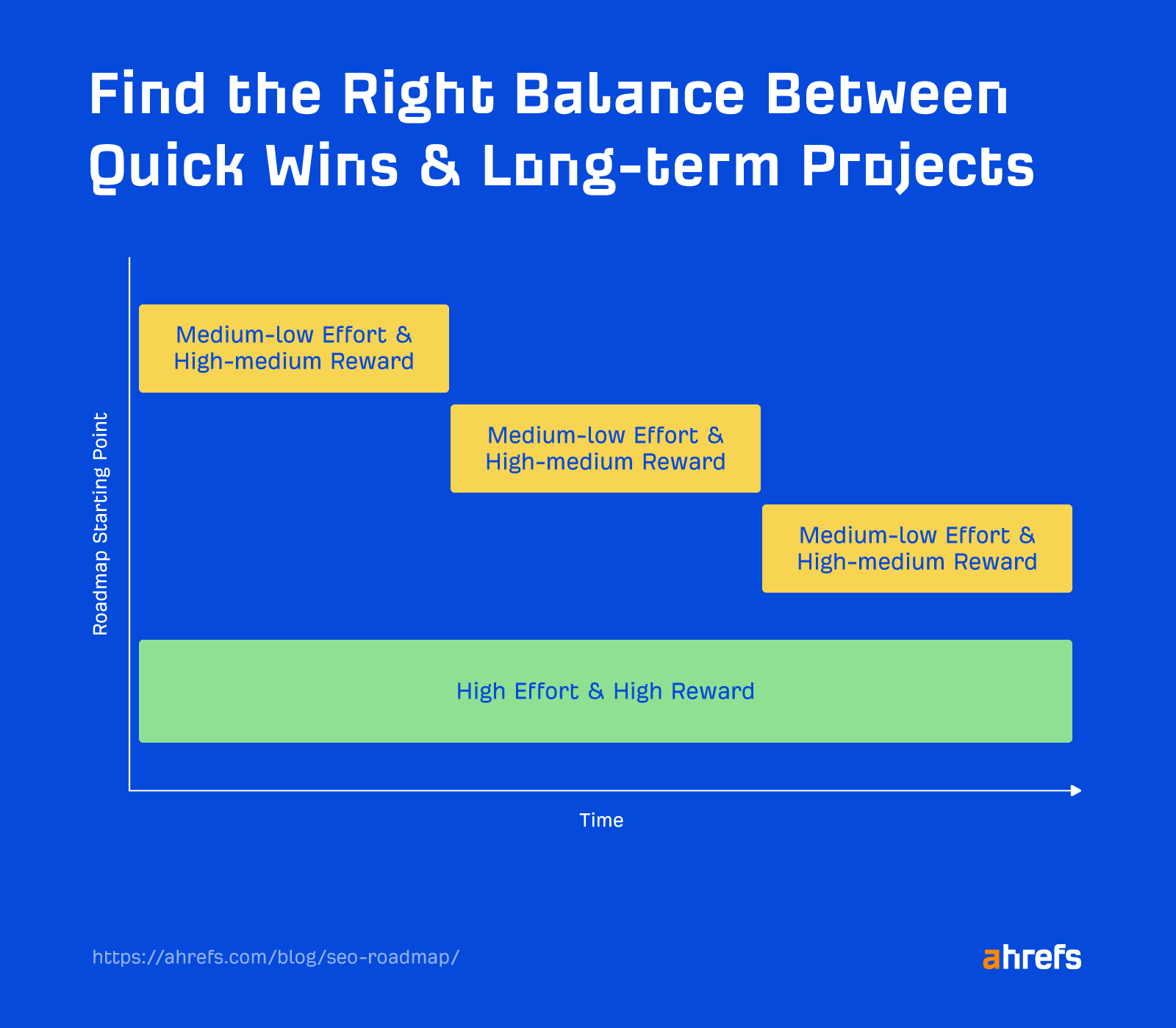
Image Source: Ahrefs
Define KPI Layers
Separate performance into leading and lagging indicators.
Leading indicators:
- Keyword movement velocity
- Growth in indexed pages
- Increase in referring domains
- Expansion of topical coverage
Lagging indicators:
- Organic traffic
- Conversion rate
- Revenue attributed to search
When clients understand that the early months focus on leading indicators, they are less likely to panic before revenue shows up.
Once goals are tied to business outcomes, you can structure deliverables into clear phases.
2. Structure SEO Into Milestone-Based Phases
Open-ended retainers feel endless. Phased roadmaps feel strategic.
Phase 1: Foundation (Month 1–2)
This stage focuses on stability and alignment.
Key components:
- Technical SEO audit
- Core Web Vitals improvements
- Site architecture refinement
- Keyword mapping and search intent clustering
Google continues to emphasize user experience and content quality. Strong technical foundations support ranking stability and reduce crawl inefficiencies.
In this phase, white label SEO services can handle:
- Technical fixes
- Data analysis
- On-page optimization implementation
Your agency remains responsible for:
- Strategy approval
- Explaining technical priorities to clients
- Framing expectations
This preserves authority while increasing capacity.
Phase 2: Authority and Content Expansion (Month 3–6)
Once the foundation is stable, authority building begins.
This includes:
- Content cluster development
- Topical mapping
- Internal linking strategy
- Strategic link acquisition
Google’s focus on helpful content and E-E-A-T signals rewards depth. Sites that demonstrate expertise across a topic area outperform thin, scattered pages.
During this phase, a white label SEO agency can support:
- Content drafting
- Outreach campaigns
- Link building execution
However, agencies should always:
- Review editorial quality
- Ensure brand voice consistency
- Approve link placements
You remain the strategist. The vendor is the engine.
Phase 3: Growth and Competitive Displacement (Month 6+)
Once rankings gain traction, the roadmap shifts toward expansion and optimization.
This stage may include:
- Advanced schema implementation
- Conversion rate optimization
- Competitor gap analysis
- Content refresh cycles
- Capturing featured snippets and other SERP features
This phase focuses on outperforming competitors, not just participating in search.
A structured phase model brings clarity. But clarity alone is not enough. Transparency builds trust.
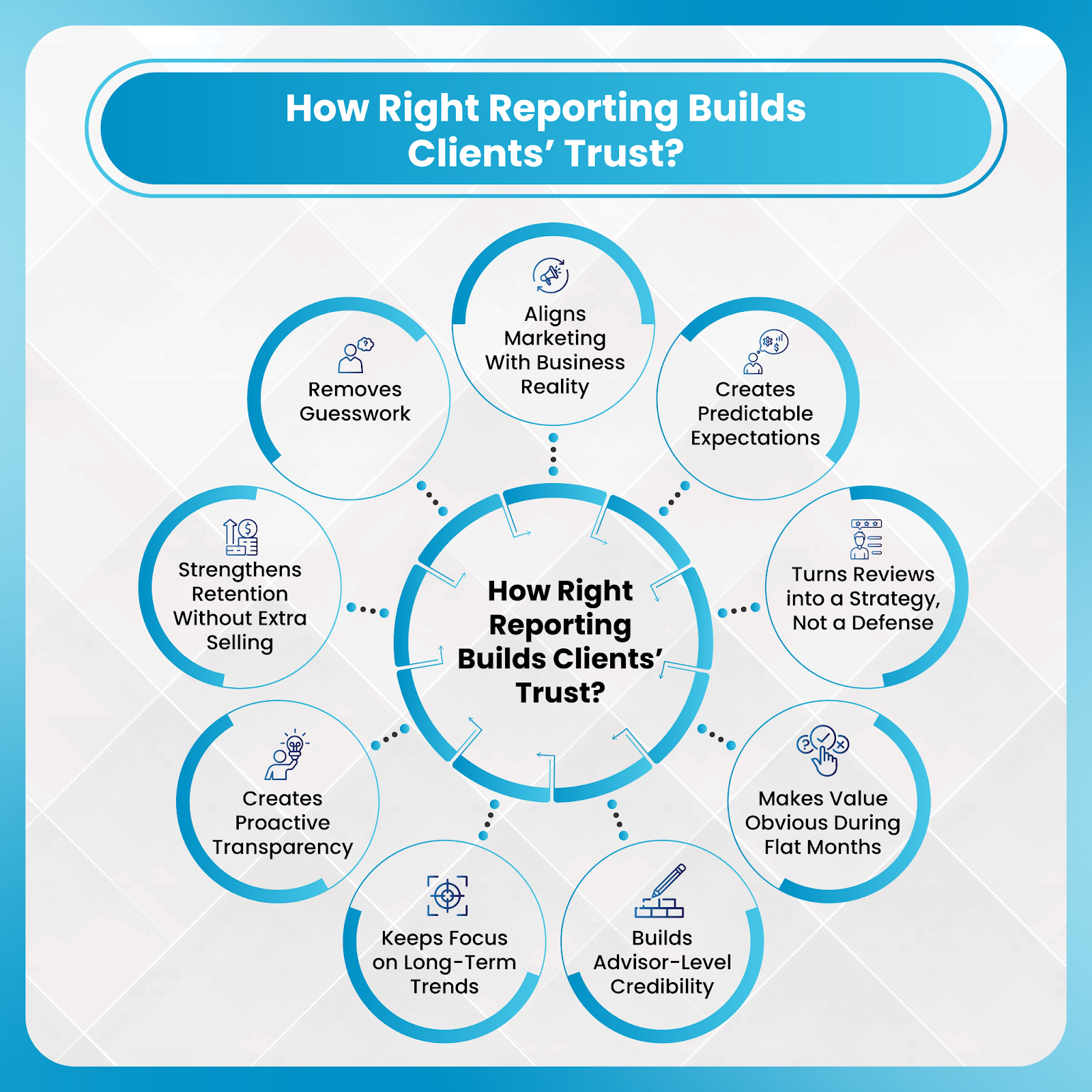
3. Build a Transparent Reporting Framework
Agencies must own the narrative.
Each monthly report should clearly explain:
- What was executed
- Why it matters
- Early impact signals
- Focus for the next month
- Updated traffic and ranking trends
Avoid sending raw dashboards without context. Technical spreadsheets without explanation create confusion. Instead, translate improvements into business language.
For example: “Page speed improved from 4.8 seconds to 2.1 seconds. This reduces bounce risk and supports ranking consistency.”
Clear interpretation strengthens retention.
4. Align White Label SEO Services With Client Expectations
Scaling without systems leads to chaos. Internal processes protect quality.
Develop standard operating procedures for:
- Keyword approval
- Content briefs
- Link quality review
- Revision workflows
- Timeline forecasting
Protect your authority by never allowing direct vendor communication with clients. Control keyword targets. Review AI-assisted content manually. Maintain final approval on deliverables.
When alignment exists internally, scaling becomes predictable rather than stressful.
5. Designing a Scalable SEO Production Model
Growth requires structure.
A. Standardized Package Framework
Create tiered offerings such as:
- Local SEO Growth
- National Expansion
- Authority Domination
Each tier should define:
- Content velocity
- Link velocity
- Reporting cadence
- Timeline expectations
This simplifies sales conversations and ensures operational clarity.
B. Margin Modeling
Healthy margins for white label SEO services often fall between 40 and 60 percent, depending on pricing structure and account complexity.
Track:
- Cost per content asset
- Cost per acquired link
- Account management time
- Client lifetime value
This transforms SEO from reactive fulfillment into predictable recurring revenue.

C. Capacity Forecasting
Use:
- Average hours per account
- Vendor turnaround times
- Historical retention data
Forecasting prevents overextension and protects service quality.
Scalability should never weaken brand authority. That brings us to positioning.
6. Maintaining Brand Authority While Using a White Label SEO Agency
Clients buy expertise. They do not buy task lists.
To maintain authority:
- Brand all reports and dashboards
- Develop your own methodology framework
- Publish anonymized case studies
- Educate clients on strategy, not tactics
White label SEO should remain invisible. Your agency is the architect. The vendor is the builder.
Using DashClicks’ White Label SEO Services Within Your Roadmap
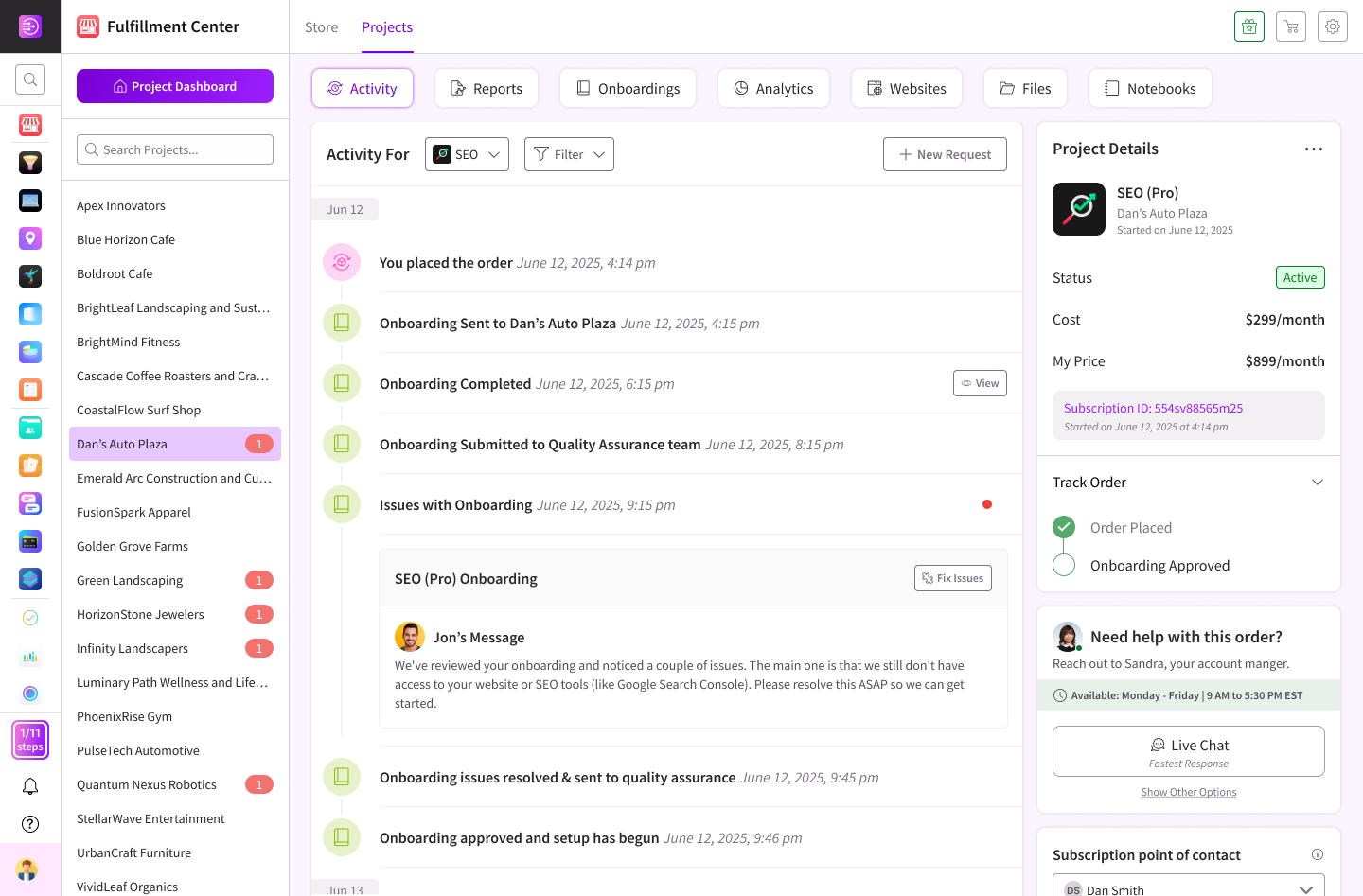
To operationalize a structured roadmap without overwhelming internal resources, agencies can leverage DashClicks as a backend execution partner while retaining strategic leadership.
DashClicks provides scalable white label SEO services that align well with a phased roadmap model. In the foundation stage, agencies can utilize the platform for technical audits, on-page optimization, and structured implementation while maintaining control over keyword strategy and client communication.
During authority-building phases, the platform supports content production and link acquisition, allowing agencies to increase topical depth and referring domain growth without expanding internal teams. As campaigns mature, ongoing optimization, reporting infrastructure, and scalable fulfillment help agencies handle larger portfolios efficiently.
Because services are delivered under the agency’s brand, firms can preserve positioning, protect margins, and present a cohesive roadmap to clients. This allows agencies to function as strategic leaders while leveraging operational support in the background.
From SEO Provider to SEO Systems Architect
Agencies that sell vague SEO retainers often struggle with churn and operational stress. Those that build structured, client-facing roadmaps create clarity. When they integrate white label SEO services strategically, they protect margins and expand capacity. When they control the narrative, they increase retention.
The competitive advantage is not outsourcing alone. It is systemizing SEO delivery while maintaining transparency and authority.
Organic search remains one of the most powerful growth channels available. With more than half of website traffic coming from search and most buying journeys starting there, agencies have a clear opportunity. The difference between stagnation and scale lies in structure.


.svg)


.svg)
.svg)
.svg)
.svg)
.svg)