

.svg)

.svg)
.svg)
.svg)
.svg)
.svg)
When a Facebook Ads campaign spends consistently but fails to produce conversions, the answer is diagnosis before optimization. Agencies need to identify where the conversion funnel is breaking before changing the campaign.
A client campaign may be spending, generating impressions and clicks, yet producing few conversions. The instinct is often to swap the creative, increase the budget, or pause the campaign. But these actions may not address the actual problem.
For example, changing the creative will not fix a landing page that fails to convert. Increasing the budget will not solve poor audience quality. Pausing the campaign will not correct inaccurate conversion tracking.
The funnel should be evaluated stage by stage:
Ad → Click → Landing Page → Lead → Qualified Lead → Customer
Each stage can create a different bottleneck, so agencies should use the data to identify the problem before deciding what to change.
WordStream's 2025 benchmark data found that Facebook lead campaigns averaged a 7.72% conversion rate, $27.66 cost per lead, and 2.59% CTR. These figures provide useful directional context, but they should not be treated as universal targets. Performance varies by industry, campaign objective, offer, audience, conversion event, and funnel structure.
The key principle is simple: find the stage causing the problem, verify the data, and make targeted changes based on evidence rather than pressure.
Why Facebook Ads Spend Without Producing Conversions?
Spending without conversions does not automatically mean a Facebook Ads campaign is failing. It means something in the path from impression to outcome isn't working as expected. There are several distinct reasons a campaign may continue spending without generating meaningful results:
- Ads are attracting attention but not purchase intent
- Audience targeting does not match the offer
- Ad messaging and landing page messaging are not aligned
- Conversion tracking is incorrectly configured
- The campaign is optimizing toward an action that does not represent business value
- The offer is not compelling enough to drive action
- Leads are being generated but are not qualified
- The campaign does not yet have enough meaningful data to exit the learning phase
Traffic Problem vs. Conversion Problem
One of the most important distinctions an agency can make early in the diagnostic process is whether the campaign has a traffic problem or a conversion problem. These require completely different responses.
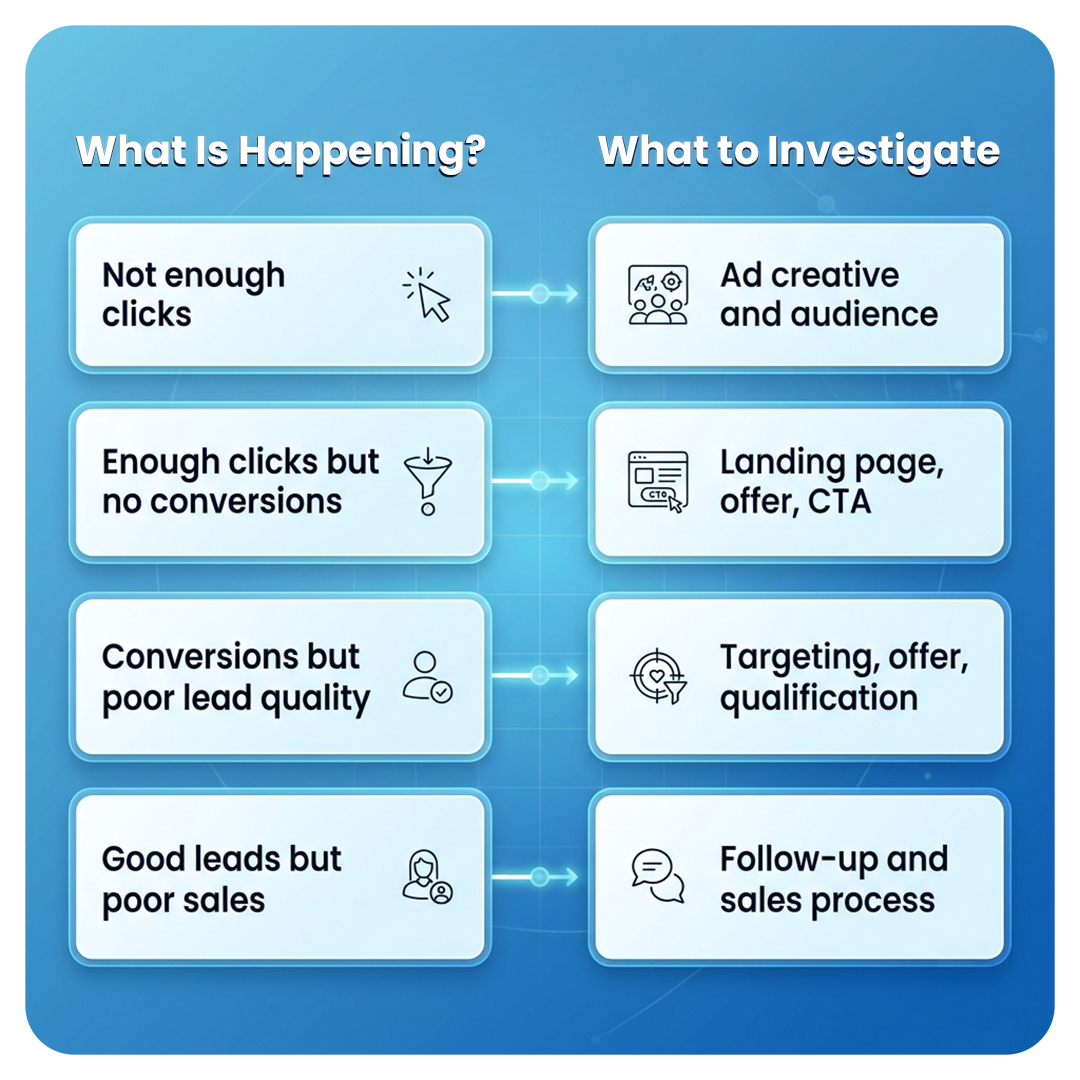
This framework prevents agencies from automatically blaming creative performance when the real issue sits downstream. A technically solid ad can feed a broken funnel. The table above is the starting point for every underperforming account review.
Don't treat every conversion problem as an ad problem. First, identify where the funnel is breaking.
Diagnose Where the Conversion Funnel Is Breaking
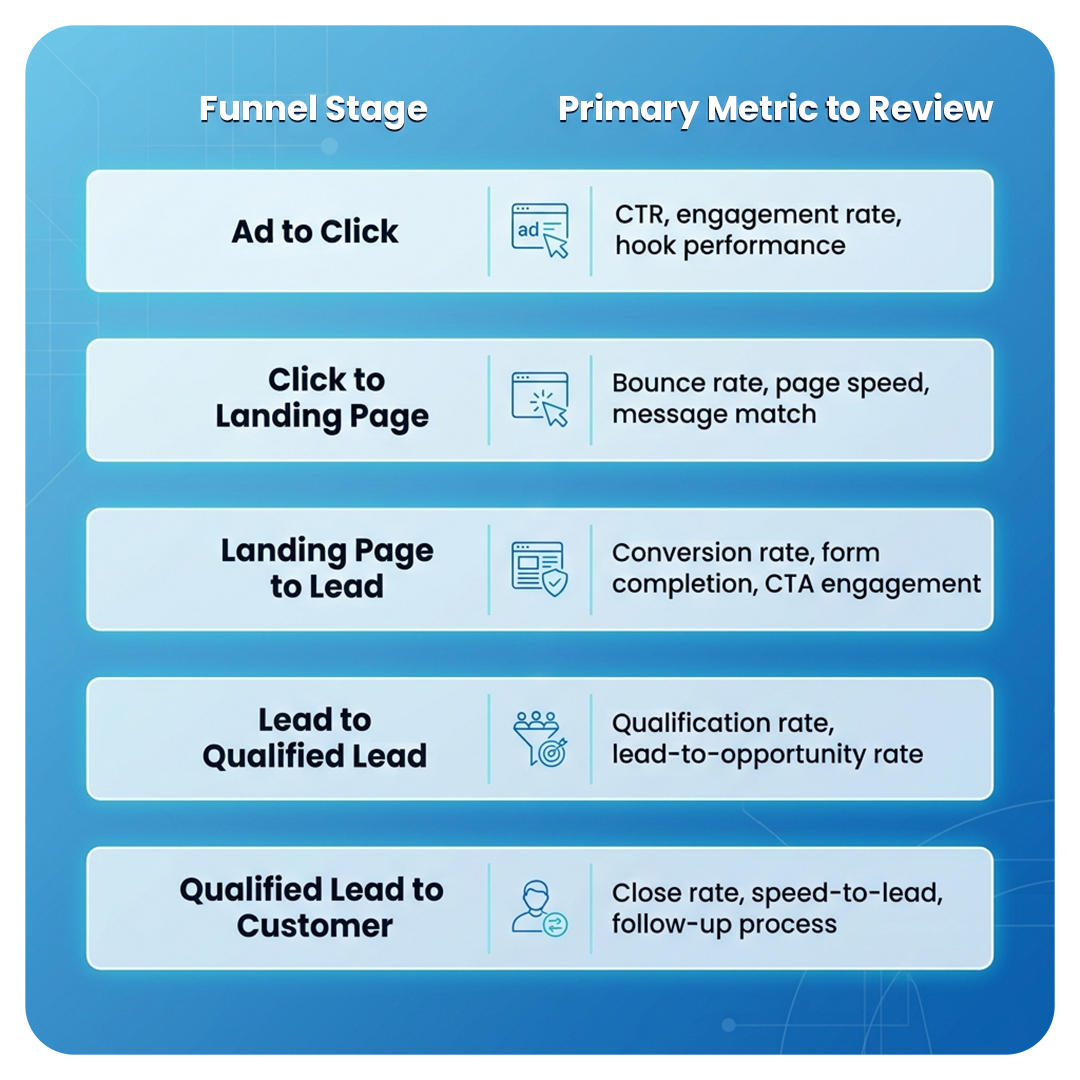
Before making any meaningful campaign changes, agencies should audit each stage of the funnel in sequence.
Ad → Click → Landing Page → Lead → Qualified Lead → Customer
Reviewing each stage individually allows agencies to isolate the bottleneck rather than changing multiple variables at once.
1. Ad to Click
The first question is whether the ad is generating meaningful engagement from the intended audience. If click-through rates are weak, the issue likely sits at the ad level.
Review the following:
- CTR relative to industry and objective benchmarks
- Creative engagement (video views, hook retention, interaction rate)
- Message relevance to the audience being targeted
- Audience alignment with the offer
- Hook strength within the first three seconds for video, or the opening line for static ads
According to WordStream's 2025 benchmark data, Facebook lead campaigns averaged a 2.59% CTR, while traffic campaigns averaged 1.71% CTR. These figures provide useful context for evaluating whether an ad is generating expected engagement, but they should not function as hard pass/fail thresholds. Account for the specific industry, objective, and audience before drawing conclusions.
2. Click to Landing Page
If clicks are arriving but conversions remain weak, the post-click experience is likely the problem. Review:
- Message match between the ad and the landing page
- Page load speed, particularly on mobile
- Mobile usability and responsive layout
- CTA visibility and placement
- Form friction and length
- Offer consistency between the ad and the page
- Trust signals such as reviews, credentials, and guarantees
An ad can generate strong engagement, but the landing page can prevent users from completing the desired action. Both elements need to work together.
3. Landing Page to Lead
A high click volume has limited value if visitors are not taking the intended action. At this stage, evaluate:
- Overall conversion rate on the landing page
- Form completion rate
- CTA engagement
- Offer strength and specificity
- Whether the form is asking for more information than necessary
- Trust elements that reduce hesitation
If the page is receiving traffic but not generating completions, the friction exists somewhere between the user arriving and the user submitting.
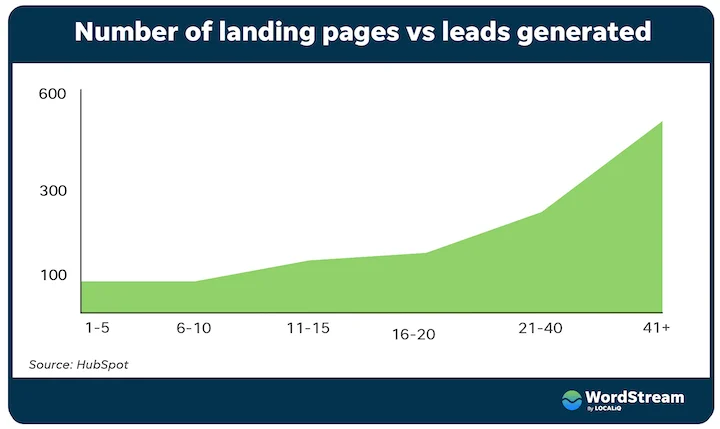
Image Source: WordStream
4. Lead to Qualified Lead
Cost-per-lead alone creates a misleading picture of campaign performance. Agencies need to look beyond volume and evaluate quality. Review:
- Lead qualification rate
- Lead source and how it correlates to quality
- Lead-to-opportunity rate
- Service area alignment
- Whether leads match the client's customer profile
- Direct client feedback on lead relevance
Ten inexpensive leads are not necessarily better than three qualified leads that have a realistic chance of becoming customers. CPL is a useful metric, but it is not the endpoint of the analysis.
5. Qualified Lead to Customer
If qualified leads are reaching the client but sales remain weak, the Facebook campaign may not be the primary problem. At this stage, investigate:
- Speed-to-lead (how quickly the client follows up)
- Follow-up process and consistency
- Sales qualification approach
- Appointment attendance rates
- Close rate by lead source
This is where the agency conversation often needs to shift from campaign performance to the client's sales process.
Check the Data Before Changing the Campaign
Diagnosis is only useful if the underlying data is accurate. Before acting on any platform metrics, agencies should confirm that what they are seeing is reliable.
1. Verify Conversion Tracking
Unreliable tracking means unreliable optimization signals. Check:
- Meta Pixel implementation and correct page placement
- Conversion events and whether they reflect real business actions
- Event configuration for accuracy
- Deduplication where server-side and browser-side events overlap
- CRM data versus platform-reported conversions
- Website analytics data as a cross-reference
- Whether the reported conversion event represents a meaningful business outcome
Meta's Conversions API can create a more reliable connection between marketing data and Meta's systems, and it supports measurement across different customer touchpoints. It does not resolve every measurement discrepancy, but it strengthens data quality when implemented correctly alongside the Pixel.
2. Compare Platform Data With Business Data
Platform metrics and business results need to be reviewed together. Pull the full picture:
- Clicks, CTR, CPC, and impressions from Meta
- Leads reported in Meta versus leads recorded in the CRM
- Qualified opportunities from the client
- Appointments scheduled and attended
- Sales closed and revenue generated where available
Discrepancies between platform data and business data often reveal tracking gaps or lead quality issues that wouldn't be visible from Meta Ads Manager alone.
3. Avoid Overreacting to Short-Term Fluctuations
A few weak days do not automatically justify a campaign restructure. Before making significant changes, look for:
- Meaningful trends across a relevant time period
- Sufficient data volume to identify a pattern
- Consistent changes in conversion behavior
- External factors that may have influenced short-term results
Agencies that restructure campaigns based on two or three days of data often introduce new variables before the previous change has had time to produce reliable signals.
4. Use the Right KPI
Low CPC does not automatically equal campaign success. For lead generation, the progression that matters is:
Cost-per-lead → Cost-per-qualified-lead → Opportunity-rate → Customer-acquisition-cost → Revenue
Optimizing toward cost per lead without accounting for lead quality can drive down CPL while reducing the number of leads that actually convert into customers.
Fix the Problem Based on What the Data Shows
Once the bottleneck is identified and tracking is confirmed, the response should be targeted and specific to the diagnosed issue.
If the Problem Is the Audience
Review:
- Audience relevance to the offer
- Targeting structure and segmentation
- Exclusions to filter out irrelevant traffic
- Geographic targeting accuracy
- Retargeting setup and audience overlap
- Lead quality by audience segment
If the Problem Is the Ad
Review:
- Hook strength within the first moment of engagement
- Creative format and whether it suits the placement
- Messaging clarity and offer positioning
- CTA relevance and specificity
- Signs of creative fatigue in frequency and engagement trends
- Whether the message aligns with the audience's actual interests
Do not recommend creative changes simply because conversion volume is low. First confirm that the ad is the actual bottleneck. Changing creative when the landing page is the problem wastes time and removes potentially useful ad data from the account.
If the Problem Is the Offer
Review:
- Clarity and specificity of the value proposition
- Whether the offer is compelling to the target audience
- Friction in the process of claiming the offer
- Urgency or lack thereof
- Alignment between the offer and the audience's needs
If the Problem Is the Landing Page
Review:
- Message match between the ad and the page
- Page speed on mobile
- Mobile layout and usability
- Form length relative to what the offer justifies
- CTA placement and visibility
- Trust signals and social proof
- Distractions that pull attention away from the conversion action
If the Problem Is Lead Quality
Ask:
- Are leads located within the client's service area?
- Do they match the client's ideal customer profile?
- Are they requesting the correct service or product?
- Are they reachable after submission?
- Are they converting to appointments?
- Are they becoming qualified opportunities?
Fix the stage causing the bottleneck, not the campaign as a whole.
Know When to Optimize, Wait, or Rebuild
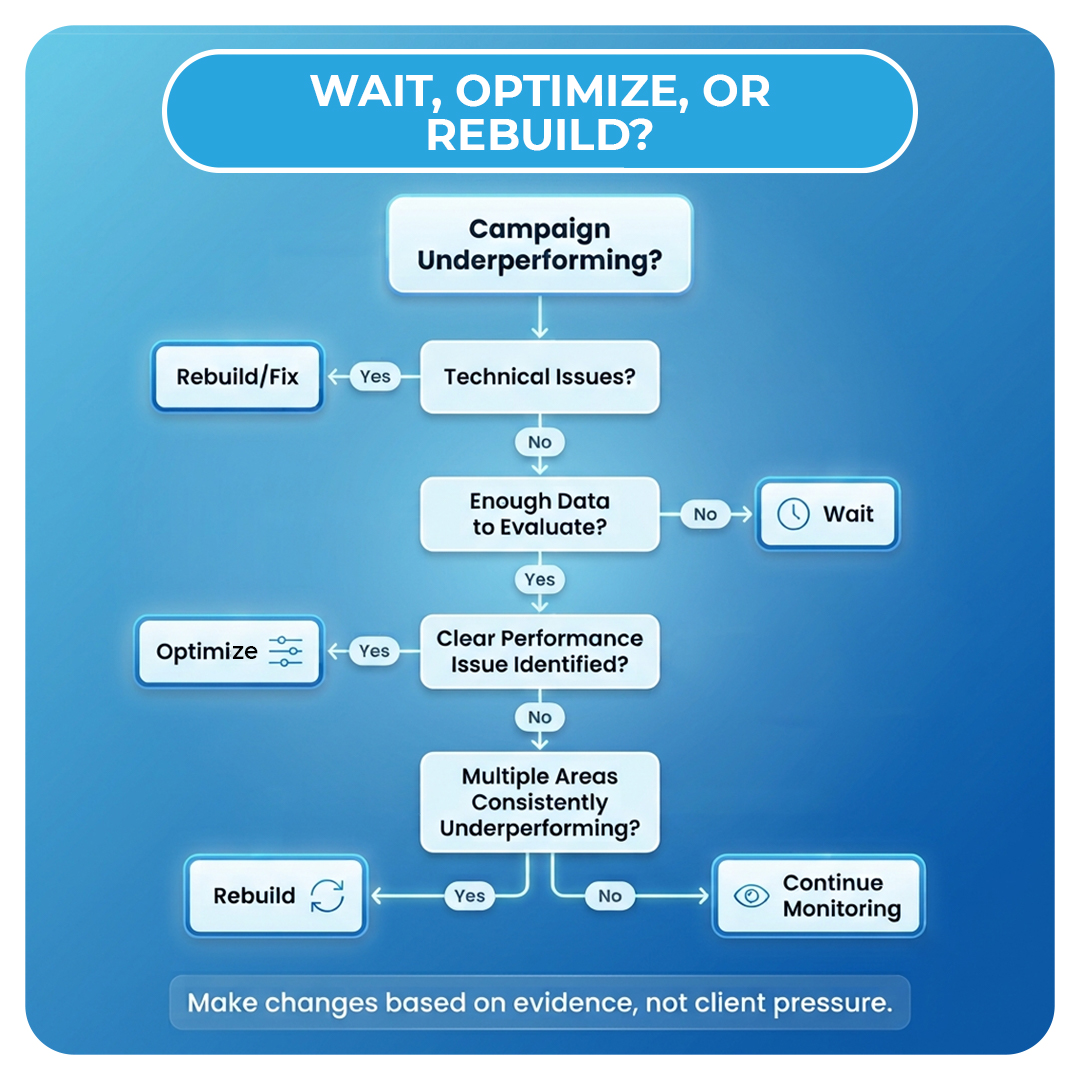
Not every underperforming campaign requires the same response. Agencies need a clear decision framework.
Optimize When
- The campaign is generating useful signals from sufficient data
- The bottleneck is isolated to a specific funnel stage
- Conversion tracking is reliable
- There is enough data to identify a consistent pattern
- A targeted change could address the identified problem
Wait When
- Tracking is unreliable, and optimization signals cannot be trusted
- Spend continues without generating any meaningful data
- The audience is clearly misaligned with the offer
- The offer is fundamentally unsuitable for the platform or audience
- A structural issue is preventing the campaign from learning
Rebuild When
- The campaign objective does not match the business goal
- The audience is fundamentally wrong for the offer
- The offer has changed significantly since launch
- The conversion event is incorrect or misaligned with what the client values
- Multiple campaign components are failing at the same time
When a rebuild is the right call, don't change everything simultaneously. If the agency changes audience, creative, landing page, offer, and campaign structure all at once, it becomes impossible to determine which change actually moved the needle. Isolate variables where possible, even during a significant restructure.
Create a Repeatable Recovery Process for Client Campaigns
Moving from troubleshooting one account to running a consistent process across many accounts requires a structured approach. Agencies that treat every struggling campaign as a unique problem spend more time per account and produce less consistent results.
The six-step recovery framework:
- Diagnose: Identify which stage of the funnel is underperforming using the Ad to Customer framework.
- Verify: Confirm tracking accuracy and data quality before drawing conclusions from platform metrics.
- Prioritize: Determine which issue is most likely causing the largest impact on results.
- Fix: Make the smallest meaningful change that directly addresses the diagnosed issue.
- Monitor: Allow enough time and data to accumulate before evaluating the impact of the change.
- Report: Communicate clearly with the client, covering what happened, what the data showed, what was changed, why it was changed, and what will be monitored going forward.
Build an Internal Campaign Recovery Checklist
Standardizing the recovery process allows account teams to move faster without missing steps. Include:
- Scheduled performance review cadence
- Tracking QA at account setup and ongoing
- Funnel-stage analysis template
- Documentation of optimizations and rationale
- Structured creative testing process
- Lead quality review process with the client
- Client communication standards for performance conversations
When the process is consistent, struggling accounts don't become completely custom troubleshooting projects. The framework applies, the steps are followed, and the agency can move faster at scale.
How DashClicks' White Label Facebook Ads Help Agencies Scale Fulfillment?
Agencies managing multiple client accounts need more than a good diagnostic process. They need consistent execution capacity. Building a full internal paid-media team to support growth is expensive and time-consuming. White label Facebook ads fulfillment is how many agencies add structured execution support without expanding headcount at the same pace as revenue.
- Specialist Execution: DashClicks provides support for campaign setup, optimization, and ongoing account management without requiring agencies to expand their internal team.
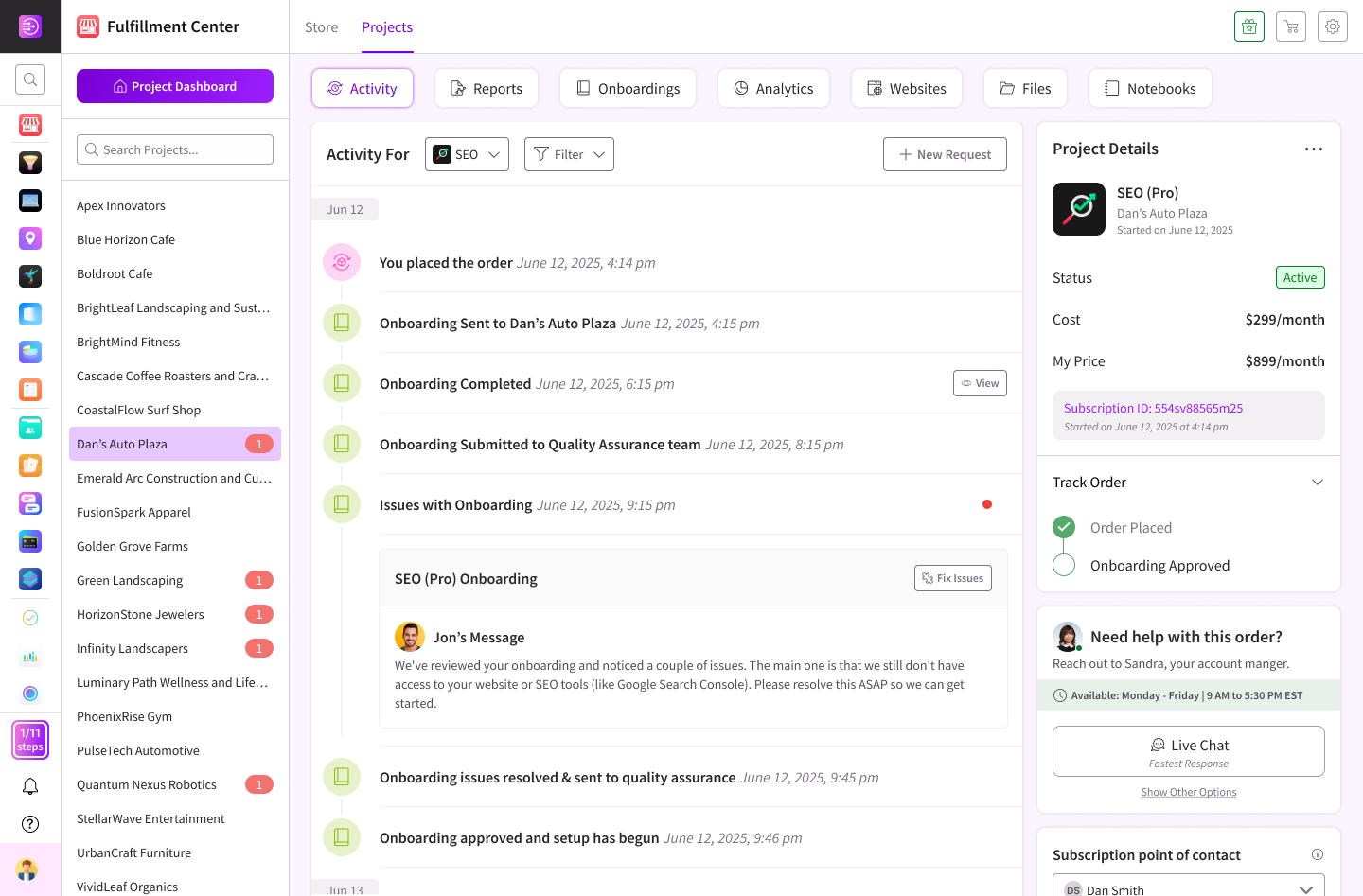
- Structured Campaign Workflow: A defined fulfillment process helps ensure important steps, from setup and quality checks to launch and maintenance, are completed consistently.
- Ongoing Optimization Visibility: Agencies receive visibility into campaign performance, optimization activity, and account progress while remaining focused on client strategy.
- White Label Client Experience: Fulfillment operates behind the agency's brand, allowing the agency to retain ownership of client communication and relationships.
- Scalable Fulfillment: As campaign volume grows, agencies can access additional execution capacity without creating internal resource bottlenecks.
Diagnose First. Then Optimize.
Spending without conversions is a symptom, not a diagnosis. The cause could sit at the ad level, on the landing page, in lead quality, in the follow-up process, or in how the campaign is tracking results in the first place.
Agencies that move straight to optimization without identifying the bottleneck often make changes that don't address the actual problem. Verifying tracking accuracy, mapping the full funnel, and making targeted changes based on what the data shows produces more consistent results than a reactive creative swap or budget adjustment.
Building a standardized recovery process across accounts, supported by reliable fulfillment when internal resources are stretched, is what allows agencies to manage performance at scale without every struggling campaign consuming a disproportionate share of the team's time.
The best Facebook Ads optimization decisions don't start with "What should we change?" They start with "Where is the funnel breaking, and what does the data actually tell us?"


.svg)


.svg)
.svg)
.svg)
.svg)
.svg)