

.svg)

.svg)
.svg)
.svg)
.svg)
.svg)
A client sends a message that sounds simple enough: "We're expanding into Dallas. Can you get us ranking there?" On the surface, it feels like a straightforward request. In practice, it opens up a series of harder questions.
The agency now has to determine several things at once:
- Whether Dallas is actually worth pursuing
- How much SEO investment the market requires
- Which resources should be redirected
- What happens to the client's existing markets
- How much additional fulfillment the expansion will require
The real challenge is not simply doing local SEO in another city. It is expanding the campaign without weakening what is already working. That distinction shapes every decision that follows.
Local search matters here because customer behaviour supports it. According to BrightLocal's 2026 Consumer Search Behavior research, 84% of consumers searched for a local business in the past three months. That figure does not prove any single market will succeed. It simply shows why visibility deserves attention when a business enters a new area.
This blog walks through a practical framework agencies can reuse across clients: market evaluation, strategy, resource allocation, existing SEO equity, first wins, protection of existing markets, KPIs, a 90-day roadmap, and finally the decision to scale or adjust.
1. Determine Whether the New City Deserves SEO Investment
Entering a new market should begin with business opportunity, not simply keyword volume. A city can look attractive in a keyword tool and still be a weak commercial bet.
Keep this distinction in mind:
SEO opportunity does not always equal business opportunity.
Agencies should evaluate several factors before committing resources:
- Existing demand for the client's services
- Local competition
- Client brand recognition
- Physical presence or service coverage
- Revenue potential
- Expected SEO investment
- Difficulty of competing
- The client's ability to serve new demand
Evaluate the Business Case First
A market with high search volume can still be a poor target. If competition is extreme, the cost of gaining visibility may outweigh the return. If the client cannot serve customers well in that area, rankings alone will not help. Traffic without fulfillment capacity on the client side creates a poor experience and wasted effort.
Assess Existing Market Conditions
Before creating work, look closely at the market itself. Review:
- Competitor visibility
- Search intent
- Local SERPs
- Service availability
- Existing brand presence
Local search is a meaningful share of what people do online. BrightLocal found that 39% of consumers estimated that at least 41% of their searches are dedicated to finding information about local businesses. This is a useful context. It does not guarantee that a specific city will be profitable for a specific client.
The point is simple. Decide whether the market deserves investment before creating a large volume of new SEO work.
2. Decide What Should Change and What Should Stay the Same
Entering a new city does not mean rebuilding the client's entire SEO strategy. Much of the existing work should continue untouched. The goal is to add a market, not reset the campaign.
It helps to sort the work into three categories.
Protect
These are assets that already produce results:
- Existing high-performing pages
- Strong rankings
- Established locations
- Valuable backlinks
- Existing organic traffic
- Existing conversion-generating pages
Expand
These are the new opportunities the expansion creates:
- New city opportunities
- New commercial search terms
- New local content
- New service-location combinations
- Additional local authority opportunities
Adapt
These are elements that adjust to support both old and new markets:
- Internal linking
- Content priorities
- Local targeting
- Authority-building resources
- Reporting structure
The principle is this: expansion should extend the existing SEO strategy, not unnecessarily disrupt it.
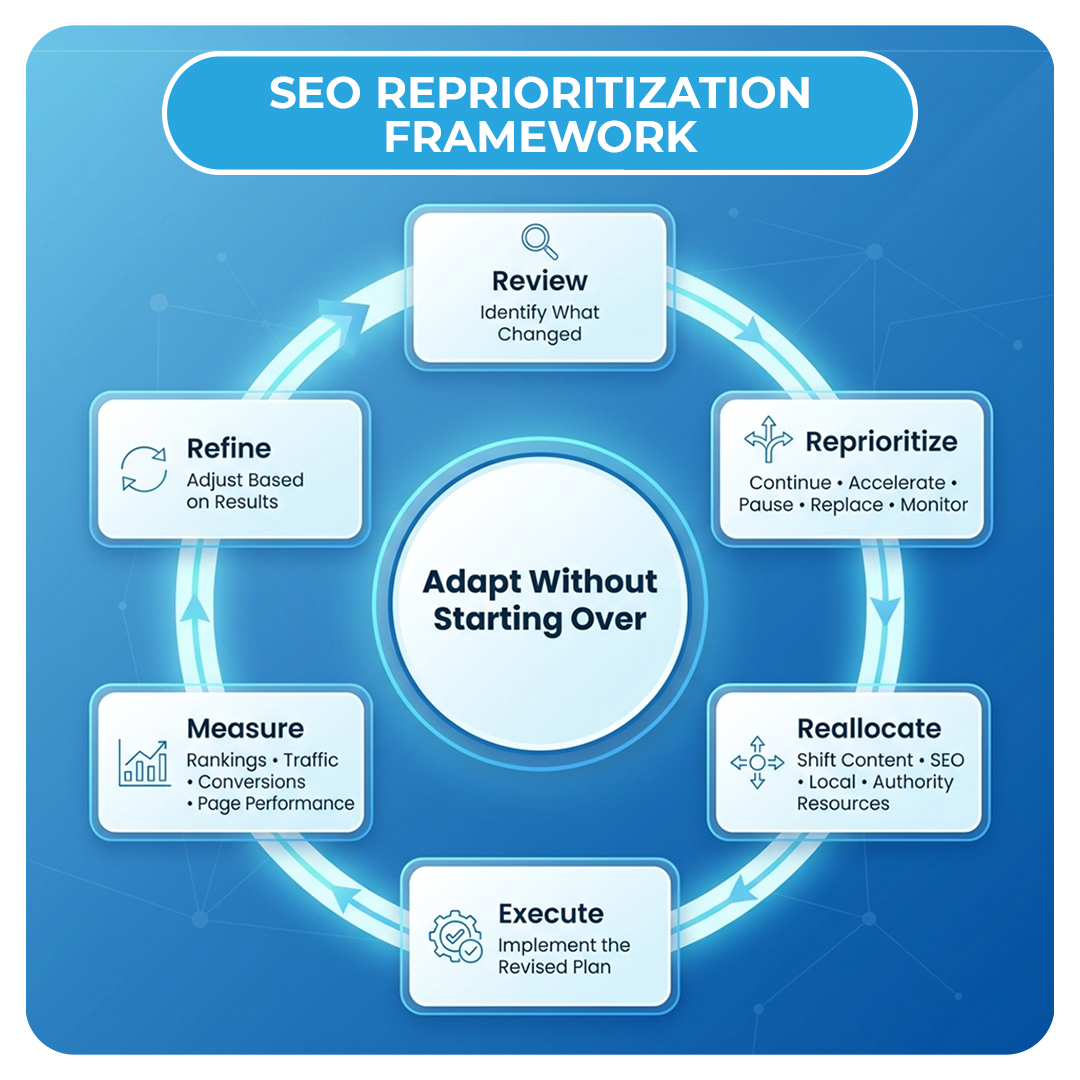
3. Build a Market-Entry Strategy Instead of a Location Page Strategy
A common mistake is treating local expansion as a simple sequence:
New city, create location page, add keywords, wait for rankings.
That approach rarely produces steady results. A single page competing in a fresh market usually lacks the signals to rank well. A better model treats the work as market entry, built in stages.
Stage 1: Establish Presence
Make the website relevant to the new market. This includes local content, clear service-area signals, and technical elements that tell search engines the client now serves this city.
Stage 2: Capture Existing Demand
Prioritise realistic, commercially valuable searches. Focus on terms where the client can compete and convert, rather than the broadest, most competitive phrases.
Stage 3: Build Authority
Strengthen signals around the new market over time. This includes relevant links, citations, and content that supports the client's presence in the area.
Stage 4: Expand Coverage
Once initial traction exists, widen the scope. Consider:
- Additional services
- Supporting topics
- Neighbourhood-level searches where relevant
- Additional commercial search opportunities
A useful way to remember the sequence:
Enter Narrow, Prove Demand, Expand.
Search habits support a focused approach. BrightLocal research found that 45% of consumers default to Google for local searches, while another 15% use Google Maps as their first choice. These figures help explain why local and map visibility deserve early attention. They are context, not a promise of results.
4. Create a Resource Allocation Model for the New Market
Every agency works with limited SEO resources. So the central question is direct: Where should the agency's limited SEO resources go?
The table below shows how effort can be split between existing and new markets.
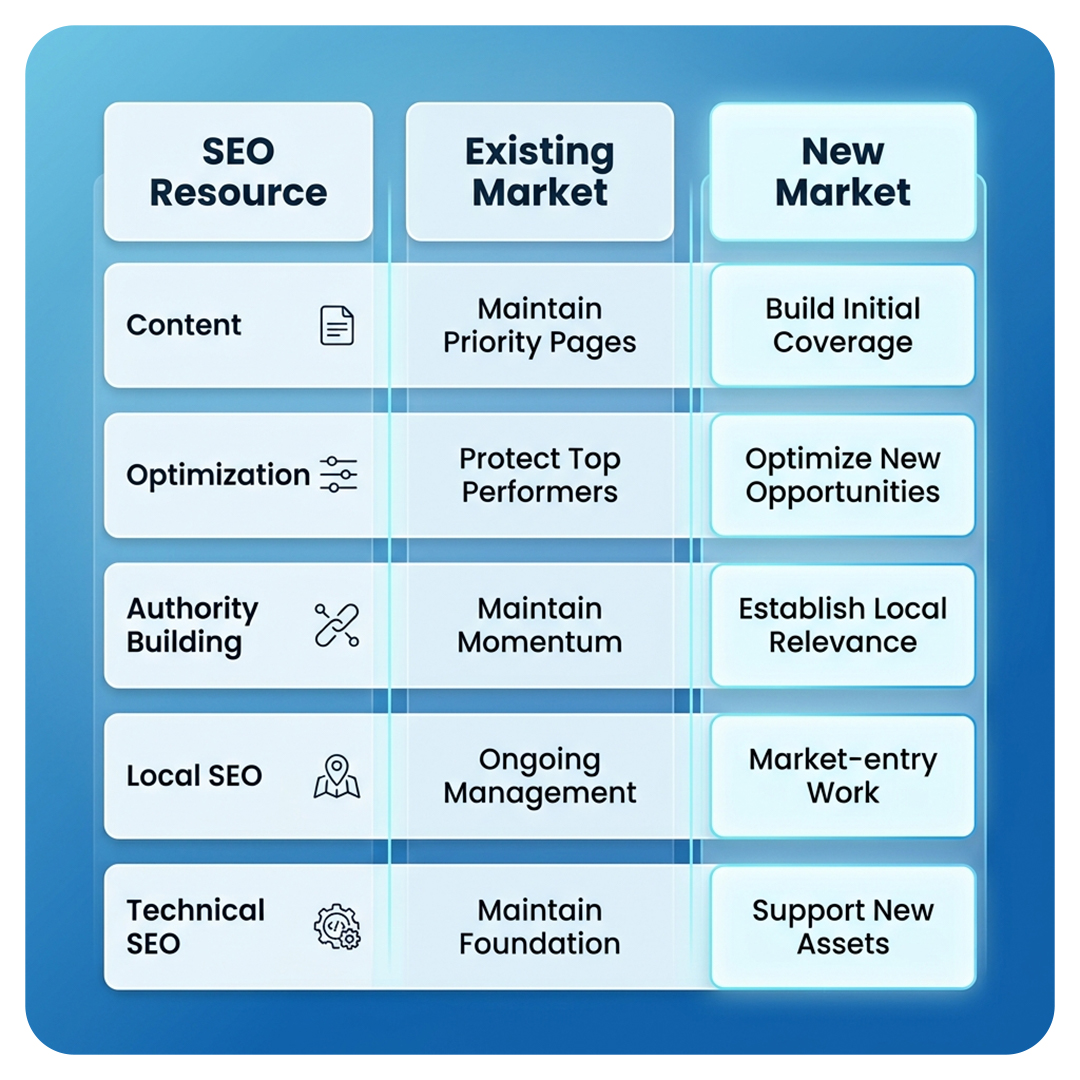
A few points guide this model:
- Expansion should not automatically double the SEO workload.
- Incremental effort should go where business potential is strongest.
- Existing markets still need enough attention to hold their position.
The goal is a deliberate split, not an even one.
5. Use Existing SEO Equity to Enter the New Market
A new city is not necessarily starting from zero. The client's website already carries value that can support the expansion. So ask a practical question: What does the client already have that can support the expansion?
Existing assets often include:
- Domain authority
- Strong service pages
- Existing topical authority
- Relevant content
- Existing backlinks
- Brand recognition
- Internal linking opportunities
- Existing organic visibility
Agencies can put these assets to work. Internal links from strong pages can support new-market pages. Existing service content can be adapted for the new location. Established topical authority can help new pages gain traction faster than a brand-new site would.
Keep this in mind throughout planning:
A new market may be new geographically, but the client's website does not necessarily start with zero SEO equity.
6. Identify the First-Win Opportunities
Agencies should not try to dominate an entire city immediately. Early, achievable wins are more useful than a broad push that spreads resources thin. This is where Enter Narrow, Prove Demand, Expand becomes practical.
Look for first-win opportunities such as:
- Lower-competition commercial searches
- Specific services rather than every service at once
- Underserved areas within the city
- Long-tail searches with clear intent
- Existing pages already receiving impressions
- Queries where the client ranks on page two or three
- Existing content that can be adapted to the new market
Early wins do more than build momentum. They give the agency evidence. When certain searches respond well, that signals where additional investment is justified. When others do not move, that is useful information too.
7. Prevent the New Market From Cannibalising Existing Priorities
New-market work can quietly consume resources that established markets depend on. It can absorb:
- Content resources
- Optimisation capacity
- Link-building resources
- Specialist time
- Account-manager attention
Meanwhile, existing markets still require maintenance. If that maintenance slips, the agency can win a new city while losing ground in a proven one.
Protect Existing Performance
Set protected resource allocations for existing markets. Decide, in advance, the minimum ongoing work each established market needs. Treat that allocation as fixed, so expansion draws from spare capacity rather than from essential maintenance.
Add Incremental Capacity Where Needed
When the expansion needs more than current capacity allows, decide how to add it. Options include:
- Reallocation of existing resources
- Additional internal resources
- Temporary fulfillment support
- Permanent hiring
- White label fulfillment
The guiding principle stays the same: expansion should add opportunity, not create unnecessary SEO instability.
8. Establish Market-Specific KPIs Instead of Using the Overall Report
Overall organic traffic can hide whether the new city is actually gaining traction. A strong established market can mask a struggling new one. This is why a new-market baseline matters.
Set a clear baseline when the expansion begins, then track:
- Visibility growth
- Rankings for priority queries
- Organic clicks
- Leads
- Conversion rate
- New-market landing-page performance
- Local search visibility
- Branded vs. non-branded growth
A simple side-by-side view helps here: Existing Market Performance vs. New Market Performance. Reporting the new market separately gives the agency, and the client, a clearer view of progress. It also makes it easier to justify continued investment or a change in direction.
Include Local Consumer Behaviour
Rankings are only part of the picture. Reputation and local visibility matter alongside them. Two findings from BrightLocal's 2025 Local Consumer Review Survey are useful context:
- 74% of consumers use two or more websites when reading reviews before deciding to use a local business.
- 81% of consumers said they used Google to find reviews in 2025.
These figures do not prove SEO success on their own. They explain why local visibility and reputation deserve monitoring alongside traditional ranking metrics.
9. Build a 90-Day SEO Expansion Roadmap
A SEO roadmap gives the expansion structure. It also prevents the agency from pouring unlimited resources into a market before there is evidence of traction.
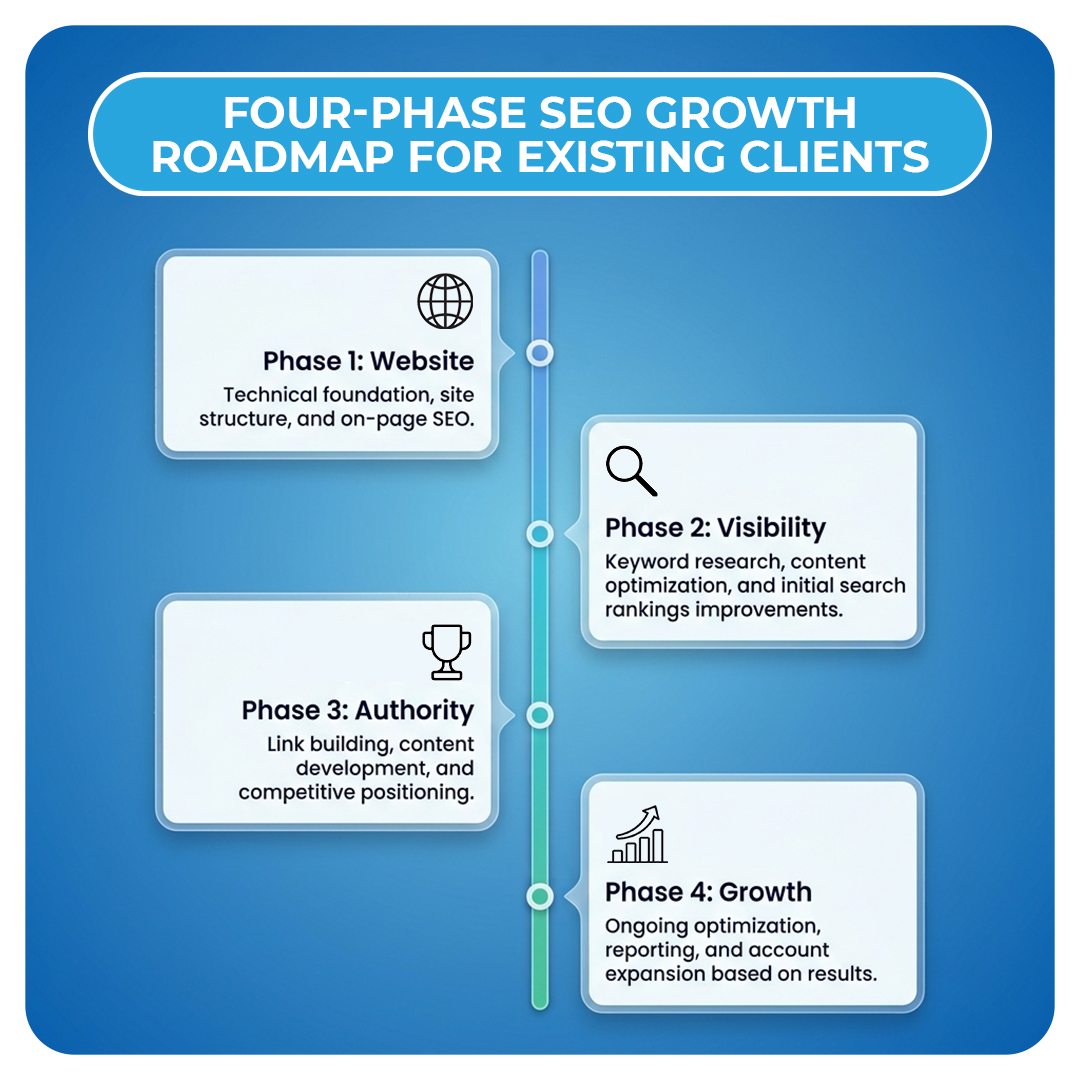
Days 1 to 30: Market Entry
- Research the opportunity
- Evaluate competitors
- Establish priorities
- Identify existing assets
- Define initial targets
- Address technical or structural requirements
Days 31 to 60: Build and Strengthen
- Develop priority assets
- Strengthen internal links
- Expand relevant content
- Begin authority-building activities
- Monitor early visibility
Days 61 to 90: Evaluate and Expand
- Identify early winners
- Reallocate resources toward what works
- Expand successful areas
- Drop low-potential targets
- Establish next-quarter priorities
This structure keeps investment tied to evidence. By day 90, the agency should know whether the market is worth deeper commitment.
Further Reading: Building a Client-Facing SEO Roadmap Using White Label SEO Services
10. Know When to Scale the New Market and When to Stop
Not every new city deserves unlimited SEO investment. Some markets earn more resources. Others should be paused. A simple decision framework helps the agency stay objective.
- Scale: Strong demand, positive performance, and clear business alignment. This market has earned more investment.
- Continue: Positive traction, but more time is needed before a bigger commitment. Hold the current pace.
- Adjust: The opportunity exists, but the current strategy is not producing enough progress. Change the approach before adding the budget.
- Pause: Low opportunity, poor business alignment, or insufficient commercial potential. Redirect resources elsewhere.
The key is to use actual market data. Do not assume every expansion deserves the same level of investment.
The Operational Challenge: Expanding SEO Across Multiple Clients
The framework above is manageable for one client. The pressure builds when several clients expand at once.
Picture an agency with five clients expanding into new markets at the same time. One client needs two new cities. Another needs five new service areas. A third wants to enter a completely new state.
The workload grows quickly across many areas:
- Research
- Content
- On-page SEO
- Local SEO
- Technical SEO
- Authority building
- Reporting
- Client communication
Here is the practical reality: the strategic plan may be clear, but execution capacity can become the bottleneck. Strategy is not usually the limiting factor. Fulfillment often is.
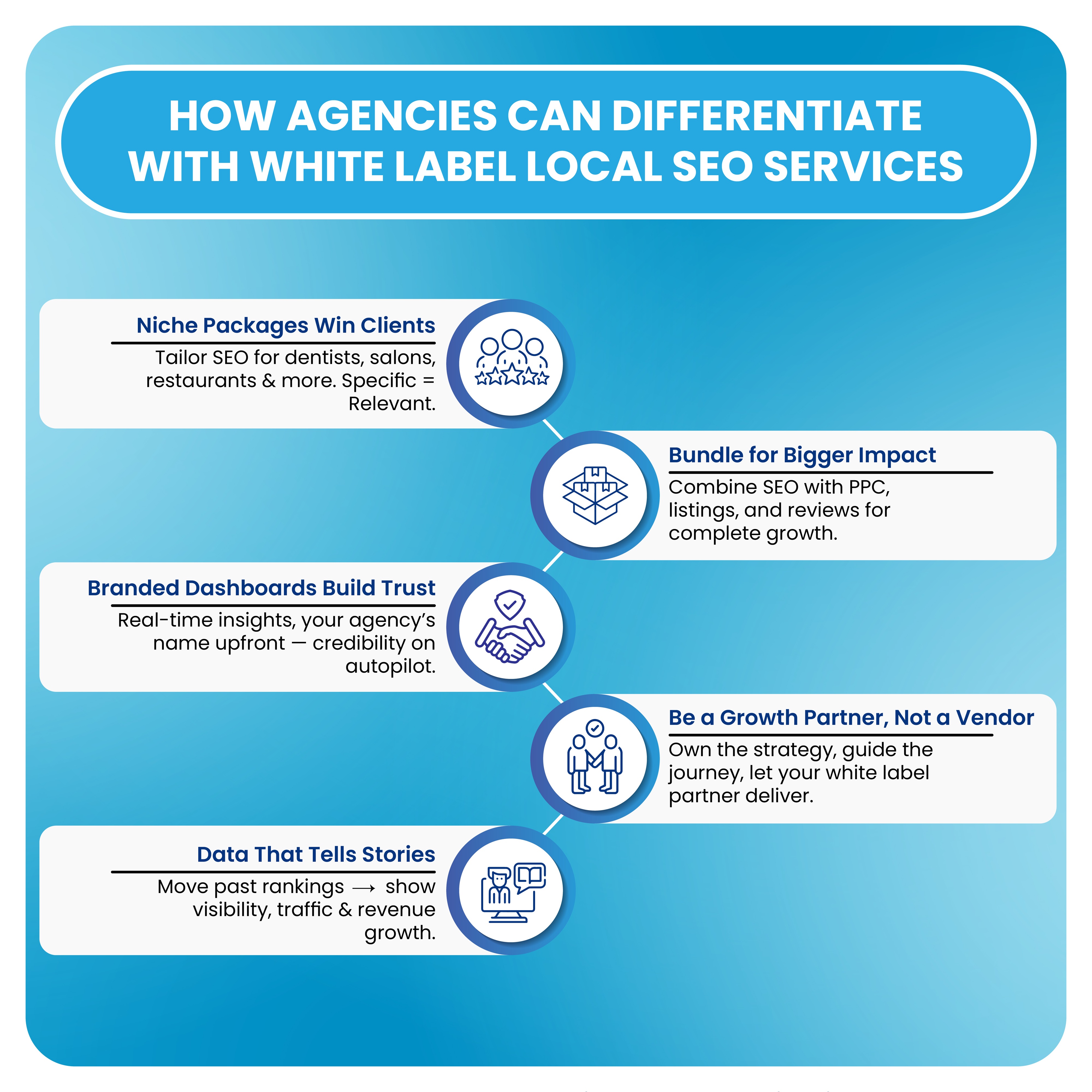
How White Label SEO Helps Agencies Scale Client Expansion?
White label local SEO services give agencies a way to add capacity when clients expand into new markets. Instead of hiring for every expansion, the agency can extend fulfillment as demand rises.
1. Add Fulfillment Capacity When Clients Expand
A white label local SEO firm can absorb additional work without the agency hiring a new specialist for each client's expansion. That flexibility matters when several markets open up at once.
2. Keep Existing Campaigns Moving
Extra fulfillment capacity protects established markets. New-market work draws from the partner's resources rather than from the team already maintaining proven accounts.
3. Access Multiple SEO Specialties
A single market expansion can require several types of work:
- Local SEO
- Technical SEO
- Content
- On-page optimisation
- Authority building
- Google Business Profile support
- Citation management
White label local SEO services agencies rely on can cover these areas without building each skill in-house.
4. Standardise Execution Without Standardising Strategy
This distinction matters: the workflow can be standardised, but the SEO strategy should remain specific to each client's market, services, and business objectives. SOPs make execution repeatable. Strategy stays tailored to each client.
5. Keep Client Relationships In-House
Outsourcing execution does not mean handing over the relationship. The agency remains responsible for:
- Strategy
- Prioritisation
- Communication
- Client relationship
- Business objectives
The fulfillment partner supports execution behind the scenes. This is added capacity, not a replacement for agency expertise.
How DashClicks Supports Agencies With SEO Market Expansion?
DashClicks offers white label local SEO services built for agencies managing client expansion into new cities. The value lies in matching fulfillment capacity to the operational problem, not in adding a list of features.
DashClicks supports agencies with:
- White label SEO fulfillment
- Dedicated specialists
- Local SEO support
- Content and on-page optimisation
- Technical SEO
- Google Business Profile support
- Citation management
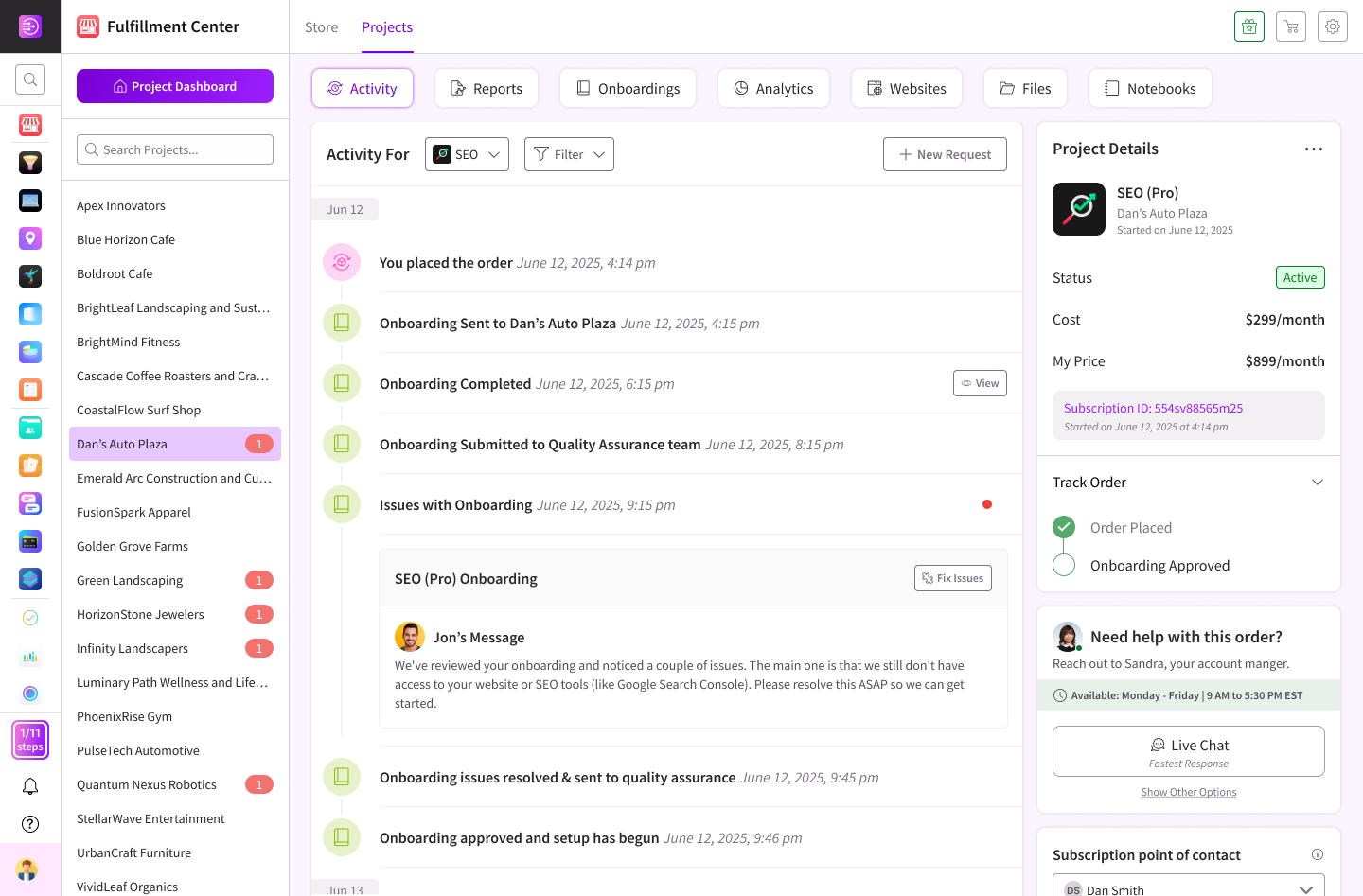
- White label reporting and client dashboards
- Scalable fulfillment
Consider a practical flow. A client expands into three new cities. The agency needs additional local SEO execution to cover the extra work. Fulfillment capacity supports that workload, while the agency keeps control of strategy and client communication.
The core benefit is this: as clients enter new markets, agencies can increase fulfillment capacity without rebuilding their internal SEO team for every expansion. DashClicks does not guarantee rankings, traffic, or revenue. It provides the execution support agencies need to deliver their own strategy at scale.
SEO Expansion Works Better When It Builds on What Already Works
Expanding into a new city is a strategic decision, not a reflex. The agencies that handle it well treat it as an extension of existing work rather than a fresh start.
The main principles are consistent:
- A new city should not automatically mean starting from scratch.
- Evaluate the business opportunity first.
- Use existing SEO equity wherever possible.
- Do not let new-market work undermine established markets.
- Identify first-win opportunities before expanding aggressively.
- Use market-specific KPIs to measure real progress.
- Build a 90-day roadmap to create structure around the expansion.
- Keep enough fulfillment capacity to execute the strategy consistently.
Here is the core message worth holding onto. A new city should not mean starting an SEO campaign from scratch. It should mean intelligently extending what already works, protecting existing performance, and allocating additional resources where the new market presents the strongest opportunity.
For agencies, executing that expansion at scale matters as much as having the right strategy. White label SEO fulfillment can provide the additional capacity needed to expand client campaigns without putting existing accounts at risk.


.svg)


.svg)
.svg)
.svg)
.svg)
.svg)