

.svg)

.svg)
.svg)
.svg)
.svg)
.svg)
As agencies grow their client portfolios, website complexity can increase SEO workload just as much as staffing limitations. From architecture gaps to migration debt, nine common website problems consistently slow SEO fulfillment. Scalable agencies address these systematically rather than case by case.
Scaling SEO is not purely a staffing challenge. As portfolios expand, each website’s CMS, technical debt, and stakeholder requirements determine how much time an account demands.
BrightEdge research shows organic search accounts for 53.3% of trackable website traffic, while its 2025 research indicates that organic search continues to drive strong referral and conversion outcomes. This makes website SEO issues an operational concern, affecting both client performance and the manual effort required from fulfillment teams.
One problematic website may be manageable. Repeated issues across dozens or hundreds of accounts create significant fulfillment friction.
Agencies that scale efficiently are not simply hiring faster. They are building repeatable processes that work across different websites, CMS configurations, technical constraints, and client requirements.
This article explores nine common website problems that slow SEO delivery and explains how agencies can address them systematically.
1. Website Architecture That Becomes Harder to Expand
Some websites function well at their current size but become difficult to expand when clients grow. Adding new services, locations, product categories, or supporting content can become operationally complex when the site has no clear structure to accommodate it.
Common architecture problems include:
- Flat page structures with no logical hierarchy
- Important pages buried several clicks from the homepage
- No consistent relationship between core service pages and supporting content
- New pages being added without a clear organizational framework
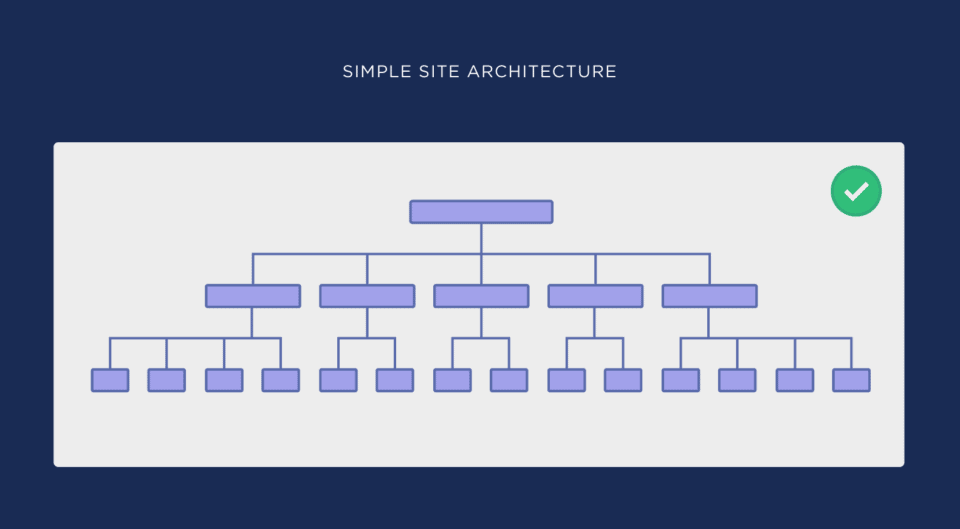
Image Source: Backlinko
Why It Makes SEO Harder to Scale?
Every new page addition may require manual decisions. Where does this page fit? Which existing pages should link to it? How does it relate to the site's core topics? Without a scalable architecture, these decisions accumulate. Google uses links to discover pages and assess relevance, so the absence of a coherent structure has direct crawling and ranking implications.
What Agencies Should Check
- Can new pages be added without restructuring the site?
- Is there a logical relationship between core and supporting pages?
- Are important pages reachable within a few clicks?
- Can internal linking be expanded systematically as the site grows?
2. Website Templates That Create SEO Problems Across Entire Page Groups
Template-level SEO issues are disproportionately impactful because a single problem can affect dozens or hundreds of URLs simultaneously. Common template problems include:
- Identical or near-identical metadata patterns across large page groups
- Thin location-page templates with minimal unique content
- Product page templates generating weak or duplicate pages at scale
- Missing heading structures or important on-page elements
- Duplicate content patterns across service or category page types
Why It Makes SEO Harder to Scale
There is a significant operational difference between fixing one URL-level issue and fixing one template issue that affects 100 URLs. Agencies that audit at the URL level rather than the template level will spend significantly more time identifying and addressing problems that share a common root cause.
What Agencies Should Check
- Are similar pages using the same problematic template?
- Are metadata patterns scalable and distinct across page groups?
- Are important SEO elements included consistently across templates?
- Are location, service, or product templates generating thin pages at scale?
One template-level fix can sometimes resolve dozens of URL-level problems.
3. CMS Limitations That Restrict SEO Changes
An agency may know exactly what needs to change but lack the ability to implement changes efficiently because of CMS constraints. This is one of the most common sources of fulfillment delay.
Typical CMS limitations include:
- Restricted title tag and meta description editing
- Difficult or locked template structures
- Limited canonical tag controls
- Poor internal linking controls
- No bulk optimization capability
- Dependency on developer resources for routine SEO changes
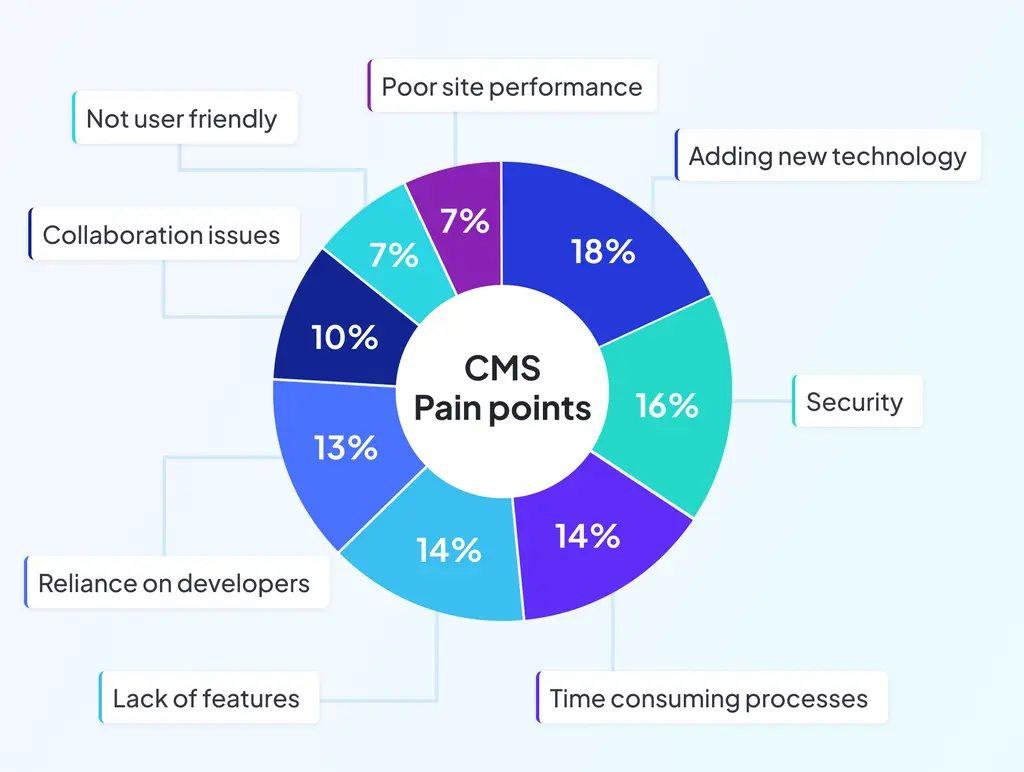
Image Source: Edge of the Web
Why It Makes SEO Harder to Scale
A simple on-page optimization can become a multi-step process:
SEO recommendation → Developer ticket → Approval → Implementation → Review → Follow-up
When that process repeats across many accounts, it consumes fulfillment capacity disproportionate to the actual complexity of the change.
What Agencies Should Check
Before onboarding a new client, assess:
- What can the SEO team change directly?
- What requires developer involvement?
- Are bulk edits possible for title tags, meta descriptions, or headings?
- Can templates be modified without a full development cycle?
- Are technical SEO controls accessible to non-developer team members?
4. JavaScript-Dependent Content That Search Engines May Not Process as Expected
Websites built with heavy JavaScript frameworks may load important content, navigation, links, or page elements in ways that depend on browser rendering. If search engine crawlers cannot access that content reliably, the SEO implications can be significant.
Why It Makes SEO Harder to Scale
Google processes JavaScript through a three-stage pipeline: crawling, rendering, and indexing. JavaScript-powered websites can have rendering delays and processing limitations, meaning content that appears to users may not be immediately accessible to crawlers. Agencies often need additional validation steps to confirm that important content and links are reaching search engines as intended, which adds time to every audit.
What Agencies Should Check
- Is important content available in the initial HTML before rendering?
- Are navigation links and internal links crawlable without JavaScript execution?
- Does the page behave differently for users and for crawlers?
- Are critical JavaScript files accessible and not blocked by robots.txt?
5. URL Structures That Generate Unnecessary Complexity
CMS platforms, faceted navigation, filters, sorting functions, search features, and dynamic parameters can generate large volumes of URLs that serve user interaction but do not represent valuable SEO landing pages.
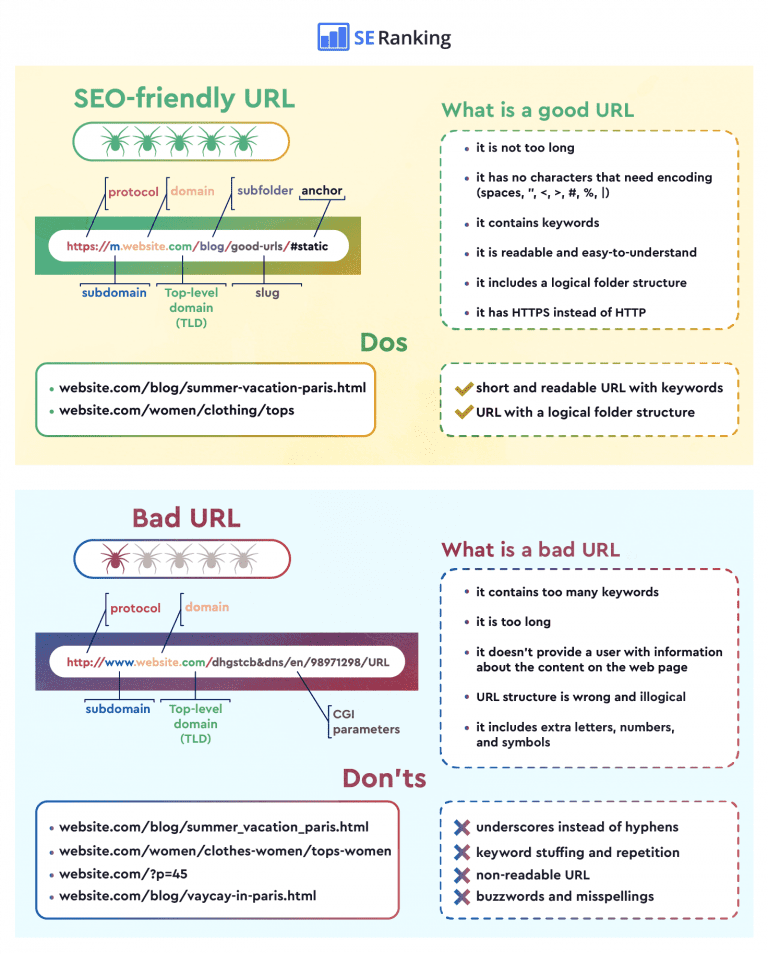
Image Source: SE Ranking
Why It Makes SEO Harder to Scale
Agencies must then determine which URLs should be crawled, indexed, consolidated, canonicalized, or excluded. That analysis is not a one-time task. As the site grows, new parameter combinations and filter variations continue to appear. Google's guidance on faceted navigation explicitly notes that large URL spaces can cause unnecessary crawl budget consumption and indexation problems.
What Agencies Should Check
- Parameter-generated URLs
- Filter and sorting combinations
- Session-based URLs
- Duplicate URL variations from trailing slashes, uppercase, or subdomain differences
- URLs created by internal search features
Further Reading: How to Create SEO-Friendly URLs: A Complete Guide
6. Website Migrations That Leave SEO Debt Behind
Website redesigns, CMS migrations, domain changes, URL restructuring, and replatforming projects all carry SEO risk. The challenge is that problems often do not surface immediately after launch. Rankings and traffic may appear stable for weeks before underlying issues become visible.
Common SEO Problems Left by Migrations
- Missing or incomplete redirect maps
- Changed URL structures with no redirects in place
- Lost internal links pointing to old URLs
- Outdated XML sitemaps referencing retired pages
- Redirect chains created by layered migrations
- External backlinks pointing to URLs that no longer exist
Why It Makes SEO Harder to Scale
Agencies may inherit significant migration-related cleanup work before they can begin the planned SEO roadmap. Google's guidance on site moves recommends maintaining redirects for at least one year and updating all internal links to point to the new URLs. If neither was done properly, the cleanup becomes part of the agency's ongoing workload.
What Agencies Should Check
- Has a full redirect map been implemented and tested?
- Do internal links point to current URLs?
- Has the XML sitemap been updated to reflect the new structure?
- Are there redirect chains that need to be collapsed?
- Are external links to retired URLs being captured by redirects?
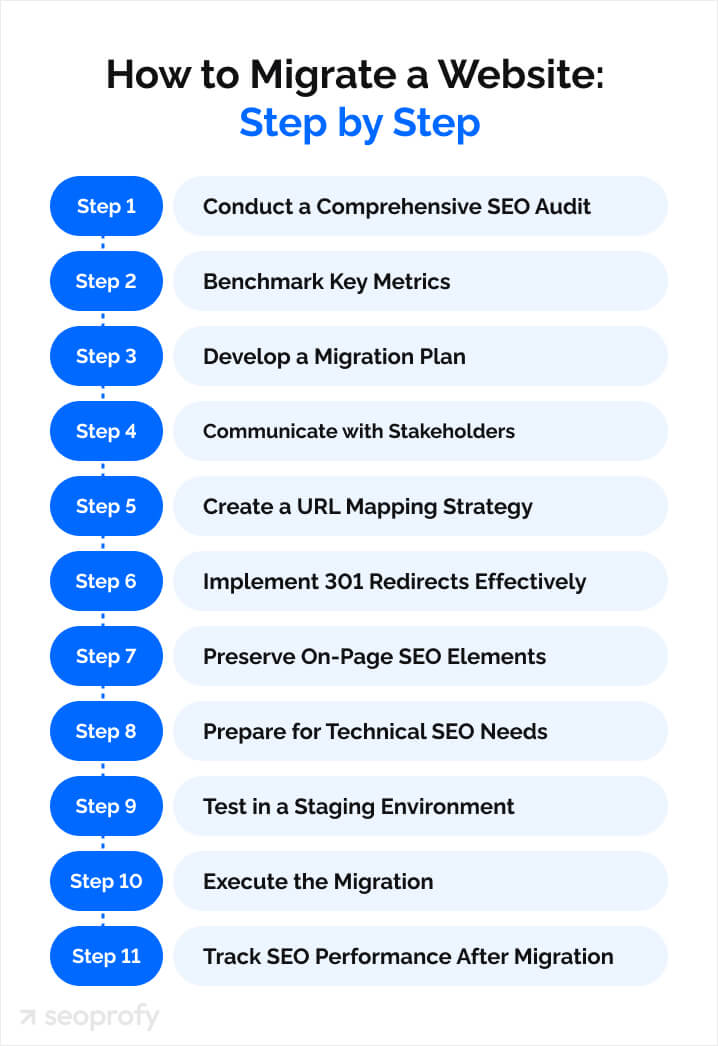
Image Source: SEOProfy
7. Poorly Controlled Duplicate or Near-Duplicate Page Systems
As websites grow, they often accumulate pages that target similar or overlapping search intent. This can happen through deliberate expansion (service and location combinations) or through CMS-generated duplication.
Common sources include:
- Service pages paired with multiple location variations
- Similar service descriptions split across multiple URLs
- Product variation pages with minimal unique content
- Old pages that were never removed or redirected
- Multiple URLs with equivalent or near-equivalent content
Why It Makes SEO Harder to Scale
The agency must determine whether each page should be improved, consolidated, redirected, canonicalized, or removed. Google's guidance on canonical URLs explains how search engines cluster duplicate pages and select a representative URL. Without agency-level management, this clustering may not favor the intended page.
Before creating another page, does the website already have a page competing for the same search intent? That question, applied consistently during content planning, can prevent significant deduplication work later.
8. Website Performance Problems That Affect Entire Client Experiences
Performance problems frequently originate at the theme, plugin, script, or template level. A slow-loading component added globally to a template can affect every page that uses it. The same performance issue can appear across hundreds of URLs because of a single implementation decision.
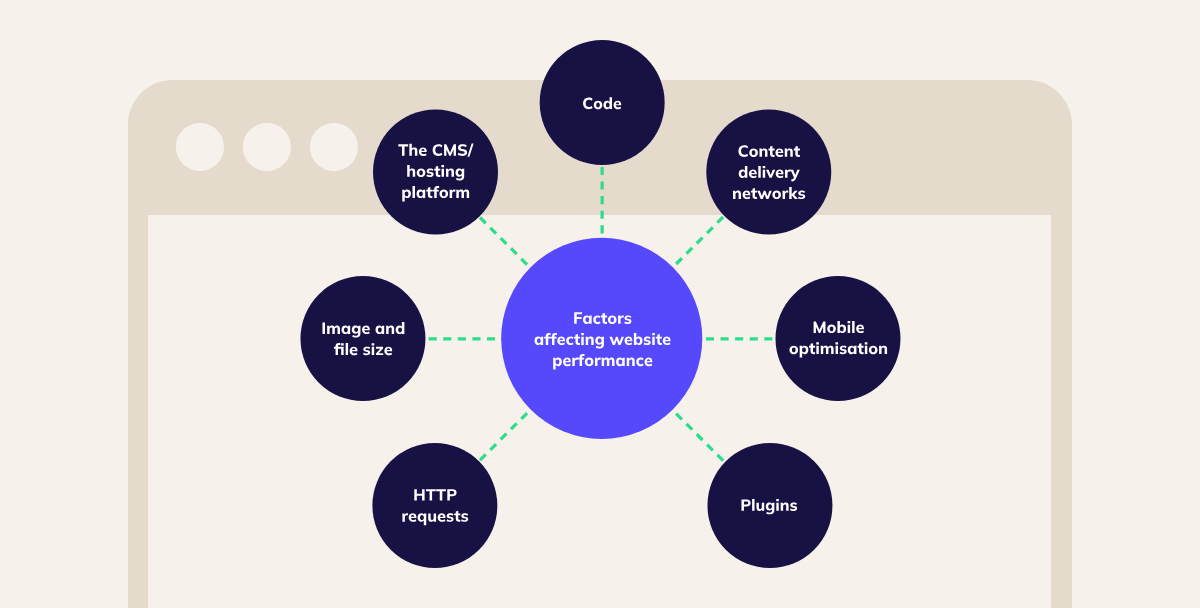
Image Source: Blend
Why It Makes SEO Harder to Scale
Agencies may repeatedly identify the same performance problem across audits but lack direct control over the underlying cause. Implementation changes may require developer resources or client decisions, creating recurring delays between identification and resolution.
What Agencies Should Check
Google's current Core Web Vitals thresholds provide a consistent performance benchmark:
- LCP (Largest Contentful Paint): 2.5 seconds or less
- INP (Interaction to Next Paint): under 200 milliseconds
- CLS (Cumulative Layout Shift): 0.1 or less
Beyond Core Web Vitals, agencies should assess:
- Mobile performance and usability
- Heavy or render-blocking scripts
- Third-party resource loading
- Layout instability caused by late-loading elements
- HTTPS implementation and intrusive interstitials, which are part of Google's broader page experience factors
9. Websites That Do Not Support the SEO Strategy Being Sold
Sometimes the website itself is not structured to support the SEO strategy the agency is proposing. This is less about technical SEO and more about whether the site can capture and convert the search demand being targeted.
Examples include:
- A local business with no scalable location page structure
- A service business without dedicated individual service pages
- A B2B website with no informational content architecture to support top-of-funnel search demand
- High-value services underrepresented or buried within the site
- Organic traffic landing on pages that do not support conversions
Why It Makes SEO Harder to Scale
Agencies may achieve rankings and traffic growth but find it difficult to translate those gains into client outcomes the client can actually see. When the website structure does not align with the strategy, agencies spend time explaining limitations rather than delivering results.
Does the website have the structure needed to capture and convert the search demand being targeted? That question is worth answering before the engagement begins, not several months into the roadmap.
How White Label SEO Services Help Agencies Scale Client SEO?
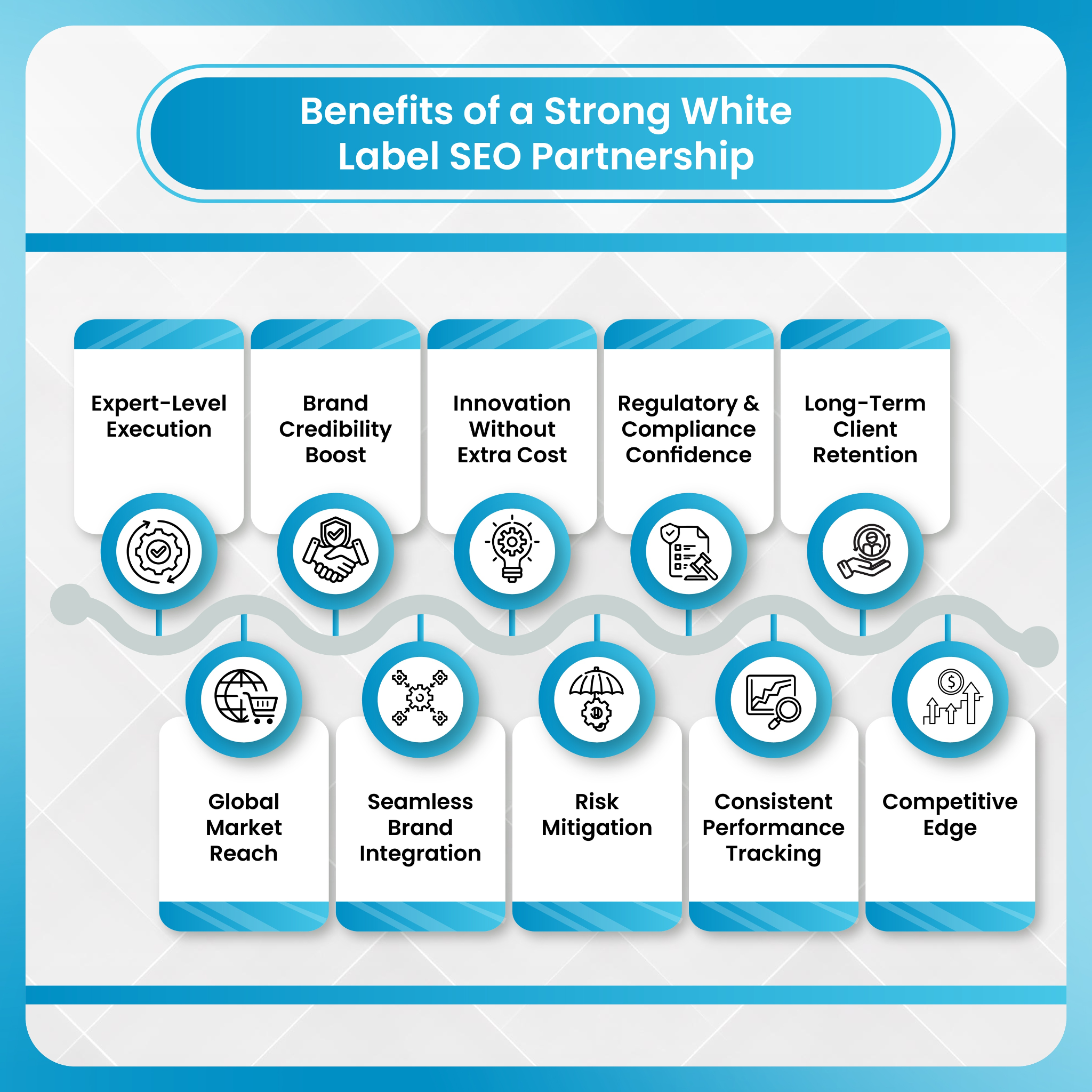
Working across clients with varying levels of website complexity is operationally demanding. A scalable fulfillment model addresses the execution workload so agencies can maintain quality without absorbing every task internally.
- Add SEO Fulfillment Capacity Without Immediate Hiring: Partnering with a white label SEO firm allows agencies to support additional accounts, absorb demand spikes, and handle technically complex work without immediately expanding internal headcount. This is particularly relevant when client volume grows faster than hiring can respond.
- Standardize SEO Fulfillment: Scalable white label SEO for agencies is built around repeatable workflows, documented SOPs, defined QA processes, and clear task assignment. When multiple specialists work across multiple websites, standardization determines whether output is consistent or variable.
- Reduce the Internal Burden of Website Problems: Technical audits, on-page optimization, implementation tasks, and recurring SEO work can be delegated to fulfillment teams. Agencies retain client communication, strategy, and priorities. Fulfillment teams support execution behind the scenes.
- Scale Without Making Fulfillment the Bottleneck: More clients typically means more permanent internal workload. A flexible fulfillment model separates growth from fixed internal capacity. As account volume increases, fulfillment capacity adjusts without requiring proportional permanent hiring decisions.
Create a Repeatable Website-Issue Workflow
When agencies encounter the nine problems described in this article, a consistent workflow reduces the time between identification and resolution:
- Identify the problem
- Assess its impact and scope
- Prioritize the fix within the client's roadmap
- Assign fulfillment resources
- Implement the optimization
- Perform QA
- Monitor results post-implementation
- Report findings back to the client
White label SEO is not simply about outsourcing individual tasks. It can provide the fulfillment infrastructure needed to manage more complex websites without allowing website problems to become a scalability constraint.
How DashClicks' White Label SEO Services Help Agencies Scale?
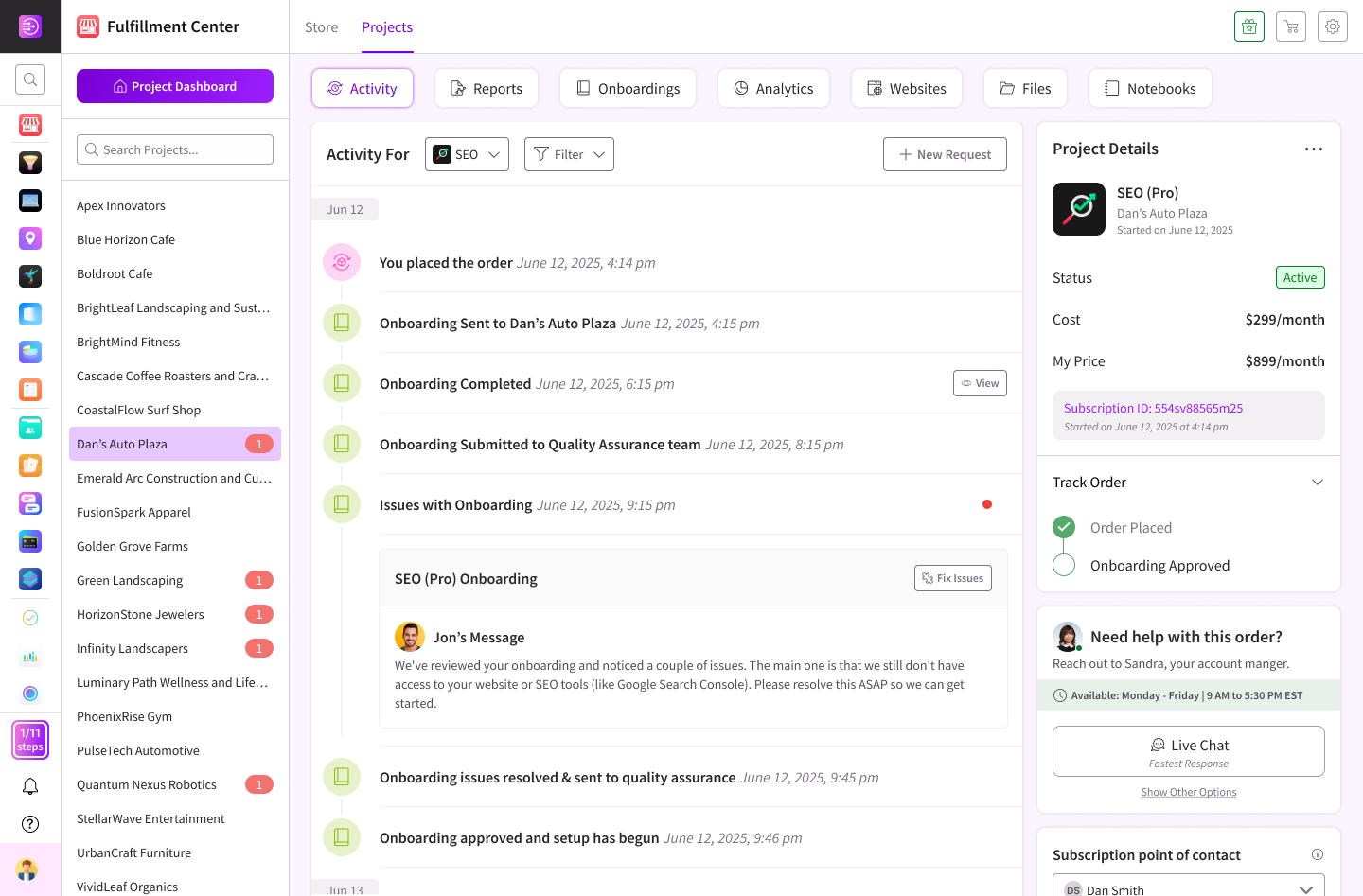
DashClicks offers a white label SEO fulfillment model designed specifically for agencies managing multiple client accounts. Rather than replacing the agency's role, the platform functions as a fulfillment partner working behind the scenes.
Agencies can use white label SEO services to support additional client accounts without immediately expanding their internal SEO team. Fulfillment is structured around documented workflows, repeatable processes, and quality control, which matters significantly when delivery needs to be consistent across a varied client portfolio.
The fulfillment partner handles recurring SEO execution, including technical audits, on-page optimization, and implementation support, allowing internal teams to focus on client communication, strategy, and account management.
As the number and complexity of client websites increase, agencies need fulfillment capacity that can grow with the workload. DashClicks is structured to support that kind of scaling. Agencies maintain their own client-facing brand and relationships throughout the process.
White label SEO services can give agencies additional fulfillment capacity without requiring them to build every specialist function internally.
SEO Scales When Both the Process and the Websites Support It
An agency's SEO capacity is not determined solely by the number of specialists it employs. The websites those specialists work with play an equally important role in shaping how much time and effort each account requires.
A website with structural gaps, CMS restrictions, unresolved migration debt, or misaligned architecture can turn routine SEO work into repeated manual troubleshooting. Multiply that across a growing client portfolio, and the operational impact becomes difficult to manage through individual effort alone.
A scalable website, combined with a scalable fulfillment model, makes SEO easier to standardize, repeat, delegate, monitor, and improve over time.
Agencies that build consistent workflows around these nine problems, rather than addressing each instance as a new challenge, are better positioned to grow their SEO operations without fulfillment becoming the constraint.
SEO scales more effectively when both the fulfillment process and the websites being optimized are built to support growth.


.svg)


.svg)
.svg)
.svg)
.svg)
.svg)