

.svg)

.svg)
.svg)
.svg)
.svg)
.svg)
Holiday shopping compresses months of purchase intent into a few short weeks. Buyers search more often, competition intensifies, and clients expect their agency to capture every bit of relevant demand. The pressure is real, and it arrives fast.
Many agencies respond by simply raising Google Ads budgets. That approach rarely works on its own. Higher spend without the right structure, targeting, and timing tends to waste money rather than win sales. Holiday success depends on adjusting campaign structure, offers, bidding, landing pages, and optimization around how people actually shop during the season.
There is also a second challenge that agencies feel acutely: fulfillment pressure. When several clients need changes at the same time, execution becomes the bottleneck. A great strategy means little if the team cannot implement it quickly across every account.
This blog covers practical holiday Google Ads strategies you can apply, along with a realistic look at how agencies can manage the extra workload. We will also explore how white label Google Ads management can add execution capacity during seasonal spikes without forcing you to expand your internal PPC team overnight.
The central idea is simple. Strong holiday performance depends on planning for changing demand while maintaining consistent execution.
Why Holiday Sales Require a Different Google Ads Strategy?
Running your usual campaigns with bigger budgets ignores everything that makes the holiday period unique. Demand behaves differently, and so should your approach.
Several factors change during the holidays:
- Seasonal search demand rises sharply within a short window.
- Competition for valuable keywords increases across most industries.
- Consumer search behaviour shifts toward gifts, deals, and fast delivery.
- Promotional windows are limited, so timing matters more than usual.
- CPCs often climb as more advertisers compete for attention.
- Clients make more frequent requests and expect faster responses.
Holiday campaigns also leave less room for slow, gradual optimization. When a promotion runs for five days, you cannot spend two weeks testing your way toward the right settings. Decisions need to happen quickly and with confidence.
The Key Takeaway: holiday campaigns require more deliberate planning and closer optimization, not simply more ad spend.
1. Identify the Holiday Opportunities That Matter Most
Before you touch a single campaign, decide where the strongest opportunities actually exist. Not every client, product, or keyword deserves equal attention during a compressed selling season.
Start by asking practical questions about each client:
- Which products or services have genuine seasonal demand?
- Which clients have compelling holiday offers ready to go?
- Which products have enough inventory to support increased spend?
- Which services experience predictable seasonal interest?
- Which keywords show strong commercial intent?
- Which existing campaigns already produce reliable conversions?
To turn these answers into decisions, use a simple prioritisation framework:
Demand → Profitability → Competition → Conversion Potential
- Demand: Is there real seasonal interest in the product or service?
- Profitability: Does the margin justify aggressive spend, or will discounts erode returns?
- Competition: How crowded is the auction, and can the client compete effectively?
- Conversion Potential: Has the campaign or landing page proven it can convert traffic?
Opportunities that score well across all four deserve your budget and attention first. This keeps your effort focused where it can produce results, rather than spread thin across accounts that lack the demand or margin to justify it.
2. Build Campaigns Around High-Intent Holiday Searches
During the holidays, the gap between browsing and buying narrows. Your campaigns should prioritise searches that signal a strong intent to purchase.
High-intent searches tend to fall into these categories:
- Commercial searches (best gift for, top-rated)
- Transactional searches (buy, order, shop)
- Product-specific searches with clear model or variant names
- Service plus holiday searches (holiday cleaning, festive catering)
- Promotional searches (discount code, sale, deal)
- Brand searches from people ready to buy
- Long-tail seasonal searches with specific intent
The difference between high-intent and informational searches is important. Someone typing "how do LED string lights work" is learning. Someone typing "buy warm white LED string lights" is closer to a purchase. Holiday budgets stretch further when they favour the second type.
That said, do not automatically abandon your evergreen campaigns when holiday campaigns launch. Evergreen campaigns often carry historical conversion data, established Quality Score, and steady baseline performance. Pausing them can disrupt account signals and cost you demand that exists year-round.
The right balance between holiday and evergreen campaigns depends on the client's business model, available budget, historical data, and conversion goals. Some clients need an aggressive seasonal push, while others simply need a modest holiday layer on top of stable evergreen activity.
3. Create Holiday-Specific Ad Copy and Offers
Holiday intent should show up clearly in your messaging. Generic ad copy running through peak season is a missed opportunity.

Reflect the season in your ads through elements like:
- Seasonal promotions and themed language
- Limited-time offers
- Specific discounts (20% off, save $50)
- Free shipping where relevant
- Gift-focused messaging (perfect gift for, ready to unwrap)
- Genuine urgency tied to real deadlines
- Clear offer deadlines
- Promotional assets and sitelinks that reinforce the deal
Make the offer and its deadline obvious, but avoid manufacturing false urgency. Countdown language only works when the deadline is real. Misleading urgency damages trust and can create compliance problems.
Agency Workflow Angle
Across multiple clients, ad copy becomes a repeatable process rather than a one-off creative task. Establish a clear sequence your team follows every time:
- Collect client offers early, ideally before the season begins.
- Confirm promotional details, including exact discounts and dates.
- Write ad variations for each offer and audience.
- Get client approval on copy and claims.
- Schedule campaigns to align with promotional start dates.
- Update or pause ads promptly when promotions end.
Step six matters more than most agencies expect. Ads promoting expired offers frustrate shoppers and waste spend. A defined process for retiring old promotions protects both performance and reputation.
4. Adjust Google Ads Budgets Around Peak Demand
Increasing every client's budget by the same percentage is inefficient. Some campaigns can absorb more spend profitably, while others cannot.
Approach budget adjustments with these considerations:
- Identify each client's specific peak shopping periods.
- Review historical conversion data to find what has worked before.
- Allocate additional budget to campaigns with a proven track record.
- Monitor impression share to spot where demand outpaces budget.
- Protect spend for high-converting campaigns during peak days.
- Adjust budgets as demand rises and falls through the season.
- Reduce or reallocate spend once promotional periods end.
Budget allocation should follow performance and opportunity, not simply the calendar.
Budget pacing deserves close attention during peak periods. A campaign that exhausts its daily budget by noon may miss valuable afternoon and evening demand. On the other hand, a campaign underspending during its best days signals a targeting or bidding issue worth investigating. Watching pacing daily during peaks helps you catch these problems while they still matter.
5. Optimize Bidding and Conversion Goals for Holiday Performance
Bidding strategy deserves careful review as demand changes, but it also rewards restraint. Sudden, drastic changes during a critical window can do more harm than good.
Work through bidding decisions methodically:
- Review existing conversion volume before making major bidding changes.
- Monitor CPA and ROAS against realistic seasonal expectations.
- Review conversion value where that data is available.
- Adjust targets only when supported by enough data.
- Watch for shifts in conversion behaviour as the season progresses.
- Avoid unnecessary changes during your most critical days.
- Give automated bidding enough quality data to operate effectively.
Automated bidding does not remove the need for human oversight. Smart Bidding relies on accurate conversion tracking and sufficient volume. During volatile holiday periods, it still needs someone watching for anomalies and stepping in when signals go wrong.
One principle protects you more than any other: avoid making several major changes at the same time during a critical promotional period, unless there is a strong reason. Simultaneous changes make it impossible to know what caused a result, and they can destabilise campaigns right when stability matters most.
6. Optimize Performance Max and Shopping Campaigns
For ecommerce clients, Performance Max and Shopping campaigns often need extra attention during the holidays. These campaign types depend heavily on accurate product data.
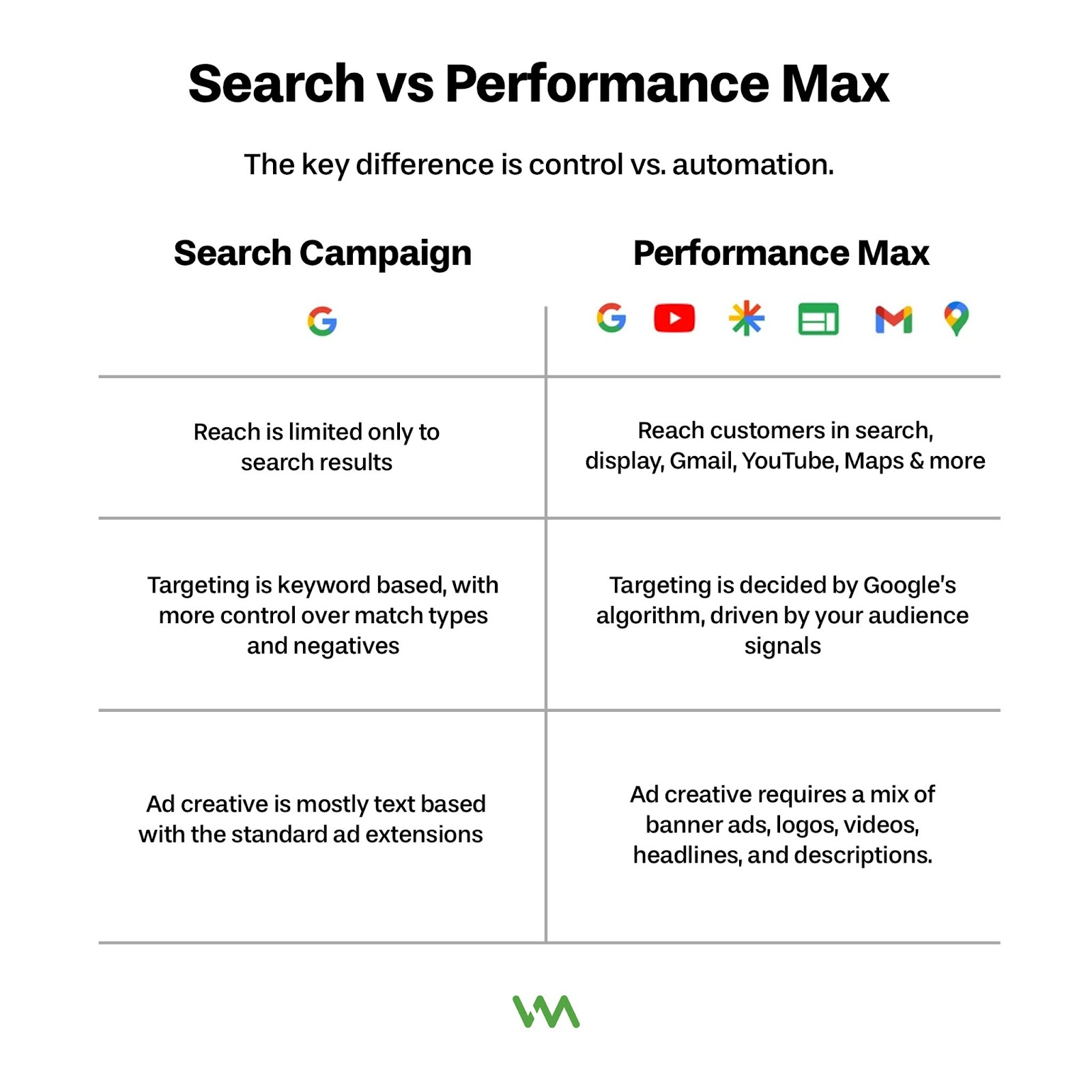
Image Source: Verde Media
Run a checklist across each ecommerce account:
- Product feed accuracy and completeness
- Correct pricing, especially for discounted items
- Product availability and stock status
- Promotional information reflected in the feed
- Product-level performance trends
- Budget allocation across product groups
- ROAS by product or category
- Creative assets used within Performance Max
- Top-performing products worth prioritising
- Underperforming products to review or exclude
Confirm that product information stays accurate whenever promotions, prices, or inventory change. A price mismatch between the feed and the landing page can cause disapprovals or lost trust at the worst possible time.
Feed and product issues can undermine performance even when the campaign itself is set up perfectly. Many agencies focus on bids and budgets while ignoring the feed, only to discover that a data error quietly capped results throughout the season.
7. Align Landing Pages With Holiday Search Intent
Winning the click is only half the job. If the landing page does not match the promise of the ad, conversions suffer regardless of how well the campaign performs.
Review landing pages for these elements:
- Message match between the ad and the page
- Clearly displayed holiday offers
- Visible promotion expiration dates
- A strong mobile experience, since holiday traffic skews mobile
- Simple, short conversion paths
- Accurate product or service availability
- Relevant, action-focused CTAs
Sending holiday traffic to an outdated evergreen landing page weakens conversion performance. A shopper who clicks a "30% off holiday sale" ad and lands on a generic homepage with no mention of the offer will often leave immediately.
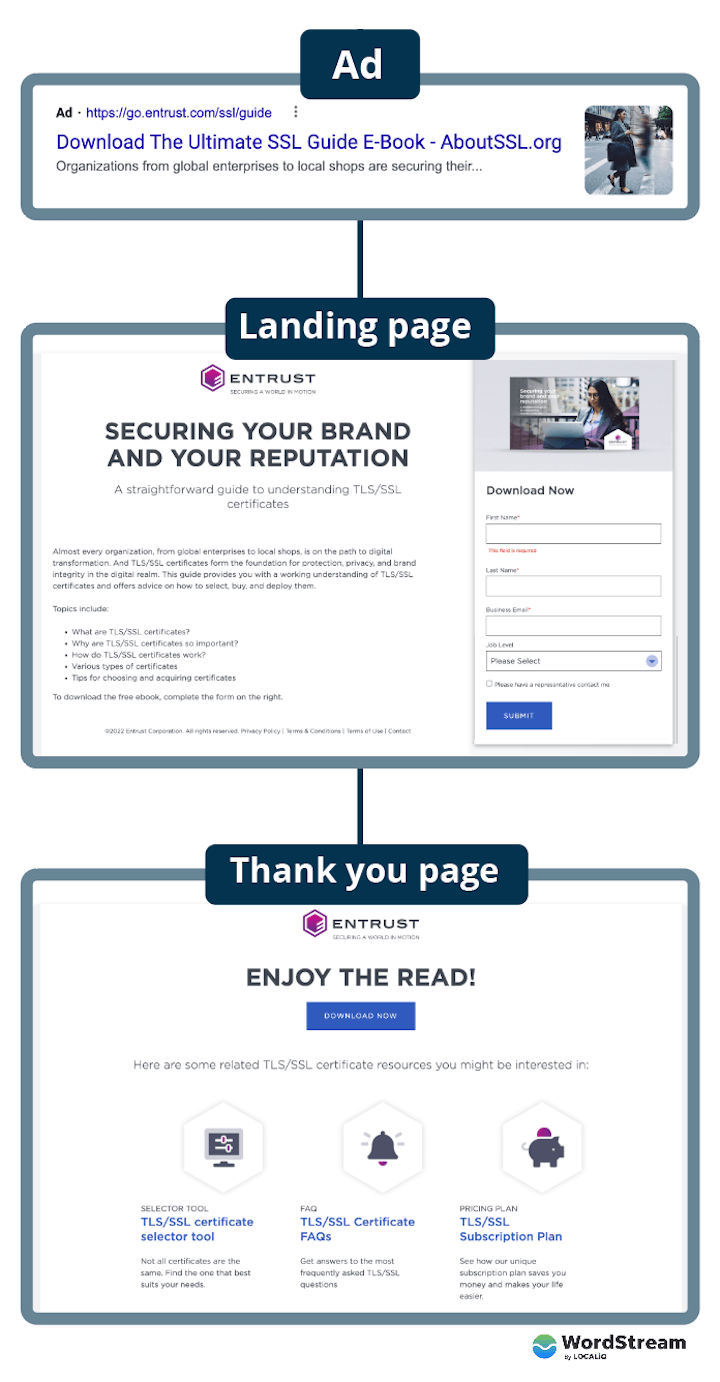
Image Source: WordStream
Aim for a clean, consistent journey:
Holiday ad → Holiday offer → Relevant landing page → Clear CTA
The landing page should deliver exactly what the ad promised. Consistency between the two builds confidence and reduces the friction that costs you sales.
8. Use Remarketing to Capture Returning Holiday Shoppers
Few shoppers convert on their first visit, especially when comparing gifts across several stores. Remarketing helps you stay present while they decide.
Useful holiday audiences include:
- Previous website visitors
- Product viewers who did not purchase
- Cart abandoners
- Previous customers likely to buy again
- High-intent visitors to key landing pages
Remarketing Ads lets you reconnect with people who showed interest but were not ready to buy. During a season defined by comparison shopping, a well-timed reminder can bring a hesitant buyer back.
Adapt your messaging to where the user sits in the buying journey. A cart abandoner might respond to free shipping or a reminder that the offer ends soon, while a past customer might respond to a loyalty-style deal. Matching the message to the moment makes remarketing far more effective than a single generic ad.
9. Monitor Campaign Performance More Closely During Peak Periods
Holiday campaigns leave little room for delayed reactions. A problem that goes unnoticed for a week can waste a meaningful share of the season's budget.
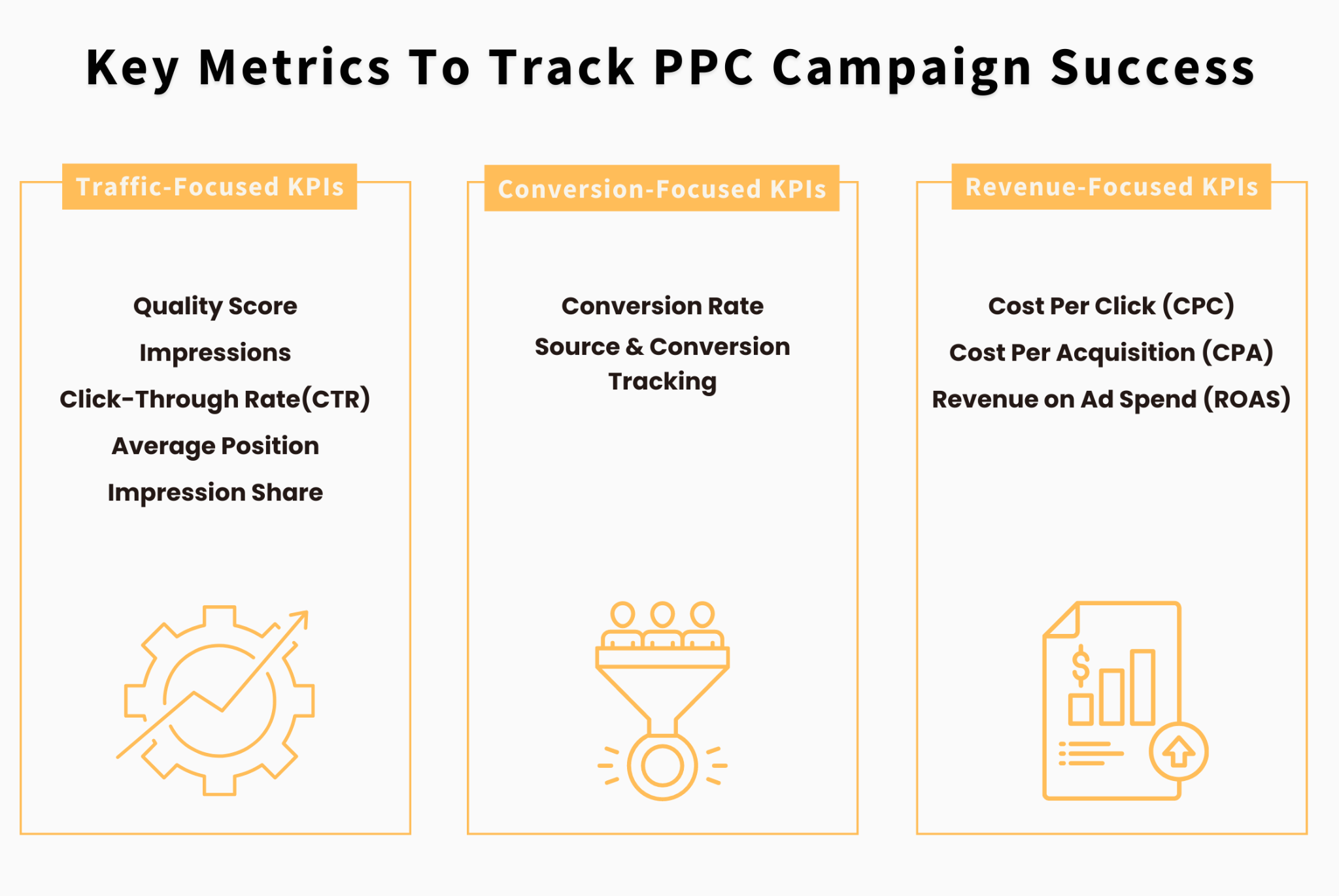
Watch these metrics more frequently than usual:
- Conversions
- Conversion value
- ROAS
- CPA
- CPC
- CTR
- Impression share
- Budget utilisation
- Product-level performance
- Service-level performance
There is an important difference between monitoring and reporting. Reporting looks backward and explains what happened. Monitoring is active and should lead to action while the campaign is still running.
To keep monitoring purposeful, define your approach before the season starts:
- What you are watching, and which metrics matter most
- How often you review each account
- Which changes require immediate attention
- Which changes require more data before you act
Clear rules prevent both overreaction and inaction. Your team knows when to intervene and when to hold steady, which is exactly the clarity you need during a busy peak.
10. Prepare for Last-Minute Client Changes
The operational reality of holiday PPC is that clients rarely stay still. Requests arrive suddenly, often at the busiest moments.
During the season, clients may:
- Change an offer
- Increase a budget
- Extend a promotion
- Pause a product
- Launch a new promotion
- Request new ad copy
- Change a landing page
- Adjust inventory availability
These requests create fulfillment pressure, particularly when several clients ask for changes at once. A single specialist cannot rewrite ad copy for one account, update a Shopping feed for another, and increase budgets for two more all within the same hour.
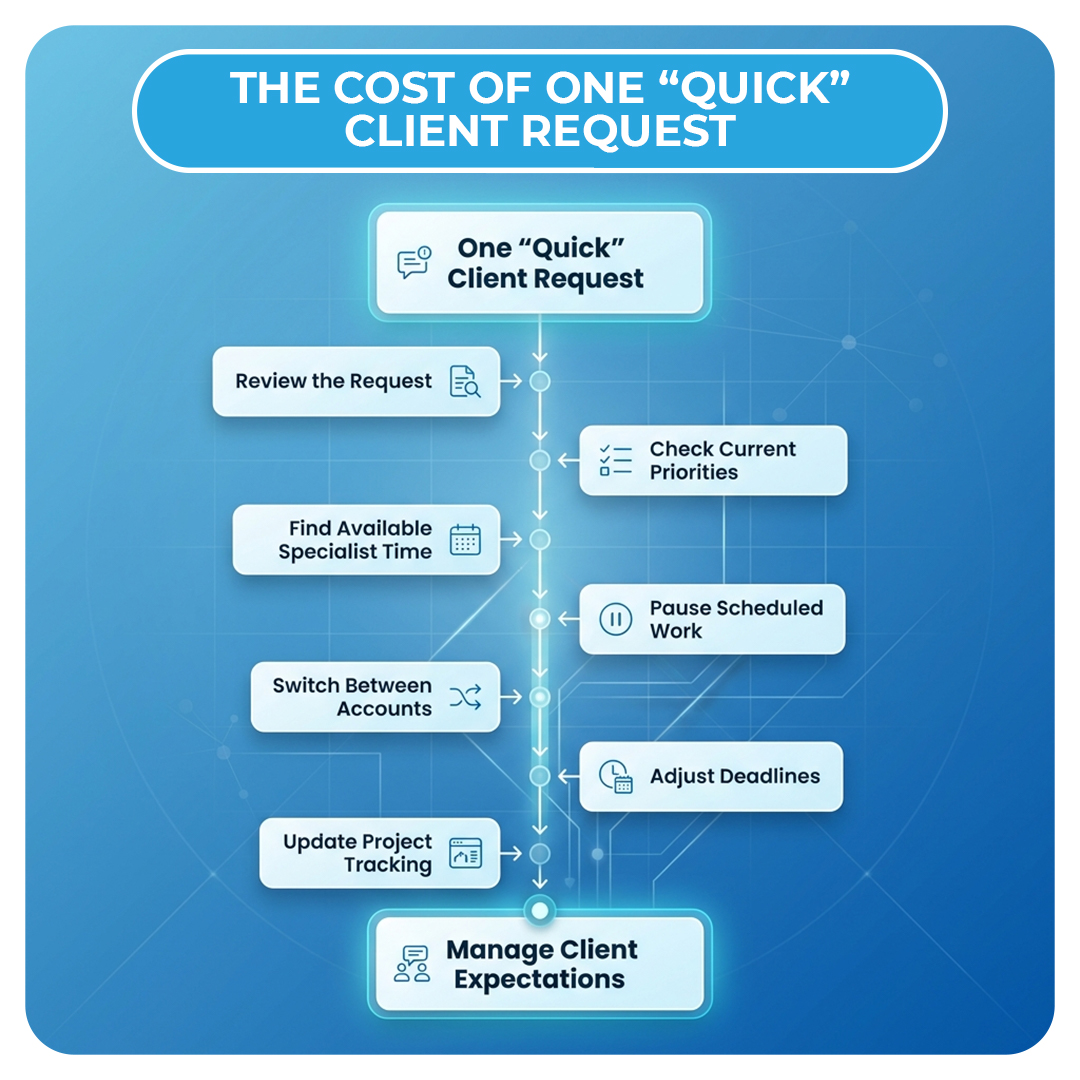
Recommend a simple workflow
A defined process keeps last-minute requests from turning into chaos:
Client request → Agency review → Approval → Fulfillment assignment → Execution → QA → Launch/update → Monitoring
Decide who approves changes and who executes them before the holiday period begins. When roles are clear in advance, urgent requests move through the process quickly instead of stalling while everyone figures out who is responsible.
How White Label Google Ads Helps Agencies Handle Holiday Campaign Work?
Holiday PPC creates a temporary surge in workload. For many agencies, that surge lasts a few weeks and then fades. Hiring permanent staff to cover a short-lived spike often does not make sense, yet the work still needs to get done.
White label Google Ads management offers one way to add execution capacity for that period without permanently expanding your team.
1. Add Fulfillment Capacity Without Immediate Hiring
A white label Google Ads agency can provide additional execution support without requiring you to recruit, hire, and train new PPC specialists right when you are busiest. That support can span:
- Campaign setup
- Ongoing campaign management
- Optimization
- Keyword research
- Ad copy creation
- Conversion tracking
- Reporting
- Budget management
This does not mean outsourcing automatically improves campaign performance. Results still depend on strategy, offers, and the quality of execution. What a fulfillment partner provides is capacity, giving your team room to handle more work during a demanding stretch.
2. Support Multiple Client Campaigns
Holiday workload usually hits several accounts at once. Picture a typical peak week:
- Client A needs a new promotional campaign built.
- Client B needs a budget increase implemented and monitored.
- Client C needs Shopping feed updates before a sale.
- Client D needs fresh ad copy for a limited-time offer.
Handling all four internally often means pulling your specialist away from work already in progress. A Google Ads outsourcing agency can absorb some of these tasks, so existing campaigns keep receiving attention while new requests get handled in parallel.
3. Access Specialised PPC Expertise
Not every agency has every PPC specialty represented on staff. A fulfillment partner can bring experience across areas such as:
- Search campaigns
- Shopping campaigns
- Performance Max
- Campaign optimization
- Keyword research
- Ad copy
- Conversion tracking
- Budget management
For an agency that is strong in strategy but thin in a specific technical area, this access can fill a practical gap during a season when there is no time to develop that skill internally.
4. Maintain the Agency's Client Relationship
A well-run white label model keeps a clear line between ownership and execution. The agency stays responsible for:
- Client communication
- Strategy
- Business objectives
- Prioritisation
- Approvals
- The overall client relationship
The fulfillment partner supports:
- Campaign execution
- Ongoing optimization
- Technical PPC tasks
- Reporting support
- Recurring campaign management
Good white label Google Ads management works behind the scenes. Your clients continue to see your brand and deal with your team, while the execution happens quietly in the background.
5. Scale Seasonal Work Without Permanent Headcount
This distinction matters most during the holidays. A temporary workload increase does not always justify a permanent hire.
Permanent Hiring = Ongoing Headcount and Long-Term Cost
White Label Fulfillment = Additional Execution Capacity That Flexes with Demand
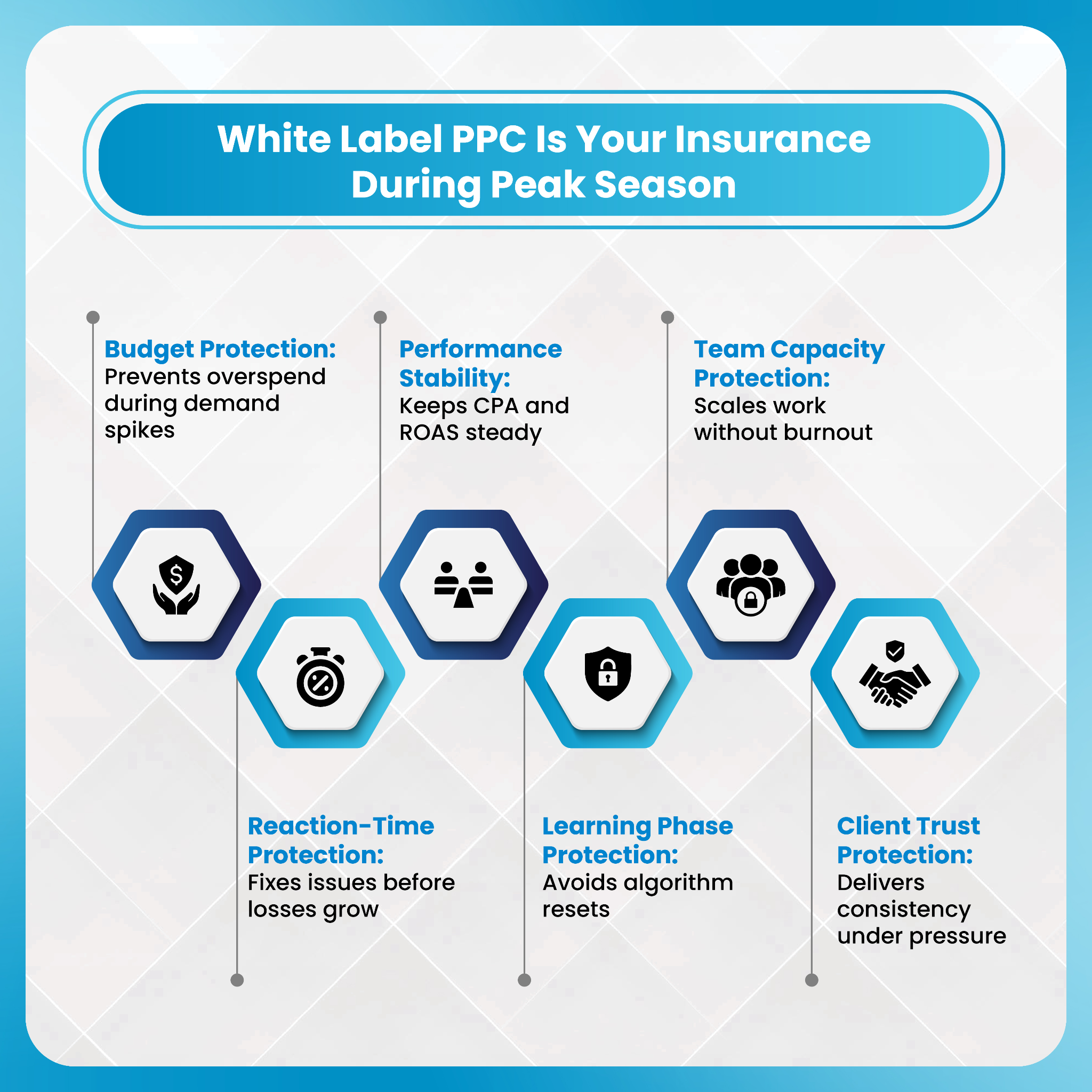
Outsourcing is not universally better than hiring. The right choice depends on your workload, your internal expertise, and your long-term plans. If you consistently need more PPC capacity throughout the year, hiring may be the better investment. If the pressure is genuinely seasonal, flexible fulfillment often fits the need more closely.
A Holiday Google Ads Workflow Agencies Can Repeat
A repeatable workflow keeps holiday execution consistent across every client. A simple structure works well:
Plan → Build → Launch → Monitor → Optimize → Report
Plan
Map out the season before you build anything:
- Seasonal opportunities worth pursuing
- Confirmed client offers
- Budget allocations
- Client priorities
- Promotional start and end dates
Build
Prepare every element the campaign needs:
- Campaign structure
- Keywords
- Ads
- Assets and extensions
- Product feeds
- Landing pages
- Conversion tracking
Launch
Activate campaigns before peak demand arrives, not at the last minute. Early launches give algorithms time to gather data and let you catch setup issues before they cost you during the busiest days.
Monitor
Keep a close eye on the metrics that signal performance and pacing:
- Spend
- Conversions
- ROAS
- CPA
- Budget pacing
- Product and service performance
Optimize
Shift budget and attention toward the strongest opportunities based on actual results. Optimization during the holidays is less about experimentation and more about doubling down on what is clearly working.
Report
Show clients a clear picture of the season:
- What changed
- What performed well
- What was optimized
- What should happen next
This workflow connects naturally to SOPs and standardised fulfillment processes. When each stage is documented, your team and any fulfillment partner can execute it the same way across every account, which is exactly what keeps quality steady during a hectic period.
Common Holiday Google Ads Mistakes Agencies Should Avoid
A few recurring mistakes undermine holiday performance more than others:
- Waiting until peak demand to launch campaigns: Late launches miss learning time and early sales.
- Increasing every client's budget equally: Uniform increases ignore where the real opportunity sits.
- Ignoring landing-page readiness: Great ads fail when the page does not match the offer.
- Using outdated promotional messaging: Expired offers waste spend and frustrate shoppers.
- Neglecting conversion tracking: Broken tracking blinds both you and automated bidding.
- Making too many changes at once: Simultaneous changes make results impossible to read.
- Failing to monitor budget pacing: Early budget exhaustion misses valuable demand.
- Ignoring product feed issues: Feed errors quietly cap Shopping and Performance Max results.
- Treating every client's holiday strategy the same: Different businesses need different approaches.
- Underestimating the fulfillment workload: Strategy fails without the capacity to execute it.
How DashClicks Supports Agencies During Holiday Google Ads Campaigns?
DashClicks helps agencies handle seasonal Google Ads workloads by providing white label fulfillment capacity without requiring every task to be managed in-house.
- White Label Fulfillment: Handle Google Ads management under your agency’s brand while you retain control of strategy and client relationships.
- Campaign Setup and QA: Support for campaign setup, quality assurance, approvals, launches, and ongoing maintenance helps keep holiday campaigns on track.
- Ongoing Optimization: Continued monitoring and optimization help campaigns adapt as demand, competition, and performance change throughout the season.
- Branded Client Experience: Use white label reporting while keeping client communication and the overall experience under your agency’s brand.
DashClicks gives agencies additional execution capacity during seasonal peaks while allowing them to stay focused on strategy and client relationships.
Planning Beats Spending Every Holiday Season
Holiday Google Ads demand rewards agencies that prepare rather than react. The strongest results come from identifying the highest-value opportunities early and building around them deliberately.
The fundamentals hold every season. Align campaigns with search intent and seasonal offers. Let budgets follow opportunity and performance rather than the calendar. Review landing pages, product feeds, conversion tracking, and bidding before peak periods arrive. Then monitor campaigns closely through limited promotional windows so you can act while it still counts.
Do not underestimate the operational side. Last-minute client requests create real fulfillment pressure, and several arriving at once can overwhelm a small team. White label Google Ads fulfillment gives agencies a way to add execution capacity during these seasonal spikes without committing to permanent headcount.
Strong holiday PPC performance is not just about spending more. It is about preparing earlier, prioritising intelligently, responding quickly, and having enough fulfillment capacity to execute the strategy across every client account.


.svg)


.svg)
.svg)
.svg)
.svg)
.svg)