

DashClicks Blog
The industry's top experts offer their best advice, research, how-tos, and insights—all in the name of helping you level-up your business and online marketing skills.
Join Us!
.svg)
.svg)
.svg)
.svg)
.svg)

Building Feedback Loops Between Your Team and White Label SEO Provider for Continuous Improvement
For most digital marketing agencies, outsourcing SEO to a white label partner begins as a capacity solution — a way to fulfill more projects without expanding the internal team. But here’s the problem: outsourcing without feedback is just delegation, not collaboration.
Agencies often end up in a cycle of repeated deliverables, inconsistent results, and “firefighting” misalignments. The real growth happens when you turn that outsourced partnership into a continuous learning system — where every campaign teaches both teams something new, improving future performance and client satisfaction.
According to a 2024 Databox survey, 57% of agencies report that collaboration and reporting are their top operational time sinks. However, agencies that actively build structured feedback loops cut project turnaround times by up to 25% and see up to 30% higher client retention.
A well-engineered feedback loop transforms SEO outsourcing from a vendor transaction into an extension of your agency’s intellectual capital — where each iteration compounds results.
The Importance of a Feedback Loop in SEO Partnerships
Agencies often turn to white label SEO providers to tap into specialized expertise and scale their service offerings. While outsourcing can provide immediate capacity and technical know-how, many agencies struggle to sustain a continuous learning process that adapts to shifting client needs, industry trends, and search engine updates. Without a structured feedback system, outsourced efforts can remain siloed, limiting both performance and long-term growth.
A well-implemented feedback loop changes that dynamic. It ensures that both your internal team and the white label SEO provider stay aligned, responsive, and focused on measurable outcomes. By fostering regular communication, shared accountability, and data-driven decision-making, a feedback loop transforms SEO efforts from routine execution into a cycle of continuous improvement.
Key Benefits of a Strong Feedback Loop
- Accelerated Client Wins: Quickly identifying and addressing performance gaps allows agencies to optimize campaigns faster, resulting in more immediate improvements for clients.
- Enhanced Client Retention: Consistently delivering measurable results builds trust and satisfaction, strengthening long-term client relationships and encouraging renewals.
- Operational Efficiency: Clear communication channels, structured processes, and defined roles reduce misunderstandings and delays, enabling teams to work more effectively.
- Data-Driven Decision Making: Continuous feedback provides real-time insights, allowing agencies to refine strategies proactively rather than reactively.
By investing in a structured feedback loop, agencies not only improve campaign outcomes but also create a framework that scales knowledge, reduces friction, and supports sustainable growth.
What Constitutes an Effective Feedback Loop?
A “feedback loop” is not just about weekly check-ins or messages. It’s a living system that collects data, synthesizes insights, prioritizes actions, and repeats — with accountability built in.
Think of it as a six-step operational flywheel:
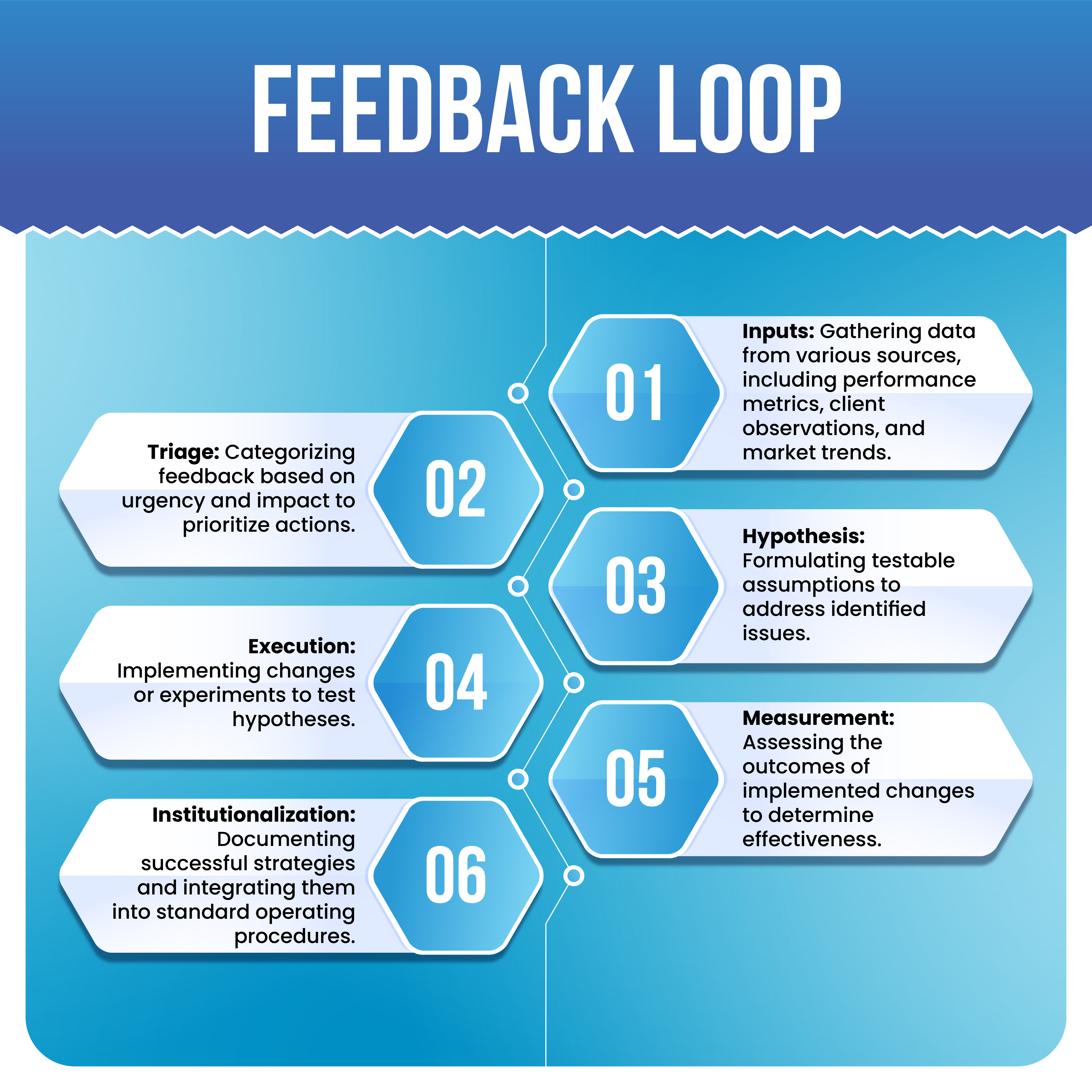
This cyclical process ensures that both teams are continuously learning and adapting, leading to sustained improvements in SEO performance.
Types of Feedback You Must Capture (and Why Each Matters)
Different kinds of feedback drive different insights. Agencies that treat all feedback equally often drown in noise — while those that structure it strategically turn chaos into clarity.
Here are five essential feedback streams:
- Performance Feedback: Quantitative data such as click-through rate (CTR), impressions, rankings, and conversion metrics.
- Experience Feedback: Qualitative insights from clients and internal teams regarding user experience and satisfaction.
- Process Feedback: Observations about workflow efficiencies or bottlenecks, including issues with SLAs or content review cycles.
- Creative Feedback: Input on messaging, tone, and calls to action that resonate with the target audience.
- Market Feedback: Information on competitor activities, industry trends, and regulatory changes that may impact SEO strategy.
Each type of feedback deserves its own capture format — form submissions for client input, call notes for qualitative context, automated tags for performance data.
The Point: structured collection is the foundation for structured improvement.
Design Patterns for Bullet-Proof Feedback Loops
To ensure the feedback loop is effective and actionable, consider the following design patterns:
- Single Source of Truth (SSOT): Maintain a centralized repository for all SEO-related data and documents to ensure consistency and accessibility.
- Event-Driven Feedback Ingestion: Implement automated systems to capture feedback in real time, reducing delays and ensuring timely responses.
- Triage Matrix (Impact × Effort): Develop a system to evaluate feedback based on its potential impact and the effort required to address it, facilitating efficient prioritization.
- Feedback Contracts: Establish clear agreements outlining the types of feedback accepted, expected response times, and criteria for resolution.
- Data Schema Standardization: Agree on consistent definitions for key metrics to prevent misunderstandings and ensure accurate reporting.
The more standardized the feedback system, the less interpretation is required. That clarity accelerates improvement cycles and fosters trust between teams.
Cadence & Governance — What to Run, How Often, and Who Owns It
Regular and structured interactions between teams are essential for maintaining an effective feedback loop:
- Daily: Monitor automated alerts for anomalies such as traffic dips or crawl errors.
- Weekly: Conduct brief triage sessions to review new feedback and assign responsibilities.
- Biweekly: Plan and execute mini-sprints to test new strategies or address identified issues.
- Monthly: Review outcomes, assess KPI progress, and gather client feedback to inform future actions.
- Quarterly: Hold strategic retrospectives to evaluate long-term trends and update roadmaps accordingly.
Assign ownership across three critical roles:
- Agency Liaison: client-facing strategist prioritizing commercial value.
- Partner Delivery Lead: white label SEO team lead, ensuring timely execution.
- Data Steward: custodian of consistent metrics and analytics integrity.
This cadence ensures structure, agility, and accountability.
Experimentation Framework - Turning Feedback into Measurable Improvements
Transforming feedback into actionable improvements requires a structured approach to experimentation:
- Hypothesis Development: Clearly define the expected outcomes of proposed changes to set measurable goals.
- Testing: Begin with small-scale tests to minimize risk, gradually scaling successful strategies.
- Run Controlled Rollouts: Use feature flags or staged deployment for on-page changes — ensures rapid rollback if metrics dip.
- Failure Post-Mortems: Document root causes, hypothesis validity, and next steps. Learning from failed experiments is the essence of continuous improvement.
This system turns your agency–client relationship into a data-driven innovation pipeline instead of a task handoff process.
Measuring Success and Attribution - Proving the Loop Moved the Needle
1. Portfolio & Client KPIs
- Organic traffic and lead growth
- Keyword ranking velocity
- Time to first-page ranking
- Retention and renewal rate
2. Signal-Level Metrics
- Reduction in crawl errors
- Indexation speed
- Internal link equity changes
- CTR improvements post-content edits
3. Attribution & Reporting
- Use time-decay or multi-touch attribution to connect SEO influence across channels.
- Always compare against baseline and measure deltas — what changed, by how much, and why.
According to Zippia, organizations with structured feedback systems see 15–20% higher productivity and improved cross-functional engagement.
In SEO, that translates into faster optimization cycles and predictable ROI.
Fostering a Feedback-Oriented Culture
A successful feedback loop is supported by a culture that values continuous improvement:
- Shared KPIs: Align incentives between the agency and SEO provider to promote mutual success.
- Blameless Post-Mortems: Encourage learning from failures without assigning blame to foster a growth mindset.
- Knowledge Sharing: Implement systems to document and share successful strategies and insights across teams.
- Client-Centric Training: Ensure that all team members understand client objectives and outcomes to align efforts effectively.
Continuous improvement is 70% process, 30% culture — and the culture part determines long-term sustainability.
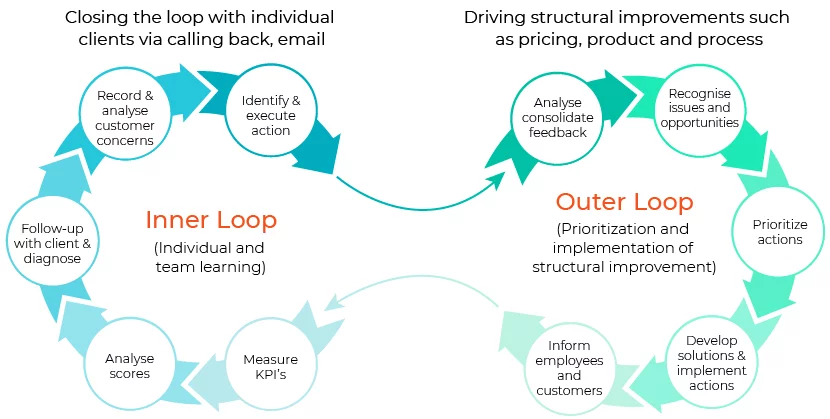
Image Source: Acuity Knowledge Partners
Common Pitfalls and How to Avoid Them?
Agencies should be aware of potential challenges in the feedback process:
- Feedback Overload: Too much feedback without action can lead to confusion and inaction. Implement triage systems to prioritize effectively.
- Metric Drift: Misaligned definitions can cause disagreements. Standardize data definitions to ensure consistency.
- Analysis Paralysis: Overanalyzing data can delay decision-making. Limit the number of concurrent experiments to maintain focus.
- Knowledge Gaps: Without proper documentation, valuable insights can be lost. Regular knowledge transfer sessions are essential.
When prevented early, these pitfalls turn your partner relationship from reactive to proactive.
A Practical Example: 8-Week Feedback Cycle
Consider a scenario where a client reports a 40% drop in leads from a specific city:
- Week 0: Gather initial feedback and identify potential issues.
- Week 1: Conduct triage and hypothesize that indexation delays and broken schema markup are contributing factors.
- Week 2: Implement changes on a small set of pages.
- Weeks 3–4: Measure the impact, observing a 12% increase in click-through rates.
- Week 5: Expand the changes to a broader set of pages.
- Week 7: Review cross-channel effects, noting improvements in PPC performance.
- Week 8: Conduct a retrospective, document the process, and plan for future optimizations.
Through this iterative process, the agency successfully addresses the client's concerns, leading to improved performance and satisfaction.
How DashClicks Facilitates Continuous Feedback and Growth?
DashClicks offers comprehensive white label SEO services and a platform that supports the establishment of effective feedback loops:
- Real-Time Analytics: Centralized dashboards provide live data on keywords, backlinks, and deliverables, ensuring transparency and timely insights.
- Automated Feedback Channels: In-platform tagging and revision requests streamline the process of capturing and acting on feedback.
- Pattern Recognition: The platform identifies recurring trends, enabling the refinement of strategies and playbooks.
- Client Retention Tools: Transparent reporting and consistent improvements help build trust and encourage client renewals.
- Seamless Integrations: DashClicks integrates with tools to facilitate smooth collaboration between teams.
By leveraging DashClicks, agencies can transform their SEO partnerships into dynamic, feedback-driven engines of growth.
Implementing a 9-Point Playbook for Immediate Impact
To kickstart a robust feedback loop between your team and your white label SEO agency, it’s essential to have a structured plan. The following nine steps provide a clear roadmap for immediate action and long-term results:
1. Establish a Single Source of Truth (SSOT)
Begin by creating a centralized inventory for all SEO-related data, including keywords, content, backlinks, and campaign deliverables. This ensures that both your internal team and your white label provider are working from the same reference point. By eliminating duplicate spreadsheets, conflicting data, or misaligned versions, the SSOT fosters consistency, reduces errors, and allows faster decision-making. Think of it as the master file that captures every insight, change, and result in one place.
2. Assign Roles
Clear accountability is crucial for a smooth feedback loop. Assign specific roles such as:
- Agency Liaison: The main point of contact for client-facing issues, responsible for prioritizing commercial value and communicating expectations to the SEO team.
- Partner Delivery Lead: Oversees execution of SEO tasks, experiments, and revisions based on feedback.
- Data Steward: Maintains the integrity of metrics and ensures that all teams are using consistent definitions for KPIs and other key measurements.
These roles prevent confusion, ensure timely responses, and create a structured chain of ownership for every feedback item.
3. Automate Feedback Collection
Implement tools and integrations that capture feedback automatically. Forms, CRM inputs, and direct integrations with platforms can feed client and internal feedback directly into your SSOT. This reduces the risk of losing insights in emails or ad-hoc messages and ensures that feedback reaches the right person without delay. Real-time capture makes it easier to respond quickly and prioritize effectively.
4. Develop a Triage System
Not all feedback is equal—some items are urgent, others are more experimental. Develop a triage matrix that evaluates each piece of feedback based on its impact (how significantly it affects KPIs) and effort (time or resources required to address it). This approach helps categorize actions into:
- Quick Wins: Easy, high-impact changes.
- Experiments: Medium-impact adjustments to test performance.
- Backlog/R&D: Longer-term initiatives or exploratory ideas.
A triage system ensures the most valuable feedback gets attention first while keeping long-term improvement projects organized.
5. Set Service Level Agreements (SLAs)
To keep the loop running efficiently, define clear SLAs for feedback responses. Establish expectations for:
- Response Time: How quickly feedback should be acknowledged.
- Action Time: How long it takes to implement changes or experiments.
- Closure Criteria: How to know when feedback has been successfully addressed.
SLAs create accountability for both your agency and the SEO provider, preventing feedback from stagnating and improving overall reliability.
6. Conduct Experiments
Turn feedback into measurable improvements through structured experimentation. Start with a small-scale test, such as optimizing a few pages or targeting a specific keyword cluster. Use a clear hypothesis format: "If we implement X, we expect Y metric to improve by Z% in T days."
This controlled approach allows your team to validate changes before rolling them out broadly, minimizing risk while maximizing learning.
7. Utilize AI Tools
AI can significantly streamline feedback processing. AI tools summarizers help condense long client emails, detailed reports, or multi-team comments into actionable insights. This reduces the cognitive load on your team and ensures that no critical point is overlooked. Additionally, AI can help identify recurring patterns in feedback, enabling you to detect underlying issues and opportunities more efficiently.
8. Host Regular Reviews
Schedule monthly outcome reviews with both your internal team and your white label SEO agency. During these sessions:
- Discuss experiments conducted and their results.
- Evaluate KPIs and compare performance against baselines.
- Identify lessons learned and prioritize the next set of actions.
Document all decisions, actions, and insights from these meetings in your SSOT to ensure that knowledge is preserved and shared across teams.
9. Institutionalize Successes
Finally, transform successful experiments and improvements into standardized playbooks. This step ensures that strategies that work for one client or campaign are not lost but instead become repeatable practices across the agency. Over time, institutionalizing successes helps scale your processes, accelerates future wins, and creates a culture of continuous improvement.
Conclusion: Transforming Outsourced SEO into a Strategic Asset
The agencies that scale fastest aren’t just outsourcing work — they’re outsourcing learning. Every campaign, experiment, and insight becomes part of a continuously evolving delivery system.
By investing in structured, transparent feedback loops with a reliable white label SEO partner, you move from reactive management to proactive optimization — achieving faster turnarounds, fewer escalations, and measurable client retention growth.
DashClicks helps agencies bridge that gap — transforming data and feedback into repeatable performance gains. Start with your first SSOT and a single triage meeting — the compounding results will speak for themselves.

Agency Profit Margins & White Label PPC: Finding the Sweet Spot Between Cost and Control
Rising advertising costs and tighter client expectations are squeezing agency margins like never before. Google Ads CPCs jumped 15-20% year-over-year across industries in 2024, while client budgets remained flat. For many agencies, this creates a challenging equation: how do you scale profitably when fulfillment costs grow faster than revenue?
The answer lies in finding the perfect balance between cost efficiency and strategic control. While many agencies struggle with either expensive in-house teams or risky full outsourcing, smart agencies are discovering a third path. White label PPC services offer a way to maintain client relationships and strategic oversight while dramatically improving profit margins.
This isn't about giving up control of your campaigns. It's about leveraging specialized expertise and proven systems to transform your cost structure while keeping what matters most under your direct management.
Understanding the Profit Equation in PPC Agencies
Agency profitability comes down to a simple formula: Revenue per client minus all fulfillment costs. But what's changed dramatically is how expensive those fulfillment costs have become.
Labor costs are skyrocketing. PPC talent shortages have driven average salaries up 12-15% year-over-year. A skilled Google Ads specialist now costs $60,000-$80,000 annually, plus benefits and overhead.
Technology expenses keep multiplying. Between bid management tools, analytics platforms, reporting software, and conversion tracking systems, agencies often spend $500-$1,500 per month on tech stacks per campaign manager.
Client churn from inconsistent performance adds hidden costs. Industry data shows that replacing a lost client costs 2-3x more than retaining them, making performance consistency crucial for long-term profitability.
Average marketing agency earns a net profit margin between 6 and 10 percent, with digital agencies reporting even higher margins of around 20 percent. Corporate advertising agencies, in some cases, report margins as high as 40 percent.
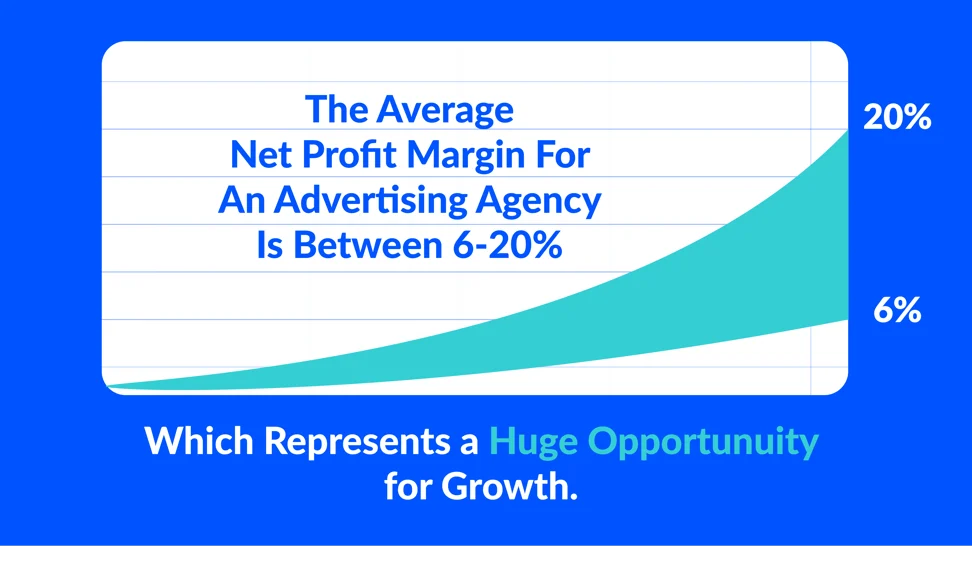
Image Source: AskCody
However, Promethean Research's 2024 study found that many agencies fall short of these benchmarks due to fulfillment inefficiencies and rising operational costs.
The key insight? Most agencies don't need more clients – they need better cost-to-control leverage across their PPC operations.
Where Margin Leaks Happen (and Why Most Agencies Miss Them)?
Smart agency owners know that profit leaks often hide in plain sight. Here are the five most common places where margins disappear:
- Leak #1: Overstaffing for Surge Cycles creates expensive downtime. Hiring full-time staff for peak workload means paying for unused capacity during slower periods. An agency paying a PPC manager $6,000 monthly only sees productive work 60-70% of the time on average.
- Leak #2: Time Drain from Repetitive Optimizations kills profitability. Bid adjustments, budget pacing, keyword research, and A/B testing consume hours that don't directly add strategic value. Yet these tasks are essential for campaign performance.
- Leak #3: Rework costs from inconsistent quality compound quickly. Without standardized processes, campaign structures vary by team member, leading to confusion, errors, and time-consuming corrections.
- Leak #4: Technology fragmentation multiplies expenses. Many agencies pay for overlapping tools – separate platforms for reporting, bid management, conversion tracking, and client dashboards – without realizing the total monthly cost.
- Leak #5: Client churn replacement costs devastate margins. HubSpot's 2024 Agency Growth Report confirms that each lost client costs 2-3x more to replace than to retain, making consistent campaign performance essential for long-term profitability.
Consider this example: An agency spending $10,000 monthly on in-house PPC labor typically sees only 35% of those hours spent on true optimization. The rest goes to reporting, administrative tasks, and routine maintenance – activities that don't differentiate the agency or add strategic value.
The Sweet Spot Between Cost and Control
Most agencies fall into one of two traps that hurt profitability:
- Over-Control Approach: Managing everything in-house provides great visibility but poor scalability and low profit margins. You're paying premium salaries for routine tasks while limiting growth potential.
- Over-Outsourcing Approach: Handing off everything to external providers boosts margins but creates client experience risks and dangerous dependency on partners you can't directly manage.
The sweet spot lies between these extremes. Successful agencies retain strategic control over budgeting, account architecture, client communication, and reporting while outsourcing repetitive execution and specialized technical work.
This approach follows a simple framework: "Control where it matters, outsource where it compounds."
Agencies using hybrid outsourcing models report improvement in gross margins without compromising service quality. They maintain direct relationships with clients while benefiting from specialized expertise and economies of scale.
How White Label PPC Services Unlock Margin Growth?
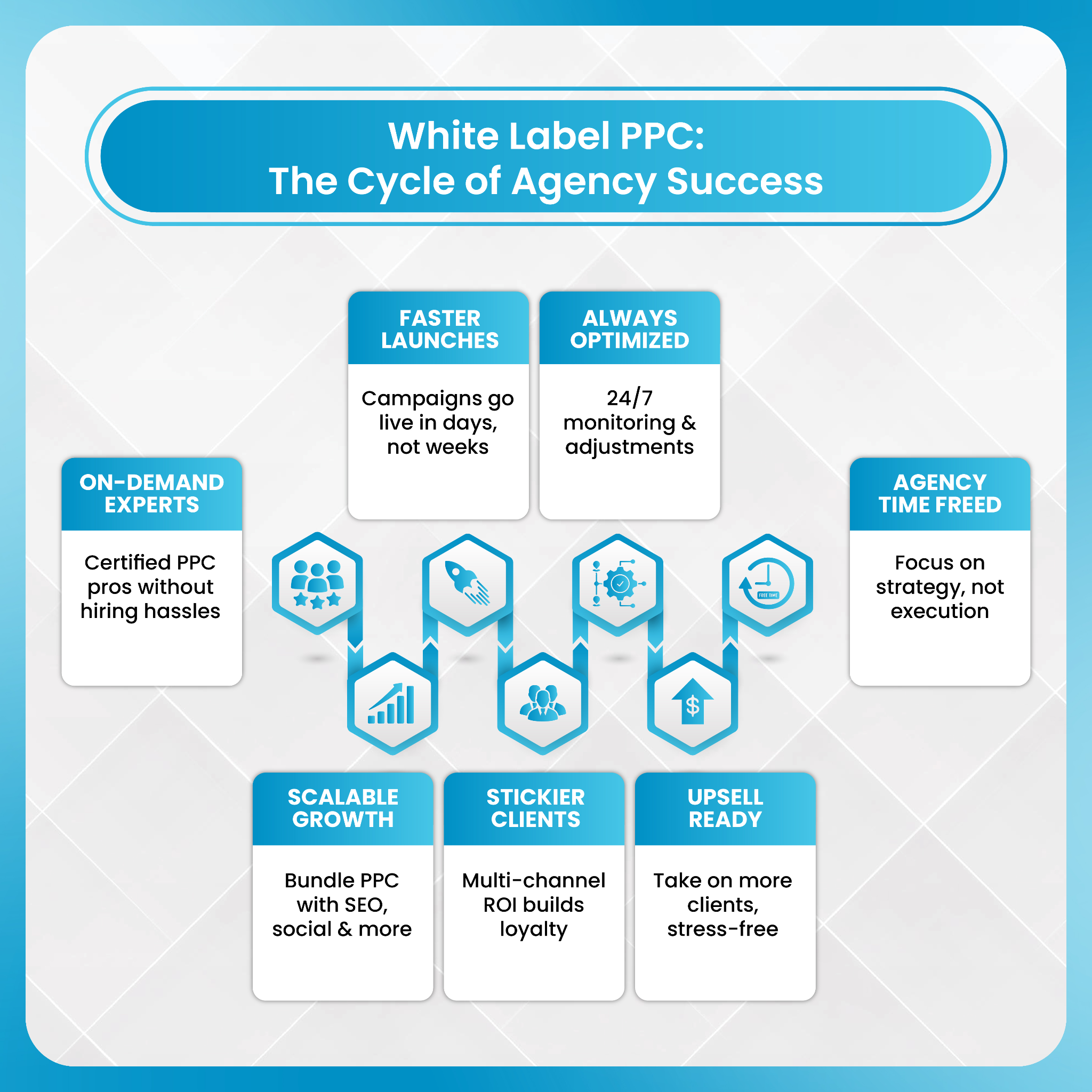
White label PPC services directly address each profit lever in your agency's equation. Here's how they transform your economics:
1. Fixed-Cost to Variable-Cost Transformation
Traditional hiring creates fixed monthly expenses regardless of workload. White label services convert payroll into flexible fulfillment costs that scale with your revenue.
Instead of paying a Google Ads strategist $6,000 monthly (plus benefits and overhead), you pay per-account costs that average 40-50% less. During slow periods, your costs decrease proportionally. During growth phases, you avoid the lag time and risk of hiring new team members.
2. Efficiency Through Specialization
White label providers manage thousands of campaigns across multiple industries. This volume creates pattern recognition and benchmark data that individual agencies can't match internally.
Testing cycles accelerate because providers have seen similar challenges across many accounts. Campaign structures are pre-optimized based on proven frameworks. This "speed-to-optimization" improvement reduces the crucial first 30-60 days when client churn risk is highest.
3. Technology Leverage Without Additional Licensing
Most white label partners include advanced tools within their service pricing. Agencies gain access to enterprise-level bid management platforms, conversion tracking systems, and automated reporting tools without separate licensing fees.
For example, services often include smart dashboards, multi-channel analytics, and client-ready performance reports – eliminating $500-$1,500 in monthly tool costs per campaign manager.
4. Cross-Platform Expertise
Managing Google Ads, Meta, LinkedIn, and Bing simultaneously becomes cost-prohibitive with individual specialists. A White label PPC agency provides pre-built cross-channel frameworks and optimization strategies.
This capability increases average client value by 25-40% as agencies can offer comprehensive paid media strategies rather than single-platform campaigns.
5. Standardization Equals Scale
Productized processes reduce error variance and create predictable delivery timelines. Consistent performance leads to happier clients, longer contracts, and higher lifetime values.
Meanwhile, your internal team can focus on strategy, agency-client relationship management, and business development – activities that generate the highest margins and differentiate your agency.
Calculating the Hidden ROI: A Real Margin Model
Consider this comparison between traditional in-house operations and a hybrid white label PPC approach:
Traditional In-House Model (per client):
- Average monthly retainer: $2,500
- Labor cost per account: $1,200
- Technology and tools: $200
- Management overhead: $400
- Gross margin: 28%
Hybrid White Label Model (per client):
- Average monthly retainer: $2,500
- White label fulfillment: $700
- Technology (included): $0
- Management oversight: $150
- Gross margin: 58%
This represents a 30-percentage-point margin improvement. For an agency managing $600,000 in annual retainer revenue, this translates to an additional $180,000 in gross profit.
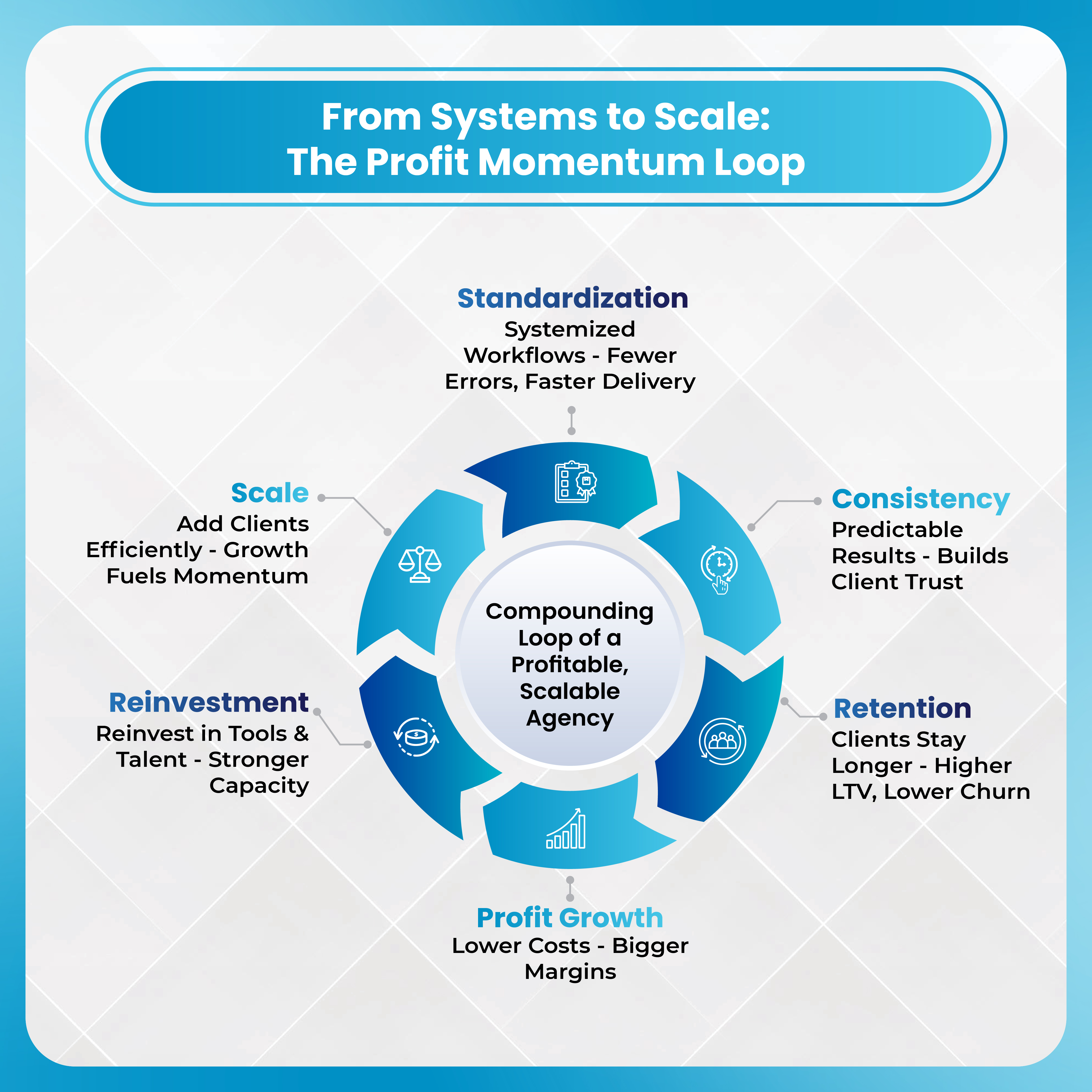
Agencies using standardized white label processes achieve higher client retention rates due to consistent performance delivery.
Managing the Control Side: Retaining Strategic Ownership
The key to successful white label PPC partnerships is maintaining control over client-facing activities and strategic decisions. Here's how smart agencies structure these relationships:
- Client communication stays in-house. All client touchpoints, strategy presentations, and performance reviews remain under direct agency control.
- Clear escalation protocols define when external teams consult internal strategists for major decisions or campaign pivots.
- Shared dashboards and transparent reporting eliminate "black box" concerns. Agencies maintain full visibility into campaign performance, optimization activities, and budget allocation.
- Weekly strategy reviews ensure external execution aligns with client goals and agency standards.
Agencies using white label services with defined escalation protocols experience fewer client escalations compared to those with unclear boundaries.
The Cultural ROI: Happier Teams and Clients
Beyond financial benefits, hybrid models create positive cultural changes. Internal teams avoid burnout from repetitive optimization tasks and can focus on strategic work that showcases their expertise.
Client satisfaction improves when campaigns receive consistent, specialized attention. Performance becomes more predictable, and agencies can confidently offer service level commitments.
This virtuous cycle creates internal bandwidth for new business development, leading to higher client lifetime values and sustainable growth.
According to the Digital Agency Network, agencies with specialized outsourcing partners report 20% higher employee retention rates compared to those handling all fulfillment internally.
How DashClicks Helps Agencies Master the Cost-Control Balance?
DashClicks specifically addresses the challenge of maintaining profit margins while scaling PPC operations. Their white label PPC services provide the transparency and control agencies need while delivering the cost efficiency that drives sustainable growth.
The system includes unified dashboards that give agencies real-time visibility into campaign performance across Google Ads, Meta, Bing, and other channels. This eliminates the "black box" concern that often prevents agencies from leveraging external expertise.
Their fulfillment model scales predictably with agency growth. Instead of hiring full-time specialists at $60,000+ annually, agencies pay flexible per-account costs that average 40-50% less than internal alternatives. During peak periods, capacity automatically scales up. During slower months, costs adjust proportionally.
The platform includes all necessary technology – bid management tools, conversion tracking, automated reporting, and client dashboards – within the service cost. This eliminates the technology fragmentation that often adds $500-$1,500 monthly per campaign manager in separate tool licensing.
Most importantly, DashClicks maintains the agency-client relationship. All communication, strategy development, and client presentations remain under direct agency control. The partnership handles execution and optimization while agencies retain strategic ownership and client relationships.
Actionable Framework: 7 Steps to Rebalance Cost and Control
Ready to optimize your agency's profit margins? Follow this systematic approach:
Step 1: Audit Current Cost Structure: Separate strategic activities from execution tasks. Calculate the true cost per hour for each team member, including salary, benefits, and overhead.
Step 2: Identify Underutilized Capacity: Track how much time goes to routine optimizations, reporting, and administrative tasks versus strategic work that differentiates your agency.
Step 3: Select a Partner with Integrated Technology and Fulfillment: Look for providers that include necessary tools within service pricing rather than adding separate software costs.
Step 4: Pilot with 2-3 Existing Accounts: Compare performance metrics and profit margins between traditional and hybrid approaches over 60-90 days.
Step 5: Create Standardized Workflows: Develop clear processes for client communication, strategy approval, and performance review to maintain control while leveraging external expertise.
Step 6: Implement Shared Dashboards: Ensure full visibility into campaign performance and optimization activities to eliminate concerns about outsourcing quality.
Step 7: Scale Systematically: Gradually transition additional accounts while monitoring client satisfaction and internal team satisfaction.
Agencies following this framework typically see 20-30% improvement in net profit per client within 90 days, according to aggregated industry surveys from 2024.
Profitable Growth Through Strategic Partnership
The future of agency profitability isn't about choosing between cost efficiency and strategic control. It's about finding partners that enable both simultaneously.
White label PPC services represent this evolution. The right partnership transforms variable costs into predictable margins while maintaining the client relationships and strategic oversight that differentiate successful agencies.
Smart agencies recognize that sustainable growth requires leverage – the ability to serve more clients profitably without proportional increases in internal resources. This isn't about reducing quality or losing control. It's about focusing internal expertise on activities that create the most value while leveraging external specialists for execution excellence.
The agencies thriving in 2024's challenging economic environment have learned to optimize their profit equation. They control where it matters most and outsource where it compounds their capabilities.

Why GEO Is Becoming the New Battleground for Online Visibility
The digital landscape is continually evolving, and as brands strive to capture online visibility, a critical shift is bearing momentum: Geographic Engine Optimization (GEO). As consumer behaviour leans increasingly towards localised searches—driven by the rise of mobile devices and voice search—understanding and integrating GEO into your digital marketing strategy is no longer optional; it’s essential.
The Importance of Local Searches
Local searches have skyrocketed in recent years, with a vast majority of consumers using search engines to find local services and products. According to multiple studies, nearly half of all Google searches are local, emphasising the importance of local SEO in the broader digital strategy. When people seek services or products nearby, they are not just browsing; they are more often ready to make a purchase.
For brands, this creates an opportunity—not just to rank higher in search results but to truly connect with the community. GEO allows brands to optimize their visibility for local queries, ensuring they are presented to the right audience at the right time. This leads to not only increased foot traffic for physical locations but also higher conversion rates for online services.
Implementing effective GEO strategies can be intricate. It requires a nuanced understanding of local demographics, seasonal behaviours, and even regional nuances in language and search terms. This is where strategic partners come into play. Professional services like prepare brands for AI-generated results can offer crucial expertise and tools to navigate these complexities. They can enhance your brand’s visibility while ensuring your marketing efforts are in tune with local preferences.
Understanding the Mechanics of GEO
GEO is multifaceted. It encompasses more than just traditional keywords; it integrates location-based data, user intent, and local authority signals.
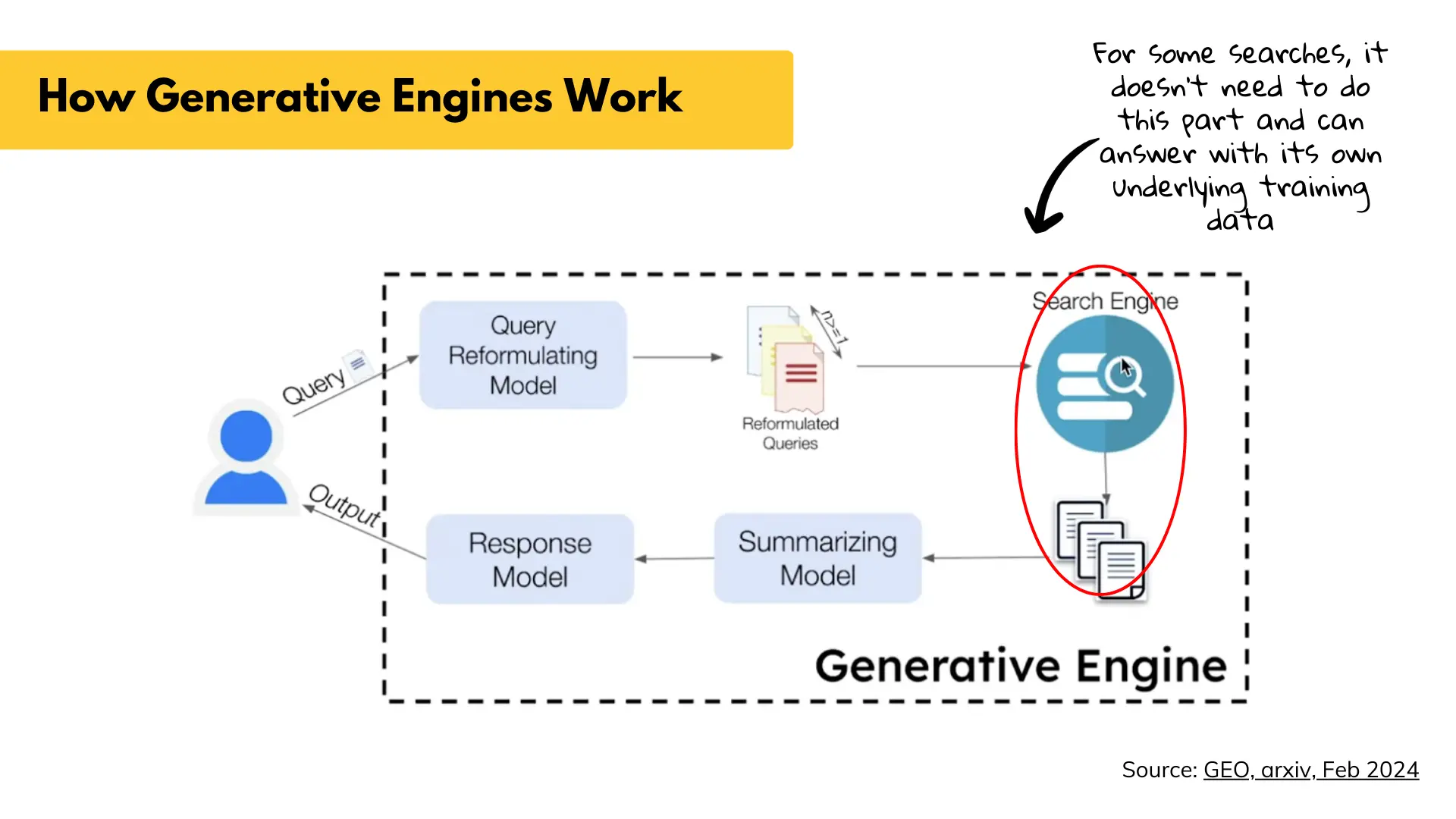
Image Source: Moz
Here are some core components of GEO:
- Local Keyword Optimization: This involves using keywords that are specific to a particular area or community. For instance, a coffee shop in Birmingham should focus on keywords like "best coffee in Birmingham" rather than just “best coffee.” By adapting your keywords, you help search engines connect relevant queries with your business.
- Google Business Profile: Claiming and optimizing your Google Business Profile is crucial. A well-maintained profile not only enhances visibility in local search results but also allows you to share essential information like hours of operation, services offered, and direct customer interactions through reviews and Q&A. Keeping this updated is paramount, particularly in a rapidly changing social climate where consumer needs and expectations can shift overnight.
- Local Link Building: While general backlinks are important, having local backlinks—links from websites and sources within your community—enhances your local authority. This might involve collaborations with local businesses, sponsorship of local events, or even engaging in community outreach programs that garner media coverage and online mentions.
- Community Engagement: Two-way engagement with your community can greatly bolster your visibility. Online forums, local social media groups, and community-building events can highlight your presence as a member of the community rather than just a service provider. These interactions can lead to word-of-mouth referrals and brand loyalty.
How Does GEO Differ From Traditional SEO?
While traditional SEO focuses on improving visibility at a national or global level, GEO narrows that focus to specific geographic areas. The goal shifts from reaching the broadest audience to reaching the closest and most relevant one.
Search engines evaluate GEO signals differently. Factors like proximity, local intent, NAP consistency, local reviews, and community relevance play a much larger role. When someone searches for “plumber near me” or “best café in Birmingham,” the engine prioritises businesses that are nearby, trusted, and actively engaged within their local ecosystem.
Local search intent is also more action-driven. Users searching locally are often ready to visit, call, or purchase within minutes. This makes GEO inherently more conversion-focused than traditional SEO, where intent may spread across research, comparison, or general browsing.
In short, traditional SEO helps you get found everywhere. GEO helps you get chosen right where it matters—in your community.
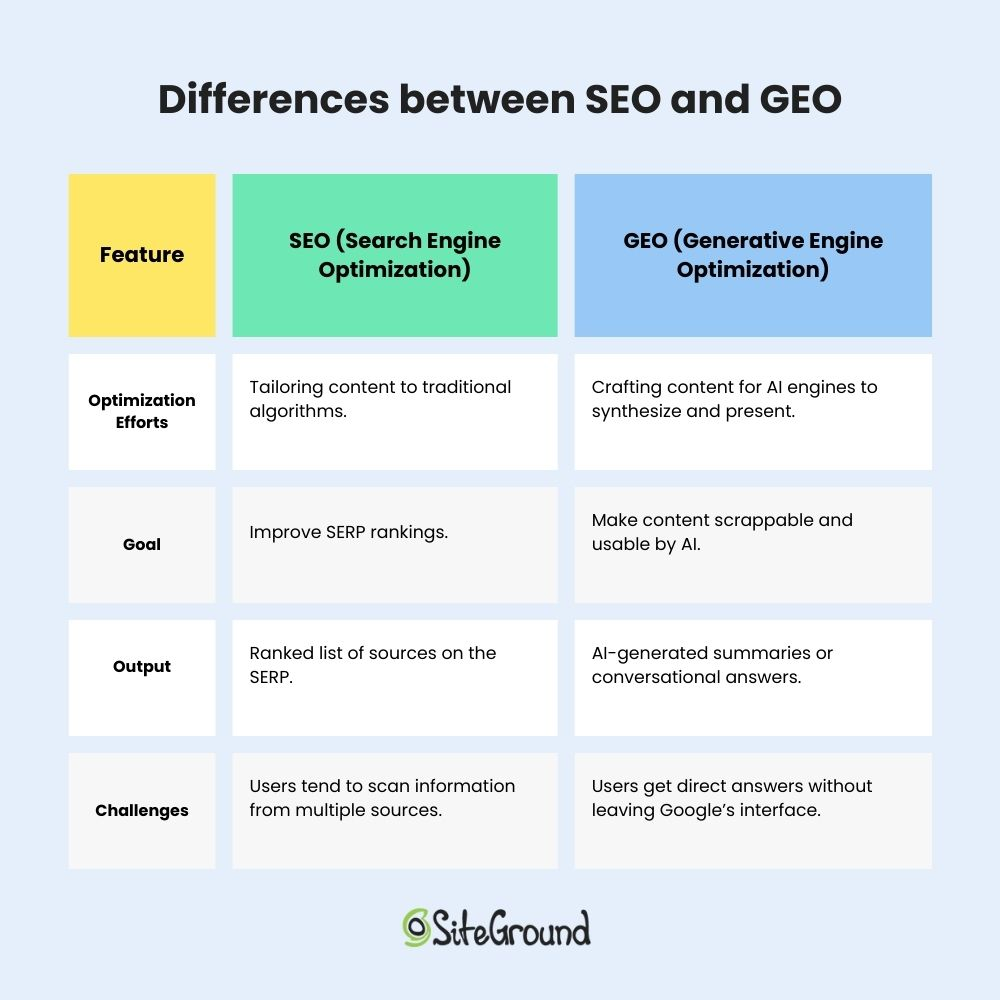
Image Source: SiteGround
Key Ranking Signals for GEO Success
To perform well in local search, brands must understand the core signals Google uses to evaluate and rank businesses at a local level. Unlike traditional SEO—where authority and content depth often dominate—GEO relies heavily on real-world context and community presence. Here are the key elements that influence local visibility:
- Proximity: Proximity refers to how physically close a user is to your business when they perform a search. Search engines prioritise nearby results to provide the most convenient options. This is why rankings often vary from street to street. Businesses cannot control proximity, but they can ensure they appear correctly on maps, local directories, and GBP so Google always knows their exact location.
- Relevance: Relevance measures how closely your content, business category, and keywords match what the user is searching for. If someone searches “vegan bakery in Manchester,” search engines look for businesses that clearly communicate vegan offerings. Well-optimized descriptions, consistent use of local keywords, and complete GBP categories all help strengthen relevance.
- Prominence: Prominence reflects how well-known, trusted, and authoritative your business appears both online and offline. Google looks at reviews, brand mentions, backlinks, and even local news coverage. A business that regularly appears in community blogs or receives consistent media attention generally outranks one with little digital footprint. Building prominence takes time but creates long-term GEO strength.
- NAP Consistency: NAP stands for Name, Address, and Phone Number. These details must be identical everywhere your business appears online. Even small discrepancies—such as abbreviations or formatting—can confuse search engines. Consistency helps Google verify that your business is legitimate and active, directly influencing local rankings.
- Local Citations: Citations are listings of your business on local directories, industry sites, and map services. The more accurate and widespread your citations, the easier it is for search engines to trust your business information. High-quality citations reinforce your local identity and support both relevance and prominence.
- Review Volume & Velocity: Reviews play a critical role in GEO performance. Search engines evaluate not only the number of reviews but also their quality and frequency. A steady flow of recent, positive reviews signals trustworthiness and active customer engagement. This directly affects both map rankings and click-through rate, as users gravitate towards businesses with strong reputations.
Content Strategy for GEO (Beyond Keywords Only)
A strong GEO strategy goes far beyond sprinkling location-based keywords into your content. To truly connect with local audiences and appear in hyper-relevant searches, brands must build content that reflects the community’s needs, culture, and context. This type of content sends powerful relevance signals to search engines and helps your business become a trusted local authority.
1. Create City-Specific Landing Pages
Dedicated city or town pages allow you to directly target searches tied to specific areas. These pages should include local services, area-specific pain points, testimonials from nearby customers, and local imagery where possible. The more tailored your landing pages, the stronger your local relevance.
2. Publish Neighborhood-Focused Blogs
Cities often have multiple neighborhoods with their own identity, demographics, and search patterns. Writing content that addresses these micro-communities — such as “Home Maintenance Tips for Parkside Residents” — builds deep topical relevance and helps your brand surface for long-tail, hyperlocal queries.
3. Build Local Guides and “Best-Of” Resources
Local searchers love practical, community-oriented guides. These might include:
- “Best Coffee Shops in Leeds for Remote Work”
- “A First-Timer’s Guide to Liverpool Waterfront Attractions”
Guides like these attract organic links, boost local authority, and position your brand as a helpful contributor—not just a service provider.
4. Tap Into Local Events and Seasonal Trends
Creating content around upcoming events, festivals, holidays, or seasonal behaviors shows search engines that your site is tied to real-world local activity. Event-based blogs not only improve relevance but also allow you to capitalize on predictable annual search spikes.
5. Add FAQ Schema with Local Intent
Local FAQs address the precise questions people ask before contacting a business. Implementing FAQ schema helps these answers appear directly in search results, improving click-through rates.
Examples include:
- “Do you offer emergency repairs in Edinburgh city centre?”
- “What areas of Bristol do you service?”
6. Use Hyperlocal Examples to Increase Relevance
Generic content rarely performs well for GEO. Instead of writing “How to choose a plumber,” content like “Best Plumbing Fixes for Older Homes in Manchester” brings in real local context. This aligns with how searchers think and directly boosts your chances of ranking for specific local queries.
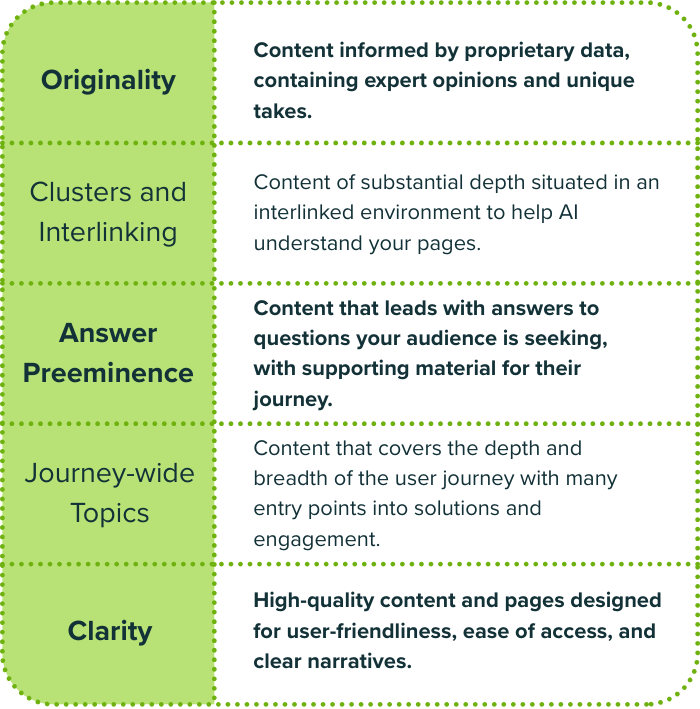
Image Source: Terakeet
The Role of Technology in GEO
Technology plays an increasingly significant role in effective GEO implementation. With advancements in AI and machine learning, brands can now analyse local search trends and user behaviour patterns with remarkable depth. This data-driven approach allows for better-targeted marketing strategies that resonate with specific demographics.
AI-generated content, for example, can be tailored to incorporate localised insights, making it more relevant and appealing to the target audience. As businesses begin to harness these sophisticated technologies, they can expect to see better engagement rates and conversion figures.
For brands seeking to leverage these cutting-edge tools, understanding how to effectively merge AI with traditional SEO practices is crucial. This is where services that offer tailored insights, like how ClickSlice prepare brands for AI-generated results, come into play. They provide the support necessary to create high-quality, optimized content that not only drives traffic but also fosters community relationships.
Adapting to Future Trends
Looking ahead, several trends are expected to shape the future of GEO. Voice search will likely become more prevalent, with devices such as smartphones and home assistants enhancing localised searches. As people increasingly request information verbally, optimizing your content for conversational language and queries will be essential.
Moreover, mobile-first indexing means that ensuring your website is mobile-friendly cannot be overstated. A seamless mobile experience will affect your search rankings and user engagement metrics.
Additionally, the rise of augmented reality (AR) applications may change how consumers discover local businesses. Imagine potential customers using AR apps to visualise product offerings or locate stores near them. For businesses, staying ahead of such trends is critical—not just for visibility, but for survival in an increasingly competitive landscape.
Common GEO Mistakes Brands Make
- Using the same location page for multiple cities – Search engines see this as thin, duplicated content, causing your pages to lose local relevance and struggle to rank anywhere.
- Overstuffing city names unnaturally – Adding locations repeatedly in titles and paragraphs makes content look spammy and reduces trust, hurting both rankings and user engagement.
- Ignoring reviews – Local search visibility drops when brands fail to earn, respond to, and manage reviews, which are major trust and ranking signals in GEO.
- Not updating NAP across directories – Even small inconsistencies in your Name, Address, and Phone number confuse search engines and weaken your local authority.
- Underestimating local competitors – Niches often feel small, but local rivals invest heavily in GEO, making it essential to track their keywords, content, and reputation signals.
- Poor GBP hygiene – An outdated or incomplete Google Business profile directly harms your visibility in maps and local packs, where most GEO clicks actually happen.
How DashClicks’ White Label SEO Services Support GEO Success
As GEO becomes a core component of online visibility, many brands—and agencies—struggle with the workload, precision, and consistency required to compete locally. DashClicks’ white label SEO services help bridge this gap by providing the systems, tools, and fulfilment needed to execute GEO strategies at scale.
DashClicks delivers fully managed SEO campaigns built on structured processes for local optimization. This includes local keyword targeting, on-page optimization, and location-specific content creation—allowing businesses to strengthen relevance for the areas they serve. Their team also handles ongoing Google Business Profile optimization, including updating business information, posting regularly, and monitoring reviews to support prominence and trust signals.
For agencies, the platform offers clear dashboards and automated reporting, ensuring full transparency when tracking local rankings, citations, and traffic improvements. This makes it easier to evaluate GEO performance and communicate progress to clients without managing every task manually.
By combining expert fulfilment with an organised, data-driven workflow, DashClicks empowers brands and agencies to stay competitive in local search—especially as GEO continues to evolve and demand greater attention.
Conclusion
The world of digital marketing is continually shifting, with GEO emerging as a pivotal arena for competition. As more consumers embrace local searches, brands must adapt and optimize their visibility in an increasingly crowded marketplace. By focusing on local keyword strategies, leveraging technological advancements, and fostering community engagement, brands can not only enhance their online visibility but also forge lasting relationships with their local audiences.
In a world where digital visibility often determines success, a proactive approach to GEO is more important than ever. Embrace this opportunity to connect with your community—and if you need assistance, consider enlisting expert guidance to navigate the complexities of this evolving battlefield.


Remove Your Agency’s Pain Points by Outsourcing Your SEO
As your agency gains momentum — landing more clients, expanding service offerings, and setting higher revenue targets — you might expect things to get easier. After all, more clients should mean more income, right? In reality, many agencies encounter the opposite: growth often exposes hidden inefficiencies and amplifies existing bottlenecks. What once worked for a smaller team now struggles under increased demand.
SEO, in particular, becomes a sticking point. Unlike tasks that scale linearly, SEO requires ongoing research, content creation, audits, technical fixes, link-building, and strategy adjustments. Each client adds layers of complexity: different industries, unique keywords, evolving algorithms, and varying expectations for reporting and communication. Trying to handle all of this with a small or overstretched internal team often results in missed deadlines, inconsistent results, and frustrated clients.
Consider the operational overhead involved: new team members need onboarding and training, tools require licenses and updates, and campaign strategies must be coordinated to avoid duplication or conflict. These factors add time, cost, and stress, but they rarely get accounted for in simple growth projections.
A quick statistic illustrates the importance of consistent delivery: agencies retain clients, on average, 2 to 5 years. Long-term partnerships are possible, but only if clients see reliable performance. If deliverables slip or campaigns underperform, clients begin questioning the value of your services, regardless of how talented your team is.
The hard truth is that agencies don’t fail primarily due to a lack of clients or demand. They fail because their operational capacity doesn’t match their growth ambitions. Without aligned systems, scalable workflows, and sufficient bandwidth, even the most promising agency can get stuck in a cycle of overcommitment and underdelivery.
This is where outsourcing SEO — particularly through white label SEO partners — transforms from a simple staffing solution into a strategic growth lever. By delegating complex, time-intensive tasks to experts, your agency regains control over its operations. You can scale client acquisition without overloading your team, maintain consistency in deliverables, and free leadership to focus on growth, strategy, and client relationships. Outsourcing SEO is no longer just a way to get more hands on deck; it’s a method to align capacity with ambition, turn bottlenecks into predictable workflows, and invest in both profitability and long-term client retention.
The Hidden Cost Centers That Drain Agency Profitability
Most agencies know time is money. But beyond tools and salaries, there are less visible inefficiencies that eat at margins and frustrate teams. Here are four big ones — and how outsourced SEO helps.
- The Knowledge Drift Problem: Multiple in-house SEOs may use different frameworks or methods. Over time, strategy fractures. Clients see inconsistent approaches. Rankings fluctuate. Expertise looks sloppy. A white label SEO partner usually has consolidated methods — unified frameworks, standard operating procedures, consistent strategy playbooks. That reduces ranking volatility and client confusion.
- Invisible Downtime Cost: Hiring pauses. Team transitions. The learning curves. Even when things appear idle, there’s revenue stalling. When you outsource, you get teams that are always “on.” No big gaps while someone is being hired. No lost momentum when an internal resource leaves. Delivery continues, pipelines stay intact.
- Data Fragmentation Across Clients: When accounts are handled individually — different dashboards, different reporting formats — it’s hard to see patterns. Are clients in the same niche having similar needs? Is there a macro trend in engagement or content effectiveness? White label SEO providers often build shared analytical frameworks. Those give agencies insights across the portfolio. You see what works overall, and what’s niche-specific.
- Strategic Myopia: When internal teams are busy executing, leadership tends to get trapped in day-to-day issues. Strategy, positioning, scaling, upsell conversations — those suffer. With outsourcing, execution becomes someone else’s problem. Leadership can move up in perspective: focusing on growth, new opportunities, partnerships, and client experience rather than tracking every deliverable.
How White Label SEO Removes Deep-Rooted Pain Points (That Internal Hiring Can’t)?
Outsourcing SEO isn’t just shifting work. It changes how work flows. It realigns capacity, strategy, and risk. Here are four ways the deep pain points can be addressed — in ways that internal hiring often can’t match.
1. Operational Leverage: From Reactive to Predictable Delivery
When you outsource, workflows come pre-built. QA layers, project management, delivery checklists, automated reporting — all of that helps make delivery predictable. For example, agencies using more systemization often see weekly deliverables multiply.
Insight: Predictability matters. Client reporting and transparency show up as critical to client retention.
2. Cognitive Load Relief for Leadership Teams
Founders often double up as strategists, account managers, and SEO experts. That divided attention drains creativity and decision-making. Outsourcing frees up that mental bandwidth. Once execution is handled, leaders can focus on positioning, exploring new verticals, refining premium offerings, or forging partnerships.
3. Cross-Functional SEO Intelligence
White label SEO providers work across many types of clients, niches, and market situations. They see what moves the needle in e-commerce, law firms, local service businesses, SaaS, or others. That gives you access to more data: which content formats are converting, what technical changes bring quick gains, and how user behavior differs by niche. You get that without huge R&D.
4. Risk Distribution & Quality Insurance
With internal teams, a single bottleneck — someone falling sick, someone leaving, someone mismanaging a project — can mean missed deadlines, unhappy clients, lost renewal chances. When you outsource to a reliable partner, risk spreads across more people and more systems. Delivery doesn’t hinge on a few individuals. Quality control tends to be built in. That stability builds trust with clients, which is hard to price but vital in retention.

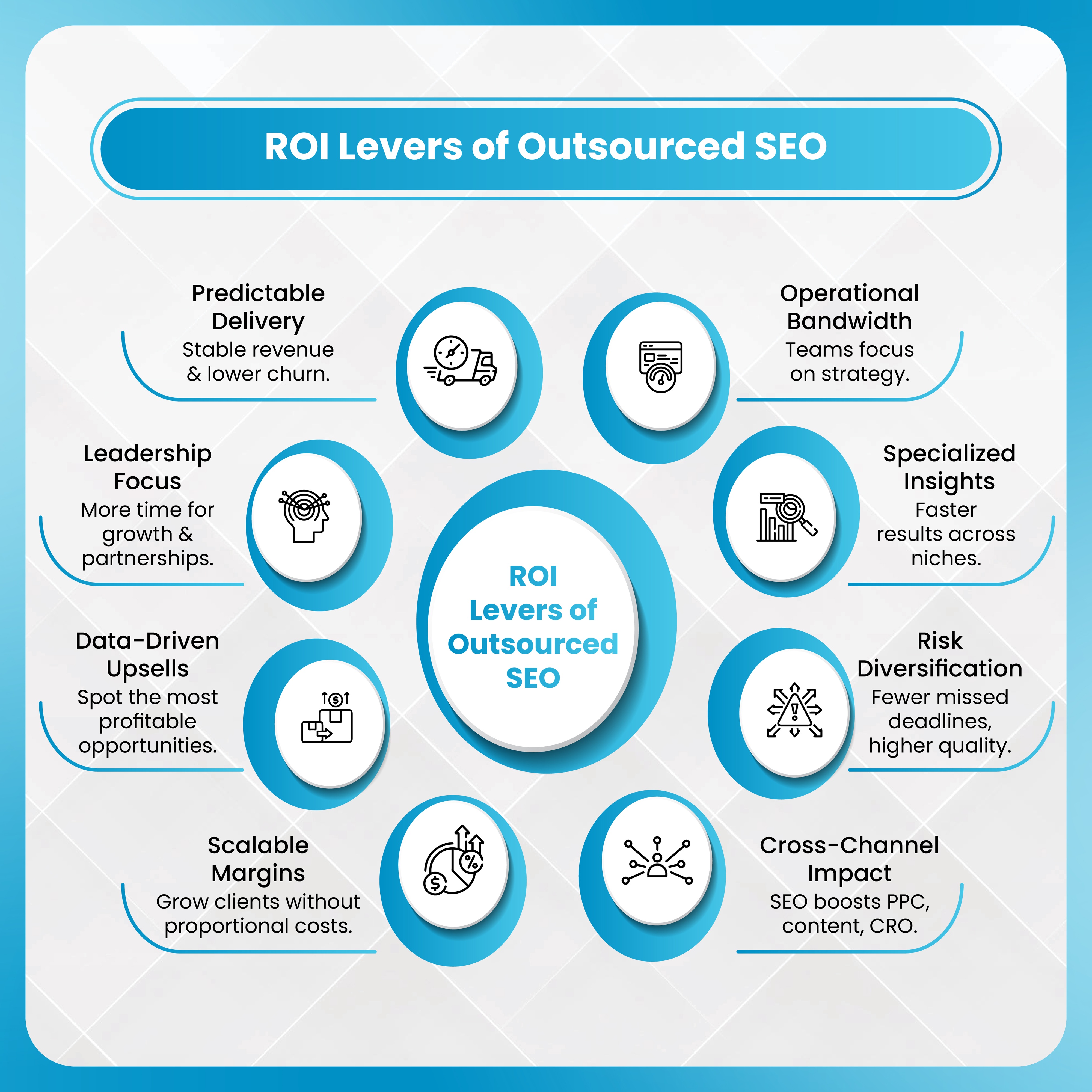
Transforming Pain Into Profit: The Hidden ROI Levers of Outsourced SEO
Outsourcing isn’t just cost-cutting. It opens up revenue and profit levers that are otherwise harder to unlock.
- From Cost to Capacity Conversion: Every rupee spent on a white-label partner becomes billable output rather than internal overhead. You reduce hiring, training, tool subscriptions, and benefits management. Agencies report that white label SEO can yield gross margins in the 40–50% range in many cases when handled well.
- Client Stickiness Through Depth of Expertise: Clients notice specialist-grade work. When you deliver strategic insights, niche-specific case studies, solid link-building, and clear technical SEO, clients perceive higher value. That helps with renewals. White label SEO providers let you offer that depth across niches without keeping a huge, specialized internal team.
- Frictionless Cross-Service Synergy: SEO doesn’t exist in a vacuum. Content, PPC, CRO, and social—all feed into each other. The data you gain from outsourced SEO (keywords, content performance, site speed, technical improvements) can enrich other services. Agencies that integrate SEO insights into their PPC, CRO, or content work often see higher retention.
- Revenue Elasticity: Sometimes, business ebbs and flows: seasonal demand, new client wins, project peaks. If your internal capacity is fixed, you either overhire (costly) or drop opportunities. Outsourcing allows you to scale up or scale down more fluidly. You keep margins healthier, avoid burnout, and accept high-value work without fear.
Unique Outsourcing Models & Strategies Agencies Should Consider
Not all outsourcing is the same. How you design the model matters. Here are some approaches that agencies often adopt.
- Hybrid Pod Model: You keep strategic roles in-house (account leads, client strategy) and delegate execution (content, link building, technical SEO) to your outsourced white label team. You maintain creative control and maintain client brand voice while scaling execution.
- Elastic Capacity Model: Treat your white-label partner as an extension — you tap into them when demand rises, relax when it’s lower. This avoids fixed overheads.
- R&D Partnership Model: Instead of just buying fulfillment, collaborate on frameworks, tools, or special offerings. For example, develop a “voice search readiness” package or a local SEO boost together. That helps differentiation.
- Silent Integration Model: The outsourcing remains invisible to your client. Reports, dashboards, and deliverables carry your branding. Clients see you as the full-service agency. You own the relationship; they see consistency.
- Tiered Outsourcing Model: Segment your clients:
Premium clients → more strategy + hybrid execution
Mid-tier clients → full white-label execution
Entry clients → automation-heavy delivery with standard white-label support
Align delivery complexity with what clients pay. - Shadow Team Retention Model: Keep a small internal “success” or “client-facing” team that handles storytelling, reporting, upsells, and relationship management. Let white label partners handle the heavy lifting behind the scenes.
How Outsourcing SEO Helps with Client Retention?
Retention isn’t just a metric. It’s your agency’s lifeblood.
- Consistent, High‑Quality Output: If deliverables are late, uneven, or variable, clients notice. By outsourcing, you get more predictable quality. That consistency builds trust.
- Transparent Reporting & Communication: White label SEO agency often come with dashboards or reporting templates you can brand. Clients get clear visibility into what’s happening. That reduces friction and surprises.
- Ability to Quickly Adapt & Add New Services: As clients grow, their needs shift — maybe into international SEO, local search, content expansion, or richer technical audits. Having outsourced capacity means you can shift gears fast, without hiring or retraining.
- Improved Value Per Client & Lifetime Value (CLV): When you deliver more value (better rankings, better content, faster fixes, better technical health), clients are more likely to stay, pay more, or accept upsells. More value per client means CLV rises, which compounds your profit.

DashClicks’ White Label SEO: A Pain‑Point‑Oriented Model
DashClicks understands the stress points agencies face because it built its white Label SEO services not just as a package, but around solving those pain points.
- End‑to‑End Fulfillment: Whether it’s technical SEO, on‑page optimization, local SEO, link building, or reporting — DashClicks delivers all these as white label services under your agency’s brand. You don’t need to assemble a new team or juggle vendors.
- Data Unification: DashClicks provides a centralized dashboard for campaign insights. That means analytics, keyword tracking, content performance, link metrics, and progress reports are all visible in one place. No more cycling through multiple tools or getting lost in mixed reports.
- Transparent Workflow: With processes and deliverables clearly defined, your clients see measurable SEO progress, while you keep brand control. The strategy alignment, timelines, and communication flows are smooth. This reduces internal friction and client confusion.
By integrating with DashClicks, agencies get execution strength and operational clarity. The noise — of trying to manage many moving parts — drops sharply. What you pay for is reliable, measurable delivery, not drama or missed deadlines.
Measuring the Pain Removed (and ROI Gained)
If you’re considering outsourcing, you want to see what shifts when you do. Here are metrics to watch — and what industry data points to suggest they can move.
- Time‑to‑Delivery Compression: Deliverables that once took 4‑6 weeks (site audits, content batches, technical fixes) may drop to 2‑3 weeks when handled by experienced external partners. The internal hand‑offs and onboarding delays get minimized.
- Retention Delta: Client lifetime tends to increase. Client contracts often extend when quality and consistency improve.
- Margin Expansion: Because you’re not paying full internal salaries, overhead, or duplicating tools, your gross margins improve. Studies of white label SEO suggest agencies see profit margins of ~40‑60% when outsourcing fulfillment carefully.
- Predictive Forecasting: With a white‑label partner managing consistent deliverables and reporting, you can more accurately forecast workloads, revenues, and renewal rates. That leads to better financial planning, fewer “surprise months,” and more confidence.
Conclusion: From Pain Management to Strategic Liberation
Growing an agency is messy. The more clients, the more moving parts, and the higher the risk that something — quality, delivery, client satisfaction — will slip.
But outsourcing SEO via a trusted white label partner doesn’t mean giving up control. It means choosing what you give up (operational chaos, risk, unpredictable delivery) so you can keep what matters (client satisfaction, reliability, high margins, and growth).
If you free up your capacity, you’re not just reducing pain — you’re reclaiming the space to think ahead: new services, new verticals, better relationships. You turn reactive chaos into predictable performance. You turn retention from an afterthought into an outcome.
If you’re ready to remove your agency’s pain points — from delivery bottlenecks to strategic overload — give DashClicks a look. See how you can outsource your SEO in a way that strengthens your brand, boosts your margins, and lets you scale without sacrificing quality.

Authenticity in Digital Marketing: Why Verified Human Content Matters More Than Ever
It's easy to feel adrift in digital content today. Every brand, every individual, seems to be vying for attention, often with messages that feel “too polished” to sound authentic. You might scroll through endless feeds, recognizing the patterns, the AI stock phrases, and the perfectly curated images, wondering where the “real” connection has gone.
And this sense of artificiality is not lost on your audience either.
They are increasingly discerning, craving something more genuine, something that resonates on a deeper level. Keep on reading to discover what happens when authenticity truly takes center stage in your digital marketing efforts — and why it’s the need of the hour now.
The Shifting Sands of Consumer Trust
Think about how you make purchasing decisions yourself. Do you immediately trust every advertisement that flashes across your screen? Probably not.
Years of exposure to exaggerated claims and unfulfilled promises have made consumers, including you, inherently skeptical. It’s a natural evolution of how people interact with brands now. Your audience has learned to filter out the noise and look for signals that cut through the commercial sheen.
That’s why trust has become the single strongest differentiator. People no longer want polished perfection — they want clarity, honesty, and a brand that behaves the way it claims to. For many industries, especially those dealing with personal well-being, this shift is not just visible — it’s unavoidable.
Htet Aung Shine, Co-Founder of NextClinic, said, “In healthcare, trust isn’t a marketing advantage — it’s the foundation of every decision a patient makes. People want transparent explanations, not scripted pitches. When communication feels genuine and human, trust builds naturally, and patients stay with you because they feel safe, not sold to.”
This consumer mindset is now shaping nearly every industry. People want verifiable experiences instead of promises. They check reviews, compare feedback, watch reactions, and look for signs of authenticity behind the scenes. They’re not convinced by branding alone; they’re convinced by behavior.
When they see real stories, real challenges, and real accountability, their confidence grows. If they sense even a hint of exaggeration, they move on without hesitation.
The brands that succeed today are the ones that meet this new standard head-on. They don’t try to outshine others through louder messaging — they focus on clarity, consistency, and honest communication. This shift is especially visible in companies that rely on trust at a structural level, like data, search tools, and tech platforms.
As Chris Muktar, Founder & CEO of LINKLY, explains, “Consumers don’t want to figure out what a brand really stands for — they want that honesty upfront. When companies are transparent about how they operate, what they collect, and why certain decisions are made, people respond with loyalty. Trust grows when clarity becomes part of the product experience itself.”
This change in consumer expectations is also redefining how brands communicate publicly. People don’t want overly curated messaging — they want real perspectives, raw honesty, and updates that feel human. They want brands that speak plainly, explain their decisions clearly, and don’t hide behind corporate language. Every touchpoint is now an opportunity to either strengthen trust or weaken it.
And nowhere is this more visible than in the media and communications world, where audiences instantly detect insincerity.
Alison Lancaster, CEO of Pressat.co.uk, describes, “People can tell when something is overly polished. What resonates today is messaging that feels open, clear, and direct. When brands communicate transparently — even when the news isn’t ideal — audiences feel respected, and that respect transforms into trust.”
What Does Authenticity Really Look Like?
Authenticity in digital marketing isn't about being perfect or flawless. In fact, it’s often the opposite. It’s about being real, transparent, and sometimes even a little bit vulnerable. It means your brand presents itself as it truly is, rather than trying to fit into a preconceived mold of what it “should” be. This can show up in the tone of your social media posts, the way you talk to customers, or even how you address mistakes publicly.
Trevor Rice, Founder of Home Pros, puts, “Customers don’t expect brands to be perfect. They expect them to be honest, consistent, and human. The moment you stop trying to impress and start trying to connect, everything changes.”
The rise of social media has dissolved the distance between brands and consumers. Direct access now works both ways, creating richer interactions and faster feedback, while raising expectations around accountability. People want to see how companies operate, communicate, and make decisions behind the scenes—especially when something goes wrong. Authentic brands don’t hide from this; they lean into it and use transparency as a competitive advantage.
Research shows that most consumers define it in very practical terms: being open about practices and policies, communicating clearly without jargon, and acting honestly even when the message is uncomfortable. For businesses, this means clarity and candor are now baseline requirements, not optional extras.
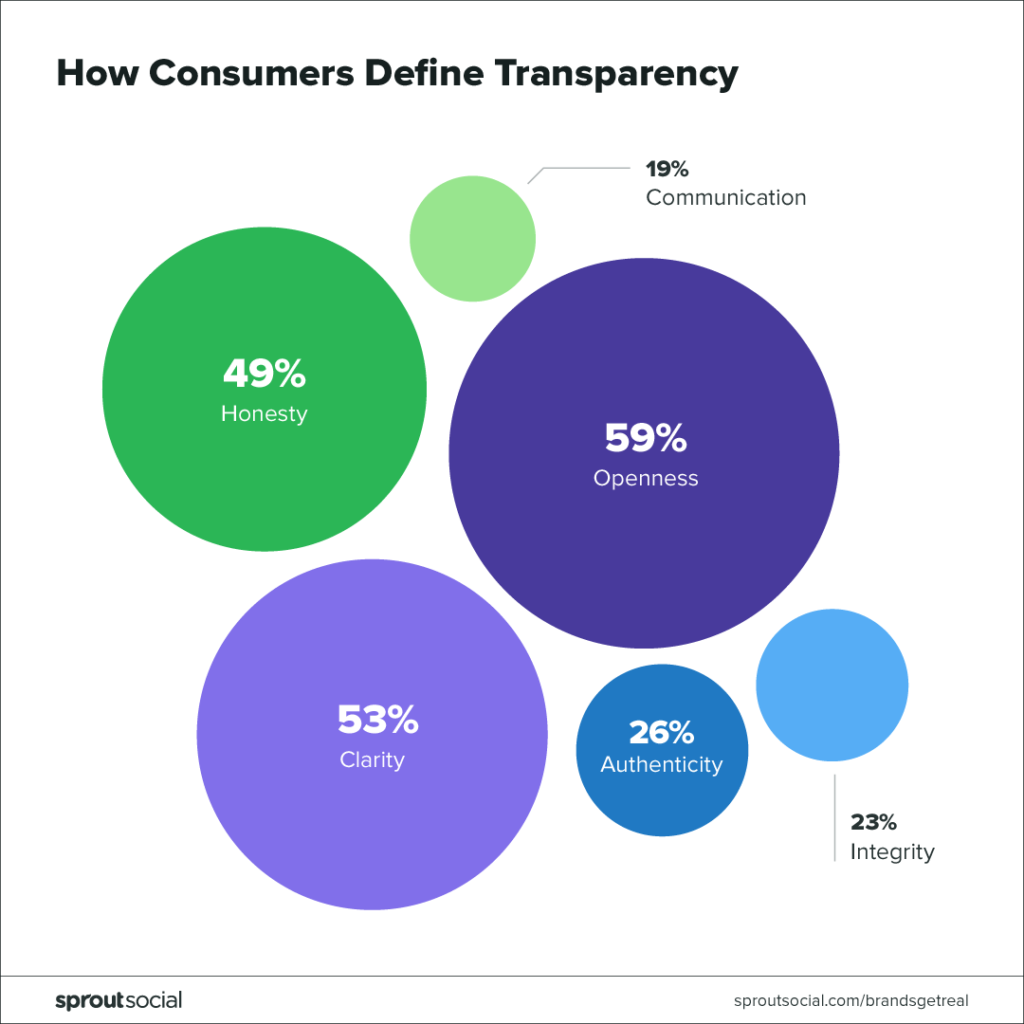
Image Source: SproutSocial
Consider a brand that openly discusses its challenges, or one that shares behind-the-scenes glimpses of its operations. These actions create a sense of honesty that resonates with people. It shows that there are real individuals, with real stories and real efforts, behind the brand name. This human element is incredibly powerful because it allows your audience to relate to you on a more personal level. They see themselves in your struggles, celebrate your successes, and feel a part of your journey.
Maria Sin, Founder of Purebred Kitties, adds, “People don’t fall in love with the logo. They fall in love with the people, the process, and the truth behind it. When a brand opens its doors and shows what really happens, trust becomes effortless.”
Another aspect of authenticity involves matching your words with your actions. If your brand claims to value sustainability, for example, your practices should reflect that commitment. Any disconnect between your stated values and your actual operations will quickly be noticed by your audience, eroding the trust you've worked so hard to build. Authenticity demands consistency in message and deed, showing that your brand isn't just speaking platitudes, but actively embodying its principles.
So, with this hunger for authenticity, how do marketers deliver?
ENTER: Verified Human Content
One of the most effective ways is through verified human content. It's about content that genuinely originates from real people, whether they are customers, employees, or brand advocates, and critically, its veracity can be confirmed. This might involve reviews, testimonials, social media posts, or even long-form stories and videos.
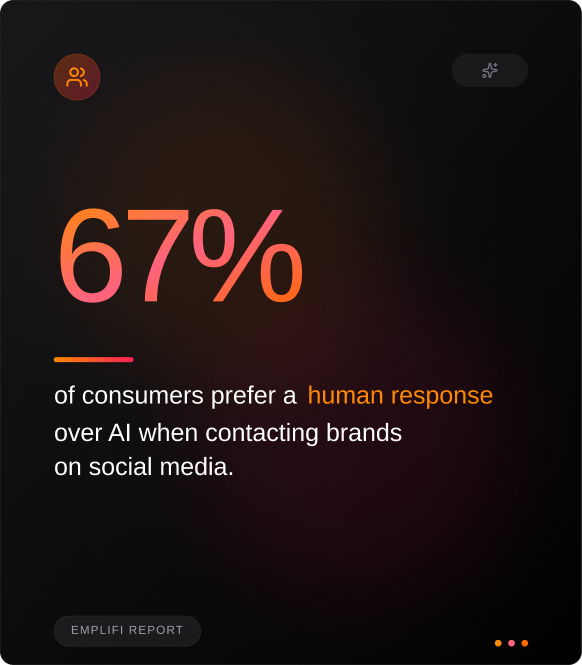
Emplifi’s report show that 67% of consumers prefer a human response over AI when contacting brands on social media..
The key differentiator here is "verified." In an age where deepfakes and AI-generated text are becoming increasingly sophisticated, your audience needs confidence that the content they are consuming is genuinely from a human source.
This verification can come through various means: platform badges, direct endorsement from the brand, or simply the inherent credibility of the source. This type of content cuts through the promotional noise because it's perceived as more trustworthy. When you see a glowing review from a verified buyer, it carries more conviction than claims made directly by the brand.
Tariq Attia, Founder of IW Capital - EIS Investment experts, said, “Verification has become the new trust signal. People want proof that what they’re reading or watching comes from a real, accountable person, not a generated persona. Once that trust is established, the message lands with far greater impact.”
It acts as social proof, validating your brand's claims through the experiences of others. This peer-to-peer recommendation has always been powerful, but in the digital age, its reach and impact are amplified exponentially.
But Why & How Verification Builds Trust?
Think about the sheer volume of information available online. Every minute, countless pieces of content are published, shared, and consumed. In this environment, discerning what is real and what is fabricated becomes a significant challenge for your audience. This is precisely why verification is so crucial. It acts as a stamp of approval, a signal that this particular piece of content has been confirmed to originate from a genuine source.
Trust has become a deciding factor in the buying process. Research consistently shows that a large majority of consumers say they need to trust a brand before they even consider making a purchase. Today, options are easy to compare with a simple Siri command or ChatGPT prompt. That’s why, credibility and reliability often influence decisions more strongly than price or promotions.
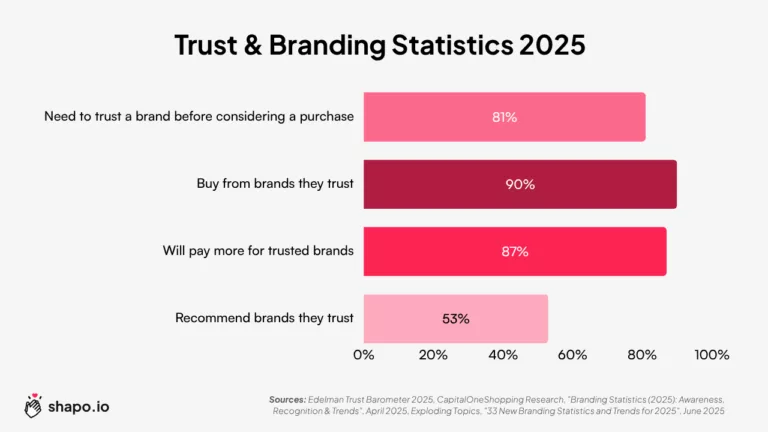
Image Source: Shapo
When content is verified as human, it essentially communicates that there's a real person, with a real perspective, behind the words or images. This immediately bypasses some of the skepticism your audience might have developed towards traditional marketing messages.
They are less likely to view it as a mere sales pitch and more likely to see it as an honest account or opinion. This shift in perception is enormous, directly impacting how much stock they put into what they are seeing or reading.
Karen Noryko, Career Content Director at Jobtrees, explains, “Job seekers and professionals respond to authenticity more than polished marketing. When content clearly comes from a real person sharing real insight, it builds confidence and engagement instantly. Verified human content isn’t just preferred, it’s expected.”
Verification also helps combat the growing concern around AI-generated content. As more businesses lean on AI tools to generate crucial messaging, the line between human and machine-generated text or visuals blurs. Your audience might start to question the origin of everything they encounter online.
By actively verifying human content, you provide reassurance, letting them know that they are engaging with authentic human experiences and insights, not just algorithms mimicking human thought. This strengthens the bond of trust, making your brand a reliable source of information and connection.
Dan Close, Founder and CEO at We Buy Houses in Kentucky, adds, “In real estate, trust can’t be faked. Verified human content allows potential clients to see genuine experiences from buyers, sellers, and agents. It’s what turns casual interest into confidence, and confidence into action.”
The Power of Employee-Generated Content
Beyond customer testimonials, one often underutilized source of verified human content comes from your own team: employee-generated content (EGC). Your employees are often the most knowledgeable and passionate advocates for your brand. They live and breathe your company culture, understand your products or services intimately, and interact with customers on a daily basis. Allowing them to share their experiences and insights offers a transparent look into your brand's inner workings.
Imagine an engineer sharing a quick video about a new feature they're excited about, or a customer service representative offering tips based on common queries. Or better yet, coming from the CEO itself. Nothing Phone company is a brilliant example of this authentic marketing strategy in the-now-times. They show the good, the bad, the best, in hour-long podcasts for the audience to judge, instead of polishing messaging alone as their marketing collaterals.
Jimi Gecelter, CEO of Tradeit, adds, “When employees share their genuine experiences, it humanizes the brand instantly. People trust real voices over polished campaigns. EGC isn’t just content, it’s proof that your company is alive, accountable, and transparent.”
This type of content is incredibly powerful because it adds a layer of genuine human connection that no corporate message can replicate. It shows the real faces behind your brand, humanizing your operations and making your company feel more approachable and trustworthy. Beyond just marketing, it strengthens the emotional bond between employees, customers, and the wider community.
Dorian Menard, Founder and Business Manager of Search Scope, highlights, “EGC transforms employees into storytellers. When teams share behind-the-scenes insights, successes, and even failures, audiences engage differently. They’re not just consuming marketing, they’re connecting with real experiences, which builds lasting credibility.”
EGC also helps build a stronger employer brand. Prospective employees want to work for companies that value honesty and transparency, and EGC provides an authentic glimpse into what it’s like to be part of your team. It demonstrates that your company trusts its employees, giving them a voice and valuing their contributions. This internal authenticity radiates outwards, enhancing your brand's overall perception in the market.
Sophia Willows, Head of Engineering at RYE, said, “When engineers, designers, or team leads share their work openly, it sends a signal that the company values expertise and honesty. People are drawn to brands where the culture is visible, genuine, and inclusive, EGC is the clearest way to show that.”
Customer Reviews and Testimonials as Gold
Perhaps the most recognized form of verified human content is customer reviews and testimonials. You, like countless others, likely consult reviews before making a purchase, booking a service, or even choosing a restaurant. These are not just casual opinions; they are social proof, powerful endorsements (or warnings) from people who have directly experienced what your brand offers. The sheer volume and accessibility of online reviews have transformed them into a cornerstone of modern consumer decision-making.
The key to their effectiveness lies in their perceived objectivity. While your brand might highlight its best features, a customer's review often details their unfiltered experience, including both the positives and, occasionally, the negatives. This transparency, particularly when a business responds thoughtfully to criticism, further builds trust. Verified purchase badges or reviewer profiles on platforms like Amazon or Yelp add another layer of credibility, confirming that the feedback comes from a bona fide customer.
Bill Sanders, from Fast People Search, explains, “When consumers see that feedback comes from real, verifiable people, it instantly removes doubt. Reviews act as a form of social validation, people trust other people more than they trust ads. Verified reviews aren’t just content… they’re a bridge to credibility.”
Encouraging and actively managing customer reviews is vital for any digital marketing strategy. This means making it easy for customers to leave feedback, responding promptly and professionally to all reviews, and, most importantly, showcasing positive testimonials across your various digital channels. When potential customers see that others have had good experiences, and that your brand values their input, it significantly lowers their perceived risk and increases their willingness to engage with you.
Rameez Ghayas Usmani, Award-Winning HARO Link Builder & CEO of HARO Link Building, adds, “Testimonials and reviews carry far more weight when they are organically sourced and verifiable. It’s the authenticity of each voice. Brands that cultivate genuine, human feedback consistently outperform those relying solely on curated messaging.”
Incorporating these reviews effectively across websites, social media, and email campaigns ensures that potential customers repeatedly encounter trustworthy voices. Each positive review becomes a micro-influence, gradually building a network of credibility that compounds over time, making your brand not just visible, but trusted.
Leveraging Influencers with Authentic Connections
Influencer marketing has exploded in recent years, but its effectiveness now hinges entirely on authenticity. The days of simply paying a celebrity for a quick product shout-out are fading. Today’s audiences are savvy, they can instantly detect whether a recommendation is genuine or merely a scripted endorsement. What resonates most are influencers who have built their following on authentic connections and a true passion for their niche.
“These days, I think authenticity works really well. At GPTZero, we've observed organizations moving towards strategies that value authentic storytelling and human innovation. When content is produced by genuine individuals with real expertise, audiences can see the difference. Our business focuses on providing marketers with the means to demonstrate that human touch, which strengthens and sustains audience trust.” — Edward Tian, CEO of GPTZero
This shift has important implications for influencer partnerships. It’s no longer just about follower counts. Brands now focus on engagement rates, the quality of the influencer’s audience, and, most importantly, alignment with the brand’s values.
An influencer who genuinely uses and believes in your product—and whose audience trusts their opinion—delivers far more impact than a mega-influencer reading from a script. Their content inherently carries the verified human element, because it comes from real experience and personal advocacy.
Moreover, micro and nano-influencers often outperform larger accounts in terms of authenticity. These individuals may have smaller followings, but they enjoy highly engaged, loyal audiences. Their recommendations feel less like paid promotion and more like genuine peer suggestions. By collaborating with influencers who embody authenticity, brands create content that is not only trusted but also shared organically, amplifying reach while strengthening credibility.
How DashClicks’ White Label Content Services Support Authentic, Human-Centered Marketing?
Building authentic digital experiences requires more than publishing polished content — it requires producing material that feels human, credible, and aligned with real audience expectations. DashClicks’ white label content services are designed to help brands deliver this level of authenticity at scale, without sacrificing quality or consistency.
Instead of generic, mass-produced copy, the service focuses on creating content that reflects genuine expertise, natural storytelling, and clear communication. Every asset — whether blog posts, website copy, social posts, or email content — is crafted to sound like a real person speaking to real people. This helps brands maintain trust while still meeting modern content demands.
DashClicks also places strong emphasis on accuracy, tone alignment, and audience context. For industries where authenticity directly impacts credibility — such as healthcare, real estate, finance, or professional services — this is especially crucial. By providing well-researched, human-written content that mirrors brand values and avoids automated clichés, DashClicks helps businesses establish deeper emotional and informational trust with their audiences.
In a digital world where consumers can instantly recognize overly polished or AI-generated messaging, DashClicks’ white label content solutions empower brands to stay transparent, consistent, and genuinely human — the qualities that define modern trust-driven marketing.
Wrap-Up
The path forward in digital marketing increasingly centers on genuine connection and verifiable experiences. As the digital world grows more complex, the human desire for truth and relatability intensifies. Focusing on transparent, real content from actual people fosters a deeper bond, moving beyond superficial interactions to create lasting trust and meaningful engagement that benefits everyone involved.


The Ultimate Web Hosting Glossary Terms Every Beginner Should Know
Starting a website can feel challenging, especially for newcomers. Many technical expressions appear unfamiliar. Understanding basic web hosting terms enables new users to make informed choices and communicate effectively with service providers. This guide provides concise explanations of key concepts, making it easier for beginners to start with confidence.
What Is Web Hosting?
Web hosting is a service that stores website files, allowing people to access them online. Providers use computers called servers to keep these files available. When someone enters a site address, the server sends the right files to their browser. Reliable hosting ensures that a website stays reachable and loads quickly for visitors.
Think of it as renting a space where your website “lives.” Instead of storing your files on your personal computer, hosting companies store them on specialized machines called servers—computers designed to stay online 24/7.
Whenever someone types your website address into their browser, their device connects to the hosting server, retrieves your files (text, images, code, videos), and displays your website.
A Simple Analogy
- Your website = your house
- Your domain name (example.com) = your home address
- Your web hosting = the land your house sits on
Without hosting, your website has nowhere to live, and no one can visit it.
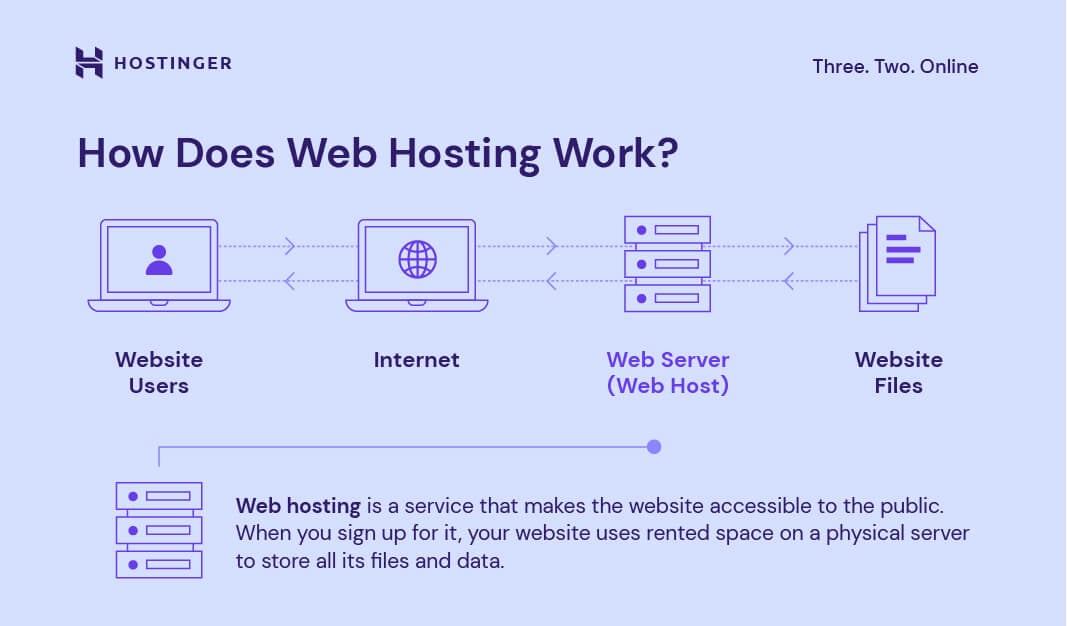
Image Source: Hostinger
Important Web Hosting Jargon
Before diving into the full glossary, it’s helpful to understand why these terms matter. Web hosting comes with a lot of technical language, and beginners often feel overwhelmed when comparing plans or talking to support teams. Knowing the basic jargon makes it easier to choose the right hosting, avoid common mistakes, and understand what you’re actually paying for.
These terms often influence your website’s speed, security, storage capacity, and overall performance. Even a simple difference—like “shared hosting” vs. “VPS”—can completely change how your site behaves.
With that in mind, let’s break down the most important hosting terms in a simple, beginner-friendly way.
1. Domain-Related Terms
- Domain Name: A domain name is a website’s unique address on the internet. It allows users to find a specific site without needing to remember a numerical address. Domain names typically end with extensions such as .com, .net, or .org. Registering a domain gives someone the right to use that address for a certain period.
- Subdomain: A subdomain is a prefix added to a main domain, creating a separate section of a website. For example, “blog.example.com” is a subdomain of “example.com.” Subdomains help organize content or create dedicated areas without requiring the registration of additional addresses.
- DNS (Domain Name System):The Domain Name System (DNS) associates domain names with their corresponding numerical IP addresses. DNS servers translate easy-to-remember addresses into numbers that computers use to locate websites. Configuring DNS records correctly ensures that visitors are directed to the intended site.
- TLD (Top-Level Domain):A TLD is the extension that appears at the end of a domain name, such as .com, .net, .org, or country-specific extensions like .in or .uk. Different TLDs serve different purposes—some are general, while others are restricted to certain regions or industries.
- Domain Registrar: A domain registrar is a company authorized to sell and manage domain names. When you purchase a domain, you do so through a registrar, which also helps you renew, transfer, or update ownership details for that domain.
- WHOIS: WHOIS is a public database that stores information about domain ownership, including the registrant’s name, registration dates, and contact details. Many registrars offer privacy protection so personal details aren’t publicly visible.
- Nameserver: Nameservers act like directory services for your domain. They tell the internet where your website is hosted by pointing your domain name to the correct server’s IP address. Without nameservers, visitors wouldn’t be able to reach your website.
2. Server-Related Terms
- Server: A server is a powerful computer that stores and delivers website content to users. Servers run constantly, so websites are always accessible. These machines handle requests from multiple users simultaneously, which means a single server can host either many websites or a single large site.
- Bandwidth: Bandwidth refers to the amount of data transferred between a website and its visitors over a given time period. Higher bandwidth supports more traffic and larger files. If bandwidth is too low, visitors might experience slow loading times or even temporary outages during busy periods.
- Disk Space: Disk space is the storage capacity allocated for website files, emails, databases, and media. Every image, video, or document uploaded uses part of this space. Selecting an appropriate amount of storage helps prevent issues such as failed uploads or missing content.
- Shared Hosting: Shared hosting means several websites reside on the same server and share its resources. This option is usually affordable and suitable for smaller sites. Because resources are divided, high traffic on one site can affect others using the same machine.
- Virtual Private Server (VPS): A Virtual Private Server, or VPS, divides a physical server into several independent sections. Each section operates like a separate machine with dedicated resources. This arrangement offers greater control and flexibility than shared hosting while costing less than a dedicated setup.
- Dedicated Hosting: Dedicated hosting provides an entire server for a single user. This arrangement offers maximum performance and security. Users gain complete control over software, resources, and settings. Dedicated servers are ideal for large sites or those with high traffic and specific technical requirements.
- Cloud Hosting: Cloud hosting distributes website data across multiple connected servers, rather than relying on a single machine. This structure enhances reliability and helps manage sudden spikes in visitor numbers. If one server goes offline, others can keep the site running smoothly.
- Uptime: Uptime measures the amount of time a website remains available to visitors. High uptime indicates that a site is rarely offline, which is important for building trust. Service providers often promise a specific percentage, such as 99.9 percent, to demonstrate their reliability.
- CPU (Processor): The CPU is the part of the server responsible for processing tasks and handling website requests. A higher CPU capacity allows a server to manage more traffic and run more complex applications without slowing down.
- Caching: Caching stores frequently accessed website data temporarily so it can be delivered faster the next time it's requested. This reduces load times and decreases the strain on your hosting server.
- CDN (Content Delivery Network): A CDN is a network of servers distributed across multiple locations worldwide. It stores copies of your website’s static content and delivers them from the server closest to each visitor, improving loading speed and performance.
- Load Balancing: Load balancing distributes incoming traffic across multiple servers. This helps prevent any single server from becoming overloaded, ensuring better uptime and more stable performance during high-traffic periods.
- Latency: Latency refers to the time it takes for a request to travel from a visitor’s device to the server and back. Lower latency results in faster page loading and is influenced by factors such as server location and network quality.
3. Control Panel & File Management Terms
- FTP (File Transfer Protocol): FTP stands for File Transfer Protocol, a method for uploading or downloading files between a computer and a server. Hosting providers provide users with FTP access to manage their website content. Using FTP clients, users can move multiple files efficiently and securely.
- Database: A database stores and organizes information needed by a website, such as user accounts or posts. Many content management systems rely on databases to function properly. Choosing the right database system supports smooth site operation and fast access to information.
- Backup: A backup is a copy of website files and data saved in case something goes wrong. Regular backups protect against accidental loss, hacking, or technical failures. Reliable providers often offer automated backups to facilitate easier recovery for users.
- cPanel / Plesk: cPanel and Plesk are user-friendly control panel systems that allow you to manage your hosting account without technical skills. They offer tools for managing domains, files, databases, email accounts, backups, and more.
- One-Click Installer (Softaculous, etc.): One-click installers allow users to quickly install applications like WordPress, Joomla, or Drupal. They automate setup steps such as database creation, making it easy for beginners to start building websites.
- File Manager: The File Manager is a tool inside the control panel that lets you view, upload, edit, and delete website files directly from your browser. It’s useful for small adjustments without needing FTP software.
- Email Hosting: Email hosting enables users to create professional email addresses linked to their domain (e.g., info@yourdomain.com). Hosting providers store and manage your email data and often include features like spam filtering and storage.
4. Security-Related Terms
- SSL Certificate: An SSL certificate encrypts data exchanged between a website and its visitors. This security feature prevents sensitive information from being intercepted. Sites with SSL display a padlock symbol in browsers and use the “https” protocol in their addresses.
- Firewall (WAF: Web Application Firewall): A Web Application Firewall monitors and filters incoming traffic to block harmful requests. It protects websites from attacks such as SQL injections, bots, and malicious scripts.
- Malware Scanning: Malware scanning involves checking your website regularly for malicious files or code that could harm visitors or compromise your data. Many hosting providers offer automated scanning and removal tools.
- Brute Force Protection: Brute force protection safeguards your website by blocking repeated login attempts from attackers trying to guess passwords. It helps prevent unauthorized access to your hosting account or CMS.
- DDoS Protection: DDoS protection defends your website against attacks that flood your server with excessive traffic. These attacks can slow down or shut down your site, so protection ensures stability and uptime.
- Two-Factor Authentication (2FA): 2FA adds an extra security layer by requiring a second verification step—such as a code sent to your phone—when logging in. This prevents unauthorized access even if someone obtains your password.
Conclusion
Grasping these essential web hosting terms empowers beginners to create, maintain, and protect their websites. A clear understanding leads to better decision-making and smoother communication with service providers. This glossary provides a helpful foundation for anyone ready to start an online project.

No results found.
Please try different keywords.
Get Started with
DashClicks Today
Get found online, convert leads faster, generate more revenue, and improve your reputation with our all-in-one platform.
.svg)
Unlimited Sub-Accounts
Unlimited Users
All Apps
All Features
White-Labeled
Active Community
Mobile App
Live Support
100+ Tutorials
Unlimited Sub-Accounts
Unlimited Users
All Apps
All Features
White-Labeled
Active Community
Mobile App
Live Support
100+ Tutorials
Unlimited Sub-Accounts
Unlimited Users
All Apps
All Features
White-Labeled
Active Community
Mobile App
Live Support
100+ Tutorials


