

.svg)

.svg)
.svg)
.svg)
.svg)
.svg)
Inconsistent conversion rates are one of the most disruptive challenges agencies face. Not because they indicate failure, but because they make performance difficult to predict and scale.
One PPC account delivers steady results month after month, while another fluctuates despite a similar budget, strategy, and audience. These swings make client retention harder, complicate budget planning, and weaken confidence in campaign performance.
That volatility creates a cascade of problems. Client retention becomes harder when performance cannot be explained or anticipated. Budget planning loses precision when conversion rates move unpredictably. ROAS reporting becomes a negotiation rather than a demonstration of value. And as agencies try to scale, unstable accounts consume disproportionate time and resources while contributing the least to profitability.
According to WordStream's Google Ads Benchmarks, the average search conversion rate reached approximately 7.52% across industries in 2025. At the same time, approximately 87% of industries experienced higher CPCs that same year. Rising CPCs mean agencies can no longer simply buy more traffic to offset weak performance. Conversion efficiency and consistency have become critical levers for sustainable growth.
Agencies need predictable performance, not occasional wins. White label PPC services offer a pathway to structured optimization frameworks and operational consistency that most agencies cannot build efficiently on their own. Before solving inconsistent conversion rates, however, agencies need to understand that volatility rarely stems from a single issue. It is usually the result of multiple campaign variables interacting simultaneously.
Why Conversion Rate Inconsistency Is A Bigger Problem Than A Low Conversion Rate?
A low conversion rate is a clear problem with a clear direction. Inconsistency is more insidious because it obscures the path forward entirely.
When conversion rates fluctuate unpredictably, client forecasting becomes unreliable. Budget planning loses its foundation. ROAS reporting turns into an exercise of qualifying results rather than presenting them with confidence. Growth projections become difficult to defend in business reviews, and client confidence erodes regardless of what average performance actually looks like.
Conversion Stability As An Agency KPI
Forward-thinking agencies are beginning to track Conversion Stability as a formal performance metric alongside CPA, ROAS, and revenue. Conversion Stability measures not just what a conversion rate is, but how consistently it holds across time.
Consider two campaigns with identical average conversion rates of 5%:
- Campaign A: Average conversion rate of 5%, with a range swinging between 2% and 8%
- Campaign B: Average conversion rate of 5%, with a range holding between 4.8% and 5.2%
Campaign A and Campaign B look identical in a summary report. They perform very differently in practice. Campaign B is easier to scale because budget increases produce predictable output. It is easier to forecast because historical data remains reliable. It is easier to optimize conversion rate because changes produce measurable, attributable effects.
Clients trust campaigns they can predict. A campaign with average results and high stability will outperform a campaign with peak results and high volatility when client satisfaction and retention are the true measures of success.
Once agencies recognize volatility itself as a performance issue worth tracking and reporting, the next challenge is identifying where that instability originates.
The Causes Behind Inconsistent PPC Conversion Rates
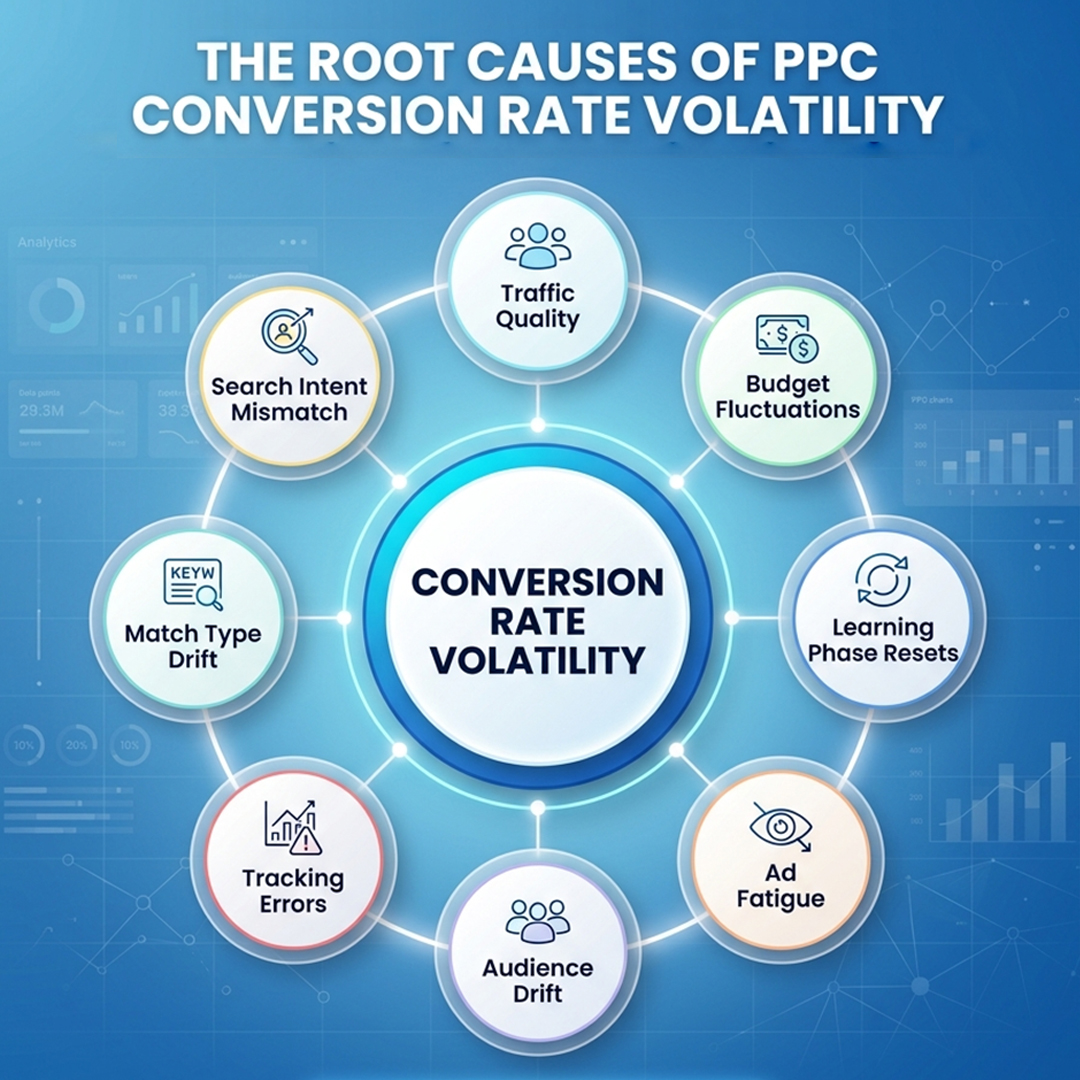
Most conversion volatility does not come from one major failure. It comes from several smaller issues building pressure simultaneously until performance destabilizes. Diagnosing the actual source requires looking across multiple campaign dimensions at once.
1. Traffic Quality Shifts
Keyword match type expansion is one of the most common sources of silent traffic degradation. When match types broaden, click volume often increases while search ntent weakens. A campaign may gain 30% more clicks after a targeting change, but if those clicks come from users earlier in the buying cycle, conversion rates drop despite higher activity.
Audience quality changes in Performance Max and broad match campaigns can create similar patterns without any explicit targeting change.
2. Budget And Delivery Changes
Budget fluctuations change which searches a campaign can compete for and when. When impression share drops significantly due to budget caps, campaigns may only surface for lower-competition, lower-intent queries during constrained periods. The result is a conversion rate that tracks budget cycles rather than actual demand.
3. Platform Learning Challenges
Google's smart bidding systems require stability to function effectively. Frequent campaign edits, bid strategy changes, and structural modifications push accounts back into learning phases. Each reset erodes the predictive accuracy that smart bidding relies on, producing conversion rate swings that appear random but are actually algorithm-driven.
4. Creative And Tracking Issues
Ad fatigue suppresses conversion rates gradually and often goes unnoticed until performance has already declined significantly. Tracking discrepancies, including delayed conversion windows and inconsistent tagging, can make campaigns appear volatile when the underlying performance is actually stable.
Many agencies optimize for CTR when the real issue lies in conversion quality. Common causes of conversion rate volatility include:
- Match type drift pulling in weaker search intent
- Budget fluctuations limiting access to high-value queries
- Learning phase disruptions from frequent campaign edits
- Audience quality deterioration in automated targeting
- Ad fatigue reduces qualified engagement over time
- Tracking gaps are creating inconsistent conversion attribution
Diagnosing volatility is only half the challenge. Maintaining consistency across dozens of client accounts is where most agencies struggle operationally.
How White Label PPC Services Create More Consistent Campaign Performance?
Consistency rarely comes from a single optimization. It comes from systems applied repeatedly across accounts over time.
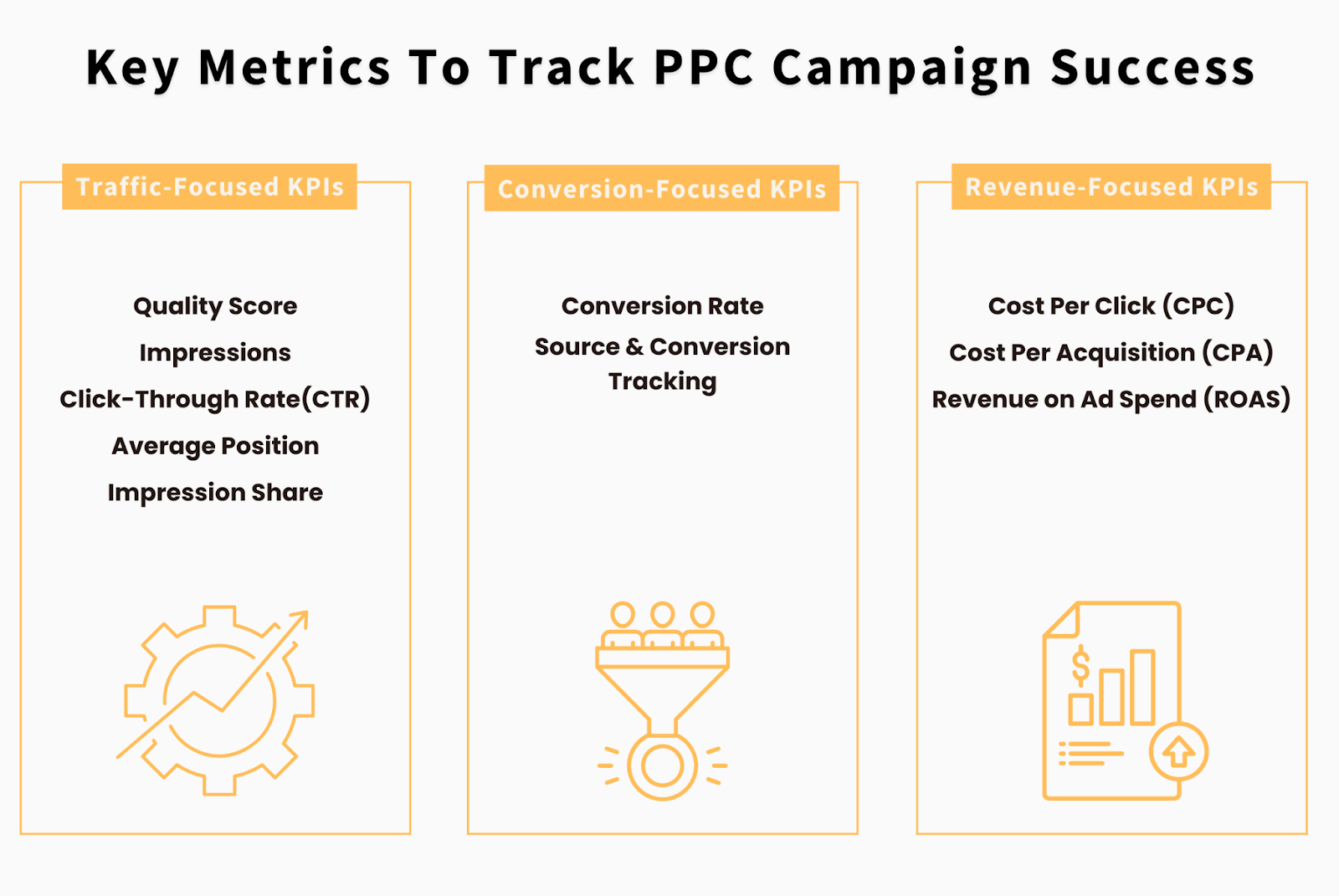
White label PPC services build that consistency through standardized frameworks that govern how campaigns are built, monitored, and adjusted. When the same structured process applies across every account, performance patterns become recognizable and correctable before they compound into client-level problems.
- Standardized Campaign Structures: Consistent account architecture ensures that similar campaigns behave similarly. When structural decisions are standardized, account managers spend less time diagnosing configuration issues and more time identifying genuine performance signals.
- Consistent Keyword Management And Negative Keyword Governance: Ongoing negative keyword governance is one of the highest-leverage activities in PPC management, and one of the most commonly deprioritized in agencies managing high account volumes. White label PPC teams apply systematic search term audits on a scheduled basis, continuously filtering out low-intent traffic before it erodes conversion rates.
- Scheduled Bid Reviews And Performance Monitoring Frameworks: Rather than reacting to performance drops after they occur, structured bid review schedules allow proactive adjustments based on trend data. Performance monitoring frameworks establish thresholds that trigger review before volatility becomes visible to clients.
Consider three healthcare campaigns that experience declining branded conversion rates after a platform update. A white label PPC agency identifies the pattern early across the portfolio and applies corrective actions across multiple accounts before performance deteriorates further. A single account manager would likely catch it in one account. A cross-account system catches it in all three simultaneously.
Cross-account visibility reveals patterns that single-account managers never see. Consistency improves when optimization processes become repeatable rather than reactive. The next step is measuring that stability accurately.
Metrics Agencies Should Track Beyond Conversion Rate
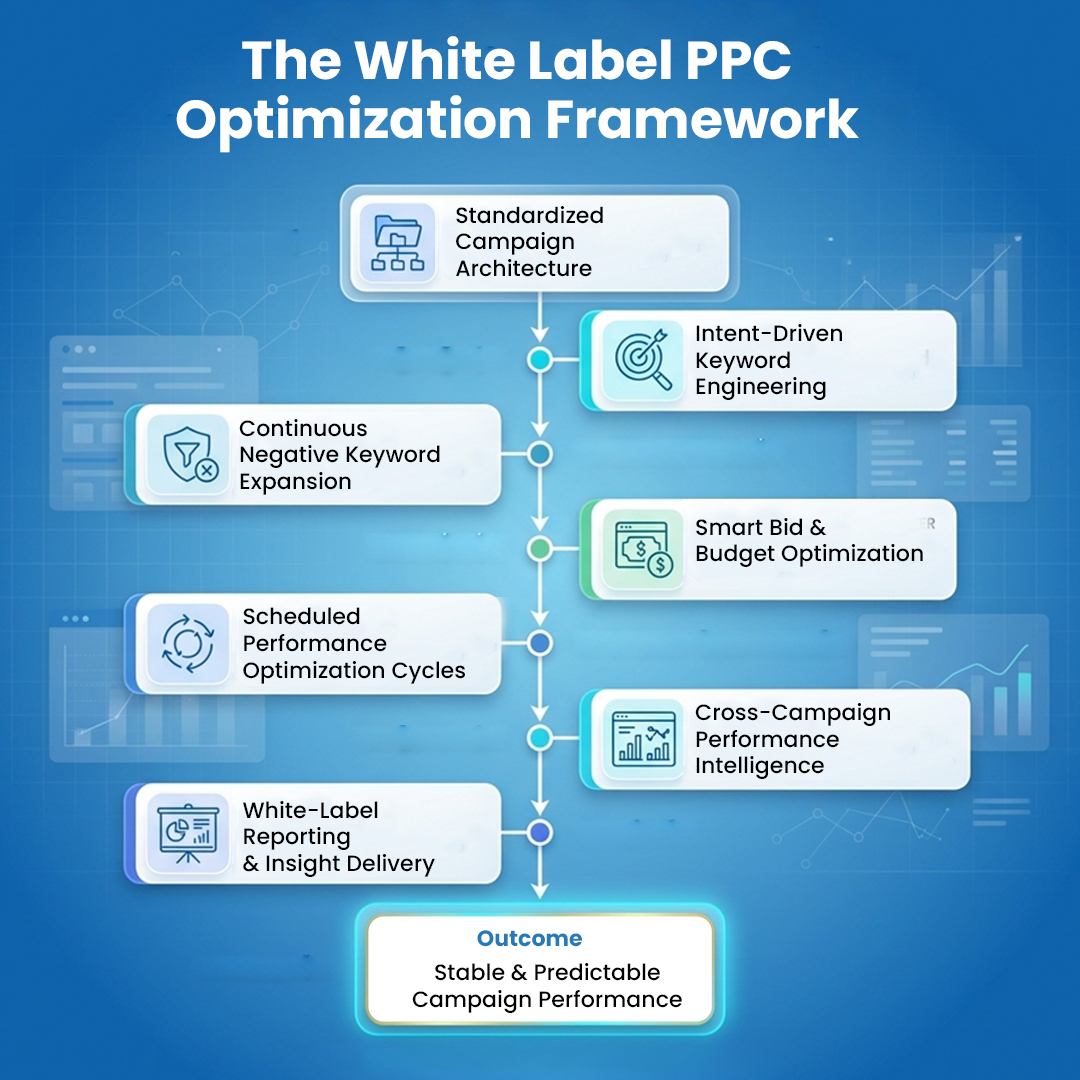
Conversion rate alone is too narrow a lens for evaluating campaign health. It captures one dimension of performance while leaving the structural signals of instability invisible.
1. The Campaign Stability Scorecard
A more complete picture of account health emerges when agencies track five dimensions together:
- Traffic Consistency: Are click volumes and impression share holding steady across reporting periods?
- Cost Consistency: Are CPC and overall spend tracking within expected ranges?
- Lead Quality Consistency: Are the leads being generated meeting qualification thresholds?
- Conversion Consistency: Is the conversion rate holding within a defined stable range?
- Revenue Consistency: Is downstream revenue output predictable relative to ad spend?
Together, these dimensions form a Campaign Stability Scorecard that gives agencies a structured view of account health rather than a snapshot of one variable.
2. CPA Stability And Impression Share Trends
CPA can remain acceptable while drifting in ways that signal future problems. Impression share trends reveal whether campaigns are maintaining competitive positioning or losing ground gradually. Both metrics matter most when evaluated directionally, not just as point-in-time figures.
2. Search Term Quality, Assisted Conversions, And Conversion Lag
Search term quality scores help agencies monitor whether traffic is remaining aligned with buyer intent. Assisted conversions and conversion lag data reveal how attribution windows affect reported performance, which prevents agencies from drawing inaccurate conclusions from standard conversion reports.
3. Cost Per Qualified Lead And Budget Pacing Consistency
Cost per qualified lead separates conversion volume from conversion value. Budget pacing consistency flags campaigns where delivery patterns may be distorting performance data in ways that make accounts appear more volatile than they actually are.
A campaign can maintain a strong conversion rate while becoming increasingly unstable underneath the surface. Measuring stability matters only when agencies have systems capable of improving it consistently.
Operational Advantages Of White Label PPC Services For Multi-Client Agencies
Operational consistency drives performance consistency. The agencies that deliver the most stable PPC results are usually not the ones with the most talented individual account managers. They are the ones with the most reliable processes.
1. SOP-Driven Optimization And Dedicated PPC Specialists
Standard operating procedures remove individual variability from campaign management. When optimization decisions follow defined frameworks, account performance becomes less dependent on which team member is working on a given account at a given time. Dedicated PPC specialists within white label teams apply those SOPs with depth and focus that generalist account managers rarely achieve at scale.
2. Faster Issue Detection And Reduced Dependence On Individual Account Managers
White label PPC partners maintain monitoring frameworks across large account portfolios. Issues that would go undetected in a single-account workflow surface quickly when performance patterns are tracked systematically. This reduces the operational risk of key-person dependency, where one account manager's departure or bandwidth constraint creates client-level exposure.
3. Scalable Campaign Management And Consistent Reporting Standards
An agency managing 50 PPC accounts can roll out optimization changes across all accounts within days through a white label partner, rather than weeks of prioritization and internal scheduling. Consistent reporting standards mean clients receive comparable transparency regardless of account size or complexity.
Many performance issues are operational problems disguised as campaign problems. Fixing the system often resolves the issue faster than fixing the campaign. Even with strong systems in place, however, agencies can still generate volatility through avoidable optimization behaviors.
Common Agency Mistakes That Lead To Conversion Volatility
Some volatility is self-inflicted. The most disciplined optimization processes can be undermined by a handful of repeated mistakes that most agencies recognize only after the damage is done.
The most common include making multiple campaign changes simultaneously, scaling budgets too quickly without a structured ramp, ignoring search term reports between audit cycles, chasing short-term trend spikes with structural changes, overreacting to daily fluctuations before statistical significance is established, switching bidding strategies without allowing adequate learning periods, and failing to validate conversion tracking before drawing performance conclusions.
Change Log Discipline
High-performing agencies document every major campaign adjustment systematically. This practice, called Change Log Discipline, creates a direct link between actions taken and performance outcomes observed.
When a conversion decline occurs after three simultaneous changes, identifying the root cause becomes nearly impossible without documentation. Change logs narrow the diagnostic window from weeks to days and allow agencies to build institutional knowledge about what works in specific account contexts.
The fastest way to create volatility is to lose visibility into what changed. Disciplined optimization becomes significantly easier when agencies have scalable fulfillment support that can maintain consistent processes without internal bandwidth constraints.
How DashClicks' White Label PPC Services Help Agencies Improve Conversion Consistency?
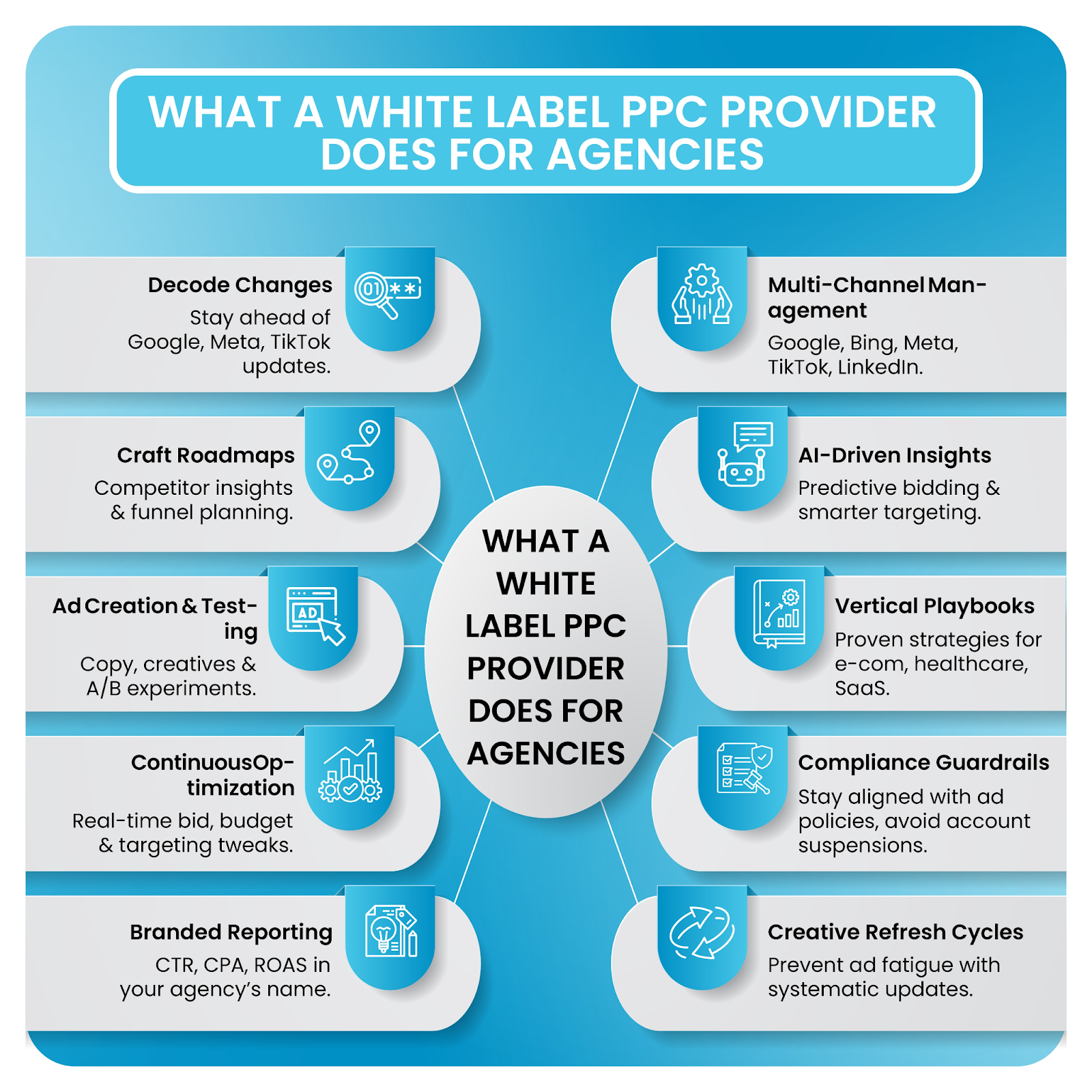
DashClicks is a white label PPC services provider built to support scalable agency fulfillment and campaign management. For agencies managing growing client portfolios, the platform provides the operational infrastructure needed to deliver consistent PPC performance without expanding internal teams.
- Structured PPC Fulfillment: DashClicks handles campaign setup, ongoing optimization, and budget management through structured fulfillment workflows. Campaigns are built and maintained according to standardized frameworks, reducing the configuration variability that frequently contributes to conversion rate inconsistency.
- Consistent Optimization Processes: Standardized workflows govern how campaigns are reviewed, adjusted, and monitored across accounts. Performance reviews follow scheduled cadences, and ongoing monitoring is applied systematically rather than reactively.
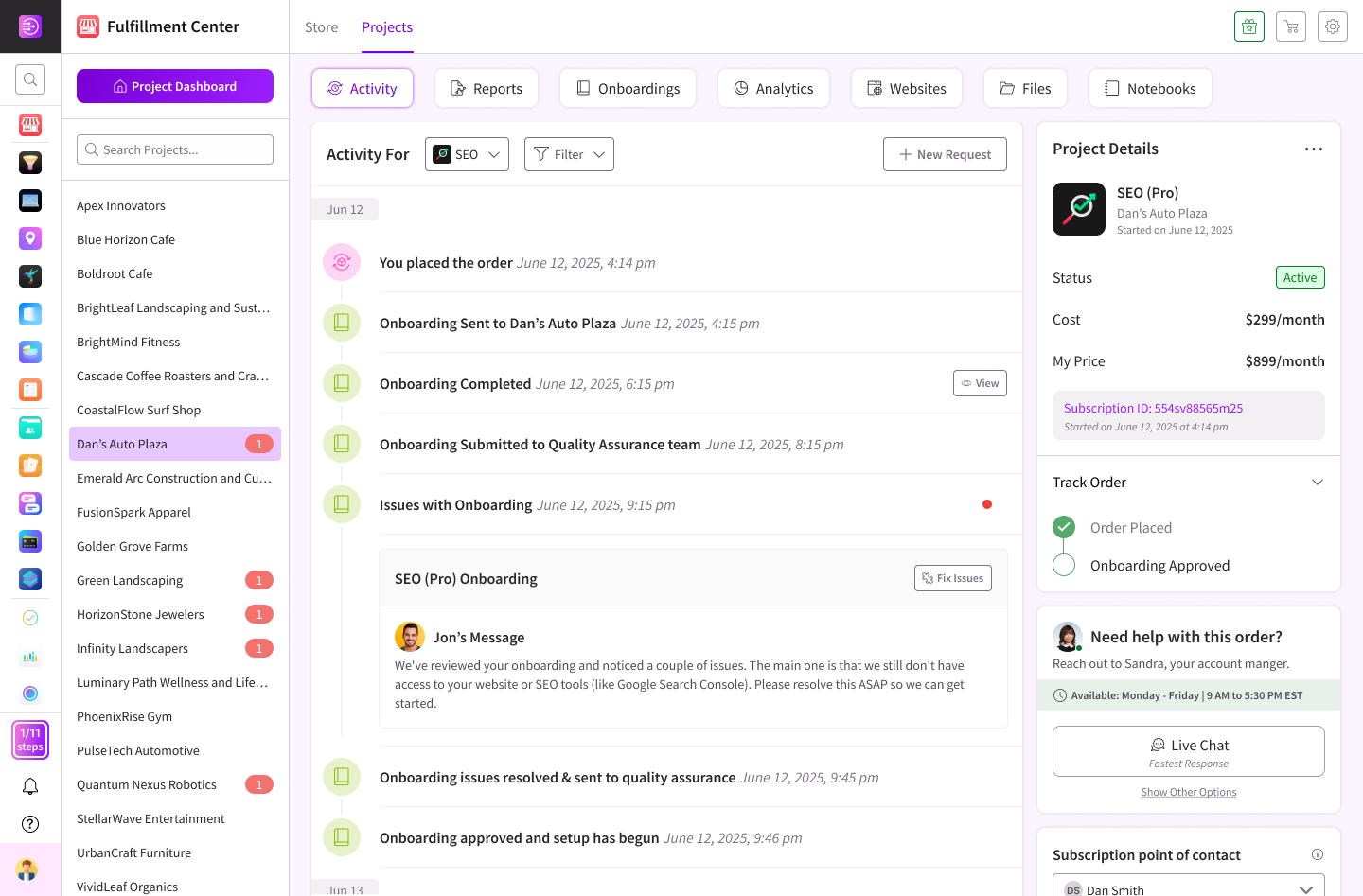
- Better Reporting Visibility: Centralized reporting and client-facing dashboards give agencies a consistent view of performance across their portfolio. Campaign transparency improves client communication and reduces the time account managers spend assembling reports manually.
- Scalable Agency Growth And More Bandwidth For Client Success: By offloading PPC fulfillment to DashClicks, agencies increase their service capacity without adding headcount. Reduced operational strain creates space for stronger client communication, more strategic account conversations, and greater focus on growth initiatives that drive retention.
As client portfolios grow, operational consistency becomes increasingly important for maintaining campaign stability. Ultimately, stable conversion performance is not created by a single tactic. It is created by disciplined systems, repeatable execution, and continuous optimization applied consistently across every account.
Stable Conversion Performance Is A System, Not A Single Optimization
Inconsistent conversion rates create a kind of uncertainty that compounds over time. Client confidence erodes. Forecasting loses reliability. Growth projections become harder to defend. And the agency's ability to scale becomes constrained by accounts that demand constant reactive attention.
Conversion Stability should sit alongside CPA and ROAS as a formal agency KPI. Most conversion volatility originates from multiple interacting variables, including traffic quality shifts, platform learning disruptions, operational inconsistencies, and avoidable optimization mistakes. Addressing one in isolation rarely produces lasting results.
White label PPC services provide the standardized optimization, scalable execution, cross-account visibility, and operational consistency that agencies need to deliver predictable performance at volume. The agencies that retain clients longest are not always the ones generating the highest conversion rates. They are the ones delivering the most predictable, explainable, and consistently improving PPC performance over time.


.svg)


.svg)
.svg)
.svg)
.svg)
.svg)