

.svg)

.svg)
.svg)
.svg)
.svg)
.svg)
In paid search, visibility is everything. You can build the best campaign structure, write strong ad copy, and optimize landing pages, but if your ads are not showing often enough, results will stall. That is where impression share becomes a critical metric.
Many agencies struggle to consistently improve impression share across multiple client accounts. Budgets are tight. Competition keeps rising. Platforms evolve quickly. At the same time, clients expect clear growth and measurable impact.
This is where white label PPC changes the game.
By partnering with a trusted provider, agencies can strategically improve impression share without overwhelming their internal teams. Instead of reacting to performance dips, they can take a proactive, data-driven approach.
Let’s break down how this works, why it matters, and how agencies use white label partnerships to drive stronger paid media results.
Understanding Impression Share and Why It Matters
Impression share is the percentage of impressions your ads receive compared to the total number of impressions they were eligible to receive.
For example, if your ads were eligible to show 10,000 times and they appeared 6,000 times, your impression share is 60%.
Google Ads divides lost impression share into two main categories:
- Lost due to the budget
- Lost due to rank
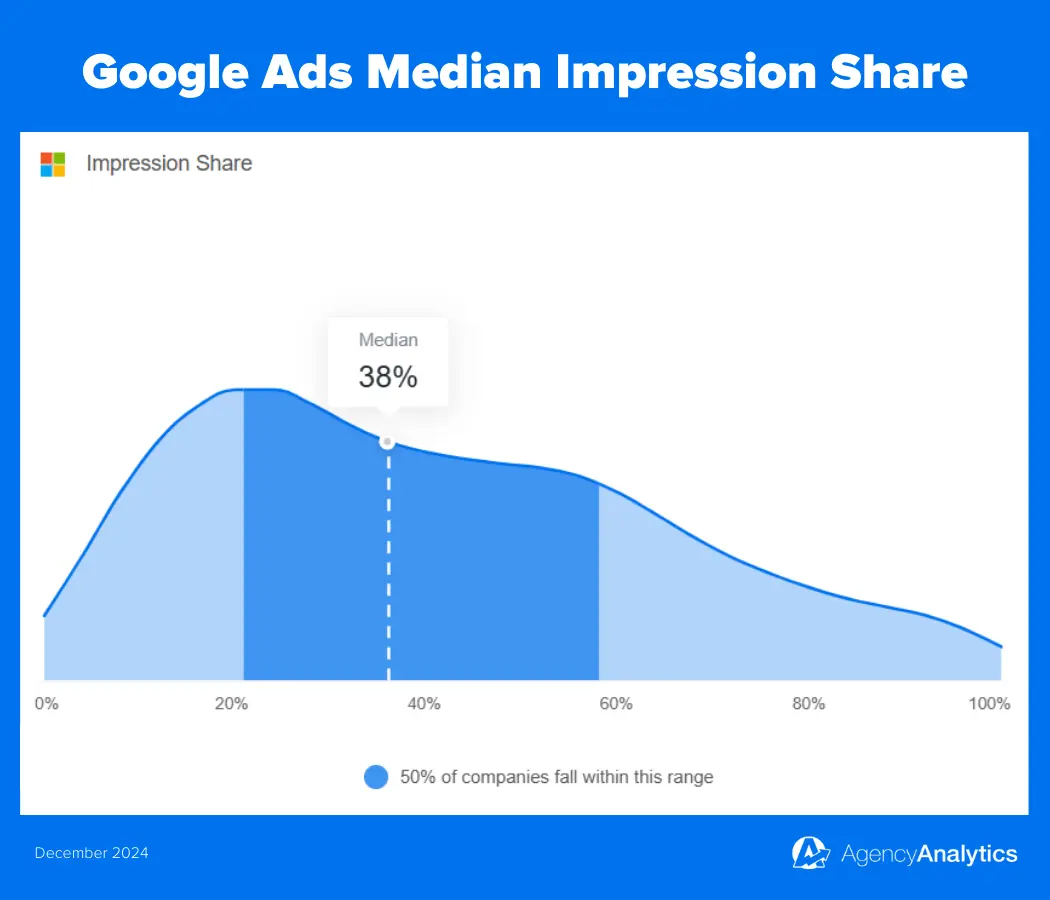
Image Source: AgencyAnalytics
According to Google Ads documentation, lost impression share due to rank often comes from lower ad quality, weak bidding strategy, or strong competitor activity. Lost impression share due to budget simply means the campaign ran out of money before it could capture all possible traffic.
Why does this matter?
Because higher impression share often leads to:
- Increased brand visibility
- More clicks and conversions
- Stronger market positioning
- Better competitive advantage
WordStream research has shown that the average Google Ads click-through rate across industries is around 6–7% on the search network. If your ads are not appearing often enough, you are limiting your ability to benefit from that potential traffic.
Improving the impression share is not just about showing up more. It is about showing up strategically in the right auctions, for the right queries, with the right budget allocation.
The Growing Complexity of PPC Management
Paid search is no longer a simple bidding exercise.
Agencies now manage:
- Smart bidding strategies
- Audience layering
- Cross-channel remarketing
- Conversion tracking across devices
- First-party data integration
- Ongoing A/B testing
- AI-driven optimization tools
At the same time, competition continues to increase. Statista reports that global digital advertising spending surpassed $600 billion in 2023 and continues to grow year over year. More advertisers mean more pressure in auctions.
As accounts scale, impression share becomes harder to control without:
- Deep platform expertise
- Constant monitoring
- Technical optimization
- Strategic budget allocation
For small and mid-sized agencies, building a full in-house paid media team can be expensive. Hiring experienced PPC managers, analysts, and strategists requires significant investment.
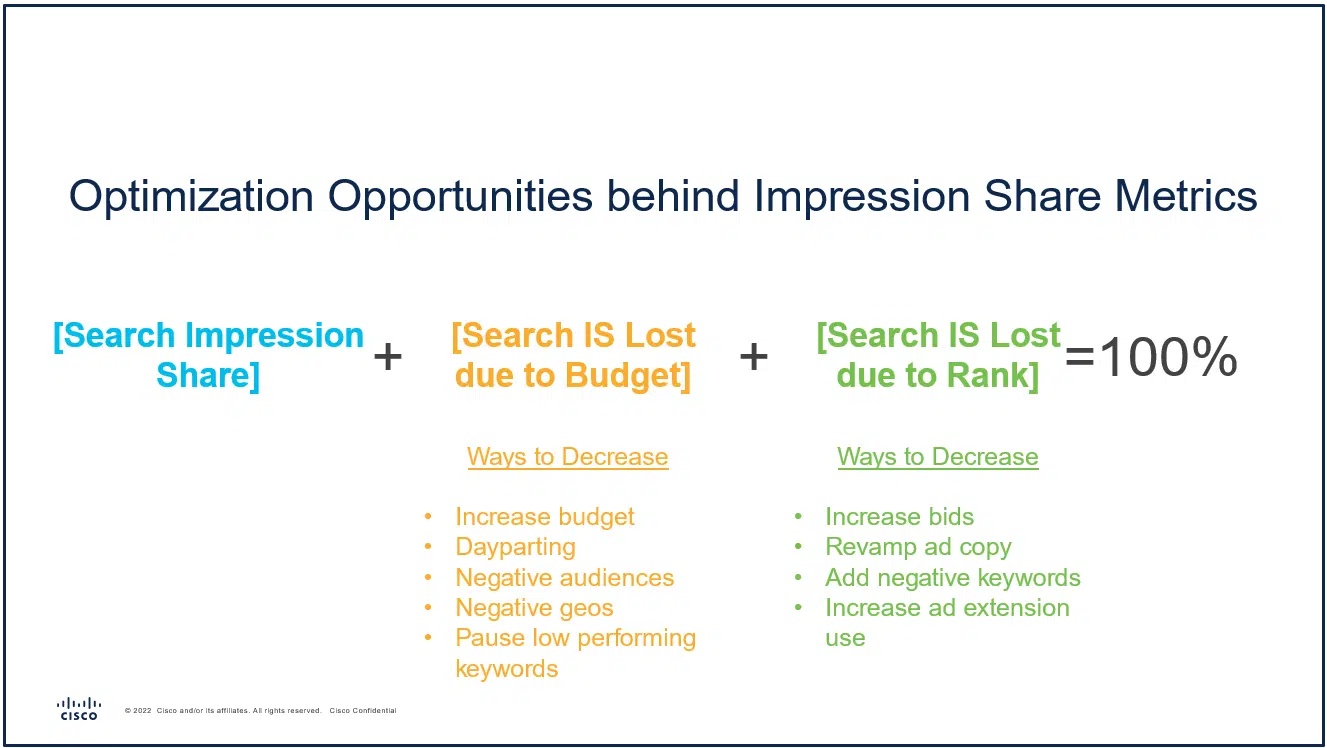
Image Source: SearchEngineLand
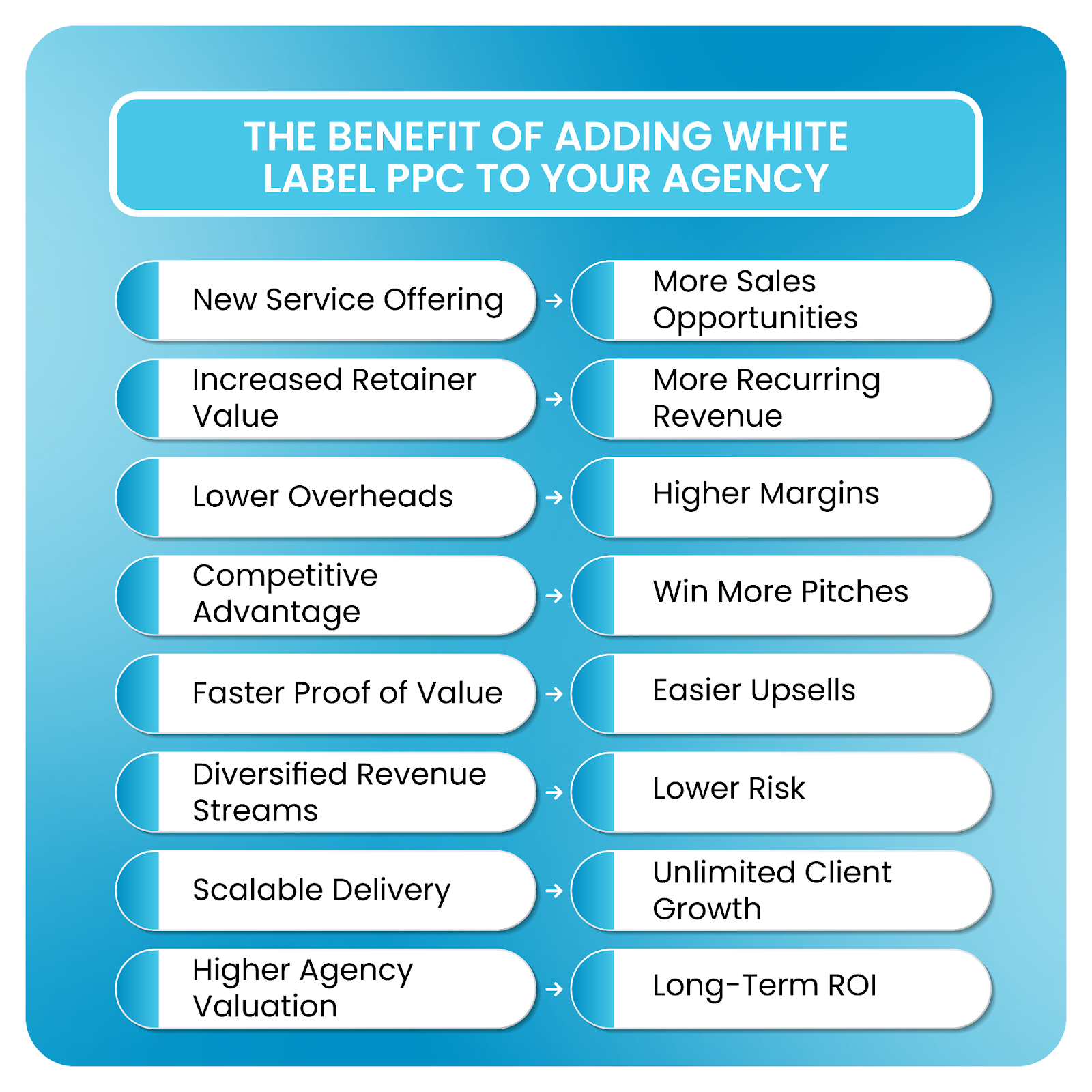
That is why many agencies turn to white label PPC services as a strategic solution.
What Is White Label PPC and Why Agencies Use It?
White label PPC allows agencies to offer paid advertising services under their own brand while a specialized partner handles the campaign execution behind the scenes.
The client sees the agency’s brand. The work is powered by an experienced team.
Agencies use this model to:
- Expand service offerings without hiring internally
- Maintain client ownership and brand control
- Deliver advanced campaign strategies
- Scale faster
- Improve performance metrics such as impression share
Instead of scrambling to troubleshoot declining visibility, agencies can rely on specialists who focus exclusively on paid media optimization.
This becomes especially powerful when impression share is part of a broader growth strategy.
How White Label PPC Helps Improve Impression Share Strategically?
Improving impression share is not just about increasing budgets. A strategic approach involves multiple levers.
Here is how agencies use white label partnerships to strengthen this metric.
1. Advanced Account Audits and Competitive Analysis
White label PPC teams begin with a deep audit of existing campaigns. They examine:
- Current impression share percentages
- Lost impression share due to rank
- Lost impression share due to the budget
- Quality Score breakdown
- Ad relevance
- Landing page experience
- Competitor overlap
This analysis identifies whether the main limitation is bidding strategy, ad quality, or budget allocation.
For example, if the impression share is low due to rank, simply increasing the budget will not fix the problem. The campaign may need better ad copy, stronger keywords, or improved landing pages.
A specialized partner understands how to prioritize the right fixes.
2. Smart Budget Allocation Across Campaigns
Many agencies spread budgets evenly across campaigns without fully analyzing opportunity gaps.
White label experts look at:
- High-converting campaigns with low impression share
- Top-performing keywords are losing rank to competitors
- Geographic segments with strong ROI but limited exposure
Instead of increasing total spend blindly, they redistribute budgets to maximize visibility where it matters most.
According to Google, advertisers who use automated bidding strategies such as Target CPA or Maximize Conversions often see improved auction performance compared to manual bidding. A white label team can align bidding strategies with impression share goals.
3. Improving Quality Score to Reduce Rank Loss
Quality Score directly impacts ad rank. Higher scores can lower cost per click while increasing visibility.
White label PPC teams improve Quality Score by:
- Refining keyword match types
- Writing highly relevant ad copy
- Testing multiple ad variations
- Aligning landing pages with search intent
- Improving page load speed
Google has stated that higher ad relevance and landing page experience contribute significantly to auction performance.
By improving these factors, agencies can increase impression share without necessarily increasing client budgets.
4. Leveraging Data for Bid Strategy Optimization
Impression share is influenced by bidding strategy.
White label teams use data to:
- Adjust bids by device
- Optimize based on time of day
- Refine audience targeting
- Exclude low-performing segments
- Focus on high-intent keywords
They analyze auction insights to understand competitor behavior and adjust strategy accordingly.
For example, if competitors are aggressively bidding during certain hours, the strategy may shift to dominate off-peak periods where cost efficiency is higher, but visibility is still strong.
This data-driven approach ensures impression share growth is profitable, not just visible.
5. Continuous Testing and Iteration
Paid search platforms evolve constantly. What works this month may not work next quarter.
White label PPC services maintain ongoing optimization cycles that include:
- Ad copy testing
- Keyword expansion
- Negative keywords refinement
- Landing page experiments
- Bid strategy reviews
This continuous improvement model helps agencies sustain impression share gains instead of seeing temporary spikes.
5. Scaling Impression Share Without Overloading Internal Teams
One of the biggest challenges agencies face is bandwidth.
When multiple clients request performance improvements at the same time, internal teams can become stretched thin. Impression share often drops during these periods because monitoring is inconsistent.
With a white label partner:
- Campaign monitoring continues daily
- Performance alerts are handled quickly
- Bid adjustments are implemented consistently
- Testing cycles stay active
This ensures clients maintain strong visibility even during peak workloads.
It also protects agency reputation. When impression share declines significantly, competitors often fill the gap. Recovering lost ground can be more expensive than maintaining steady exposure.
6. Using Impression Share as a Competitive Strategy
Impression share is not just a technical metric. It can shape competitive positioning.
Agencies often use impression share strategically in the following ways:
- Defending branded search terms
- Dominating local markets
- Supporting seasonal campaigns
- Launching new products or services
- Targeting competitor keywords
For example, when defending branded keywords, a near 100% impression share ensures competitors do not capture traffic searching directly for the client’s name.
According to industry data, branded search campaigns typically achieve much higher click-through rates compared to non-branded terms. Protecting that visibility can significantly impact revenue.
White label PPC teams help agencies maintain strong branded impression share while strategically expanding into high-intent non-branded keywords.
7. Balancing Budget and Visibility
A common misconception is that higher impression share always requires higher budgets.
In reality, the balance depends on:
- Campaign efficiency
- Quality Score
- Keyword selection
- Competitive intensity
White label specialists identify opportunities where small improvements in Quality Score or ad relevance can produce meaningful gains in ad rank.
For example, moving from an average ad position of 3.5 to 2.0 can dramatically increase click-through rate. According to Google, ads shown at the top of search results often receive significantly more engagement than those appearing lower on the page.
Improving rank strategically can increase both impression share and conversion volume without doubling ad spend.
8. Reporting Impression Share to Clients Clearly
Clients often focus only on leads and sales. However, impression share can tell a broader growth story.
Agencies using white label PPC partnerships can present impression share in reports to show:
- Increased market coverage
- Competitive defense
- Improved ad rank
- Reduced lost impressions due to budget
- Stronger positioning over time
This transforms PPC discussions from cost conversations into market share conversations. Instead of asking, “Why are we spending more?” clients begin asking, “How much of the market are we capturing?”
That shift strengthens long-term client relationships.
The Strategic Advantage of White Label PPC Services
Agencies that embrace white label PPC services gain more than operational support. They gain strategic flexibility.
They can:
- Onboard new clients quickly
- Scale accounts without delay
- Offer advanced paid search solutions
- Improve key metrics such as impression share
- Stay competitive in high-demand industries
As digital advertising costs continue to rise, efficient auction participation becomes more important than ever. Strategic impression share growth ensures clients remain visible in the moments that matter most.
With the right partnership, agencies can transform impression share from a reactive metric into a proactive growth tool.
How DashClicks' Supports Agencies in Improving Impression Share?
DashClicks play a key role in helping agencies strengthen their paid advertising performance through strategic execution and scalability. As a provider of white label PPC services, the platform enable agencies to deliver advanced campaign management without expanding internal payroll.
Their team focuses on structured campaign builds, detailed keyword research, and ongoing optimization. This includes monitoring impression share metrics closely and identifying whether visibility issues stem from rank limitations or budget constraints. By combining data analysis with active bid management, they help agencies improve ad position while maintaining cost efficiency.
Agencies working with DashClicks can access:
- In-depth campaign audits
- Structured Google Ads and Microsoft Ads management
- Transparent reporting dashboards
- Continuous performance tracking
- Strategic bid optimization aligned with client goals
Because the work is executed behind the scenes, agencies maintain brand ownership while benefiting from a team dedicated to performance growth. This allows them to improve impression share strategically rather than reactively.
For agencies that want to expand their white label PPC services while ensuring campaigns remain competitive in increasingly crowded auctions, DashClicks offers a scalable solution that supports long-term growth.
Bringing It All Together
Improving impression share is not about chasing numbers. It is about controlling visibility, defending brand presence, and maximizing opportunity in competitive auctions.
Agencies that try to manage everything internally often struggle with time constraints and evolving platform complexity. White label partnerships provide the depth, focus, and consistency required to optimize at scale.
By combining structured audits, bid strategy refinement, Quality Score improvements, smart budget allocation, and continuous testing, agencies can strategically increase impression share while protecting return on investment.
DashClicks supports this process by giving agencies the infrastructure and expertise needed to manage campaigns effectively under their own brand. Instead of worrying about execution details, agencies can focus on client relationships and growth strategy.


.svg)


.svg)
.svg)
.svg)
.svg)
.svg)