

.svg)

.svg)
.svg)
.svg)
.svg)
.svg)
PPC management has fundamentally changed because of AI-driven bidding and automation. Smart Bidding is no longer a competitive advantage for digital marketing agencies. It is quickly becoming the standard baseline across the industry. Agencies relying only on manual optimizations face significant efficiency and scalability challenges in this new environment.
Clients expect faster optimization cycles, better reporting, and stronger ROI accountability from their agency partners. The real challenge is not adopting Smart Bidding technology. The true challenge is managing it strategically to drive meaningful business growth. The number of Google advertisers adopting automated bidding is increasing, making it impossible to ignore.
While Smart Bidding has become mainstream, many agencies still misunderstand what has actually changed inside modern PPC management.
The New Reality Of Smart Bidding In PPC Management
Smart Bidding has evolved far beyond simple automation to become a highly sophisticated system. It relies heavily on machine learning decision-making to drive performance. Agencies must understand that manual bid adjustments alone cannot compete with auction-level optimization.
Today, Smart Bidding evaluates vast amounts of data to make predictions about how bidding amounts might impact conversions. This auction-time bidding process happens in milliseconds and considers numerous variables simultaneously. Real-time optimization allows the system to adjust bids for each unique search query and user context. Manual bidding simply cannot process this volume of data with the required speed.
Google states Smart Bidding can evaluate signals and optimize bids for every individual auction rather than relying only on periodic bid changes. These contextual signals include:
- Device
- Location
- Time of day
- Browser
- Operating system
- User behavior signals
The role of PPC managers is shifting from traditional bid managers to data strategists and performance architects.
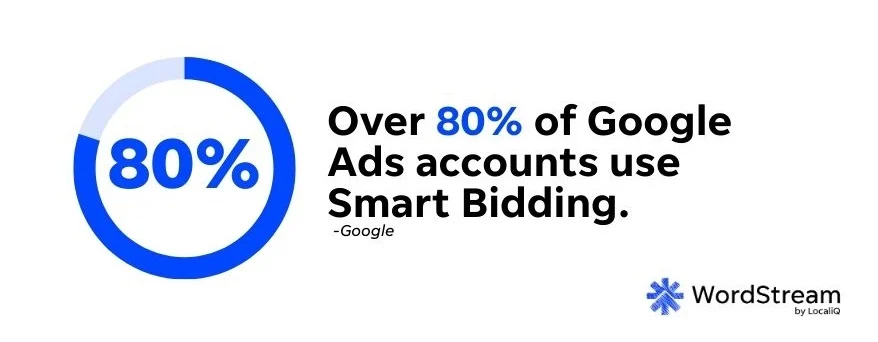
Image Source: WordStream
Agencies must now focus on feeding the algorithm the best possible data and business logic. Machine learning needs high-quality inputs to make accurate decisions.
As bidding becomes increasingly automated, agencies face a different challenge: maintaining control while relying on machine learning systems.
Why Many Agencies Struggle With Smart Bidding Adoption?
Successfully adopting Smart Bidding requires a fundamental shift in how an agency operates. Many teams attempt to use new automated tools with outdated operational frameworks. This mismatch creates friction and often leads to poor campaign performance.
Agencies frequently misdiagnose algorithm failures when the actual problem is a lack of proper strategic inputs. Smart Bidding requires meticulous setup and ongoing guidance to function correctly. Without these elements, automated campaigns will inevitably struggle to meet client expectations.
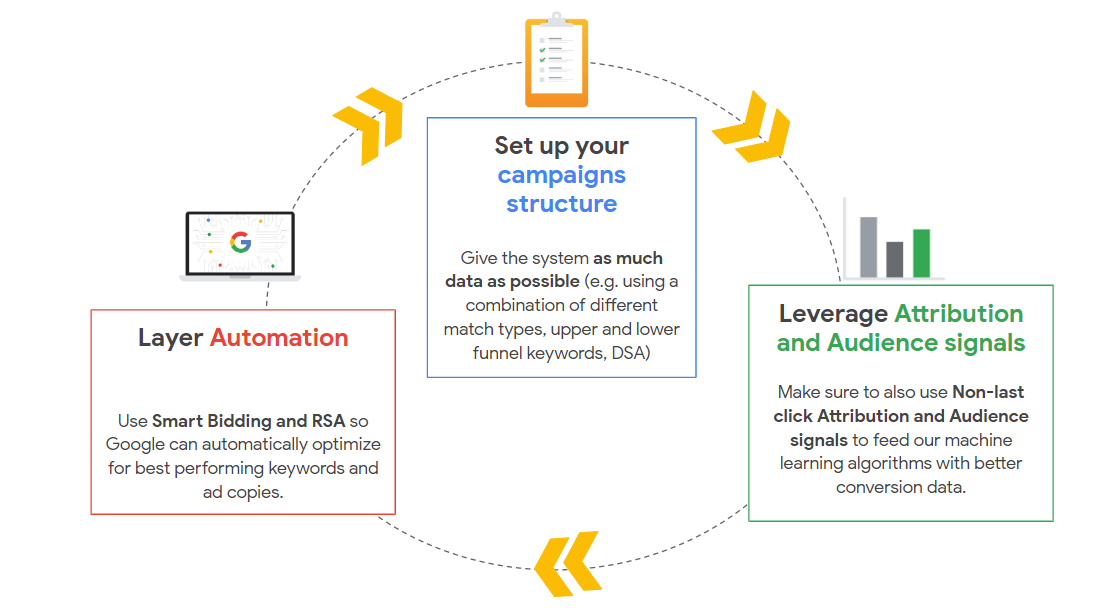
Image Source: Seer Interactive
These common pain points highlight where agencies need the most help:
- Insufficient conversion volume
- Disconnected tracking systems
- Impatience during learning phases
- Operational complexity across portfolios
The biggest Smart Bidding failure is often not the algorithm. It is incomplete data feeding the algorithm.
This is where agencies begin to realize that PPC success depends less on bid management and more on operational infrastructure.
1. Limited Conversion Data
Smart Bidding depends heavily on quality conversion signals to optimize effectively. Many SMB clients lack sufficient conversion volume to feed the machine learning models. Sparse data limits optimization quality and makes the algorithm guess rather than learn. Weak conversion tracking ultimately lowers bidding accuracy and wastes client budget.
- Low monthly transaction counts
- Missing micro-conversions
- Improperly weighted conversion actions
Agencies must help clients build robust data pipelines to solve this challenge.
2. Poor Attribution Infrastructure
Smart Bidding cannot optimize well if the data is incomplete or inaccurate. Offline conversions often remain untracked in many agency campaigns. CRM and ad platform disconnects create massive optimization blind spots. Lead quality is often not passed back into Google Ads for proper evaluation.
- Broken CRM integrations
- Missing phone call tracking
- Unrecorded offline sales
Connecting the full customer journey is essential for accurate algorithmic bidding.
3. Learning Period Disruptions
Frequent campaign edits can severely disrupt algorithmic learning periods. Agencies often mistake learning periods for poor performance and panic. Excessive changes can reset optimization stability and waste ad spend. Premature edits reduce bidding efficiency and prevent campaigns from maturing properly.
- Constant budget adjustments
- Daily target CPA changes
- Frequent ad group restructuring
Patience and strategic planning must replace reactive manual adjustments.
4. Scaling Across Multiple Accounts
Managing dozens of client accounts introduces intense operational complexity for an agency. Every account has different tracking setups that require unique maintenance. Different client goals and different conversion values make standardization very difficult. Different account maturity levels mean agencies cannot use a single approach everywhere.
- Variable reporting requirements
- Custom attribution models
- Unique margin considerations
Building a standardized approach to these unique challenges is critical for growth.
The Hidden Skills Smart Bidding Still Cannot Replace
A common misconception is that automation eliminates the need for deep agency expertise. Smart Bidding can optimize toward a defined goal, but it cannot decide whether that goal is correct. Human strategy is still the most critical component of a successful marketing campaign.
Agencies must provide the business context that algorithms inherently lack. Smart Bidding cannot independently determine the nuances of a client's business model. It cannot understand brand voice, market positioning, or complex sales cycles.
Smart Bidding cannot independently determine:
- Business priorities
- Lead quality
- Profit margins
- Client-specific growth goals
- Creative strategy
- Landing page experience
Consider a campaign optimized strictly for lead volume. This setup may generate more conversions while simultaneously reducing sales quality. If every form fill is treated as equal, Smart Bidding may prioritize cheaper but weaker leads. The algorithm succeeds at the stated goal while failing the client's actual business objective.
AI can optimize toward a goal, but agencies must define the right goal.
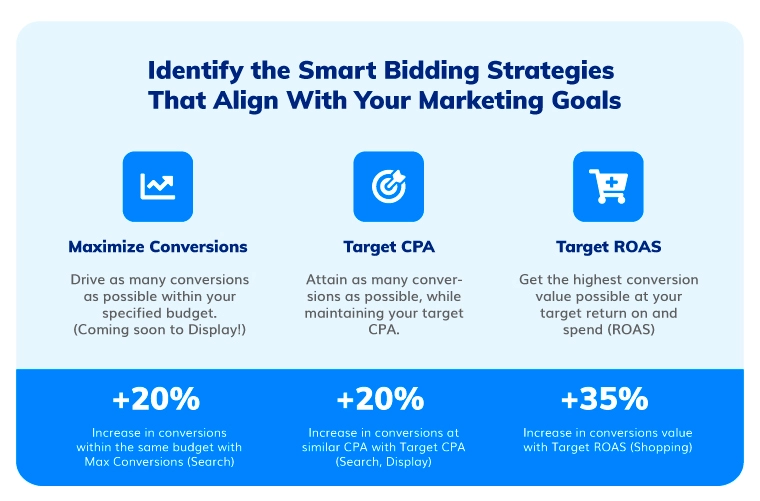
Image Source: White Shark Media
Because strategic oversight remains essential, agencies need a scalable way to combine automation with expert management.
How White Label PPC Services Help Agencies Adapt Faster?
White label PPC provides a massive operational advantage for agencies navigating these changes. It is a strategic growth solution rather than simple task outsourcing. Agencies can leverage this support to build a scalable fulfillment infrastructure.
By partnering with experts, agencies gain immediate operational capacity without overhead. This allows the internal team to focus heavily on client relationships and overall marketing strategy. A strong white label PPC agency provides the foundational support needed for modern campaigns.
Agencies partnering with a white label provider typically see improvements in:
- Campaign launch speed
- Technical tracking accuracy
- Cross-account standardization
- Advanced strategic implementation
The most successful agencies are increasingly building strategy-first models while outsourcing execution-heavy PPC operations.
However, simply outsourcing PPC is not enough. Agencies need a framework for making Smart Bidding work across client portfolios.
1. Access To Specialized PPC Expertise
White label PPC services give agencies access to dedicated teams familiar with advanced bidding strategies. These experts understand industry patterns and platform changes that general marketers might miss. They provide a competitive edge in a rapidly changing technical landscape.
- Advanced algorithm training
- Industry-specific bidding knowledge
- Proactive adaptation to platform updates
Expert guidance prevents costly mistakes when configuring automated bidding rules.
2. Better Conversion Tracking Setups
A white label team can support the complex technical needs of modern attribution. They help establish enhanced measurement frameworks that feed better data to the algorithms. Offline conversion integration and CRM attribution support become much easier to implement. Establishing proper primary and secondary conversion setups ensures the bidding system learns correctly.
- Server-side tracking implementation
- Cross-domain tracking validation
- Custom variable configuration
Accurate data pipelines are the foundation of any successful automated campaign.
3. Faster Testing Cycles
More execution capacity helps agencies test faster and learn quicker. White label PPC teams can manage the rigorous demands of audience testing and bid strategy testing. Landing page experimentation and creative testing can occur simultaneously without bottlenecking internal staff. Faster learning directly translates to better client outcomes and higher retention rates.
- Rapid ad copy deployment
- Continuous audience refinement
- Statistical significance monitoring
Speed of execution is a major differentiator in competitive advertising markets.
4. Scalability Without Hiring Delays
White label PPC services help agencies expand PPC capacity without increasing payroll. It eliminates the delays associated with recruiting, training, and onboarding new staff. Agencies can take on more clients without slowing delivery or overloading internal teams. This flexible infrastructure protects profit margins during periods of rapid growth.
- Zero recruitment costs
- Immediate access to talent
- Flexible resource allocation
Scalable fulfillment is the key to maintaining profitability while growing an agency.
A Practical Framework For Agencies Managing Smart Bidding Clients
Agencies need a structured approach to deploy automation across diverse client portfolios. Without a standardized framework, account management becomes chaotic and unpredictable. This methodology ensures that Smart Bidding serves the client rather than working against them.
The goal is to build a repeatable process that prioritizes data quality and business alignment. This approach reduces errors and sets clear client expectations for both the agency and the client. Following a precise sequence guarantees that automation has the right inputs to succeed.
A practical implementation framework includes these critical elements:
- Fixing measurement infrastructure
- Aligning strategies with goals
- Protecting learning periods
- Evaluating true quality metrics
- Guiding automation with human insight
Most blogs discuss Smart Bidding tactics. Few explain how agencies should operationalize Smart Bidding across multiple client accounts.
When agencies apply this framework consistently, Smart Bidding becomes a growth lever rather than a black-box system.
Step 1: Fix Measurement Before Optimization
Before touching any bid settings, agencies must audit conversion tracking thoroughly. They need to validate primary and secondary conversions to ensure accuracy. Importing offline conversion data when possible is crucial for B2B and high-ticket clients.
- Tag manager audits
- Pixel firing validation
- CRM integration checks
Flawed measurement guarantees flawed automated bidding performance.
Step 2: Align Bidding Strategy With Business Goals
Each bidding strategy must map to a real business objective.
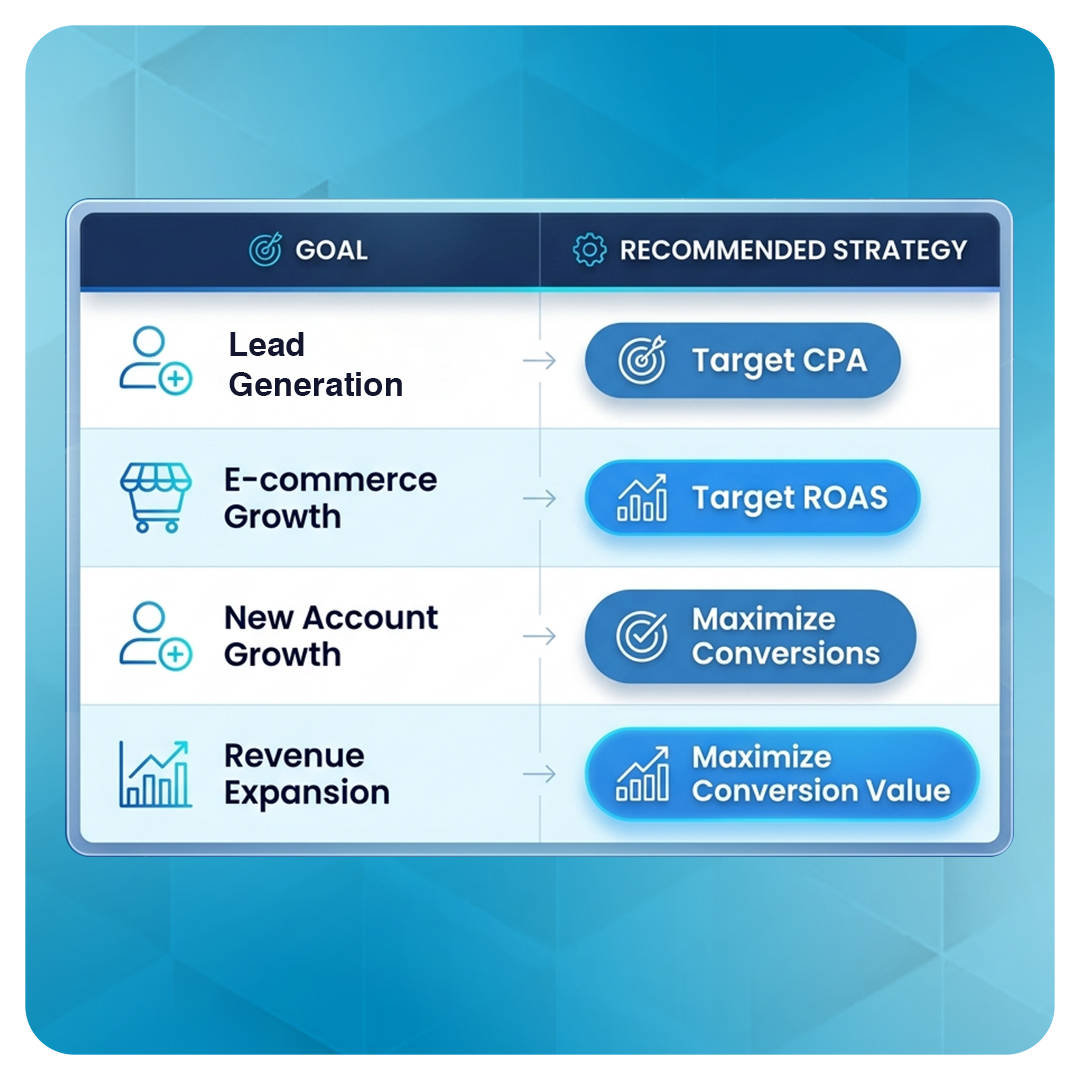
Choosing the wrong strategy will misalign the algorithm with client expectations.
Step 3: Allow Learning Period Stability
Agencies must avoid excessive bid adjustments that disrupt the algorithm. They should reduce unnecessary campaign resets and focus on long-term data gathering. Giving campaigns enough time to stabilize is essential for optimal performance.
- Limiting budget changes to 20% increments
- Avoiding frequent target CPA modifications
- Pausing instead of deleting underperforming assets
Patience allows the machine learning system to find the most efficient conversion paths.
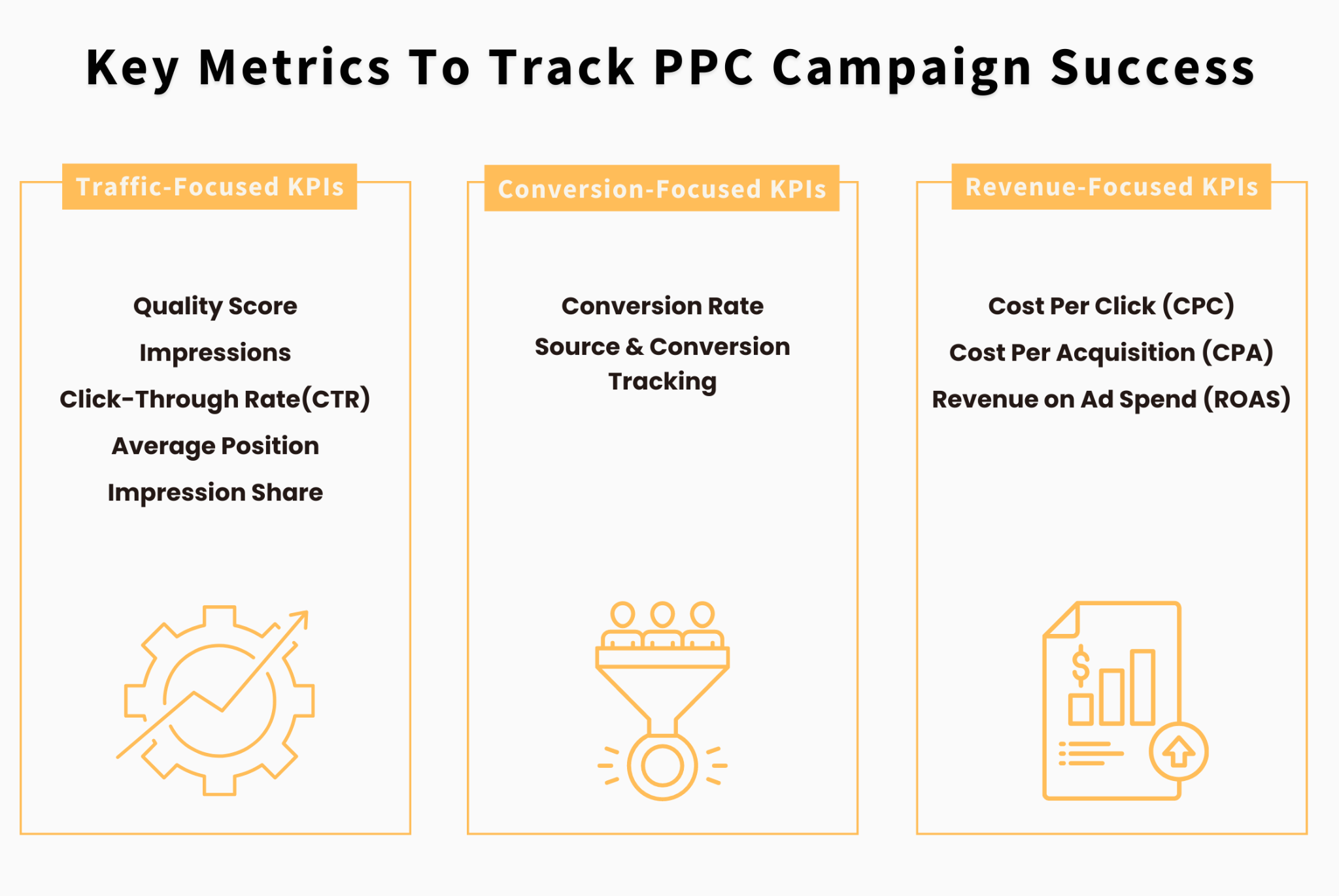
Step 4: Evaluate Quality Metrics
Agencies must look beyond surface-level metrics like CPC and CTR. They should focus heavily on revenue and pipeline contribution. Understanding customer acquisition cost and lifetime value proves the real ROI of a campaign.
- Marketing qualified lead tracking
- Sales qualified lead tracking
- Closed-won revenue reporting
Quality metrics prove agency value far better than raw traffic numbers.
Step 5: Use Human Insights To Guide Automation
Algorithms lack common sense and require human guidance. Agencies must manage audience exclusions to prevent wasted spend on irrelevant clicks. Creative testing and budget allocation require strategic human oversight to match market positioning.
- Competitor exclusion lists
- Negative keyword management
- Seasonal budget pacing
Human insight combined with machine execution creates the strongest campaigns.
Emerging Smart Bidding Trends Agencies Should Prepare For
The advertising landscape is evolving rapidly, and agencies must stay ahead of the curve. Preparing for upcoming changes ensures agencies remain valuable partners to their clients. Those who ignore these shifts risk offering outdated and ineffective services.
Google’s Smart Bidding systems increasingly use query-level learning and cross-signal analysis to improve auction-time decisions. This complexity requires agencies to continuously update their knowledge and technical capabilities. Future-proofing an agency means embracing these advancements proactively.
Agencies should prepare for these specific industry shifts:
- Stricter privacy regulations
- Increased reliance on first-party data
- Deeper CRM connections
- Shift toward value-based bidding
The agencies that prepare for these shifts now will be positioned to deliver stronger client outcomes as automation becomes even more sophisticated.
1. First-Party Data Becoming More Important
Privacy changes rapidly increase dependence on owned customer data. Third-party cookies are disappearing, making platform tracking less reliable. Agencies must help clients build robust systems to collect and leverage their own data.
- Customer list uploads
- Enhanced conversions implementation
- Lead form data integration
Owning customer data is the best defense against tracking limitations.
2. Greater Integration Between CRM Data And Ad Platforms
Offline conversion imports are becoming critical for performance visibility. Connecting a white label CRM software directly to the ad platform closes the loop on attribution. This allows Smart Bidding to see which leads actually result in closed revenue.
- Salesforce integrations
- HubSpot data syncing
- Custom API connections
Connecting these systems is now a mandatory requirement for high-level optimization.
3. Value-Based Optimization
Agencies must shift from focusing on lead quantity to focusing on lead quality. Revenue-based bidding strategies are becoming much more important for service businesses. Assigning different values to different conversion actions guides the algorithm toward higher profits.
- Tiered lead scoring
- Dynamic revenue tracking
- Profit margin bidding
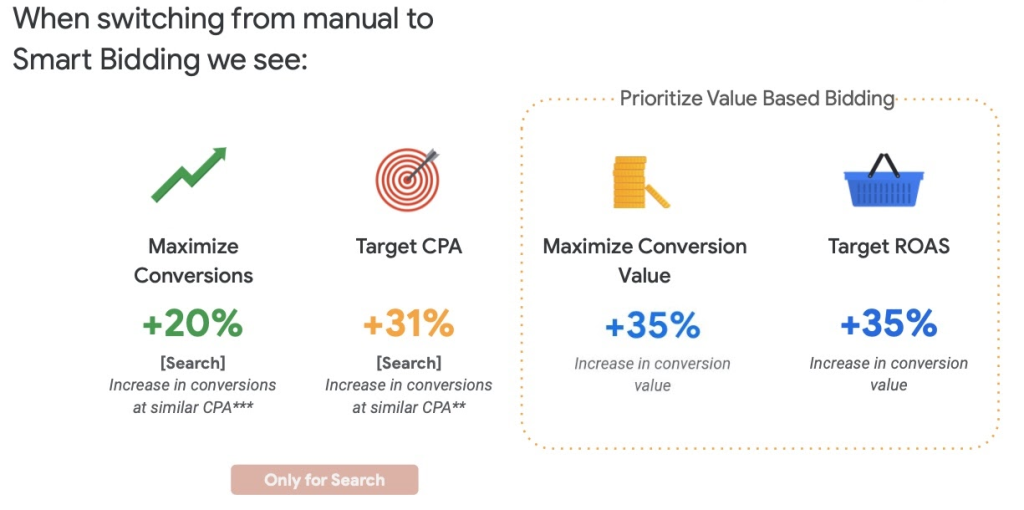
Image Source: Mega Digital
Optimizing for value ensures the client actually grows their bottom line.
4. AI-Driven Campaign Types
Performance Max and future AI-powered formats will rely heavily on Smart Bidding. These campaign types require excellent creative assets and strong data inputs to function. Agencies must master these new formats to remain competitive in the marketplace.
- Asset group optimization
- Audience signal refinement
- Video and image creation
Mastering AI-driven campaigns requires a blend of technical setup and creative strategy.
How DashClicks’ White Label PPC Services Help Agencies Scale Smart Bidding Success?
DashClicks provides marketing agencies with premium white label fulfillment services and powerful software. This platform helps agencies scale faster and boost client results without hiring additional staff. Agencies can eliminate backend work and focus entirely on growth and strategy.
Utilizing these white label PPC services gives agencies a distinct operational advantage. DashClicks handles the complex execution required to make Smart Bidding successful. Agencies maintain full ownership of the client relationship while leveraging expert technical support.
DashClicks offers comprehensive support through several key areas:
- White label PPC fulfillment
- Campaign management support
- Reporting visibility
- Attribution and measurement support
- Scalable agency growth support
As Smart Bidding continues to evolve, agencies need systems that combine automation, visibility, and strategic execution.
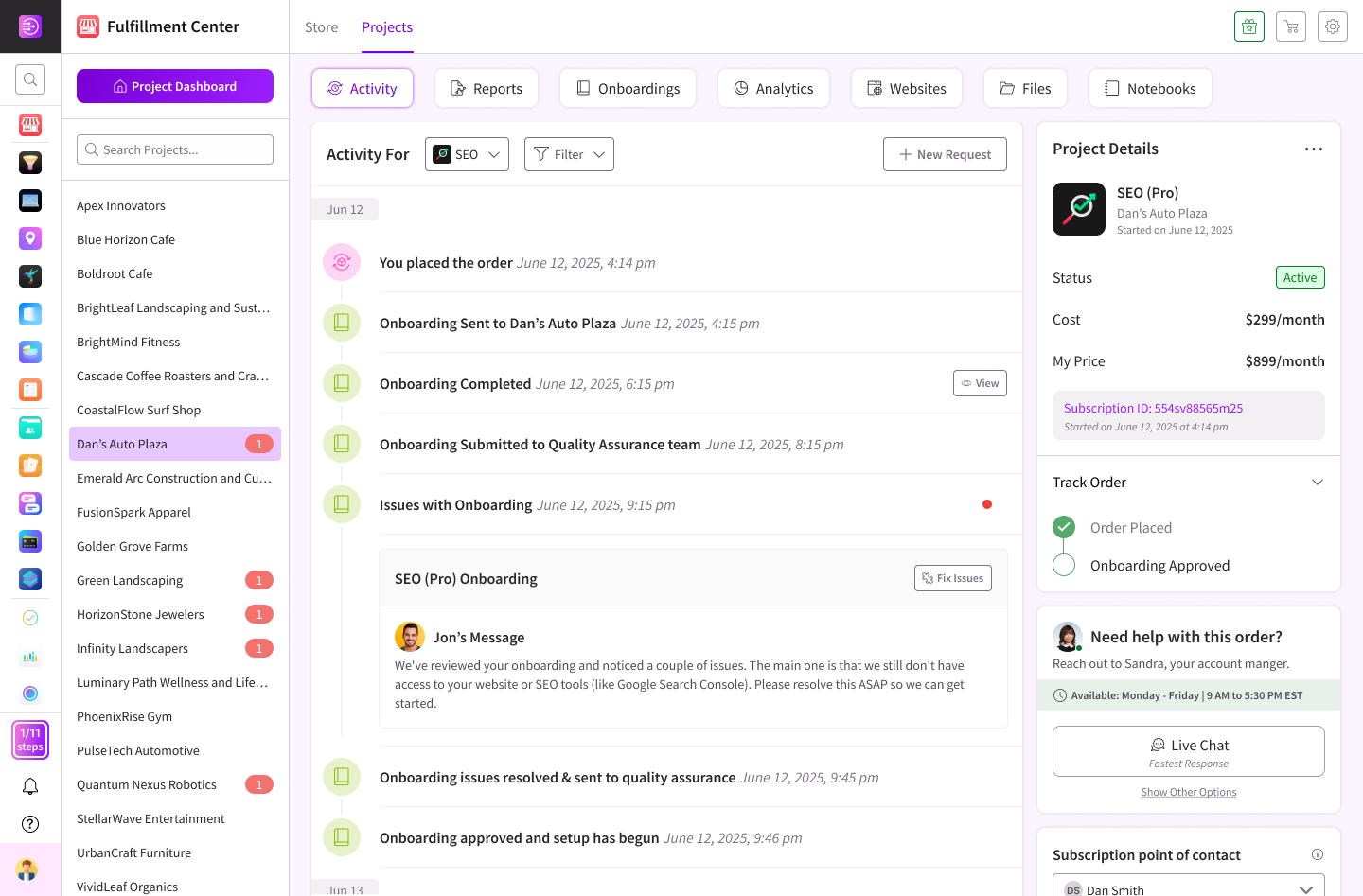
Partnering with DashClicks gives agencies the operational capacity they need to grow. The platform streamlines workflows, projects, teams, and client communications. This comprehensive support empowers agencies to focus on sales and high-level client strategy.
Scale Smarter With White Label PPC Services
Smart Bidding is fundamentally changing what PPC management looks like across the industry. However, it is absolutely not eliminating the need for deep agency expertise. It is simply shifting that expertise away from manual adjustments and toward data strategy.
Winning agencies will focus on strategy over manual bid adjustments. They will actively improve measurement and attribution for their clients. They will leverage specialized PPC support where needed to maintain operational capacity. Combining automation with human decision-making will be their primary competitive advantage.
The agencies that thrive over the next few years will not be the ones fighting automation. They will be the ones building smarter systems around it and using white label PPC services to scale those systems efficiently.


.svg)


.svg)
.svg)
.svg)
.svg)
.svg)