

.svg)

.svg)
.svg)
.svg)
.svg)
.svg)
The digital marketing landscape has undergone a massive transformation over the past decade. Previously, agencies could secure top search engine rankings for their clients simply by publishing a high volume of keyword-stuffed articles. The strategy was entirely focused on production. The more pages a website had, the more traffic it was likely to generate. Search engines have evolved significantly since then. Modern algorithms prioritize relevance, authority, and user experience above raw content volume. As a result, the "publish and forget" method no longer yields sustainable organic growth.
To remain competitive, agencies must shift their focus toward content optimization. This means returning to existing pages, analyzing their performance against current search trends, and making strategic enhancements. A piece of content is never truly finished the moment it goes live. It requires continuous refinement to maintain its ranking and relevance. Upgrading old posts allows agencies to leverage the authority those pages have already built over time.
Securing the expertise and time required to execute this process consistently is a major challenge for growing firms. Many turn to white label SEO management to bridge the gap between their strategic goals and their execution capabilities. Partnering with dedicated specialists allows agencies to deliver high-level optimization without expanding their internal payroll. Understanding exactly how this optimization process works and why it is critical can redefine an agency's approach to client success.
Why Content Optimization Is Where Most SEO Campaigns Win or Fail?
Search engine optimization is no longer about publishing a high volume of new content every single month. Continuous optimization of existing assets is what actually drives and sustains top rankings in a competitive market. However, this is where most agencies struggle.
A piece of content that is published and subsequently ignored will inevitably stagnate. Competitors are constantly publishing updated guides, and search engines actively reward pages that offer the most current and comprehensive answers.
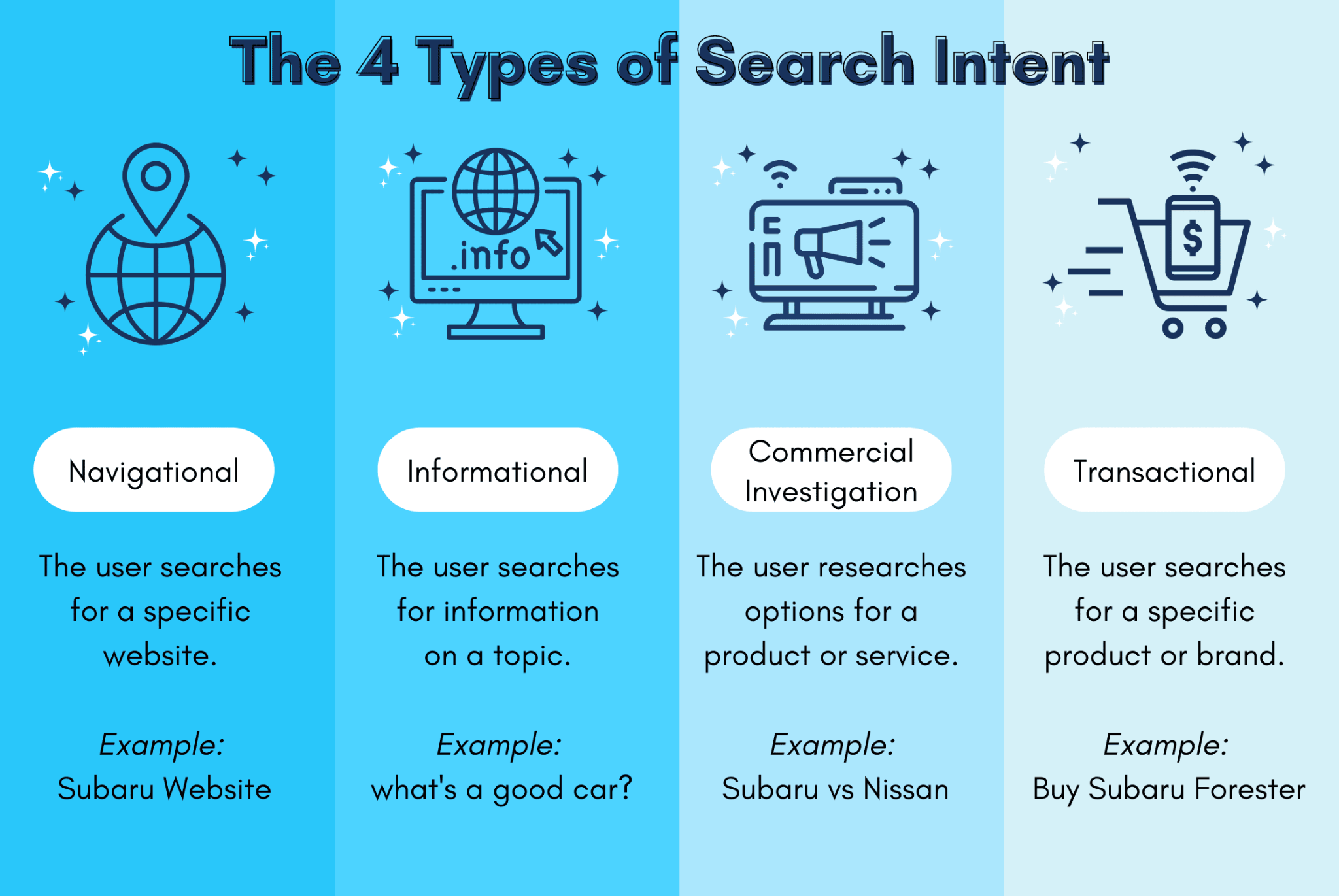
High rankings depend heavily on matching keyword search intent, maintaining a logical page structure, and providing comprehensive depth.
When an agency neglects to optimize older content, they allow their clients' most valuable digital assets to slowly decay. The pages drop from the first page of search results to the second, and the organic traffic they once generated disappears.
Many agencies overlook the value of improving existing content. According to HubSpot, updating and optimizing older pages can increase traffic by up to 106%. This shows that growth does not always require new content, but rather improving what already exists. For agencies, this makes optimization a high-impact strategy.
Why agencies fail to execute optimization consistently remains a major operational hurdle.
Why Agencies Struggle with Content Optimization at Scale?
Most marketing agencies build their core operations around production rather than refinement. Scaling an optimization strategy requires significant resources, deep technical analysis, and specialized talent that many teams simply do not possess in-house.
1. Content Gets Published but Rarely Improved
Agencies often operate on a strict deliverable-based model where the primary goal is to hit a monthly quota of published articles. Once a blog post goes live, the team immediately shifts focus to the next assignment.
Over time, this creates a large content library filled with pages that are no longer aligned with current search trends. These pages represent a significant investment in terms of time and budget, yet they are left underutilized.
As search intent evolves and competitors update their own content, these older pages begin to lose their effectiveness. Without regular updates, they gradually stop contributing meaningful traffic.
2. Lack of Clear Optimization Frameworks
Executing a successful optimization strategy requires a structured process. This includes identifying which pages need updates, determining what changes are required, and tracking performance after implementation.
Many agencies lack this level of structure. Instead, optimization happens sporadically, often driven by intuition rather than data. Without a framework, teams cannot prioritize effectively or measure the impact of their efforts.
A proper optimization framework typically includes:
- Regular content audits
- Page prioritization based on performance data
- Defined update checklists
- Post-update tracking and analysis
Without these elements, optimization remains inconsistent and inefficient.
3. Search Intent Misalignment
A frequent mistake in content creation is obsessing over specific keywords while ignoring the actual problem the user wants to solve. Content that targets a high-volume search term but fails to answer the user's underlying question will experience high bounce rates and low engagement. This misalignment signals to search engines that the page is not helpful, resulting in poor rankings. Evaluating the search engine results page to understand what users actually want is a critical step.
According to Backlinko, aligning content with search intent is the fundamental rule for ranking in today's search environment. When a page successfully matches the format, type, and angle that searchers expect, it secures a lasting position at the top of the results. This makes intent alignment a mandatory focus for any serious SEO effort.
4. Resource Constraints and Time Limitations
Content optimization is incredibly labor-intensive. It requires conducting deep technical audits, analyzing top competitor pages, and rewriting large sections of text to add tangible value. Agency teams are frequently stretched thin trying to manage daily client communication, monthly reporting, and new content creation.
Dedicating hours to auditing and updating old posts takes precious time away from fulfilling immediate, contractually obligated deliverables. As a result, optimization gets pushed down the priority list until client performance noticeably begins to drop.
5. Difficulty Tracking What Works
Agencies often struggle to measure the exact impact of their optimization efforts. Without establishing a clear performance baseline before making changes, it becomes impossible to know if a specific update actually improved rankings or traffic.
Teams need advanced tracking tools to monitor keyword movements, user engagement, and organic traffic shifts specific to the updated pages. A lack of performance clarity makes it difficult to justify the time spent on optimization to paying clients.
To solve this, a structured approach is required.
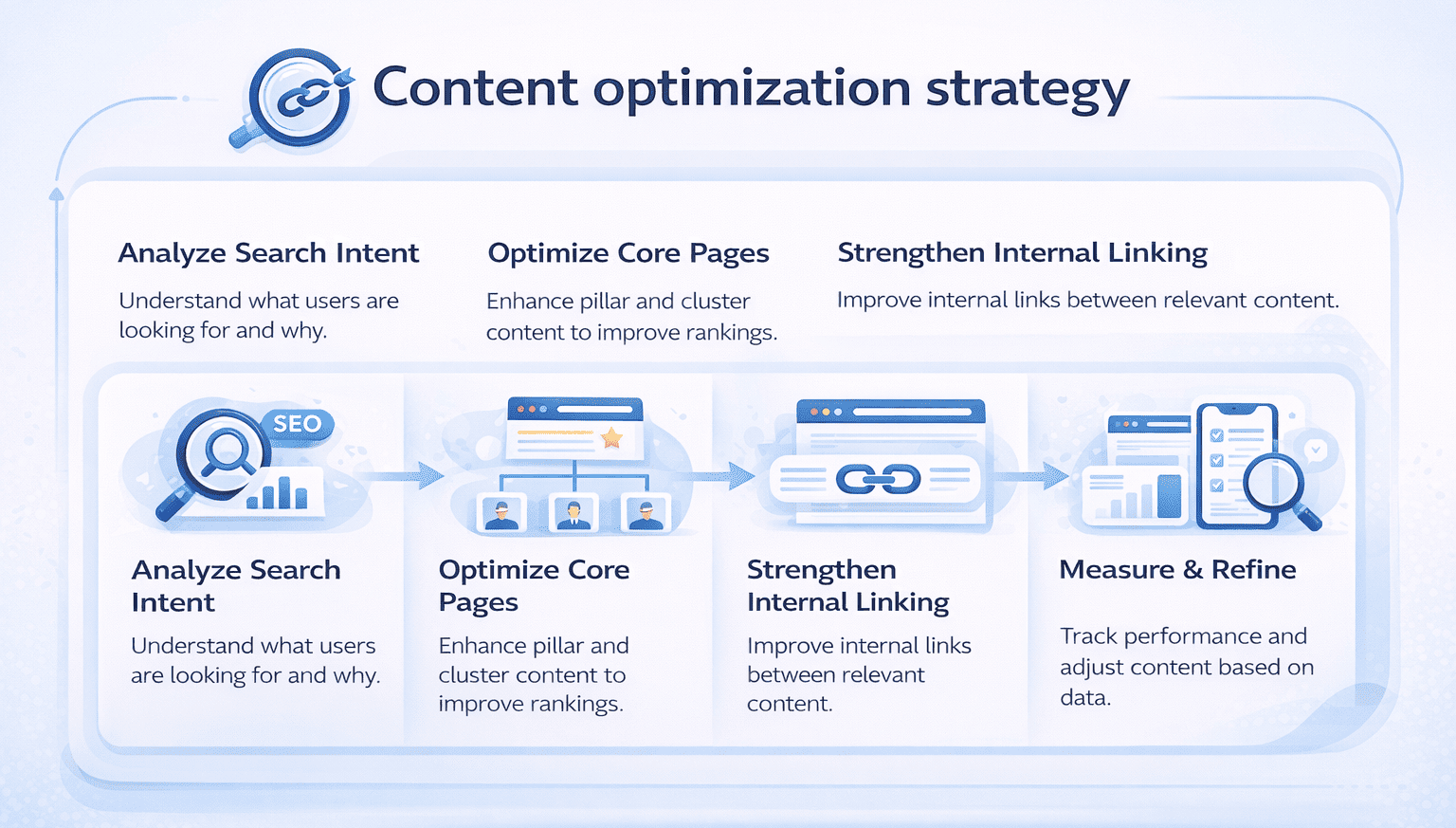
Image Source: Linkbuilding
How Agencies Use White Label SEO for High-Impact Content Optimization?
Overcoming internal limitations requires a deliberate shift from reactive problem-solving to structured, proactive optimization. Partnering with a specialized provider for white label SEO content execution allows agencies to implement high-impact strategies without overloading their internal teams.
1. Structured Content Audits
The absolute foundation of any serious optimization campaign is a comprehensive content audit. White label specialists analyze a client's entire website to identify pages that are underperforming or actively losing organic traffic.
They evaluate specific metrics like total impressions, click-through rates, and average search positions to find pages sitting just off the first page of search results. These "striking distance" keywords present the fastest and most reliable opportunities for growth. Identifying these gaps provides a clear, actionable roadmap for where optimization efforts will yield the absolute highest return.
2. Search Intent Alignment
Once target pages are identified, the next step involves thoroughly analyzing the current search landscape. White label experts review the top-ranking competitor pages to understand exactly what search engines currently reward for a specific query. They adjust the client's content to ensure it directly answers the user's primary questions.
Google emphasizes the importance of user satisfaction in its Search Quality Guidelines, noting that ranking systems are designed to reward helpful, reliable information created to benefit people. Aligning content with these guidelines ensures that the page serves the user's needs effectively. For SEO campaigns, this builds essential trust and directly improves long-term search visibility.
3. On-Page Optimization
Detailed on-page optimization goes far beyond basic keyword placement. White label teams refine title tags, meta descriptions, and header structures to improve topical relevance and user click-through rates. They analyze the semantic relationship between terms and integrate secondary keywords naturally into the text.
Additionally, they optimize internal linking structures to pass ranking authority from strong, established pages to the newly updated content. This level of technical and structural refinement gives search engines crystal clear signals about the page's core topic.
4. Content Depth Expansion
Thin content rarely maintains top positions in highly competitive digital markets. The best white label SEO services focus heavily on expanding the depth and comprehensiveness of existing pages. This might involve adding frequently asked questions, detailing specific case studies, or covering nuanced subtopics that competitors completely missed. Creating thorough resources correlates strongly with better performance.
A comprehensive study by Backlinko found that the average Google first page result contains 1,447 words. This indicates that search engines prefer pages that cover a topic comprehensively. For agencies, expanding content depth is a necessary tactic for outranking aggressive competitors in crowded markets.
5. Continuous Optimization
Search algorithms and competitor marketing strategies are constantly evolving. A page that ranks in the first position today might drop to the fifth position next month if left entirely unattended. White label partners implement continuous optimization cycles to combat this decay.
They treat content as a living digital asset, scheduling regular reviews to update statistics, refresh outdated information, and adjust strategies based on newly emerging search trends. This iterative approach ensures that client websites maintain their competitive edge over the long term.
6. Data-Driven Decisions
Effective content optimization relies entirely on factual data rather than creative intuition. White label teams utilize advanced marketing analytics software to track exactly how users interact with updated pages. They monitor critical metrics such as organic traffic growth, time on page, and granular keyword ranking shifts.
If a specific page does not respond to an initial update, the team analyzes the incoming data to formulate a new hypothesis and applies further strategic refinements. This rigorous testing and tracking process guarantees that every action taken is explicitly designed to push the campaign forward.
This leads to a deeper issue regarding the tangible impact this has on agency operations and client success.
What Changes for Agencies and Their Clients?
Implementing a consistent optimization strategy dramatically improves the return on investment and predictability of client campaigns. When an agency transitions to a structured optimization model, the operational dynamics change significantly.
- Better Rankings Without New Content: Agencies can drive significant traffic increases simply by maximizing the potential of pages the client already owns.
- Higher Engagement: When pages are optimized for search intent and depth, users spend more time reading the material.
- Predictable SEO Performance: Moving away from a guessing game allows agencies to forecast results more accurately.
- Stronger Client Trust: Delivering consistent upward movement in organic traffic concretely proves the agency's long-term value.
Achieving these results requires a dedicated execution partner to handle the daily workload.
How DashClicks' White Label SEO Supports Content Optimization?
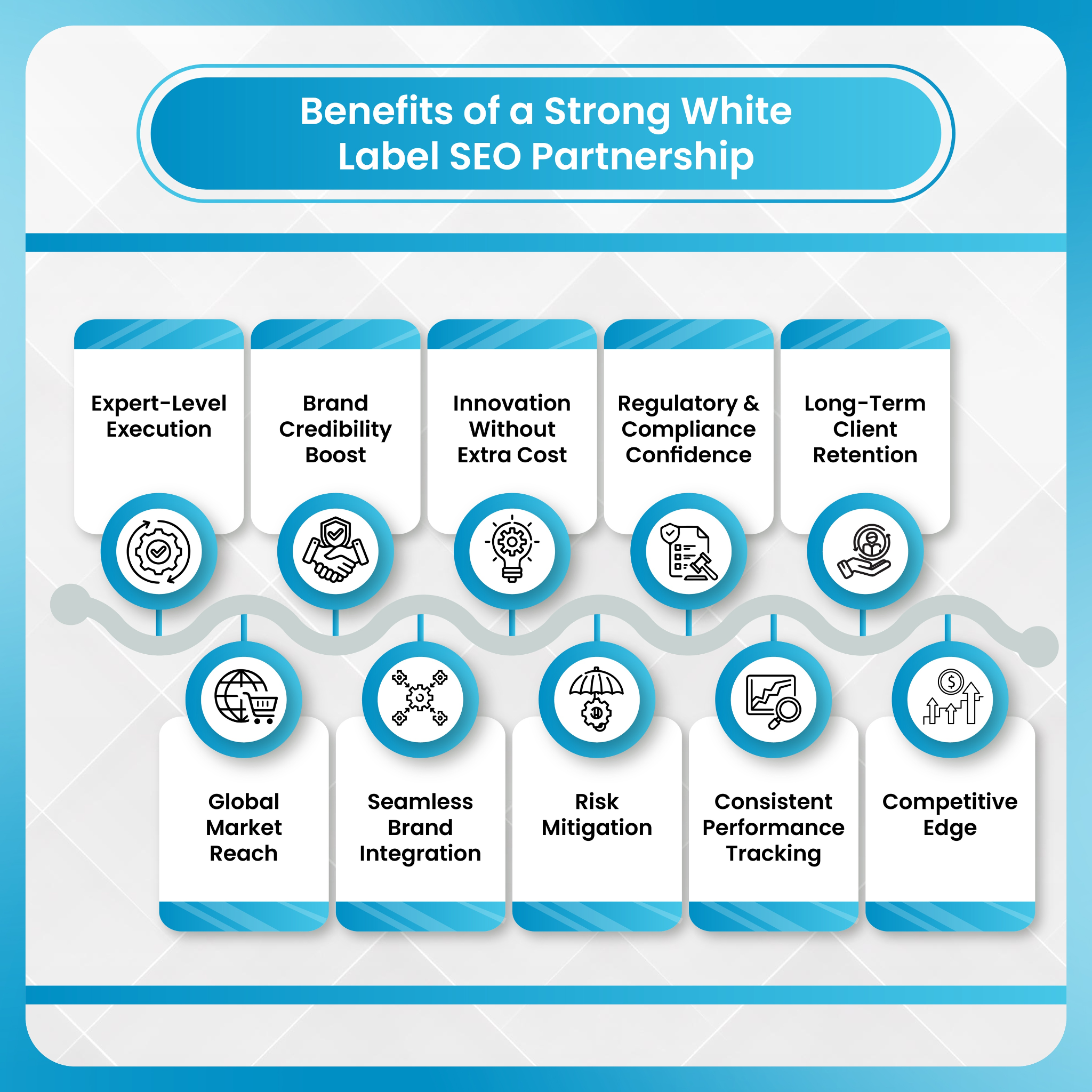
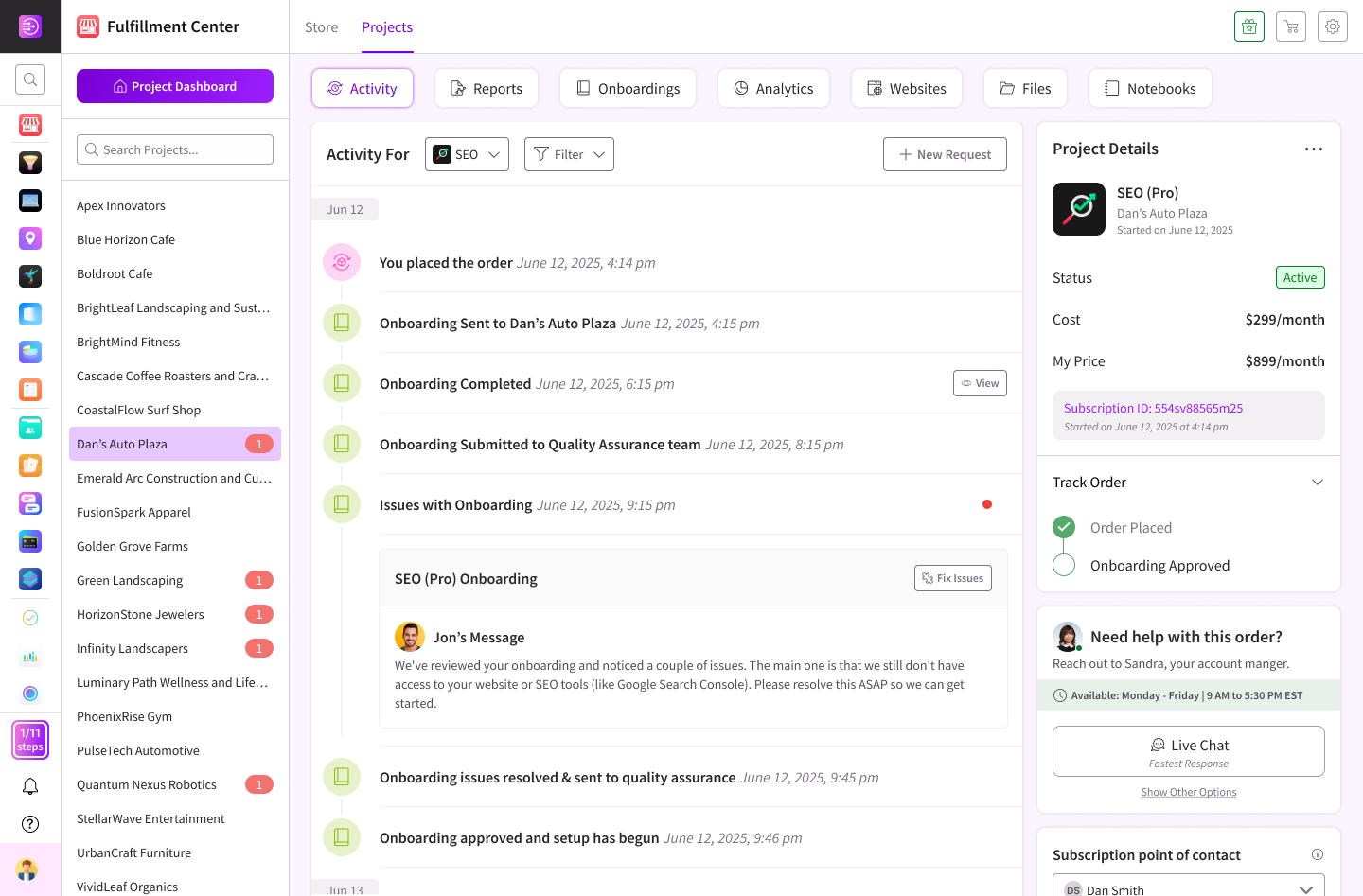
Scaling an agency efficiently requires dependable backend support that assumes the heavy lifting of strategic execution. DashClicks acts directly as that execution layer, providing white label SEO content services to help agencies deliver consistent, high-quality optimization without increasing their internal overhead.
- Structured Content Audits: The platform's expert team thoroughly evaluates client websites to uncover hidden ranking opportunities and pinpoint pages requiring immediate attention.
- Search Intent Optimization: Specialists rigorously analyze search engine results to ensure every piece of content precisely matches user expectations and algorithmic preferences.
- On-Page Improvements: The service executes comprehensive updates to headers, metadata, and keyword targeting to maximize the contextual relevance of existing assets.
- Internal Linking: Experts build highly logical pathways between related pages to distribute ranking authority evenly across the client's website architecture.
- Continuous Updates: The team provides ongoing iterative improvements to keep client content remarkably fresh and competitive over time.
- Scalable Delivery: Agencies can seamlessly add dozens of new clients to the platform, knowing the backend team will manage the increased workload with standardized efficiency.
Content Optimization Is the Real Growth Lever
Publishing new blog posts is an easy box to check, but it is no longer enough to dominate search results in a crowded digital ecosystem. True growth comes from the meticulous, ongoing process of optimization. Agencies that focus their time and resources on refining and upgrading existing content will consistently outperform competitors that only care about content volume.
Prioritizing optimization leads to measurably better rankings, a higher return on investment, and stronger client retention metrics. By leveraging expert backend support, your agency can deliver these exact results predictably and profitably.


.svg)


.svg)
.svg)
.svg)
.svg)
.svg)