

.svg)

.svg)
.svg)
.svg)
.svg)
.svg)
Search is no longer just about ranking on Google. It has evolved into a complex ecosystem where users discover information across multiple platforms, often without even clicking on a website.
Today, search includes AI-generated answers, voice assistants, social platforms, and traditional search engines. This shift has fundamentally changed how visibility works. Agencies are no longer competing for just the top position on a results page. They are competing to be part of the answer itself.
The pace of change is also accelerating. AI-driven search traffic has grown by over 527% year-over-year, while nearly 60% of searches now end without a click. That means users are getting what they need directly from search results or AI responses.
For agencies, this creates a serious challenge. How do you keep up with constant changes while managing multiple clients and maintaining consistent performance?
This shift forces agencies to rethink SEO entirely, not just how they execute it, but how they build the capability to keep up with it at scale. So, how do high-performing agencies stay ahead?
The Search Landscape in 2026
Search in 2026 is being shaped by a combination of AI advancements, shifting user behavior, and the expansion of discovery across multiple platforms. As highlighted in the evolving SEO landscape, success is no longer driven solely by rankings or clicks.
Instead, it depends on how well brands adapt to AI-driven search systems, build strong content authority, and maintain visibility across an increasingly fragmented ecosystem. From AI-powered answers to omnichannel discovery and new performance metrics, these changes are redefining how agencies approach SEO strategy and execution.
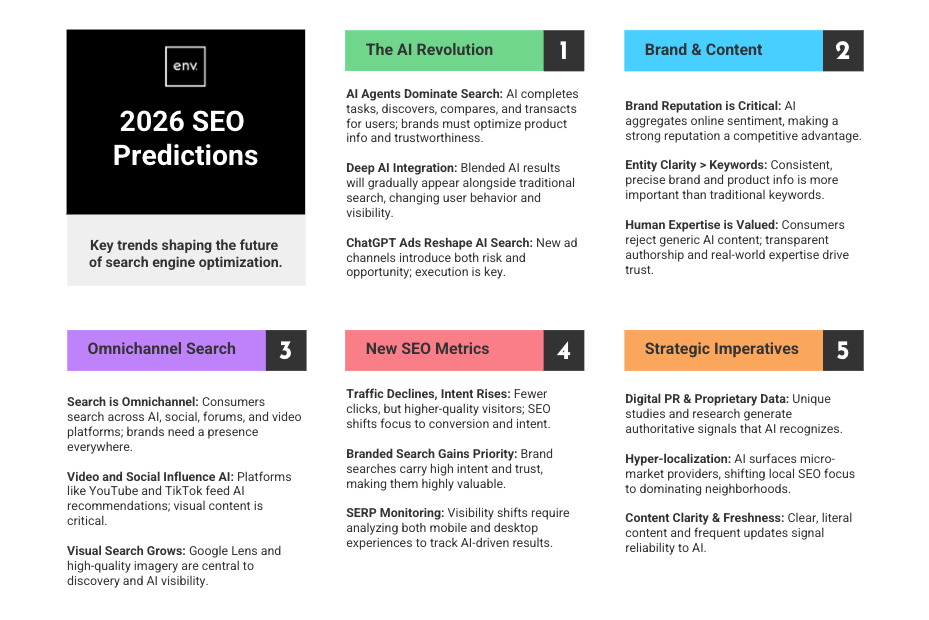
Image Source: Envisionit
1. AI-First Search Ecosystem
Search engines have evolved far beyond simple indexing systems. Today, they act more like intelligent assistants that interpret intent, process context, and deliver direct answers. This shift is being driven by rapid advancements in artificial intelligence, changing how information is presented and consumed.
Instead of showing a list of links, search platforms now generate summarized responses, highlight key insights, and often answer queries without requiring users to visit a website. AI-generated overviews, conversational search interfaces, and answer engines are becoming a standard part of the search experience.
This transformation has introduced a new approach known as Generative Engine Optimization (GEO). Unlike traditional SEO, where the goal is to rank higher on search engine results pages, GEO focuses on getting content cited, referenced, or used within AI-generated answers.
To succeed in this environment, agencies must rethink how content is created and structured. It is no longer enough to target keywords alone. Content must now:
- Provide clear and direct answers to user queries
- Be structured in a way that AI systems can easily interpret
- Demonstrate strong topical authority and credibility
- Align closely with user intent and conversational queries
AI systems prioritize content that is trustworthy, well-organized, and contextually rich. This means agencies need to focus more on clarity, depth, and accuracy rather than just optimization techniques.
In short, the competition is no longer just other websites. It is also about earning a place within AI-generated responses.
2. Decline of Traditional Click-Based SEO
The concept of SEO has long been tied to clicks. Higher rankings meant more traffic, and more traffic often meant better results. That relationship is now changing.
With the rise of zero-click searches, users are increasingly finding answers directly on search pages. Featured snippets, knowledge panels, and AI-generated summaries provide immediate information, reducing the need to click through to a website.
Recent data shows that a large percentage of searches now end without a click. Even more striking, the click-through rate for top-ranking results has dropped significantly, in some cases by over 32%. This means that even if a page ranks first, it may not receive the same level of traffic as before.
For agencies, this creates a shift in how success is measured. Rankings alone are no longer enough. Instead, performance must be evaluated based on a broader set of metrics, such as:
- Search visibility across different result types
- Brand presence in featured snippets and AI responses
- Engagement and conversions rather than just traffic
- Influence on user decisions, even without direct clicks
This change also affects how value is communicated to clients. Agencies must help clients understand that visibility and brand positioning within search results can drive impact, even when traffic numbers do not increase in the same way.
The focus is moving from “How many clicks did we get?” to “How visible and influential is the brand in search?”
3. Multi-Platform Search Behavior
Search behavior is no longer confined to traditional search engines. Users now rely on a variety of platforms to find information, often choosing the one that best fits their needs in the moment.
For example:
- YouTube has become a primary destination for tutorials, product reviews, and how-to content
- Social platforms are widely used for discovering trends, recommendations, and real-world experiences
- AI tools are increasingly used for quick answers, summaries, and research support
This shift has created a fragmented search environment where discovery happens across multiple channels. Users may start their search on one platform and continue it on another, or they may never use a traditional search engine at all.
For agencies, this means SEO can no longer be treated as a single-channel strategy focused only on search engines. Instead, it must evolve into a broader visibility strategy that includes:
- Video content optimization for platforms like YouTube
- Social content aligned with search intent and SEO trends
- Content structured for AI tools and conversational interfaces
- Consistent messaging and branding across all discovery channels
This multi-platform approach ensures that brands remain visible wherever users are searching, not just on one platform.
The key takeaway is clear. SEO is no longer just about ranking on search engines. It is about being discoverable across an entire ecosystem of platforms and technologies.
Understanding these changes is essential, but awareness alone is not enough. Agencies must translate these insights into actionable strategies that help clients stay competitive and visible in an increasingly complex search landscape.
Why Staying Ahead of Search Trends Is Critical for Agency Clients?
1. Revenue Impact of Search Evolution
Search continues to play a major role in revenue generation. AI-driven search alone is expected to influence hundreds of billions of dollars in revenue over the next few years.
If clients are not optimized for these new systems, they risk losing visibility where it matters most.
2. Competitive Risk
Early adopters of new SEO strategies often gain a strong advantage. They appear in AI-generated responses, build authority faster, and capture more attention.
Late adopters, on the other hand, face:
- Declining organic traffic
- Reduced visibility
- Lower brand recall
In a competitive market, this gap can grow quickly.
3. Changing Client Expectations
Clients are more informed than ever. They expect:
- Faster results
- Broader visibility across platforms
- Measurable outcomes beyond rankings
Agencies are no longer judged only on rankings. They are judged on leads, conversions, and overall visibility. This creates pressure to deliver better results, faster.
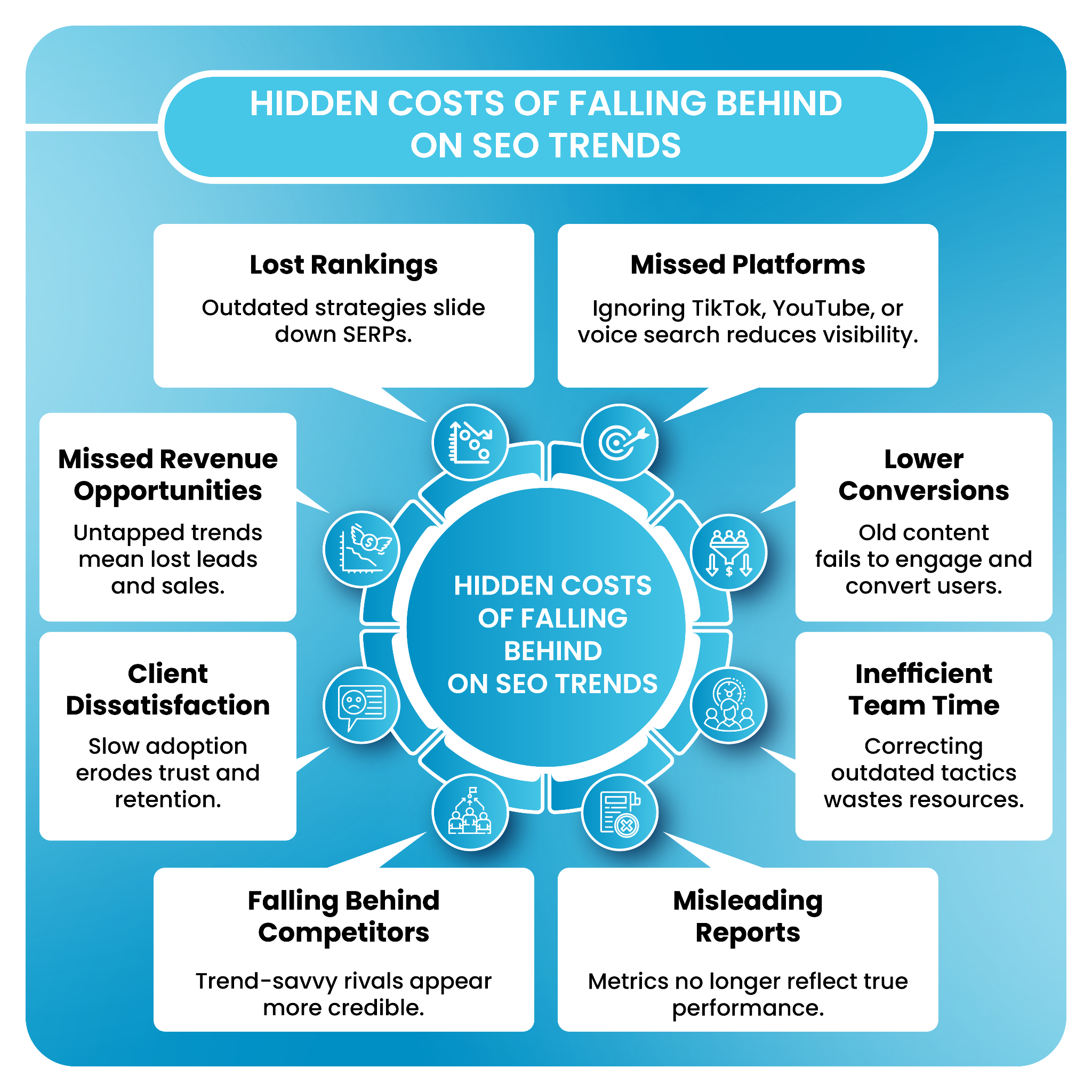
The problem is that keeping up with all these changes requires constant learning, new tools, and specialized expertise. This is where many agencies start to struggle.
The Core Challenge: Why Agencies Struggle to Keep Up Internally
1. Constant Algorithm and AI Updates
Google's algorithm changes frequently. On top of that, AI systems are continuously evolving.
Keeping up requires ongoing testing, learning, and adjustments. This is difficult to manage while also handling client work.
2. Talent and Skill Gaps
Modern SEO requires more than just keyword research.
Agencies now need:
- Technical SEO specialists
- AI-focused strategists
- Skilled content creators who understand search intent
Hiring and retaining this level of expertise can be expensive and time-consuming.
3. Tool and Technology Costs
Advanced SEO tools and AI platforms come at a high cost. Managing multiple tools for different functions adds complexity.
For many agencies, maintaining a full-stack SEO operation internally is not sustainable.
4. Scalability Issues
As agencies grow, managing multiple clients becomes harder. Each client has different needs, industries, and competition levels.
This often leads to:
- Burnout within teams
- Inconsistent delivery
- Slower execution
The reality is that agencies are no longer competing based on effort alone. They are competing on speed, expertise, and adaptability.
To overcome these challenges, many agencies are turning to a more scalable solution.
What Is White Label SEO?
White label SEO is often misunderstood as simple outsourcing. In reality, it is much more than that. It acts as a capability multiplier. It allows agencies to expand their expertise, improve execution, and adapt to trends without building everything in-house.
Instead of replacing internal teams, it enhances them. It provides access to specialized skills, advanced processes, and scalable systems.
In today’s fast-moving search landscape, white label SEO is not just a support function. It is a strategic advantage.
Further Reading: White Label SEO: The Complete Agency Growth Guide
How White Label SEO Helps Agencies Stay Ahead of Search Trends in 2026?
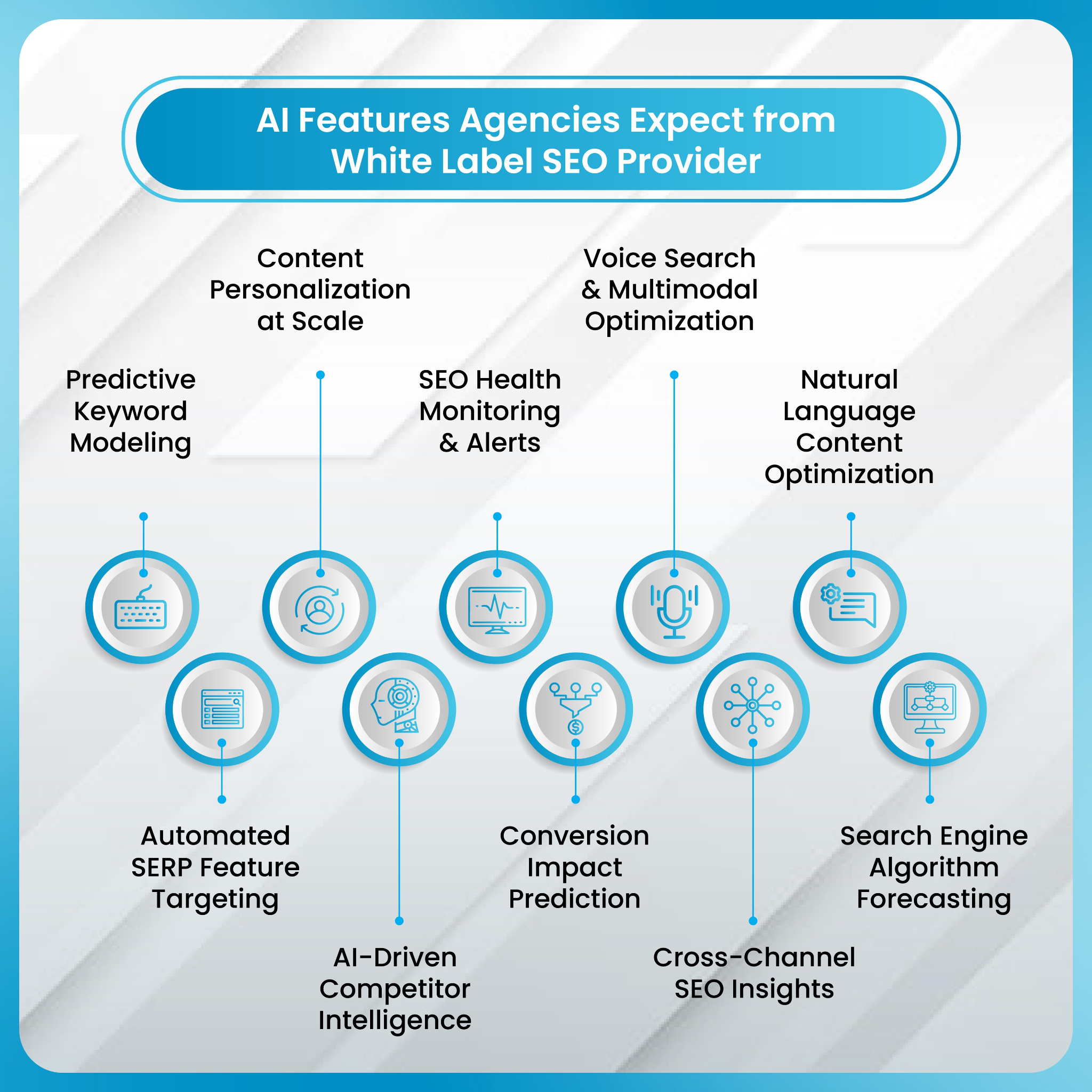
1. AI Search and Generative Engine Optimization
Optimizing for AI search requires a different approach.
Content must be:
- Clear and structured
- Contextually relevant
- Built around user intent
White label SEO teams often specialize in these strategies. They stay updated with AI trends and adjust content frameworks accordingly.
2. Zero-Click Search Optimization
With most searches ending without clicks, visibility becomes the priority.
This includes:
- Featured snippets
- FAQ sections
- Structured content
White label partners can scale the creation of this type of content efficiently.
3. Entity-Based SEO and E-E-A-T
Search engines now focus on entities and authority rather than just keywords.
This means building:
- Topic clusters
- Strong internal linking
- Credible content
White label SEO services often use advanced frameworks to establish authority and trust signals.
4. Voice and Conversational Search
Voice search continues to grow, driven by natural language queries.
Content needs to reflect how people actually speak.
White label teams optimize content for conversational intent, improving visibility in voice-driven results.
5. Content Depth, Quality, and Differentiation
Long-form, high-quality content continues to perform better. In fact, detailed content can drive up to three times more traffic compared to shorter pieces.
Producing this level of content consistently is difficult for most agencies.
White label SEO solves this by enabling:
- Regular content production
- High editorial standards
- SEO optimization at scale
6. Multi-Platform Search Visibility
SEO now extends beyond traditional search engines.
White label strategies often include:
- Video optimization
- Social content alignment
- Cross-platform visibility
This helps agencies deliver a more complete search strategy.
7. Faster Execution and Continuous Optimization
Speed matters more than ever.
White label teams allow agencies to:
- Launch campaigns faster
- Implement changes quickly
- Continuously optimize performance
This creates a strong competitive advantage.
8. Data-Driven SEO and Performance Tracking
Modern SEO is driven by data.
White label services provide:
- Advanced reporting
- Performance insights
- Clear metrics beyond rankings
This helps agencies demonstrate real value to clients.
With these capabilities in place, agencies can move from reactive SEO to proactive growth strategies.

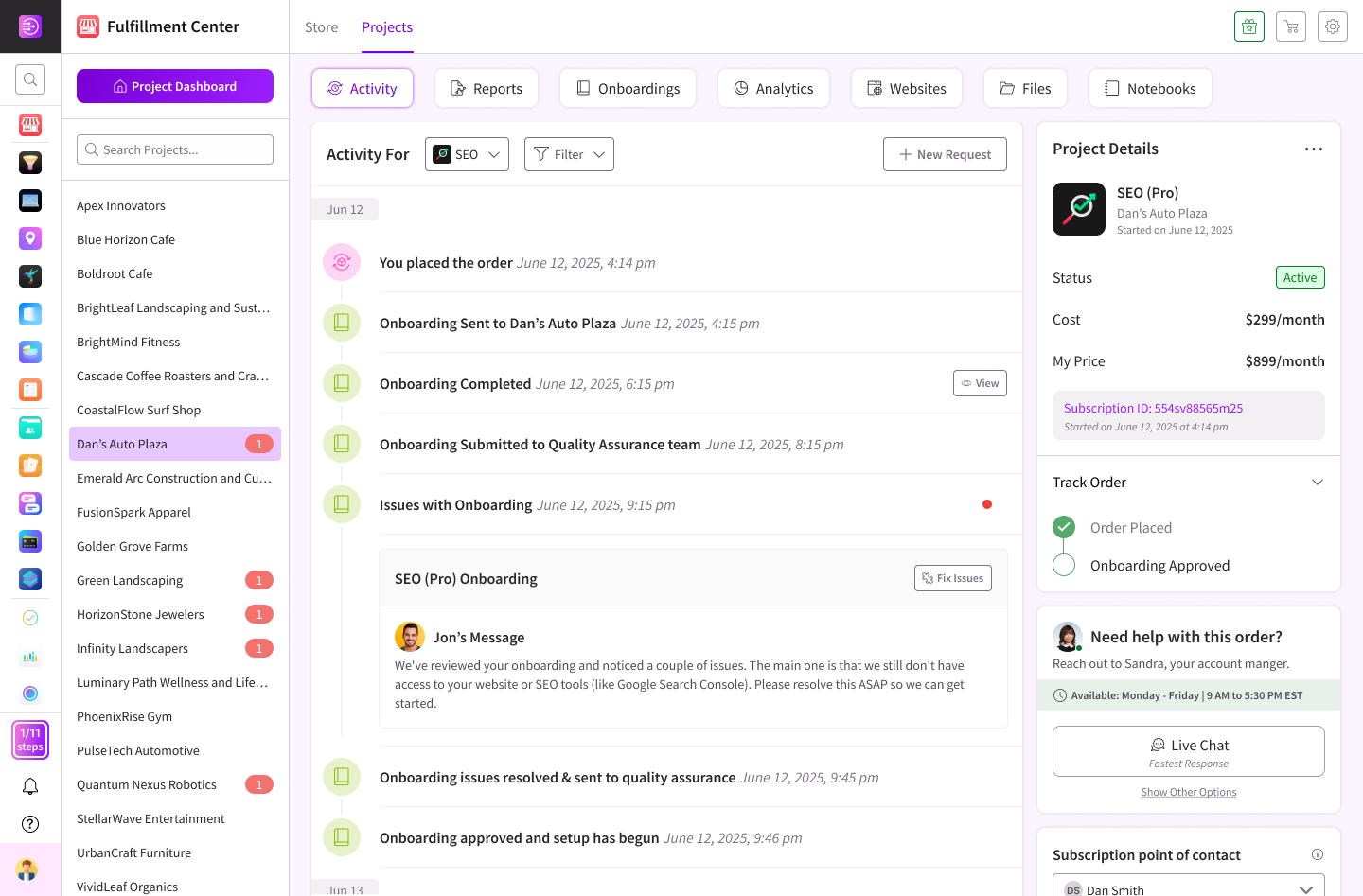
How DashClicks White Label SEO Services Support Agencies?
DashClicks provides a structured approach that helps agencies manage SEO at scale without increasing internal workload. Their systems are designed to simplify execution while maintaining consistency across client campaigns.
Agencies benefit from standardized workflows that cover on-page optimization, technical SEO, and content creation. This ensures that every campaign follows proven processes without requiring constant oversight. At the same time, the platform gives access to specialized teams who stay updated with evolving search trends, including AI-driven search and content optimization strategies.
One of the key advantages is scalable content production. Through white label SEO services, agencies can deliver consistent, high-quality content that supports visibility in both traditional and AI-based search environments. This is especially important as search continues to shift toward structured and authoritative content.
Speed is another important factor. The platform enables faster turnaround times, allowing agencies to respond quickly to algorithm updates and client needs. Combined with detailed reporting dashboards, agencies can track performance, measure results, and communicate progress clearly to clients.
Overall, the platform helps agencies grow without adding operational complexity. Instead of hiring and training new teams, agencies can expand their services and handle more clients with confidence.
Conclusion: Winning in Search Requires Speed, Expertise, and Scale
Search will continue to evolve. AI will become more integrated, user behavior will keep changing, and competition will increase.
Agencies that rely only on traditional SEO methods will struggle to keep up. The demands of modern search require faster execution, deeper expertise, and the ability to scale without losing quality.
White label SEO offers a practical way to meet these demands. It allows agencies to adapt quickly, expand their capabilities, and deliver stronger results without overloading internal teams.
In today’s environment, it is no longer just an optional support system. It has become a key part of staying competitive.


.svg)


.svg)
.svg)
.svg)
.svg)
.svg)