

.svg)

.svg)
.svg)
.svg)
.svg)
.svg)
Clients hold digital marketing agencies to incredibly high standards. They expect clear and measurable returns on their advertising investments. Meeting these expectations is becoming harder as cost-per-click rates on platforms like Google Ads and Meta continue to rise. Agencies face mounting pressure to scale their operations while somehow maintaining peak campaign performance.
According to HubSpot, 61% of marketers say generating traffic and leads is their biggest challenge. This challenge is magnified when you factor in the high stakes of paid search. A report on Google Economic Impact shows that PPC visitors are 50% more likely to convert than organic visitors. Paid traffic carries enormous potential for revenue. However, capturing that revenue requires flawless execution.
Many agencies find themselves dealing with inconsistent or declining returns on ad spend. A campaign might perform beautifully for two months and then suddenly crash. Alternatively, an agency might onboard a new client only to find that their standard strategies fail to generate profitable results. These inconsistencies frustrate clients and cause churn. They also drain agency resources as account managers scramble to find solutions.
Before solving ROI issues, we must explain why PPC campaigns underperform.
Common Reasons Behind Poor PPC ROI
Identifying the root cause of a failing campaign is the first step toward fixing it. Agencies often overlook critical structural flaws while searching for quick tactical wins.
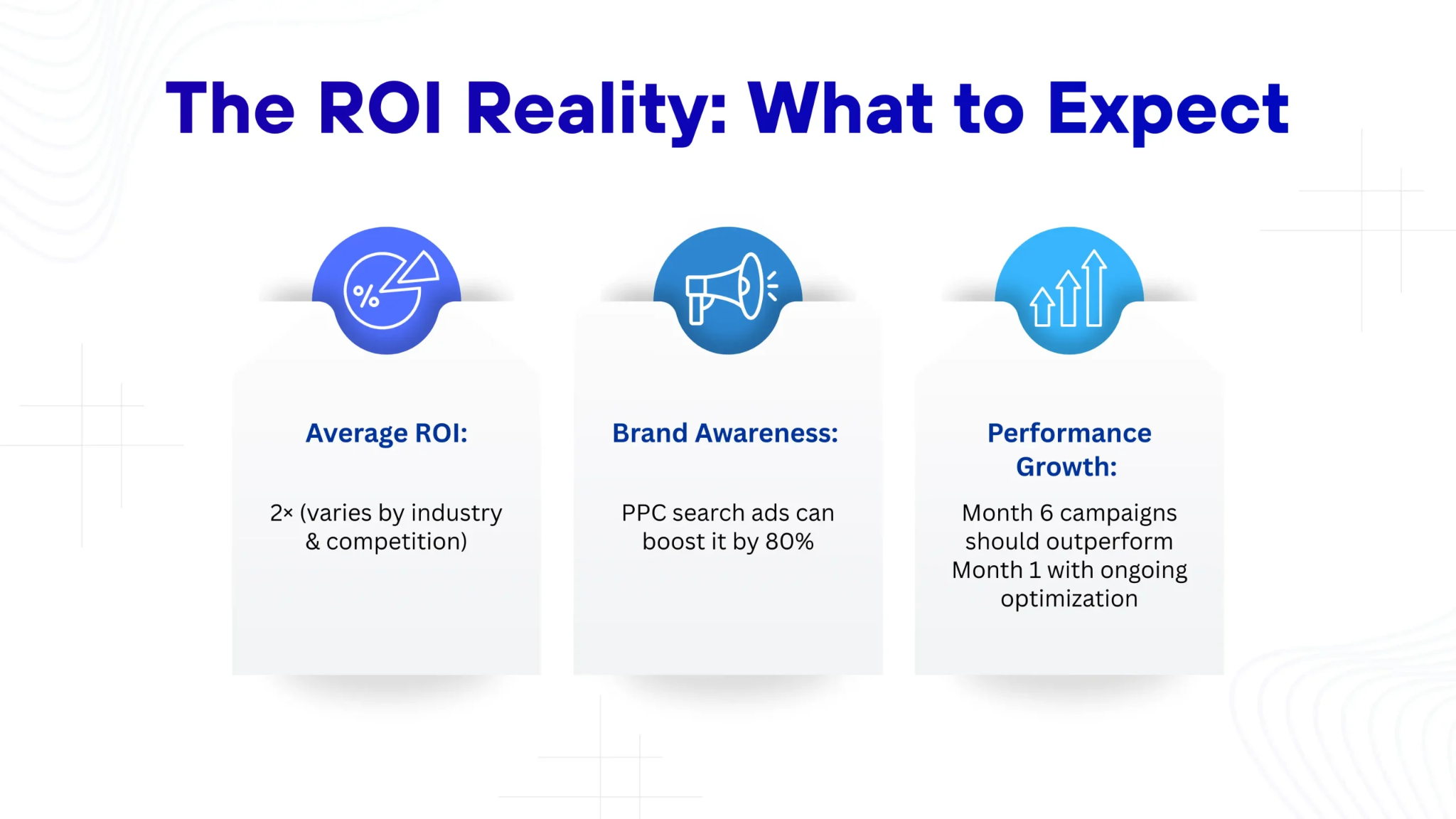
Image source: WebGuruz
Here are the real reasons campaigns fail to deliver a strong return on investment.
1. Weak Conversion Signals and Smart Bidding Misalignment
Modern advertising platforms rely heavily on algorithmic bidding. These algorithms require high-quality data to function correctly. When a campaign feeds poor-quality conversion data back to the platform, smart bidding cannot optimize for the right audience.
Treating a low-intent newsletter signup the same as a high-intent consultation request confuses the algorithm. This lack of distinction between lead quality forces the system to chase cheap but useless conversions. The result is a depleted budget with zero tangible revenue.
2. Inaccurate or Incomplete Conversion Tracking
Accurate tracking is the foundation of any successful paid media strategy. Unfortunately, broken or duplicated tracking is incredibly common. Agencies frequently inherit client accounts with double-counting issues or improperly configured tags. A major oversight is the failure to track offline conversions.
When phone calls or in-store purchases go unrecorded, the agency cannot prove the true value of their work. Furthermore, confusing micro-conversions with macro-conversions leads to wildly inaccurate ROI calculations.
3. Over-Reliance on Platform Recommendations
Google and Meta provide numerous automated suggestions to improve campaign performance. Blindly applying these recommendations is a dangerous practice. Platform algorithms are designed to maximize ad spend.
Accepting an automated budget increase without ROI validation will drain a client's funds rapidly. Account managers must evaluate every suggestion through the lens of the client's actual business goals rather than simply clicking a button to raise an optimization score.
4. Search Term Leakage from Broad Match Expansion
Broad match keyword settings can help discover new search queries. They can also waste thousands of dollars if left unchecked. Poor visibility into actual search terms allows irrelevant traffic to consume the daily budget. A weak negative keyword strategy exacerbates this problem. When agencies fail to regularly review and exclude unrelated queries, they pay for clicks from users who have absolutely no intention of buying the client's product or service.
5. Landing Page Intent Mismatch
A perfectly optimized ad is completely useless if the destination page fails to convert. According to WordStream benchmarks, the average conversion rate for Google Ads is roughly 4% to 6%. Reaching or exceeding that benchmark requires tight alignment between the ad copy and the landing page. A disconnect between the promise made in the ad and the reality of the landing page causes users to bounce immediately. Additionally, a poor mobile experience will destroy conversion rates since a massive portion of search traffic originates from mobile devices.
6. Lack of Funnel-Based Campaign Structuring
Treating all target audiences exactly the same is a critical mistake. Users at the top of the funnel are looking for information. Users at the bottom of the funnel are ready to purchase. When campaigns lack segmentation by intent, budget allocation becomes inefficient. A weak retargeting strategy means the agency abandons potential buyers who simply needed a gentle reminder to complete their purchase. Campaigns must be structured to guide users logically from awareness to final conversion.
7. Attribution Gaps Across Channels
Customer journeys are rarely linear. A user might click a Google Ad on Monday, browse the client's Facebook page on Wednesday, and finally make a purchase by typing the website URL directly on Friday. Ignoring these multi-touch journeys creates massive attribution gaps. When an agency assigns 100% of the credit to the last click, they misunderstand the value of their top-of-funnel efforts. This leads to misleading ROI calculations and poor strategic decisions.
8. Creative Fatigue and Lack of Iteration
Audiences quickly grow tired of seeing the same advertisements. Reused creatives suffer from declining click-through rates and rising acquisition costs. Many agencies fail to implement rigorous testing cycles. Without continuous A/B testing for headlines, images, and calls to action, campaigns stagnate. Fresh creatives are mandatory for maintaining user interest and driving consistent conversions over time.
9. KPI Misalignment Between Agency and Client
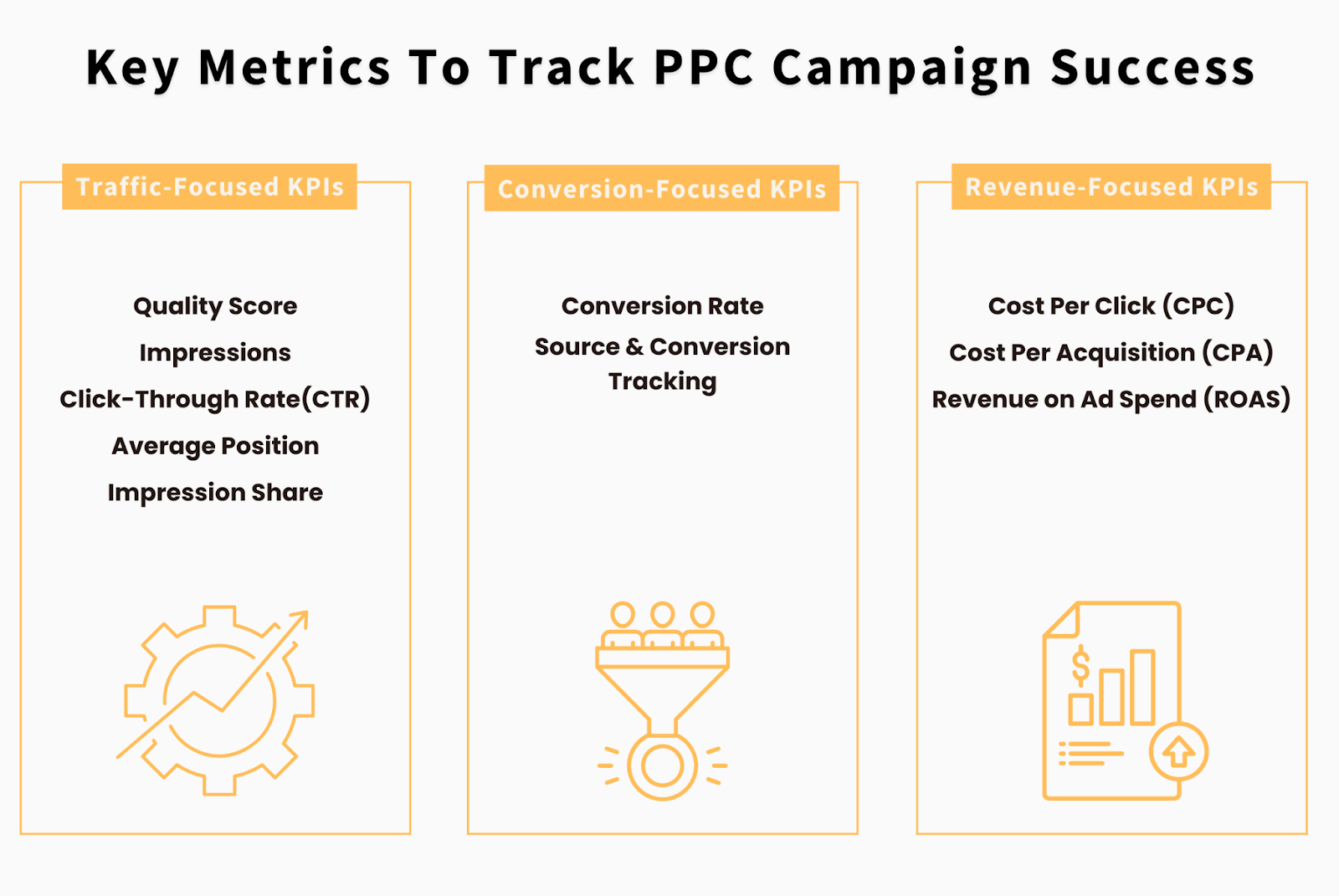
Success looks different to different people. If an agency optimizes a campaign for impressions while the client expects qualified sales meetings, the relationship will fail. Tracking the wrong metrics creates a false sense of security. Agencies often present reports highlighting low cost-per-click rates and high click volumes. However, without direct revenue alignment, these vanity metrics mean nothing to a business owner struggling to pay their overhead.
10. Premature or Aggressive Scaling
When a campaign shows early signs of success, the natural instinct is to increase the budget immediately. Budget increases implemented too early will completely disrupt performance stability. Algorithmic learning phases require time and consistent data. Forcing massive budget hikes resets the algorithm and causes costs to spike uncontrollably. Scaling must be handled methodically to protect the underlying ROI.
These are not just tactical issues but structural limitations.
Why Agencies Struggle to Fix ROI Internally?
Recognizing poor performance is easy. Fixing it is an entirely different challenge. Most digital marketing agencies operate with limited time and bandwidth. Account managers are often stretched incredibly thin as they juggle multiple clients, internal meetings, and reporting deadlines. They simply do not have the dedicated hours required to perform deep forensic audits on underperforming accounts.
Cost is another massive barrier. The high cost of hiring elite PPC experts eats directly into agency profit margins. Senior media buyers command premium salaries. For an agency trying to scale efficiently, building a massive internal team of specialized experts is financially risky.
Furthermore, the digital advertising landscape never stops shifting. Constant platform changes regarding automation, artificial intelligence, and user privacy updates require continuous education. An internal team must spend hours every week just reading platform documentation to stay compliant and effective. This makes it incredibly difficult to maintain consistency across dozens of diverse client accounts.
How White Label PPC Support Solves ROI Problems?
Partnering with a specialized white label PPC agency allows growth teams to bypass their internal bottlenecks. This model provides immediate access to dedicated experts who focus entirely on campaign execution and optimization. Here is how expert fulfillment solves the most stubborn ROI problems.
1. Strengthening Conversion Signals
White label experts know exactly how to train bidding algorithms. They implement advanced tracking protocols to monitor highly qualified leads rather than simple page views. By feeding accurate and prioritized data back into Google or Meta, they provide improved smart bidding inputs. The algorithms then learn to target users who actually possess buying intent.
2. Fixing Tracking and Attribution Gaps
A proper white label partner will not launch a campaign on a broken foundation. They conduct full tracking audits before spending a single dollar of client budget. They correct duplicated tags and configure Google Tag Manager properly. Crucially, they set up offline conversion integration. This allows the agency to tie closed CRM deals directly back to specific keyword clicks.
3. Reducing Wasted Spend
Stopping financial bleeding is the fastest way to improve a client's return on investment. Dedicated white label teams conduct rigorous search query analysis on a weekly basis. They build strong negative keyword frameworks that block irrelevant traffic. This meticulous account hygiene ensures that the budget is spent exclusively on users actively searching for the client's specific offerings.
4. Improving Ad-to-Landing Page Alignment
A successful white label partner looks beyond the advertising platform. They analyze the user experience post-click. By ensuring a better message match between the ad copy and the destination website, they reduce bounce rates significantly. They also provide actionable landing page recommendations to help the agency improve overall conversion rates for the client.
5. Building Full-Funnel Campaign Structures
Expert media buyers understand audience segmentation. They build specific campaigns for cold traffic, warm leads, and hot prospects. This cold, warm, and retargeting segmentation allows for precise budget allocation by intent. A client's money is distributed logically to push users steadily toward a final purchase decision.
6. Enhancing Attribution Visibility
White label PPC services bring sophisticated tracking logic to the table. They implement multi-touch attribution models to reveal the true customer journey. By providing assisted conversion tracking, the white label team helps the agency prove the value of every marketing touchpoint. This transparency builds immense trust with the end client.
7. Preventing Creative Fatigue
Continuous testing is built into the workflow of a dedicated fulfillment partner. They execute structured A/B testing across multiple ad variants simultaneously. Regular refresh cycles ensure that audiences are always presented with compelling, fresh messaging. This proactive approach prevents ad fatigue and keeps acquisition costs stable.
Further Reading: Managing Creative Fatigue at Scale: How Agencies Use White Label Facebook Ads
8. Aligning KPIs with Business Goals
Professional fulfillment teams ignore vanity metrics. They force conversations around actual business impact. They focus entirely on return on ad spend, bottom-line revenue, and verified qualified leads. By avoiding vanity metrics like raw impressions, the white label team ensures the agency can report on the numbers that actually matter to the client's leadership team.
9. Scaling Campaigns with Stability
A white label provider knows how to scale budgets without breaking algorithms. They utilize controlled scaling techniques, increasing daily limits in small, calculated increments. This cautious approach involves expertly managing learning phases. The campaigns grow in volume while maintaining the strict cost-per-acquisition targets set by the client.
White label PPC enables consistent ROI improvement.
Real-World Impact: What Better PPC ROI Looks Like
When these structured optimizations are applied by an experienced team, the results are transformative. Agencies experience a noticeably lower cost per acquisition across their client portfolios. Conversion rates climb as irrelevant traffic is blocked and landing page alignment improves.
This ultimately results in a much higher return on ad spend. The greatest benefit is predictable performance. For example, an agency handling a regional plumbing client might reduce wasted spend by aggressively filtering out DIY search queries. After refining the conversion tracking and applying a strict negative keyword list, the client sees a steady flow of high-value emergency calls. This level of reliable success allows the agency to retain the client for years.
How DashClicks White Label PPC Services Help Improve ROI?
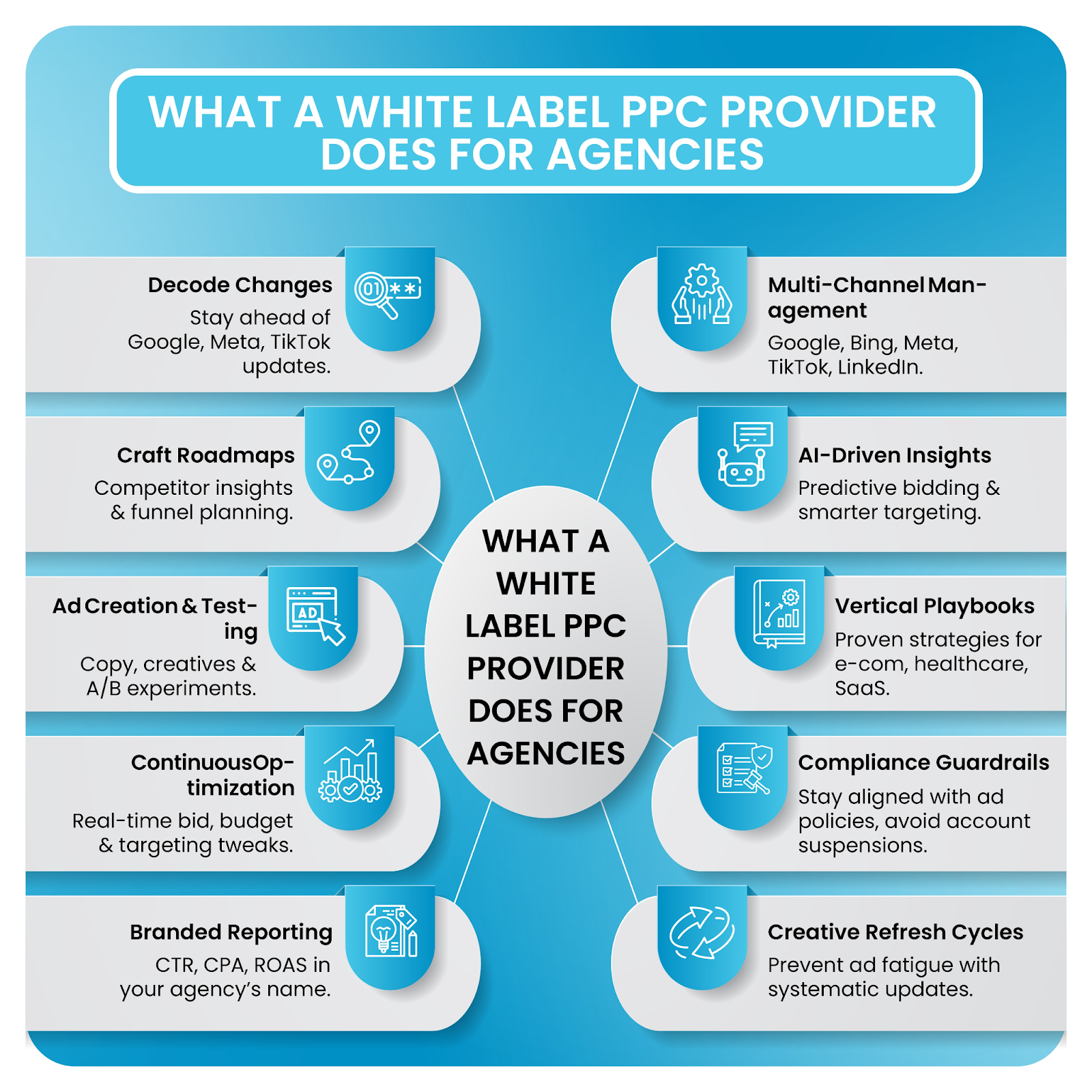
DashClicks offers a structured approach to white label PPC services designed specifically for agencies that need consistent performance and scalable fulfillment.
1. End-to-End PPC Campaign Management
- Campaign creation, monitoring, and optimization across platforms like Google Ads and Meta
- Continuous performance tracking and adjustments
- Focus on improving conversions, not just traffic
DashClicks combines expert campaign management with structured workflows, allowing agencies to deliver better results without internal bottlenecks.
2. Access to Specialized PPC Experts
- Dedicated PPC professionals managing campaigns daily
- Experience across industries and platforms
- Faster optimization cycles and smarter decision-making
This eliminates the need for hiring and training internal teams while improving execution quality.
3. Advanced Tracking and Performance Optimization
- Implementation of accurate conversion tracking systems
- Integration of campaign data with reporting tools
- Focus on qualified leads and revenue-driven KPIs
DashClicks emphasizes aligning campaign performance with real business outcomes rather than surface-level metrics.
4. White-Labeled Reporting and Dashboards
- Fully branded reporting dashboards for client transparency
- Real-time performance tracking
- Clear communication of results to clients
These dashboards help agencies present PPC performance under their own brand while maintaining transparency and trust.
5. Scalable Fulfillment Without Operational Strain
- Ability to manage multiple client campaigns simultaneously
- Faster onboarding and campaign launches
- Flexibility to scale up or down based on demand
DashClicks enables agencies to scale efficiently by providing both fulfillment services and software in one unified platform.
6. Consistent Optimization and Testing Framework
- Ongoing A/B testing of ads and creatives
- Continuous keyword refinement and targeting improvements
- Structured optimization cycles
This ensures campaigns do not stagnate and ROI continues to improve over time.
By combining expert execution, structured optimization, and scalable systems, DashClicks helps agencies move from reactive PPC management to consistent ROI-driven performance.
Turning PPC from a Cost Center into a Growth Driver
Inconsistent returns on ad spend will destroy an agency's reputation over time. As CPC costs rise and platform algorithms become more complex, relying on basic strategies is no longer viable. Broken tracking, poor conversion signals, and ignored search term leakage are structural flaws that demand expert attention.
Agencies need more than just tactical adjustments to succeed. They require a blend of high-level strategy and flawless daily execution. By leveraging white label PPC services, digital marketing agencies can eliminate the burden of internal fulfillment. They gain the power to deliver predictable, highly profitable campaigns for their clients. Embracing a white label partnership is a strategic, long-term solution that turns paid search into a massive engine for agency growth.


.svg)


.svg)
.svg)
.svg)
.svg)
.svg)