

.svg)
.svg)
.svg)
.svg)
.svg)
.svg)
Facebook advertising, now part of the broader Meta ecosystem, continues to be one of the most effective paid channels for lead generation and eCommerce growth. Despite rising competition and evolving algorithms, businesses still rely heavily on Facebook and Instagram to reach highly targeted audiences at scale. According to Meta’s own disclosures and third-party benchmarks from Wordstream, average Facebook ad costs have increased steadily year over year, with CPMs rising by more than 10% in many industries. As costs rise, creative quality and relevance have become central to maintaining performance.
One of the biggest challenges agencies face today is creative fatigue. This happens when audiences are repeatedly exposed to the same ads, causing engagement to drop and performance to decline. Click-through rates fall, CPMs climb, and conversions slow down. Creative fatigue is not just a creative issue. It is a scaling problem that impacts operations, resources, and long-term results.
For agencies managing multiple clients, campaigns, and audience segments, the issue compounds quickly. What works for one audience may fatigue another within days. Refreshing ads manually across dozens or even hundreds of ad sets becomes unsustainable. Internal teams burn out, creative pipelines clog, and performance suffers.
As the industry moves toward 2026 and beyond, agencies are realizing that ad success depends on systems, not just talent. Many are adopting white label Facebook advertising models to manage creative fatigue more effectively. By combining data-driven insights, structured creative rotation, and dedicated production support, white label Facebook ads services help agencies maintain relevance without overwhelming internal teams.
This shift is not about outsourcing creativity. It is about building scalable processes that keep ads fresh, audiences engaged, and performance stable across accounts.
Why Creative Fatigue Is a Scaling Bottleneck?
What Creative Fatigue Is and Why It Matters?
Creative fatigue refers to the gradual decline in ad performance that occurs when audiences are exposed to the same creative assets too frequently. At first, an ad may perform well. It grabs attention, drives clicks, and converts. Over time, however, repeated exposure causes users to scroll past the message without engaging. Familiarity replaces curiosity, and performance begins to slide.
Facebook’s algorithm is built to reward relevance and engagement. When engagement drops, the system interprets this as reduced user interest. As a result, ads may be shown less often, delivered to less responsive segments, or served at a higher cost. This is why creative fatigue often leads directly to rising CPMs and weaker results, even when targeting and budgets remain unchanged.
Common signals of creative fatigue include:
- A consistent decline in click-through rate over time
- Rising CPM and cost per result despite stable targeting
- Lower quality, engagement, or conversion rankings
- Increasing frequency without a corresponding lift in conversions
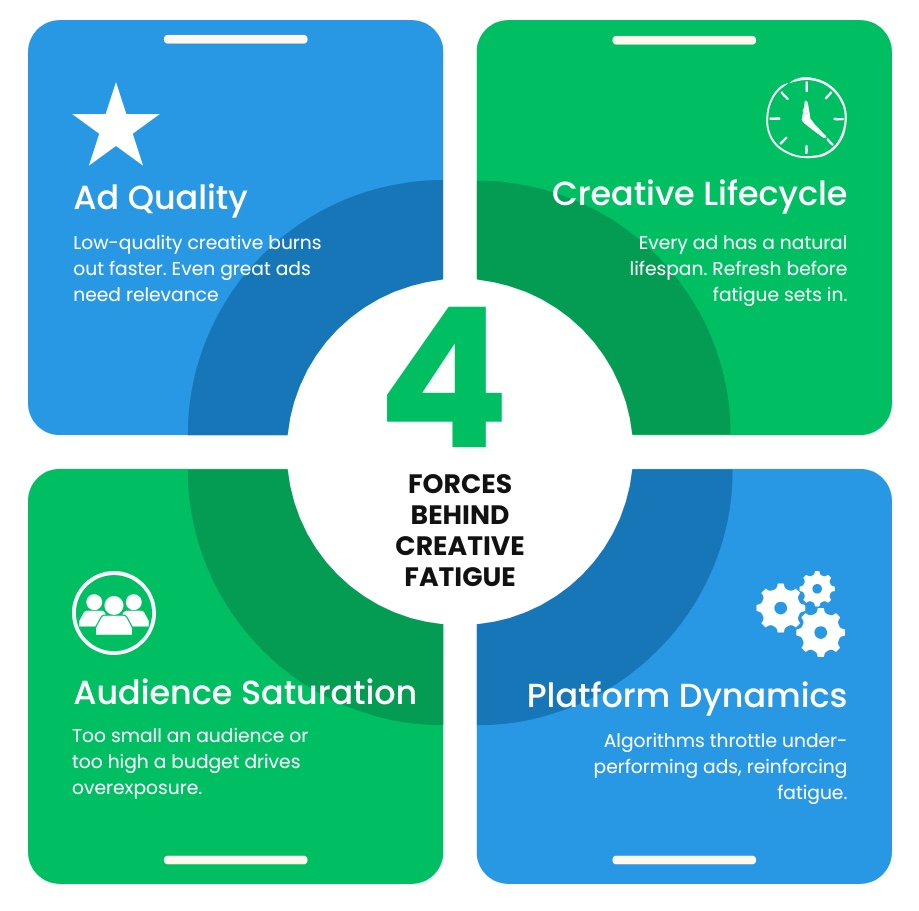
Image Source: Search Engine Land
Industry benchmarks highlight how quickly this issue can surface. Insights from Meta business reports and Socialbakers indicate that many Facebook ads experience noticeable performance decay within three to four weeks if creatives are not refreshed. In some cases, agencies report declines of 20 to 40% in CTR or conversion efficiency during that window.
At a small scale, creative fatigue is relatively easy to manage. A single campaign or a handful of ads can be refreshed manually. At agency scale, the impact is far more severe. Creative fatigue becomes an operational challenge that affects delivery costs, margins, and client confidence. When performance drops across multiple accounts at once, the pressure on teams increases quickly.
1. Audience Fragmentation Makes Fatigue Worse
Modern Facebook advertising no longer relies on broad targeting alone. Agencies now run highly layered strategies designed to reach users at different stages of awareness and intent. These strategies often include:
- Interest and behavior-based segments
- Custom audiences built from website visitors and email lists
- Multiple lookalike audiences with varying similarity levels
- Retargeting campaigns across different funnel stages
Each of these audience types responds differently to creative messaging. A high-energy video ad may perform well with cold audiences but fatigue quickly in retargeting campaigns. A testimonial might resonate with one demographic while failing to connect with another. Even small changes in audience makeup can alter how quickly a creative loses effectiveness.
As audience complexity increases, creative fatigue accelerates. One creative asset may need several variations to remain relevant across segments. Headlines, visuals, formats, and calls to action often need to change to match user intent. Without a scalable process in place, agencies struggle to meet this demand. The result is either overused creatives or rushed updates that fail to restore performance.
2. Why Frequency Alone Is Not a Solution?
Frequency is often used as a shortcut for identifying creative fatigue. While it is a helpful metric, it does not tell the full story. A frequency of three may be perfectly acceptable for a long buying cycle, while a frequency of two could already be too high for a short consideration product; context matters.
Different industries, audience types, and funnel stages have different tolerance levels. Retargeting audiences often fatigue faster than cold audiences. High-ticket offers may sustain a higher frequency if the messaging evolves. Looking at frequency in isolation ignores these nuances.
Relying on frequency alone creates several challenges:
- Fatigue is identified only after performance has already declined
- Teams are forced into reactive decision-making
- Insights remain scattered across multiple campaigns and ad sets
Agencies managing large accounts often track dozens or even hundreds of ad sets. Monitoring frequency manually at that scale leads to delayed optimizations and inconsistent outcomes. By the time action is taken, costs may already be climbing.
3. Creative Velocity vs. Internal Capacity
Agency clients expect continuous improvement. This usually means frequent testing, new ideas, and ongoing optimization. Typical expectations include:
- Fresh creatives every one to two weeks
- Consistent A/B testing across audiences
- Unique copy and visuals tailored to each segment
In reality, internal creative teams have finite capacity. Designers and copywriters are often stretched across multiple clients and channels. Production timelines slip, review cycles slow down, and creative queues grow longer. As pressure increases, teams may resort to small tweaks instead of meaningful refreshes.
This gap between expectations and capacity leads to several issues. Creatives are rushed. Testing becomes shallow. Performance plateaus because ads are not refreshed quickly or thoughtfully enough. Over time, internal teams experience burnout, which further reduces output and quality.
4. Data Without Action Creates Chaos
Facebook provides extensive performance data, but data alone does not solve creative fatigue. Metrics often signal fatigue only after results have dropped. Connecting those signals across audiences, placements, and campaigns is time-consuming and complex.
Many agencies struggle to translate performance data into timely creative decisions. Insights remain siloed. Opportunities are missed. Instead of proactive planning, teams spend their time reacting to declines.
Creative fatigue at scale is rarely caused by a lack of ideas. It is driven by operational gaps, fragmented insights, and limited creative throughput.
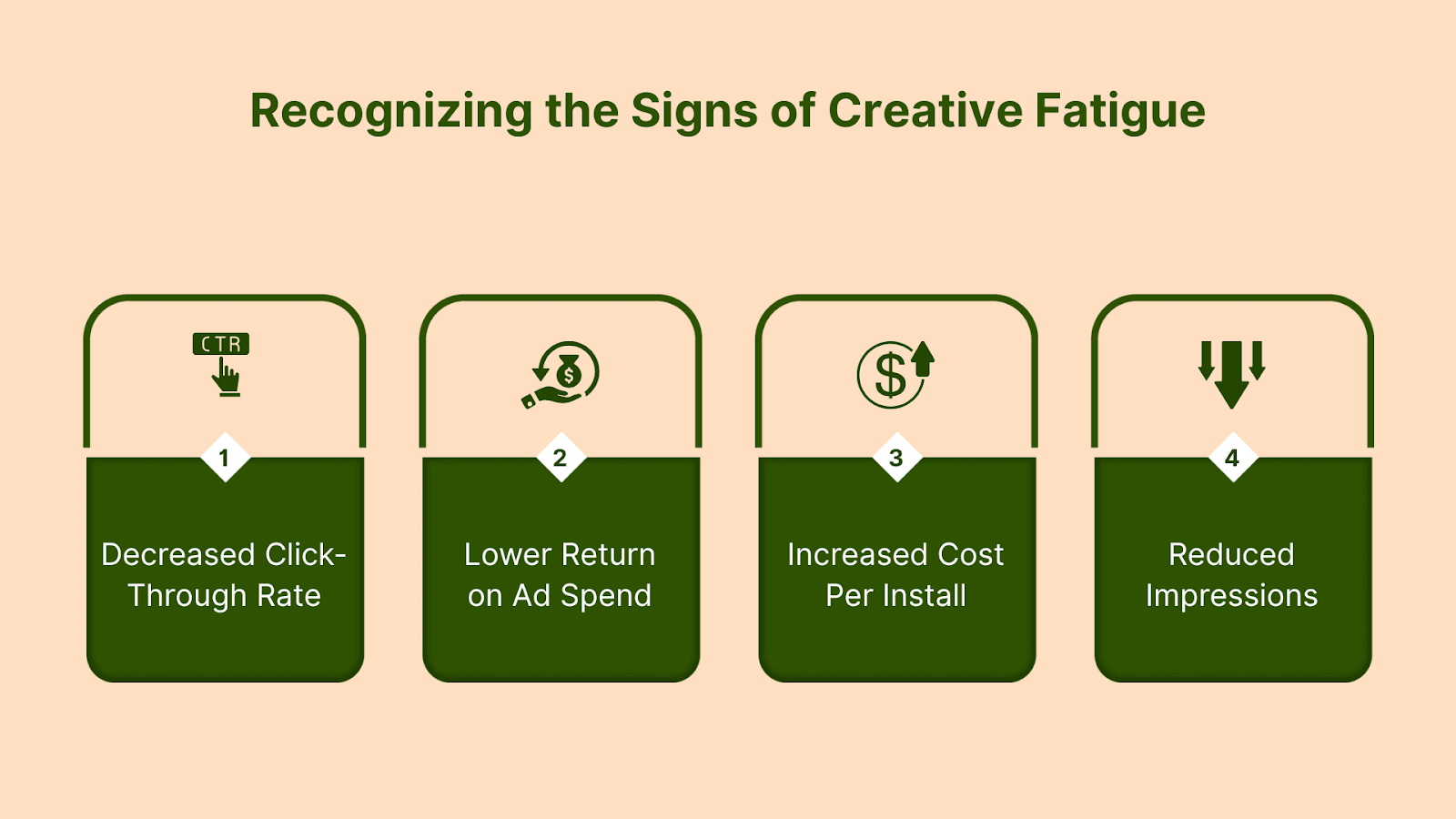
Image Source: Segwise
This is why white label Facebook ads services have become a strategic solution. They provide the structure, monitoring, and production support agencies need to manage fatigue consistently, rather than relying on last-minute fixes.
How White Label Facebook Ads Help Agencies Manage Creative Fatigue?
1. Systematic Fatigue Detection Across Audiences
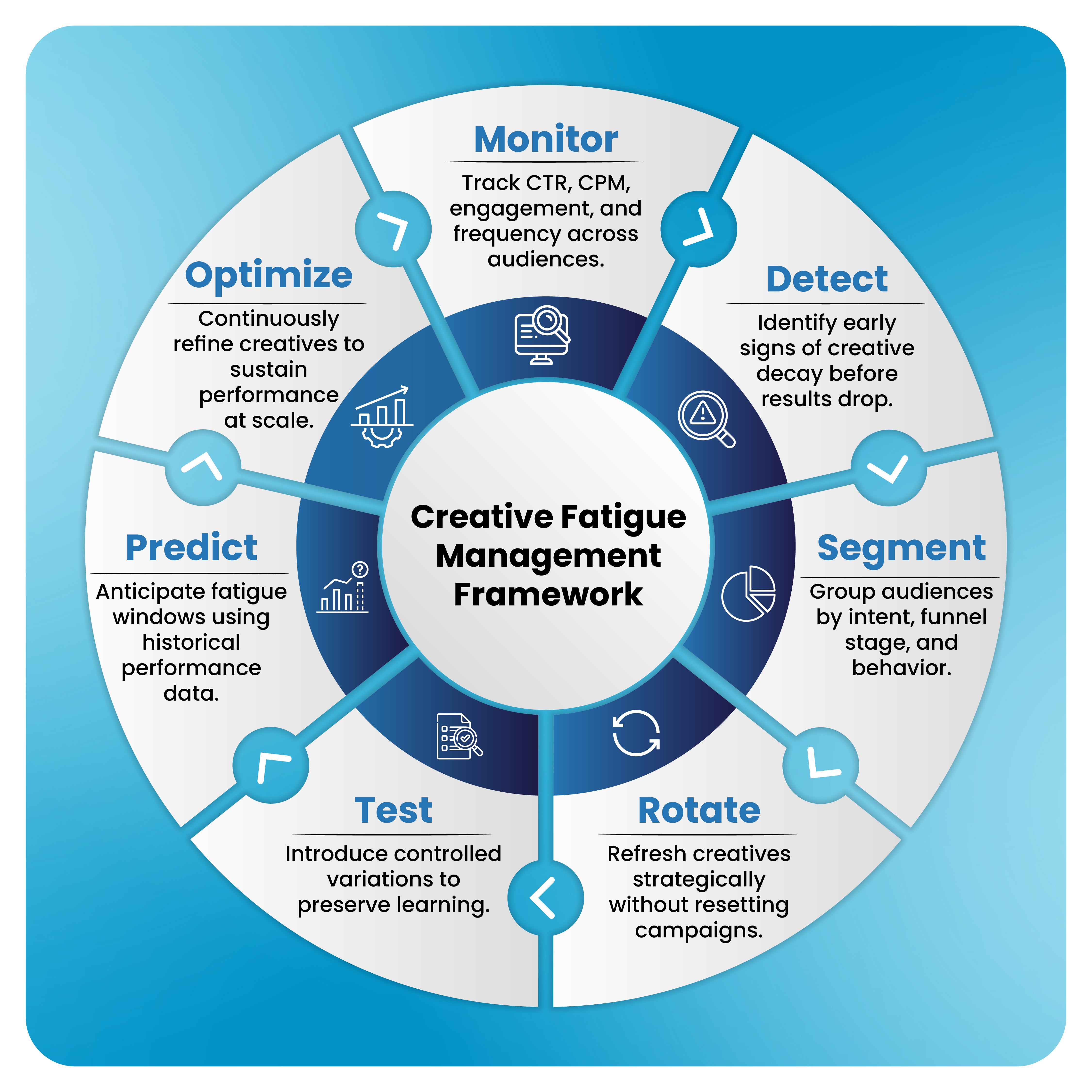
White label Facebook advertising partners rely on structured analytics frameworks to monitor performance across accounts, campaigns, and audience segments in real time. Instead of reviewing metrics manually or waiting for weekly reports, they track early indicators of creative fatigue at the audience level. These indicators often include gradual engagement decline, rising CPMs, and shifts in relevance rankings that signal reduced user interest.
By centralizing performance data, white label teams can compare how the same creative performs across different audiences and placements. This makes it easier to identify patterns that would otherwise go unnoticed, such as fatigue appearing first in retargeting audiences or specific age groups. Agencies benefit from earlier intervention, allowing them to refresh or rotate creatives before performance drops sharply.
This proactive approach replaces reactive optimization. Rather than fixing issues after results decline, agencies can maintain stable performance over time. PPC benchmark reports suggest that teams using advanced monitoring and alert systems can shorten optimization cycles by up to 30 percent compared to manual reporting workflows, resulting in more consistent outcomes across accounts.
2. Data-Driven Creative Rotation Frameworks
One of the core strengths of white label Facebook ads services is the use of structured creative rotation frameworks. Instead of relying on one-off creative swaps, white label teams build and maintain libraries of pre-tested variations designed for different audiences, formats, and funnel stages.
These frameworks allow agencies to:
- Rotate creatives based on real audience response, not guesswork
- Prioritize variations that maintain engagement over longer periods
- Prevent overexposure within specific segments
By sequencing creatives logically, agencies keep ads fresh while preserving learning signals within the Facebook algorithm. This approach reduces the need to restart campaigns or reset optimization phases, which can disrupt performance. Over time, structured rotation creates a steady rhythm of testing and refinement rather than constant resets.
3. Predictive Modeling for Creative Lifespan
Some white label partners go beyond reactive rotation by using predictive modeling to estimate a creative’s effective lifespan. Historical performance data plays a key role in this process. Metrics such as frequency sensitivity, audience overlap, engagement decay, and past conversion trends help determine how long a creative is likely to remain effective.
With these insights, agencies can plan creative development in advance. Instead of scrambling when performance drops, they schedule refreshes ahead of time and align production timelines with expected fatigue windows. This shift from reaction to anticipation reduces stress on teams and leads to smoother campaign transitions. Predictive planning also helps agencies allocate creative resources more efficiently across clients.
4. Dedicated Creative Production Support
Scaling creative output internally often requires additional hiring, training, and management. White label Facebook ads services eliminate much of this burden by providing access to experienced media buyers, copywriters, designers, and video editors as part of the service.
This support is especially valuable as video continues to dominate performance on Facebook and Instagram. Meta benchmarks consistently show that video ads can outperform static creatives by up to six times in engagement. Producing video at scale often outperform static creatives by up to 6–10× in engagement on Facebook and Instagram, however, requires specialized skills and fast turnaround times. White label teams help agencies maintain a steady flow of high-quality assets without expanding payroll or overloading internal staff.
5. Campaign Structuring for Longevity
Creative fatigue is closely linked to how campaigns are structured. White label experts help agencies design campaigns with longevity in mind by aligning creative strategy with audience intent and funnel stages. Key practices often include:
- Diversifying placements to avoid overexposure
- Managing audience overlap to reduce redundancy
- Sequencing creatives based on where users are in the buying journey
- Matching messaging tone and format to intent
This structured approach reduces fatigue while preserving valuable learning data within the platform. Ads feel more relevant because they evolve alongside the user’s journey rather than repeating the same message across every touchpoint.
6. Clear Reporting That Ties Creative to Results
White labeled reporting connects creative performance directly to business outcomes. Instead of focusing only on surface-level metrics, reports highlight how creative freshness impacts cost per result, engagement trends, and conversion stability over time.
For agencies, this clarity improves client communication. Creative decisions can be explained with data, not assumptions. Clients gain a better understanding of why creative refreshes matter and how they contribute to long-term performance. This transparency builds trust and reinforces the agency’s strategic role rather than positioning creative updates as reactive fixes.
How DashClicks Helps Agencies Manage Creative Fatigue at Scale?
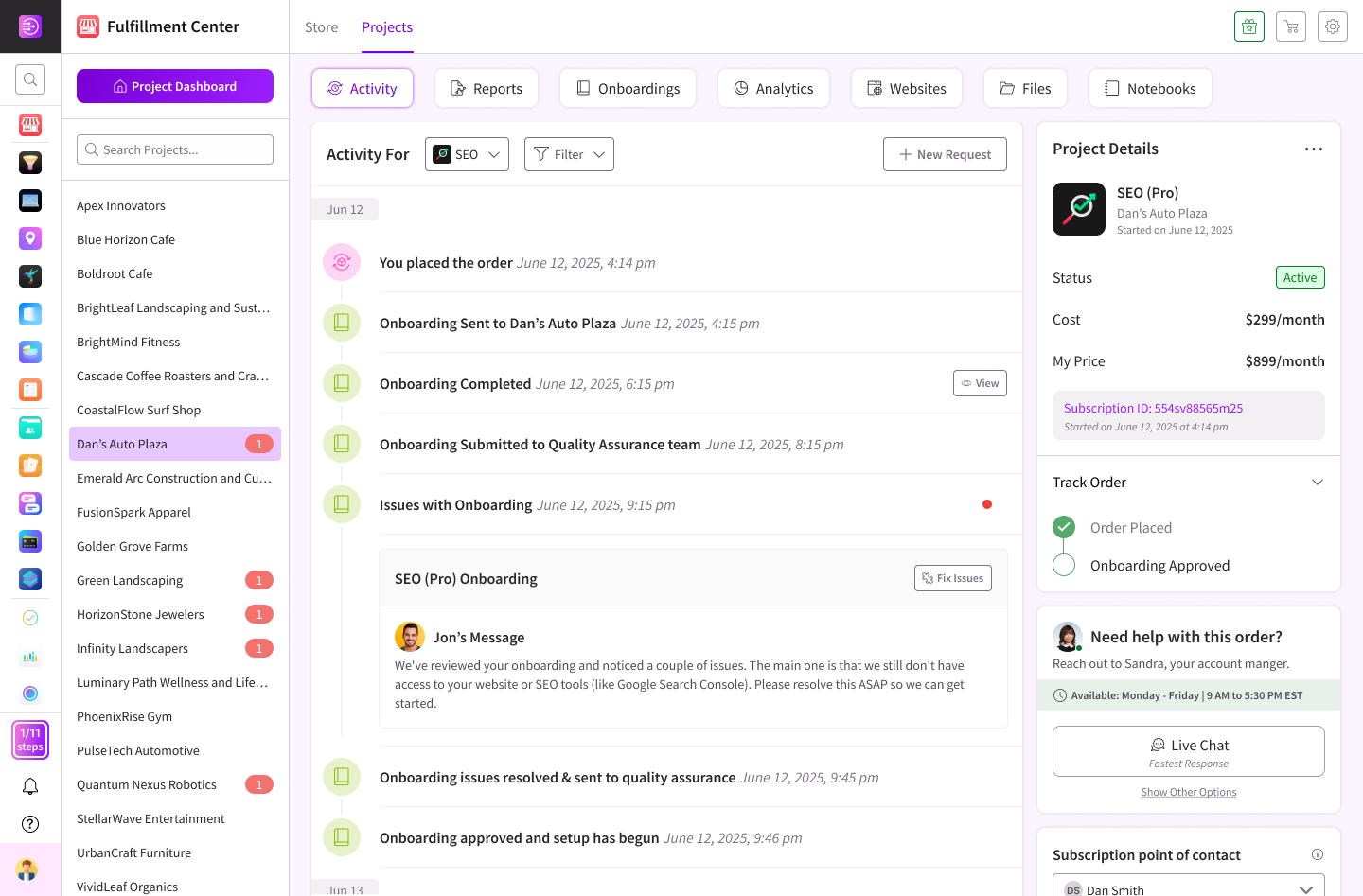
DashClicks offers white label Facebook advertising designed specifically for agencies managing growth at scale. The platform provides access to dedicated media buyers and creative specialists who work under the agency’s brand, ensuring consistency and professionalism.
Their platform supports agencies with structured creative rotation and testing frameworks that reduce audience overexposure. Campaigns are monitored continuously for fatigue signals such as rising CPMs, declining CTRs, and increasing frequency. When early signs appear, creative refreshes are implemented strategically rather than reactively.
Audience-specific optimization is a core strength. Their team ensures that creatives align with different audience segments and funnel stages, helping maintain relevance across campaigns. White-labeled reporting ties creative performance directly to key metrics, making it easier for agencies to explain results and justify decisions to clients.
By handling the operational complexity of Facebook ads services, DashClicks allows agencies to focus on strategy, client relationships, and business growth without overwhelming internal teams.
Conclusion
Creative fatigue is no longer a minor optimization issue. It is one of the main reasons Facebook campaigns plateau or decline as agencies scale. Rising ad costs, fragmented audiences, and limited internal capacity make manual solutions ineffective.
White label Facebook advertising offers agencies a scalable operating model. With systematic fatigue detection, data-driven creative rotation, predictive planning, and dedicated production support, agencies can maintain performance without exhausting their teams.
The agencies that succeed in the coming years will be those that treat creative operations as a system, not a series of last-minute fixes. Leveraging the best white label Facebook ads partners allows agencies to stay ahead of fatigue while delivering consistent results for clients.


.svg)


.svg)
.svg)
.svg)
.svg)
.svg)