

.svg)

.svg)
.svg)
.svg)
.svg)
.svg)
Managing client expectations has become one of the most demanding responsibilities in digital marketing today. Facebook Ads remain one of the world's largest digital advertising platforms, and businesses of every size continue investing in them at scale. Meta generated more than $160 billion in advertising revenue in 2024, demonstrating that businesses continue investing heavily in its advertising ecosystem despite increasing competition. Still, that widespread adoption has not made client management any easier.
Performance naturally fluctuates because of competition, audience behavior, creative fatigue, seasonality, and continuous platform changes. Yet many clients become concerned after only a few weeks of shifting metrics, even when campaigns are progressing exactly as they should. Those concerns often arrive before an agency has had enough time to move through a proper optimization cycle.
Agencies are expected to handle all of this at once: optimize active campaigns, educate clients about how digital advertising actually works, explain results clearly, and maintain the kind of relationship that keeps a client renewing month after month. That is a significant workload, and it only grows as an agency takes on more clients.
White label Facebook advertising has emerged as a scalable operational solution for agencies navigating these pressures. By combining expert optimization with transparent reporting and proactive communication, white label support allows agencies to deliver stronger results without stretching their internal teams to the breaking point.
Understanding client concerns starts with recognizing that many of them stem from misconceptions rather than poor campaign performance.
Why Clients Lose Confidence in Facebook Ads So Quickly?
Client concerns are often driven by psychology rather than actual campaign failure. When clients invest money in advertising, they naturally want to see results quickly. That instinct is understandable, but it frequently leads to misaligned expectations from the very beginning of an engagement.
Clients commonly expect immediate ROI, predictable performance week over week, and linear growth that maps directly onto their ad spend. These expectations make sense from a business perspective, but they do not reflect how Facebook Ads actually work. The platform relies on machine learning, audience signals, and iterative testing to improve results over time.
Many of these frustrations are also fueled by comparisons. Clients who have run Google Search Ads often expect Facebook to behave the same way, with clear intent signals and predictable conversion paths. Facebook Ads operate on a fundamentally different model, one driven by interruption-based discovery rather than active search intent. That distinction is rarely explained upfront, and the gap between expectation and reality becomes a source of ongoing friction.
Clients also tend to focus on vanity metrics, misunderstand the Learning Phase, and react strongly to short-term fluctuations that any experienced media buyer would consider normal. Some of the most common concerns include:
- CPA increasing week over week
- ROAS dropping unexpectedly
- CPM spikes during high-demand periods
- Lower lead volume during optimization cycles
- A falling CTR as creative becomes more familiar to the audience
According to HubSpot's State of Marketing Report, Facebook continues to rank among the highest ROI paid social advertising platforms despite normal performance variability. That context is often missing from the conversations agencies are having with their clients.
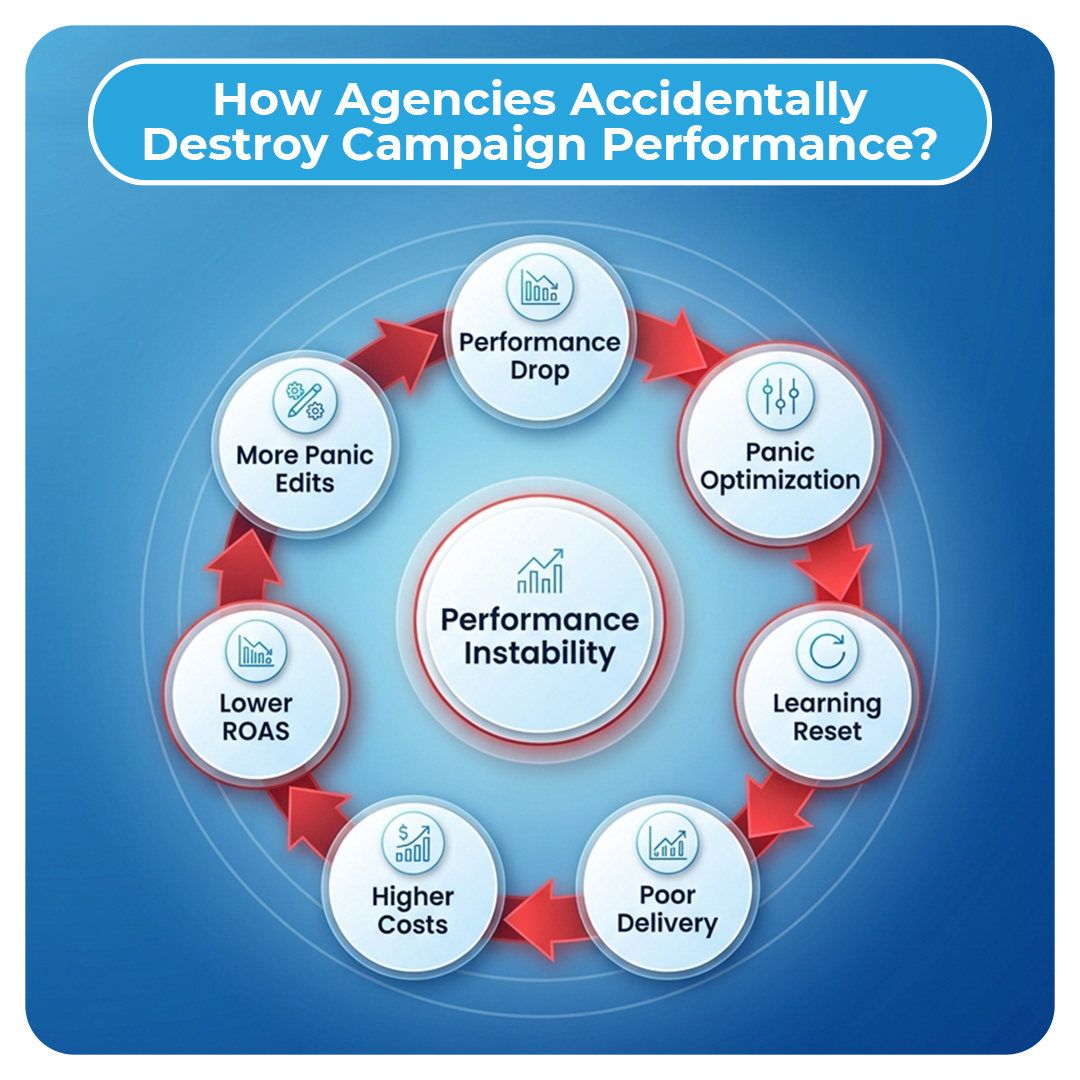
Many important performance factors exist outside an agency's direct control, and understanding those factors is essential for setting realistic expectations.
The Factors That Influence Facebook Ads Performance
Campaign performance depends on a wide range of constantly changing variables. Even the most experienced media buyers cannot fully control every element that influences results. Helping clients understand this reality is one of the most important things an agency can do to protect its relationships during difficult periods.
1. Meta's Machine Learning Needs Time
Meta's ad delivery system learns through data. During the Learning Phase, the algorithm tests different audiences, placements, and delivery strategies to find the combination most likely to achieve a campaign's objective. This process requires a meaningful volume of conversions before the system can optimize reliably.
When agencies or clients make frequent edits to active campaigns, including budget changes, audience adjustments, or creative swaps, the Learning Phase resets. That means the algorithm starts over, which delays optimization and introduces the kind of inconsistency that makes clients nervous. Patience during this period is not a passive choice. It is part of a deliberate strategy.
2. Audience Saturation
Even a well-built audience has limits. As a campaign runs, frequency increases, meaning the same people see the same ads more often. Creative fatigue sets in, engagement drops, and performance weakens. Audience overlap between different ad sets can amplify this problem further.
Refreshing creative and expanding audiences are routine parts of any healthy campaign lifecycle. Clients who are not aware of this often interpret declining performance as a sign that something has gone wrong, when it is actually a signal that the campaign needs its next phase of optimization.
3. Competition Changes Every Day
Ad auction dynamics shift constantly. During peak seasons, such as the holiday shopping period or major industry events, more advertisers compete for the same audiences. That competition drives up CPMs and changes what a dollar of ad spend can achieve.
Competitor budgets increase and decrease without warning. A sudden surge in spending from a competitor can affect an agency's client without any change in the client's own campaign. Explaining these auction dynamics to clients early in a relationship prevents confusion when CPMs rise unexpectedly.
4. Landing Page Experience Matters
Facebook Ads can deliver qualified traffic, but the conversion still happens on the client's website. A slow load time, weak messaging, or a poor mobile experience will suppress results regardless of how well the ad campaign is optimized.
Google's research has consistently shown that improving mobile experience positively impacts conversion rates, and those same principles apply when Facebook users click through to a landing page. When performance underperforms expectations, agencies should evaluate the full customer journey, not only the ad account.
5. Attribution Isn't Perfect
Tracking has become significantly more complex over the past several years. Apple's App Tracking Transparency significantly reduced deterministic tracking, requiring advertisers to rely more heavily on modeled attribution and aggregated measurement. Attribution windows have shortened, cross-device behavior is harder to capture, and some conversions simply do not appear in reported data.
This means campaigns sometimes perform better than the numbers suggest. Explaining modeled attribution and its limitations helps clients understand that the data they see in a dashboard is an estimate, not a complete picture.
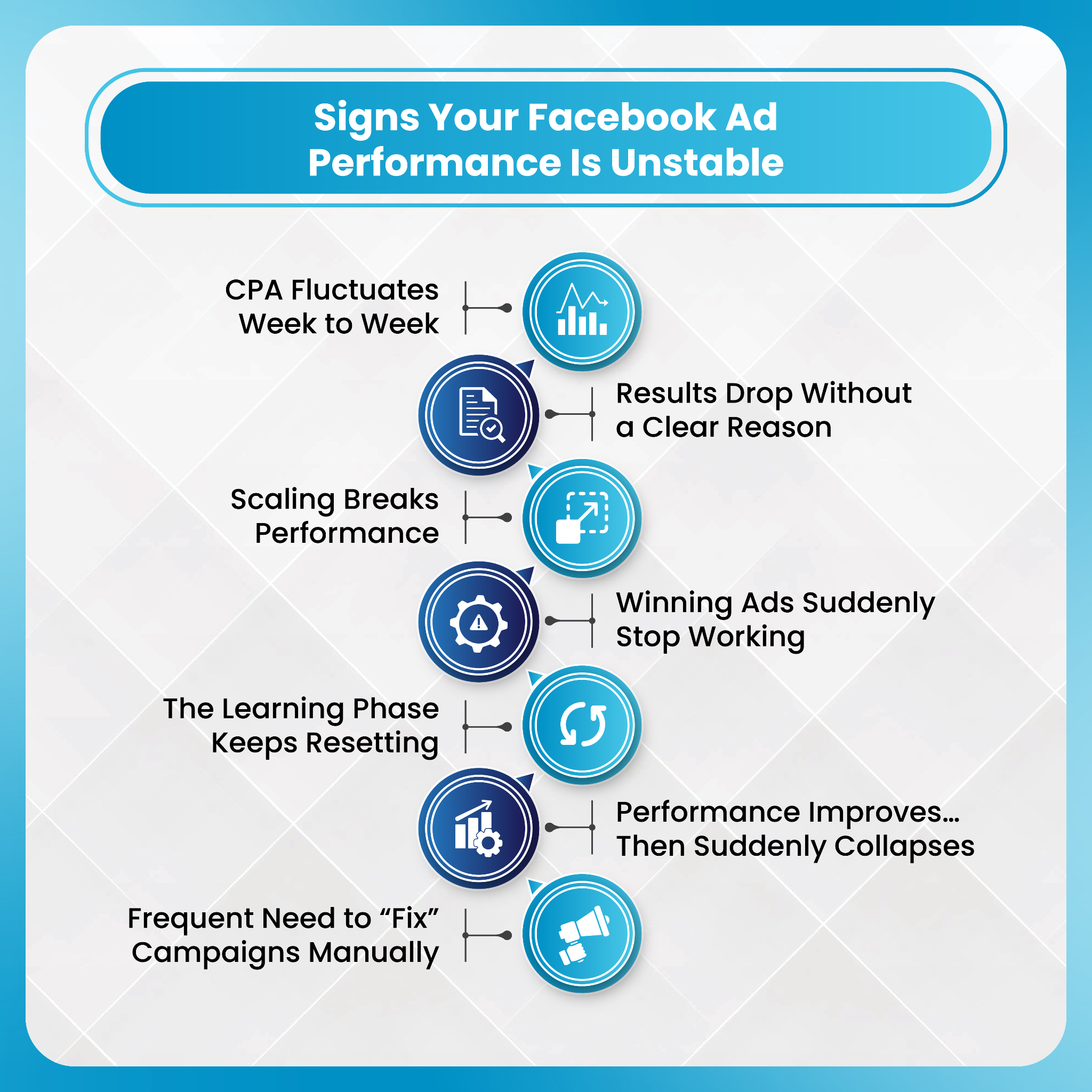
Structured optimization and consistent communication matter just as much as technical campaign management, which is why client confidence often depends on what happens outside the ad account.
Why Managing Client Expectations Is Just as Important as Managing Campaigns?
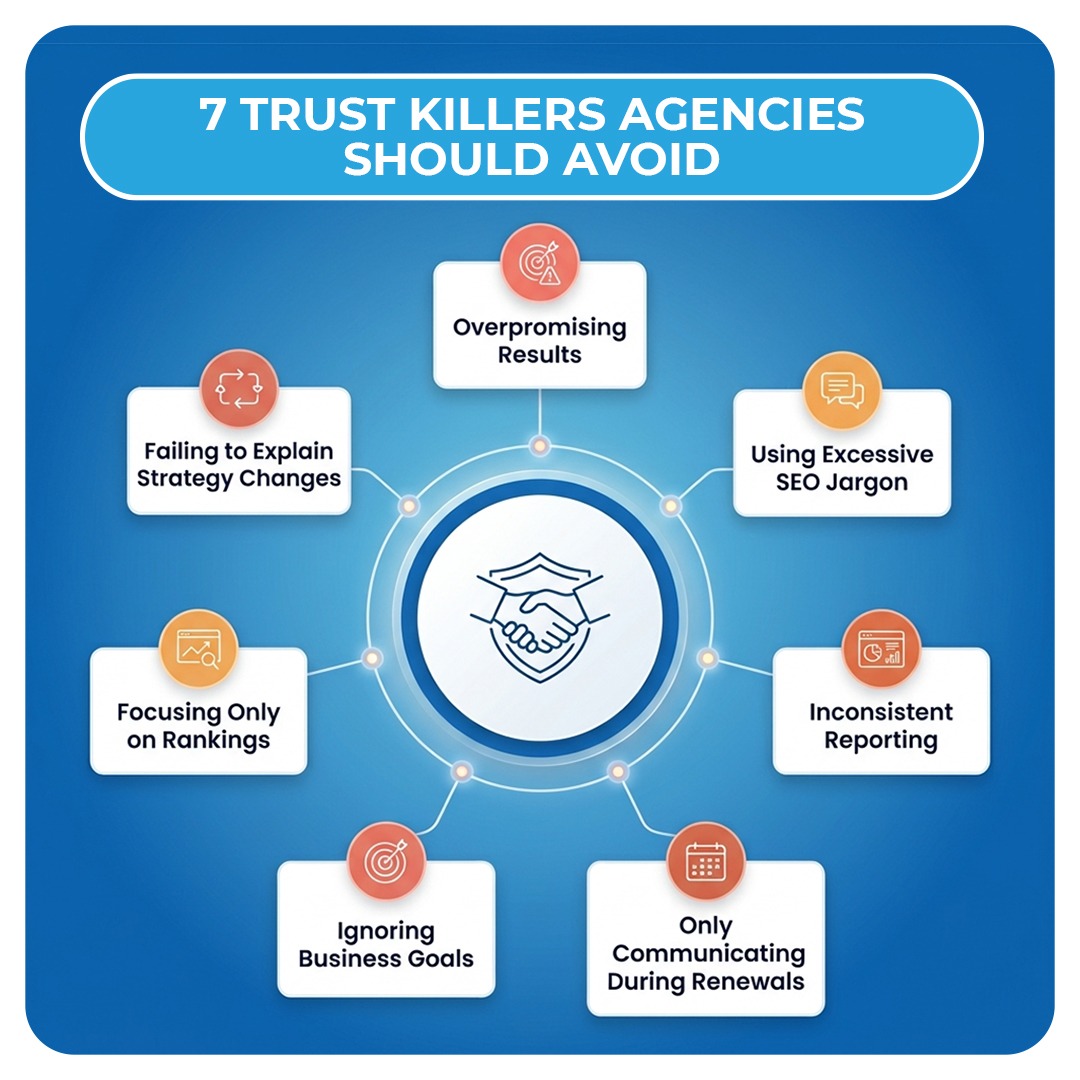
Agencies rarely lose clients simply because campaigns go through a rough patch. Performance fluctuations are a normal part of digital advertising, and most clients understand that at some level. What erodes trust is the feeling that nothing is being done about it, or that the agency is not being transparent about what is happening.
Clients leave when expectations were never properly aligned at the start, communication becomes inconsistent during difficult periods, reports provide numbers without meaningful context, and performance changes go unexplained for too long. Each of these failure points is preventable with the right systems in place.
Agencies that proactively educate clients build a foundation of trust that holds up when performance fluctuates. That education should cover:
- Testing periods and why they take time
- Optimization cycles and what agencies are actually doing during them
- When and why creative refreshes are necessary
- Realistic timelines for seeing meaningful results
- How to measure success using business-focused KPIs rather than platform metrics alone
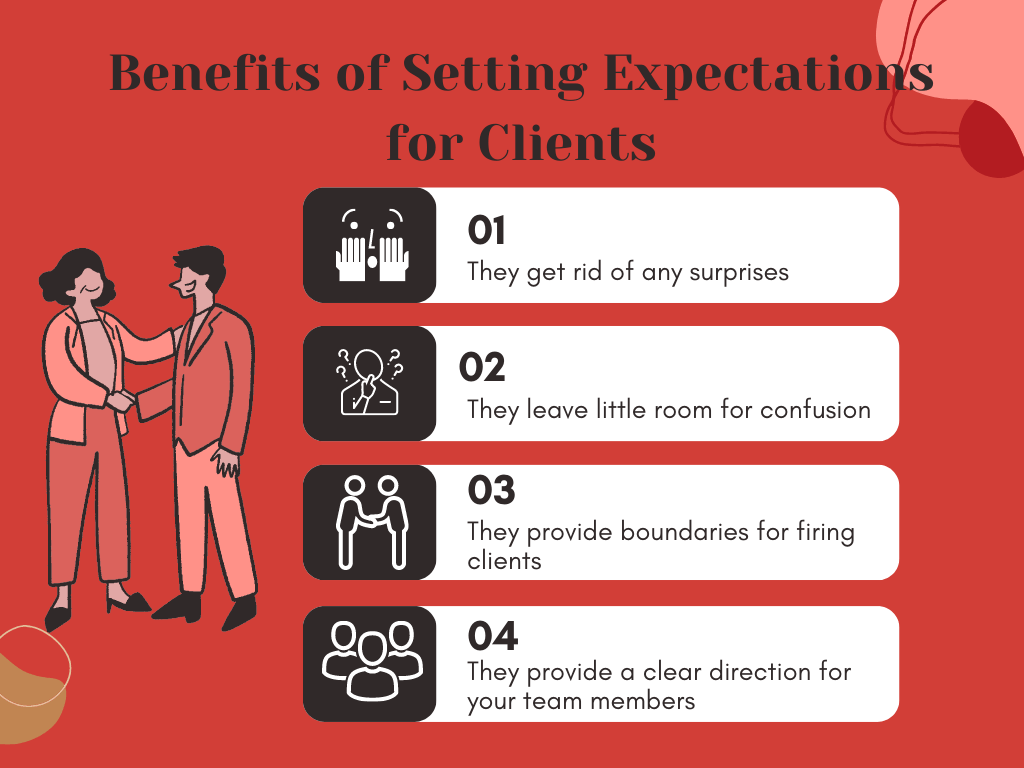
Image Source: The HOTH
A clear framework for expectations helps both sides of the relationship stay aligned. Agencies should set expectations around four key areas at the start of every engagement:
- Timeline: How long before the campaign exits the Learning Phase, and when should meaningful results be expected?
- KPIs: Which metrics reflect actual business impact, and which are supporting indicators?
- Optimization Process: What does the agency monitor, test, and adjust, and how often?
- Reporting Frequency: When will the client receive updates, and what will those updates include?
This framework does not eliminate every difficult conversation, but it dramatically reduces how often those conversations feel like surprises. Clients who understand the process are more patient and more likely to stay engaged during periods when results are building rather than peaking.
Maintaining this level of communication becomes increasingly difficult as agencies grow, which is where operational support becomes critical.
Further Reading: Facebook Ads: Managing Client Expectations with White Label Services
How White Label Facebook Ads Support Reduces Client Concerns?
White label fulfillment is not simply a way to outsource Facebook Ads work to another team. It is an operational support system that allows agencies to deliver a higher standard of campaign management and client communication without scaling internal headcount at the same rate as client growth.
1. Faster Campaign Optimization
One of the most direct benefits of white label Facebook Ads support is continuous campaign monitoring. In-house teams managing multiple client accounts often struggle to catch performance shifts quickly enough to respond before clients notice them. A dedicated white label team can monitor campaigns more closely and act faster, reducing the amount of time a campaign spends underperforming before an optimization is made.
Faster optimization means fewer opportunities for client concern to develop in the first place.
2. Access to Specialized Facebook Ads Expertise
Media buyers work inside Facebook Ads Manager every day. They bring deep experience with advanced testing strategies, budget allocation across campaign structures, and audience segmentation techniques that generalist teams may not use consistently.
That expertise translates into stronger campaign performance and fewer costly mistakes. It also means agencies can take on more complex client accounts with confidence, knowing the fulfillment behind the work is handled by people with the right skills.
3. Consistent Reporting
Reporting is one of the most visible parts of an agency relationship. White label Facebook Ads support typically includes white label reporting software and client-ready performance reports that make it easier for agencies to hold regular reporting conversations without spending hours compiling data.
Consistent, well-structured reporting improves ROI conversations and gives clients the transparency they need to feel confident in what their ad spend is achieving.
4. More Time for Client Communication
When fulfillment is handled externally, agency teams spend less time inside Ads Manager and more time on the things that directly impact client retention. That includes:
- Strategy conversations that help clients think longer-term
- Regular check-ins that strengthen the relationship
- Identifying upsell opportunities within existing accounts
- Proactive communication during periods of performance fluctuation
These are the activities that build the kind of client trust that survives difficult months.
5. Scalable Fulfillment
Agency growth typically creates operational pressure. Adding clients without adding headcount leads to inconsistent execution, slower response times, and higher staff burnout. White label Facebook advertising allows agencies to scale the number of clients they serve without proportionally increasing their operating costs.
The result is a more sustainable business model where service quality does not decline as the client roster grows.
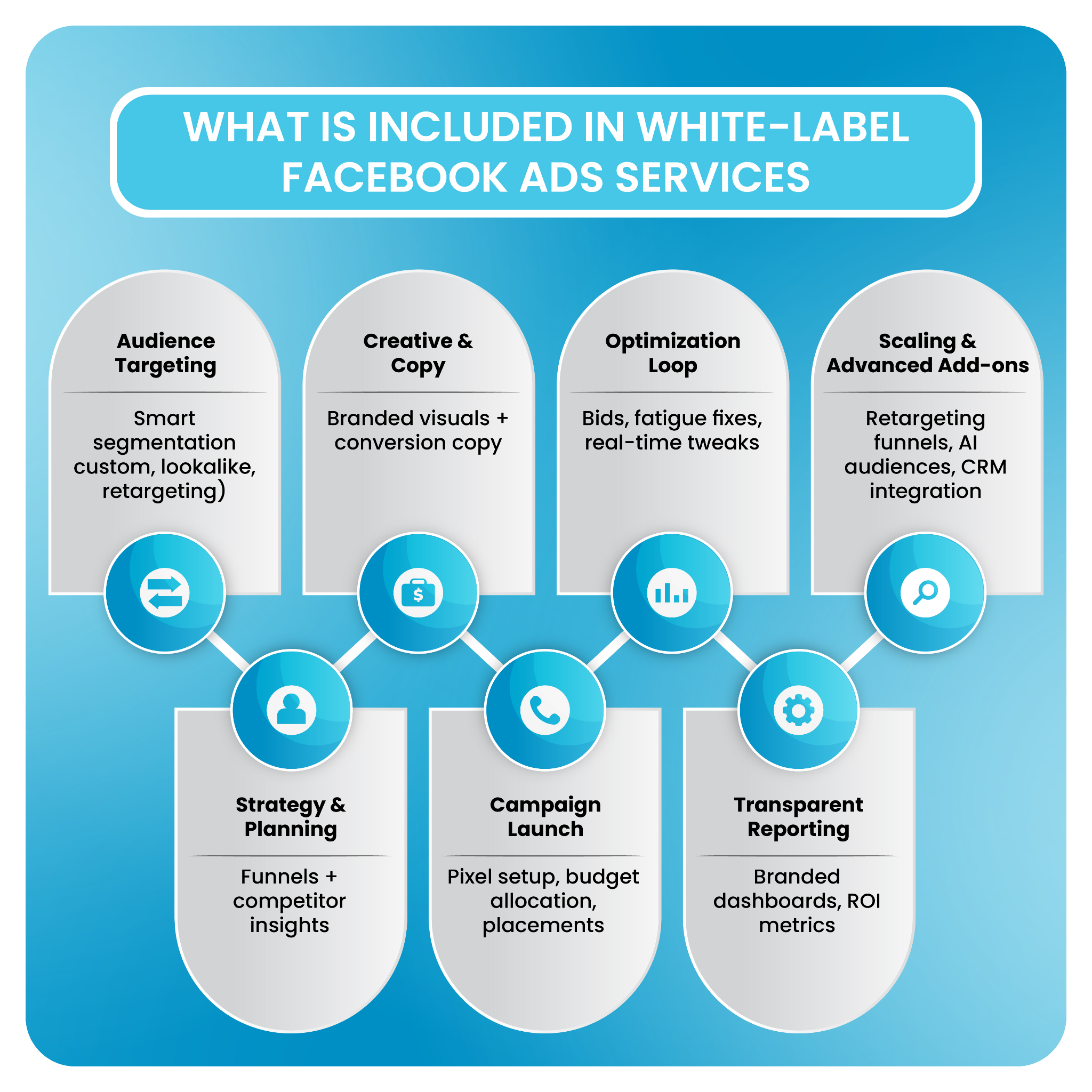
These operational improvements allow agencies to shift from a reactive posture to a proactive one, addressing client concerns before they become a reason to cancel.
Proactive Strategies Agencies Can Use to Build Client Confidence
Building client confidence is most effective when it happens before concerns arise. Agencies that wait for a client to raise a complaint are already operating in a defensive position. The agencies that retain clients longest are the ones that establish credibility and transparency from the very beginning.
1. Share Performance Trends Instead of Daily Results
Daily performance data is noisy. Showing a client a single day's ROAS or CPA without context invites unnecessary anxiety. Weekly and monthly reporting provides a much clearer picture of whether a campaign is improving over time.
Agencies that frame results in terms of trends rather than snapshots give clients a more accurate and less alarming view of their investment.
2. Celebrate Leading Indicators
Not every positive development shows up immediately in revenue. Improvements in CTR, reductions in CPC, stronger engagement rates, and higher conversion rates are all signs that a campaign is moving in the right direction.
Celebrating these indicators with clients and explaining what they predict about future performance helps maintain confidence during the optimization period when final results are still developing.
3. Explain Every Optimization
Clients do not need to understand every technical detail of campaign management. But they do benefit from knowing what changed, why the change was made, and what the agency expects to happen as a result.
A brief optimization update with each reporting cycle demonstrates that the agency is actively working, not simply waiting for results to improve on their own.
4. Report Business Impact
Platform metrics like clicks, impressions, and reach are useful internally but rarely meaningful to a business owner. Agencies that translate campaign performance into business outcomes, including leads generated, appointments booked, revenue influenced, and customer acquisition costs, make it far easier for clients to connect their ad spend to real growth.
That connection is what keeps clients committed to their campaigns over the long term.
5. Establish Quarterly Strategy Reviews
Regular quarterly reviews give agencies an opportunity to look beyond day-to-day performance and discuss the bigger picture. These sessions can cover market changes that have affected campaign conditions, opportunities to expand into new audiences, updates to creative strategy, and goals for the next quarter.
According to Harvard Business Review, retaining customers is generally far less expensive than acquiring new ones, making strong client relationships a major driver of long-term agency profitability. Quarterly strategy reviews are one of the most effective tools for building those relationships over time.
The combination of operational efficiency and proactive communication is where white label Facebook Ads support can make the greatest difference for growing agencies.
How DashClicks Strengthens Facebook Ads Delivery for Agencies?
DashClicks operates as an operational partner for agencies that want to improve their Facebook Ads fulfillment without building out a full in-house media buying team. The platform is designed specifically to support agency growth by delivering expert execution while keeping the client relationship firmly in the agency's hands.
- White Label Facebook Ads Management: The team provides white label Facebook ads management, including campaign creation, audience building, ongoing optimization, and strategic execution across Meta's advertising platforms. Every campaign is managed under the agency's brand, so clients experience a seamless service that reflects the agency they hired.
- Continuous Campaign Optimization: The fulfillment team monitors active campaigns on an ongoing basis, making budget adjustments, refining audience targeting, and testing creative to maintain performance. This continuous attention reduces the gaps between performance shifts and corrective action that can trigger client concern.
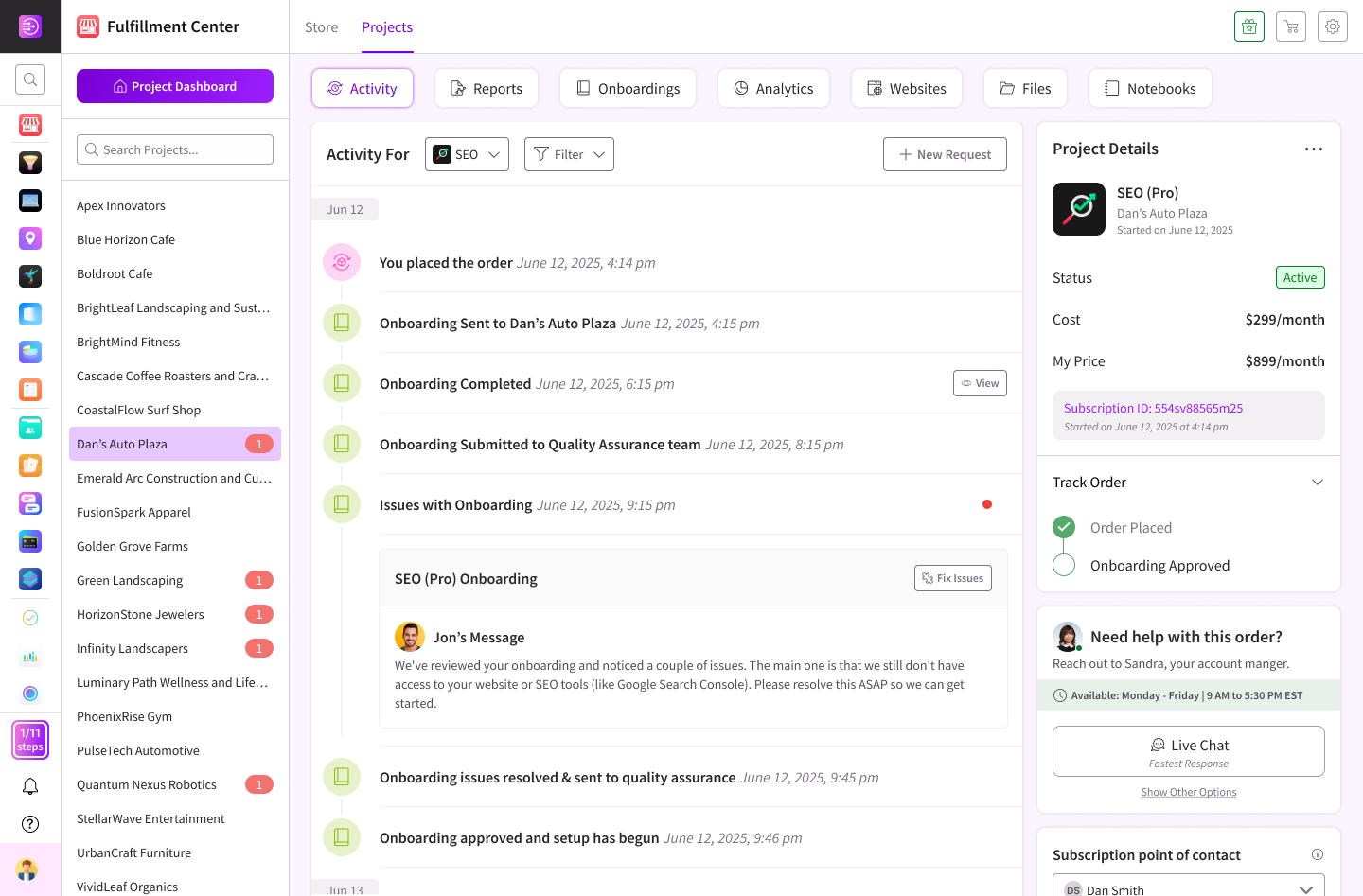
- Transparent Performance Reporting: DashClicks provides white label reporting software that agencies can share directly with clients. These reports are built to be client-ready, presenting campaign data in a clear format that supports productive conversations about results and progress.
- Scalable Fulfillment for Growing Agencies: As an agency's client roster grows, the fulfillment model scales alongside it. Agencies can take on more accounts, maintain consistent campaign quality across all of them, and free up their internal teams to focus on strategy, communication, and new business development. The agency keeps full ownership of every client relationship while the fulfillment team handles the technical fulfillment behind the scenes.
Build the Kind of Agency Clients Stay With
Facebook Ads naturally go through periods of fluctuation. That is not a sign of failure; it is a characteristic of any performance-driven, auction-based advertising platform. What determines whether clients stay or leave is rarely the performance itself. It is the confidence they have in the agency managing their investment.
Client confidence depends on education as much as optimization. Transparent communication strengthens trust in ways that no single strong month of results can fully replicate. Consistent optimization, honest reporting, and proactive outreach create the conditions where clients feel informed rather than anxious.
Agencies that choose to outsource Facebook Ads fulfillment to a reliable white label partner improve their operational capacity while creating more time for the strategic and relational work that drives retention. The best white label Facebook Ads partnerships do not just fill a capacity gap. They raise the standard of service an agency can consistently deliver.
The agencies that combine expert execution with proactive communication are better positioned to retain clients, strengthen their reputation, and scale sustainably over time. Building that combination requires intentional systems, not just talented people working harder.
Invest in the right operational foundation now, and client confidence becomes something your agency earns by design rather than defends under pressure.


.svg)


.svg)
.svg)
.svg)
.svg)
.svg)