

.svg)

.svg)
.svg)
.svg)
.svg)
.svg)
You just closed a major client for your agency. They are excited, your team is ready, and the onboarding call went perfectly. The client immediately asks how many leads they should expect by Friday. Suddenly, the energy shifts. You realize they expect Facebook ads to operate like a vending machine, where they put money in and immediately get revenue out.
This scenario plays out in marketing agencies every single day. There is a massive disconnect between how clients perceive paid social media marketing and how the platforms actually operate. Business owners see the end results of successful campaigns online, completely unaware of the extensive testing, failing, and optimization required to reach those outcomes.
Agencies are left in a difficult position. You have to educate the client, execute the strategy flawlessly, and generate a positive return on ad spend before the client loses patience. Building a bridge between immediate expectations and long-term realities requires excellent communication and flawless execution. By leveraging white label Facebook advertising, agencies can scale their delivery systems to ensure campaigns perform faster and clients stay happy.
Understanding Client Expectations from Facebook Ads
Most clients do not understand the technical mechanics of media buying. They base their expectations on heavily edited success stories and the general cultural belief that digital marketing is an instant solution. When you launch a campaign, you need to understand the psychological state of the client paying the invoice.
Why Clients Expect Immediate Results?
Clients often come to Facebook after experiencing high-intent marketing channels like Google Search. When someone types a specific query into a search engine, they are actively looking to buy. Paid social media operates on a completely different framework, interrupting users rather than capturing active demand. Clients fail to recognize this distinction and expect the same immediate conversion velocity.
Furthermore, the internet is flooded with misleading case studies from supposed gurus who promise overnight success. Your clients see these videos and assume your agency can easily replicate those outlier results within days. This creates immense psychological pressure around their ad spend, especially for small business owners who are funding campaigns from tight operational budgets.
That pressure is worth addressing head-on with data. Despite the patience required, the payoff is well documented. According to research compiled by Keywords Everywhere, 70% of businesses report that Facebook ads deliver the highest ROI of any advertising channel they use, with roughly one-third of business owners naming Facebook ads as their single top-performing. The problem is not whether the channel works. The problem is that clients expect it to work on their timeline rather than the algorithm's timeline.
The Reality of Facebook Ads Performance
The actual timeline for a profitable campaign looks nothing like the highlight reels online. Meta specifically states that a new ad set must go through a learning phase, which requires roughly 50 optimization events or results within a seven-day period for the delivery system to stabilize. During this window, performance will fluctuate wildly as the algorithm tests different user segments.
Agencies must anchor client expectations to realistic industry averages. For instance, a healthy campaign might see an average click-through rate of around 1.7 percent. When clients understand that less than two percent of viewers will actually click their ad, they stop panicking when thousands of impressions do not immediately result in sales. Similarly, WordStream's 2024 benchmark data confirms this, reporting the average CPC for Facebook traffic campaigns at $0.77 across all industries.
Conversion rates typically land between 3 and 7 percent, meaning the vast majority of website traffic will leave without taking action. Ultimately, a solid campaign will generate a return on ad spend between 2.5x and 4x. Sharing these benchmarks helps clients measure success based on data rather than emotion.

Image Source: Stape
The timeline for these results requires patience:
- Week 1 to 2: The system is entirely focused on data gathering, algorithm training, and navigating the learning phase.
- Week 3 to 4: Initial data provides directional insights, allowing media buyers to trim underperforming assets and scale the winners.
- Month 2: Costs begin to stabilize as the pixel matures and retargeting audiences populate with qualified traffic.
- Month 3+: The campaign enters a phase of predictable scaling and reliable return on investment.
Paid media is an iterative system. It requires continuous refinement rather than instant perfection.
What Clients Don't See?
Behind the scenes of every campaign is a chaotic environment of hidden complexity. Clients only see the final dashboard, completely oblivious to the daily hurdles media buyers navigate to keep metrics stable.
They do not see algorithm dependencies that randomly shift audience targeting. They are unaware of creative fatigue, which happens when an audience sees the same image too many times and stops engaging entirely. They do not factor in rising competition during holiday seasons or sudden tracking issues caused by third-party browser updates. These invisible factors require constant monitoring and technical adjustments.
Why Agencies Fail to Handle Client Expectations?
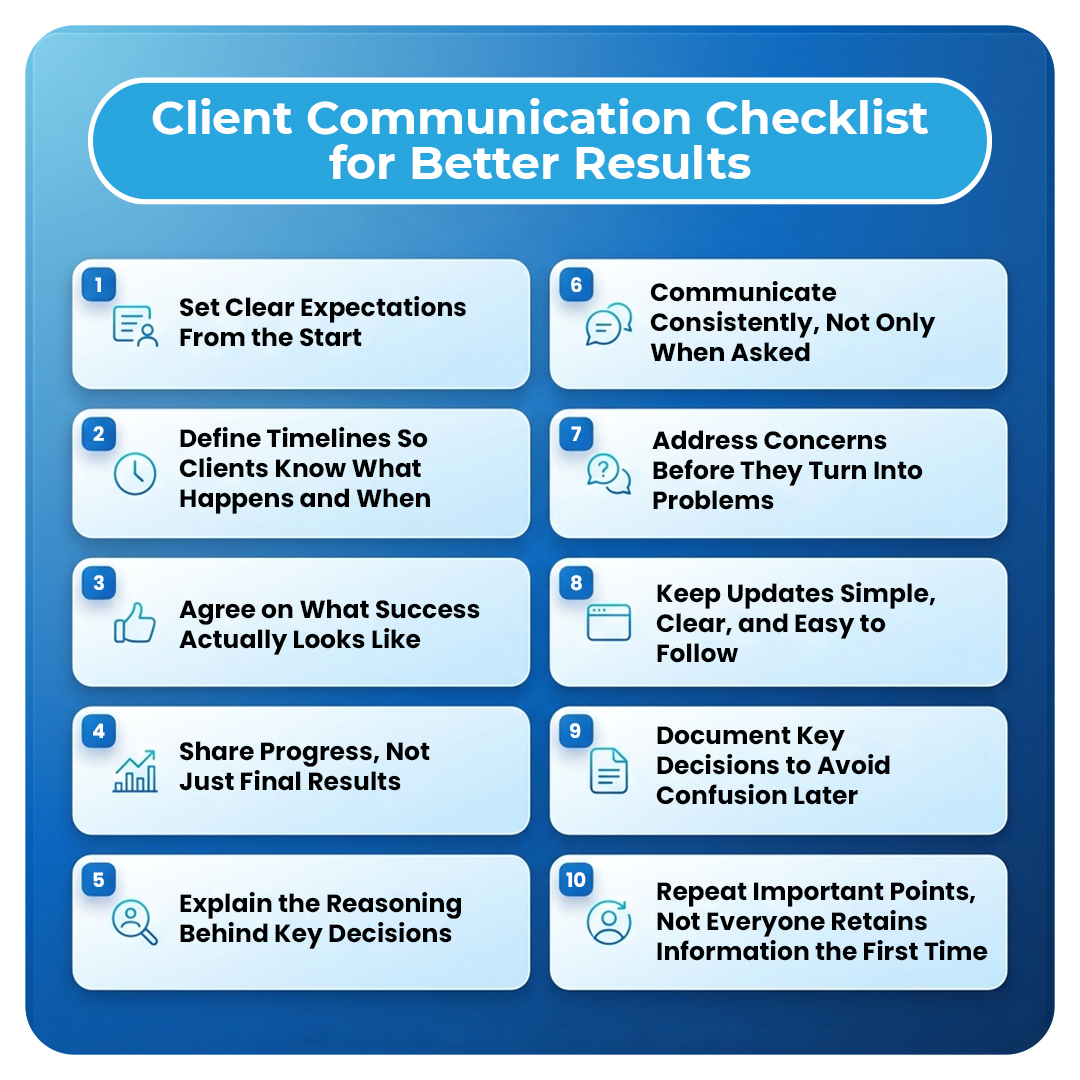
Managing client psychology is just as important as managing the ad account itself. Unfortunately, many agencies stumble because they lack the internal processes required to educate clients while simultaneously delivering high-level execution. This leads to fractured trust and high churn rates.
- Overpromising Fast Results: In the rush to close a deal, salespeople often agree to unrealistic timelines. For example, an agency might promise a local gym 50 new members in the first two weeks just to get the signature on the contract. When the first week yields only five leads due to the learning phase, the client immediately assumes the agency is incompetent.
- Lack of Expectation Frameworks: Agencies frequently fail to set boundary rules during the client onboarding process. They do not provide documentation explaining what will happen in the first 30 days. If an agency does not tell an e-commerce client that their cost per acquisition will initially be high, the client will panic the moment they review the first weekly report.
- Poor Reporting Depth: Many agencies send automated, generic reports that only highlight surface-level metrics like impressions and reach. Without explaining the context behind the numbers, clients are left to draw their own conclusions. A client running a high-ticket consulting offer does not care about impressions. They need to understand the cost per booked call and the quality of the leads being generated.
- Inconsistent Execution: Execution is the true test of an agency. A firm might launch a campaign perfectly, but then fail to monitor the account over the weekend. A broken link or a disapproved ad might sit unnoticed for days, wasting client budget and destroying trust.
- Slow Creative Testing: Creative assets drive the success of modern campaigns. Many agencies take weeks to design, approve, and launch a new batch of ad creatives. If a client's core video ad suffers from creative fatigue, waiting three weeks for a replacement guarantees a massive drop in performance and a very angry email from the business owner.

The Hidden Bottleneck: Execution vs Strategy
Many agencies boast incredible strategic minds but suffer from crippling operational bottlenecks. Knowing the right strategy is useless if your team cannot execute it efficiently. The difference between a thriving agency and a struggling one comes down to operational velocity.
A brilliant media buyer might know exactly what audiences to target and what ad copy to write. However, if they are bogged down by client calls, billing issues, and reporting formatting, they cannot physically implement the strategy fast enough. This breakdown causes severe delays in launching new campaigns and results in missed testing cycles.
When ad campaign optimization happens too slowly, the algorithm punishes the ad account. Execution speed equals performance speed. If an agency cannot refresh creatives, duplicate winning ad sets, and kill losing ads on a daily basis, the client will ultimately pay the price through wasted ad spend.
How White Label Facebook Ads Services Solve This Problem?
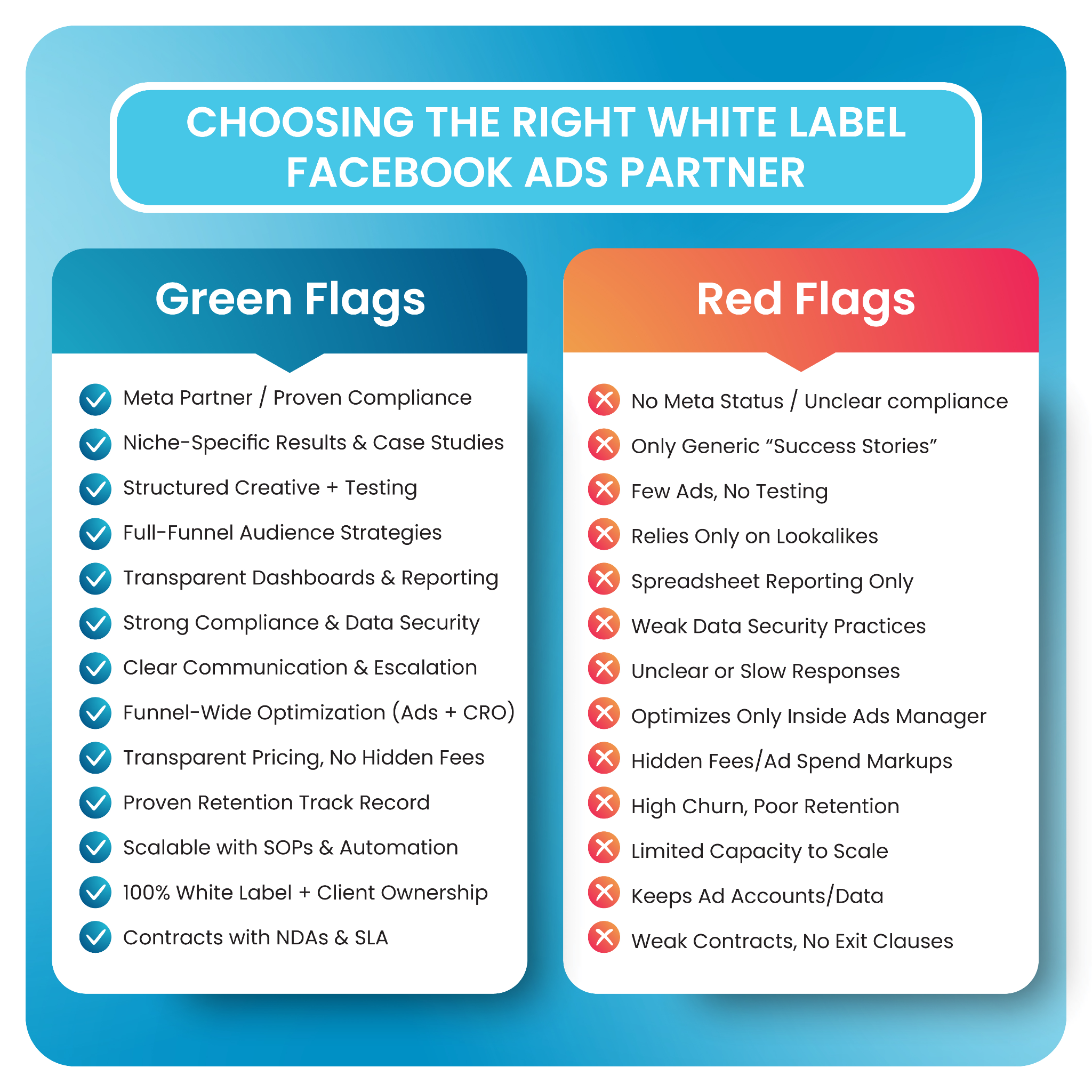
Agencies that want to scale without sacrificing execution quality often turn to external partners. The best white label Facebook ads services provide the operational infrastructure needed to execute campaigns at high velocity, keeping clients happy and performance stable.
1. Faster Execution
Speed is a massive competitive advantage. When an agency utilizes a white label partner, they unlock parallel workflows. The internal agency team can focus entirely on client communication and strategy while the white label team builds out the campaigns, sets up the tracking pixels, and launches the ads.
- Campaigns go live in a fraction of the time.
- Audience segmentation happens simultaneously with creative uploads.
- Troubleshooting tracking issues does not delay the campaign launch.
2. Access to Specialized Expertise
Scaling an internal team requires hiring generalists who can handle a bit of everything. White label Facebook advertising allows agencies to access role-based execution. You are no longer relying on one person to do the copywriting, media buying, graphic design, and analytics.
- Dedicated media buyers manage the daily budget pacing.
- Specialized copywriters craft compliance-friendly ad text.
- Technical specialists handle complex pixel and API integrations.
3. High-Velocity Creative Testing
Because creative elements are the primary driver of performance, agencies must test new concepts constantly. White label partners have the resources to generate and deploy new creatives at scale.
- Winning angles are isolated and expanded upon quickly.
- Fatigued ads are swapped out before performance tanks.
- Multiple formats, including videos and carousels, are tested simultaneously.
4. Consistent Optimization
The algorithm never sleeps, which means ad accounts require continuous oversight. White label teams provide the daily monitoring required to keep campaigns healthy and budgets optimized.
- Losing ads are paused before they waste a significant budget.
- Budgets are scaled vertically on top-performing ad sets.
- Bid caps and cost controls are adjusted based on real-time data.
5. Scalability Without Bottlenecks
Growth often breaks internal agency systems. If an agency suddenly signs ten new clients, an internal team will drown in the workload. Facebook Ads services offer an operational advantage by absorbing that excess volume effortlessly.
- Agencies can sign unlimited clients without hiring delays.
- Onboarding remains smooth regardless of volume.
- Quality control stays consistent across all active accounts.
6. Better Reporting and Transparency
Clients need to feel safe. High-quality white label providers supply agencies with detailed, white-labeled dashboards that the agency can present to the client. This psychological impact is profound, as clients feel fully informed about where their money is going.
- Real-time dashboards replace outdated weekly spreadsheets.
- Metrics are tied directly to business goals like revenue and leads.
- Agencies look incredibly professional and organized.
How Agencies Should Combine Expectation Management + White Label Support?
Solving the client expectation problem requires a hybrid approach. You must control the narrative from the very first conversation while relying on your white label partner to deliver the results.
First, set the narrative early during the sales process. Do not promise overnight riches. Outline the exact timeline mentioned earlier, explaining the learning phase and the necessary testing windows.
Next, show leading indicators to the client before the final conversions roll in. If a client expects sales by week two, show them the improvements in click-through rates and add-to-cart metrics. Explain that these are the required stepping stones to reach their ultimate revenue goals.
Align timelines by creating a strict 90-day roadmap. Tell the client exactly what the white label team is building in month one, what they are optimizing in month two, and how they plan to scale in month three.
Finally, use your white label provider for all execution tasks. Because you are not trapped inside the Facebook Ads Manager trying to adjust bids manually, you have the time and mental energy to guide your client through the emotional ups and downs of the campaign.
How DashClicks’ White Label Facebook Ads Support Agencies?
Agencies need a reliable partner to handle the rigorous demands of paid social execution. The platform provides execution support that allows agencies to focus on client relationships and front-end sales. By handling the heavy lifting of campaign builds, tracking setup, and daily optimization, it ensures campaigns hit the ground running with a strong foundation in white label Facebook advertising services.
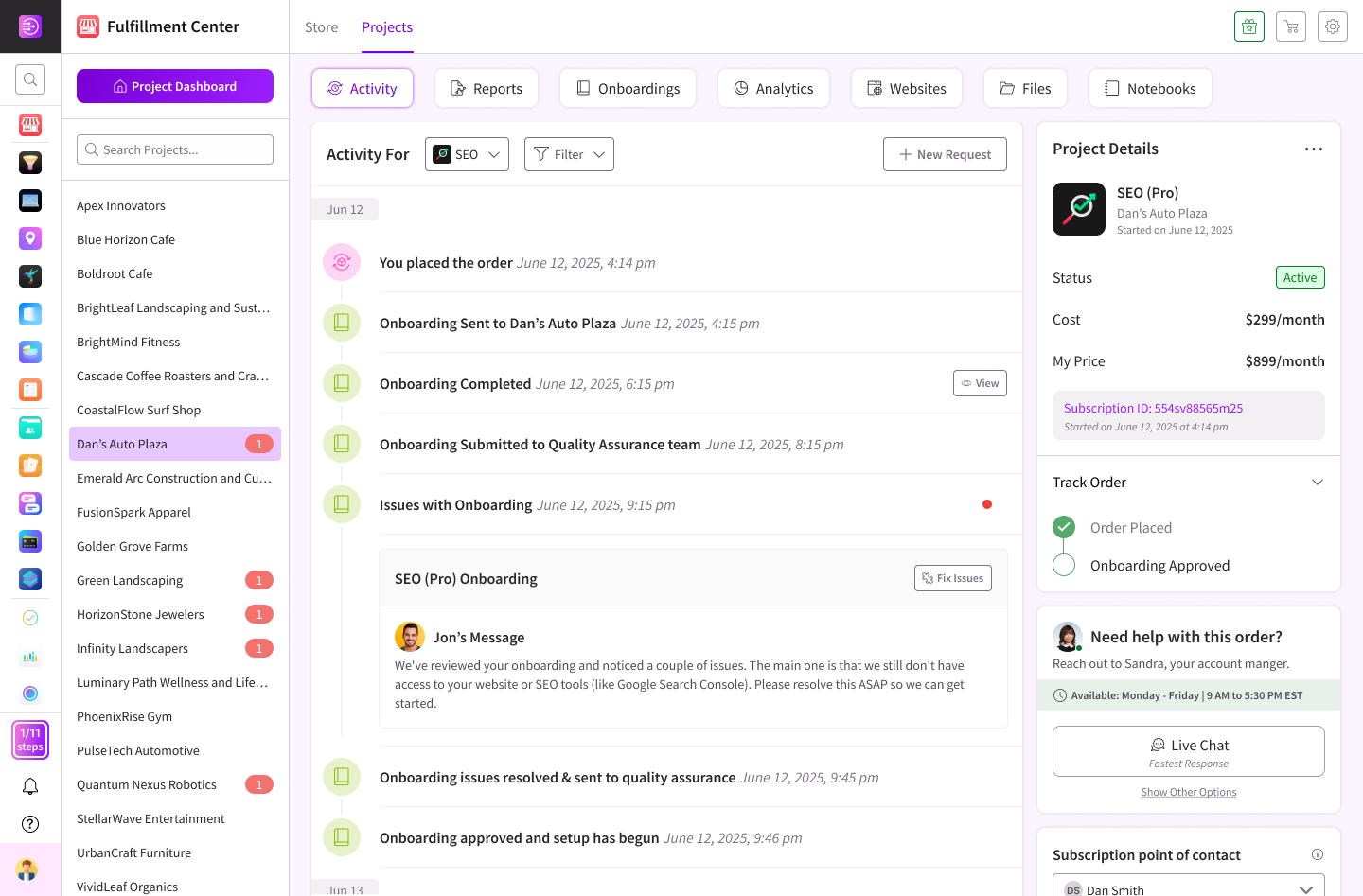
One of the standout features is the utilization of white label dashboards. Agencies can provide their clients with total transparency through branded portals, cutting down on back-and-forth email updates and building immense trust.
Furthermore, DashClicks assists with creative and campaign management to prevent ad fatigue. This scalable approach means an agency can take on a dozen new clients in a single week and still maintain a faster turnaround time for every single launch.
Turning Frustration into Confidence
At the core of every client dispute is a lack of clarity. Clients do not actually need overnight success. What they truly need is to feel confident that their money is being managed by professionals who have a definitive plan.
Agencies need execution systems that allow them to deliver on the promises they make. When an agency is bogged down by manual campaign management, communication suffers, and clients become frustrated. White label services bridge this gap perfectly. They remove the technical bottlenecks from the agency's workflow, ensuring that campaigns are launched quickly, monitored consistently, and scaled effectively.
By combining transparent client communication with elite execution, you transform your agency from a stressful environment into a highly profitable, scalable business.


.svg)


.svg)
.svg)
.svg)
.svg)
.svg)