

.svg)

.svg)
.svg)
.svg)
.svg)
.svg)
Most agencies evaluate a white label PPC partner based on pricing, turnaround times, and platform expertise. Those factors matter, but they rarely determine whether the partnership succeeds over the long term.
A white label PPC agency is more than a fulfillment provider. It becomes an extension of your agency, influencing campaign performance, client retention, profitability, operational efficiency, and your overall reputation. When your partner delivers consistent results, your clients stay satisfied. When they fall short, your agency bears the consequences.
The challenge is that many agencies lack a structured process for evaluating a white label PPC reseller. Decisions are often based on referrals, sales calls, or first impressions rather than a thorough assessment of long-term capabilities.
This makes careful evaluation essential. According to research, B2B buyers are nearly 70% through their purchasing process before engaging with a vendor, and 80% already have a preferred vendor before the first conversation. Agencies should apply the same level of diligence when choosing a partner.
This guide provides a practical framework to help you evaluate potential partners, ask the right questions, and identify providers that can support your agency's long-term growth.
Before evaluating specific providers, agencies first need to understand why choosing the wrong partner can become far more expensive than simply paying a higher monthly fee.
Why Choosing the Wrong White Label PPC Partner Can Cost More Than You Think?
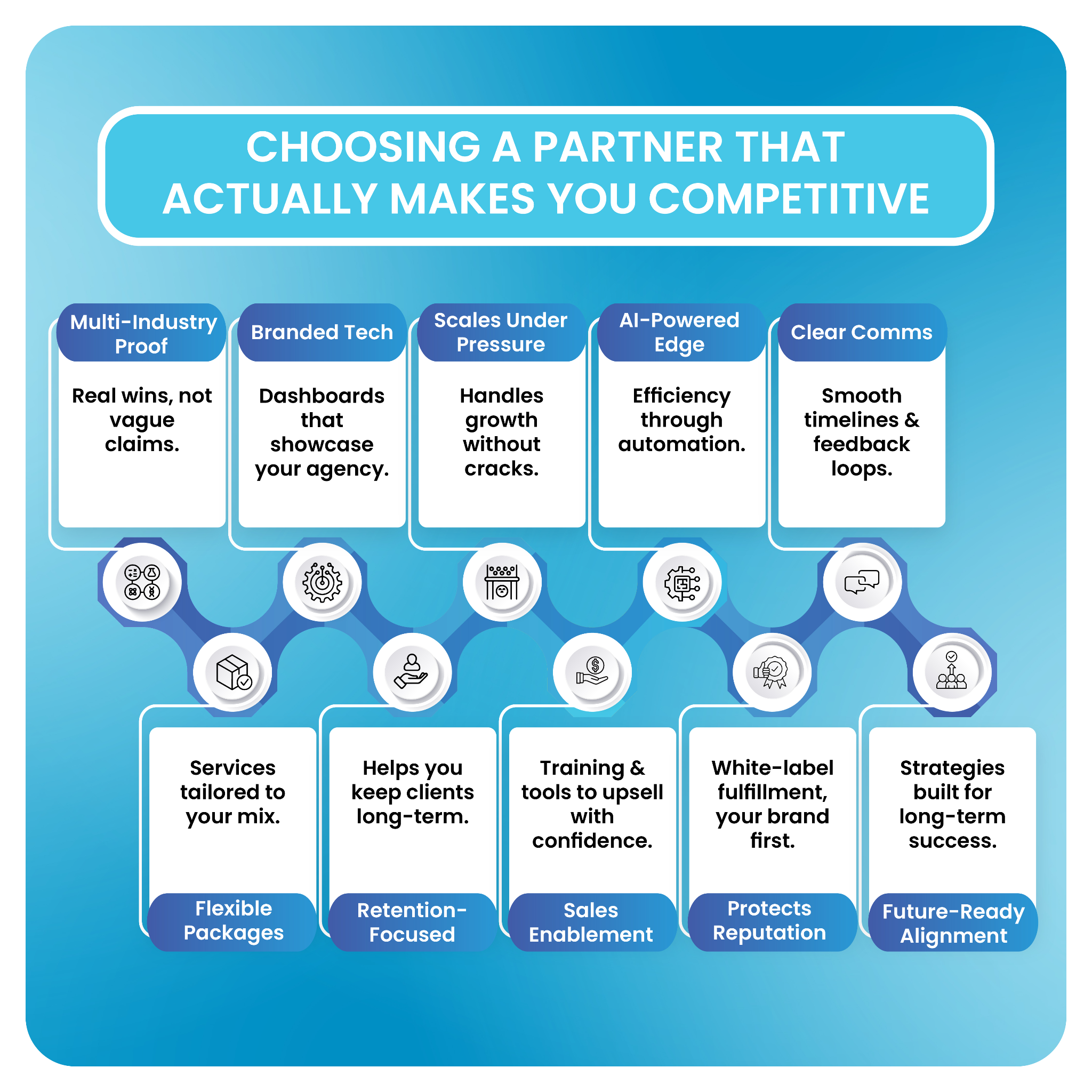
A poor white label PPC partner affects far more than campaign performance. The impact often spreads across client relationships, team productivity, profitability, and your agency's reputation.
Common consequences include:
- Missed client KPIs that put accounts at risk.
- Poor communication creates uncertainty.
- Inconsistent campaign management and unpredictable results.
- Damaged agency-client relationship when performance questions go unanswered.
- Increased client churn and lower profitability.
- Time spent fixing issues instead of growing your agency.
- Harm to your agency's reputation and future sales opportunities.
These problems compound over time. A missed KPI leads to difficult client conversations, increased account management time, and lower account profitability.
A white label PPC partner is not simply a fulfillment provider. They directly influence client satisfaction, retention, and long-term agency growth. Evaluating providers on price alone overlooks the factors that truly determine success.
Once you understand what's at stake, the next step is to ask better questions during the evaluation process.
Category 1: Questions About PPC Expertise and Strategy
Technical expertise and strategic thinking are the foundation of successful PPC campaigns. This category helps determine whether a provider can consistently deliver results.
Question #1: What PPC Platforms Do You Actively Manage?
Not every provider specializes across every advertising platform. Ask which platforms they manage daily rather than relying on a list of logos on their website.
Look for expertise in:
- Google Ads
- Microsoft Ads
- YouTube Ads
- Performance Max
- Display campaigns
- Local Services Ads
Each platform requires different strategies, bidding models, and optimization techniques. A capable partner matches platforms to business goals rather than applying the same approach everywhere.
Question #2: Do You Have Experience in My Clients’ Industries?
Industry experience shortens onboarding and improves campaign performance.
Ask whether they've managed campaigns in industries such as:
- Home services
- Legal
- Healthcare
- SaaS
- Ecommerce
Industry knowledge often leads to stronger keyword selection, better ad copy, and more realistic performance expectations.
Question #3: How Do You Develop Campaign Strategy?
A strong white label PPC agency should build every campaign around research instead of templates.
Look for a planning process that includes:
- Market research
- Competitor analysis
- Audience segmentation
- Conversion-focused planning
Avoid providers that launch campaigns without a defined strategic framework.
Question #4: How Do You Handle Campaign Plateaus?
Even successful campaigns eventually plateau. The best providers use structured processes to restore growth.
Look for:
- Structured testing frameworks
- Audience expansion strategies
- Landing page recommendations
- Data audits
A provider focused on campaign revitalization will continue creating growth after the initial wins.
Technical expertise is only part of the equation. Agencies also need complete transparency into how campaigns are managed and communicated.
Further Reading: Why Most PPC Campaigns Stall and How White Label PPC Teams Fix Them
Category 2: Questions About Transparency and Communication
Strong communication is essential to a successful white label partnership. When your white label PPC partner communicates clearly, you can confidently update clients, explain performance, and build trust. Poor communication, on the other hand, leaves your agency answering questions without complete visibility.
This category helps you evaluate how a provider communicates, responds to issues, and keeps your agency informed.
Question #5: Who Will Be Managing My Accounts?
Knowing who manages your clients' campaigns provides insight into the consistency and quality of service you can expect.
Ask whether you'll work with:
- A dedicated PPC strategist or a pooled team.
- Experienced specialists or junior account managers.
- A clearly defined escalation process for urgent issues.
A dedicated point of contact often improves continuity, accountability, and long-term campaign performance.
Question #6: How Often Will We Communicate?
Communication expectations should be established before the partnership begins. Inconsistent updates often lead to unnecessary frustration and misunderstandings.
Ask about:
- Regular strategy or performance meetings.
- Slack or other real-time communication channels.
- Scheduled email updates.
- Emergency response procedures for account issues.
Providers with structured communication processes are easier to trust with client-facing work.
Question #7: Can I See Exactly What Changes Are Being Made?
Transparency is critical because your agency remains accountable for every client campaign.
Look for visibility into:
- Budget adjustments.
- Bid changes.
- Creative testing and new ad variations.
- Campaign restructures and optimization updates.
Clear account visibility makes it easier to explain performance, justify decisions, and strengthen client confidence.
Question #8: What Happens When a Campaign Underperforms?
Every PPC campaign experiences periods of lower performance. The key difference is how a provider responds.
Look for a process that includes:
- Proactive communication.
- Root-cause analysis.
- Action plans with clear next steps.
- Regular performance reviews.
A provider that addresses problems before you have to ask demonstrates accountability and helps you navigate difficult client conversations with confidence.
Strong communication builds trust, but meaningful reporting is what demonstrates measurable business impact.
Category 3: Questions About Reporting and Performance Measurement
Reporting should demonstrate business outcomes, not just campaign activity. Metrics like clicks and impressions provide useful context, but they don't show whether campaigns are generating meaningful results. This category helps you evaluate whether a provider measures success using the KPIs your clients actually care about.
Question #9: Which KPIs Do You Prioritize?
The KPIs a provider emphasizes reveal how they define success. The strongest white label PPC partners focus on metrics tied directly to business growth.
Look for KPIs such as:
- Cost per acquisition (CPA)
- Return on ad spend (ROAS)
- Lead quality
- Revenue contribution
Be cautious if reporting focuses primarily on:
- Clicks
- Impressions
- CTR without conversion or revenue context
Providers that prioritize revenue-focused metrics are more likely to align with your clients' business goals.
Question #10: How Do You Measure Lead Quality?
Lead volume alone doesn't indicate campaign success. A strong provider should explain how they evaluate whether leads actually become customers.
Look for processes that include:
- CRM integration
- Offline conversion tracking
- Sales-qualified lead measurement
- Revenue attribution
Connecting campaign data to business outcomes makes it easier to demonstrate ROI and justify ongoing investment.
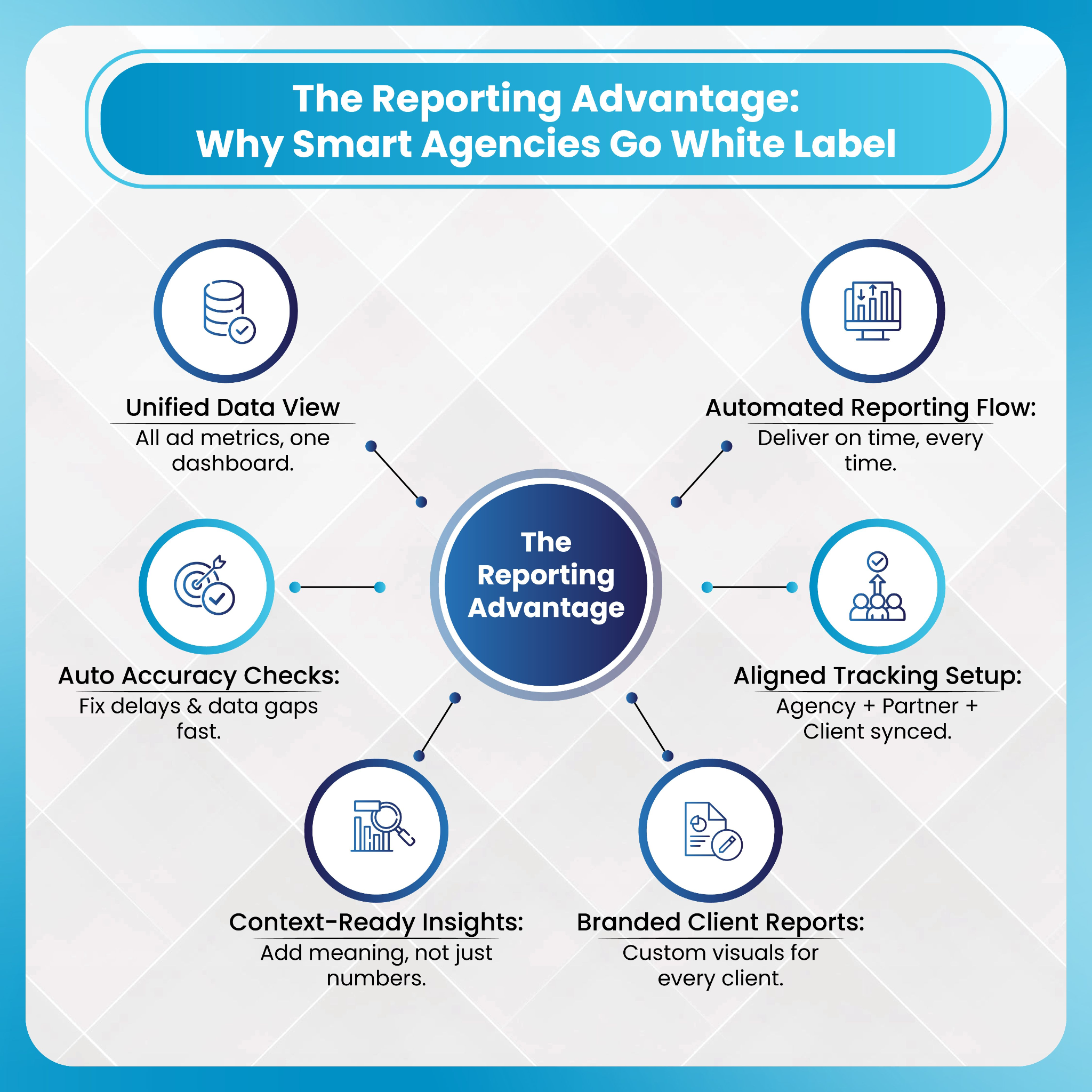
Question #11: What Reporting Will My Agency Receive?
Your reporting should strengthen your brand while making client communication easier.
Look for:
- Fully white label reports
- Real-time performance dashboards
- Executive summaries
- Actionable recommendations and next steps
Professional reporting backed by meaningful insights helps reinforce your agency's value. Even the best reporting loses impact if your provider cannot scale alongside your agency.
Category 4: Questions About Scalability
Scalability should be evaluated before you need it. A provider that supports five accounts may struggle with fifty. This category helps determine whether a white label PPC agency can grow alongside your business.
Question #12: Can You Support Agency Growth?
Ask how the provider maintains quality as agencies expand.
Discuss how they handle situations when you:
- Double your client roster
- Win larger PPC accounts
- Expand into additional advertising platforms
Experienced providers should be able to explain their scaling process with confidence.
Question #13: How Quickly Can You Onboard New PPC Accounts?
Slow onboarding delays campaign launches and creates unnecessary client frustration.
Ask about:
- Average onboarding timelines
- Account setup process
- Required information before launch
Efficient onboarding reflects strong internal systems and helps your agency maintain momentum.
Question #14: What Is Your Process for Handling Multiple Account Launches Simultaneously?
As agencies grow, launching several accounts at once becomes common.
Look for:
- Documented SOPs
- Dedicated onboarding teams
- Quality assurance processes
- Consistent project management
Well-defined operational systems ensure quality remains consistent, even during periods of rapid growth.
Scalability is important, but agencies should also understand what truly differentiates one white label PPC reseller from another.
Category 5: Questions About the White Label Partnership
The final question helps you cut through generic sales language. Many providers sound similar on the surface, so this is your chance to find out what really sets one apart.
Question #15: What Makes You Different From Other White Label PPC Providers?
Be wary of vague promises like "we care more" or "we get results." Strong providers back up their claims with specifics.
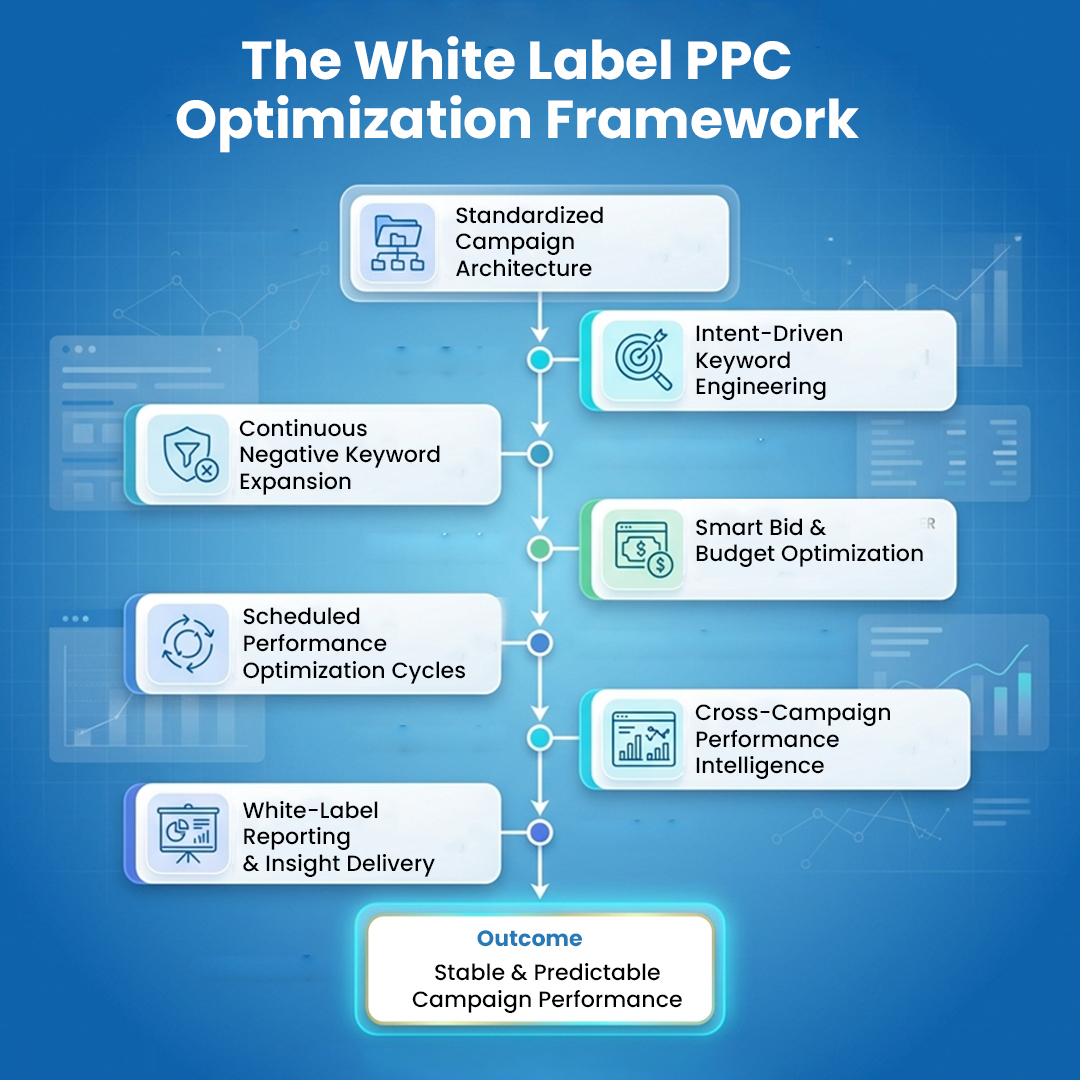
A compelling answer should demonstrate clear strengths across several areas:
- Expertise shown through certifications, case studies, and platform depth.
- Processes that are documented and repeatable.
- Communication habits that keep you informed and confident.
- Technology that improves efficiency and reporting.
- Results proven with real client outcomes.
When a provider can speak concretely about all five, you know their differentiation is real rather than marketing copy.
Knowing the right questions is valuable, but recognizing warning signs is equally important before signing a partnership agreement.
Red Flags to Watch For During the Evaluation Process
Identifying warning signs early helps you avoid partnerships that turn costly later. The evaluation stage is when problems are easiest to spot and least expensive to walk away from. Pay close attention to how a provider responds when you press for details.
- Vague Answers About Strategy: A provider who cannot clearly explain how they build campaigns is a serious concern. Vagueness often hides a lack of real strategy or experience. If you leave the conversation unsure how they would approach your clients, treat that as a warning.
- No Transparency Into Account Activity: If a provider hesitates to show you what happens inside campaigns, ask why. Reluctance to share account activity usually points to either weak processes or work they would rather you not see. You cannot stand behind work you cannot inspect.
- No Clear Reporting Process: A partner without a defined reporting process will leave you scrambling at the end of each month. Reporting should be standardized and reliable, not something improvised when a client asks. Inconsistent reporting makes it nearly impossible to prove value.
- Unrealistic Performance Guarantees: Promises of guaranteed rankings, instant results, or specific ROAS figures should raise immediate doubts. No one can guarantee PPC outcomes because results depend on many factors outside any provider's control. Honest partners set realistic expectations instead.
- Limited Scalability: A provider that cannot describe how they handle growth may stall your agency later. Limited scalability becomes a hard ceiling on your own expansion. If they cannot grow with you, the partnership has a built-in expiration date.
These issues often create long-term operational challenges that are difficult and expensive to fix once a partnership is underway. Spotting them early saves you from inheriting someone else's weaknesses.
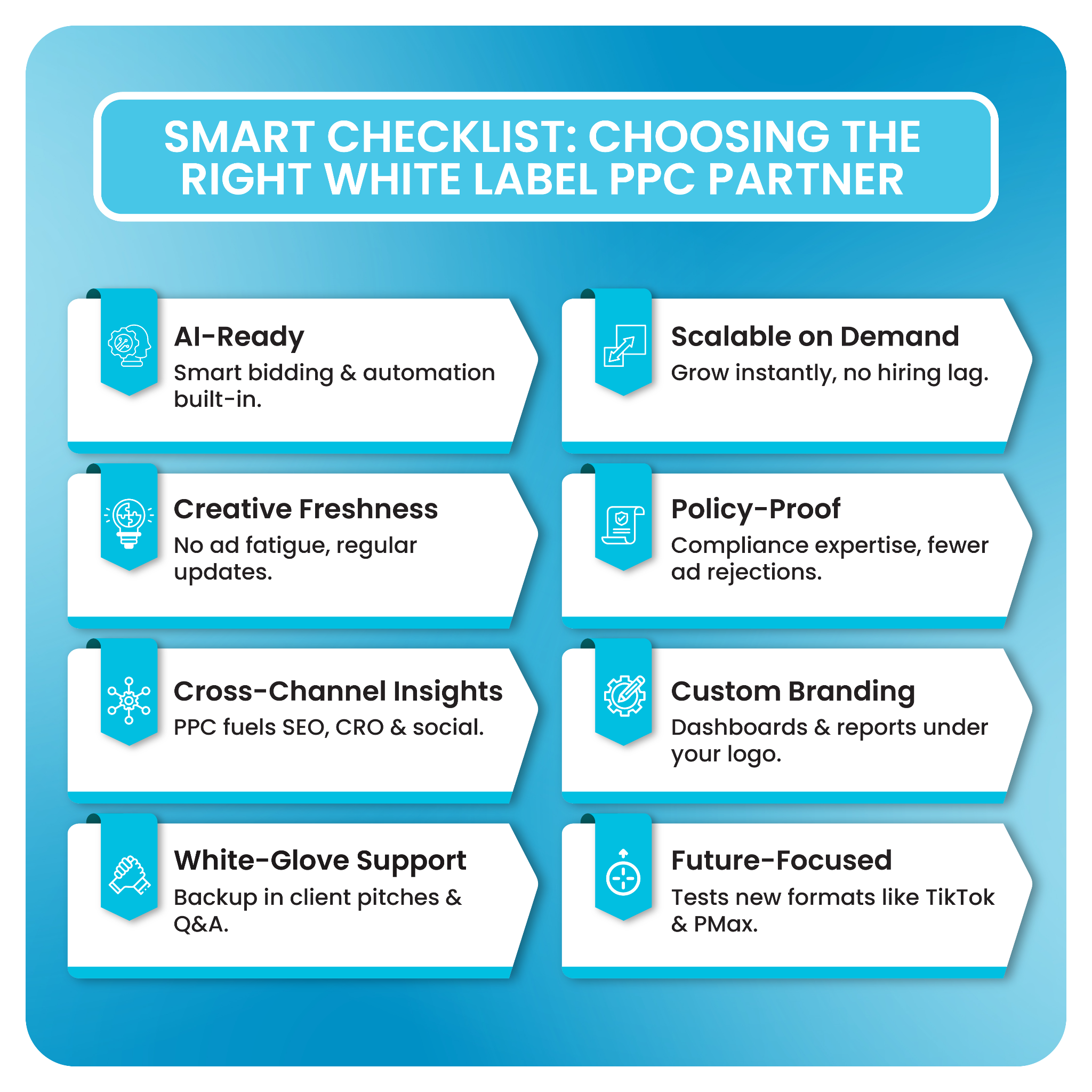
The best partnerships combine expertise, transparency, and operational scalability.
How DashClicks Help Agencies Scale PPC With Confidence?
DashClicks’ white label PPC services are designed to function as an extension of your agency's PPC team, not just another vendor on your list. The goal is to give you the expertise and infrastructure of an in-house team without the cost and complexity of building one. That distinction shapes how the entire service is structured.
When you work with DashClicks, your accounts are supported by people and processes built for agency growth. The focus stays on delivering results your clients can see and reports that strengthen your brand.
Key capabilities that support agency success include:
- Dedicated PPC specialists who learn your accounts and act as part of your team.
- Google Ads expertise grounded in hands-on, daily campaign management.
- White label reporting branded entirely as your agency.
- Transparent communication that keeps you informed at every stage.
- Strategic campaign management focused on business outcomes, not vanity metrics.
- Scalable fulfillment that grows as your client roster grows.
These capabilities work together to solve the exact problems covered throughout this guide. With dedicated specialists and transparent reporting, you can answer client questions with confidence. With scalable fulfillment and structured onboarding, you can take on new accounts without overloading your internal team.
The practical result is an agency that can improve client satisfaction, increase fulfillment capacity, and grow without constantly hiring. By treating fulfillment as a strategic partnership rather than a transaction, DashClicks helps you protect your reputation while expanding your services.
Ultimately, choosing the right white label PPC partner begins with asking thoughtful questions before any agreement is signed.
Ask Better Questions, Build Better Partnerships
The right white label PPC partner is rarely the cheapest option, and it is not always the largest. Price and size are easy to compare, but they say little about how a provider will perform once real client budgets are on the line.
Long-term success depends on a deeper set of factors. Expertise, communication, transparency, reporting, and scalability all determine whether a partnership lasts or unravels. Each of the 15 questions in this guide is designed to test one of these areas before you commit.
Take the time to evaluate providers carefully rather than rushing the decision. A thorough process now prevents painful transitions, lost clients, and damaged trust later.
The best white label PPC partners share a clear set of traits. They:
- Understand your agency's clients and their industries.
- Communicate proactively instead of waiting for problems to surface.
- Deliver measurable results tied to revenue and growth.
- Scale alongside your agency as your needs expand.
Asking better questions today leads to stronger partnerships and more sustainable agency growth tomorrow. The effort you put into evaluation now pays off in client retention, profitability, and peace of mind for years to come.


.svg)


.svg)
.svg)
.svg)
.svg)
.svg)