

.svg)

.svg)
.svg)
.svg)
.svg)
.svg)
Pay-per-click advertising still sits at the center of digital growth strategies for many businesses. When it works, PPC delivers fast visibility, measurable leads, and predictable revenue. When it doesn’t, budgets drain quietly while results are flatline. For agencies, this gap between expectation and performance can create real pressure. Clients start questioning ROI, account managers scramble to explain reports, and growth stalls alongside campaign results.
What makes this problem more frustrating is that PPC failure is rarely about the channel itself. Google Ads, Meta Ads, and other paid platforms continue to perform well for brands that approach them with structure, discipline, and ongoing optimization. The issue is execution. Many campaigns launch with energy but lose momentum within weeks or months.
Recent industry research suggests that nearly 73 percent of PPC campaigns fail to meet performance goals within the first 90 days due to poor planning, tracking issues, and lack of optimization. This statistic alone explains why agencies often struggle to scale paid media services profitably.
In this blog, we will break down why most PPC campaigns stall in real-world conditions, not theory. We will then explore how white label PPC teams help agencies fix broken campaigns, stabilize performance, and scale without adding internal strain. If you manage paid media for clients or plan to expand your PPC offerings, understanding this shift can change how you deliver results.
Why Most PPC Campaigns Stall or Fail?
PPC campaigns rarely collapse overnight. In most cases, performance slips gradually. Small issues go unnoticed at first, then compound over weeks or months. Budgets keep spending, but results stop improving. Across industries, these patterns show up again and again, regardless of platform or ad format.
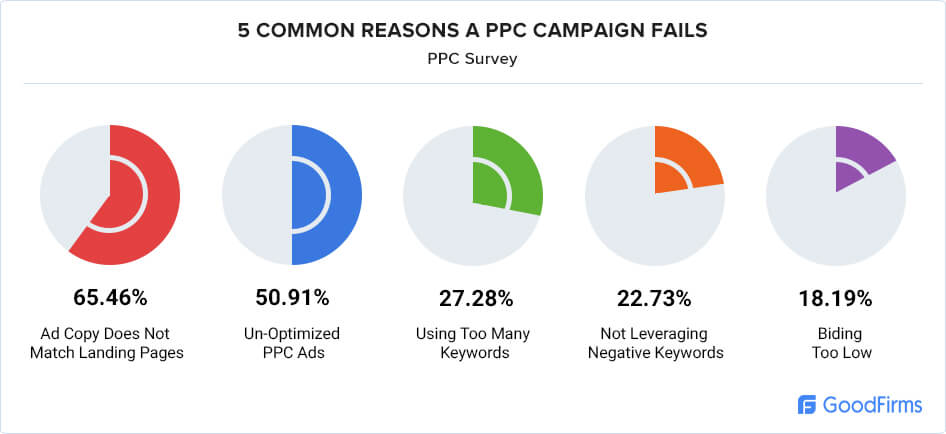
Image Source: GoodFirms
Below are the most common reasons PPC campaigns stall and eventually fail.
1. Lack of Clear Goals and KPIs
Many PPC campaigns launch with vague objectives. Teams agree on ideas like increasing traffic or generating more leads without defining what success actually looks like in numbers. While these goals sound reasonable, they lack the clarity needed for effective optimization.
Clear KPIs give campaigns direction. Without them, decision-making becomes reactive rather than strategic.
When goals are unclear, several problems emerge:
- Optimization becomes guesswork instead of data-driven improvement.
- Budget shifts are based on assumptions rather than performance trends.
- Reports highlight clicks and impressions instead of revenue impact.
For example, an agency may report steady growth in traffic month over month. On the surface, the campaign appears healthy. However, if conversions or sales do not increase alongside that traffic, the campaign is not delivering real value. Without KPIs tied to cost per acquisition, return on ad spend, or lead quality, performance can look strong while profitability quietly declines.
2. Misaligned Focus on Vanity Metrics
Vanity metrics are appealing because they are easy to track and often show quick wins. Click-through rate, impressions, and engagement percentages can make reports look impressive at a glance. However, these numbers rarely reflect real business impact on their own.
A campaign with a high CTR but a low conversion rate is a common warning sign. It shows that ads are attracting attention, but not the right intent. Industry analysis from Delivered Social indicates that teams focused mainly on engagement metrics often miss deeper conversion issues until budgets are already under pressure.
Common vanity metric traps include:
- Optimizing ads only to improve CTR.
- Prioritizing impressions instead of conversions.
- Reporting activity levels rather than business outcomes.
When success is measured by surface-level engagement, campaigns drift away from what actually matters, which is qualified leads, sales, and sustainable return on investment.
3. Poor Keyword Targeting and Spend Waste
Keyword strategy plays a central role in PPC performance. When keyword selection is too broad or poorly maintained, even strong ads struggle to deliver results.
Research from the Digital Marketing Institute shows that 88 percent of keywords in many PPC accounts consume more than 60 percent of ad spend while producing little or no sales. This imbalance is one of the clearest signs of wasted budget.
Spend waste typically occurs when:
- Broad match keywords are used without proper controls.
- Negative keyword lists are ignored or outdated.
- Search intent is assumed instead of carefully analyzed.
As a result, ads appear for loosely related searches that drive clicks but not conversions. Over time, this inefficiency increases costs and erodes confidence in PPC as a channel, even though the issue lies in strategy rather than the platform itself.
4. Ineffective Campaign Structures
Campaign structure affects everything from Quality Score to bidding efficiency. Poor structure limits control and makes optimization harder across the account.
Oversized ad groups filled with unrelated keywords are a common problem. While they may seem easier to manage, they reduce relevance between keywords, ads, and landing pages.
Insights shared by Social Media Today show that poorly segmented accounts often experience lower Quality Scores, higher cost per click, and reduced ad visibility. When hundreds of keywords are grouped into a single ad group, ads are forced to serve across multiple intents. This weakens messaging, limits testing, and slows meaningful optimization.
Over time, these structural issues cause performance to plateau, even when budgets continue to increase.
5. Tracking and Conversion Setup Issues
Accurate tracking is the foundation of any successful PPC campaign. Without reliable data, even experienced marketers are forced to make decisions based on assumptions rather than evidence. Unfortunately, many campaigns run with incomplete, misconfigured, or broken conversion tracking from the start.
According to ClickPatrol, a large number of ad accounts fail to correctly separate paid conversions from organic or referral traffic. This makes it difficult to understand what PPC is truly driving and what results are coming from other channels.
When tracking is unreliable:
- Optimization decisions are based on incomplete or misleading data.
- Budget shifts rely on guesswork rather than performance signals.
- Performance reports lose credibility with clients.
If conversions are not tracked accurately, it becomes nearly impossible to scale what works or fix what does not. Over time, this lack of clarity leads to stalled growth and wasted spend.
6. Landing Page and User Experience Problems
Even the most carefully optimized ads cannot overcome a poor landing page experience. PPC drives intent-based traffic, but it is the landing page that determines whether that intent converts. Research shows that conversion rates drop sharply when landing pages load slowly or fail to match the message of the ad.
Common landing page issues include:
- Slow page load times that increase bounce rates.
- Unclear or weak call-to-action.
- A mismatch between the ad promise and page content.
A high click-through rate combined with a low conversion rate often points to a landing page problem rather than an ad issue. When users click with clear intent but leave without taking action, the disconnect usually lies in clarity, speed, or relevance on the page.
7. Poor Budget Management and Optimization
Budget mismanagement is another frequent reason PPC campaigns lose momentum. Without regular reviews and adjustments, spend continues flowing into underperforming keywords, ads, or audiences.
Data from Magic Clickz highlights that many PPC accounts go weeks without meaningful bid or budget updates. During that time, market conditions change, competitors adjust strategies, and performance declines quietly.
Poor budget management often results in:
- Overspending on low-performing segments.
- Underfunding campaigns that show strong conversion potential.
- Rising acquisition costs with no clear explanation.
Consistent budget oversight is critical to maintaining efficiency and preventing wasted spend.
8. Lack of Continuous Testing and Optimization
PPC is not a set-and-forget channel. Platforms evolve constantly as algorithms update, competition shifts, and audience behavior changes. Campaigns that are not actively tested and refined inevitably fall behind.
Successful PPC requires ongoing testing of:
- Ad copy variations to improve relevance.
- Audience segments to refine targeting.
- Bidding strategies to control costs.
- Landing page layouts to improve conversions.
When testing slows or stops, performance plateaus. Over time, campaigns become less competitive, costs increase, and results stagnate despite continued investment.
Symptoms of a Stalled PPC Campaign
Agencies often sense something is wrong before the data confirms it. Recognizing early warning signs can prevent extended budget loss.
Common symptoms include:
- Rising spend without proportional conversions.
- Cost per acquisition is increasing month over month.
- Performance flattening despite higher budgets.
- Declining Quality Scores or relevance metrics.
- Client concerns about return on investment.
Quick Diagnostic Checks to Identify a Stalled Campaign
- Are conversions properly tracked and verified?
- Are most conversions coming from a small keyword group?
- Has CPA increased while traffic remained stable?
- Are ads and landing pages aligned by intent?
- Has testing slowed or stopped entirely?
If several of these apply, the campaign likely needs a structural reset.
How White Label PPC Teams Fix Broken Campaigns?
White label PPC involves outsourcing campaign strategy, setup, and optimization to a specialized third-party team that operates under the agency’s brand. Clients never see the fulfillment partner, allowing agencies to maintain ownership of the relationship.
This model allows agencies to deliver expert PPC services without building or expanding an internal team.
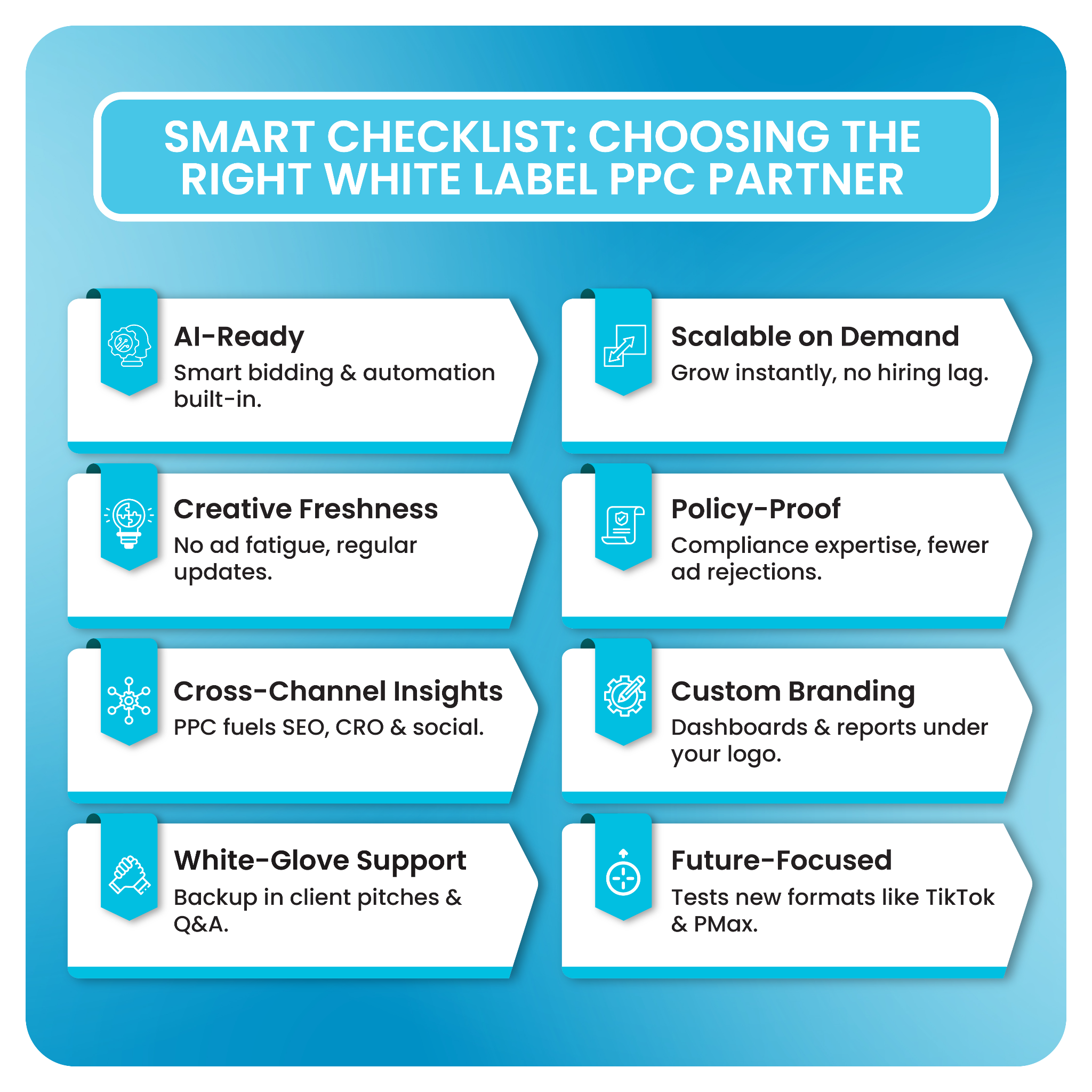
How White Label PPC Solves Core Problems?
1. Tactical Expertise and Advanced Optimization
White label PPC provider focuses exclusively on paid media. Their specialists manage campaigns across platforms daily and stay current with algorithm changes and best practices.
They handle:
- Campaign restructuring
- Keyword refinement
- Bid optimization
- Conversion tracking alignment
This expertise shifts focus back to outcomes like CPA, ROAS, and lead quality.
2. Unified KPI Framework and Reporting
White label PPC teams deliver structured reporting tied directly to business KPIs. Instead of surface metrics, reports emphasize measurable impact.
This helps agencies:
- Communicate value clearly
- Reduce reporting friction
- Build trust with clients
DashClicks supports white-labeled dashboards that align paid media performance with revenue goals.
3. Scalable Capacity and Faster Launches
Hiring and training PPC talent takes time and money. White label teams remove this bottleneck.
Agencies gain:
- Immediate access to experienced strategists
- Faster onboarding for new clients
- Flexibility during growth spikes
Many agencies see measurable improvements within 60 to 90 days after campaign rebuilds.
4. Access to Advanced Tools and Attribution Systems
Enterprise-grade tools are expensive and complex to manage. White label PPC partners often include access to these platforms as part of their service.
This enables:
- Smarter bidding automation
- Improved attribution modeling
- Better cross-platform visibility
DashClicks integrates advanced tools without requiring agencies to manage additional software costs.
5. Cost-Efficient Resource Allocation
White label PPC shifts paid media costs from fixed salaries to flexible fulfillment expenses. Agencies pay per account or per service, protecting margins.
This model:
- Reduces overhead risk
- Improves profitability
- Supports scalable growth
6. Continuous Testing and Optimization Discipline
Dedicated PPC teams follow structured testing schedules. Ads, audiences, and landing pages are tested consistently to prevent stagnation.
This discipline keeps campaigns adaptive and competitive.
7. Brandable Reporting and Client Experience
Agencies retain full control over branding and communication. Clients experience seamless service delivery without knowing fulfillment is outsourced.
This improves:
- Client retention
- Trust and transparency
- Long-term account value
Actionable Playbook for Agencies
Agencies looking to fix stalled campaigns can follow this structured approach:
- Audit conversion tracking and attribution
- Identify spend waste and keyword inefficiencies
- Define KPIs tied to revenue outcomes
- Evaluate white label PPC services provider carefully
- Integrate workflows and reporting systems
- Review performance weekly and iterate
This process creates accountability and restores momentum.
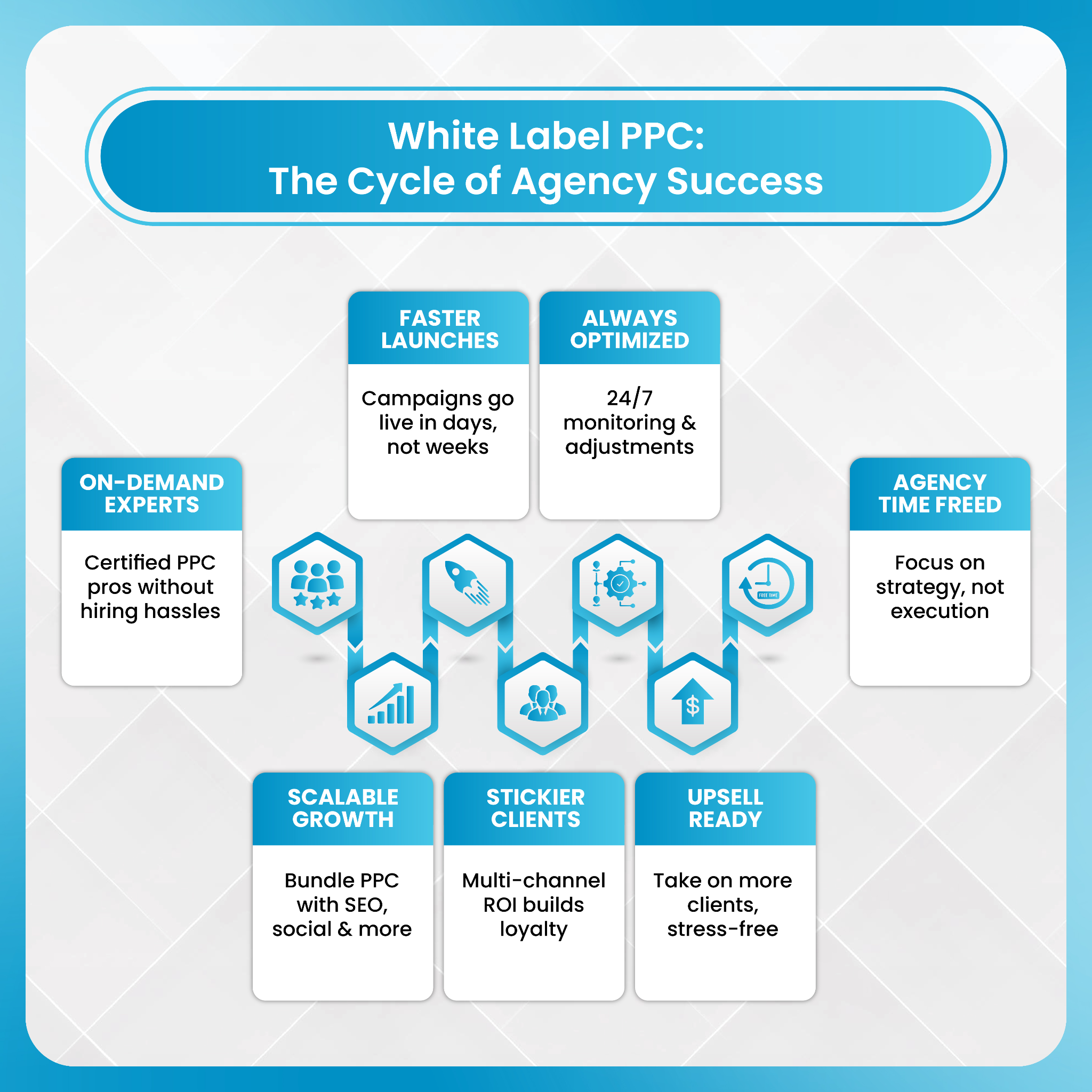
How DashClicks’ White Label PPC Services Helps Fix Stalled PPC Campaigns?
DashClicks supports agencies with white label PPC services designed to address the exact reasons campaigns stall. Their approach focuses on structure, clarity, and consistent optimization.
Key ways DashClicks helps include:
- Dedicated PPC specialists working under the agency brand.
- In-depth audits to uncover waste and tracking gaps.
- Campaign rebuilds centered on intent and relevance.
- Optimization driven by CPA, ROAS, and lead quality.
- Continuous testing to prevent performance plateaus.
- White-labeled reporting aligned with real business KPIs.
- Scalable fulfillment without hiring or training costs.
- A margin-friendly model that supports agency growth.
By combining expertise with operational efficiency, DashClicks enables agencies to stabilize results while expanding paid media offerings confidently.
Conclusion
Most PPC campaigns stall not because paid advertising no longer works, but because execution falls short. Undefined goals, wasted spend, weak tracking, and inconsistent optimization quietly erode performance over time. For agencies, this leads to strained client relationships and limited scalability.
White label PPC teams offer a practical solution. They bring focused expertise, structured processes, and scalable capacity without adding internal complexity. When implemented correctly, this model allows agencies to fix broken campaigns, improve margins, and deliver consistent results.
If your PPC campaigns have plateaued or your team is stretched thin, now is the time to reassess your approach. Partnering with experienced white label specialists can turn stalled performance into sustainable growth.


.svg)


.svg)
.svg)
.svg)
.svg)
.svg)