

.svg)

.svg)
.svg)
.svg)
.svg)
.svg)
Search engine optimization is often entirely misunderstood by clients, rather than being an ineffective marketing strategy. Digital marketing agencies constantly face the challenge of managing expectations for businesses that invest in organic search. Clients naturally expect a fast return on their investment. They are accustomed to the immediate traffic spikes generated by paid advertising campaigns. SEO operates on a completely different roadmap. It is a compounding growth strategy that requires patience, structured implementation, and consistent effort over many months.
Client frustration usually peaks within the first 60 to 90 days of a new campaign. During this window, clients are paying monthly retainers but rarely seeing massive jumps in organic traffic or revenue. They begin to question the strategy, doubt the agency, and wonder if their budget is being wasted.
The core idea agencies must communicate is that SEO is a sequential process, not a slow one. Every action builds the foundation for the next. The work being done in month one makes the results in month six possible. Highlighting the value of this channel is critical because 68% of online experiences begin with search. Agencies must reframe the conversation around organic growth to keep clients engaged and confident in the process.
The Root of Client Frustration: Why SEO Feels Too Slow
Clients do not get frustrated because SEO fails. They get frustrated because they do not understand how it works. The gap between expectation and reality creates most of the tension early in campaigns. This disconnect is rarely the fault of the client. Most business owners have been conditioned by other marketing channels to expect immediate, measurable results. When SEO does not deliver within the same timeframe, anxiety and skepticism naturally follow.
1. Expectation vs Reality Gap
A significant mismatch exists between what clients expect from a marketing investment and how search engines actually operate. When a business owner signs a contract, they want to see their phone ringing and their inbox filling up with leads by the following week. Search engine algorithms do not reward new optimizations overnight.
Google and other search engines require time to crawl websites, evaluate content quality, assess domain authority, and adjust their rankings accordingly. This gap between the desire for instant gratification and the reality of algorithmic timelines creates friction and doubt.
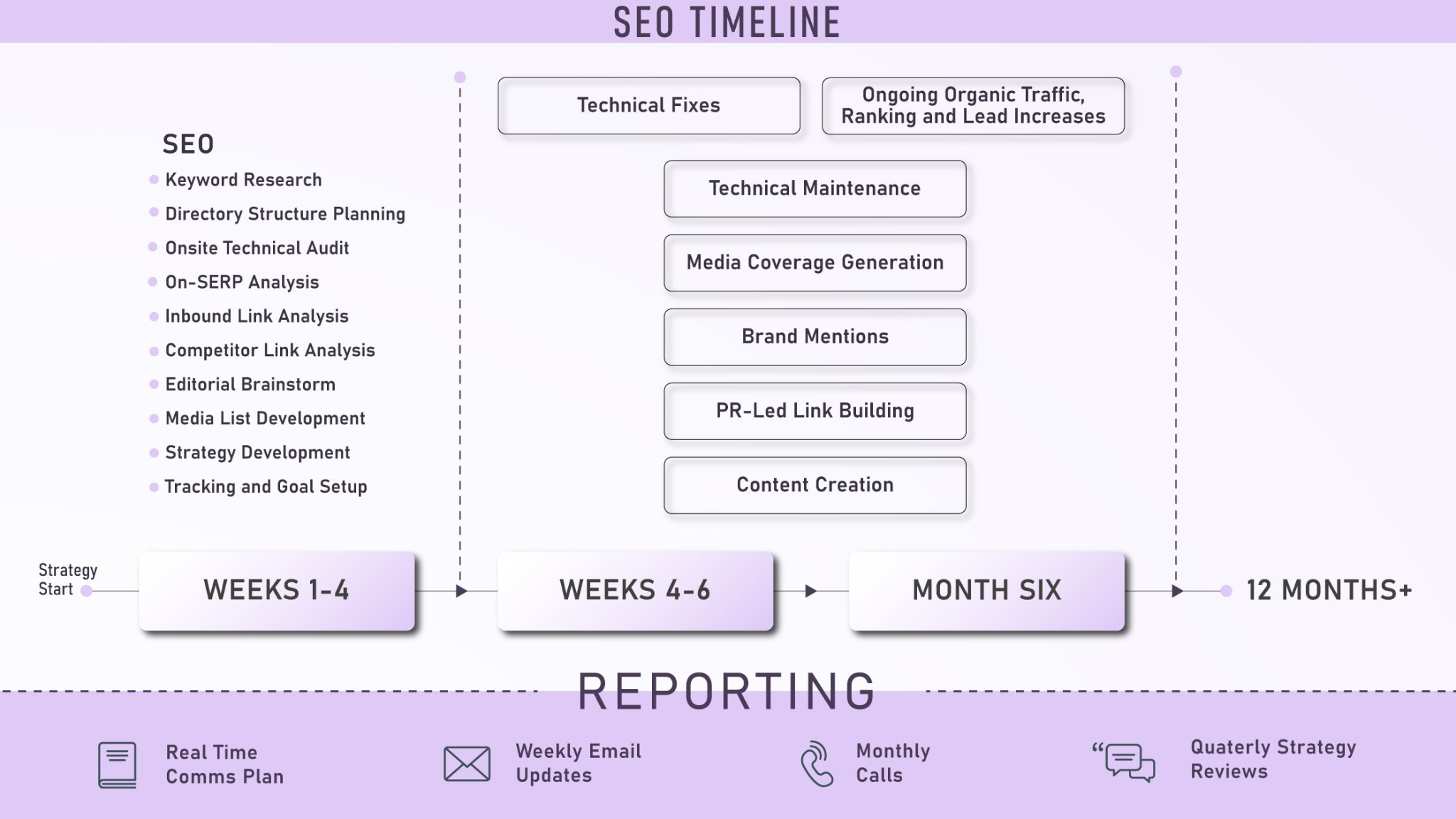
2. Sequential Nature of SEO
SEO cannot be executed all at once. It is a strictly sequential discipline. First, technical fixes must be implemented to ensure a website is healthy and crawlable. Once technical barriers are removed, search engines can properly index the new and existing content.
After indexing occurs, the site must gradually build authority through backlinks and positive user signals. Only after technical health, proper indexing, and domain authority are established will a website begin to see meaningful improvements in competitive rankings.
Key Causes of Slow Perception
Several specific factors contribute to why clients perceive organic search campaigns as moving too slowly:
- Competitive keyword landscapes require more time and resources to penetrate successfully. In established industries, the top search results are occupied by websites with years of accumulated authority, thousands of quality backlinks, and extensive content libraries. Displacing these entrenched competitors requires sustained effort across multiple fronts.
- Authority building takes time because earning high-quality backlinks is a gradual outreach process. Unlike buying ad placements, links from reputable websites cannot be purchased outright without risking penalties. Each link must be earned through relationship building, content creation, and strategic partnerships. This organic growth cannot be artificially accelerated without consequences.
- Indexing delays occur when search engines take weeks to discover and evaluate newly published pages. Google's crawl budget allocation means smaller or newer websites receive less frequent crawling. Even after a page is discovered, it enters a probationary period where search engines assess user engagement, bounce rates, and content quality before granting higher rankings.
- Technical fixes with delayed visibility mean foundational code improvements do not immediately translate to new organic traffic. Optimizing site speed, fixing redirect chains, implementing structured data, and cleaning up duplicate content all improve a website's technical foundation, but these improvements only become visible in rankings after search engines recrawl the site and reassess its quality across multiple ranking factors.
Clients often fail to realize the maturity of the competitors they are trying to outrank. According to a study by Ahrefs, top-ranking pages are often two or more years old. Displacing entrenched competitors requires a sustained strategy, not a quick fix.
The Real Problem: Poor Visibility into SEO Progress
SEO work is often invisible to clients. When they cannot see progress, they assume nothing is happening. This is where most agencies lose trust.
Why Clients Think Nothing Is Happening?
When clients cannot see the backend work, they assume no work is being done. Foundational SEO tasks like optimizing site speed, fixing broken links, cleaning up site architecture, and writing meta tags are entirely invisible to the average business owner. They look at their total website traffic and their keyword positions.
If those two metrics remain flat, they feel ignored. This lack of visibility breeds mistrust. Agencies must bridge the gap between backend execution and client-facing communication to prevent churn.
Where Agencies Fall Short?
Agencies frequently shoot themselves in the foot by failing to communicate the nuances of early-stage organic search campaigns.
- No milestone-based reporting exists to show the completion of technical and foundational phases.
- No clarity on implementation progress leaves clients guessing what their monthly retainer actually covers.
- Overpromising timelines sets unachievable client SEO expectations that inevitably lead to disappointment and cancelled contracts.

What Clients Actually Need?
To remain confident in an SEO strategy, clients require specific types of communication that prove their investment is working.
- Clear progress signals showing exact tasks completed and their immediate outcomes.
- Timeline context reminding them of the sequential phases of organic growth.
- Proof of momentum demonstrating that leading indicators are moving in the right direction.
Providing this clarity is vital. Since 68% of online experiences begin with a search engine, clients need to know their agency is actively securing their share of that massive digital landscape.
Fixing the Gap: Milestone-Driven SEO That Clients Understand
Breaking SEO into clear phases helps clients understand progress. When expectations are structured, frustration decreases.
1. Phase-Based SEO Execution
Breaking a campaign down into distinct phases helps clients understand exactly what is happening and when they should expect specific outcomes.
- Month 1 to 2: Technical SEO and indexing optimization form the foundation of the campaign. During this phase, success is measured by crawl errors fixed, page speed improvements, mobile usability enhancements, and the number of pages successfully indexed. Traffic may remain flat or even temporarily decline as technical issues are addressed, but the groundwork is being laid for future growth.
- Month 2 to 4: Content expansion focuses on publishing targeted landing pages and blog posts. Success metrics shift to content pieces published, keyword targets established, internal linking structures implemented, and user engagement signals like time on page and scroll depth. Early traffic gains may begin appearing for low-competition keywords.
- Month 4 to 6: Authority building accelerates through strategic outreach and link acquisition. Metrics focus on backlinks earned, referring domain growth, domain authority improvements, and competitive keyword movement. This is when the compounding effects of earlier work begin to manifest as measurable traffic and ranking improvements.
2. Key Metrics to Report
Instead of only reporting on final keyword rankings, agencies must report on the leading indicators that show a campaign is gaining traction.
- Indexed pages growth proves that search engines are recognizing new content.
- Keyword impressions demonstrate that the website is appearing in search results more frequently.
- Internal linking improvements show that site structure is being optimized for better crawlability.
- Keyword movement tracks terms moving from page five to page two, signaling future traffic gains.
3. Quick Wins Strategy
Securing early momentum is a powerful way to build client trust while the long-term compounding strategies take effect.
- Low-competition keywords can be targeted to generate targeted traffic within the first few months.
- Optimize near-ranking pages that are sitting on page two or three to push them onto the first page quickly.
Moving a page just a few spots can dramatically alter campaign performance. According to Backlinko, ranking in the number one position versus the number two position can increase click-through rates by approximately 30%. Securing these quick wins validates the agency's expertise.
Why Agencies Struggle to Deliver SEO Consistently?
Even with the right strategy, execution often breaks down. This is where most delays occur.
Internal Bottlenecks
Even when an agency understands the right strategy, executing that strategy flawlessly month after month is incredibly difficult.
- Limited bandwidth prevents internal teams from executing deliverables on schedule.
- Fragmented expertise means team members might excel at content but lack advanced technical SEO skills.
- Execution delays occur when staff turnover or sick leave disrupts the production pipeline.
- Reporting inefficiencies waste hours of account management time pulling data manually.
Resulting Impact
When these internal bottlenecks occur, SEO feels slow to the client due to agency inconsistency, not because the strategy itself is flawed. If it takes an agency three months to implement technical fixes that should have taken three weeks, the timeline for generating a positive return on investment is pushed back significantly. Inconsistent execution is the primary killer of client retention.
Further Reading: Solving SEO Bottlenecks with White Label Fulfillment
How White Label SEO Services Speed Up Results and Reduce Frustration?
This is where white label SEO becomes a strategic advantage. It solves execution issues and improves delivery speed.
1. Faster Execution
A white label SEO agency provides the necessary workforce to execute complex campaigns at high velocity. Instead of relying on a single in-house specialist to handle audits, content writing, and link building sequentially, a white label partner uses parallel workflows. Multiple specialists work on different aspects of the campaign simultaneously, compressing the timeline for implementation.
2. Expert-Led Delivery
Hiring and training internal staff takes months. Utilizing white label SEO services removes the learning curve entirely. Agencies instantly gain access to veteran specialists who already know how to diagnose complex technical issues, optimize site architectures, and secure high-authority placements. This expertise prevents costly mistakes that delay campaign progress.
3. Scalability Without Slowdowns
Growing an agency usually means hitting capacity ceilings. When five new clients sign on in the same week, internal teams often crumble under the sudden workload, causing delays for every active account. A white label partner handles multiple clients seamlessly, allowing the primary agency to scale revenue without slowing down deliverable timelines.
4. Consistent Reporting
Transparency keeps clients happy. Quality white label SEO agency provide automated, client-ready reporting systems. These systems allow agency owners to show clients exactly what work was completed, what metrics improved, and what the next steps are. Improved transparency eliminates the anxiety clients feel during the early months of a campaign.
5. Proven Systems
Building standard operating procedures from scratch is a massive drain on agency resources. White label providers operate on highly refined, standardized workflows that have been tested across thousands of campaigns.
- Faster implementation of critical site updates and content publishing.
- Reduced delays caused by guesswork or inefficient task management.
- Better output consistency ensures every client receives top-tier deliverables regardless of agency workload.

How DashClicks’ White Label SEO Services Help Agencies Deliver Faster Results?
DashClicks provides a comprehensive white label SEO services for digital marketing agencies that need to solve SEO execution bottlenecks. By combining execution teams with advanced software, agencies can stop worrying about fulfillment and focus entirely on client relationships and sales.
- Execution Support: Dedicated specialists handle the heavy lifting, including advanced technical SEO, high-quality content creation, and authoritative backlinks.
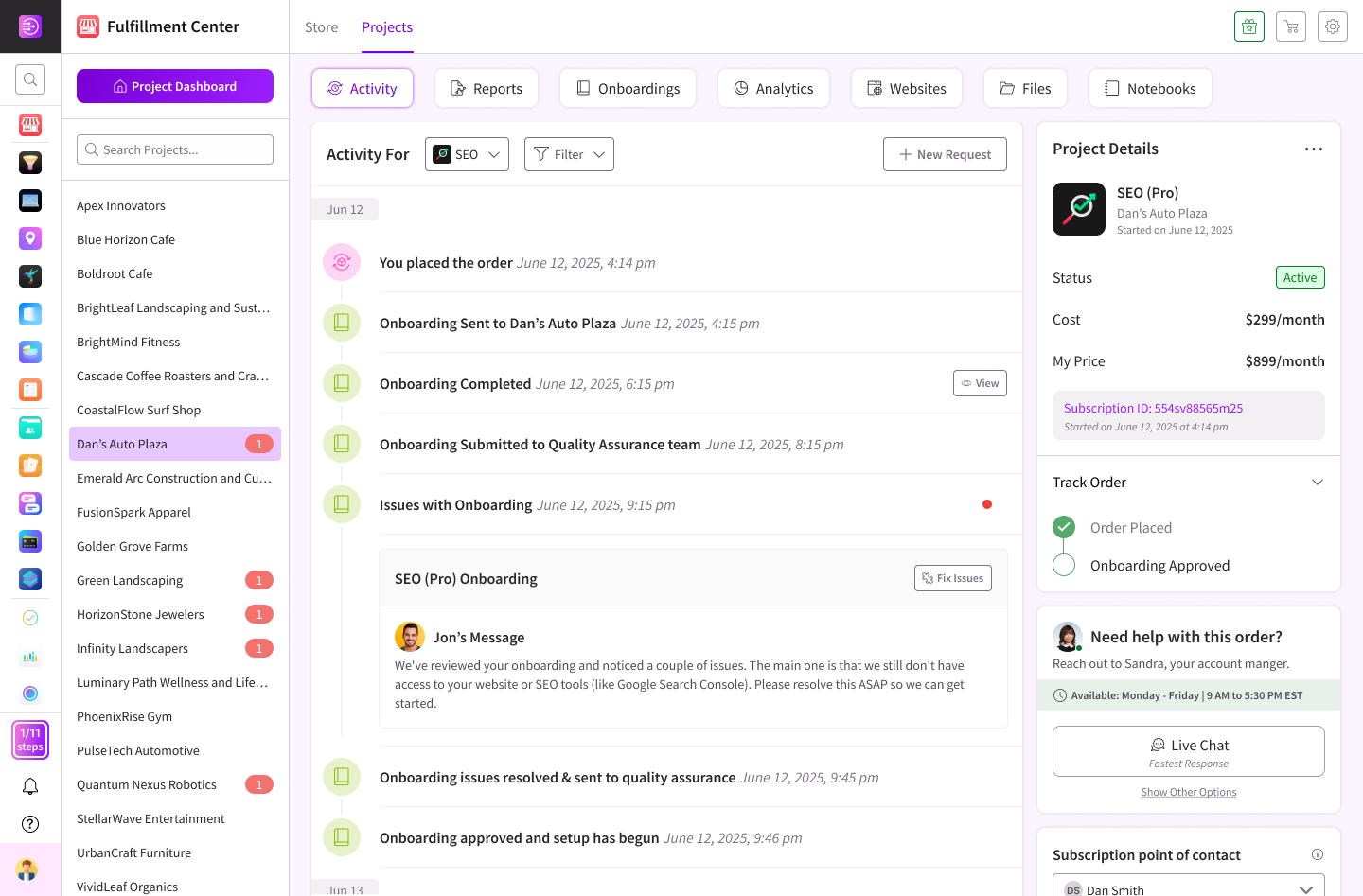
- Reporting & Transparency: Agencies get access to fully white-labeled dashboards that offer real-time visibility into campaign progress.
- Scalability: The platform is built to handle more clients easily, allowing agencies to onboard ten or fifty new accounts without missing a deadline.
- Speed: Streamlined operations result in much faster turnaround times for monthly deliverables.
- Strategic Support: DashClicks offers data-driven insights to ensure campaigns are always moving toward measurable business goals.
By utilizing this infrastructure, agencies can shift from being bogged down in daily tasks to operating as strategic advisors for their clients.
Turning Slow SEO into Visible Progress
Organic search optimization is not inherently slow. It is a highly structured, compounding system that requires precise execution. The majority of client frustration comes from a lack of visibility into the backend work and actual execution delays caused by agency bottlenecks.
Agencies that actively show progress, communicate timelines clearly, and execute deliverables consistently are the ones that win long-term client loyalty. Moving away from manual, in-house fulfillment toward a standardized white label model removes the friction that slows campaigns down.



.svg)


.svg)
.svg)
.svg)
.svg)
.svg)