

.svg)

.svg)
.svg)
.svg)
.svg)
.svg)
Agencies don't have to choose between fast SEO delivery and high-quality execution. The real challenge is building operational systems that support both. White label SEO services give agencies the structured workflows, specialized teams, and scalable infrastructure needed to grow without sacrificing results.
According to BrightEdge, 53.3% of all trackable website traffic comes from organic search, making consistent SEO execution critical for businesses. For digital marketing agencies, that statistic represents both an enormous opportunity and a mounting operational pressure. Clients expect SEO to be set up quickly. They also expect continuous optimization, measurable progress, and regular reporting, all delivered without disruption.
The problem is that speed and quality are often treated as opposing forces. When agencies rush to onboard new clients or meet tight turnaround expectations, technical mistakes creep in, content becomes thin, and optimization becomes inconsistent. The result is poor rankings, frustrated clients, and churn that offsets any growth the agency achieved.
But agencies don't need to choose between speed and quality. The real solution isn't working faster or hiring more people. It's building the operational systems that allow both to happen at the same time. A white label SEO agency, used strategically, isn't just a way to outsource work. It's an operational solution that allows agencies to scale without the bottlenecks that slow most of them down.
If SEO has become one of the most valuable services agencies provide, why do so many agencies struggle to deliver it efficiently as they grow?
Why Agency Growth Often Creates a Speed vs. Quality Problem?
Growth feels like the goal until it starts creating operational strain. Every new SEO client adds a recurring workload, not a one-time project. That distinction matters more than most agency owners realize when they're in growth mode.
SEO requires continuous execution. Rankings shift, algorithms update, content needs refreshing, and technical issues appear without warning. One new client might mean several recurring tasks per month across technical SEO audits, keyword research, content optimization, link building, quality assurance reviews, reporting, and client communication. Multiply that across 20, 40, or 80 clients, and the volume becomes difficult to manage without a structured system.
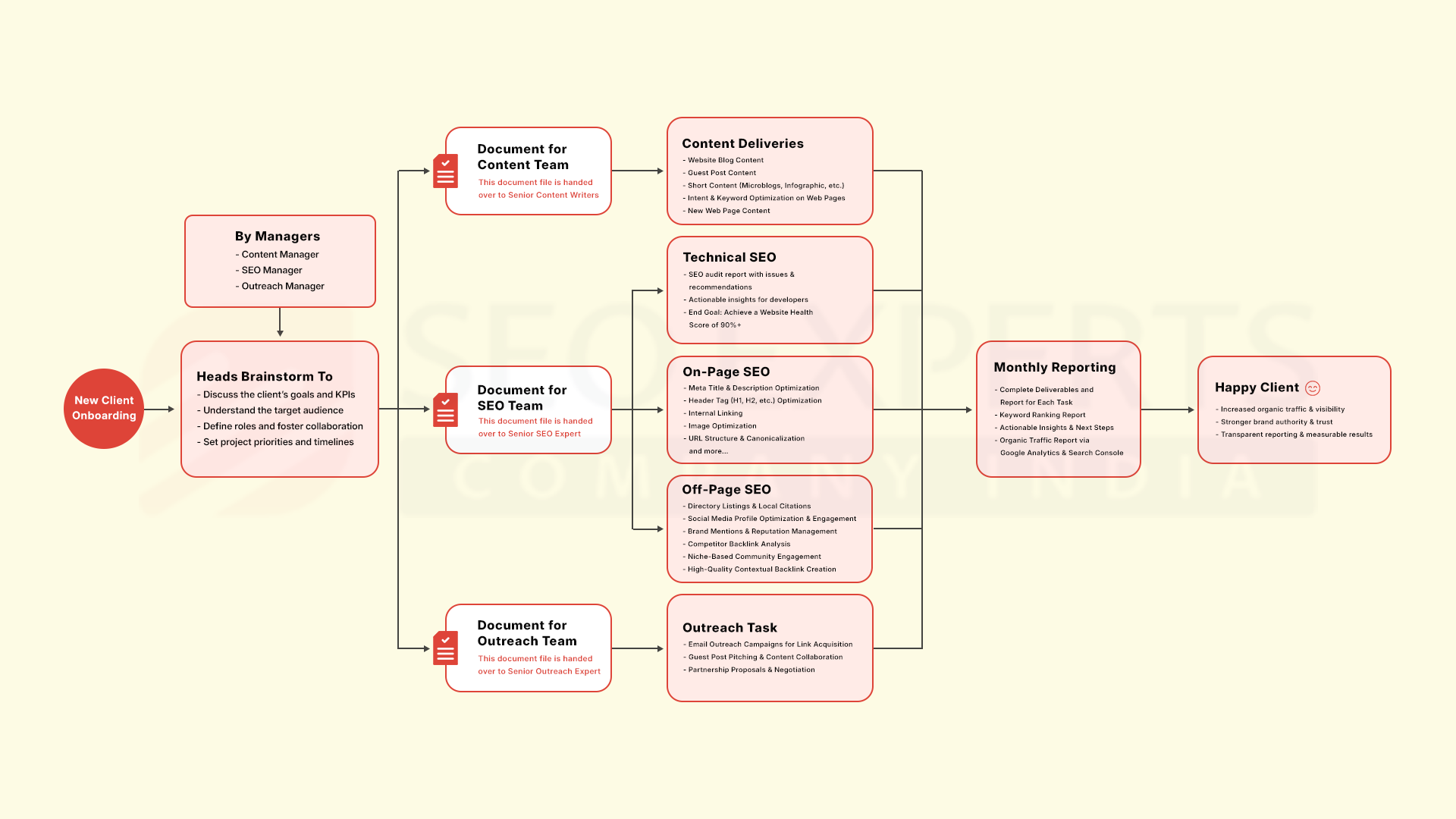
Image Source: SEO Experts
Small delays compound quickly. If keyword research runs a day late, content briefs are delayed. If content is delayed, publishing falls behind. If publishing slips, the reporting cycle becomes inconsistent. None of these delays look serious in isolation, but across a full client base, they erode confidence and slow down results.
Hiring seems like the obvious answer, but recruitment takes time, onboarding takes longer, and new team members need months before they operate at full capacity. Operational complexity increases faster than headcount, and agencies that rely on adding people to solve delivery problems often find themselves hiring reactively rather than scaling strategically.
The issue is rarely SEO knowledge. It is the growing number of recurring tasks that must be completed consistently, across every client, every month, without gaps.
What "Quality SEO" Actually Looks Like Behind the Scenes?
Quality SEO isn't just about rankings. It's about structured execution and aligned SEO strategy across every layer of a campaign.
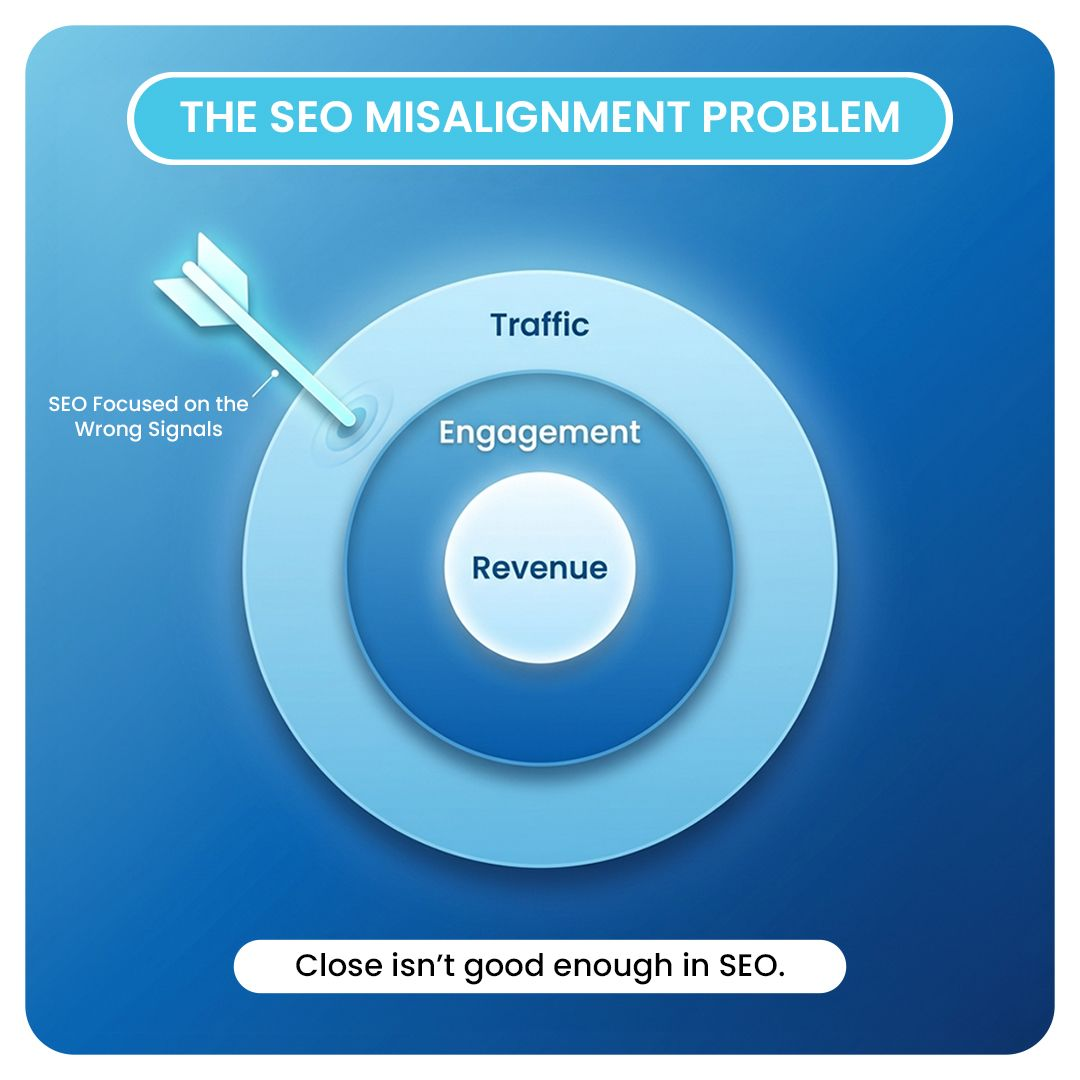
Agencies that understand this are better positioned to build repeatable delivery systems rather than relying on individual effort.
- Strategic Planning: Every quality SEO engagement starts with a clear understanding of the client's business goals, target audience, and competitive landscape. This means mapping search intent carefully, identifying which keywords signal purchase readiness versus research behavior, and analyzing competitor visibility to find gaps worth targeting. Without this foundation, even technically flawless SEO can miss the mark.
- Technical Excellence: Search engines need to crawl, index, and understand a website before any optimization can take effect. Technical SEO covers crawlability, site architecture, indexation, and Core Web Vitals, the performance metrics Google uses as part of its page experience systems (Google Search Central). Addressing technical issues early removes barriers that can suppress rankings regardless of content quality or link authority.
- Content Optimization: Content is the primary way a website communicates relevance to search engines and value to users. Quality content optimization goes beyond keyword placement. It involves aligning content with search intent, building topical authority across related subjects, strengthening internal linking structures, and updating existing content to reflect current information and rankings data.
- Authority Building: Search engines use external signals to evaluate how trustworthy and authoritative a website is within its industry. Building that authority requires acquiring quality backlinks through digital PR, strategic outreach, and local citations for businesses targeting specific geographic markets. Low-quality link building can cause more harm than good, which is why this pillar demands consistent standards.
- Continuous Improvement: SEO is not a launch-and-leave discipline. Rankings fluctuate. Competitors make moves. User behavior shifts. Monitoring organic traffic, tracking keyword movement, analyzing conversions, and making ongoing optimizations are what separate campaigns that plateau from those that continue growing.
Delivering this level of execution consistently across dozens of SEO clients is primarily an operational challenge.
Where Agencies Lose Speed Without Realizing It?
Most agencies don't lose time because their SEO knowledge is lacking. They lose time because their internal workflows aren't built to handle recurring, high-volume fulfillment efficiently.
- Context Switching: Every time a team member shifts between client accounts, they lose momentum. Moving from a technical SEO audit for one client to a content brief for another and then to a reporting call for a third fragments focus and increases error rates. Context switching is a quiet productivity drain that becomes more damaging as the client roster grows.
- Manual Processes: Spreadsheets, manual audits, repetitive reporting, and disconnected tools slow everything down. When teams build and format reports from scratch each month, export data from multiple platforms, or perform audits without structured templates, they spend hours on logistics that could be handled through standardized systems.
- Lack of Standardized Workflows: Without documented processes, every team member approaches tasks differently. One person's SEO audit might cover 15 checks while another's covers 40. One content brief might include search intent mapping while another skips it entirely. Inconsistent workflows produce inconsistent quality, which means QA reviews take longer and errors slip through more often.
- Quality Control Delays: Review and approval steps are necessary, but they become bottlenecks when there's no clear structure. Without defined review checkpoints, deliverables sit in queues, feedback loops are slow, and final approvals delay the entire production schedule.
- Communication Bottlenecks: Internal delays caused by unclear ownership, missing context, or slow responses between team members can hold up entire campaigns. When a team member needs clarification before moving forward and can't get it quickly, tasks stall.
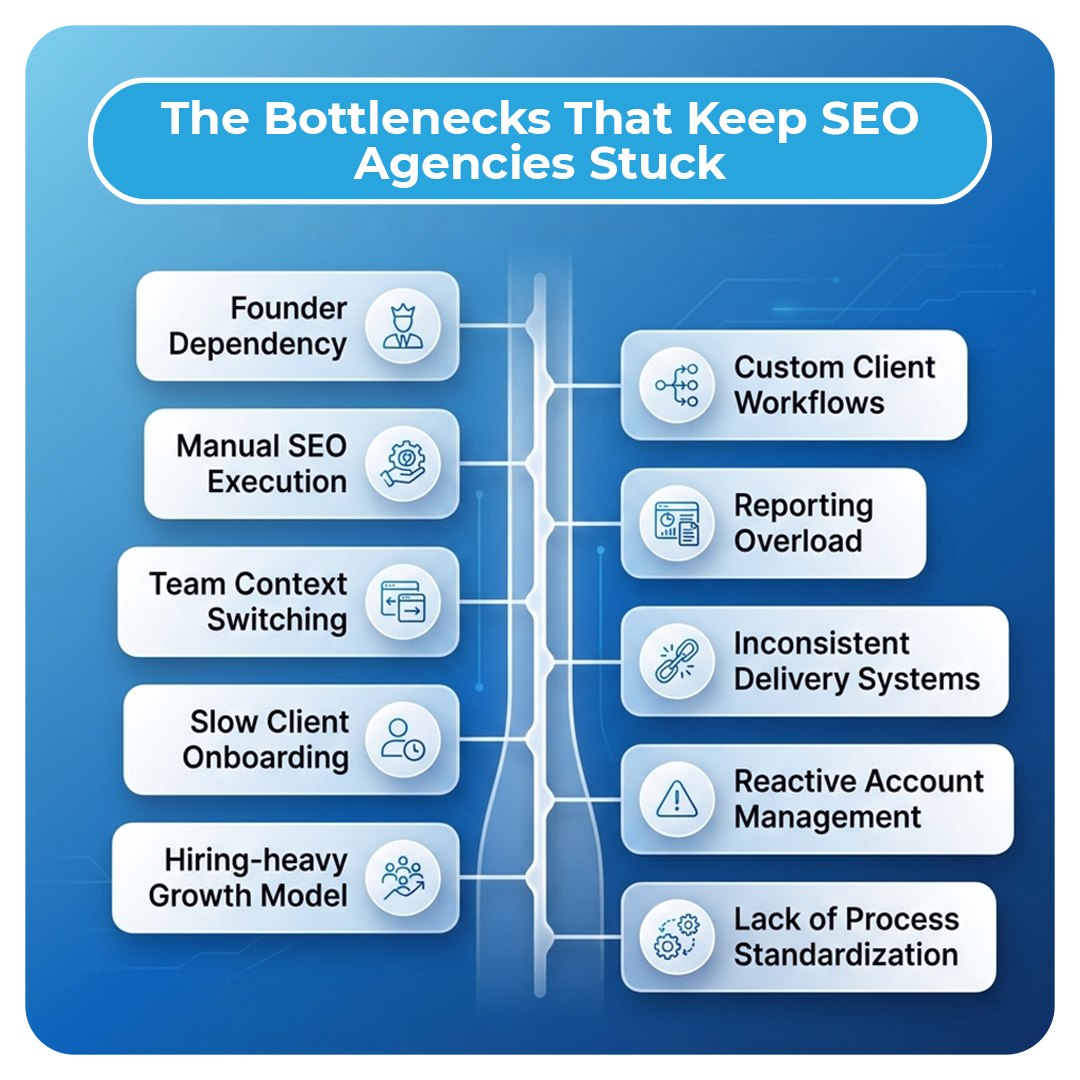
Improving delivery speed requires improving operational workflows, not just working harder or adding hours.
How White Label SEO Creates Operational Efficiency Without Sacrificing Quality?
A white label SEO partner doesn't just add capacity. When structured correctly, it introduces operational efficiency that most agencies can't replicate internally without significant investment and time.
1. Specialized Teams Instead of Generalists
Internal agency teams are often built around versatility. One person handles technical SEO, content, reporting, and client calls. That versatility is valuable for small account loads, but it becomes a liability at scale. White label SEO services typically use specialized teams, where technical SEO specialists focus exclusively on crawlability, site architecture, and Core Web Vitals.
Content teams focus on search intent, topical authority, and content optimization. Link acquisition teams manage outreach and digital PR. Local SEO specialists handle citations and local search visibility. Reporting teams build and maintain white label dashboards. Specialization reduces errors, increases speed, and raises the quality ceiling for each function.
2. Standardized SOPs
Reliable white label SEO partners operate on documented standard operating procedures. Repeatable workflows mean every SEO audit follows the same structure, every content brief addresses the same strategic elements, and every report delivers consistent data. Fewer decisions need to be made from scratch each time, which reduces errors and maintains quality across all accounts.
3. Parallel Execution
Sequential fulfillment is one of the biggest speed constraints agencies face. A linear workflow where a technical audit must be completed before keyword research begins, keyword research before content briefs, and content before technical fixes creates unnecessary delays. White label SEO services built on specialized teams can execute multiple activities simultaneously. While one specialist runs a technical SEO audit, another conducts keyword research, and a third begins content optimization planning. Parallel execution compresses timelines without cutting corners.
4. Built-In Quality Assurance
Structured review systems catch errors before deliverables reach the agency or client. Rather than relying on individual team members to self-review, white label partners build QA into the workflow at defined checkpoints, ensuring consistency without adding pressure to the agency's internal team.
5. Predictable Turnaround Times
Consistency in delivery timelines allows agencies to set accurate client expectations, structure retainer agreements confidently, and plan capacity without guessing. According to PMI's Pulse of the Profession, organizations using standardized project management practices achieve better performance outcomes. Predictability is a byproduct of standardized systems, and it makes agencies easier to work with from a client's perspective.
Operational efficiency becomes even more valuable as agencies continue growing.
Further Reading: How White Label SEO Simplifies SEO Operations for Agencies
Scaling SEO Without Expanding Internal Headcount
Hiring is expensive and slow. A single experienced SEO specialist can take weeks or months to recruit, followed by an onboarding process that may last another two to three months before the new hire operates at full productivity. Add training time, documentation requirements, and the ongoing cost of salary, benefits, and management overhead, and internal hiring becomes a significant barrier to rapid, sustainable growth.
Employee turnover compounds the problem. When a specialist leaves, the agency loses institutional knowledge along with capacity. Rebuilding takes time, and the clients those specialists were serving feel the disruption.
White label SEO services offer an alternative model. When an agency wins new business, it can expand fulfillment capacity almost immediately without recruiting, interviewing, or onboarding anyone. The white label SEO partner absorbs that additional volume through its existing infrastructure. Resources scale up as the agency grows and adjust if business needs change, without the fixed cost structure of a full-time team.
This model also removes the capacity planning problem. Agencies no longer need to predict exactly how many specialists they'll need six months from now. The partner handles fluctuations, allowing agency leadership to focus on strategy, client relationships, and business development rather than workforce planning.
Scaling successfully also requires maintaining the client experience, not just the production volume.
Why Does Consistency Improve Client Confidence?
Clients don't only evaluate agencies on rankings. They evaluate agencies on how it feels to work with them. Responsiveness, timely deliverables, clear reporting, actionable strategic recommendations, and reliable communication all shape how a client perceives the value they're receiving, especially in the early months before significant ranking movement occurs.
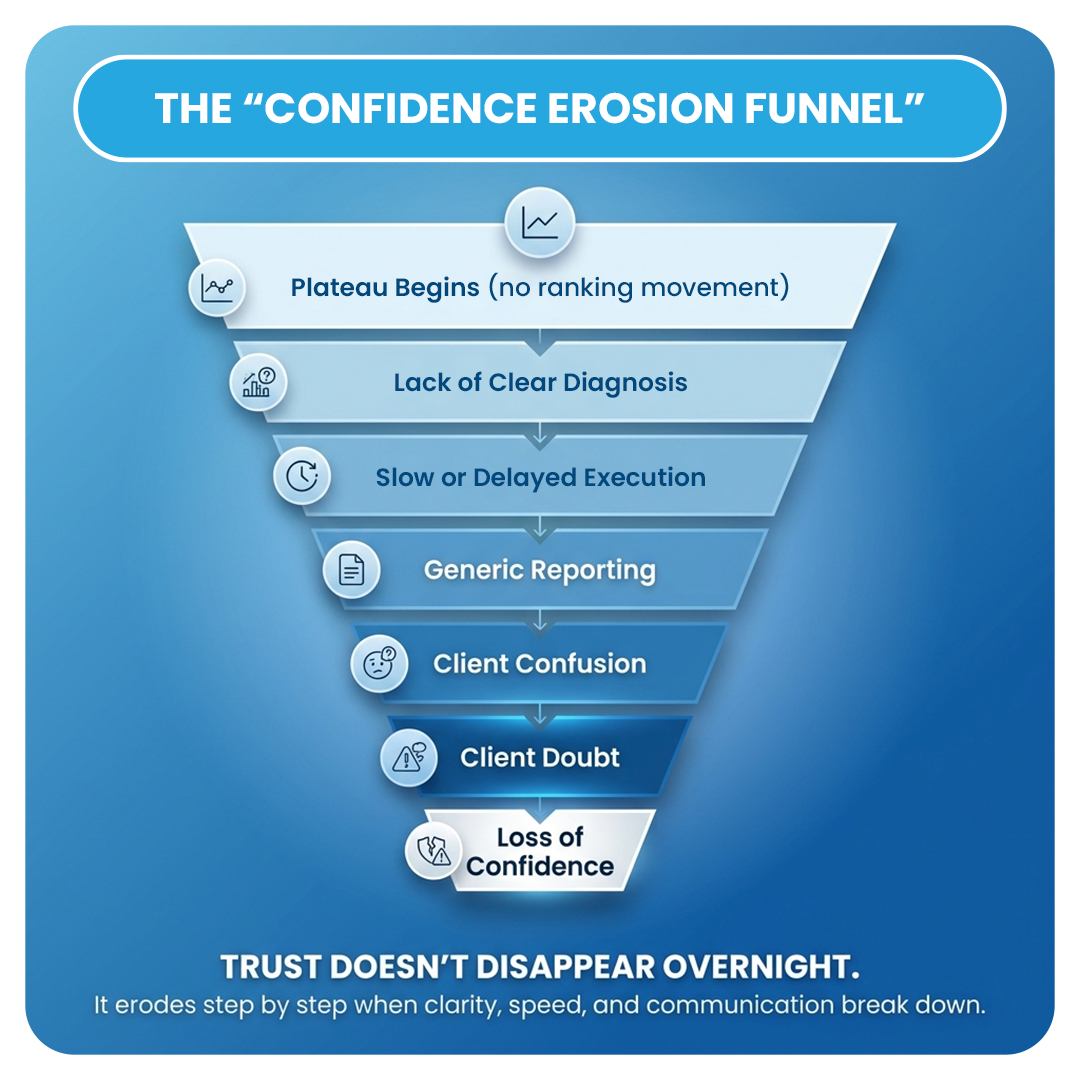
Consistency builds trust faster than results alone. A client who receives a thorough monthly report on time, gets questions answered promptly, and sees a clear plan being executed is far more likely to stay than a client who gets inconsistent updates and unclear progress signals, even if both clients have similar ranking trajectories.
According to Bain and Company, increasing customer retention by just 5% can increase profits by 25% to 95%. For agencies, that means the operational systems that support consistent delivery aren't just fulfillment decisions. They are revenue decisions.
Agencies that deliver SEO consistently, communicate clearly, and report transparently build the kind of client relationships that generate long-term retainer revenue and referrals. Those that struggle with inconsistency lose clients before the SEO work has time to produce meaningful results.
Operational consistency becomes easier when agencies rely on repeatable fulfillment systems.
How DashClicks Helps Agencies Balance Speed and Quality?
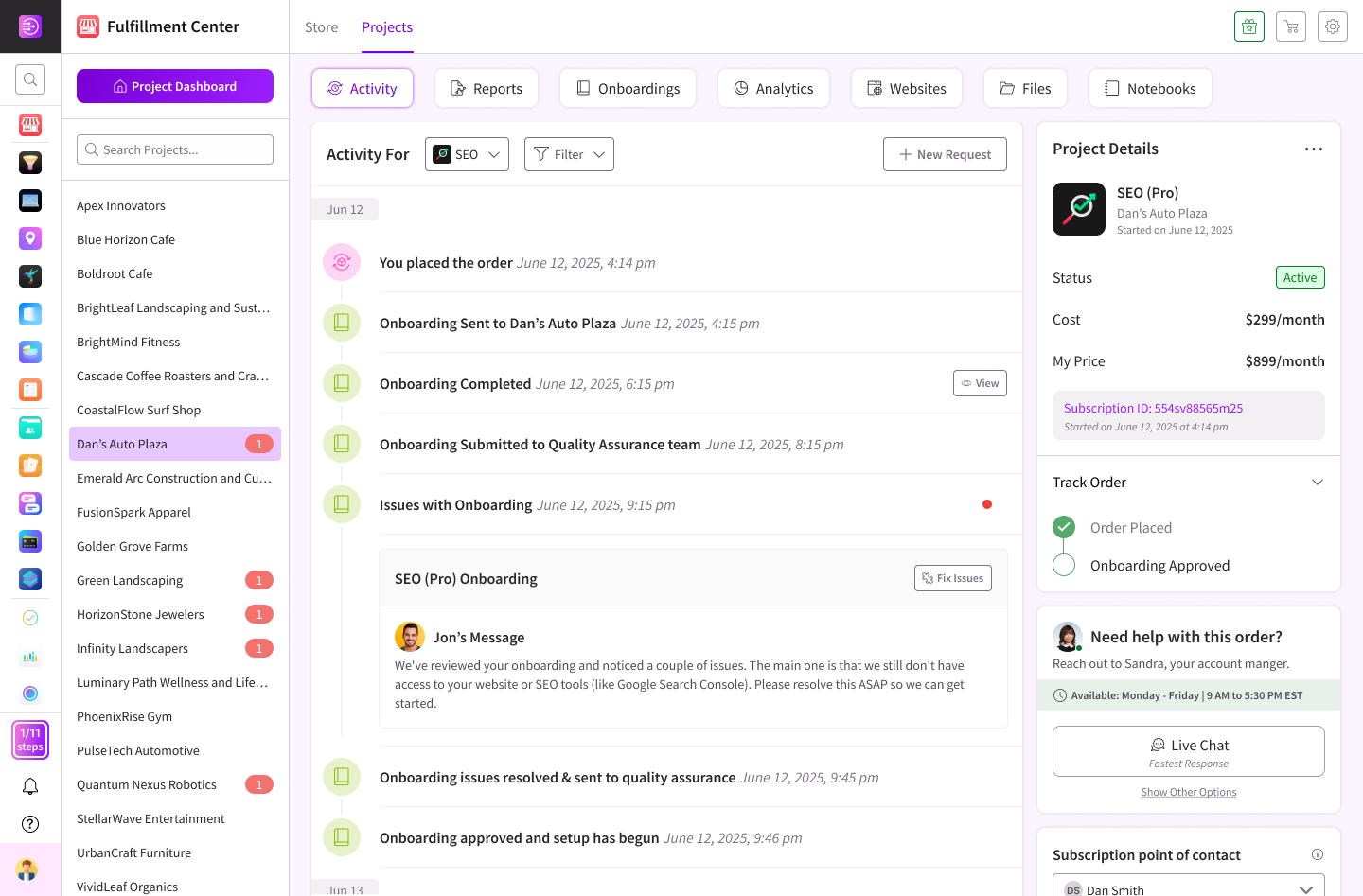
DashClicks provides white label SEO services designed specifically to help agencies scale fulfillment without sacrificing quality. Every component of the offering is built around structured execution and consistent delivery.
- White Label SEO Fulfillment: The white label SEO team handles the full scope of SEO delivery, including technical SEO, content optimization, backlink building, and local SEO. Agencies gain access to comprehensive fulfillment without managing individual specialists or building out separate service lines internally.
- Experienced SEO Specialists: Work is executed by dedicated SEO professionals with experience across technical, content, and authority-building disciplines. Specialization ensures that each component of the SEO strategy is handled by someone focused on that specific area, which produces more consistent and reliable results.
- Structured Workflows: Standardized processes govern how every task is scoped, executed, and reviewed. This reduces variability, improves turnaround reliability, and makes it possible for agencies to plan delivery timelines with confidence.
- White Label Reporting: Agencies receive professional, white label reports that can be delivered directly to clients under the agency's brand. Reports communicate progress clearly, demonstrate ongoing value, and support transparent communication throughout the engagement.
- Scalable Fulfillment Infrastructure: As an agency's client base grows, the fulfillment infrastructure scales with it. It is built to absorb increased volume without compromising standards, giving agencies the operational flexibility to pursue growth without worrying about whether they can deliver on it.
DashClicks positions itself as an operational extension of the agency, handling fulfillment so that internal teams can focus on strategy, relationships, and growth.
The Right Operational Partner Changes What's Possible
Speed without quality produces poor SEO outcomes. Thin content, ignored technical issues, and inconsistent optimization don't generate rankings or organic traffic, regardless of how fast they're delivered. Quality without operational efficiency limits how far an agency can grow before fulfillment becomes unsustainable.
Sustainable agency growth requires systems that support both. White label SEO services, built on specialized teams, standardized workflows, and parallel execution, give agencies the operational infrastructure to scale without choosing one over the other.
Agencies that invest in consistent execution strengthen client trust, reduce churn, and create the foundation for long-term growth. The constraint isn't SEO knowledge. It's operational capacity. And with the right white label SEO partner, that constraint disappears.


.svg)


.svg)
.svg)
.svg)
.svg)
.svg)