

.svg)

.svg)
.svg)
.svg)
.svg)
.svg)
A Google Ads account is never truly “finished.” Once campaigns go live, they generate ongoing work, from campaign monitoring and search-term analysis to budget adjustments, ad testing, tracking checks, reporting, and optimization.
For agencies, the challenge is rarely knowing what needs to be done. It is having enough specialist capacity to complete it across every account. When urgent issues or client requests take priority, routine tasks get pushed back. One delayed review can quickly become several overdue tasks, creating a backlog.
Backlogs rarely result from negligence. They are often the result of managing multiple accounts with finite specialist time. Once work starts piling up, it becomes harder to maintain the planned optimization cadence.
White label PPC can help ease this pressure by acting as an additional execution layer alongside the internal team. Agencies can route overflow work to fulfilment when capacity is stretched, helping protect recurring deliverables, maintain optimization cadence, and keep account work moving.
Why Google Ads Tasks Fall Behind at Agencies?
It is easy to blame delayed PPC work on the fact that “agencies are busy.” But the real issue is often structural. Multiple accounts, recurring work, client requests, and communication all compete for the same limited specialist capacity.
1. Multiple Accounts Create Competing Priorities
A PPC specialist may manage dozens of campaigns, each with different budgets, industries, goals, and deadlines. A high-priority issue in one account can quickly push routine work for several others down the queue.
This is where account priority and task priority differ. An urgent issue for a major client may take precedence, even when routine tasks for other accounts are already due. Those tasks do not disappear. They simply get pushed further back.
2. PPC Work Is Continuous, Not Project-Based
Unlike a website project with a defined finish, PPC management involves recurring work such as search-term reviews, negative keyword management, budget monitoring, bid strategy evaluation, ad testing, tracking checks, campaign reviews, performance analysis, and reporting.
When one task is skipped, it becomes part of the next day's workload. Over time, these small delays can compound into a larger backlog.
3. Client Requests Compete With Recurring Optimization
New campaign requests, locations, products, budget changes, promotions, and landing pages can all arrive unexpectedly. While these requests may be important, they add work to an already planned schedule.
As specialists make room for urgent client deliverables, recurring optimization tasks can get pushed back. Eventually, the planned optimization cadence starts to erode.
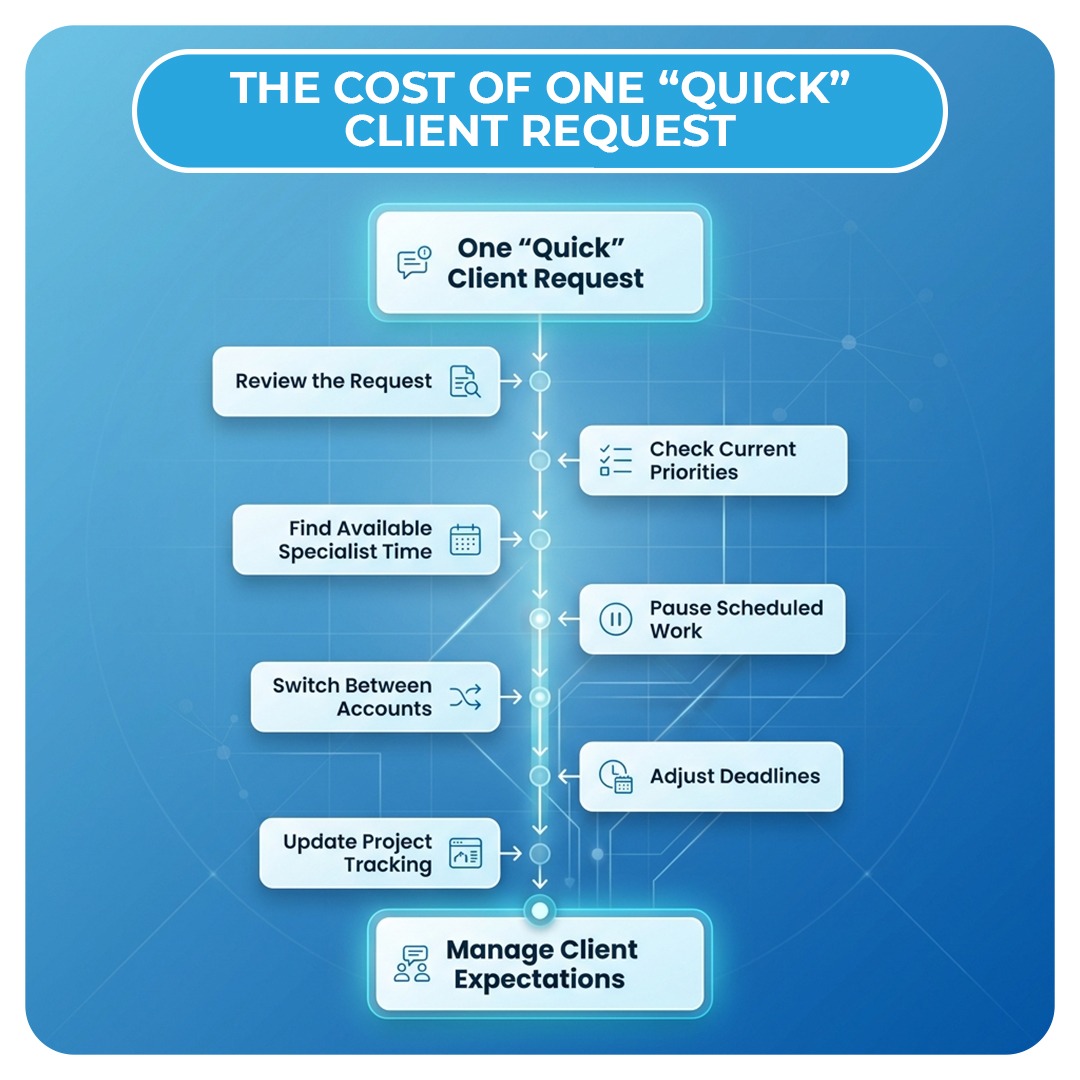
4. Reporting and Account Communication Consume Specialist Time
PPC specialists do more than work inside Google Ads. They also prepare reports, explain performance, attend meetings, review client requests, document changes, and coordinate with account managers.
These activities are necessary, but they reduce the time available for execution. As a result, an agency's actual PPC capacity can be considerably lower than its headcount suggests, creating room for backlogs to grow.
What a PPC Backlog Actually Looks Like?
A backlog rarely announces itself. It builds gradually, one deferred task at a time, until the agency wakes up to a queue that feels unmanageable. Tracing the timeline makes the pattern clear.
Day 1: One Task Gets Pushed
A specialist has a search-term review scheduled for a mid-sized account. That morning, an urgent issue surfaces on another account and demands immediate attention. The review is postponed to "later this week". At this stage, it feels harmless. One task, one small delay.
Week 1: More Work Competes for Attention
By the end of the first week, that postponed review is still waiting. Meanwhile, a new campaign launch has been prioritised for another client, and it pushes back scheduled ad testing and budget reviews. Now three or four routine tasks are quietly queued behind higher-priority work.
Week 2: The Specialist Is Catching Up
Two weeks in, the specialist is no longer working ahead. Several routine tasks across multiple accounts now need attention at the same time. Instead of steady, planned optimization, the days become an exercise in catching up. Work is being completed reactively rather than on schedule.
Month-End: The Backlog Meets Reporting
Then reporting season arrives. Monthly reports require current, accurate account insights. But the optimization work that should have generated those insights is still overdue. The specialist faces a squeeze: produce reports on time while a stack of unfinished optimization tasks sits waiting. Reporting usually wins because it has a hard client deadline, and the optimization backlog rolls into the following month.
The Real Problem
It would be easy to file this under "productivity". That framing is misleading. A PPC backlog is not a sign that people are working slowly or badly. It represents a recurring execution gap between what an account genuinely needs and what the agency has the time or capacity to deliver.
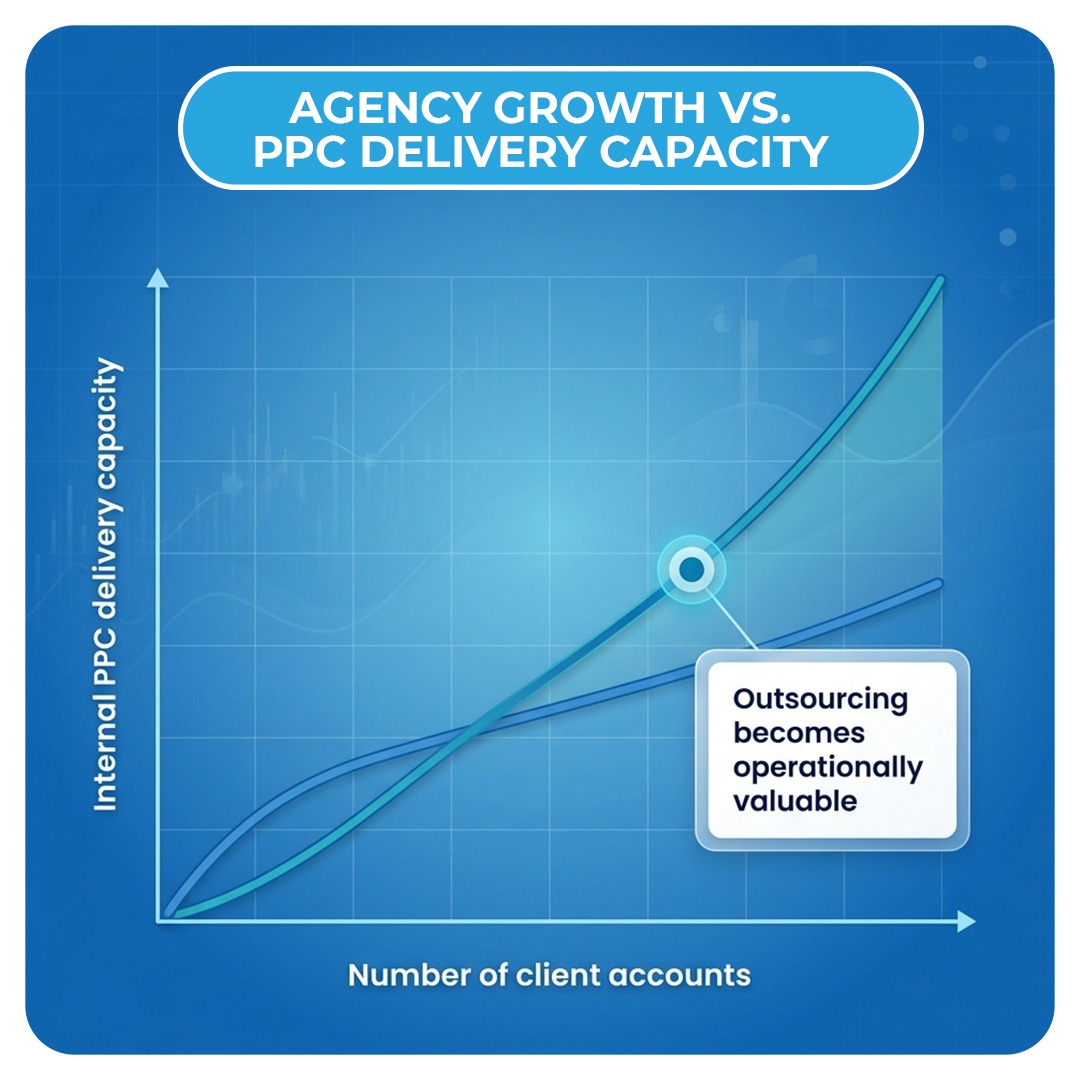
Until that gap is addressed structurally, the same pattern repeats every cycle, regardless of how hard the team works.
Why Consistent PPC Execution Matters More as Advertising Costs Rise?
As advertising costs rise, consistent PPC execution becomes more important. WordStream's 2026 Google Ads benchmarks, based on more than 13,000 US-based search advertising campaigns across 23 industries from April 2025 to March 2026, report an average CTR of 6.64%, CPC of $5.42, conversion rate of 8.18%, and CPL of $66.69.
1. Higher Costs Increase the Cost of Inattention
With an average CPC of $5.42, spend can accumulate quickly. Regular monitoring helps agencies identify changes, potential inefficiencies, and missed opportunities before they go unnoticed for too long.
That does not mean every delayed task automatically causes wasted spend or financial loss. The point is that higher costs increase the importance of maintaining an appropriate level of monitoring and reducing the chance of issues going unnoticed.
2. PPC Requires an Ongoing Feedback Loop
PPC management follows a continuous loop: data → analysis → optimization → new data → analysis. Each cycle provides information that helps shape the next decision.
When optimization is delayed, that feedback loop slows down. The account continues running, but the agency may take longer to respond to new performance data, identify opportunities, or adjust its approach.
3. The Agency Doesn't Need to Optimize Everything Every Day
Consistency does not mean changing every account every day. Unnecessary edits can be counterproductive, particularly when campaigns need stable conditions for automated bidding and learning.
The right cadence depends on factors such as account size, activity, budget, objectives, performance, campaign type, and workflow. A high-spend account may need frequent attention, while a stable lower-budget campaign may require less. The goal is a consistent and appropriate review cadence, not constant changes.
The Google Ads Tasks Agencies Should Protect From Backlogs
The tasks below are examples of the recurring work that keeps accounts healthy. They are not a rigid, identical checklist to be applied to every account in the same way. The mix and frequency should reflect each account's needs.
- Search-Term and Query Reviews: Regular search-term reviews reveal what people are actually typing to trigger ads. This work identifies irrelevant queries draining budget, surfaces negative keyword opportunities, uncovers new keyword themes worth targeting, and detects shifts in search behaviour before they become expensive patterns.
- Budget and Spend Monitoring: Budgets need watching in both directions. Monitoring highlights campaigns approaching their limits and losing impression share, campaigns under-spending against their targets, how spend is distributed across the account, and any unusual spending patterns that warrant a closer look.
- Ad and Asset Testing: Testing keeps messaging fresh and performance improving. Protecting this work means keeping planned tests moving rather than stalling them, reviewing existing ad variants, introducing new messaging when the data supports it, and preventing testing roadmaps from being postponed indefinitely.
- Conversion Tracking and Measurement Checks: If tracking breaks, every decision built on that data becomes suspect. These checks confirm conversions are recording correctly, investigate anomalies, verify that important actions are being measured, and coordinate the resolution of tracking issues before they distort reporting and mislead optimization.
- Campaign Hygiene: Accounts accumulate clutter over time. Hygiene work involves reviewing campaign settings, checking targeting is still appropriate, identifying outdated elements, and removing or updating anything that no longer fits the current strategy.
- Performance Analysis: Beyond the individual tasks sits the broader view. Performance analysis compares results against client goals, identifies significant changes in the numbers, and surfaces opportunities that deserve a strategic conversation rather than a quick fix.
How White Label PPC Prevents the Backlog From Growing?
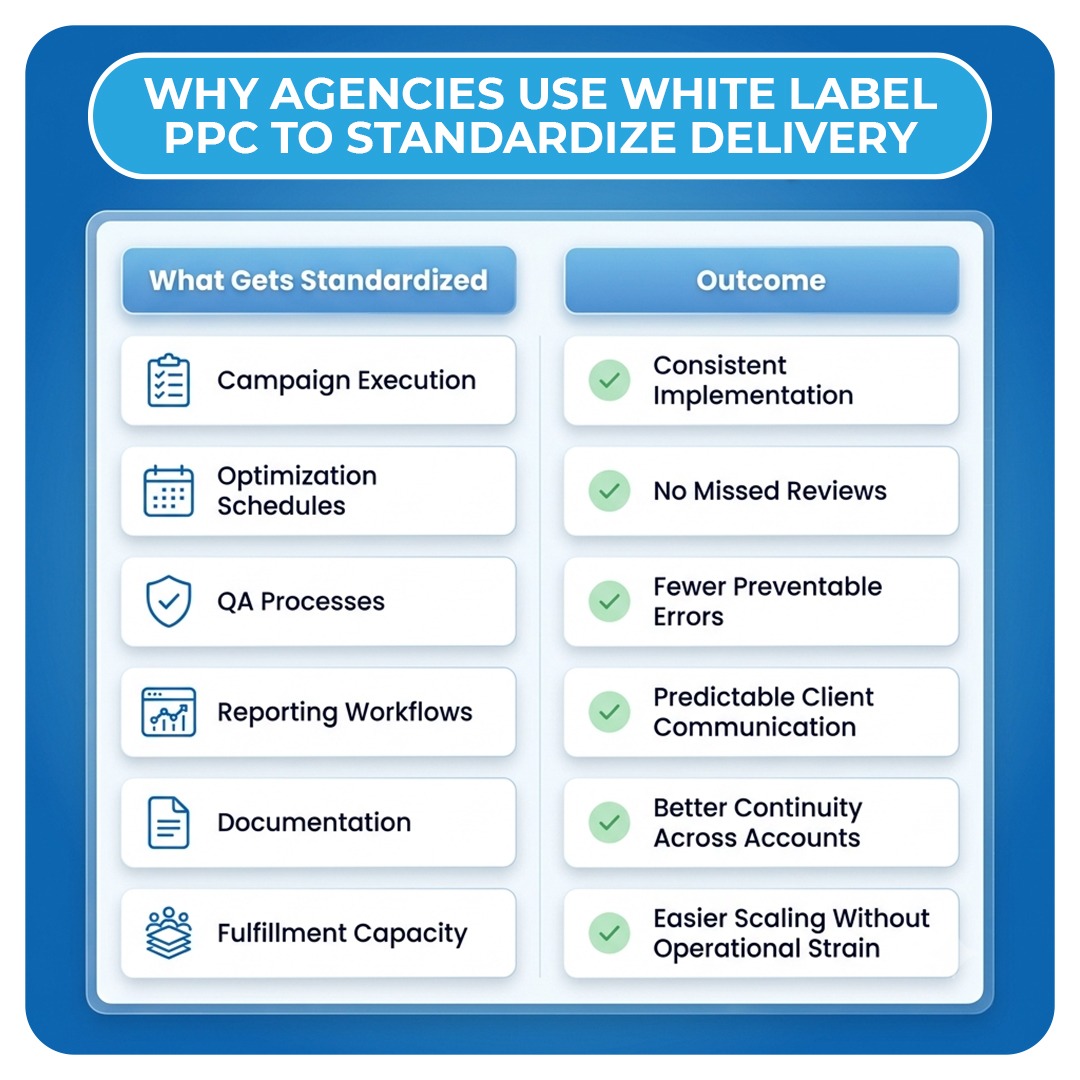
White label PPC works best when viewed as a capacity and workflow solution, rather than simply outsourcing PPC work. It gives agencies additional execution support when internal capacity is stretched, helping keep planned work moving.
It Adds Execution Capacity Without Adding Another Permanent Internal Workload.
When agencies win more clients, the traditional response is often more internal workload followed by more hiring. But hiring adds permanent costs and may not make sense when demand fluctuates.
White label PPC provides a more flexible alternative: more clients → flexible fulfilment capacity → additional execution support. It extends the internal team's capacity without replacing it or immediately adding permanent overhead.
It Gives Specialists Somewhere to Route Overflow Work.
When workloads exceed available capacity, specialists often have to work longer hours or push tasks back. A fulfillment partner provides another option.
Additional PPC tasks can be routed to the partner while the internal team maintains its existing priorities. The agency still owns the client relationship, while overflow work continues moving towards completion.
It Protects Recurring Tasks From Being Crowded Out.
The value of fulfilment is not limited to large, one-off projects. It can also protect recurring PPC work when unexpected priorities appear.
If an urgent client request threatens to push search-term reviews, budget checks, or other scheduled work aside, those tasks can be moved to fulfillment instead of becoming part of the backlog. This helps maintain the planned execution cadence even when priorities change.
It Helps Separate Strategy From Execution Capacity.
A clear division of responsibilities can make the workflow easier to manage. The agency retains ownership of client strategy, goals, budget decisions, priorities, client communication, and final approval.
The fulfilment partner handles agreed PPC execution, account maintenance, optimization tasks, research, and reporting support. This keeps strategic decisions with the agency while allowing execution capacity to flex when demand increases.
Further Reading: The Art of Growing Your Agency with White Label PPC
Where White Label PPC Fits Into the Agency's Existing Workflow
Knowing what white label PPC does is one thing. Knowing when to use it is what makes it valuable. Several common situations can create a need for additional fulfilment capacity.
Scenario 1: Internal Team Is at Capacity
When the internal team is fully booked, new work can push existing tasks behind. Fulfilment can absorb additional execution without forcing an immediate hiring decision, giving the agency flexibility while it assesses whether demand is temporary or ongoing.
Scenario 2: A Major Client Project Takes Priority
When a major client needs new campaigns built quickly, internal specialists may need to focus on that project. Fulfilment can handle recurring work across other accounts, allowing the team to prioritise the urgent project without creating a wider backlog.
Scenario 3: Multiple Accounts Need Attention at Once
Several accounts may require attention at the same time. Fulfilment can take on overflow across selected accounts, helping the agency distribute the workload and keep priority tasks moving.
Scenario 4: The Agency Wins Several New PPC Clients
New client wins create immediate onboarding and execution demands. Fulfilment can provide additional capacity while internal processes and staffing catch up with the increased workload.
Scenario 5: Temporary Staff Availability Changes
Vacations, employee transitions, absences, and other temporary gaps can reduce team capacity. Fulfilment can maintain continuity during these periods, preventing recurring work from accumulating while internal resources are unavailable.
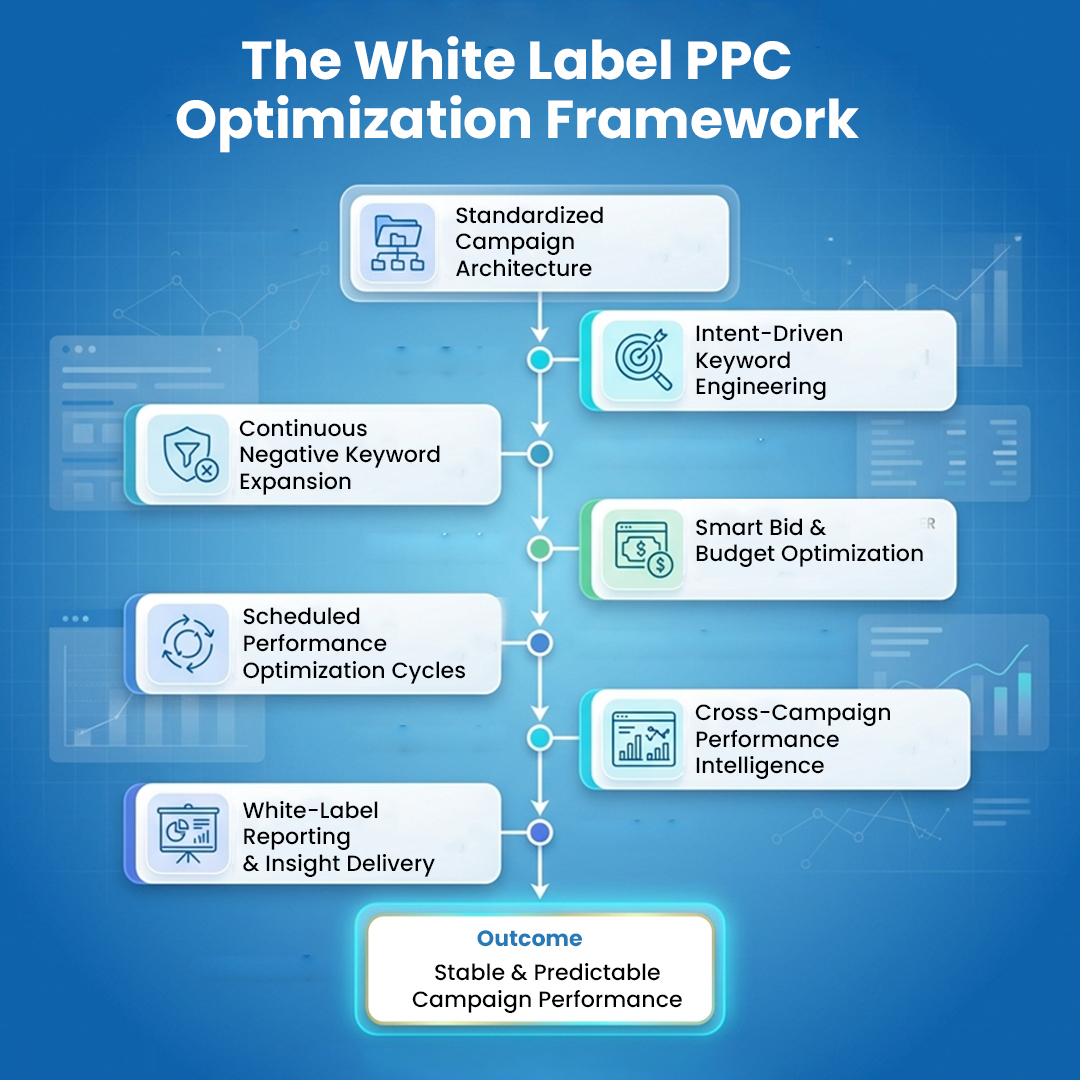
Use Google Ads' Own Recommendations as a Prioritization Signal, Not an Automatic To-Do List
Google Ads provides signals about potential areas for attention through its optimization score. The score is calculated in real time using factors such as account statistics, settings, campaign status, available recommendations, and recommendation history.
Google also reports that advertisers who increased their account-level optimization score by 10 points saw a median 14% increase in conversions. This is Google's reported median, not a guarantee for every account. It should therefore be used as a prioritisation signal, not a reason to implement every recommendation automatically.
Don't Treat Every Recommendation as an Urgent Task
Recommendations highlight potential opportunities, not mandatory actions. Some may fit a client's strategy, while others may suggest changes to targeting, budgets, or campaign settings that are not appropriate for the account.
Agencies should evaluate recommendations against client goals and strategy before acting. A fulfillment partner can support this process by reviewing recommendations and consistently implementing the ones that have been approved.
Turn Recommendations Into a Review Process
A defined review process is safer than simply accepting recommendations. The workflow can be:
Recommendation appears → Specialist evaluates → Strategy rules are applied → Action is approved → Implementation → QA
This keeps human judgement involved and positions the optimization score as a prompt for review rather than an automatic to-do list.
How DashClicks Can Support Consistent Google Ads Fulfillment?
For agencies that want a structured fulfillment partner, DashClicks offers white label PPC support designed to slot into existing workflows.
- White Label PPC Execution: The platform provides white label PPC services that add fulfilment capacity without exposing the fulfilment relationship to your clients. The work is delivered under your brand, so the client experience stays entirely yours.
- SOP-Driven Execution: Documented standard operating procedures support consistency across many accounts. When execution follows repeatable processes, the quality of routine work stays steady even as volume grows.
- White Label Reporting: Reporting support reduces the administrative burden that eats into specialist execution time. Freeing the team from report production leaves more capacity for the optimization work that actually moves accounts forward.
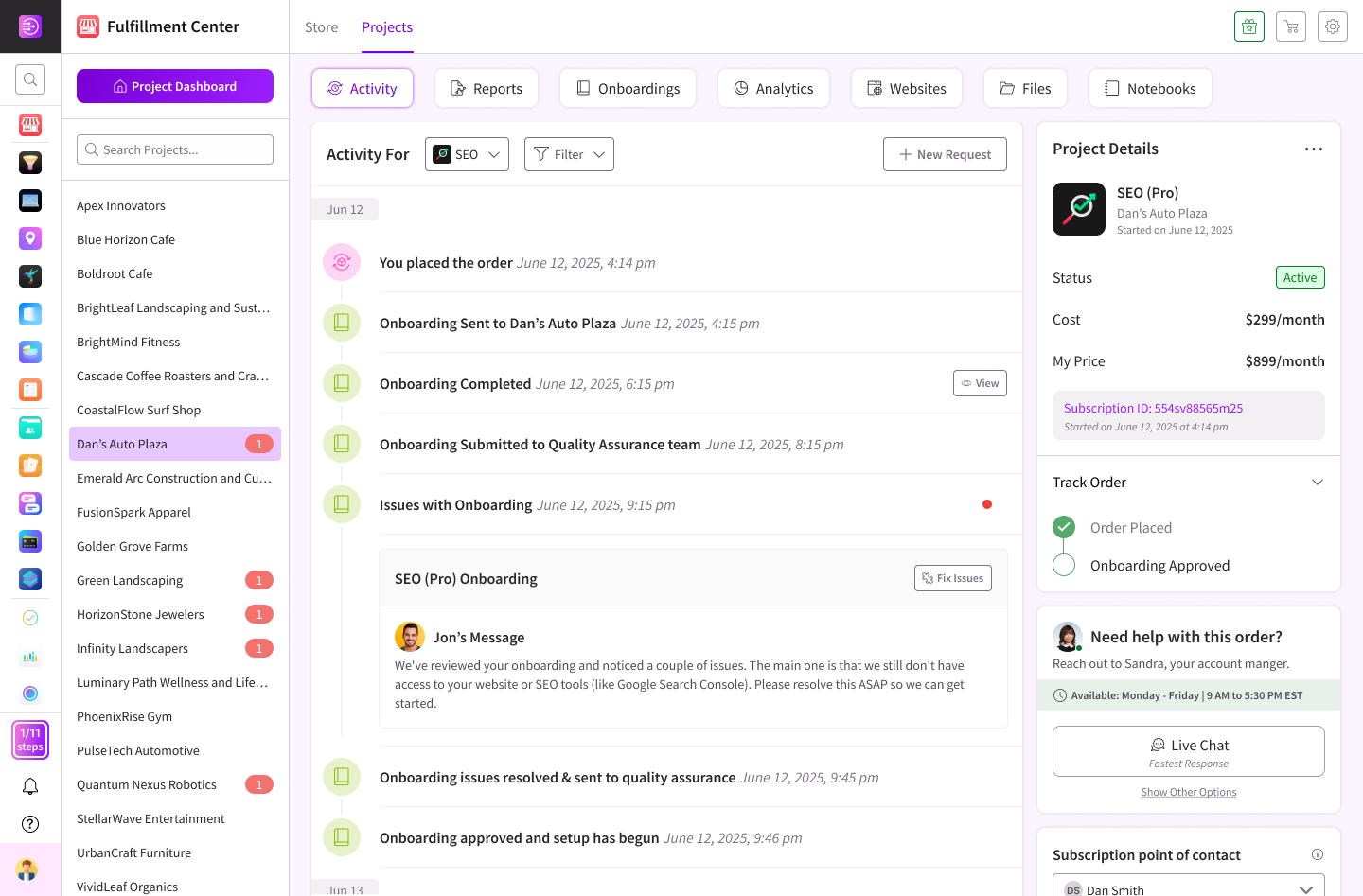
- Client Dashboard Visibility: Centralised dashboard visibility helps agencies monitor both fulfilment and client delivery in one place, making it easier to keep an eye on progress across the portfolio.
Keep Google Ads Work Moving
PPC management is not a series of one-off projects. It is an ongoing execution system, and the bigger risk is often the accumulation of small delays that eventually becomes a backlog.
Rising advertising costs make consistent management even more important. WordStream's 2026 benchmark reports an average CPC of $5.42 and an average CPL of $66.69. This does not mean every delayed task causes financial loss, but it does make prolonged inattention harder to ignore.
Agencies do not need permanent headcount for every increase in workload. White label PPC can provide flexible execution capacity when internal teams are stretched, helping protect the recurring work that keeps accounts on track. The goal is not to hand over strategy, but to maintain the execution cadence that keeps client accounts moving forward.


.svg)


.svg)
.svg)
.svg)
.svg)
.svg)