

.svg)

.svg)
.svg)
.svg)
.svg)
.svg)
Many agencies struggle with a problem they don't even recognize. While their teams work hard to serve existing clients, valuable resources sit idle, waiting for the right opportunity. This unused capacity represents more than missed potential—it's silent revenue decay happening right under their noses.
The solution isn't always hiring more staff or taking on bigger clients. Sometimes, the smartest move is leveraging what you already have through strategic partnerships. White label PPC services offer a unique opportunity to transform idle resources into profitable growth engines.
This comprehensive guide explores how agencies can unlock hidden ROI by converting unused capacity into billable hours through white label PPC partnerships. We'll examine the real costs of underutilized resources and show you practical strategies to maximize your agency's earning potential without expanding your overhead.
The Real Cost of Unused Capacity in PPC Agencies
Most agencies operate with significant slack in their systems without realizing the financial impact. This hidden inefficiency costs more than just productivity—it directly affects your bottom line.
1. Hidden Slack in Operations
Agency operations often contain invisible gaps that drain profitability. Account managers may have capacity for additional campaigns, ad credits might expire unused, and budgets could be allocated more efficiently across client portfolios.
According to a 2024 HubSpot Agency Operations Report, nearly 38% of agency hours go unbilled due to process inefficiencies and uneven workloads. This staggering figure represents thousands of dollars in lost revenue for the average agency.
2. Revenue Leakage
Every hour of unused PPC management capacity equals lost billable time. Consider this scenario: if your agency currently manages Google Ads for 10 clients but has the infrastructure to handle 15 accounts effectively, those missing 5 campaigns represent pure opportunity loss.
The math is simple yet sobering. If each additional client brings $2,000 monthly in retainer fees, unused capacity for 5 clients means $10,000 in monthly revenue sitting on the table. Over a year, that's $120,000 in missed opportunities.
3. The Capacity-Profitability Mismatch
Many agencies scale their staffing around large retainer clients, which often leaves smaller accounts underserved. This creates a dangerous cycle where valuable team members work below their potential while profitable opportunities slip away.
White label PPC agencies bridge this gap efficiently by providing expert management for overflow work, allowing your team to focus on high-value strategic activities while ensuring no revenue opportunity goes untapped.
Understanding Hidden ROI: Beyond the Obvious Cost Savings
When agencies evaluate the return on investment (ROI) of white label PPC services, the instinct is often to focus on immediate cost savings—reducing in-house staff or avoiding overhead expenses. While these savings are real, they represent only the tip of the iceberg. The true ROI of white label PPC extends far beyond cost reduction, delivering measurable gains in revenue recovery, operational efficiency, and client lifetime value.
1. Client Lifetime Value (CLV) ROI
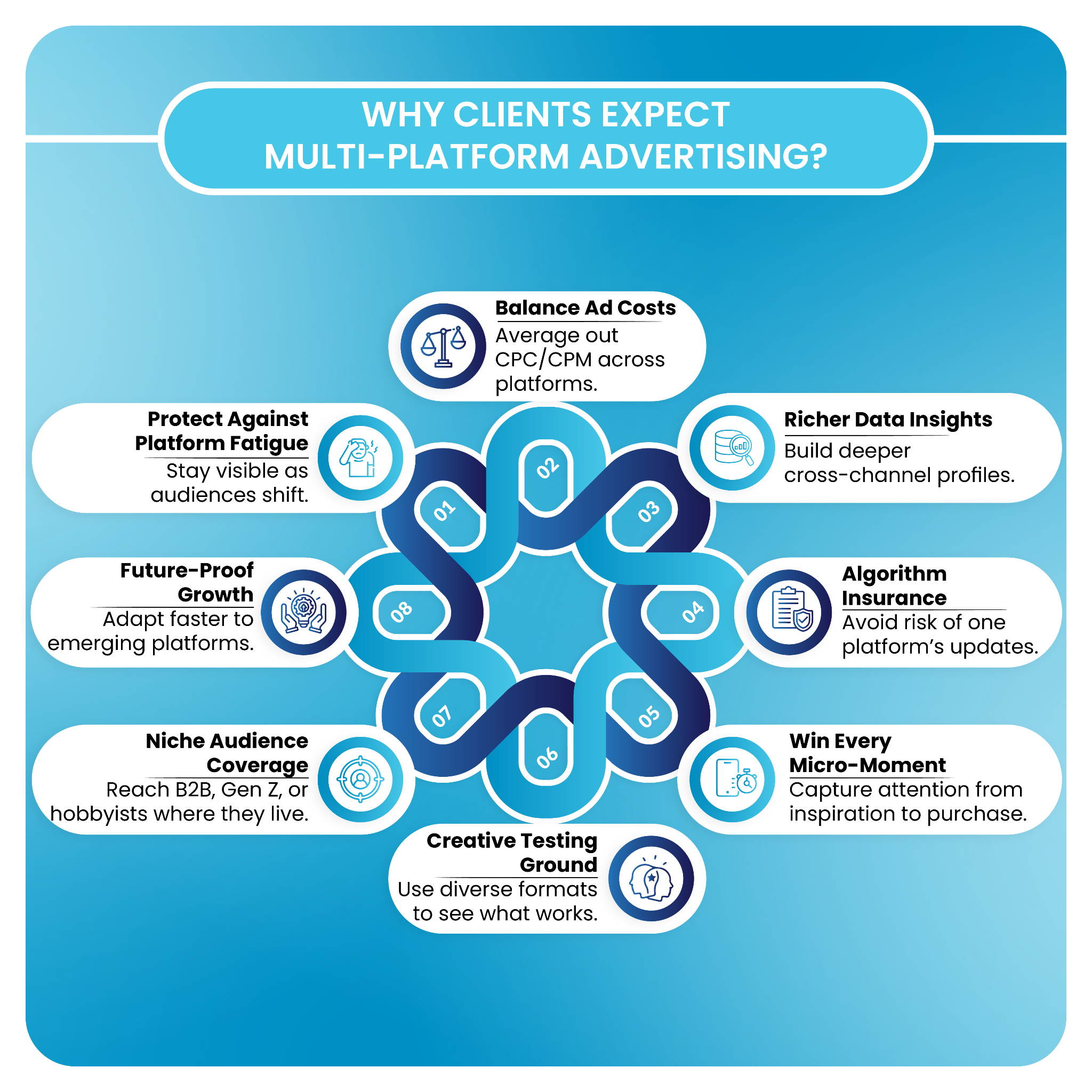
Perhaps the most significant hidden ROI lies in its impact on client retention and lifetime value. Consistent, high-quality service across multiple advertising platforms creates better performance results, which clients notice and reward with long-term loyalty.
Agencies offering comprehensive PPC solutions across Google, Meta, LinkedIn, and other platforms provide a seamless experience that strengthens client trust. When campaigns consistently deliver results, clients are more likely to:
- Increase their monthly spend across platforms.
- Expand their service adoption to include additional marketing offerings.
- Remain with the agency longer, reducing churn.
Supporting this, CallRail’s 2024 Agency Benchmark Study found that agencies offering cross-platform PPC services saw a 32% increase in average client lifespan. This extended relationship directly boosts lifetime value per client, translating into more predictable revenue streams and higher overall profitability.
2. ROI as Revenue Recovery
One of the most overlooked benefits of white label PPC is its role in capturing revenue that might otherwise be lost. Instead of thinking of white label services as “outsourcing,” forward-thinking agencies view them as a tool for revenue recovery.
This mindset shift changes how you assess value. With white label PPC, agencies can take on more client work without the cost and commitment of hiring full-time staff. Overflow projects, seasonal campaigns, or specialized ad platforms—tasks that might have been declined or delayed due to capacity constraints—can now be executed efficiently. The result is additional profit on work that might otherwise have been lost to competitors.
For example, an agency with limited internal PPC capacity could pass on a LinkedIn or programmatic campaign, only to see a competitor secure the client. With white label support, that revenue stays in-house, effectively converting previously “unreachable” business into tangible profit.
3. Operational ROI
White label PPC services also deliver operational benefits that compound over time, making your agency more agile and efficient:
- Improved Campaign Velocity: White label partners accelerate campaign launch timelines, allowing clients to see results faster. Quicker execution often leads to higher client satisfaction and repeat business.
- Enhanced Expertise Access: Agencies gain access to specialists experienced in various platforms and industries without the cost of hiring or training in-house teams.
- Reduced Training Costs: No need to develop internal experts for every ad platform, saving both time and money.
Data support these advantages. According to WordStream’s 2024 Agency Data, agencies leveraging hybrid white label PPC teams report 23–27% faster campaign launch times compared to agencies relying solely on in-house staff. This operational efficiency not only improves client outcomes but also frees internal resources to focus on strategy, client relations, and scaling other services.
The Big Picture
White label PPC ROI isn’t just about cutting costs; it’s about unlocking revenue you might otherwise miss, improving operational efficiency, and extending client relationships. Agencies that recognize these hidden returns position themselves to grow faster, retain clients longer, and maximize profit margins—all while maintaining flexibility and avoiding the constraints of a fully in-house team.
How White Label PPC Converts Slack into Billable Growth?
The transformation from unused capacity to profitable growth happens through several key mechanisms that smart agencies leverage systematically.
1. Instant Utilization Without Hiring
White label partnerships enable agencies to onboard additional campaigns across Google Ads, Meta, LinkedIn, and other platforms with zero lag time. A 10-person team can effectively manage twice its normal workload by leveraging backend support.
This arrangement transforms every underutilized strategist hour into client-facing deliverable time. Your team focuses on strategy, client communication, and business development while white label partners handle execution and optimization.
2. Expanding Service Mix for Existing Clients
Cross-selling becomes significantly easier when you can confidently offer multi-platform PPC management. Clients appreciate working with one agency that can handle their entire paid advertising portfolio.
Agencies diversifying into 3+ PPC platforms experienced a significant increase in upsell rates within six months. This expansion happens without adding internal complexity or training costs.
3. Dynamic Resource Allocation
Unlike fixed salary costs, white label partnerships allow agencies to scale campaigns up or down based on client demand. This flexibility converts the volatility of client needs into predictable profit margins.
Seasonal businesses, performance-based campaigns, and testing budgets all become profitable opportunities rather than resource allocation challenges.
4. High-Margin Billing Models
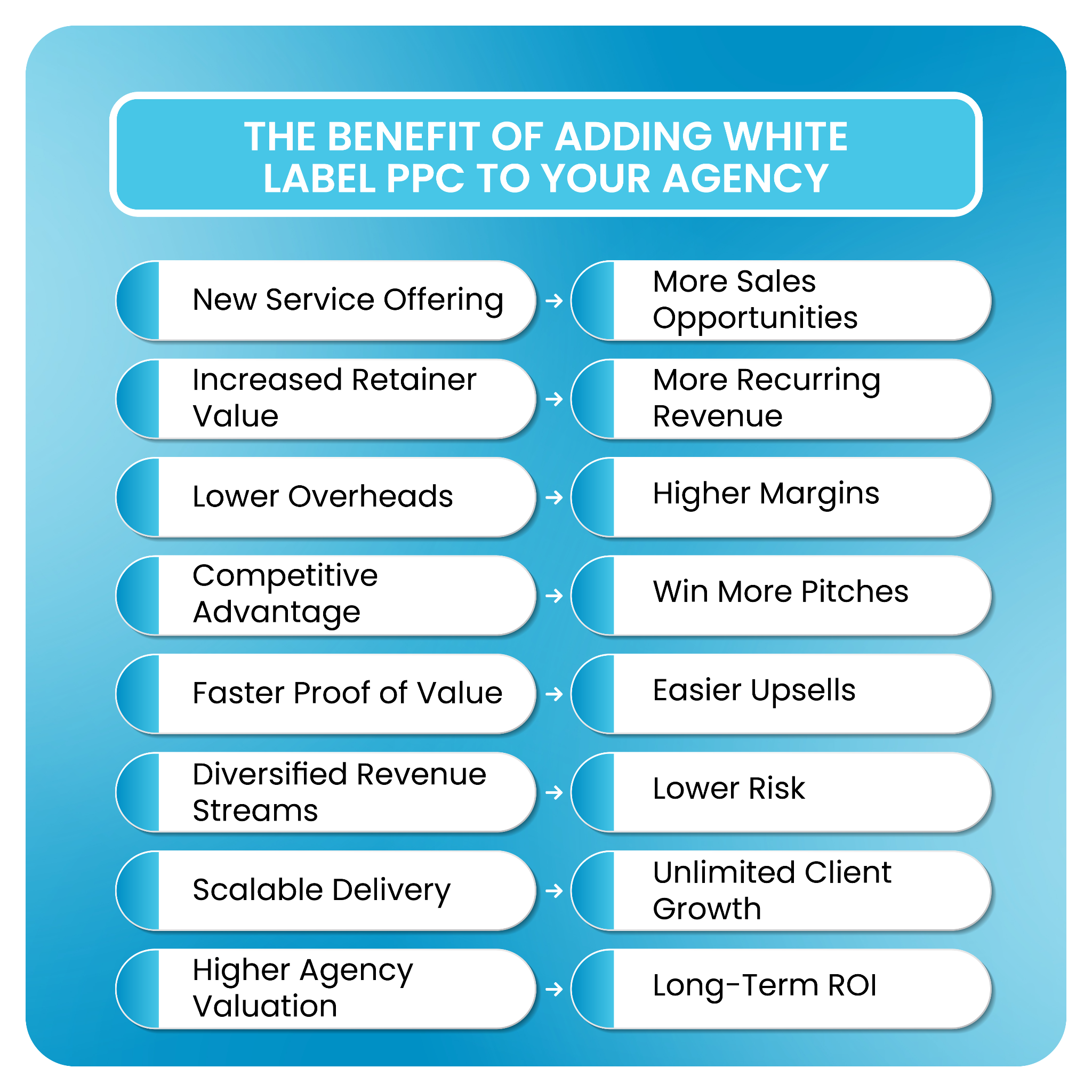
Well-structured white label arrangements allow agencies to maintain 40-60% margins on outsourced campaigns while clients receive full-service delivery. This creates win-win scenarios where everyone benefits from the expanded capacity.
For example, a $2,000 client retainer minus $1,200 in white label costs leaves $800 in net gain with zero internal labor investment. These margins often exceed in-house delivery costs when you factor in benefits, training, and overhead expenses.
The Compounding Effect: How White Label PPC Enhances Client Retention
Hidden ROI compounds through improved client satisfaction and retention, creating long-term value that far exceeds initial cost savings.
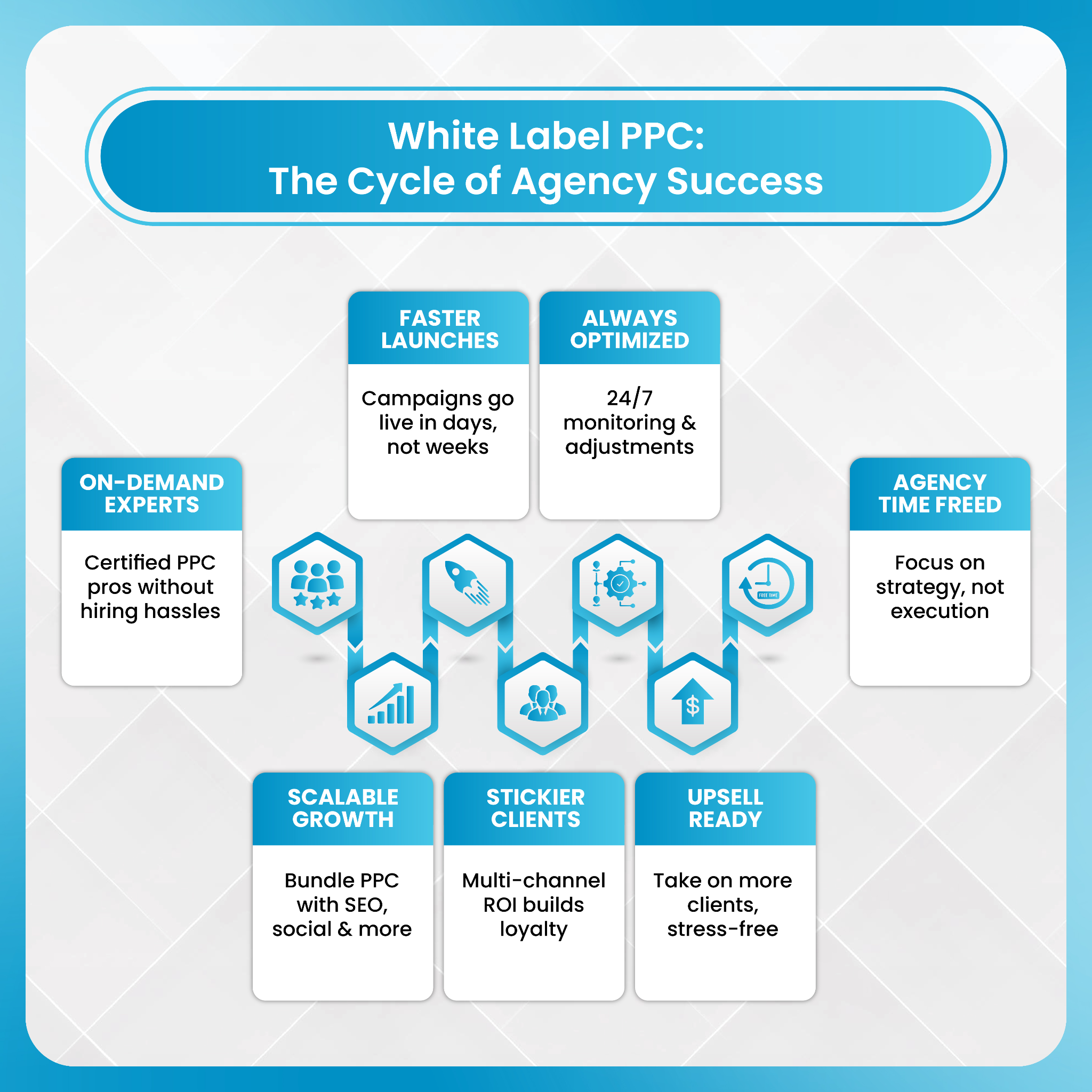
- Consistent Performance Delivery: Clients experience seamless service quality even during agency transitions, staffing changes, or campaign overloads. This consistency builds trust and demonstrates professional reliability.
- Always-On Expertise: White label PPC agency provide specialized knowledge and 24/7 optimization that smaller agencies cannot afford to maintain in-house. Clients benefit from enterprise-level service delivery at a fraction of the cost.
- Proactive Scaling: Rather than declining opportunities outside your core expertise, you can confidently expand service offerings. When clients ask about TikTok ads or YouTube campaigns, you respond with "we have a specialized team ready" instead of "that's not our focus."
According to AdRoll's 2024 Agency Study, agencies leveraging white label PPC partnerships saw 19% higher client retention year-over-year compared to agencies relying solely on internal resources.
Revenue Architecture: Turning Efficiency Gains into Growth Systems
The most profitable agencies don't just use white label PPC services—they systematize them into scalable growth engines.
- Tiered Packaging Model: Smart agencies create integrated PPC packages that combine Google, Meta, and YouTube advertising under unified management. This approach increases billing efficiency while simplifying client decision-making. Clients prefer working with agencies that can manage their entire paid advertising portfolio rather than coordinating between multiple specialists.
- Data Integration Advantage: Unified reporting from white label teams enables agencies to create comprehensive dashboards that show cross-platform performance. This integrated view adds significant perceived value for clients.
- Strategic Expansion: Agencies that successfully cross-sell YouTube Ads to 30% of existing clients typically see ARR increases of 22% without additional internal hires. This growth comes from expanded wallet share rather than new client acquisition costs.
Measuring the Hidden ROI
Making ROI visible requires tracking specific metrics that demonstrate the true value of expanded capacity.
Core Metrics to Track
- Utilization Rate: Percentage of available hours converted to billable work.
- Revenue per FTE: Should increase 20-35% with white label integration.
- Cross-Sell Adoption: Track the percentage of clients using multiple PPC channels.
- Retention Rate: Target 85%+ for agencies with hybrid white label models.
Transparent Reporting
Integrate white label performance data into branded dashboards that clients access directly. This transparency builds trust while demonstrating the value of your expanded service capabilities.
DashClicks: Maximizing Your Hidden ROI Potential
DashClicks transforms unused agency capacity into profitable growth through comprehensive white label PPC services that seamlessly integrate with your existing operations.
Our platform enables agencies to manage multi-platform campaigns across Google Ads, Facebook, TikTok, and LinkedIn without increasing internal headcount. The transparent reporting dashboards and performance tracking tools maintain your brand identity while delivering enterprise-level results.
Agencies using DashClicks' white label solutions typically see immediate improvements in utilization rates and client satisfaction scores. The platform's intuitive interface makes it easy to manage campaigns at scale while maintaining the personal touch your clients expect.
With branded reporting and seamless client communication tools, your team can focus on strategy and relationship management while DashClicks handles the technical execution. This division of labor maximizes both efficiency and profitability.
Future Outlook: The Agency Model Moving Toward Invisible Operations
The next evolution in agency scaling involves "invisible capacity"—a model where growth becomes completely decoupled from internal headcount limitations.
As AI and automation merge with white label PPC systems, agencies will move toward meta-efficiency, where every task, interaction, and optimization opportunity gets monetized. This transformation will separate successful agencies from those stuck in traditional service delivery models.
Agencies that master hidden ROI principles now will be positioned to dominate the performance economy of tomorrow. The combination of strategic oversight, white label execution, and data-driven optimization creates sustainable competitive advantages that compound over time.
Turning Hidden Potential into Profitable Reality
The hidden ROI of white label PPC lies not just in cost savings, but in transforming unused capacity into systematic growth engines. By leveraging specialized partnerships, agencies can serve more clients better while maintaining healthy margins and improving team satisfaction.
The key is recognizing that unutilized capacity isn't a minor inefficiency—it's a major profit leak that compounds over time. White label PPC services provide the solution by converting idle resources into billable growth opportunities.
Smart agencies are already making this transition, turning their unused potential into competitive advantages. The question isn't whether you have hidden capacity—it's whether you'll unlock its value before your competitors do.


.svg)


.svg)
.svg)
.svg)
.svg)
.svg)