

Managing local SEO for one business location is relatively straightforward. Managing it for a client with fifteen locations spread across six states is an entirely different operation. Search behavior shifts from city to city, competitors change, and the business details that matter to customers (hours, services, contact information) vary by address.
A single optimization strategy rarely performs well across every market. What ranks a landscaping company's "lawn care services near me" page in Denver won't necessarily work in Austin, where the competitive landscape and customer language look completely different. Each location may also carry its own operating hours, service offerings, and Google Business Profile requirements that need individual attention rather than a copy-paste approach.
This creates a real operational challenge for agencies. Every additional location adds more keyword research, more content to write, more citations to check, and more performance data to track. When an agency manages this across multiple client accounts, the workload multiplies quickly, and internal teams can struggle to keep pace without sacrificing quality.
This is where white label local SEO services agencies rely on to become a practical operational tool rather than a shortcut. By distributing recurring execution work to a trusted fulfillment partner, agencies can extend their delivery capacity while still controlling strategy, client communication, and final decisions.
The rest of this article breaks down why location-specific optimization demands individual attention, what that work actually involves, and how white label fulfillment support fits into managing it at scale.
Why Location-Specific Optimization Requires a Different SEO Approach?
Local SEO isn't a single discipline that applies uniformly across markets. Each location an agency manages comes with its own search behavior, competitive pressure, and operational details that shape what "good optimization" actually looks like there.
1. Different Search Behaviors
Customers in different cities, and even different neighborhoods within the same city, don't always search the same way. A plumbing company's customers in one region might search "emergency plumber," while customers in two cities over search "24 hour plumbing repair."
- City- and Neighborhood-specific Phrasing: Local dialects and common usage can shift how people describe the same service.
- Service Naming Differences: One market may use "HVAC repair," while another defaults to "AC repair" or "furnace service."
- Search Intent Variations: The urgency, specificity, or informational nature of a search can shift based on local context.
- Research Over Assumption: Agencies should research how customers in each target market actually phrase their searches, rather than reusing the same keyword list across every location page.
2. Varying Local Competition
The difficulty of ranking in one city has little bearing on the difficulty of ranking in another. Competitive strength is a local variable, not a universal constant.
- Established Local competitors: Some markets have businesses with years of built-up local visibility and reviews.
- Differences in Local Authority: Backlink profiles and domain strength can vary widely between regional competitors.
- Volume and Quality of Competing Businesses: A saturated market requires a different level of optimization effort than a less competitive one.
- Strategy Adjustments: An approach that works well in a lower-competition city may need to be strengthened significantly in a more contested market.
3. Different Business Requirements
Each location often has operational details that need to be reflected accurately, both for customers and for search engines.
- Business addresses and direct contact information.
- Operating hours, including seasonal or holiday schedule changes.
- Services actually offered at that specific location (not every service a company provides company-wide).
- Location-specific Google Business Profile details and categorization.
Keeping this information accurate across every location matters more than it might seem. Inconsistent or outdated details can quietly undermine both user trust and local visibility.
4. Location-Level Relevance
Generic service pages often fail to address what a customer in a specific area actually needs to know. A page built around general service descriptions, with a city name swapped in, rarely reflects the market it claims to represent.
- Dedicated Location and Service Pages: These give search engines and users a clearer signal of relevance.
- Geographic Specificity: Mentioning actual neighborhoods, landmarks, or service areas adds genuine context.
- Locally Useful Content: Information that helps a user understand what's available to them specifically, not generically.
- Beyond Template Swaps: Simply changing a city name on an existing page doesn't create meaningfully useful content for that market.
The importance of accurate, locally relevant information isn't just a best practice; it's backed by consumer behavior data. According to Rio SEO's 2025 study, 84% of consumers search for local businesses online daily. That volume of daily local search activity underscores why businesses need accurate, relevant information readily available whenever a nearby customer searches.
Content relevance also plays a measurable role in how local pages perform. Whitespark's 2026 Local Search Ranking Factors survey identifies dedicated service pages and geographic keyword relevance as two leading factors associated with local organic rankings. It's worth distinguishing this from Google Maps or local pack rankings, which weigh a different set of signals.
The Whitespark findings point to correlation among experienced local SEO practitioners rather than a guaranteed ranking formula, but they do reinforce why generic, templated pages tend to underperform compared to genuinely location-relevant content.
Key Local SEO Tasks Agencies Must Manage Across Locations
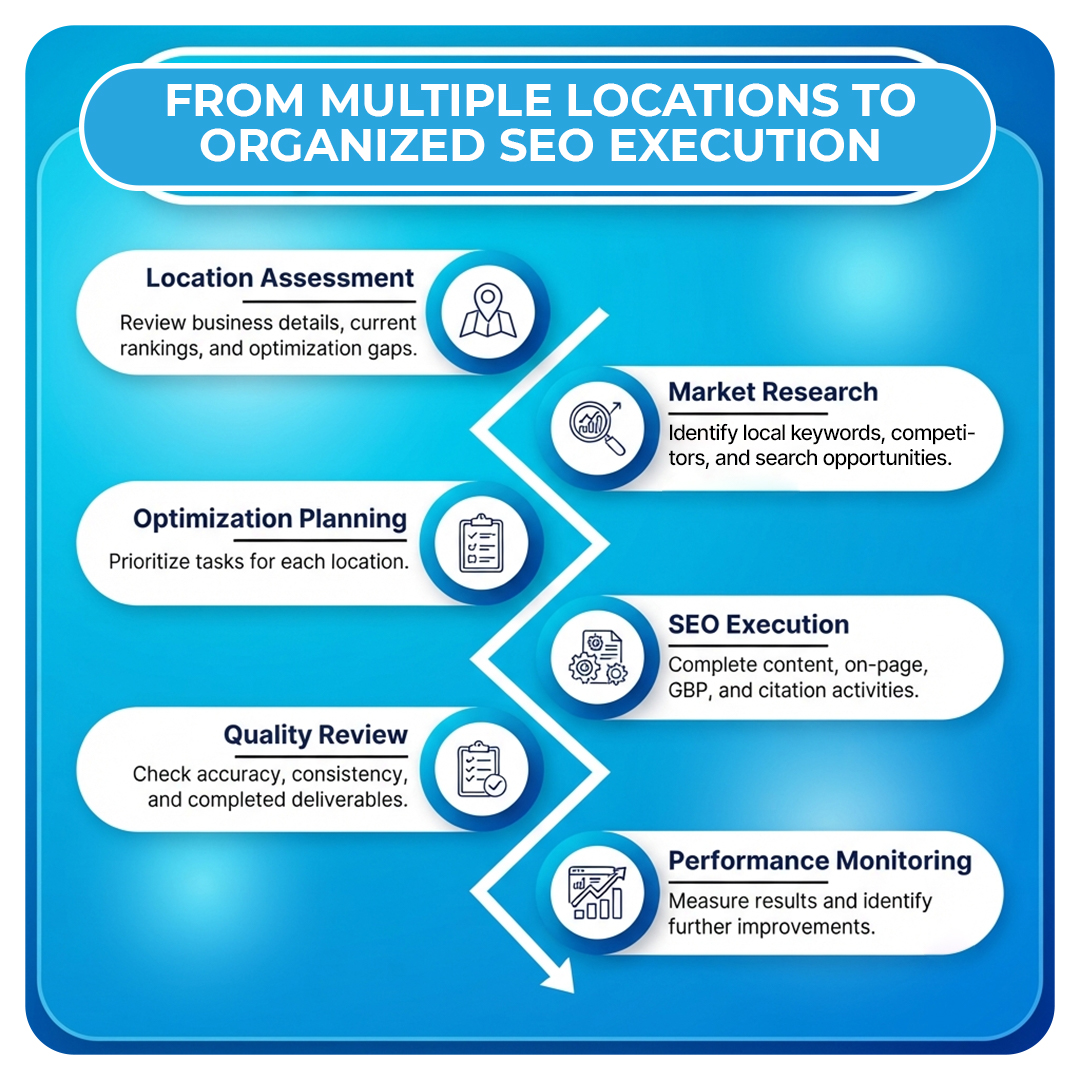
Managing multiple locations requires recurring optimization activities organized at the individual location level.
1. Location-Based Keyword Research
Agencies need to identify the search terms that matter in each market.
- Research city-, neighborhood-, and service-specific keywords.
- Identify local search intent and customer expectations.
- Map relevant keywords to individual location and service pages.
- Avoid using identical keyword groups across different markets.
- Review keyword opportunities as search behavior changes.
2. Google Business Profile Optimization
Each eligible location's Google Business Profile requires accurate and relevant information.
- Verify business addresses, contact details, and service areas.
- Review categories and listed services.
- Update operating hours, including seasonal and holiday schedules.
- Identify incomplete or outdated profile information.
- Ensure profile details reflect the services actually available.
Agencies should also verify eligibility under Google's guidelines before creating individual profiles for business locations.
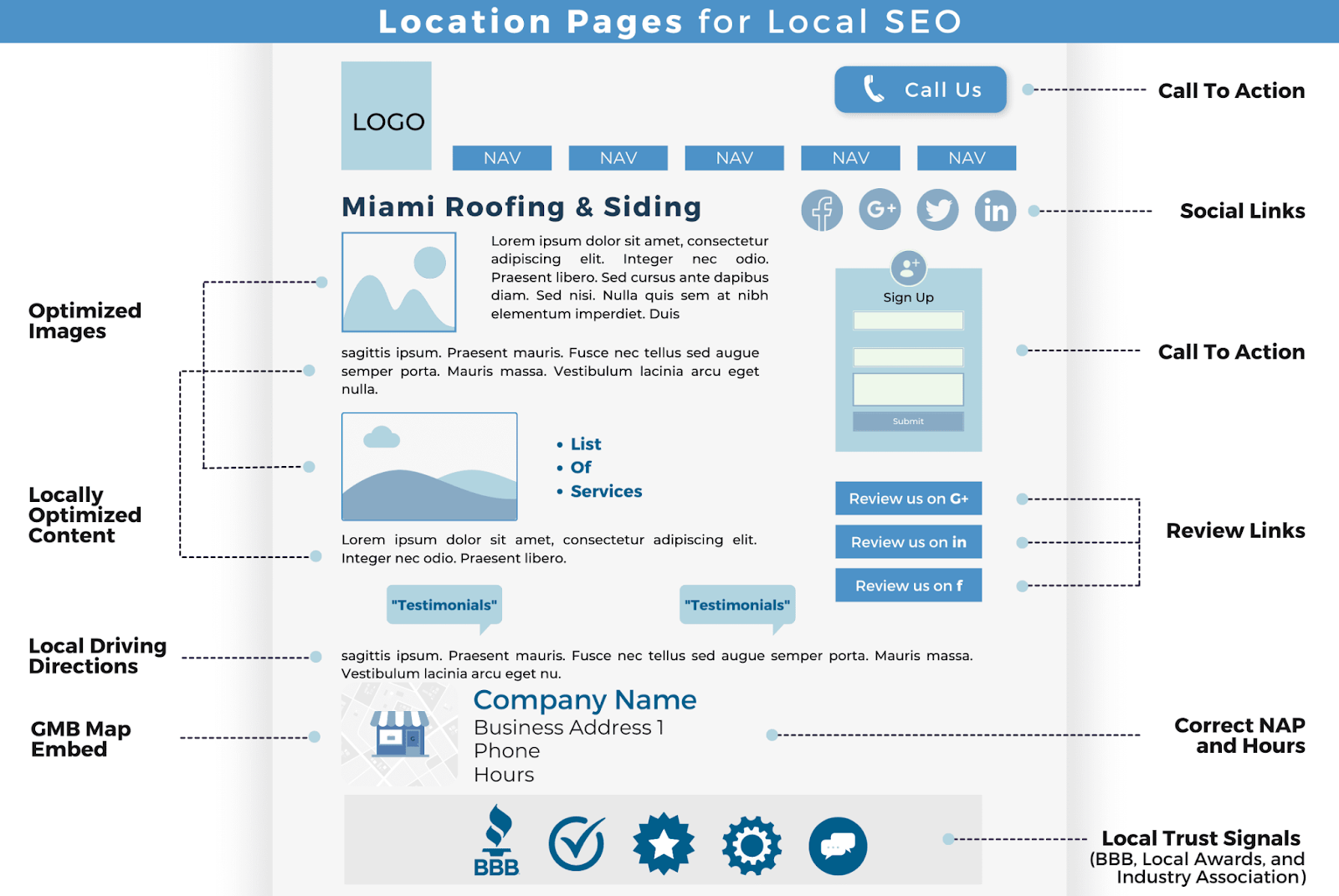
3. Location-Specific Landing Pages
Dedicated landing pages help customers find relevant information about services in their area.
- Describe services available at each location.
- Include relevant neighborhoods and geographic details.
- Address local customer needs and search intent.
- Provide accurate contact and service information.
- Avoid duplicate pages that only replace city names.
4. Local Citations and Link Building
Accurate business listings and relevant local authority support local SEO efforts.
- Maintain consistent Name, Address, and Phone number (NAP) information.
- Identify and correct outdated directory listings.
- Prioritize relevant industry and location-specific directories.
- Explore link opportunities through local publications and community organizations.
- Avoid irrelevant or spammy link-building practices.
5. Location-Level Performance Tracking
Account-wide reporting may hide differences in individual market performance. Agencies should:
- Monitor keyword rankings separately for each location.
- Review organic traffic to individual landing pages.
- Track Google Business Profile engagement where applicable.
- Identify underperforming locations and optimization gaps.
- Compare performance trends to prioritize future activities.
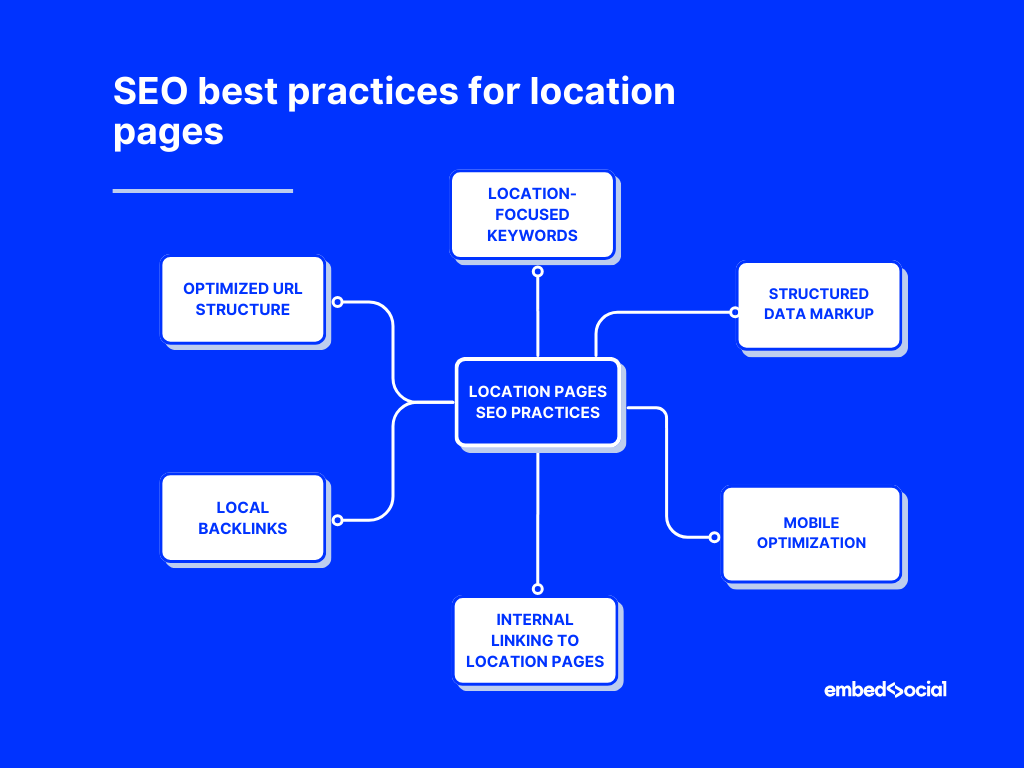
Image Source: EmbedSocial
Each stage should have a simple icon and a short supporting phrase.
Common Challenges Agencies Face When Managing Local SEO at Scale
Understanding local SEO requirements is one thing. Coordinating their execution across multiple clients and locations is another.
1. Inconsistent Business Information
Maintaining accurate addresses, phone numbers, operating hours, and service details across numerous directories becomes increasingly difficult as location counts grow. Outdated information can confuse customers, undermine trust, and affect local visibility.
2. Content Duplication
Creating genuinely useful content for every location requires considerable research and writing effort.
- Template Dependency: Replacing city names in existing pages may seem faster but rarely creates meaningful local relevance.
- Low-value Content: Repetitive pages offer little additional value to customers or search engines.
- Research Requirements: Effective location pages need accurate service information and geographic context.
- Resource Constraints: Developing distinct content across multiple markets requires time and consistent effort.
3. Uneven Optimization Requirements
Different locations need different optimization priorities. One market may require stronger local link building, another may need improved on-page SEO, and a third may have incomplete Google Business Profile information.
Applying identical checklists everywhere can waste resources and overlook actual performance gaps.
4. Limited Fulfillment Capacity
Recurring keyword research, content updates, technical optimization, citation management, link building, profile maintenance, and reporting create substantial workloads.
As agencies acquire more clients and locations, they need additional execution capacity, specialist knowledge, and quality control. Without sufficient resources, turnaround times and optimization consistency can suffer.
5. Fragmented Reporting
Disorganized reporting makes it difficult to understand individual location performance.
- Comparison Challenges: Agencies may struggle to identify which markets are performing well.
- Limited Visibility: Incomplete tasks can go unnoticed without structured tracking.
- Prioritization difficulties: Teams need location-level data to allocate resources effectively.
The stakes of getting business information right are higher than many agencies assume. Rio SEO's 2025 study found that 53% of consumers say inaccurate business listings will drive them away. That's a meaningful portion of the audience lost before a conversation even starts. Inaccurate addresses, outdated hours, or incorrect phone numbers don't just risk ranking performance; they directly undermine consumer confidence and can cost businesses customers who simply move on to a competitor with accurate information.
How White Label Local SEO Helps Agencies Manage Location-Specific Optimization
A structured white label local SEO partnership allows agencies to distribute recurring execution tasks without rebuilding every operational function internally. The agency retains strategic direction and client ownership while the fulfillment partner supports delivery.
1. Distribute Location-Level SEO Workloads
Agencies can delegate recurring optimization activities across multiple client locations, including:
- Location-based keyword research.
- On-page SEO improvements.
- Location page updates and maintenance.
- Citation management.
- Local link-building activities.
- Recurring optimization tasks across client accounts.
This gives internal teams more time to focus on strategy, client communication, and higher-level decision-making.
2. Maintain Consistent Optimization Standards
Documented workflows and quality checks help agencies maintain consistent fulfillment standards.
- Verify NAP information across business listings.
- Follow defined on-page optimization requirements.
- Establish documented execution processes.
- Assign clear task ownership and quality checks.
- Maintain consistent reporting expectations.
However, standardized processes should not mean identical strategies. Each location still requires optimization based on its competition, business requirements, and performance gaps.
3. Support Location-Specific Content Development
Creating dedicated location pages across multiple markets can consume significant internal resources. Fulfillment support can help agencies manage this workload through:
- Developing content relevant to individual markets.
- Incorporating accurate geographic and service details.
- Creating distinct pages instead of repetitive city-based templates.
- Updating existing content when services or business information change.
Content should always reflect verified business information and provide genuine value to local customers.
4. Extend Technical and Local SEO Capacity
Additional fulfillment resources can support recurring SEO requirements, such as:
- Technical SEO updates and website optimization.
- Google Business Profile optimization activities.
- Local citation management.
- On-page improvements across location pages.
- Backlink and link-building activities.
- Website content optimization.
Agencies should confirm the specific services available through their fulfillment partner and retain oversight of strategic recommendations and approvals.
5. Centralize Reporting and Progress Tracking
Structured reporting helps agencies maintain visibility as their client and location counts increase.
- Organize optimization tasks by client and location.
- Track completed and pending deliverables.
- Monitor individual location performance.
- Identify incomplete tasks and optimization gaps.
- Use performance data to guide future recommendations.
This allows agencies to oversee fulfillment activity without personally executing every recurring task.
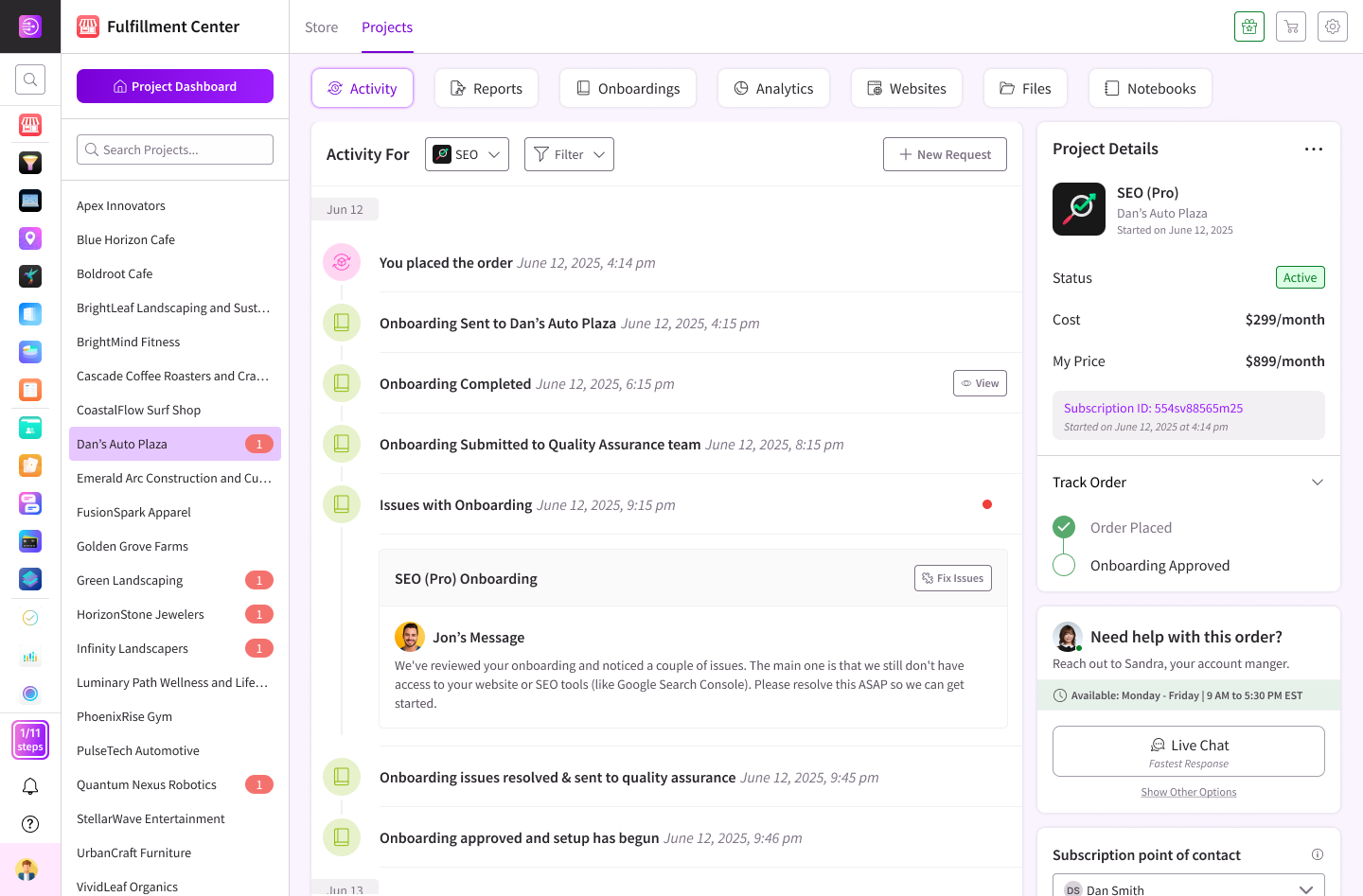
How DashClicks' White Label SEO Services Support Local SEO Fulfillment
For agencies looking to expand their SEO delivery capacity, DashClicks offers white label local SEO service support through several areas:
- Comprehensive SEO Fulfillment: Supports recurring SEO requirements across client accounts, including on-page SEO, technical optimization, content creation, local SEO activities, link building, and reporting.
- Scalable Local SEO Support: Helps agencies manage SEO requirements across multiple client accounts and business locations without placing additional pressure on internal teams.
- Agency-Owned Client Relationships: Allows agencies to retain control over client communication, market strategy, recommendations, and final decisions while delegating agreed-upon execution tasks.
- Reduced Operational Workload: Shifts recurring SEO execution tasks to the fulfillment partner, giving internal teams more time for strategic planning, client relationships, and business development.
- Flexible Delivery Capacity: Helps agencies accommodate additional local SEO accounts and locations without expanding every internal operational function at the same pace.
- White Label Brand Control: Enables agencies to deliver SEO services under their own brand while keeping the fulfillment partner behind the scenes.
DashClicks helps agencies extend their local SEO delivery capacity through structured white label fulfillment while maintaining ownership of their brand, client relationships, and overall strategy.
Scale Local SEO Without Losing Location-Level Focus
Effective multi-location local SEO requires individual attention to each market rather than a single strategy applied uniformly across every address. Search behavior, competition, business information, and content relevance all vary between locations.
Agencies need relevant keyword targeting, accurate business profiles, useful location-specific content, and performance tracking at the individual market level. They must also address challenges such as inconsistent business information, content duplication, uneven optimization requirements, and limited fulfillment capacity.
A structured white label local SEO firm is a practical way to expand execution capacity while maintaining consistent processes. Agencies retain ownership of client relationships, strategy, recommendations, and final decisions, while fulfillment partners support recurring optimization activities.
Combining location-specific strategies, consistent execution standards, and clear agency oversight allows agencies to scale local SEO without losing the market-level focus that makes it effective.