

.svg)

.svg)
.svg)
.svg)
.svg)
.svg)
Facebook Ads performance is rarely a straight line. Results can fluctuate due to auction competition, shifting audience behavior, seasonality, creative fatigue, and frequent platform updates. A campaign that delivered strong ROAS last month may dip the next, even when the overall strategy remains unchanged. For agencies, this volatility is simply part of managing paid social campaigns.
Most agencies focus heavily on improving campaign performance, but managing how clients perceive that performance is equally important. A temporary decline in leads can feel alarming to a client who does not understand the factors influencing Facebook Ads results. The same fluctuation often feels far less concerning when expectations have been set properly and communication remains consistent.
This distinction has significant business implications. Acquiring a new customer can cost 5 to 25 times as much as retaining an existing one, making client retention one of the most valuable growth levers for agencies. Maintaining client confidence is often far more cost-effective than constantly replacing lost accounts.
This is where white label Facebook Ads support becomes valuable. By providing consistent campaign management, clearer reporting, and specialized expertise, white label support helps agencies maintain trust, transparency, and consistent performance, even when results fluctuate.
While performance optimization is essential, client confidence often determines whether an agency relationship survives temporary setbacks. To manage expectations effectively, agencies first need to understand what typically causes client concern.
Why Clients Become Concerned About Facebook Ads Performance?
Client anxiety usually follows a few predictable patterns. Recognizing them early helps you respond before frustration sets in.
Common sources of concern include:
- Fluctuating ROAS and lead volume. When return on ad spend drops or leads slow down, clients often assume something is broken, even when the change is temporary.
- Rising CPMs and advertising costs. As cost per thousand impressions climbs, clients see their budgets stretch thinner and start questioning the value they are getting.
- Attribution discrepancies. Numbers in Facebook Ads Manager rarely match a client's CRM or Google Analytics exactly, and those gaps create doubt.
- Delayed conversion cycles. In industries with longer sales cycle, leads may take weeks to convert, leaving clients impatient in the meantime.
- Unrealistic expectations around speed and results. Many clients expect immediate returns and have not been told that early campaigns require a testing period.
Here is the important part: most of these concerns are completely normal. Facebook Ads performance is rarely linear. Campaigns move through testing, learning, and optimization phases, and each of these naturally creates fluctuations in cost and output. The algorithm needs data before it can perform efficiently, and that data takes time to gather.
Platform changes add another layer. When Facebook adjusts its ad delivery system, privacy rules, or reporting tools, results can shift temporarily through no fault of the agency. A client who does not know this is happening behind the scenes may interpret a brief dip as poor management.
For example, an e-commerce client running ads during a slow seasonal period might see their cost per purchase rise. That is a predictable market shift, not a campaign failure. But without a clear explanation, the client may push for sudden changes that disrupt the account.
While occasional performance fluctuations are normal, client perception often matters as much as actual campaign results. If concerns aren't addressed proactively, uncertainty can quickly evolve into frustration, creating pressure on both campaign performance and the agency-client relationship.
How Does Client Doubt Affect Agency Growth?
When a client loses confidence, the effects ripple through your entire operation in ways that are easy to underestimate.
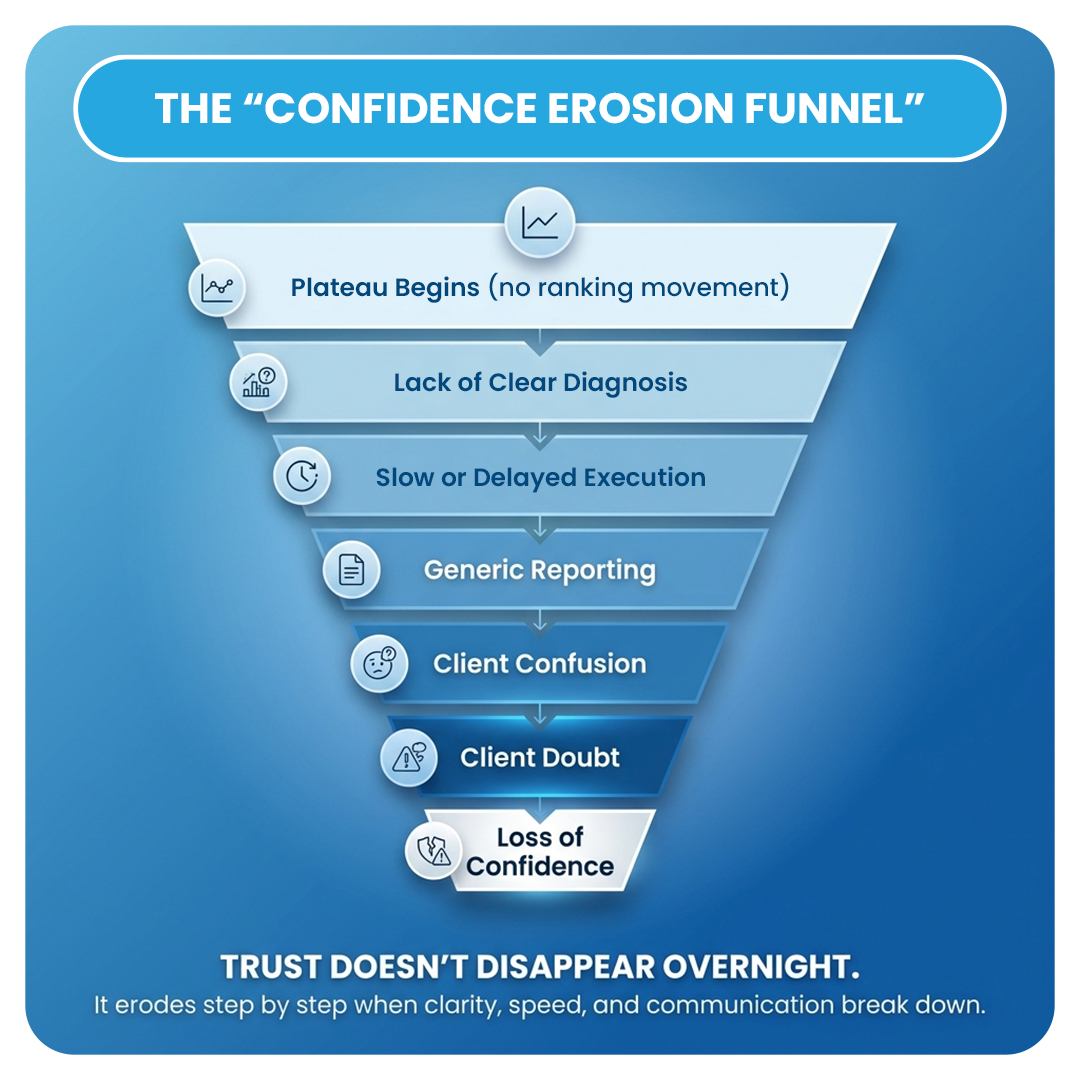
Here is how client concerns typically affect agencies:
- Increased account scrutiny. Doubtful clients start examining every metric, asking for explanations on small movements that would normally go unnoticed.
- More reactive communication. Instead of strategic check-ins, your team spends time answering urgent emails and fielding worried phone calls.
- Additional reporting demands. Clients begin asking for extra reports, custom dashboards, and frequent updates that pull time away from actual optimization.
- Reduced trust in agency recommendations. When confidence erodes, clients second-guess your strategy and resist the very changes that could improve performance.
- Higher churn risk. Left unchecked, all of this builds toward cancellation.
The cost of this churn is high. Research shows that a 5% increase in customer retention can improve profits by 25% to 95%. In other words, holding onto clients does not just protect revenue; it actively multiplies profitability. Every client you keep contributes far more over time than the monthly retainer suggests.
Client trust is what makes that retention possible. When clients trust your agency, they give you room to test, learn, and optimize without panicking over every fluctuation. They understand that short-term dips are part of a longer strategy, and they wait for the results that proper optimization delivers.
Strong relationships also tend to compound. A client who trusts your judgment is more likely to expand their budget, add services, and refer other businesses to you. Retained clients often become long-term revenue drivers, and some of your most profitable accounts will be the ones you have held for years.
Consider an agency that loses a client three months into a campaign because performance had not yet stabilized. Not only does the agency lose that recurring revenue, but it also forfeits the future upsells and referrals that relationship might have produced. The real cost of doubt is rarely just the lost retainer.
Understanding the cost of client uncertainty is only half the equation. To reduce concerns effectively, agencies must first understand what clients actually expect from their marketing partners.
What Clients Really Want From Their Agency?
Clients are not asking for perfect results every month. What they want is more reasonable and more achievable than constant flawless performance.
- Transparency sits at the top of the list. Clients want honest discussions about performance trends, including the disappointing ones. They want clear explanations of both wins and losses, and they want realistic expectations set from the very start of the engagement. A client who hears the truth early is far more forgiving than one who feels blindsided.
- Consistent communication comes next. Regular updates, proactive reporting, and ongoing strategic recommendations show clients that their account is receiving attention. Silence breeds suspicion. When clients do not hear from you, they assume the worst, even if the campaign is performing well behind the scenes.
- Evidence of progress reassures clients that work is happening. This includes visible optimization efforts, clear testing roadmaps, and well-defined next steps. Clients want to know what you tried, what you learned, and what you plan to do next. Movement, even during a slow period, signals competence.
- Finally, clients care about business impact. At the end of the day, they want revenue and pipeline growth, improvements in lead quality, and more efficient customer acquisition. Vanity metrics rarely satisfy a business owner who is watching their bank account. Connecting your work to real outcomes keeps the relationship grounded in what actually matters to them.
Providing this level of communication and strategic guidance becomes increasingly difficult as agencies grow. The challenge isn't understanding what clients want. It's delivering that experience consistently across every account.
Further Reading: Facebook Ads: Managing Client Expectations with White Label Services
How White Label Facebook Ads Support Helps Agencies Build Client Confidence
As your client roster expands, the gap between what clients want and what your team can deliver tends to widen. White label Facebook Ads support closes that gap by adding fulfillment capacity and expertise without forcing you to hire. Here is how it strengthens client confidence on multiple fronts.
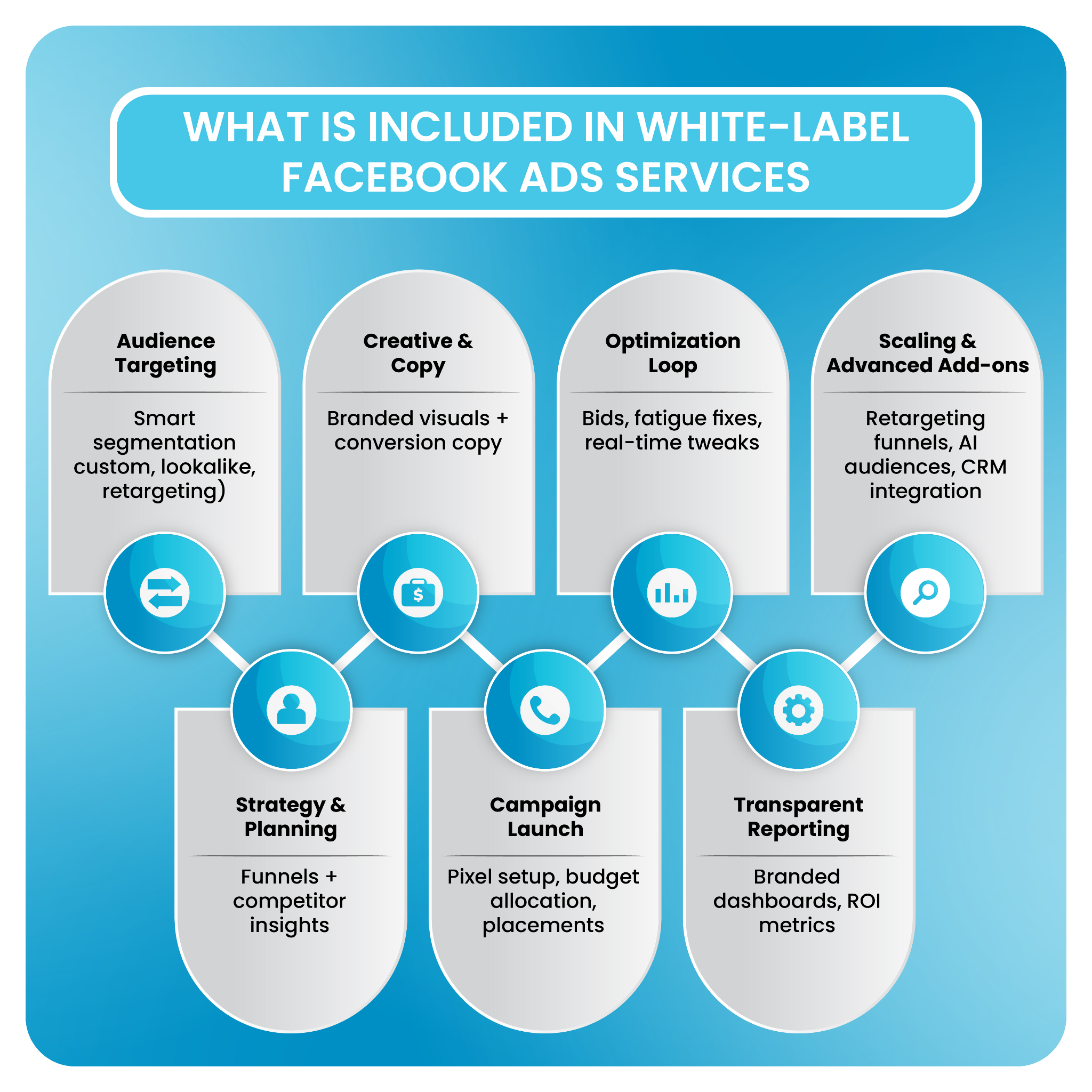
- Consistent campaign management is the foundation. A dedicated white label team can provide daily monitoring, continuous optimization, and faster issue resolution across every account. When a campaign starts underperforming, problems get caught and corrected quickly rather than sitting unnoticed until the client points them out. This consistency is hard to maintain in-house when a small team is juggling dozens of accounts at once.
- Better reporting and insights make client conversations easier. A strong white label Facebook Ads agency delivers more accurate performance visibility, which in turn helps you explain results in plain language. Instead of scrambling to interpret a confusing dip, you walk into agency client meetings with a clear narrative backed by data. That clarity builds credibility and calms nerves.
- More time for the agency-client relationship may be the most underrated benefit. When you choose to outsource Facebook marketing execution, your team spends far less time buried in Ads Manager and far more time on strategy and communication. The relationship-building work that actually drives retention finally gets the attention it deserves. For many agencies, this shift alone transforms how clients perceive their service.
- Access to specialized expertise rounds out the picture. White label Facebook Ads management connects you with experienced professionals who run campaigns every day across many industries. They bring proven optimization processes and stronger campaign execution than a generalist team can usually match. Your clients benefit from that depth of skill without ever knowing the work was fulfilled by a partner.
Consider a small agency with five Facebook Ads clients and a two-person team. As they sign three new accounts, optimization quality starts to slip, and client emails go unanswered for days. By partnering with a white label Facebook ads provider, the agency keeps every account properly managed while the founders focus on onboarding and client check-ins. The clients experience steady performance and responsive communication, and the agency grows without burning out its staff. That is the practical value of white label support: it protects both performance quality and communication standards at the same time.
The benefits of white label support become especially noticeable when agencies begin approaching operational capacity. As client demands increase, maintaining optimization quality and communication standards becomes significantly more challenging.
Signs Your Agency Could Benefit From White Label Support
Most agencies do not decide to outsource on a quiet day. The need usually announces itself through a series of warning signs that build over time.
- Operational warning signs show up first inside your team. A growing client roster starts to outpace your capacity. Reporting demands pile up faster than you can fulfill them. Campaign optimizations get delayed because no one has the bandwidth to log in. Team members are stretched thin, and account management becomes inconsistent, with some clients getting attention while others quietly slip through the cracks.
- Client experience warning signs follow close behind. You notice more performance-related questions landing in your inbox. Response times stretch from hours to days. Strategic conversations dry up because everyone is too busy putting out fires. And eventually, the most telling signal of all appears: client churn starts to creep upward.
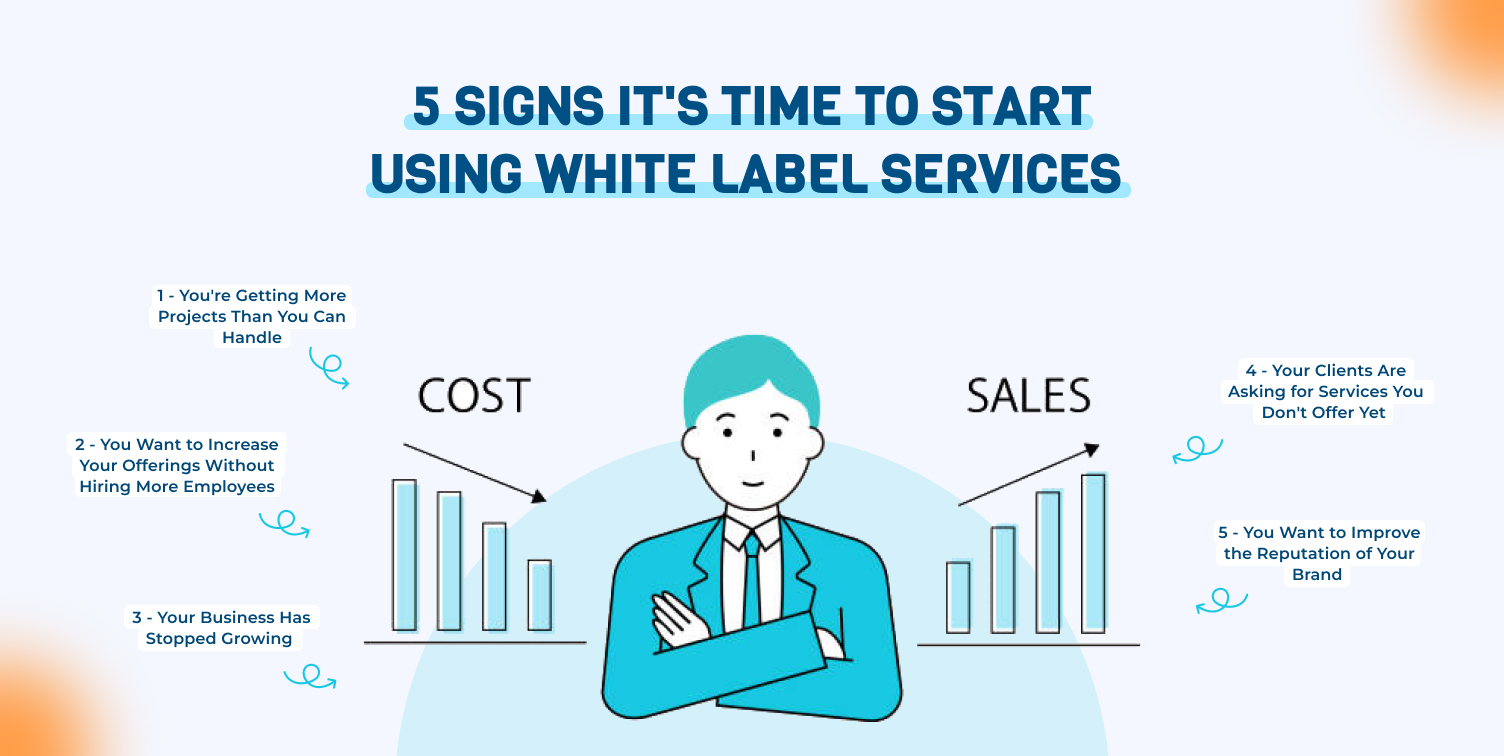
Image Source: Dynamic Dreamz
Picture a consultant who manages Facebook Ads for eight clients alone. For a while, the workload is manageable, but after landing two larger accounts, the consultant finds that reports go out late, optimizations happen weekly instead of daily, and two clients mention they feel out of the loop. These are not signs of incompetence. They are signs of a fulfillment model that has hit its ceiling. The work has simply outgrown the available hours in the day.
When you start seeing these patterns, it is a signal that your current setup cannot scale further without something breaking, either the quality of your work or the well-being of your team.
Recognizing these challenges is the first step. The next is finding a solution that helps your agency scale fulfillment while maintaining the level of service clients expect.
How DashClicks Helps Agencies Deliver a Better Client Experience
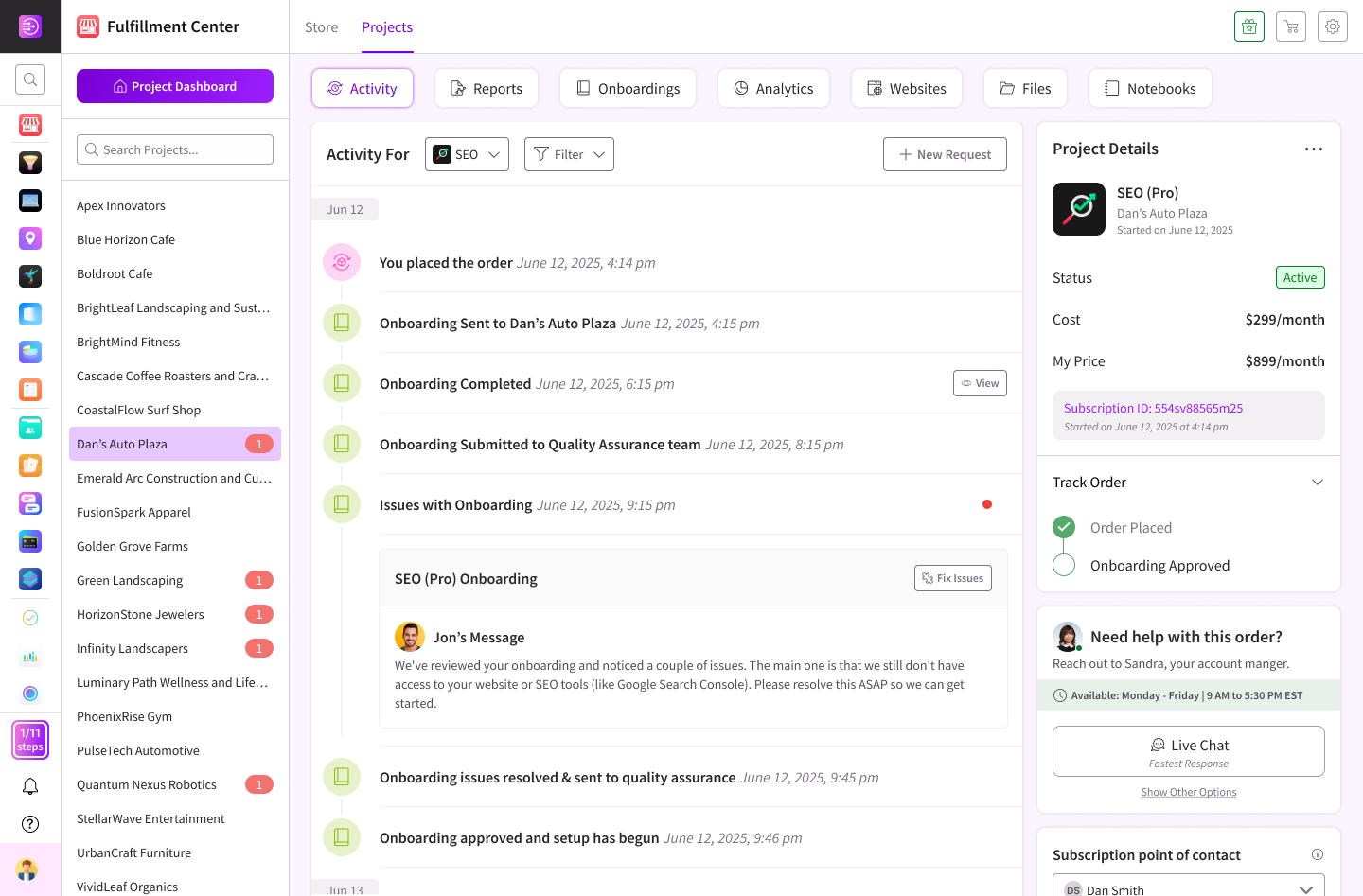
DashClicks is built to help agencies solve the exact tension described above: growing demand on one side and limited internal capacity on the other. Rather than adding to your team's workload, it expands what your agency can deliver behind the scenes.
- White label Facebook Ads management handles the day-to-day execution that consumes so much agency time. This includes campaign setup and management, audience optimization, and ongoing performance monitoring. Your clients receive professionally managed campaigns under your brand, while your team stays focused on the work only you can do.
- Reporting support gives you the visibility that keeps client conversations productive. With clear reporting, meaningful performance insights, and data-backed recommendations, you walk into every client meeting prepared to explain what is happening and why. That preparation translates directly into client confidence, especially during the inevitable rough patches.
- Scalability without additional hiring is where the operational impact really shows. DashClicks increases your fulfillment capacity, supports consistent service delivery across every account, and reduces the operational strain that comes with rapid growth. You can take on new clients without the cost, risk, and delay of recruiting and training new staff.
The downstream effect is agency growth. Improved client confidence leads to better retention opportunities, and the time you reclaim can be redirected toward strategy and business development. Instead of being trapped inside campaign execution, you get to focus on the activities that actually grow your agency. For agencies looking to outsource Facebook marketing without sacrificing quality, this combination of fulfillment and reporting support creates a dependable foundation for scaling.
Ultimately, maintaining client confidence is not about eliminating every fluctuation in performance. It is about building systems that allow agencies to communicate clearly, optimize consistently, and deliver a dependable client experience.
Trust Is the Foundation of Long-Term Client Retention
Facebook Ads performance concerns are not a problem you can fully eliminate. They are inevitable. Auction dynamics shift, costs rise and fall, and platform updates arrive whether you are ready for them or not. The question is never whether fluctuations will happen, but how your agency responds when they do.
That response is what separates agencies that retain clients from those that constantly chase new ones. Consistent optimization shows clients that their account is in capable hands. Transparency keeps them grounded in reality instead of fear. Clear, proactive communication turns a worrying dip into a manageable conversation rather than a relationship-ending event. Together, these habits build the trust that carries a client relationship through difficult stretches.
White label support makes it realistic to deliver these experiences at scale. By outsourcing fulfillment to specialists, agencies can maintain optimization quality, sharpen their reporting, and free up the time needed to nurture client relationships, all without expanding their internal teams. The result is a service experience that stays steady even as the client roster grows.
The financial logic is hard to ignore. Because acquiring a new client can cost 5 to 25 times more than retaining an existing one, investing in client confidence isn't just good service. It's a smart growth strategy. Every relationship you protect saves you the steep expense of replacement and opens the door to upsells, referrals, and long-term revenue.
Agencies that build trust are simply better positioned for the future. They retain more clients, improve profitability, and scale sustainably, while their competitors stay stuck on the acquisition treadmill.


.svg)


.svg)
.svg)
.svg)
.svg)
.svg)