

.svg)

.svg)
.svg)
.svg)
.svg)
.svg)
Not long ago, digital advertising success was mostly about impressions and reach. If an ad was seen by enough people, it was considered effective. That thinking has changed completely. Today, engagement metrics drive real performance, and agencies are expected to deliver measurable results across every campaign.
Platforms like Meta have shifted their algorithms to prioritize user interaction over passive exposure. This means ads that generate clicks, comments, shares, and meaningful actions get better distribution. Ads that don’t engage simply fade away, no matter how large the budget.
For agencies, this creates both an opportunity and a challenge. Clients are no longer satisfied with vanity metrics. They want to see strong click-through rates, consistent conversions, and a clear return on ad spend. Delivering that level of performance across multiple accounts is not easy.
This is where white label Facebook Ads have become a powerful solution. Instead of trying to manage everything internally, agencies can rely on specialized teams that focus on performance at scale.
To truly understand how this works, it’s important to first break down what engagement metrics actually mean and why they matter so much.
Engagement in Facebook Ads is not just one number you glance at in a dashboard. It’s a network of metrics that work together. When one improves, it often creates a ripple effect across the rest.
For example, better creatives can increase click-through rate, which can lower costs and improve conversions. Understanding how these pieces connect is what separates average campaigns from consistently profitable ones.
Let’s break it down properly.
A. Primary Performance Metrics (Direct Revenue Impact)
These are the metrics that directly influence revenue and profitability. If you’re reporting results to clients or measuring campaign success, this is where most of your attention goes.
1. Click-Through Rate (CTR)
Click-Through Rate measures the percentage of people who click on your ad after seeing it.
- A high CTR usually means your creative, headline, and targeting are aligned
- A low CTR often signals weak messaging or poor audience fit
- Strong CTR also improves your ad relevance, which can reduce costs over time
In simple terms, CTR tells you if your ad is doing its job of grabbing attention.
2. Conversion Rate (CR)
Conversion Rate tracks how many users complete a desired action after clicking your ad.
- This could be a purchase, sign-up, or lead submission
- A strong CR indicates your landing page, offer, and user experience are aligned
- A weak CR often points to friction after the click, not the ad itself
This is where many campaigns fail. The ad works, but the landing experience doesn’t.
3. Cost Per Click (CPC)
Cost Per Click is the amount you pay for each click.
- Lower CPC means you’re getting traffic more efficiently
- CPC is heavily influenced by CTR and competition
- Better engagement typically leads to lower CPC over time
Think of CPC as a reflection of how expensive it is to earn attention.
4. Cost Per Mille (CPM)
Cost Per Mille is the cost per 1,000 impressions.
- It’s influenced by audience competition, seasonality, and ad quality
- High CPM doesn’t always mean poor performance, but it reduces margin flexibility
- Strong engagement can help stabilize or lower CPM
This metric helps you understand how expensive it is to reach your target audience.
5. Return on Ad Spend (ROAS)
ROAS is the ultimate performance metric.
- It shows how much revenue you generate for every rupee spent
- A ROAS of 4 means you earn ₹4 for every ₹1 spent
- It combines the impact of all other metrics into one number
If CTR brings people in and CR converts them, ROAS tells you if it’s all worth it.
Benchmark Context: Industry benchmarks suggest:
- Average Facebook Ads CTR: ~0.9% to 1.6%
- Average conversion rates: ~2% to 5% (varies by industry)
These are useful reference points, but top-performing campaigns often exceed them by a wide margin through continuous testing and optimization.
B. On-Ad Engagement Metrics (User Interaction Signals)
These metrics reflect how people interact with your ad directly within the platform. While they don’t always translate into immediate revenue, they play a major role in how the algorithm evaluates your content.
Key interaction signals include:
- Likes and reactions
- Comments
- Shares
- Saves
- Overall engagement rate
Why do these matter:
- High engagement signals tell the algorithm your ad is relevant and valuable
- This can lead to better placement, lower costs, and wider reach
- Social proof (likes, comments, shares) increases trust and improves CTR
For example, an ad with hundreds of comments and shares naturally feels more credible than one with zero interaction.
C. Video Engagement Metrics (Critical in 2025 and Beyond)
Facebook Video Ads continues to dominate ad performance across platforms. But simply using video isn’t enough. You need to measure how people actually consume it.
Important video metrics include:
3-Second Video Views
- Indicates how effective your hook is
- If users don’t stay for 3 seconds, your opening isn’t strong enough
ThruPlay (15 seconds or full video)
- Measures deeper engagement
- Shows whether your content holds attention beyond the initial hook
Average Watch Time
- Helps you understand overall content quality
- Longer watch times typically signal stronger interest
Video Retention Rate
- Shows how many viewers stay until key moments
- Drop-offs reveal exactly where your content loses attention
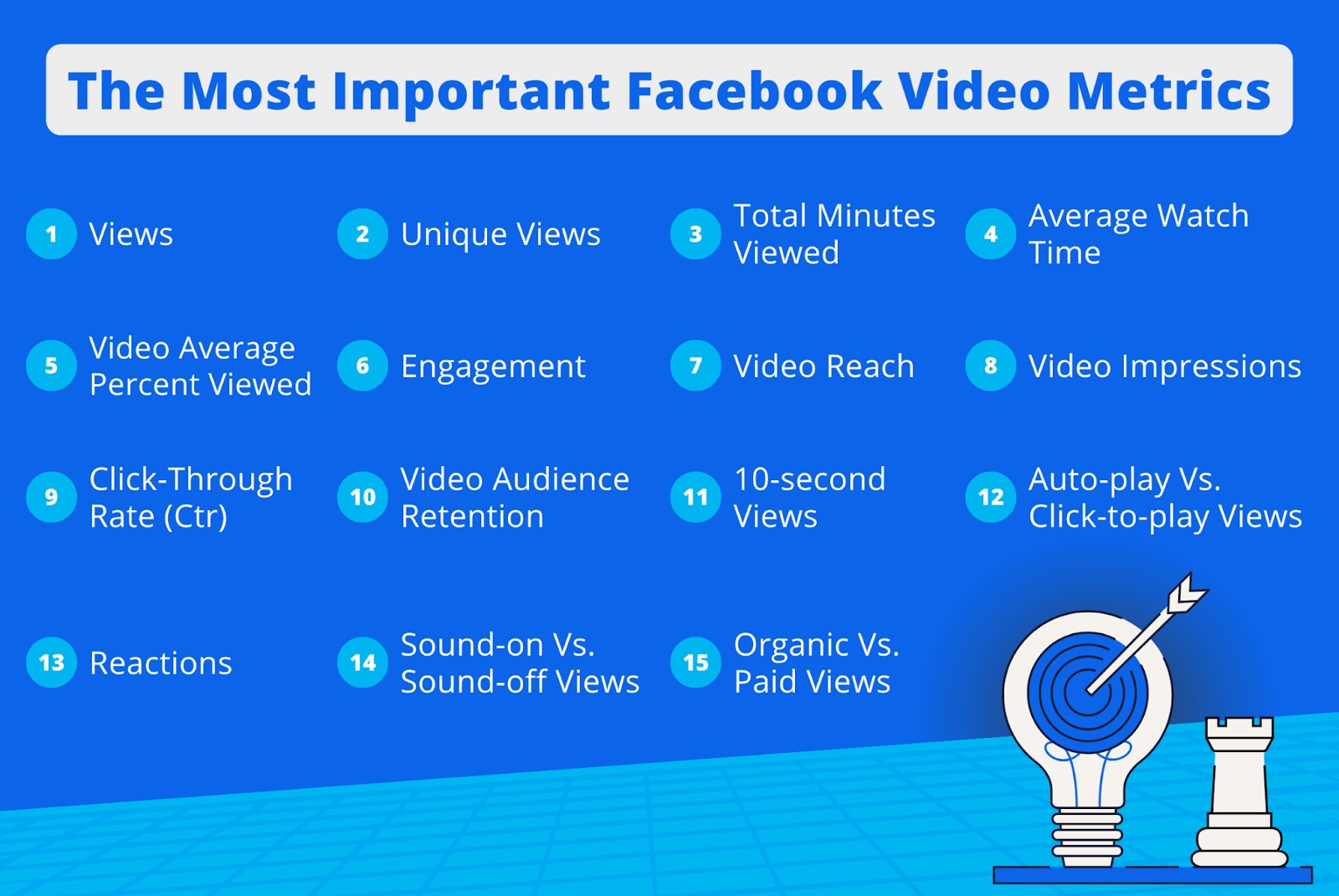
When analyzed together, these metrics give a clear picture of how engaging your video actually is.
Why this matters: Research indicates that well-optimized video ads can generate up to 30% higher engagement compared to static formats. That advantage compounds over time through better reach and lower costs.
D. Behavioral and Funnel Engagement Metrics
Clicks are just the beginning. What users do after clicking is often more important than the click itself.
These metrics help you evaluate the full customer journey.
Key funnel metrics include:
- Landing page views
- Bounce rate
- Time on site
- Add-to-cart actions
- Initiate checkout events
- Purchases
What these tell you:
- Whether your landing page loads properly and quickly
- If your messaging matches user expectations
- Where users drop off in the conversion process
- How strong is your offer really
For example:
- High CTR + low purchases = landing page problem
- Strong add-to-cart but weak checkout = pricing or trust issue
This is where real optimization happens. Not just at the ad level, but across the entire funnel.
E. Delivery and Quality Indicators
These metrics don’t directly represent engagement, but they strongly influence it.
Frequency
- Measures how often the same user sees your ad
- High frequency can lead to ad fatigue and declining performance
- Most campaigns start to see diminishing returns when frequency climbs too high
Relevance Diagnostics
- Includes rankings for quality, engagement rate, and conversion rate
- Helps you understand how your ad compares to competitors targeting the same audience
Impressions vs Reach
- Reach = number of unique users
- Impressions = total views (including repeat views)
- A large gap between the two often indicates repeated exposure
Why this matters:
- If users see the same ad too often, engagement drops
- Creative fatigue leads to lower CTR and higher costs
- Refreshing creatives regularly helps maintain performance
Bringing It All Together
No single metric tells the full story.
- CTR tells you if people are interested
- CR tells you if they take action
- Engagement metrics tell you how content resonates
- Funnel metrics reveal where performance breaks down
- Delivery metrics explain why performance changes over time
The real advantage comes from reading these metrics together, not in isolation. That’s how agencies move from guesswork to consistent, scalable results.
Key Insight: No single metric defines success. Engagement performance works as a connected system where each element influences the others.
While agencies understand these metrics, consistently improving them across multiple clients is where things become difficult.
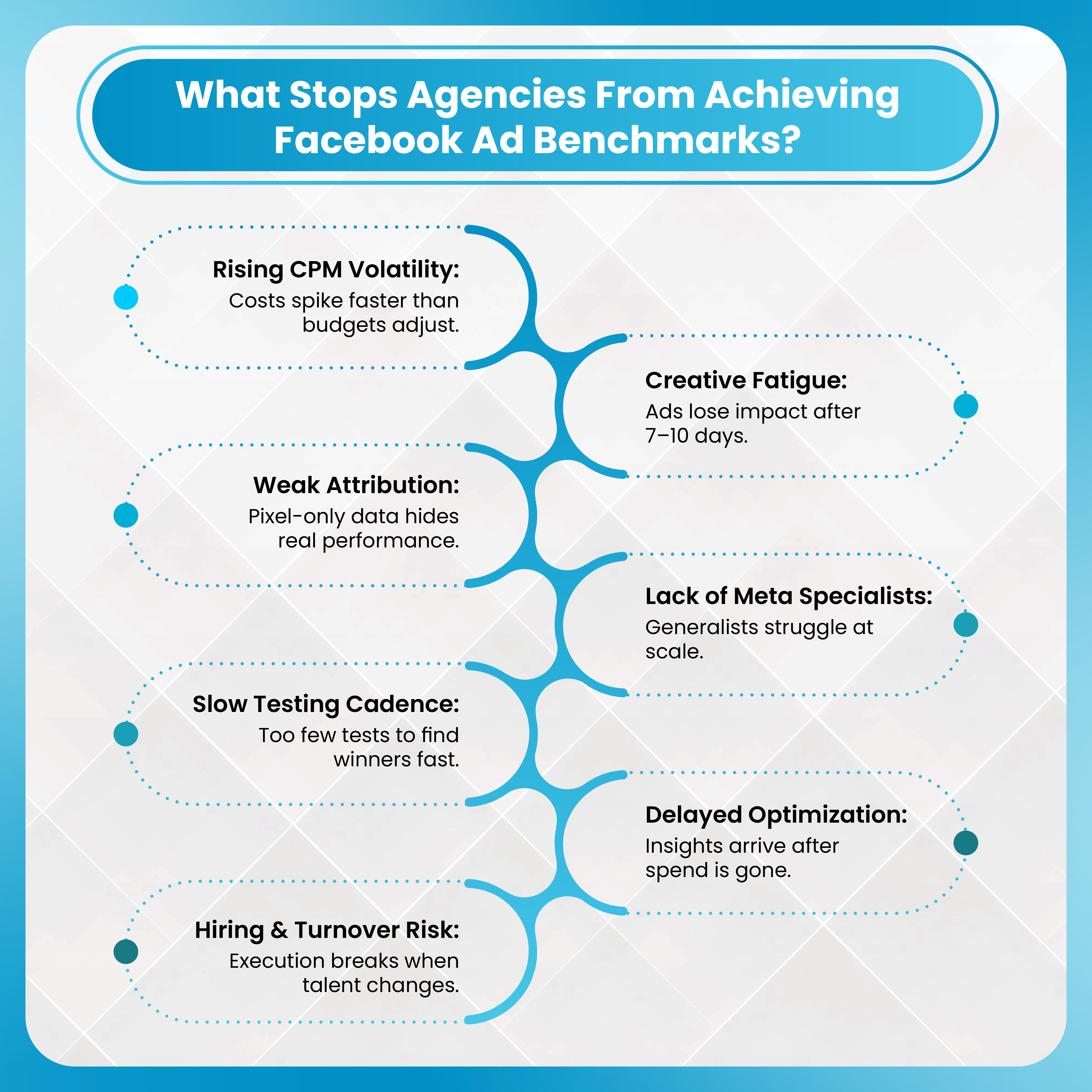
Why Agencies Struggle to Improve Engagement Metrics In-House?
Managing Facebook Ads at scale is complex. Even experienced agencies face recurring challenges when trying to improve engagement consistently.
One of the biggest issues is limited creative production. Strong engagement starts with strong creatives. Without a steady flow of new ideas, CTR tends to stagnate. Another common problem is inconsistent funnel optimization. Even if ads generate clicks, poor landing pages can lead to low conversion rates.
Cost control is also a challenge. As competition increases, CPC and CPM often rise. Without advanced optimization strategies, campaigns become less efficient over time. Testing is another area where many agencies fall short. Structured A/B testing requires time, data, and resources. Without it, learning cycles slow down, and performance plateaus.
Managing multiple client accounts adds another layer of complexity. Each account requires attention, analysis, and optimization. Scaling this internally often means hiring more people, which increases costs.
On top of that, privacy changes and tracking limitations have made attribution more difficult. This makes it harder to identify what’s actually working. The core issue is that many agencies optimize metrics in isolation rather than treating them as part of a larger system.
This is exactly the gap that white label Facebook Ads are designed to fill.
What White Label Facebook Ads Mean for Agencies?
White label Facebook Ads allow agencies to outsource campaign execution to specialized teams while maintaining their own branding.
These external teams handle key components such as:
- Creative strategy and production
- Media buying and optimization
- Funnel alignment
- Performance tracking and reporting
The agency remains the client-facing partner, while the white label provider works behind the scenes.
The biggest advantage is access to expertise and data across multiple accounts. This allows for more refined strategies and faster optimization. But the real value lies in how these systems improve engagement metrics across the board.
How White Label Facebook Ads Improve All Engagement Metrics Systematically?
White label Facebook advertising solutions don’t just improve one metric. They enhance the entire engagement ecosystem.
1. CTR and On-Ad Engagement (Top-of-Funnel Performance)
Strong engagement starts with compelling creatives. White label teams typically use high-volume creative testing frameworks. This means multiple variations of ads are tested simultaneously to identify what resonates best.
They also focus on platform-native formats like Reels and Stories, which tend to perform better in today’s environment. Messaging is carefully aligned with audience intent, ensuring ads feel relevant rather than intrusive.
Impact:
- Higher CTR
- More likes, shares, and comments
- Improved video engagement
2. Conversion Rate and Funnel Engagement (Mid to Bottom Funnel)
Getting clicks is only part of the equation. Converting those clicks is where real value lies. White label teams ensure alignment between ads and landing pages. This creates a seamless user experience.
They also implement retargeting strategies that bring back warm audiences, which often convert at a much higher rate. Offer optimization plays a key role as well. Small changes in messaging or pricing can significantly impact conversions.
Impact:
- Increased conversion rates
- More add-to-cart and purchase actions
- Lower bounce rates
3. Cost Efficiency Metrics (CPC and CPM Optimization)
Better engagement naturally leads to lower costs. When users interact more with ads, relevance scores improve. This often results in reduced CPC and more stable CPM.
White label teams also use advanced bidding strategies and placement optimization to maximize efficiency.
Impact:
- Lower CPC
- Controlled CPM
- Reduced cost per conversion
4. Video and Content Engagement Optimization
Video performance depends heavily on the first few seconds. White label providers focus on hook-driven creatives that capture attention immediately. They continuously refine videos based on retention data.
Multiple formats are tested to identify what works best for each audience.
Impact:
- Higher ThruPlay rates
- Longer watch times
- Better retention
5. Delivery and Algorithmic Performance
Ad fatigue is a common issue that reduces engagement over time. White label teams manage frequency carefully and refresh creatives regularly to keep campaigns effective.
They also leverage advanced campaign types like Advantage+ to improve delivery.
Impact:
- Controlled frequency
- Improved relevance diagnostics
- Better reach efficiency
6. ROAS as the Outcome of Engagement Optimization
All engagement improvements ultimately contribute to better returns. A full-funnel strategy ensures that users are guided from awareness to conversion.
Budgets are allocated based on performance, ensuring that high-performing campaigns receive more investment.
Final Impact:
- Higher ROAS
- Lower customer acquisition cost
- More predictable revenue
The key takeaway here is simple. White label partners don’t optimize individual metrics. They optimize the entire system.
Further Reading: Why Agencies Struggle with ROAS and How White Label Facebook Ads Fix It?

Scaling Engagement Across Clients Without Increasing Headcount
One of the biggest advantages of white label Facebook Ads is scalability.
Agencies can manage multiple campaigns across different industries without increasing internal workload.
This is possible because:
- Campaigns are executed in parallel
- Testing cycles are faster
- Proven frameworks are reused across accounts
As a result, agencies can take on more clients while maintaining consistent performance. This not only improves profitability but also strengthens client retention.
The Systems Behind Consistent Engagement Growth
Sustainable engagement improvements don’t come from one-off tactics. They come from structured systems.
White label providers rely on:
- Creative testing matrices that identify winning variations
- Audience segmentation frameworks for precise targeting
- Cross-account learning that accelerates optimization
- AI-driven tools that enhance performance
These systems allow for continuous improvement without starting from scratch each time. The result is consistent, predictable growth in engagement metrics.
How DashClicks Helps Improve Engagement Metrics with White Label Facebook Ads?
DashClicks plays a key role in helping agencies improve engagement metrics through a structured and performance-driven approach.
Their white label Facebook advertising services focus on full-funnel optimization. Campaigns are not just designed to generate clicks but to drive meaningful actions that impact revenue.
They continuously test new creatives to keep campaigns fresh and engaging. This helps prevent ad fatigue and ensures consistent performance over time. The platform also leverages data from multiple campaigns to refine strategies quickly. This allows for faster improvements in metrics like CTR, conversion rate, and ROAS.
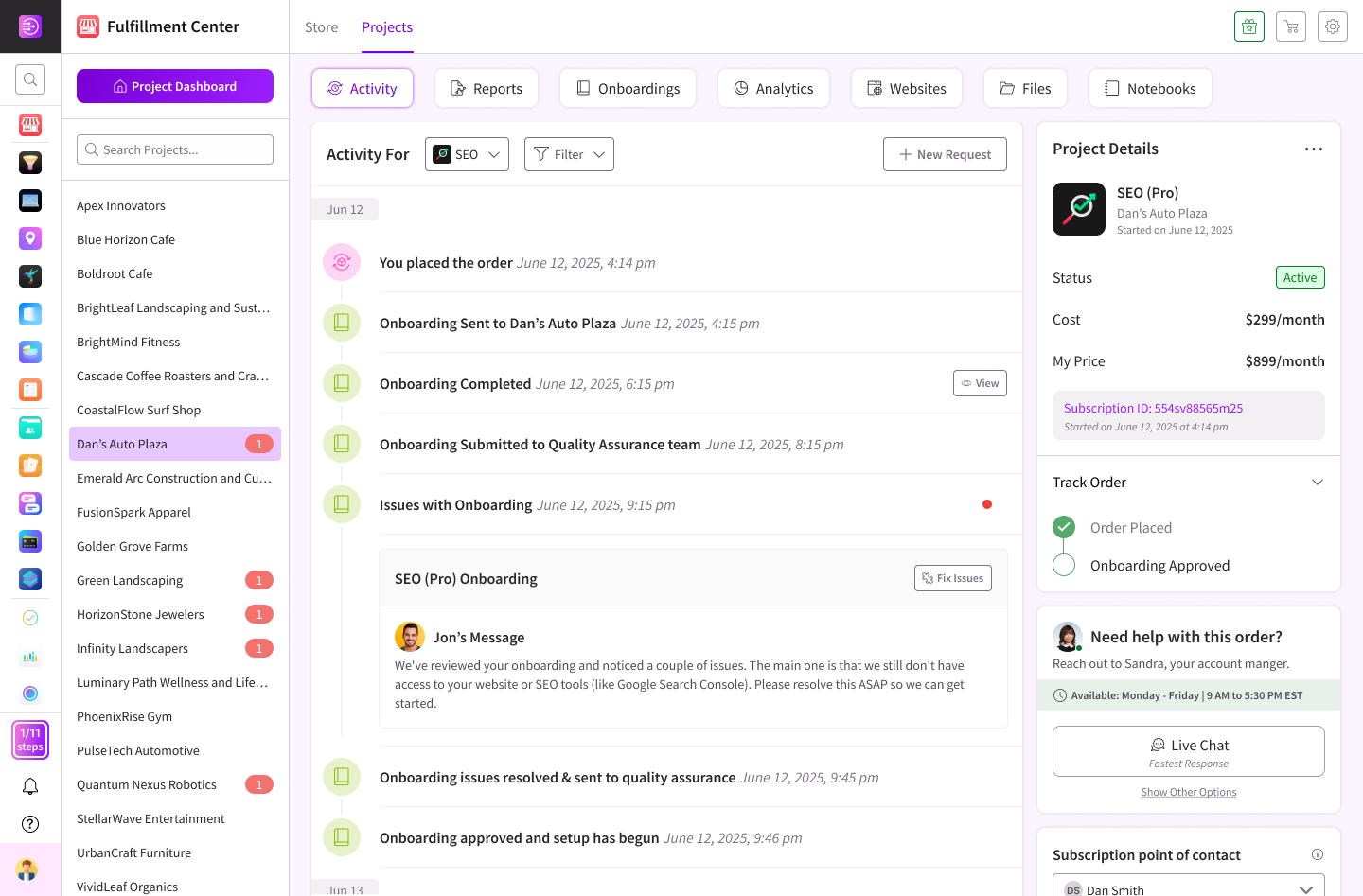
Another important aspect is scalability. Agencies can expand their client base without hiring additional staff. DashClicks handles execution while the agency maintains full control of client relationships. Everything is managed under the agency’s brand, creating a seamless experience for clients.
This combination of strategy, execution, and scalability makes it easier for agencies to consistently improve engagement metrics across all accounts.
Strategic Takeaways: Turning Engagement Metrics into Agency Growth
Engagement metrics are no longer just indicators of ad performance. They are leading signals of business growth. Agencies that focus on improving these metrics can deliver stronger results and build long-term client relationships.
A few key takeaways:
- Engagement is a system, not a single metric
- Creative, targeting, and funnel optimization must work together
- Consistency is more important than short-term wins
- Scalable systems drive sustainable growth
White label Facebook Ads provide a practical way to achieve all of this without increasing internal complexity. They allow agencies to focus on strategy and client relationships while execution is handled by specialists.
Conclusion
Improving engagement metrics is one of the most important challenges agencies face today. With increasing competition and evolving algorithms, delivering consistent results requires more than just basic campaign management.
It requires a system that connects every part of the funnel, from the first impression to the final conversion. White label Facebook Ads offer a clear path forward. They bring together expertise, data, and scalable processes that improve performance across all key metrics.
For agencies looking to grow without sacrificing quality, this approach provides both efficiency and consistency. In the end, agencies that master engagement are the ones that build stronger campaigns, retain more clients, and scale with confidence.


.svg)


.svg)
.svg)
.svg)
.svg)
.svg)