

.svg)

.svg)
.svg)
.svg)
.svg)
.svg)
For digital marketing agencies, few metrics carry more weight than return on ad spend. Clients do not care how complex the strategy is or how many hours were invested. They look at one number: revenue generated compared to money spent.
That pressure has intensified over the past few years.
Advertising costs across platforms owned by Meta Platforms have become more volatile. Increased competition, privacy changes, and algorithm updates have made performance less predictable. According to recent industry reports, average CPMs on Facebook have risen steadily in competitive industries, sometimes increasing by over 15–20% year over year. At the same time, customer acquisition costs across digital channels continue to climb.
Clients expect growth. Budgets are scrutinized more than ever. And agencies are expected to deliver consistent, scalable performance in an environment that keeps shifting.
Here is the hard truth: many agencies can launch campaigns. Fewer can maintain consistent ROAS month after month. Even fewer can scale those campaigns profitably without straining internal operations.
To understand how white label solutions solve this problem, we first need to unpack why agencies struggle with ROAS in the first place.
1. Shallow Platform Specialization
A common issue is that many agencies treat Facebook Ads as an add-on rather than a core discipline.
They may offer SEO, web development, email marketing, branding, and paid search. Paid social becomes one service among many. On paper, this looks like a full-service advantage. In practice, it often leads to surface-level execution instead of deep expertise.
Running high-performing campaigns on platforms owned by Meta Platforms requires constant attention. The advertising environment changes quickly. Auction dynamics shift. Creative trends evolve. Targeting options update. Privacy policies impact tracking.
High performance demands:
- Daily optimization of bids, budgets, and placements
- Ongoing creative iteration to prevent fatigue
- Structured testing frameworks with documented hypotheses
- Continuous monitoring of audience frequency and saturation
- Rapid adaptation to algorithm updates
Many agencies launch campaigns using basic interest Facebook ad targeting and a few ad variations. Results often look promising during the initial learning phase. Performance stabilizes for a short period. Then it plateaus.
Without a testing roadmap, there is no clear next move. Agencies begin guessing. They tweak budgets, duplicate ad sets, or swap minor creative elements. These adjustments rarely produce meaningful lifts. This is not a talent issue. It is a focus issue.
Specialization creates pattern recognition. When a team works exclusively on paid social, they notice trends faster. They identify creative fatigue earlier. They understand how to scale without destabilizing results.
If specialization is the first crack in the foundation, bandwidth is the next.
2. Bandwidth Bottlenecks and Overextension
Even skilled media buyers struggle when overloaded. In many agencies, one buyer manages:
- 10 to 20 active accounts
- Reporting dashboards and performance summaries
- Client strategy calls
- Internal planning meetings
- Cross-channel coordination with SEO or web teams
That workload leaves little room for proactive optimization. High-performing accounts require rhythm. Strong results usually depend on:
- Daily monitoring of spend, CPA, CTR, and frequency
- Weekly structured testing cycles
- Monthly creative refreshes
- Ongoing audience analysis and segmentation refinement
When this cadence breaks, performance begins to decay.
Creative fatigue sets in quietly. Frequency climbs. Click-through rate decline. Cost per acquisition rises gradually. By the time results look alarming, damage has already occurred.
Instead of anticipating performance shifts, teams react after the decline. They rush to fix problems under pressure. Reactive management rarely produces stable ROAS.
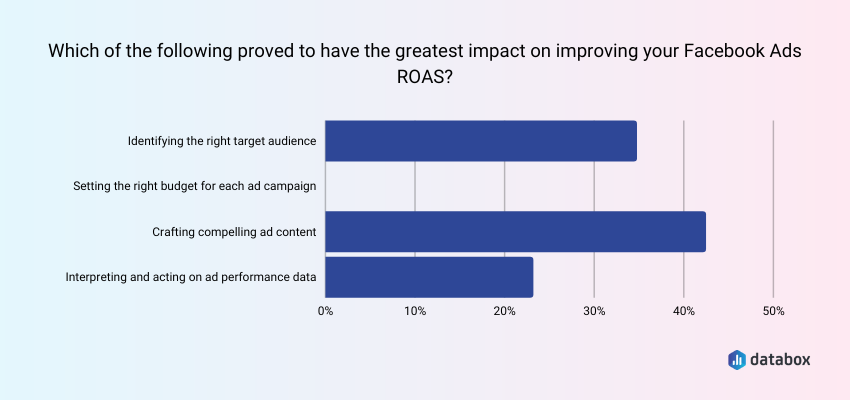
Image Source: Databox
Bandwidth constraints also limit experimentation. Testing requires time to plan, launch, measure, and analyze. When teams are stretched thin, they default to safe tactics rather than innovative approaches.
Even if an agency manages to free up time, another weakness often appears: a lack of systematic testing.
3. Weak Creative Testing Frameworks
In today’s paid social landscape, creative is the primary driver of performance.
Meta has repeatedly emphasized that creative quality significantly influences auction outcomes. Strong creatives can improve engagement, lower CPMs, and increase conversion rates. In competitive markets, the difference between average and excellent creative can determine profitability.
Yet many agencies approach testing casually. Common mistakes include:
- Testing new audiences instead of new creative angles
- Launching two or three variations and calling it a test
- Failing to define clear hypotheses before launching ads
- Repeating the same format with minor cosmetic changes
This approach produces scattered data rather than meaningful insights.
Sustainable ROAS requires structured experimentation:
- Angle testing to explore different value propositions
- Hook testing focused on the first three seconds of attention
- Format testing across UGC, static images, carousels, and short-form video
- Control versus challenger models to isolate performance drivers
For example, instead of launching random variations, a structured framework might test one core offer across three distinct angles. Once a winning angle is identified, the next round refines hooks and visuals. Each round builds on the previous one.
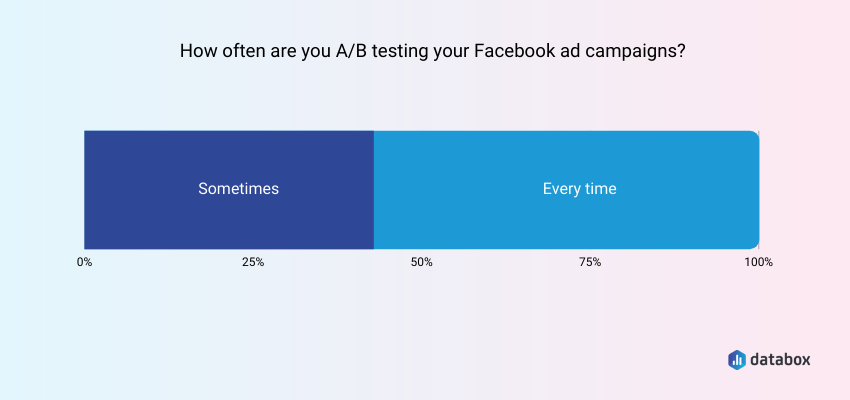
Image Source: Databox
Without this discipline, scaling becomes unpredictable. Agencies rely on occasional winning ads rather than repeatable creative systems.
Creative captures attention. But conversion architecture determines whether attention turns into revenue.
4. Poor Funnel and Tracking Alignment
ROAS instability often begins outside the ad account. Agencies frequently encounter issues such as:
- Weak or generic landing pages
- Slow site speeds, especially on mobile
- Confusing call-to-action
- Mismatched messaging between ad and page
- Inconsistent offers
Even the best ad cannot compensate for a broken funnel.
Conversion rate optimization studies show that improving landing page conversion rates by just 1 to 2 percent can meaningfully reduce acquisition costs. Small improvements compound over time. Yet many agencies focus heavily on ad metrics while overlooking the post-click experience.
Tracking adds another layer of complexity. Data privacy changes have reduced visibility into user behavior. Attribution windows vary between platforms. In-platform ROAS does not always align with CRM or backend revenue data.
Agencies may:
- Neglect server-side tracking implementation
- Rely solely on default attribution models
- Ignore discrepancies between platform and blended revenue data
These gaps create confusion. A campaign may appear profitable inside the ad manager, but underperform in actual revenue reporting. Or the reverse may occur.
Stable ROAS requires ecosystem alignment. Ads, landing pages, tracking systems, and offer positioning must operate together. When even one component breaks, profitability suffers.
Even when campaigns perform well under controlled budgets, scaling introduces additional risk.
5. Scaling Without Structure
Scaling is where many agencies lose control. Performance looks strong at a moderate budget. The instinct is to increase spending quickly. Unfortunately, aggressive scaling often disrupts stability.
Common mistakes include:
- Increasing budgets by large percentages overnight
- Duplicating campaigns without clear testing logic
- Resetting learning phases repeatedly
- Expanding into cold audiences before the creative is validated
The results follow a familiar pattern:
- Rising CPMs as audience pools widen
- Declining click-through rates due to weaker relevance
- Higher cost per acquisition
- Falling ROAS
Scaling is not simply budget expansion. It is a system expansion.
When the budget increases, creative volume must increase. Testing frequency must increase. Monitoring must intensify. Audience segmentation often needs refinement.
Without structured scaling frameworks, agencies move from controlled growth to volatility. Performance swings become more dramatic. Clients become nervous. Internal pressure rises.
These challenges are rarely the result of incompetence. Most agency teams work hard and care deeply about results. The struggle comes from structural limitations: limited specialization, limited time, weak testing systems, and fragmented funnel alignment.
That is precisely where white label Facebook Ads services can change the equation. By introducing dedicated focus, systematic testing, and scalable execution capacity, they address the root causes rather than the surface symptoms of inconsistent ROAS.
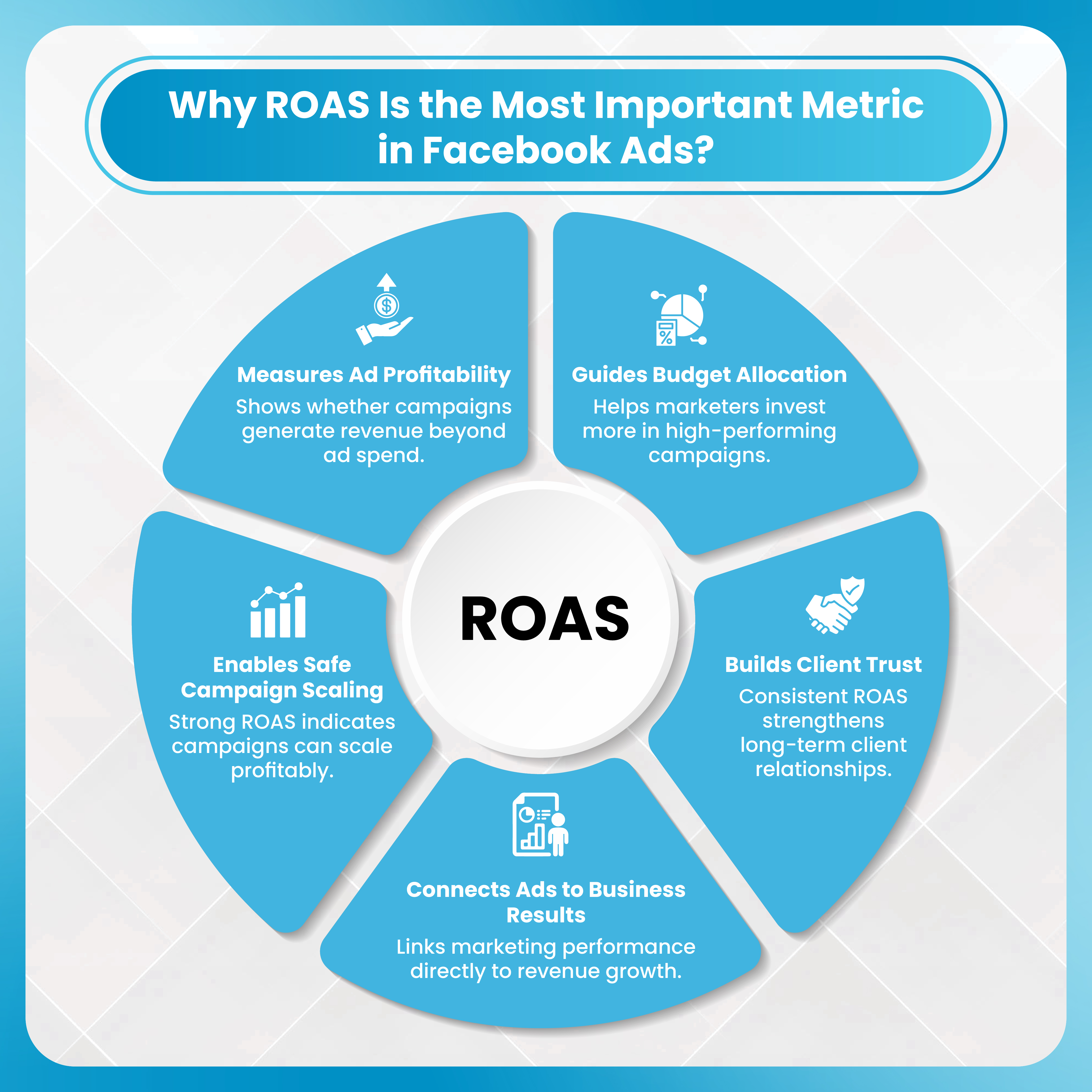
How White Label Facebook Ads Fix the ROAS Problem?
White label support is not simply outsourcing. When implemented strategically, it becomes operational leverage.
1. Dedicated Media Buying Specialists
The best white label Facebook ads services providers offer dedicated specialists who focus exclusively on paid social.
This level of focus leads to:
- Faster adaptation to algorithm changes
- More accurate bid strategies
- Stronger audience segmentation
- Better interpretation of performance trends
Instead of dividing attention across channels, specialists refine one discipline. Depth replaces surface knowledge. Expertise alone is not enough, though. Systems matter.
2. Structured Testing Engines
Professional white label Facebook advertising teams typically operate with formalized frameworks.
They use:
- Documented creative roadmaps
- Clear hypothesis-driven tests
- Control and challenger models
- Creative fatigue monitoring
- Audience saturation tracking
Testing becomes predictable rather than random. This structured approach reduces volatility. Instead of sudden ROAS swings, agencies experience incremental improvements over time.
Performance becomes measurable. Patterns become visible. Decisions become data-driven. Beyond performance gains, there is a major operational advantage.
3. Scalability Without Hiring
Hiring in-house media buyers comes with a high cost.
In the United States, mid-level paid media specialists often earn between $60,000 and $85,000 per year. When you add benefits, tools, and training, total employment costs increase further. There is also ramp time and turnover risk.
White label Facebook ad services provide:
- Immediate senior-level execution
- Flexible capacity
- No HR management burden
- Lower fixed overhead
For agencies, this protects margins. Instead of adding payroll, they add scalable fulfillment capacity.
Profitability improves when high-margin services can be delivered without increasing fixed expenses. The biggest advantage, however, is consistency.
4. Performance Consistency Through Process
White label teams rely on standard operating procedures.
These typically include:
- Weekly account reviews
- Cross-account performance comparisons
- Industry benchmarks
- Structured reporting
When multiple accounts are managed under similar frameworks, institutional knowledge builds quickly.
If one account experiences rising CPMs, insights from similar industries can guide adjustments. If creative fatigue appears, documented testing processes identify replacement strategies.
Agencies benefit from collective experience rather than isolated trial and error. When performance stabilizes, something important happens: client relationships transform.
5. Client Retention and Lifetime Value Expansion
Consistent ROAS reduces anxiety. When clients see predictable returns:
- Churn decreases
- Upsell conversations become easier
- Referrals increase
- Trust deepens
Studies show that improving client retention by just 5% can increase profitability by 25% to 95%, depending on the industry. Stable performance directly supports retention.
White label Facebook advertising becomes more than fulfillment. It becomes a growth strategy.
Agencies can reposition themselves as strategic partners instead of execution bottlenecks. Internal teams focus on acquisition, strategy, and relationships. Specialists handle performance execution. This shift is powerful.
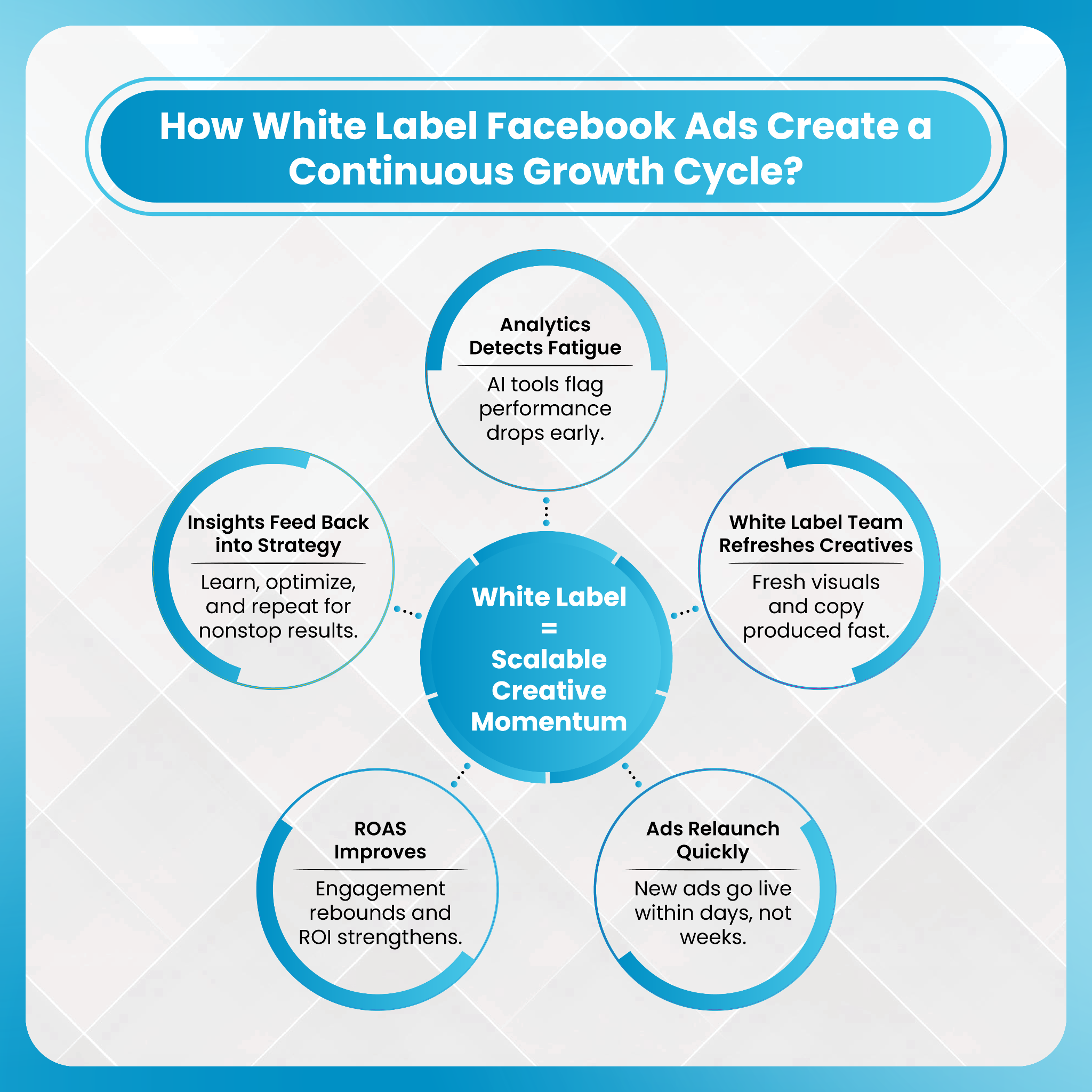
How DashClicks Helps Agencies Stabilize and Scale ROAS?
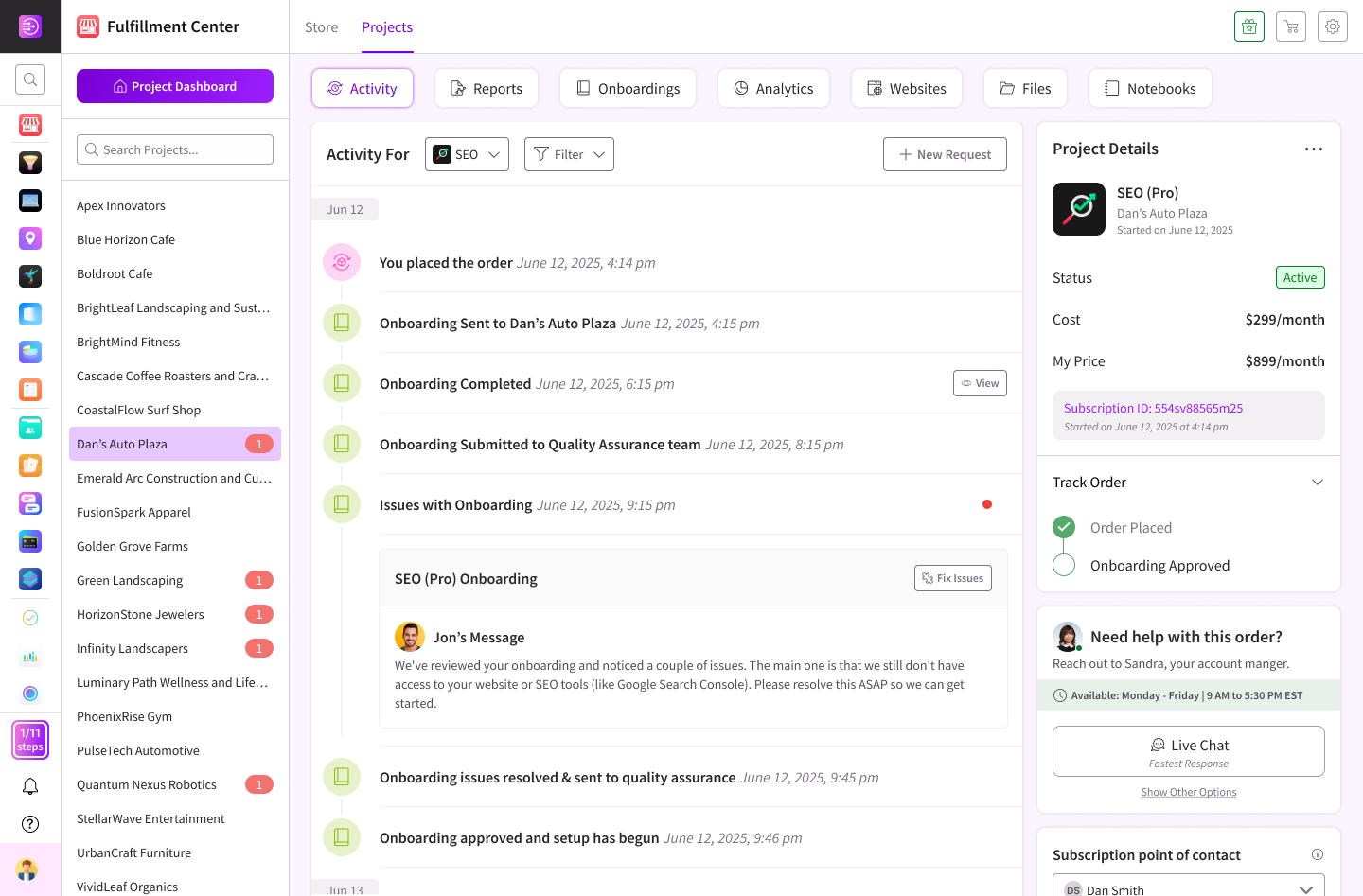
DashClicks provides structured white label Facebook ad services designed specifically for agencies that want predictable performance without building large in-house teams. Instead of acting as a detached vendor, DashClicks operates as an extension of the agency’s brand, aligning reporting, communication, and optimization workflows with the agency’s existing processes. Their paid social specialists focus exclusively on campaign execution, ensuring that optimization is consistent rather than reactive.
The approach is process-driven. Campaign builds follow structured audits and objective-based planning. Creative testing is systematic, not improvised. Performance reviews are conducted regularly, helping agencies detect trends early instead of waiting for performance to drop. This reduces volatility and improves long-term stability.
From a scalability standpoint, DashClicks allows agencies to expand capacity without adding payroll. As client rosters grow, fulfillment scales alongside them. This helps protect margins while delivering the type of disciplined execution typically associated with the best white label Facebook ads teams. Agencies maintain client relationships and strategic oversight while leveraging experienced specialists for day-to-day media buying and optimization.
Systemized execution turns ROAS from unpredictable to manageable. That shift allows agencies to grow with confidence rather than hesitation.
Reframing the ROAS Struggle
Inconsistent ROAS is rarely about intelligence or effort. It is about systems.
Agencies that struggle often face:
- Divided focus
- Limited bandwidth
- Weak testing frameworks
- Funnel misalignment
- Unstructured scaling methods
These are structural constraints, not personal failures. The agencies that win make three core shifts:
- They specialize in execution.
- They standardize testing.
- They scale through leverage.
White label Facebook advertising addresses each of these areas directly. It introduces focus, structure, and scalability without forcing agencies to overhaul their internal teams.
The result is not just better campaigns. It is a stronger operational foundation.
Conclusion: From Volatile Results to Predictable Growth
Paid social is more competitive than ever. Costs fluctuate. Algorithms evolve. Client expectations rise.
Trying to manage all of this internally without deep specialization often leads to inconsistent results. ROAS becomes unpredictable. Scaling feels risky. Teams become overstretched.
The solution is not working longer hours. It is building stronger systems.
White label Facebook ad services provide agencies with dedicated expertise, structured testing, and scalable fulfillment capacity. They transform paid social from a reactive service into a repeatable growth engine.
When execution becomes consistent, performance stabilizes. When performance stabilizes, retention improves. When retention improves, agencies grow.


.svg)


.svg)
.svg)
.svg)
.svg)
.svg)