

.svg)

.svg)
.svg)
.svg)
.svg)
.svg)
Facebook Ads reporting becomes a major operational bottleneck for growing agencies because of fragmented data, attribution gaps, and manual reporting workflows. White label Facebook advertising solutions and centralized analytics platforms help solve this by automating data aggregation, standardizing reports, and allowing agencies to scale without adding more internal reporting work.
Facebook Ads reporting is no longer just a marketing task. For agencies managing multiple accounts, it directly affects client retention, scalability, and profitability. Meta reported 3.56 billion Family Daily Active People across its apps in Q1 2026, while ad impressions across its Family of Apps increased 19% year over year. This scale shows why agencies need faster, clearer, and more organized reporting systems.
In the early stages, pulling metrics from a few accounts into a spreadsheet may feel manageable. As the client roster grows, agencies start dealing with different conversion events, attribution windows, industries, and client expectations.
This lack of standardization slows the entire agency. Account managers spend hours extracting data, formatting charts, and explaining inconsistent numbers instead of focusing on optimization. When reporting is delayed, performance issues may not be caught quickly enough.
The real problem is not a lack of data. It is fragmented data spread across disconnected systems. Agencies need a single source of truth that keeps clients informed and helps teams make faster decisions.
Before agencies can fix reporting inefficiencies, they need to understand where Facebook Ads reporting breaks down first.
Reporting Issues Agencies Face With Facebook Ads
Meta Ads Manager gives agencies plenty of data, but it does not always create reporting clarity. One major issue is the mismatch between Meta Ads Manager and Google Analytics 4.
Meta may credit conversions using view-through attribution and Facebook pixel data, while GA4 may attribute the same activity to organic search, direct traffic, or another channel. This creates confusion when an agency reports one number and the client sees another in their analytics dashboard.
Delayed conversion tracking adds another layer of difficulty. Since reporting can update after conversions are modeled or processed, agencies may be forced to make optimization decisions before the full data is available.
Common reporting issues include:
- Fragmented data across Meta, GA4, CRM systems, and call tracking tools
- Manual report generation through spreadsheets and exports
- Inconsistent KPI definitions between agencies and clients
- Too much data without clear takeaways
- Client confusion around ROAS, CTR, assisted conversions, and attribution windows
Privacy changes have made reporting even more complex. iOS updates, tracking limitations, changing conversion windows, and offline attribution gaps reduce visibility into the full customer journey.
This is especially challenging for lead generation and local businesses. For example, Meta may report a low cost per lead, but the client’s CRM may show that many leads were unqualified or never answered the phone. If the agency only reports Meta data, the client sees a gap between reported performance and actual business results.
The problem is not that agencies lack data. The problem is that Facebook Ads produces too much fragmented data without a unified reporting structure.
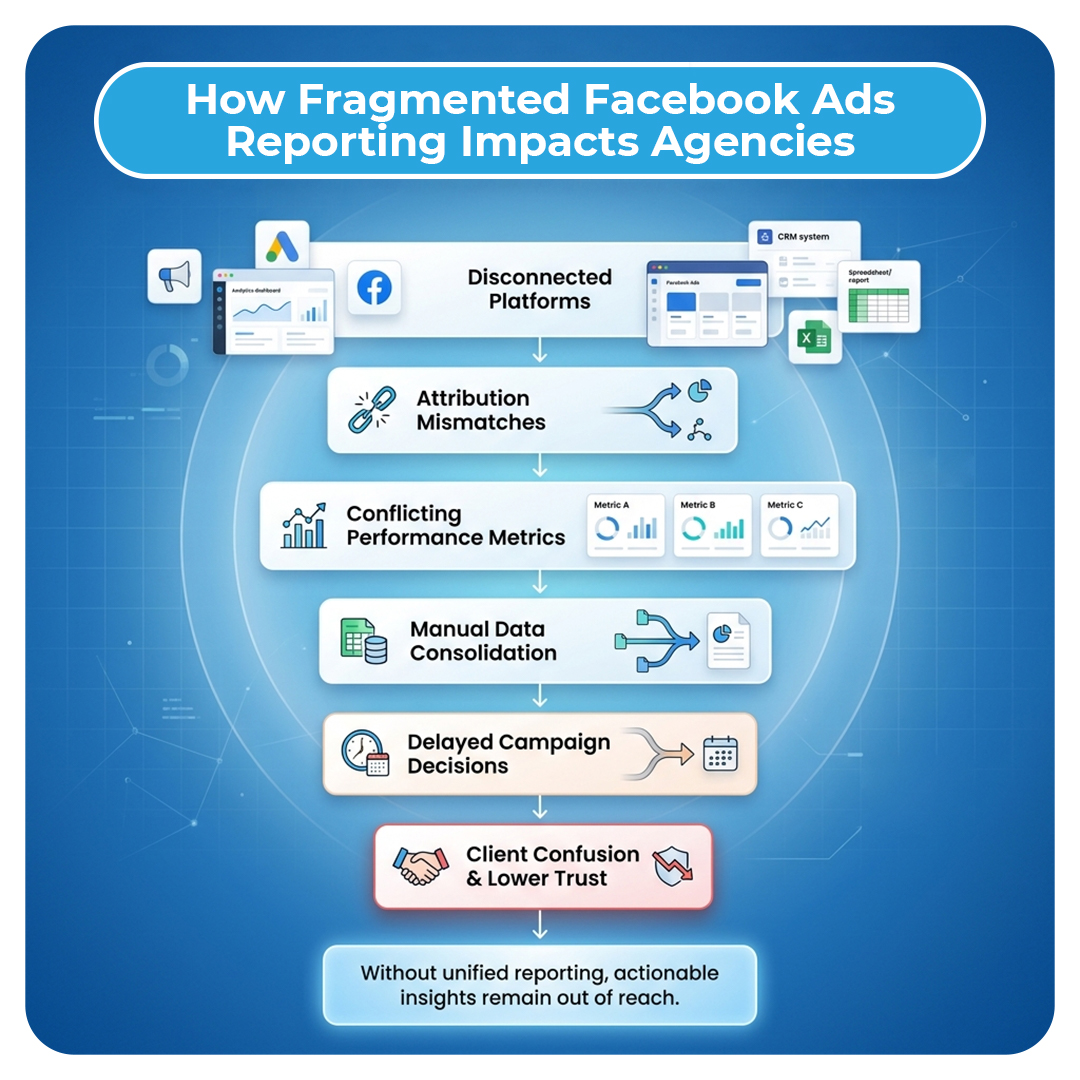
These issues become harder to manage once agencies start handling reporting across dozens of client accounts.
Why Agencies Struggle With Reporting Issues At Scale?
Handling attribution gaps and delayed reporting for one or two clients is manageable. The problem starts when agencies scale across a larger client portfolio.
As the number of accounts grows, teams spend more time compiling reports than analyzing performance. According to AgencyAnalytics benchmark research, most agencies spend 15 to 30 minutes creating a single client report, while more complex accounts can take longer. Across dozens of clients, that becomes a hidden operational cost.
Teams also switch between several platforms just to prepare one review, including Meta Ads Manager, GA4, CallRail, CRM systems, and spreadsheets. This creates unnecessary delays and increases the chances of reporting errors.
The lack of standardized reporting systems creates another bottleneck. When every account manager uses a different template or process, consistency becomes difficult to maintain. It also makes onboarding harder because new team members must learn individual workflows instead of one clear reporting system.
Small inefficiencies compound quickly at scale. A 30-minute report may not seem like much for one client. But across 50 clients, even one hour per report can turn into 50 hours of unbillable work every month.
The operational impact includes:
- Senior talent is spending time on basic reporting tasks
- Slower client communication
- Delayed campaign optimization
- Fulfillment bottlenecks
- Reporting fatigue among internal teams
This also affects performance. If teams are busy compiling month-end reports, they may miss early signs of creative fatigue, tracking errors, or rising acquisition costs.
By the time the report is reviewed, the data may already be stale. As reporting complexity increases, the financial and operational cost of poor reporting becomes impossible for agencies to ignore.
Cost of Poor Facebook Ads Reporting
Facebook Ads Reporting is often the most visible part of a digital marketing agency’s work. Clients may not see the hours spent building audiences, testing creatives, or adjusting bids, but they do see the final report.
When that report is confusing, delayed, or inconsistent, the impact is serious. The first major consequence is loss of trust. If agency data repeatedly conflicts with the client’s internal sales figures, the client may begin questioning the entire service.
Clients rarely leave only because campaigns fluctuate. They leave when they no longer trust the visibility and explanation behind the results.
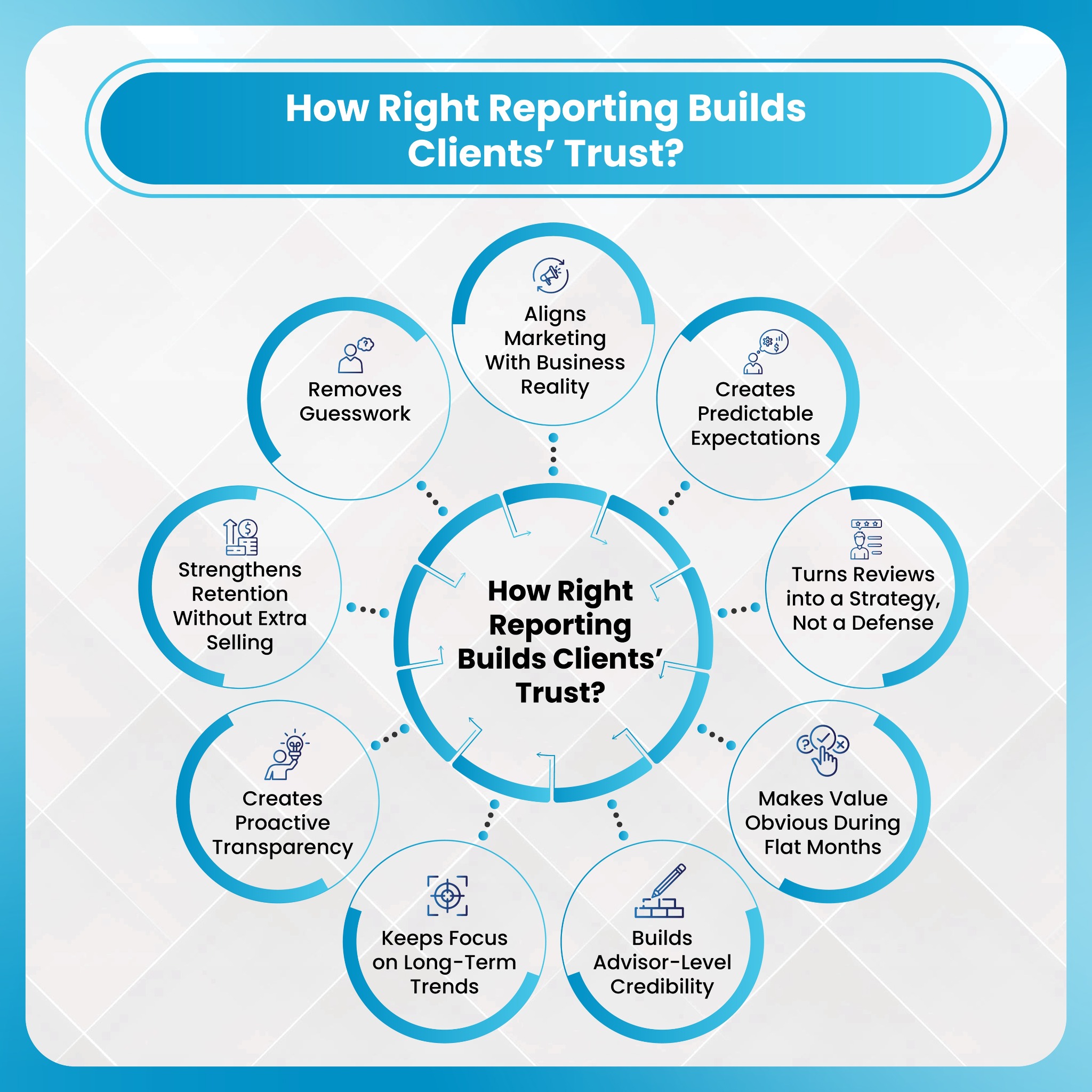
Performance marketing naturally has ups and downs. Costs rise, campaigns slow down, and attribution shifts. But if an agency cannot clearly explain what changed and what is being done next, the client feels out of control.
Poor reporting weakens:
- communication
- confidence
- perceived agency expertise
- decision-making speed
- client retention
It also makes ROI harder to prove. If a client spends heavily on Facebook Ads, they need reporting that connects ad spend to leads, revenue, or pipeline. A report focused only on impressions and clicks will not justify the investment.
Poor reporting also creates internal problems. Teams may miss tracking issues, landing page errors, or creative fatigue because the data is scattered across too many systems.
By the time the issue appears in a monthly report, the budget may already be wasted.
Repetitive reporting work can also create burnout. When skilled team members spend hours fixing spreadsheets or explaining attribution gaps, they have less time for strategy and optimization.
To overcome these challenges, agencies are increasingly moving toward centralized and scalable reporting systems powered by white label Facebook Ads solutions.
How White Label Services Help Facebook Ads Reporting Issues?
To scale profitably, agencies need to reduce the friction of manual data aggregation. This is where white label Facebook ads fulfillment services and centralized analytics platforms become useful.
Instead of pulling data from multiple tools and rebuilding reports manually, agencies can use structured reporting systems that bring campaign data into one place. This helps teams improve visibility, reduce errors, and create a more consistent client reporting experience.
White label reporting systems help agencies:
- centralize campaign visibility across client accounts
- reduce manual reporting work
- standardize dashboards and client updates
- improve communication with clearer data
- scale reporting without adding more internal overhead
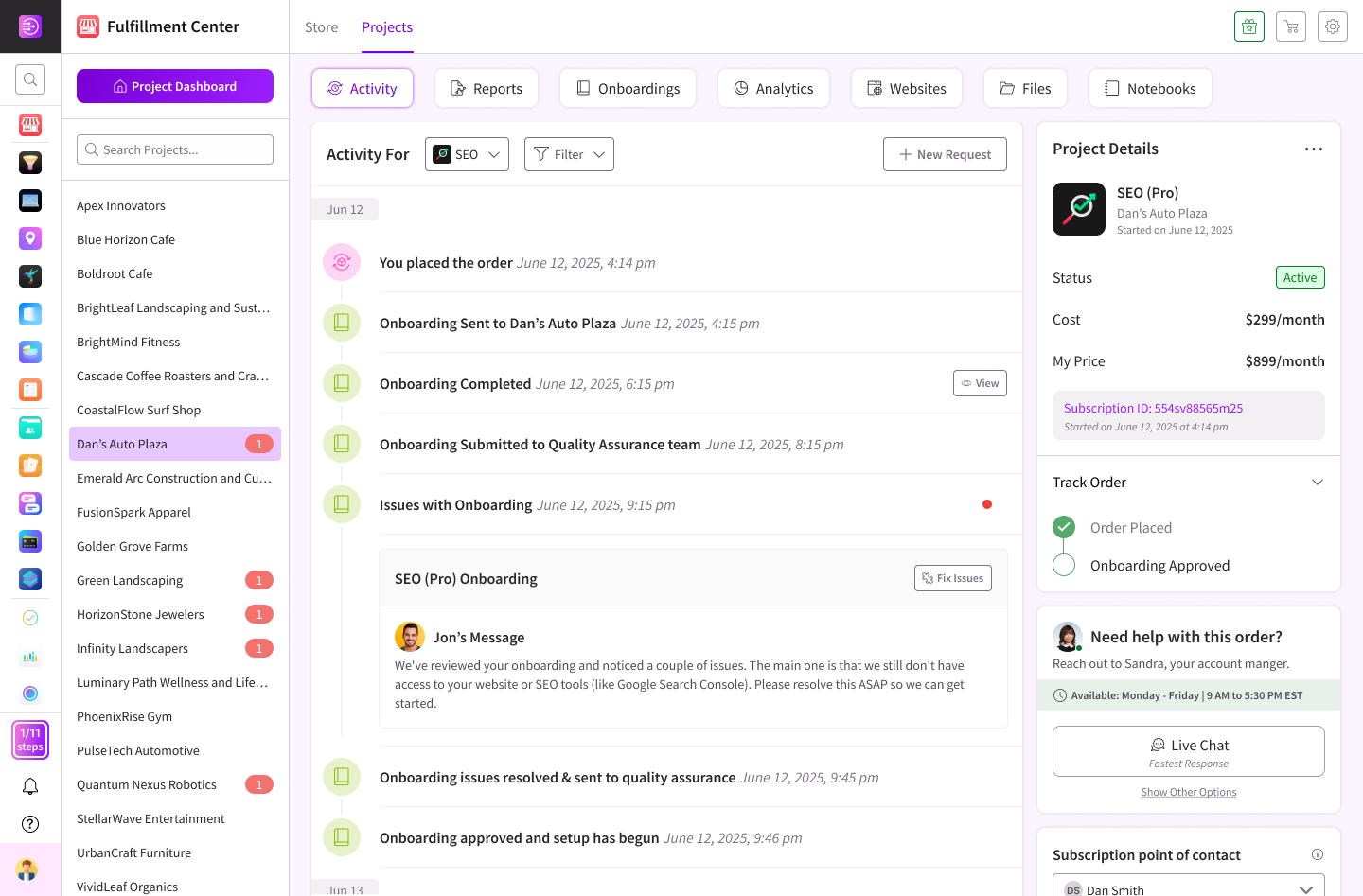
DashClicks’ white label Analytics Software can support this process by helping agencies centralize Facebook Ads reporting through agency-focused analytics tools. With Facebook Ads analytics integration, automated dashboards, cross-channel visibility, real-time reporting access, and white-labeled client dashboards, agencies can organize campaign performance in a more accessible way.
This reduces the need to compile fragmented Facebook Ads data manually. Clients can review campaign metrics through a branded reporting environment, while account managers can spend more time on strategy, optimization, and client communication.
The real value is operational. Better reporting systems help agencies turn Facebook Ads reporting from a repetitive administrative task into a more scalable client management process.
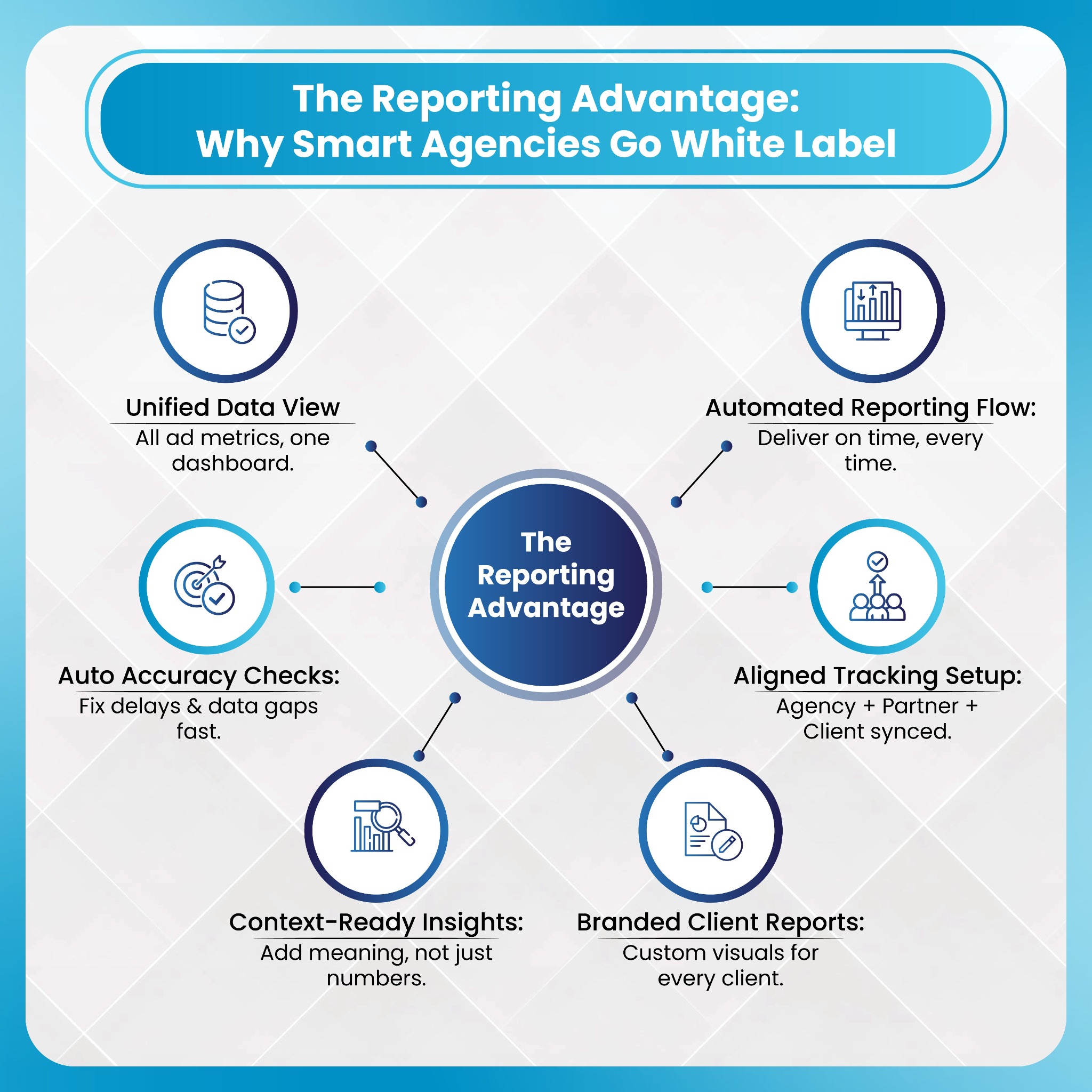
However, better tools alone are not enough. Agencies also need to measure the metrics that actually reflect business impact.
Further Reading: 6 White Label Reporting Features that Agencies Need
What Agencies Should Actually Measure In Facebook Ads Reporting?
Having a centralized reporting system is only valuable if the data being displayed actually helps the client make informed business decisions. Too often, agencies fill their reports with vanity metrics to make campaigns look successful, even when the underlying business outcomes are poor. Metrics like impressions, link clicks, and generic engagement rates are useful for media buyers analyzing top-of-funnel traction, but they do not belong at the forefront of a client report. Agencies should measure business outcomes, not vanity metrics.
To provide strategic value, agencies must focus on metrics that align directly with the client's profitability and revenue goals. One critical metric is the cost per qualified lead. Generating leads at a low cost is easy if the targeting is broad, but if those leads do not convert into sales, the campaign is a failure. Tracking lead quality indicators and filtering out unqualified submissions provides a much more accurate picture of campaign success. High click-through rates mean very little if lead quality and downstream conversions remain weak.
Agencies utilizing advanced reporting infrastructure should prioritize the following business-impact metrics:
- Blended ROAS, which measures the total revenue generated across all channels divided by total marketing spend, provides a holistic view of overall marketing efficiency.
- Conversion rate trends highlight how changes in ad creative or audience targeting are impacting the final action taken on the website.
- Customer acquisition cost, detailing exactly how much ad spend is required to acquire a net new paying customer.
- Funnel conversion drop-offs, identifying exactly where users are abandoning the purchasing or booking process.
- Frequency and creative fatigue, monitoring when an audience has seen an ad too many times, and performance begins to decline.
- Attribution-assisted conversions, showing how Facebook Ads contribute to sales that ultimately close via email marketing or organic search.
- Revenue contribution by audience segment, proving which demographic or interest group yields the highest lifetime value.
- Landing page conversion efficiency, ensuring that the post-click experience is actually converting the traffic being generated by the ads.
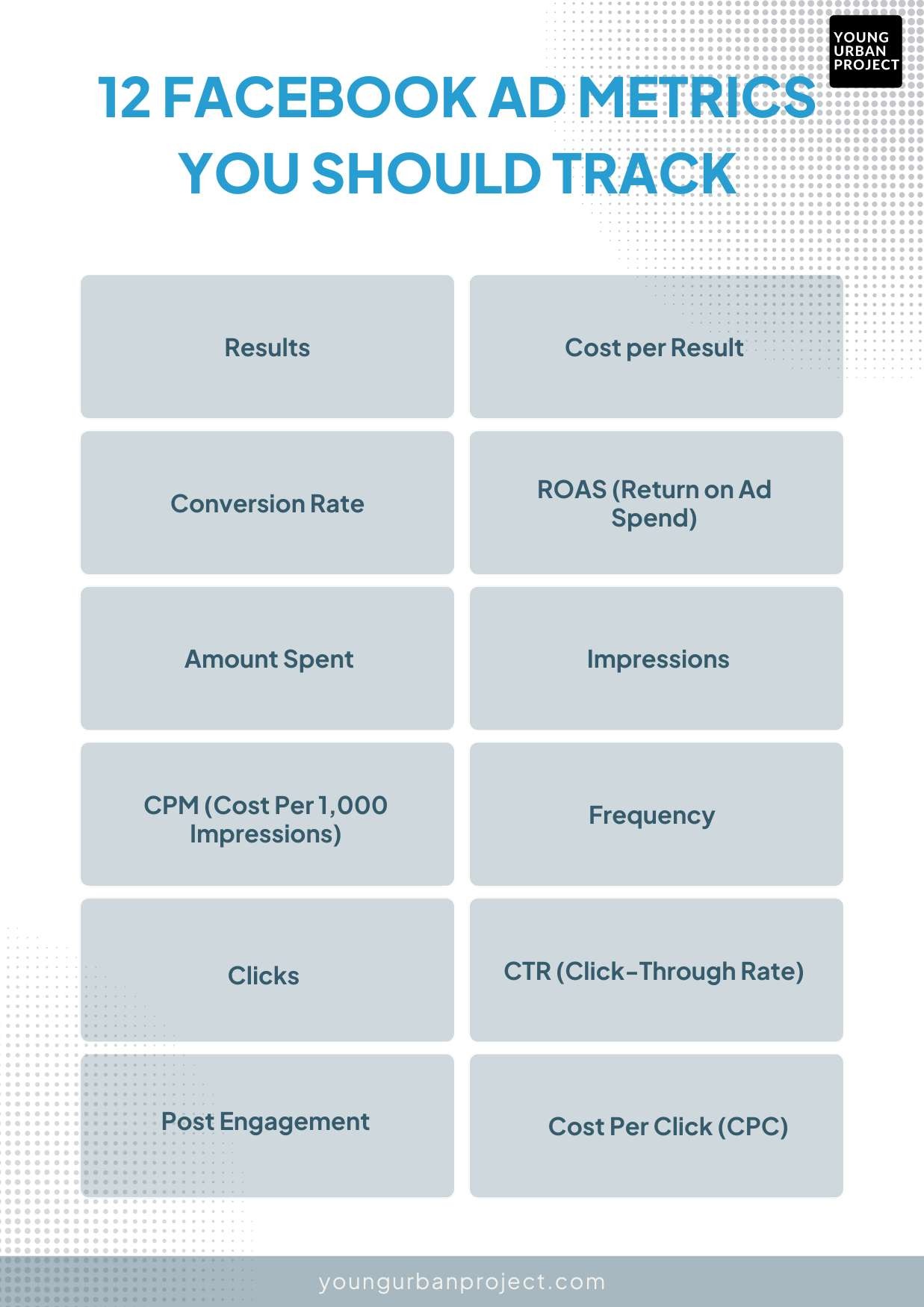
High click-through rate means very little if lead quality and downstream conversions remain weak. A campaign may look successful in Meta Ads Manager, but if leads do not convert into customers, the reporting is incomplete.
Context also matters more than isolated metrics. A higher customer acquisition cost may look concerning at first, but it can make sense if the campaign is attracting higher-value customers or supporting a higher-ticket offer.
Client-specific KPI alignment is equally important. A local service business may care about booked appointments, while an e-commerce brand may focus on revenue, ROAS, and average order value.
For example, an e-commerce agency can use centralized reporting to show how a video ad supported awareness while a catalog retargeting campaign helped drive the final sale. This gives the client a clearer view of how campaigns work together.
The agencies that scale Facebook Ads successfully are not the ones with the most data. They are the ones with clear reporting systems and the ability to turn analytics into actionable decisions.
Conclusion
Navigating the complexities of digital advertising requires more than just excellent media buying skills. Facebook Ads reporting is no longer just about presenting campaign metrics. It is about building a scalable reporting infrastructure that improves client trust, operational efficiency, and long-term agency growth. When agencies rely on disconnected spreadsheets and native platforms, they create a fragile operational environment where reporting complexity outpaces their ability to scale.
Fragmented reporting slows agencies down by forcing talented strategists to waste hours on manual data entry. These manual workflows become unsustainable at scale, ultimately draining agency profit margins and creating severe fulfillment bottlenecks. When clients receive delayed, confusing, or inaccurate data, poor reporting impacts retention and profitability. They lose faith in the agency's competence, leading to inevitable churn.
White label analytics systems simplify reporting operations by automating data aggregation and providing a centralized, unified view of campaign performance. By leveraging these platforms, agencies can completely eliminate the administrative burden of end-of-month reporting. Furthermore, by ensuring these automated dashboards prioritize actionable business metrics over vanity metrics, agencies can facilitate highly strategic conversations with their clients. Upgrading your reporting infrastructure ensures that you can handle more accounts, communicate results clearly, and retain clients for years to come.


.svg)


.svg)
.svg)
.svg)
.svg)
.svg)