

.svg)

.svg)
.svg)
.svg)
.svg)
.svg)
Performance Max gives agencies access to Google's advertising inventory across Search, YouTube, Display, Discover, Gmail, and Maps from a single campaign. Instead of managing separate campaigns for each channel, agencies provide assets, goals, and signals while Google's machine learning handles much of the placement and bidding in real time.
Performance Max has become a significant part of Google Ads strategy. In April 2025, Google reported that more than 1 million advertisers were using Performance Max. Google also said that more than 90 quality improvements introduced in 2024 collectively increased conversions and conversion value by more than 10% for advertisers, based on its internal data.
However, automation does not mean a campaign can be launched and left unattended. Agencies still need to monitor conversion data, creative assets, audience signals, search themes, budgets, bidding, landing pages, and performance trends across client accounts.
Effective Performance Max management comes down to providing the right inputs, monitoring meaningful signals, and making controlled adjustments. That becomes more complex when an agency manages multiple accounts with different objectives, budgets, audiences, offers, and conversion goals.
This guide breaks down how agencies can build a systematic, repeatable process for optimizing Performance Max campaigns at scale.
Start With the Right Conversion Goals
Conversion data is the foundation of Performance Max. If campaigns optimize toward the wrong actions or tracking is broken, other optimization efforts will not address the underlying problem.
- Primary and Secondary Conversion Actions: Understand which actions campaigns are optimizing toward. A campaign prioritizing newsletter signups will behave differently from one prioritizing purchases.
- Business Outcomes: Focus on meaningful client outcomes rather than simply maximizing clicks or form fills.
- Conversion Tracking: Confirm tracking works correctly before making optimization decisions.
- Conversion Values: Assign appropriate values when different conversion actions have different business impact.
- Lead Quality: More leads do not necessarily mean better results. Evaluate whether leads are useful to the business.
- Imported Conversions: Verify that CRM or offline conversions accurately represent the client's current goals.
Google's current guidance emphasizes relevant conversion actions and accurate tracking as foundational to Performance Max. Campaigns use conversion events and/or conversion value to determine how to spend the daily budget. Google also recommends balancing conversion actions that are close to the final sale with enough conversion volume for the system to learn effectively.
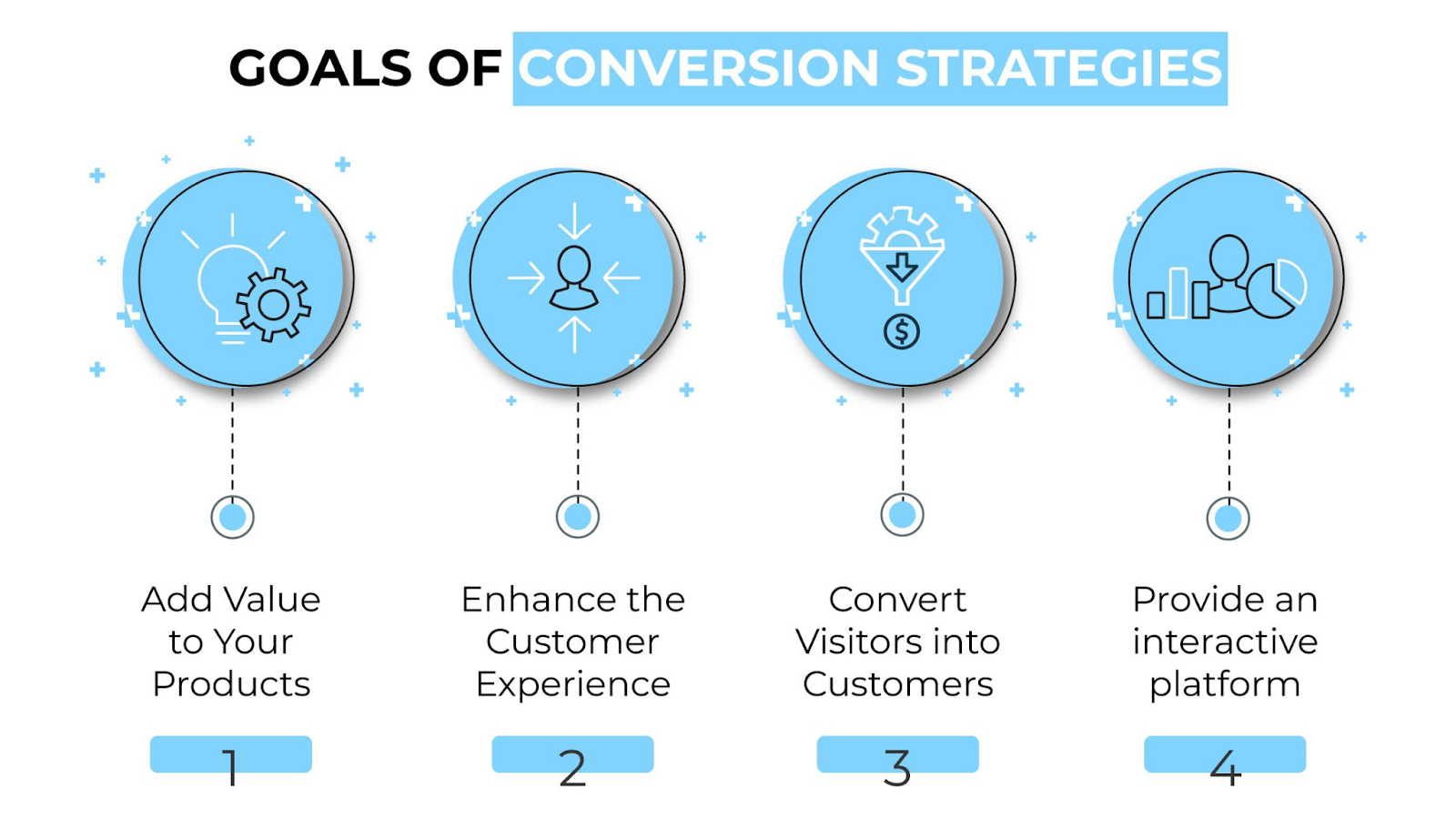
Before changing bids, budgets, or creative, agencies should establish whether Performance Max is learning from the right conversion signals.
Organize Campaigns and Asset Groups Around Clear Goals
Once conversion goals are confirmed, agencies should structure campaigns and asset groups to give automation useful context without creating unnecessary complexity.
- Product or Service Categories: Group campaigns around distinct products, services, or business lines.
- Customer Needs: Separate structures when different customer needs require different messaging.
- Offers or Business Objectives: Create dedicated structures for distinct promotions or business goals.
- Relevant Asset Groups: Keep each asset group focused on a clear product, service, offer, or theme.
- Match Assets to the Theme: Headlines, images, and videos should clearly relate to the asset group's focus.
- Avoid Unnecessary Fragmentation: Do not create excessive divisions that limit conversion volume or add complexity without providing useful context.
Google describes Performance Max as a goal-based campaign type and recommends defining the conversion goals and values that matter to the business. Agencies should apply the same principle rather than relying on a generic structure for every account.
Further Reading: Google Performance Max Campaigns - Everything You Need to Know
Strengthen Performance Max Creative Assets
Creative assets are key inputs agencies can actively improve. Because Performance Max assembles ads across formats and placements, the quality and variety of available assets affect what the system can work with.
- Headlines: Use messaging that reflects the client's offer and relevant search or audience context.
- Descriptions: Reinforce the value proposition and support the headline messaging.
- Images: Review relevance, quality, variety, and suitability across placements.
- Logos: Use recognizable, appropriate logos that maintain brand consistency.
- Videos: Include video assets wherever possible, particularly for YouTube inventory.
- Asset Variety: Provide enough variation for the system to test different combinations.
- Different Creative Formats: Avoid relying only on one format, such as static images.
- Weak or Outdated Assets: Replace assets that no longer fit the client's offer, messaging, or brand.
- Brand Consistency: Keep creative variation aligned with the client's positioning and objectives.
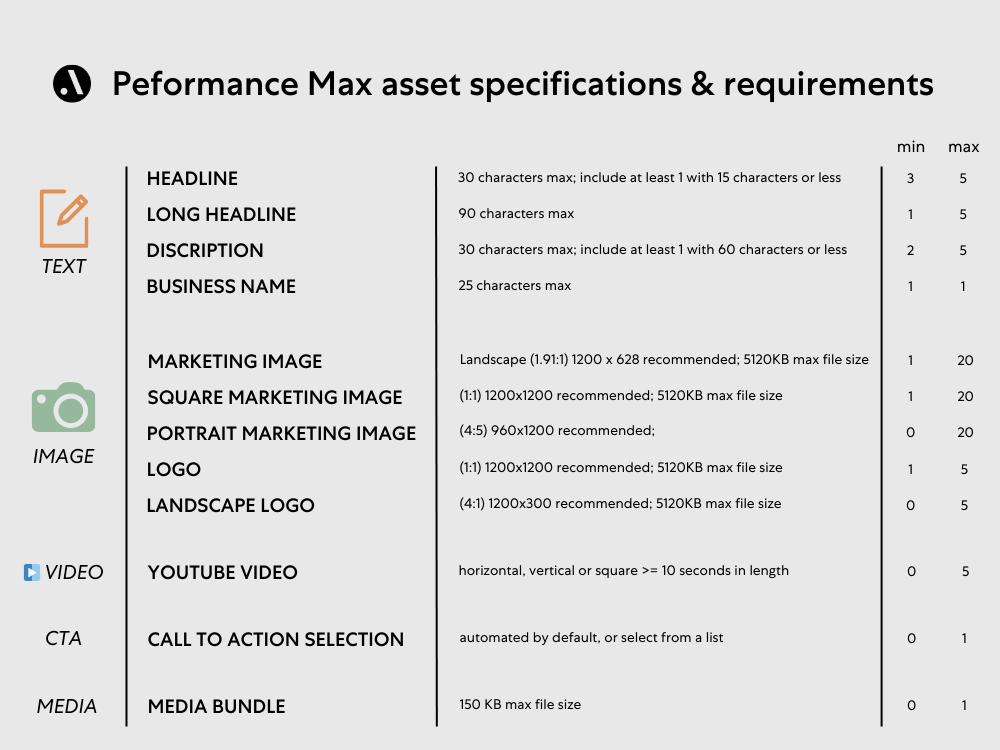
Image Source: Adchieve
Agencies can use asset reporting and Ad Strength as diagnostic inputs while evaluating whether creative changes contribute to meaningful campaign performance. Google's current guidance reports that advertisers improving Ad Strength from Poor to Excellent see a median 6% increase in conversions or conversion value at a similar CPA/ROAS. This is a median figure from Google's data, not a guarantee.
Google also provides conversion metrics at the asset and asset-group levels, giving advertisers more ways to evaluate individual assets.
Use Audience Signals to Guide Campaign Learning
Audience signals provide Google's AI with additional context about users who may be more likely to convert. They inform the system rather than restricting ads to those audiences.
- First-party Customer Data: Use existing customer information to provide context about previous converters.
- Customer Lists: Relevant lists, such as past purchasers or high-value customers, can support campaign learning.
- Website Visitors: Visitor data can provide signals from users who have already shown interest.
- Remarketing Audiences: Keep remarketing lists updated so they continue to reflect relevant user behavior.
- Custom Segments: Use relevant interests or behaviors to add context beyond first-party data.
- Audience Insights: Review insights to understand which audiences are associated with campaign performance.
- Client-specific Knowledge: Translate knowledge of the client's customers, products, services, and buying behavior into useful signals.
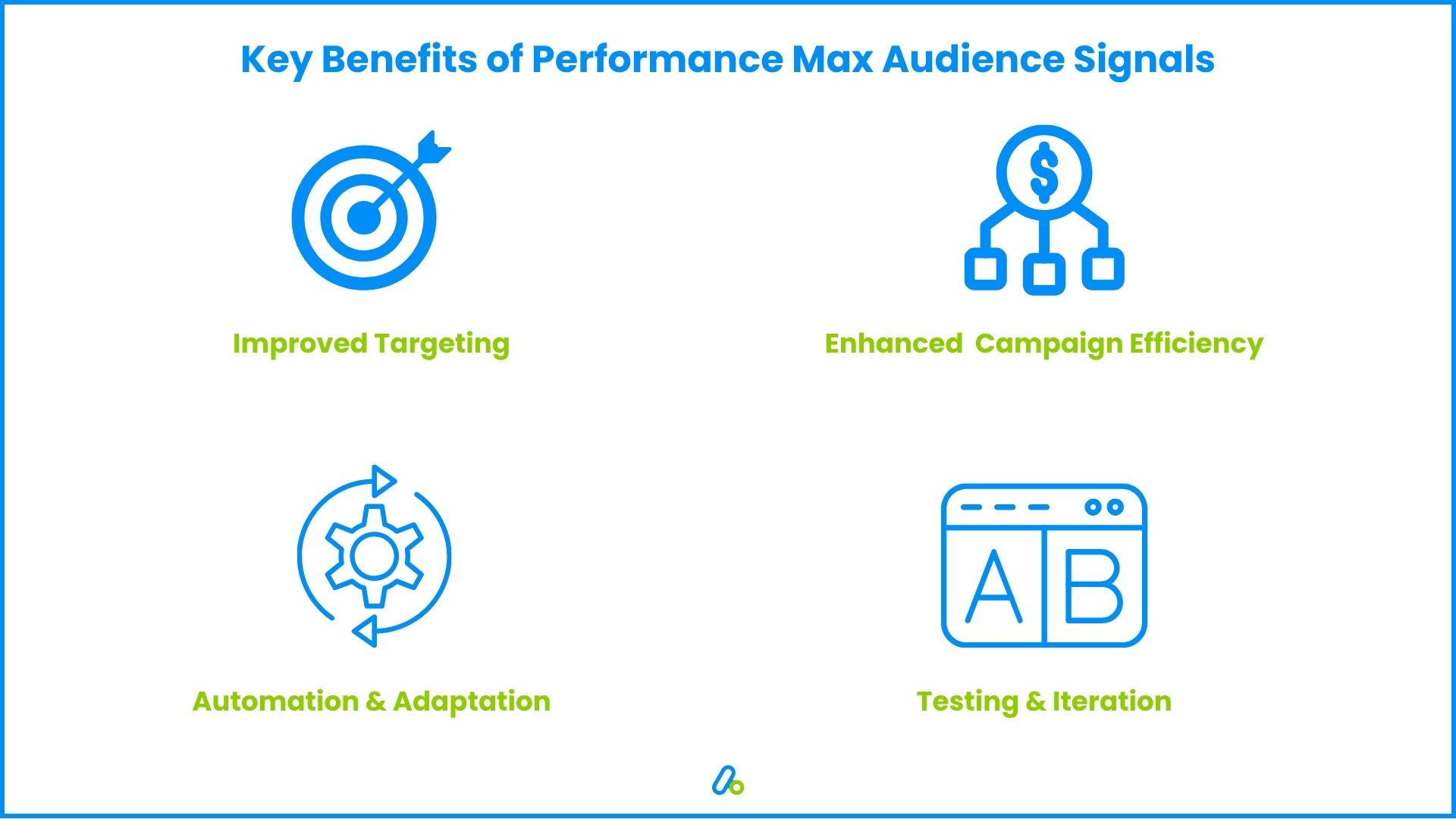
Image Source: Analyzify
Google recommends using updated remarketing lists and strong audience signals to help guide Performance Max's AI. Agencies should clarify that these signals inform the system but do not guarantee ads will only reach those specific audiences.
Refine Search Themes and Search Controls
Performance Max automates much of channel selection, but search-related traffic still requires attention. Agencies should review whether campaign reach remains relevant to the client's business.
- Search Themes: Use themes that reflect the actual products or services being promoted.
- Search Term Insights: Review available insights to understand the queries triggering campaign activity.
- Irrelevant Search Intent: Identify traffic that does not align with the client's offerings or desired audience.
- Negative Keywords: Where available, use negative keywords to limit clearly irrelevant queries.
- Brand Exclusions: Consider brand exclusions when the client does not want Performance Max competing with branded search campaigns.
- Search-related Traffic: Monitor traffic quality and relevance rather than focusing only on volume.
- Product or Service Alignment: Evaluate traffic against what the client actually sells or wants to promote.
The goal is not simply more traffic. Search-related insights should help agencies determine whether campaign reach aligns with the client's business objectives.
Optimize Bidding and Budget Allocation
Bidding and budget decisions are closely connected to conversion volume and campaign goals.
- Budget Constraints: Budget affects available conversion volume, and the data automated bidding can learn from.
- Target CPA: Relevant when the priority is generating conversions at a target cost.
- Target ROAS: Relevant when reliable conversion value data is available, and the client prioritizes conversion value.
- Conversion Volume: Consider whether there is enough activity to support the selected bidding strategy.
- Conversion Value: Account for differences in the business value of individual conversions.
- Budget Pacing: Review spend against campaign objectives and available budget.
- Restrictive Targets: Overly restrictive CPA or ROAS targets can limit delivery and prevent campaigns from spending their full budget.
- Measured Changes: Avoid repeatedly changing bidding settings before there is enough data to evaluate the previous change.
Google reports that advertisers switching from Target CPA to Target ROAS saw, on average, 14% more conversion value at a similar ROAS, according to its cited data. This is an average result, not a guarantee for every account.
Not every performance problem is a bidding problem. Weak conversion tracking, creative, landing pages, or traffic relevance may need to be addressed first.
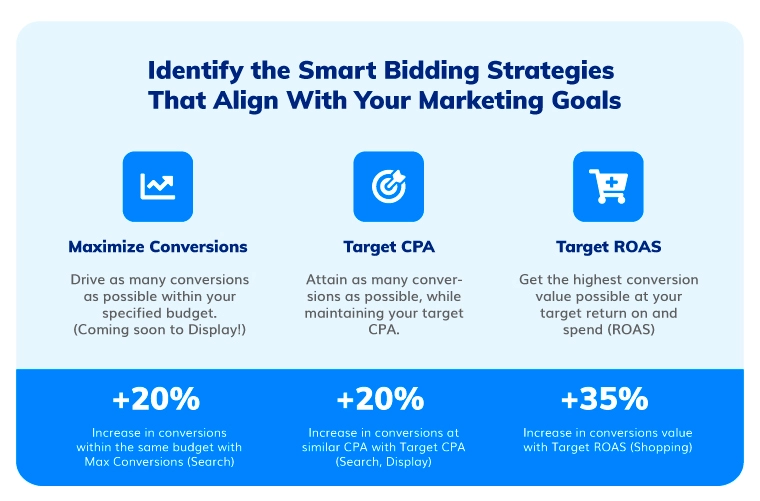
Image Source: White Shark Media
Further Reading: How Agencies Can Adapt to Smart Bidding Trends Using White Label PPC Services
Review Landing Pages and Final URL Expansion
Google Ads optimization extends beyond the ad account. Agencies should also evaluate what happens after the click.
- Landing-page Relevance: Confirm that the page matches the ad, search intent, and promoted product or service.
- Service/Product Alignment: Send visitors to relevant destinations rather than defaulting to the homepage.
- Conversion Experience: Identify friction or disconnects between the ad and landing experience.
- Page Quality: Review factors such as load speed, mobile usability, and call-to-action clarity.
- Final URL Expansion: Understand where Performance Max can direct traffic when final URL expansion is enabled.
- Traffic Destinations: Review where users are actually being sent.
- Stronger and Weaker Landing Pages: Identify destinations associated with stronger or weaker outcomes and adjust settings where appropriate.
Google's current Performance Max reporting guidance includes landing-page and performance insights, helping agencies connect campaign activity with what happens on the client's website.
Monitor Performance Before Making Changes
Optimization should not mean constantly editing campaigns. Agencies should first identify what changed and where the problem is.
- Conversions: Check whether campaigns are generating the intended actions.
- Conversion Value: Review the business value of those conversions.
- Cost per Conversion: Compare efficiency against client goals and relevant historical benchmarks.
- ROAS: Review return relative to spend where value-based measurement applies.
- Conversion Rate: Evaluate what happens after users reach the conversion point.
- Spend: Compare actual spend with budget and campaign objectives.
- Budget Utilization: Identify whether the budget is being used as intended.
- Asset Performance: Review creative reporting and performance trends.
- Search-related Insights: Monitor search themes, search-term insights, and traffic relevance.
- Lead Quality: Where CRM data is available, evaluate whether leads are useful to the business.
Agencies can follow a consistent cycle: identify, diagnose, adjust, allow learning, measure, repeat.
Google says the Performance Max Insights page is refreshed daily and recommends accounting for conversion lag when evaluating performance. Daily updates do not mean agencies should make daily campaign changes. Reactive edits based on incomplete data can create more noise than clarity.
Give Performance Max Time to Learn
Performance Max needs sufficient data and time to respond to changes. Patience is part of effective optimization.
- Learning Periods: Automated bidding and asset delivery need enough data to identify patterns.
- Conversion Cycles: Consider how long it typically takes a click or interaction to become a recorded conversion.
- Significant Campaign Changes: Changes to bidding strategies, asset groups, or conversion goals can affect performance patterns.
- Avoid Unnecessary Edits: Frequent changes make it harder to determine which action affected results.
- Appropriate Comparison Periods: Evaluate performance over a timeframe that reflects the campaign's conversion cycle.
- Change Documentation: Record significant changes so later performance can be evaluated against them.
Google notes that Performance Max can take time to begin generating impressions and emphasizes correct conversion tracking before relying on campaign optimization. Optimization is controlled iteration, not constant intervention.
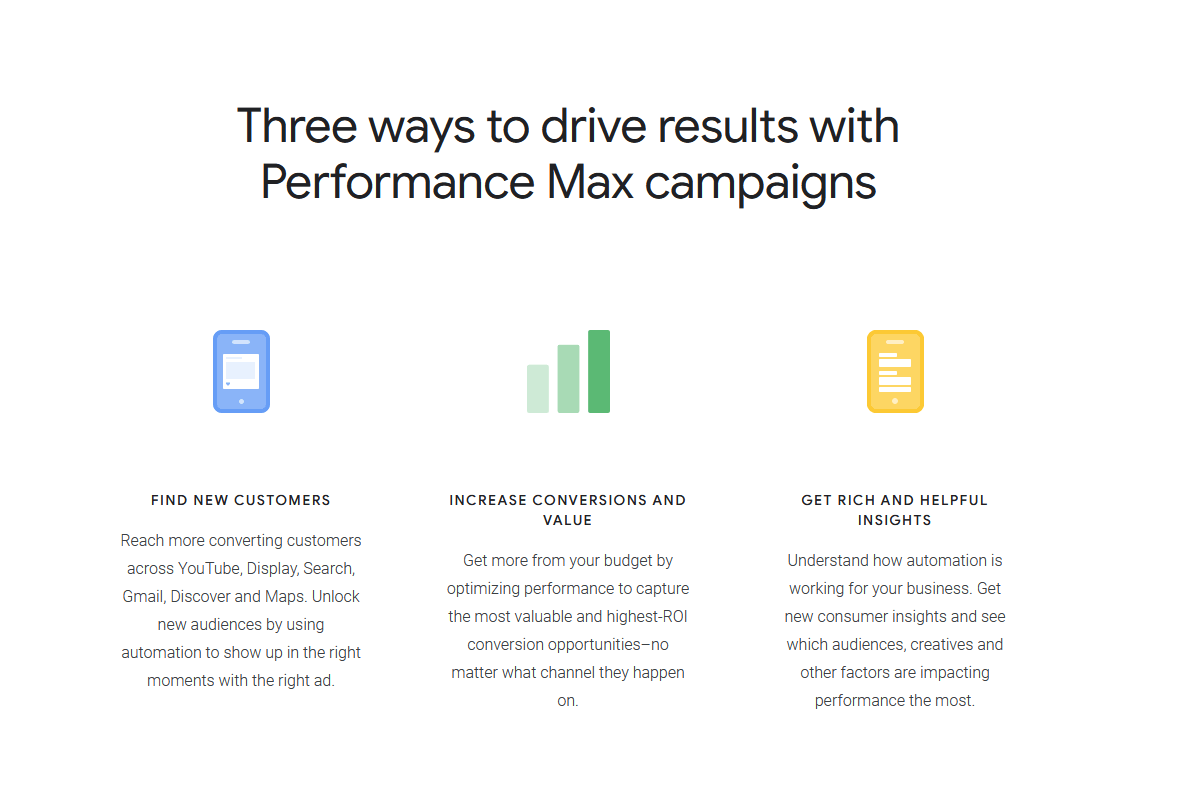
Image Source: Social Media Examiner
Create a Repeatable Performance Max Optimization Process
A documented workflow helps agencies manage multiple Performance Max accounts consistently while keeping decisions specific to each client.
- Check Conversion Tracking: Confirm tracking is accurate.
- Review Campaign Performance: Evaluate conversions, conversion value, cost per conversion, and relevant trends.
- Identify the Biggest Performance Issue: Focus on the issue most likely to affect results.
- Determine the Relevant Optimization Lever: Decide whether the issue relates to conversions, creative, audiences, search relevance, bidding, or landing pages.
- Make a Controlled Adjustment: Change one meaningful variable at a time where practical.
- Allow Sufficient Learning Time: Give the campaign time to respond.
- Review the Impact: Compare results against an appropriate baseline.
- Document the Result and Continue Monitoring: Record the change and outcome before moving to the next issue.
The workflow provides consistency, while account-specific data determines what actually needs attention.
Scale Performance Max Optimization With White Label Google Ads
Knowing how to optimize Performance Max is one challenge. Having enough time and specialized resources to perform that work consistently across every client account is another.
As an agency's client roster grows, the operational demands of managing Performance Max well across every account start to add up.
- Multiple Client Campaigns Requiring Regular Monitoring: Different accounts can require different review schedules, objectives, and optimization priorities, which makes a single standardized routine difficult to apply.
- Different Conversion Goals: One client may care about lead volume while another focuses on conversion value or a specific business action, requiring separate strategies within the same agency.
- Different Budgets and Bidding Strategies: Agencies need to manage account-specific constraints rather than apply one standard setting everywhere.
- Ongoing Creative Requirements: Performance Max requires continued attention to available assets and messaging, which takes ongoing creative resourcing.
- Search and Traffic Analysis: Agencies need to regularly review whether campaign reach remains relevant to each client's specific services and products.
- Campaign Adjustments: Optimization requires controlled changes based on account evidence, not one-size-fits-all edits applied across the board.
- Reporting and Documentation: Agencies need to maintain clear records of performance and changes for every client, which takes time to prepare and communicate.
- Client Deadlines: Campaign management also needs to fit into recurring reporting and delivery schedules that clients expect.
- Limited In-house PPC Capacity: Growing client demand can exceed the agency's available specialist resources, especially for agencies that offer PPC alongside other services.
This is where Google Ads outsourcing becomes a practical option for agencies that need to extend their fulfillment capacity without building an entirely new internal team.
- Specialized PPC Fulfillment: Agencies can use a specialized team to handle ongoing Google Ads execution, including the day-to-day work involved in Performance Max management.
- Consistent Optimization: Established processes can help maintain regular campaign reviews and optimization across every client account, rather than optimization happening only when time allows.
- Agency Retains the Client Relationship: The agency remains the primary client-facing business while fulfillment happens behind the scenes.
- Scalable Delivery: White label Google Ads agency can give agencies additional capacity when their client roster grows, without requiring them to immediately build a larger internal PPC team.
DashClicks operates as an extension of the agency's team in this model, not a replacement for the agency's strategy, client relationship, or decision-making.
Why Agencies Use DashClicks for White Label Google Ads?
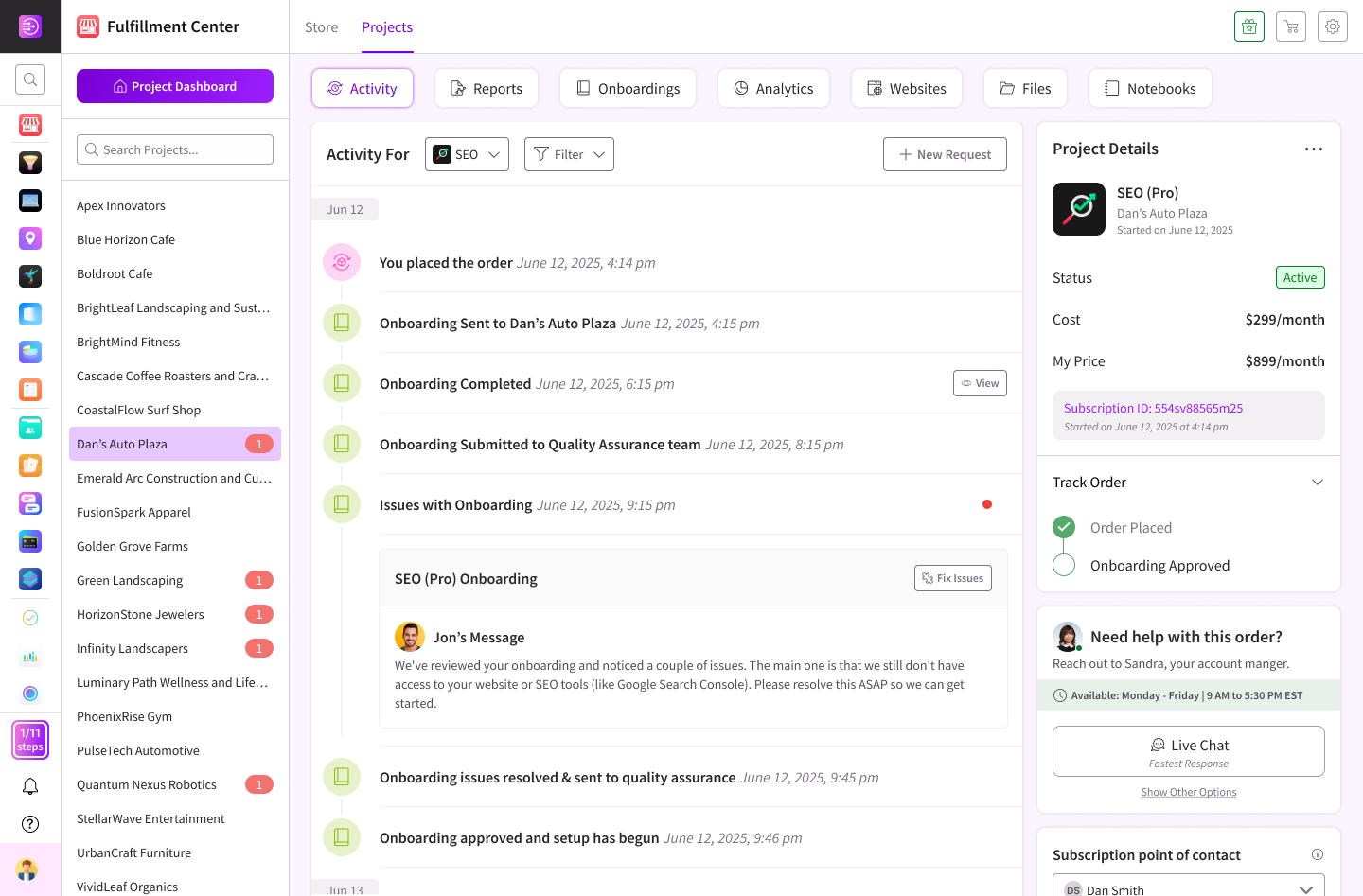
DashClicks works as a fulfillment partner that can support agencies with the execution workload behind their Google Ads services, including the ongoing optimization work covered throughout this guide.
- Dedicated PPC specialists: DashClicks provides specialized white label Google Ads management for agencies, giving them access to PPC expertise without hiring additional in-house staff.
- Ongoing Campaign Optimization: Support can include monitoring campaign performance and making optimization adjustments based on each account's specific goals, following the kind of process outlined earlier in this guide.
- Agency-Branded Delivery: The agency maintains the client-facing relationship and can deliver services under its own brand, with fulfillment work happening behind the scenes.
- Scalable Fulfillment: Agencies can use DashClicks to supplement existing PPC capacity as their client roster grows, rather than turning down new business or overextending their current team.
- Reporting and Transparency: Agencies can review campaign performance and communicate results to clients without handing the client relationship to a third-party provider.
- Extension of the Agency Team: DashClicks is positioned as a fulfillment partner that works behind the scenes, supporting the agency's existing strategy rather than replacing it.
Conclusion
Performance Max automation reduces manual campaign management, but it does not eliminate strategic oversight. Agencies still need to provide accurate conversion data and relevant inputs while monitoring creative, audience signals, search controls, budgets, bidding, and landing pages.
A repeatable optimization process helps agencies identify issues, make controlled changes, and allow enough time to evaluate results instead of reacting to daily fluctuations. For agencies whose client base is growing faster than their internal PPC capacity, white label Google Ads can provide additional fulfillment support while the agency retains strategic and client ownership.


.svg)


.svg)
.svg)
.svg)
.svg)
.svg)