

.svg)

.svg)
.svg)
.svg)
.svg)
.svg)
Many search engine optimization campaigns fail because agencies focus on operational activity rather than measurable business outcomes. High publishing volume and busy reporting schedules create a false sense of momentum. Scaling agencies can solve this disconnect by utilizing the best white label SEO services to standardize execution and prioritize revenue-aligned growth strategies.
Many digital marketing campaigns look incredibly busy on the surface. Agency teams spend countless hours generating content, publishing schedules, and organizing ranking reports. Account managers send out detailed backlink reports and massive technical audits. Keyword tracking dashboards update daily with new data points.
Yet, despite all this visible effort, agencies still experience significant performance issues. Client traffic growth remains completely flat month after month. The lead quality from organic search continues to weaken. Poor conversion growth makes it nearly impossible to prove return on investment. Ultimately, this leads to client dissatisfaction and intense retention pressure for the agency.
Search engine optimization deliverables are often mistaken for actual progress. BrightEdge reports that organic search drives 53% of all trackable website traffic. This makes organic visibility critical for business growth. However, HubSpot reports that proving ROI remains one of the biggest challenges for marketers today.
Google Search Quality systems increasingly reward helpful, people-first, intent-driven content rather than publishing volume alone. This means churning out dozens of mediocre blog posts no longer guarantees higher rankings. As search competition increases across every industry, agencies can no longer rely on visible activity alone to justify campaign effectiveness. They must find the best white label SEO services or internal systems to bridge the gap between output and actual revenue.
Why SEO Activity Often Gets Confused With SEO Progress?
There is a massive difference between operational SEO activity and measurable business outcomes. Operational activity refers to the tasks completed during a billing cycle. Measurable outcomes refer to the actual financial return those tasks generate for a client.
Agencies frequently fall into the trap of prioritizing common busy work. This includes:
- Weekly blog publishing schedules
- Automated keyword ranking reports
- Bulk metadata updates across irrelevant pages
- Massive backlink outreach spreadsheets
- Automated site audits with zero implementation
- Generic technical checklists
These activities create false momentum. The agency feels productive, and the client sees a long list of completed tasks. However, the needle never actually moves on revenue.
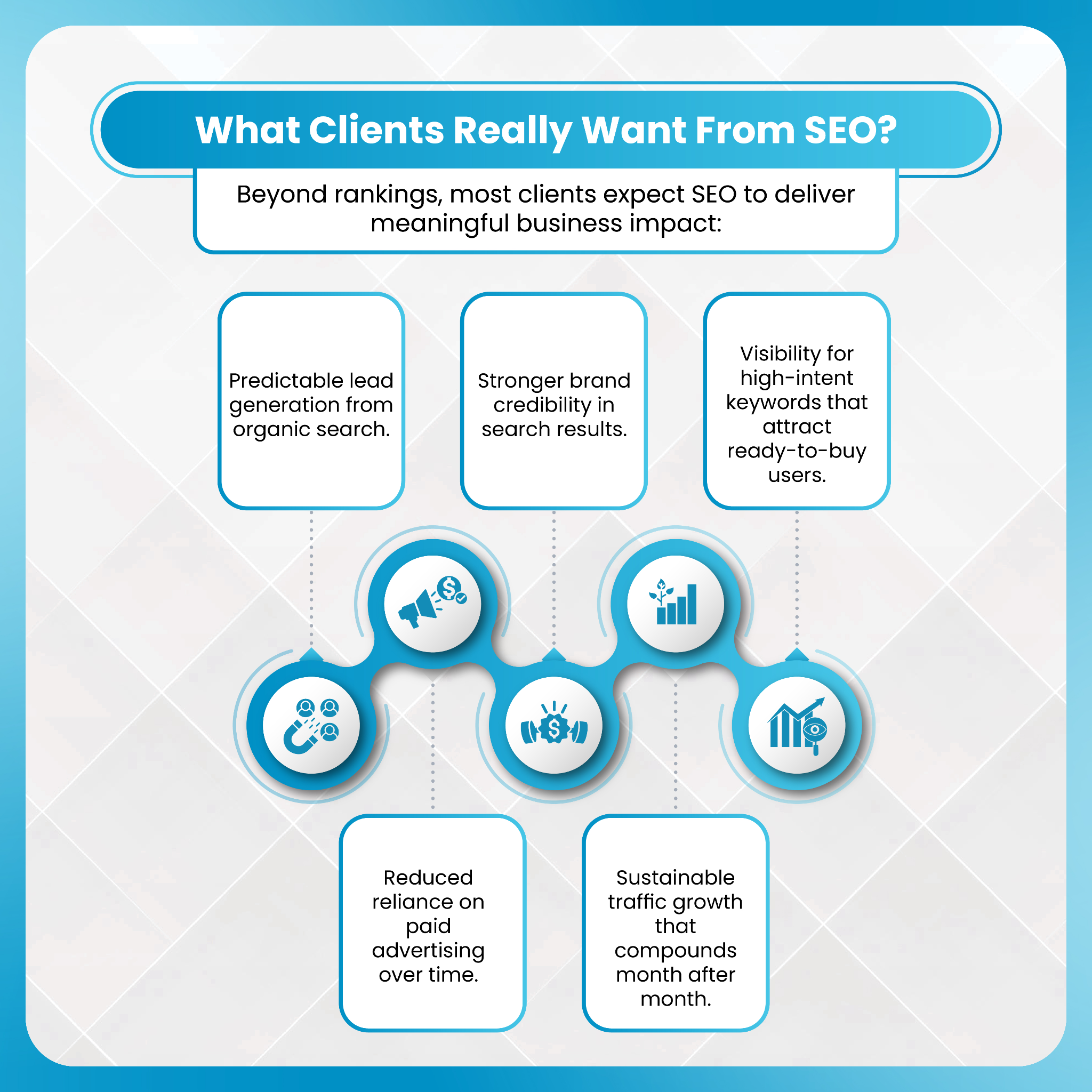
For example, an agency might publish 40 blog posts in six months for a local plumbing client. The agency celebrates the high output. Yet, the client sees very little traffic growth. This happens because the content relies on low-intent targeting. The agency fails to build topical authority. Poor internal linking leaves the new pages isolated. There is absolutely no differentiation from competitors in the market.
This busy work gives clients the illusion that their marketing investment is working. When the phone fails to ring, the agency points to the completed checklist as proof of effort. This dynamic naturally pushes agencies toward relying on superficial data points to justify their retainers. Vanity metrics quickly become the easiest way to hide a lack of real progress.
Vanity Metrics Create the Illusion of SEO Success
Misleading metrics distract clients from the numbers that actually matter to their bottom line. Agencies often highlight metrics that look impressive on a PDF report but carry zero commercial value.
Some of the most common misleading metrics include:
- Total search impressions
- The number of indexed pages
- Keyword count growth for irrelevant terms
- Third-party domain authority changes
- Traffic spikes from out-of-state visitors
- High volumes of low-quality backlinks
- Average rankings without click-through rate growth
Higher visibility does not automatically create better leads. Increased impressions do not equal more conversions. Ranking for a good keyword search volume means nothing if it does not drive revenue growth for the business.
Consider a scenario where an agency grows a client's website traffic by 30 percent over a quarter. The client initially feels thrilled. However, the bounce rate rises significantly during the same period. Demo requests stay completely flat. The total revenue generated from the website remains unchanged. The agency succeeded at driving traffic but failed at driving business.
According to Semrush, search intent alignment strongly influences SEO performance quality. When content does not match what the user actually wants to achieve, traffic becomes worthless. Vanity metrics become even more dangerous when content strategies prioritize publishing volume over user intent.
Why High-Volume Content Production Often Underperforms?
Many agencies believe that publishing more content automatically leads to more traffic. This mindset leads to critical strategic failures across the entire campaign.
Common mistakes in high-volume content production include:
- Broad keyword targeting with no commercial value
- Shallow content that fails to answer user questions
- Skipping comprehensive SERP analysis
- Ignoring topical authority and content clusters
- Building disconnected content libraries
Content velocity without strategic depth creates severe SEO dilution. Search engines struggle to understand the core expertise of the website when it is flooded with generic information.
Let us compare two different agency approaches. Agency A publishes 20 generic blog posts per month for a software client. Agency B publishes just six authoritative, highly interlinked resources for a similar client.
Agency B consistently wins because they build better topical clusters. Their comprehensive articles generate stronger user engagement. The depth of their writing creates better authority signals. Strategic internal linking passes equity effectively throughout the site.
Google explicitly outlines Helpful Content principles that reward experience and expertise. They prioritize usefulness and people-first content.
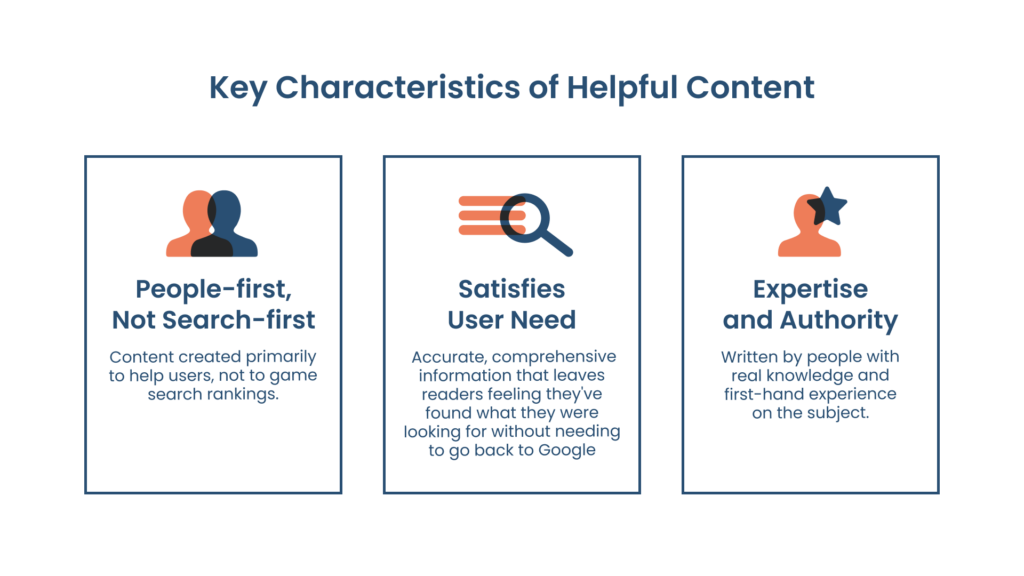
Image Source: Digital Hitmen
Mass-producing articles simply to hit a monthly quota directly violates these principles. Poor content strategy creates a ripple effect that damages other aspects of the website. This inevitably bleeds into technical performance issues.
Disconnected SEO Execution Quietly Kills Campaign Performance
Siloed agency departments often ruin great marketing strategies. When teams do not communicate, the final output suffers tremendously.
Disconnected execution usually involves misaligned teams handling:
- Content creation and editing
- Technical SEO implementation
- Link building and digital PR
- Conversion rate optimization
- Analytics tracking
- Client reporting
These communication gaps create severe problems resulting in client loss.
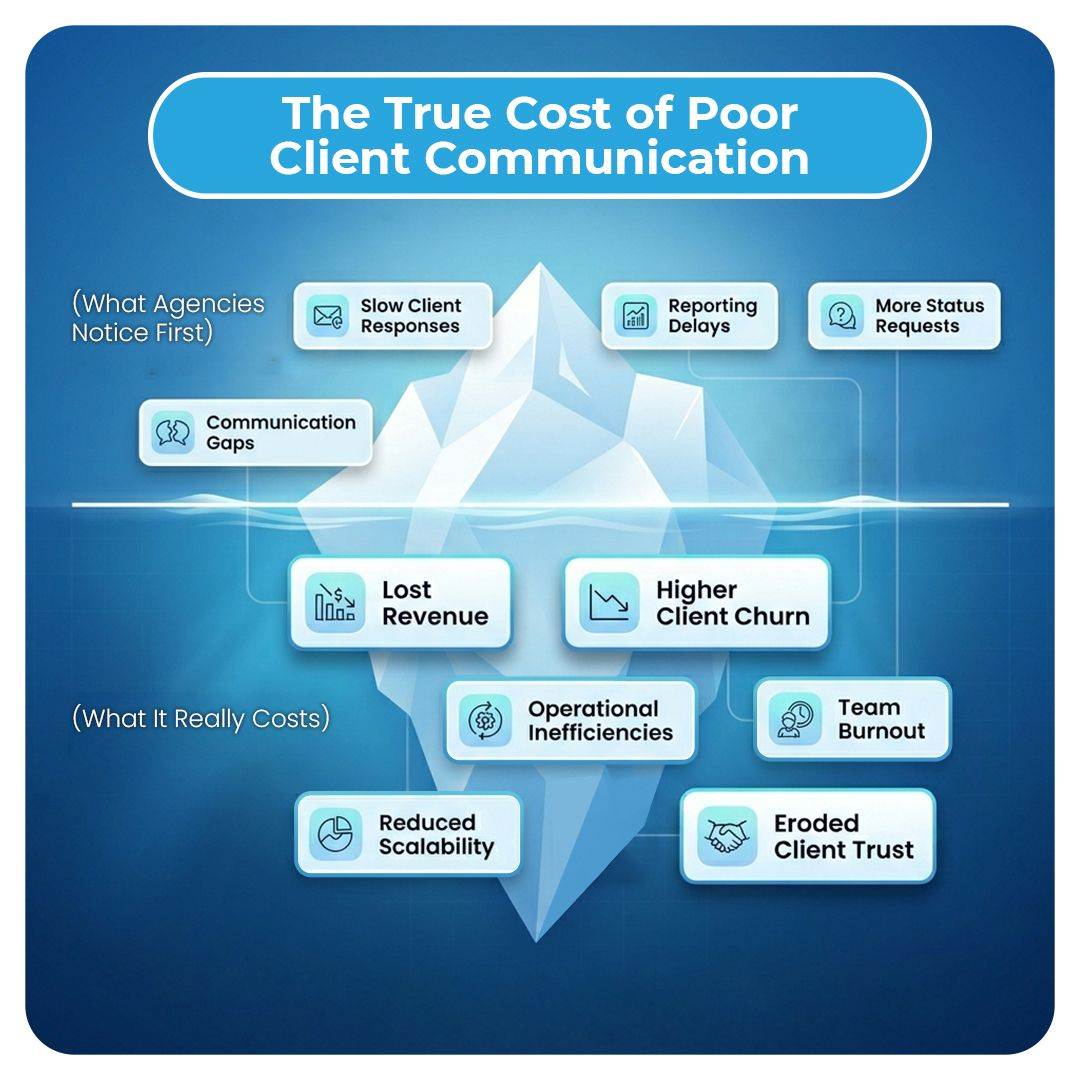
The website develops orphan pages that search engines cannot find. Crawl inefficiencies waste the crawl budget on low-value URLs. Keyword cannibalization occurs when multiple pages compete for the same term. Weak authority flow prevents important service pages from ranking. Inconsistent optimization leaves gaps for competitors to exploit.
For example, a content writer might produce a brilliant, highly researched article. However, the article completely fails to rank. This happens because the technical team ignored slow page speed issues. The web developer failed to implement proper internal links. The analytics team missed adding the correct schema markup. There is weak supporting content around the topic.
A brilliant piece of writing cannot overcome a broken technical foundation. When execution remains disconnected, agencies spend most of their time fixing easily avoidable mistakes. This exhausting cycle eventually drains the energy from the team. Campaigns then quietly slip into a state of complacency.
Why SEO Campaigns Enter “Maintenance Mode”?
Agencies often reach a point where they stop actively trying to grow an account. They put the campaign on autopilot and hope the client does not notice the lack of innovation.
Common signs of maintenance mode include:
- Repetitive reporting with no new insights
- Static strategies that never evolve
- Tracking outdated keywords for months
- Having absolutely no content refresh process
- Declining experimentation with new tactics
- Static link acquisition methods
Campaigns become operationally comfortable rather than strategically adaptive. The agency collects the monthly retainer but provides very little proactive value.
Google processes billions of searches daily, and search behavior constantly evolves (Google, 2024). A strategy that worked perfectly two years ago will likely fail today.
For example, a client page might rank exceptionally well in 2023 but decline sharply in 2026. This happens because competitors improve their own content. The core search intent shifts over time. The overall freshness of the page weakens.
The agencies that outperform are usually not the busiest. They are the most operationally disciplined. They actively monitor for decay and pivot their strategies accordingly. Breaking out of maintenance mode requires a fundamental shift in how the agency views campaign management.
What Effective SEO Campaigns Actually Prioritize?
The most successful agencies stop selling lists of tasks. Instead, they sell business growth systems. They build campaigns designed specifically to generate measurable financial returns.
Winning campaigns prioritize the following elements:
- Search intent alignment for every single page
- Building deep topical authority over time
- Driving targeted, conversion-focused traffic
- Maintaining flawless technical health
- Strategic and contextual internal linking
- Consistent content refreshes for older posts
- Monitoring real user engagement metrics
- Accurate, closed-loop revenue attribution
These agencies discuss advanced concepts with their clients. They provide accurate SEO forecasting based on historical data. They execute ruthless content pruning to remove dead weight from the website. Their refresh strategies keep old content ranking highly. They utilize conversion-path optimization to turn traffic into actual buyers. Integrated analytics prove exactly where the leads originated.
For example, a highly disciplined agency might decrease total publishing volume. However, the client conversion rates increase dramatically. Website engagement rises across the board. The overall lead quality improves significantly. Total assisted revenue grows quarter over quarter.
Maintaining this level of operational consistency becomes significantly harder as agencies scale. What works for five clients rarely works for fifty clients without standardized processes.
Why Scaling SEO Fulfillment Internally Becomes Difficult?
Growth frequently breaks agency operations. Bringing on new clients highlights the hidden weaknesses in a service delivery model.
As agencies grow, quality control becomes a major issue. QA processes become highly inconsistent across different accounts. Client reporting slows down significantly at the end of the month. Dedicated specialists become severely overloaded with administrative tasks. Production bottlenecks increase exponentially. The overall strategy quality varies wildly depending on which account manager handles the client.
Agency owners face extreme challenges when trying to scale internally. They develop a dangerous talent dependency on one or two key employees. Delivery inconsistency frustrates clients and causes churn. Content bottlenecks delay important website launches. Scaling without quality loss feels nearly impossible. Maintaining strategic oversight across fifty campaigns requires too many expensive management layers.
Hiring more junior staff rarely solves the problem. It usually just creates more management overhead and increases the margin for error. Agencies need a way to decouple revenue growth from headcount growth. This is exactly why many agencies are moving toward structured fulfillment support models. However, it’s important to remember that another option to seek out experienced employees to join your team is to browse databases where you can find all information on their previous job positions, responsibilities, experiences, and much more.
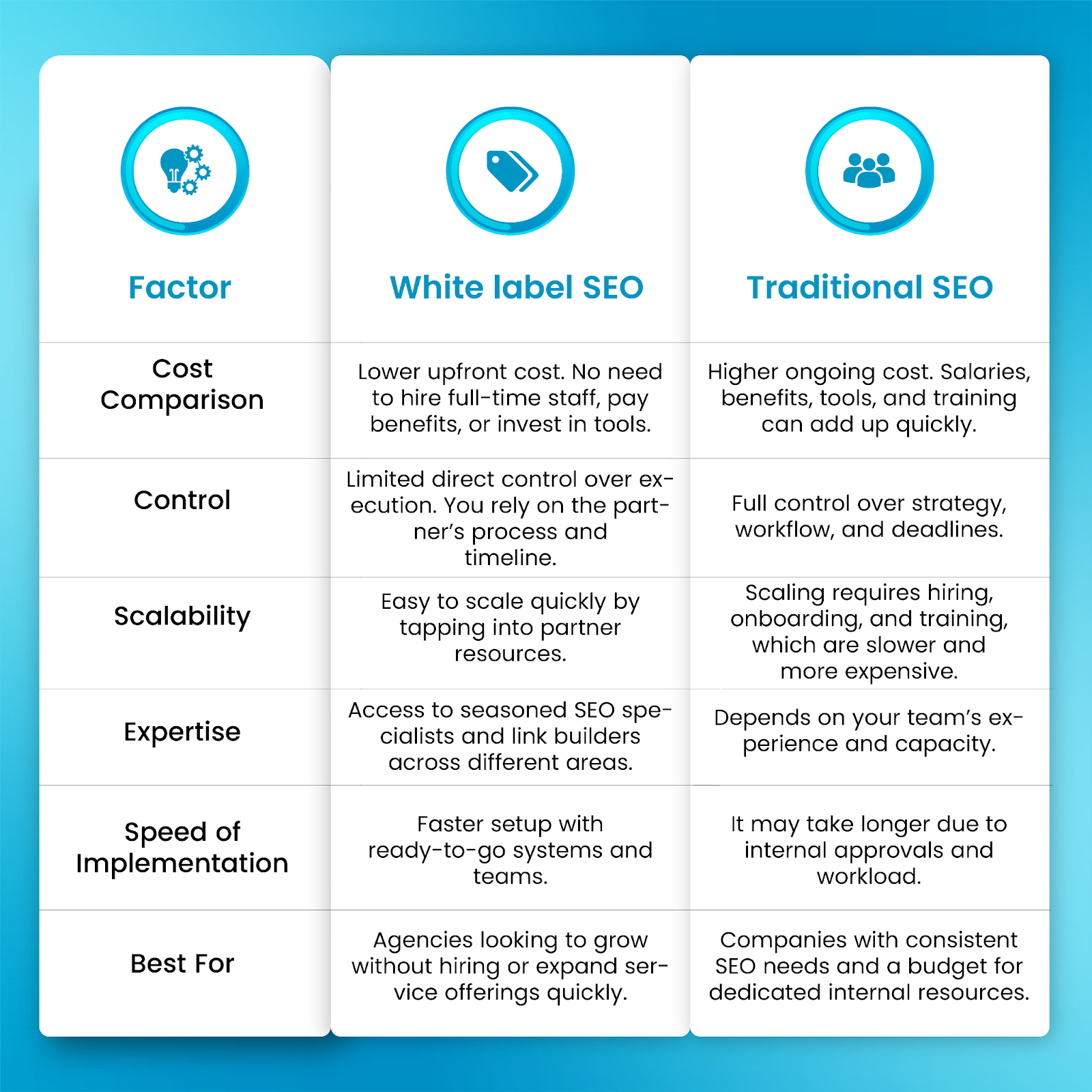
How White Label SEO Helps Agencies Focus on Outcomes Instead of Activity?
Partnering with a dedicated fulfillment provider completely transforms agency operations. The best white label SEO services allow agency owners to step away from daily task management. They provide the infrastructure necessary to deliver high-quality results at an impressive scale.
Strong white label SEO providers help agencies achieve several critical goals. They standardize execution across all client accounts. They improve reporting consistency with automated dashboards. They maintain a strict optimization cadence that prevents campaigns from stalling. They scale content strategically using vetted professional writers. They improve technical oversight with dedicated engineering teams. Ultimately, they reduce fulfillment chaos.
The value is not simply outsourcing cheap tasks overseas. The true value is creating repeatable systems that drive actual business outcomes. Effective white label SEO management brings operational discipline to chaotic agencies. It guarantees strategic continuity even if an internal account manager leaves the company. It provides scalable quality control that internal teams simply cannot match.
Agencies that utilize a reputable white label SEO agency experience massive operational benefits. They see much better client retention rates. They enjoy strong margin protection because fulfillment costs remain fixed. They achieve predictable scaling without massive payroll risks. This allows the agency leadership to maintain a stronger growth focus.
How DashClicks Supports Agencies with White Label SEO Management?
DashClicks provides a comprehensive fulfillment infrastructure built specifically for scaling agencies. We understand that selling an SEO campaign is entirely different from successfully executing one. Our white label SEO services are designed to eliminate operational bottlenecks so you can focus entirely on client relationships and agency growth.
- Full-Funnel SEO Support: We handle the complex execution required to drive measurable outcomes. This includes deep technical auditing, strategic keyword mapping, and comprehensive on-page optimization. We ensure every action aligns perfectly with user intent and client revenue goals.
- Scalable SEO Fulfillment: Our platform allows you to scale your client base without hiring additional internal staff. We manage scalable content production, ensuring high-quality, authoritative assets are published consistently. We provide the technical SEO support necessary to keep client websites running flawlessly.
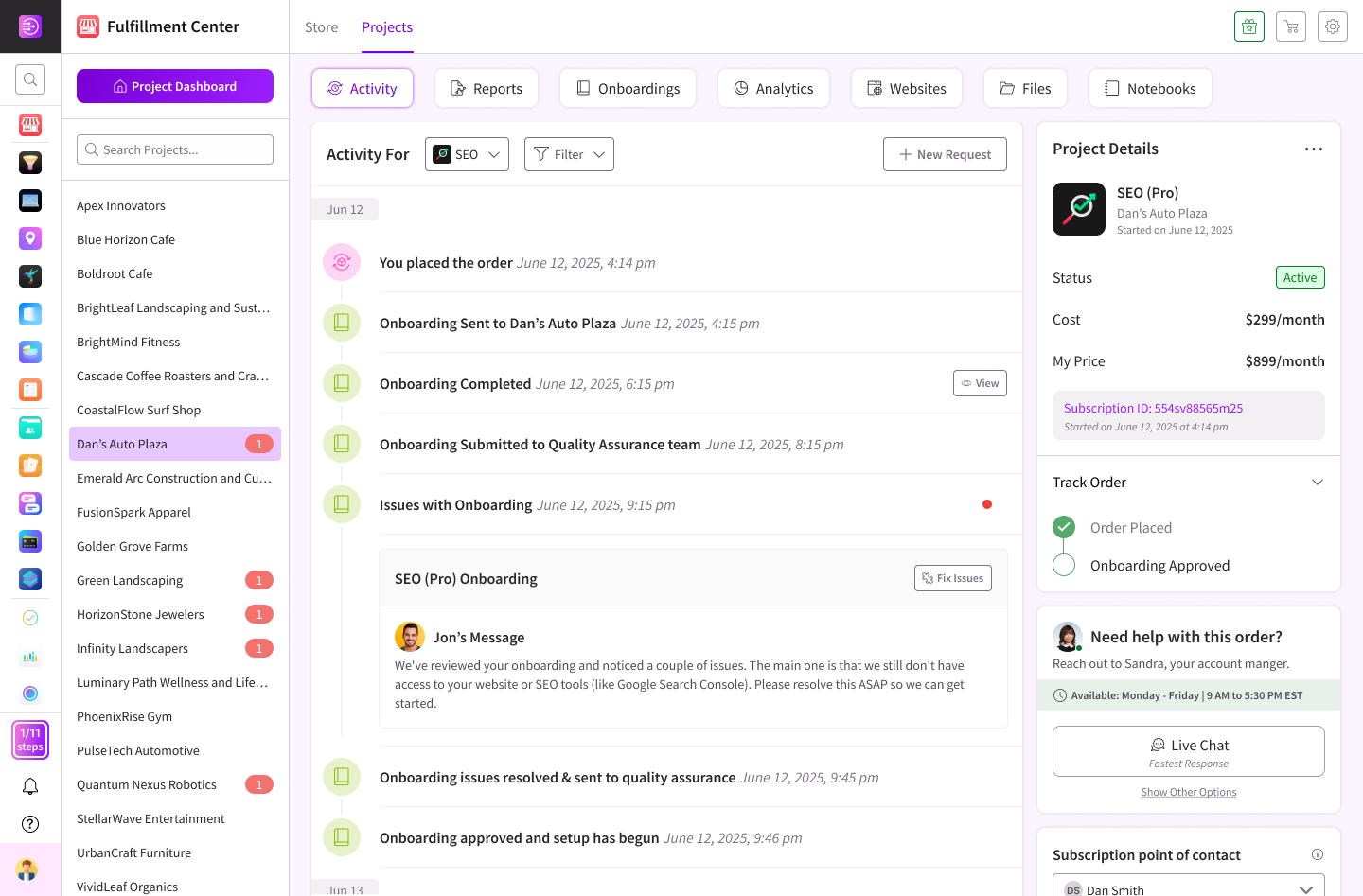
- Reporting and Visibility: Transparency is critical for client retention. DashClicks provides complete reporting visibility through white label client dashboard. Your clients can see their progress, engagement metrics, and completed tasks in real time, all under your own agency brand.
- Supporting Agency Growth Without Expanding Internal Teams: Our fulfillment support for growing agencies ensures operational consistency across your entire roster. By relying on our established systems, you protect your profit margins and eliminate the chaos of managing a massive in-house production team.
Conclusion
SEO activity alone does not guarantee business growth. High publishing volume and massive audit spreadsheets do not automatically generate revenue.
Busy campaigns often hide severe operational inefficiencies. They cover up weak strategies and poor intent alignment. They foster a dangerous vanity metric dependency that ultimately destroys client trust. To succeed in today's competitive landscape, agencies must shift their focus entirely.
Modern SEO requires highly integrated systems. It demands intent-driven optimization that solves actual user problems. It relies on strict operational consistency month after month. Above all, it requires direct revenue alignment.
The agencies that win in the long term will not be the ones producing the most SEO activity. They will be the ones building the strongest systems for sustainable organic growth.


.svg)


.svg)
.svg)
.svg)
.svg)
.svg)