

.svg)

.svg)
.svg)
.svg)
.svg)
.svg)
SEO in 2026 looks very different from what most agencies were doing even three years ago. It is no longer about picking a set of keywords, publishing a few optimized pages, and waiting for rankings to improve. Search engines now focus on trust, experience, and how well a brand satisfies real user intent across multiple surfaces.
Google’s AI Overviews and similar search features are changing how people interact with results. Studies have shown that more than 55 percent of searches now end without a click, largely due to zero-click results, featured snippets, and AI-generated summaries. At the same time, users still expect brands to show up consistently, look credible, and offer helpful answers when they do engage.
In 2026, agencies are expected to deliver much more than rankings. Clients want:
- Visibility that holds up in AI-driven search results.
- Presence across formats like video, community platforms, and Discover feeds.
- Clear links between SEO work and real business outcomes.
The challenge is not a lack of demand for SEO. Businesses still invest heavily in organic search, with global SEO spending expected to exceed $122 billion by 2026. The real issue is the widening gap between what clients expect and what many agencies can realistically execute with internal teams alone.
Most agencies will not lose clients because they did not try hard enough. They will lose clients because their SEO delivery models were not built for how search actually works today. Structural blind spots, not effort, are becoming the real risk.
This is where white label SEO enters the picture. In 2026, it is no longer just an outsourcing option. It is a strategic capability layer that helps agencies stay competitive, credible, and scalable as SEO continues to evolve.
1. AI-Driven SERPs Are Reducing Traditional Organic Clicks
Search results in 2026 are increasingly shaped by AI-generated summaries, instant answers, and constantly changing layouts. Google’s AI Overviews now pull information from multiple trusted sources and often satisfy user intent directly on the results page. In many cases, users get what they need without ever clicking through to a website.
This shift means that ranking on page one is no longer the final goal. Agencies must now think beyond rankings and focus on how content appears and performs inside AI-driven search environments. To stay competitive, agencies are expected to:
- Optimize content for citation and inclusion in AI summaries.
- Structure pages so AI systems can clearly understand context and relevance.
- Measure visibility even when clicks do not occur.
Despite these changes, many agency SEO teams still operate using a traditional model centered on keywords, rankings, and traffic growth. When rankings improve but traffic declines, clients naturally question the value of the work. This creates tension, even when the agency is technically doing things right.
The real issue is not that SEO has stopped working. The issue is that visibility is being measured using outdated assumptions. Internally, agencies struggle because:
- Few teams fully understand how AI-driven SERPs evaluate and surface content
- Testing frameworks across multiple industries are limited
- Data sets are often too small to spot early trends
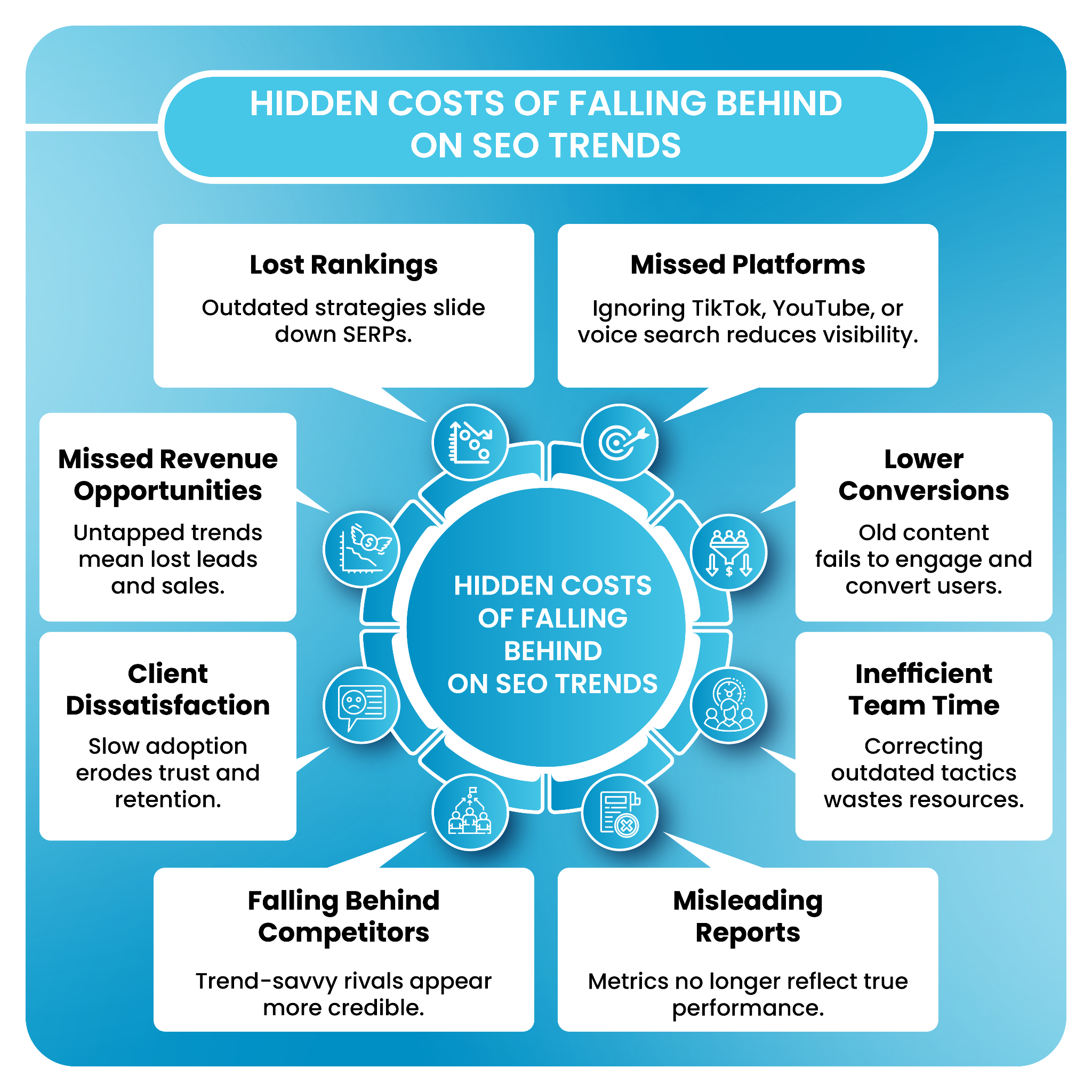
Without access to broader insights, agencies end up reacting to changes after they happen rather than preparing for them ahead of time.
2. E-E-A-T Is Now a Ranking Prerequisite, Not a Bonus
Experience, Expertise, Authoritativeness, and Trust have moved from being helpful signals to becoming core ranking requirements. In 2026, search engines place far more weight on who is creating content and why that content should be trusted.
Modern ranking systems increasingly reward:
- Real authors with verifiable experience in their field
- Consistent topical authority built over time
- Brand signals supported by third-party mentions, reviews, and references
Many agencies still rely on content strategies that focus on volume and basic optimization. While this approach may scale production, it often lacks true depth. Generic templates, surface-level research, and recycled outlines do little to establish credibility or long-term trust.
The biggest challenge here is scale. Building E-E-A-T properly across multiple industries requires much more than good writing. It demands:
- Author frameworks connected to real credentials
- Entity mapping that reinforces subject-matter authority
- Repeatable processes that go beyond content creation alone
Most agencies do not have the time, tools, or internal systems to manage this level of complexity consistently without outside support.
3. Technical SEO Has Become a Continuous Engineering Function
Technical SEO in 2026 is no longer limited to audits and recommendations. Core Web Vitals now directly influence user experience, conversion rates, and how efficiently both users and AI crawlers interact with a site.
Modern websites rely heavily on JavaScript frameworks, headless CMS platforms, and dynamic rendering. While these technologies improve flexibility and design, they also introduce new risks related to crawlability, indexation, and performance.
As a result, SEO audits are no longer occasional tasks. They must function as ongoing monitoring systems. Clients increasingly expect:
- Continuous detection of technical issues
- Clear ownership and accountability for fixes
- Ongoing collaboration between SEO and development teams
Most agencies are still structured around a handoff model. They audit, provide recommendations, and move on. When issues remain unresolved, trust erodes over time, and SEO begins to feel disconnected from real outcomes.
4. SEO Is Now Multi-Surface, Not Just Google
Organic visibility no longer exists in a single channel. In 2026, it spans multiple platforms and content surfaces, including:
- Traditional Google Search results
- Google Discover and personalized feeds
- YouTube and video-based search
- Community platforms like Reddit and Quora
- Sources used to train and inform AI systems
Clients often notice when competitors seem to be everywhere and ask why their brand is not showing up in the same way. Many agencies struggle to answer because they lack cross-platform strategies and tools to track visibility beyond standard SERPs.
When SEO reporting focuses only on rankings, it feels disconnected from what users actually experience. This gap makes SEO harder to justify, even when the underlying strategy is sound.
5. Measurement Is Breaking Down
Analytics has become more complex and less intuitive. GA4 limitations, attribution gaps, and AI-driven traffic sources make it increasingly difficult to tie SEO performance directly to revenue.
Clients now want deeper insights, such as:
- Business impact rather than raw traffic numbers
- Assisted conversions and influence across channels
- Visibility trends that exist beyond clicks
For agencies, explaining SEO value often takes more effort than executing the work itself. Manual reporting does not scale, and SEO can appear less predictable compared to paid channels that offer clearer attribution models.
6. SEO Knowledge Decays Faster Than Teams Can Update
Search algorithms evolve at a rapid pace. Helpful content updates, spam detection systems, and AI-driven ranking adjustments mean that strategies effective last year can actively hurt performance today.
Many agencies rely heavily on:
- A single senior SEO specialist
- Outdated internal documentation
- Knowledge silos that increase delivery risk
When that expertise is stretched too thin, quality suffers. This is not a talent issue. It is a structural challenge caused by the speed at which SEO continues to change.
White Label SEO as a Strategic SEO Infrastructure Layer
1. AI-Search Adaptation at Scale
White label SEO providers operate across hundreds of campaigns, industries, and search environments. This gives them early insight into how AI-driven SERPs behave.
They test and refine:
- AI-readable content structures
- Entity-based optimization approaches
- Citation-ready formatting
Agencies benefit from shared learnings that would be impossible to gather alone. Patterns emerge faster, and adaptation becomes proactive instead of reactive.
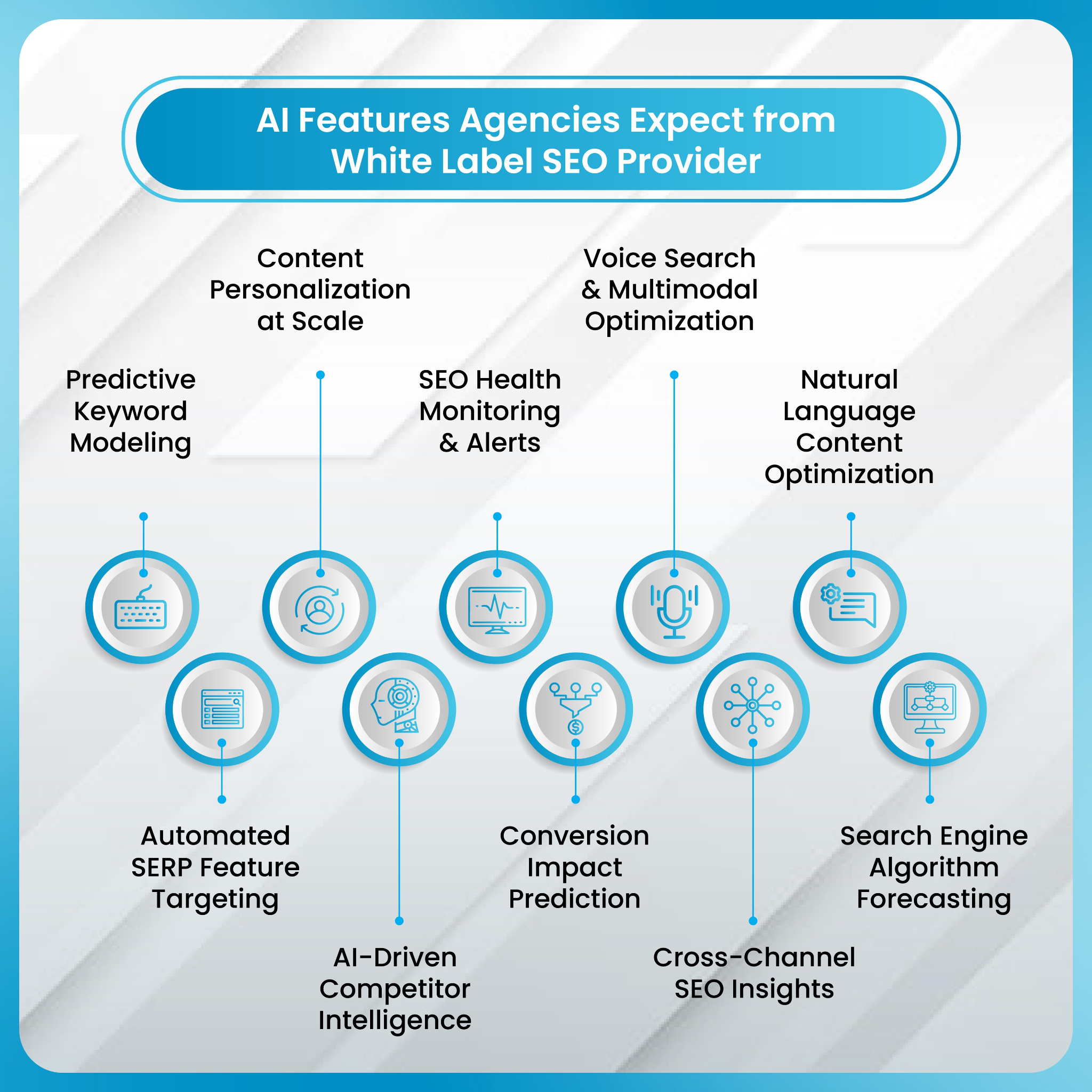
2. Systematic E-E-A-T Implementation
Instead of treating E-E-A-T as a creative gamble, white label SEO teams turn it into a system. This includes:
- Author and contributor frameworks
- Trust signal checklists
- Structured entity relationships
The result is consistent quality across clients without reinventing the wheel each time. Content rework decreases, and trust signals compound over time.
3. Continuous Technical SEO Monitoring
White label SEO functions like an SEO operations team. Rather than delivering one-time audits, they focus on:
- Ongoing crawl diagnostics
- Performance and page experience tracking
- Indexation control and error resolution
This shifts SEO from advisory work to accountable delivery. Agencies no longer have to bridge the gap between strategy and execution alone.
4. Multi-Surface Visibility Execution
Modern white label SEO services expands beyond traditional rankings. It supports visibility across:
- SERP features and rich results
- Community-driven platforms
- Content signals that influence AI systems
Agencies stop selling rankings and start selling search presence, which aligns better with how users actually discover brands in 2026.
5. Advanced SEO Measurement and Reporting
White label partners invest heavily in reporting frameworks that go beyond traffic. These often include:
- Visibility-based metrics
- Conversion-aligned dashboards
- Clear narratives tied to business goals
This makes ROI conversations easier and more defensible, especially when traffic patterns fluctuate.
6. Collective Intelligence Over Individual Guesswork
One of the biggest advantages of white label SEO is collective intelligence. Insights from hundreds of campaigns reduce risk and experimentation costs for individual agencies.
Instead of guessing, agencies operate with confidence backed by real-world data.
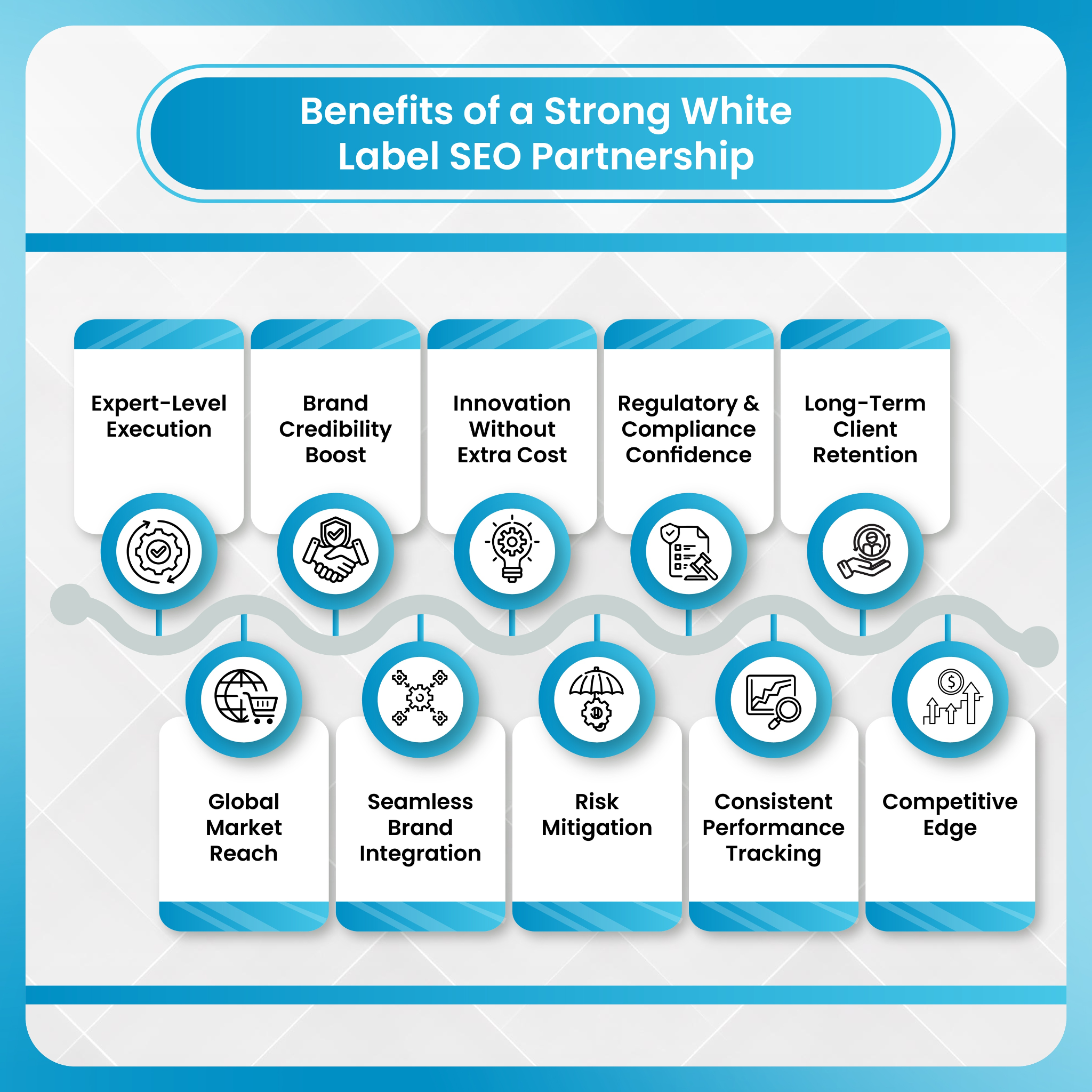
DashClicks’ White Label SEO: Specialized Support Built for Modern Agency Needs
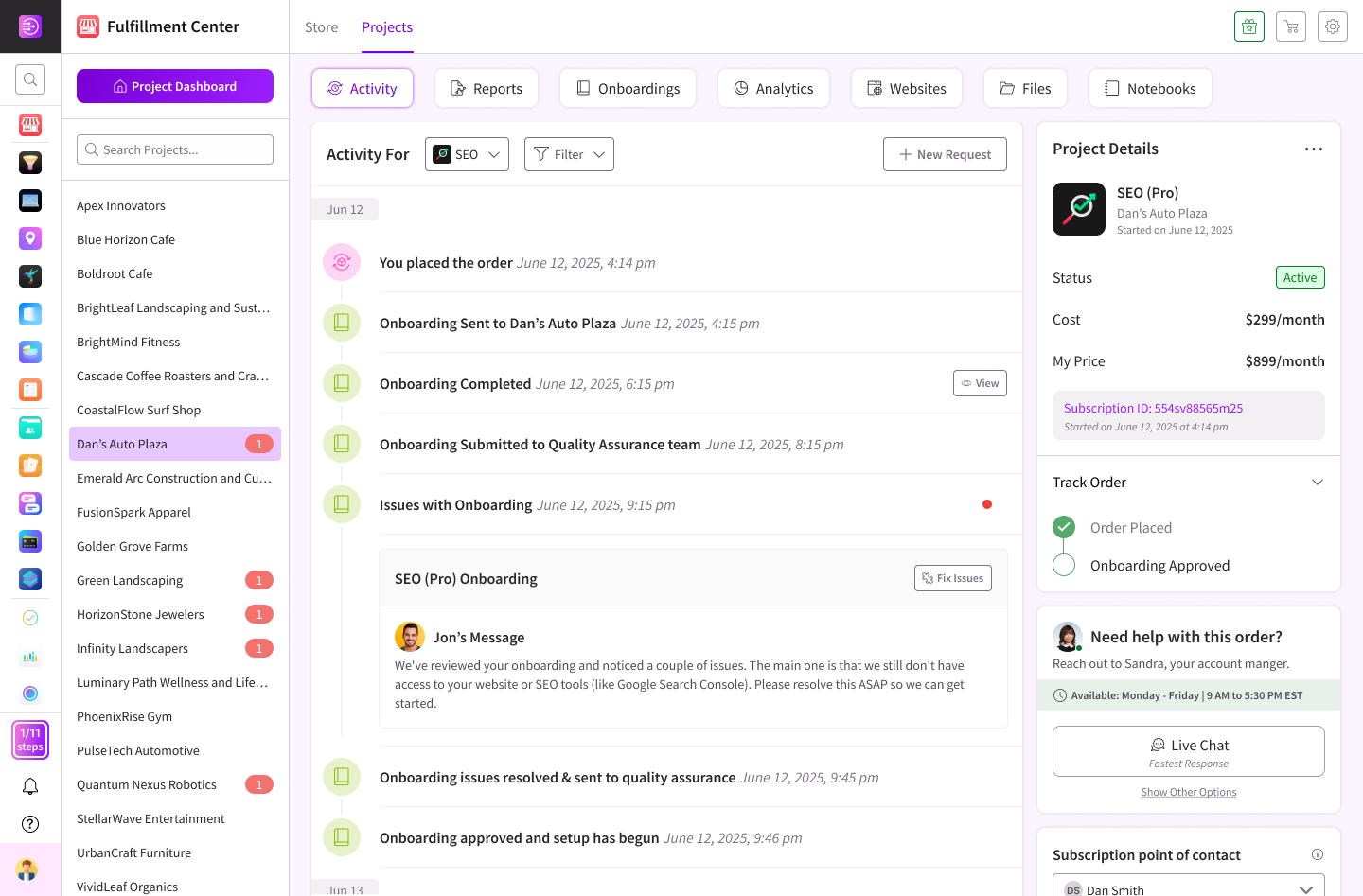
DashClicks offers white label SEO services designed specifically for agencies navigating the realities of modern search. Rather than acting as a generic provider, DashClicks functions as an extension of the agency’s team, delivering SEO execution under the agency’s brand.
Dedicated SEO specialists handle day-to-day work, allowing agencies to stay focused on strategy, relationships, and growth. This structure helps agencies meet rising client expectations without rebuilding internal systems from scratch.
DashClicks supports advanced SEO needs that matter in 2026, including:
- AI-driven search optimization and entity-based SEO strategies
- EEAT-focused content development that strengthens trust and authority
- Continuous technical SEO monitoring to address performance and indexation issues
- White-labeled reporting that highlights visibility, conversions, and business impact
By combining process-driven execution with scalable infrastructure, DashClicks helps agencies deliver consistent, future-ready SEO. This approach reduces delivery risk while allowing agencies to offer sophisticated SEO services with confidence.
Conclusion: In 2026, SEO Is a Capability, Not a Service
SEO in 2026 is no longer something agencies can package as a checklist or treat as a standalone line item. It has become a living capability that blends strategy, technology, content, and measurement into one connected system. Search engines now evaluate brands holistically, which means isolated tactics rarely deliver lasting results.
Agencies that continue to treat SEO as a one-off service will feel increasing pressure as algorithms evolve and client expectations rise. In contrast, those that approach SEO as strategic infrastructure will be better positioned to adapt. White label SEO is not about handing off responsibility or cutting corners. It is about building delivery models that evolve faster than search changes and scale without sacrificing quality or consistency.
The most successful agencies in 2026 will not try to do everything themselves. Instead, they will build strong ecosystems that combine internal expertise with specialized partners who focus exclusively on SEO and stay ahead of industry shifts. This approach reduces risk, improves outcomes, and allows agencies to remain confident in what they deliver.
For agencies looking to future-proof their SEO offerings, strengthen client trust, and stay competitive in an increasingly complex search landscape, partnering with the right white label SEO provider can be a defining advantage. It is not just about keeping up with SEO. It is about building a model that is ready for what comes next.


.svg)


.svg)
.svg)
.svg)
.svg)
.svg)