

.svg)

.svg)
.svg)
.svg)
.svg)
.svg)
Many agencies believe better PPC results come from smarter bidding, stronger creatives, or larger budgets. These elements matter, but they are only part of the picture. Campaign tactics determine what you do. Operational execution determines whether those tactics are applied correctly, every time.
As agencies grow, inconsistent processes begin affecting campaign quality, reporting accuracy, response times, and client satisfaction. A well-structured bid strategy means little if it is implemented differently across accounts. A strong creative has limited impact if tracking is misconfigured and conversion data cannot be trusted.
High-performing agencies understand this. They treat PPC as an operational discipline, not just a marketing function. According to the Project Management Institute's Pulse of the Profession report, organizations with standardized project management practices complete more projects successfully and waste significantly less investment due to poor performance. The same principle applies to PPC management at scale.
This article covers why operational consistency directly impacts PPC performance, which operational areas matter most, common breakdowns agencies experience while scaling, how standardized workflows improve client outcomes, and how white label PPC supports consistent execution.
Before discussing consistency, it is important to understand why PPC performance often becomes less predictable as agencies grow.
Why PPC Performance Becomes Inconsistent as Agencies Scale?
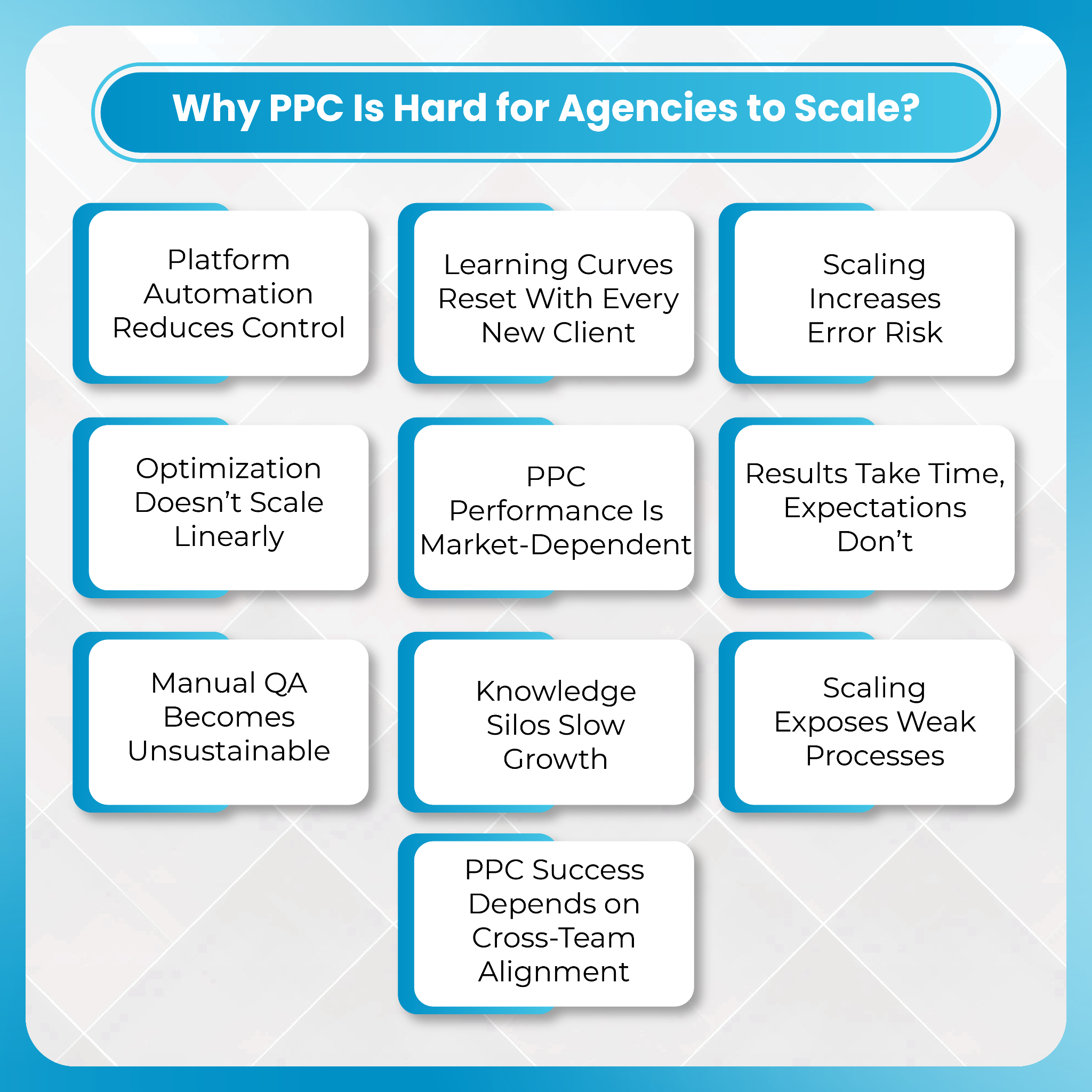
Growing agencies frequently experience performance inconsistencies that are difficult to trace back to a single cause. The problem is rarely a flawed strategy. More often, it is the result of operational gaps that develop as workloads increase and team structures evolve.
Common inconsistencies include:
- Campaign launches completed without standardized checklists
- Optimization reviews delayed or skipped during busy periods
- Negative keywords list left unupdated across accounts
- Reporting formatted differently depending on the account manager
- Communication gaps between team members managing the same account
- QA steps missed under time pressure
- Different account managers following entirely different internal processes
Operational complexity grows alongside client volume. One PPC manager may optimize accounts daily, while another reviews accounts weekly. Neither approach is automatically wrong, but inconsistency creates uneven client results, making it difficult to identify whether performance differences are caused by strategy or execution.
Poor performance is not always caused by poor strategy. It is often caused by inconsistent execution.
These inconsistencies usually appear in several operational areas long before they become visible in campaign performance.
The Operational Areas That Have the Greatest Impact on PPC Results
PPC consistency depends on several agency operations layers working together. When even one layer breaks down, the effects ripple across campaign quality, data reliability, and client confidence.
1. Campaign Build Consistency
How a campaign is built determines how efficiently it can be managed over time. Standardized builds reduce future errors and make ongoing optimization significantly easier. Key elements include:
- Naming conventions applied consistently across all accounts
- Account structure organized to align with client goals and reporting needs
- Audience organization documented and replicated across similar campaigns
- Conversion tracking verified before campaigns go live
- Asset management maintained so creative is organized and accessible
When these elements are handled the same way every time, account managers spend less time deciphering past decisions and more time improving performance.
2. Optimization Cadence
Optimization should be process-driven, not reactive. Reactive optimization means accounts only receive attention when something goes wrong. Process-driven optimization means every account is reviewed on a defined schedule, regardless of how busy the team is.
A consistent optimization cadence includes:
- Routine bid adjustments based on performance data
- Regular search term reviews to capture new negatives and identify intent shifts
- Budget allocation reviewed against pacing and performance targets
- Negative keyword lists updated on a fixed schedule
- Audience refinement based on observed conversion patterns
Structured optimization schedules reduce the risk of missed opportunities that quietly erode campaign performance over time.
3. Quality Assurance
QA prevents avoidable mistakes before they affect performance or create client-facing problems. A repeatable QA process should cover:
- Launch checklists completed for every new campaign
- Tracking verification confirmed before and after campaign activation
- Landing page functionality tested across devices
- Policy compliance reviewed to reduce disapproval risk
- Budget validation checked against signed agreements
Without QA checkpoints, errors that could be caught in minutes end up costing hours of troubleshooting and potentially weeks of compromised data.
4. Reporting Processes
Clients value consistency. Receiving a different report format each month, with different metrics highlighted and different levels of explanation, creates uncertainty and erodes confidence. Monthly reports should:
- Explain what changed and why
- Highlight meaningful insights rather than just raw numbers
- Define specific next actions the team will take
- Connect campaign metrics directly to the client's business goals
Consistent reporting transforms data into a communication tool, helping clients understand the value of what is being delivered.
5. Internal Communication
When account knowledge lives only in someone's memory, it disappears the moment that person is unavailable. Structured internal communication protects continuity and reduces knowledge gaps. This includes:
- Standard operating procedures documented and accessible to the full team
- Campaign notes maintained within account management tools
- Shared workflows that keep multiple team members aligned on account status
- Documentation updated whenever strategy or structure changes
Strong internal communication ensures that any team member can step into an account and understand its history without starting from scratch.
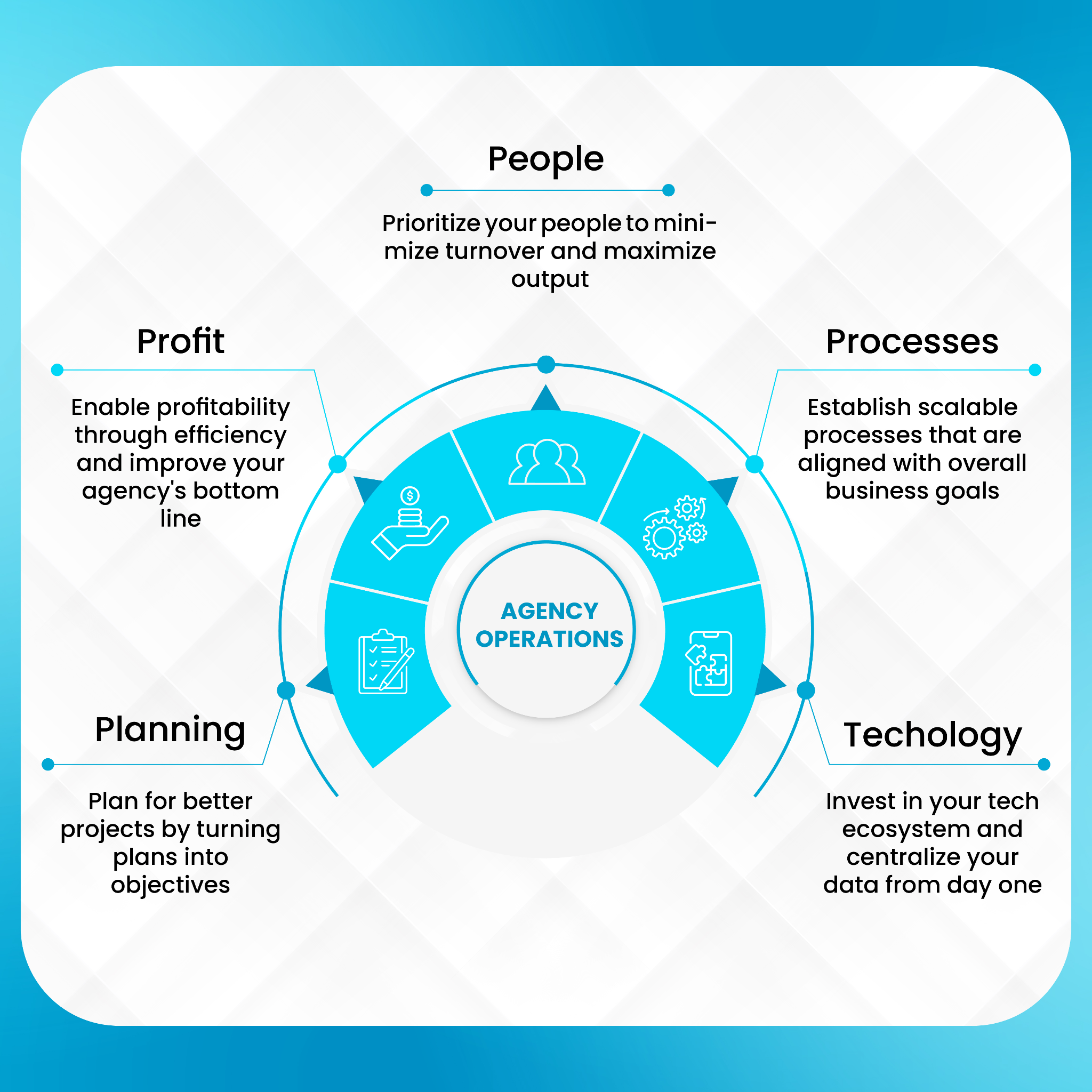
When these operational elements become standardized, the benefits extend well beyond smoother internal workflows.
How Operational Consistency Improves PPC Performance?
Standardized execution does not just make agencies easier to manage internally. It creates measurably better campaign outcomes for clients.
1. Better Optimization Decisions
Routine reviews prevent missed opportunities and reduce guesswork. When optimization follows a defined schedule, account managers can identify patterns, act on emerging trends, and make adjustments based on data rather than urgency. Reactive management leads to optimization decisions made under pressure, which are more likely to be inconsistent or incomplete.
2. Faster Problem Detection
Consistent monitoring helps identify issues before clients notice them. Problems that go undetected for days or weeks can significantly distort performance data and damage client trust. Regular account reviews make it easier to catch:
- CPA spikes that signal audience fatigue or competitive shifts
- Conversion tracking failures that corrupt reporting data
- Budget exhaustion happening earlier than expected
- Disapproved ads reducing impression share without triggering alerts
3. More Reliable Performance Data
Data quality depends directly on execution consistency. The relationship works in sequence:
- Consistent tracking
- Better reporting
- Better optimization
- Better decisions
Inconsistent tracking produces unreliable data. Unreliable data leads to poor optimization decisions. Poor optimization decisions produce weaker results. Fixing data quality at the source creates a compounding improvement across every downstream process.
4. Easier Testing
Structured testing frameworks improve the reliability of ad copy experiments, landing page tests, and audience experiments. When account structures and naming conventions are standardized, test results are easier to interpret and apply across multiple accounts. Unstructured testing often produces findings that cannot be replicated or scaled.
5. Higher Client Confidence
Clients notice operational consistency even when they cannot name it. Predictable reporting, proactive communication, and fewer surprises build the kind of trust that leads to longer client relationships and referrals. According to HubSpot's State of Marketing Report, marketers consistently rank data-driven decision-making and performance measurement among the most important factors for marketing success. Clients expect their agencies to meet that standard.
Despite understanding these benefits, many agencies struggle to maintain operational consistency as client demand increases.
Common Operational Challenges Growing Agencies Face
Operational strain usually grows quietly as more clients are added. Each new account adds a small amount of pressure, and the cumulative effect often goes unnoticed until performance starts to slip.
1. Increasing Client Volume
Adding clients without adding structure creates a predictable outcome:
- More accounts
- Less attention per account
- Higher risk of inconsistent execution
Volume growth without process investment is one of the most common causes of declining service quality at scaling agencies.
2. Team Expansion
Bringing on new specialists solves a capacity problem but can introduce a consistency problem. Different team members arrive with different workflows, different standards, and different interpretations of best practices. Without documented processes, each person manages accounts according to their own approach.
3. Manual Processes
Agencies that rely on manual methods for reporting, QA, and optimization tracking face increasing inefficiency as volume grows. Manual processes are slower, more error-prone, and difficult to audit when problems arise.
4. Staff Turnover
When employees leave, account knowledge often leaves with them. If processes are not documented, the next person to manage that account starts with incomplete context, increasing the risk of errors and inconsistent execution during the transition.
5. Limited Bandwidth
As agencies scale, strategic work gets replaced by operational tasks:
- Pulling and formatting reports
- Troubleshooting tracking issues
- Managing client emails
- Coordinating internally across accounts
According to Asana's Anatomy of Work Index, knowledge workers spend a substantial portion of their time on work, including coordination, status updates, and searching for information. This significantly reduces the time available for the strategic work that actually drives campaign performance.
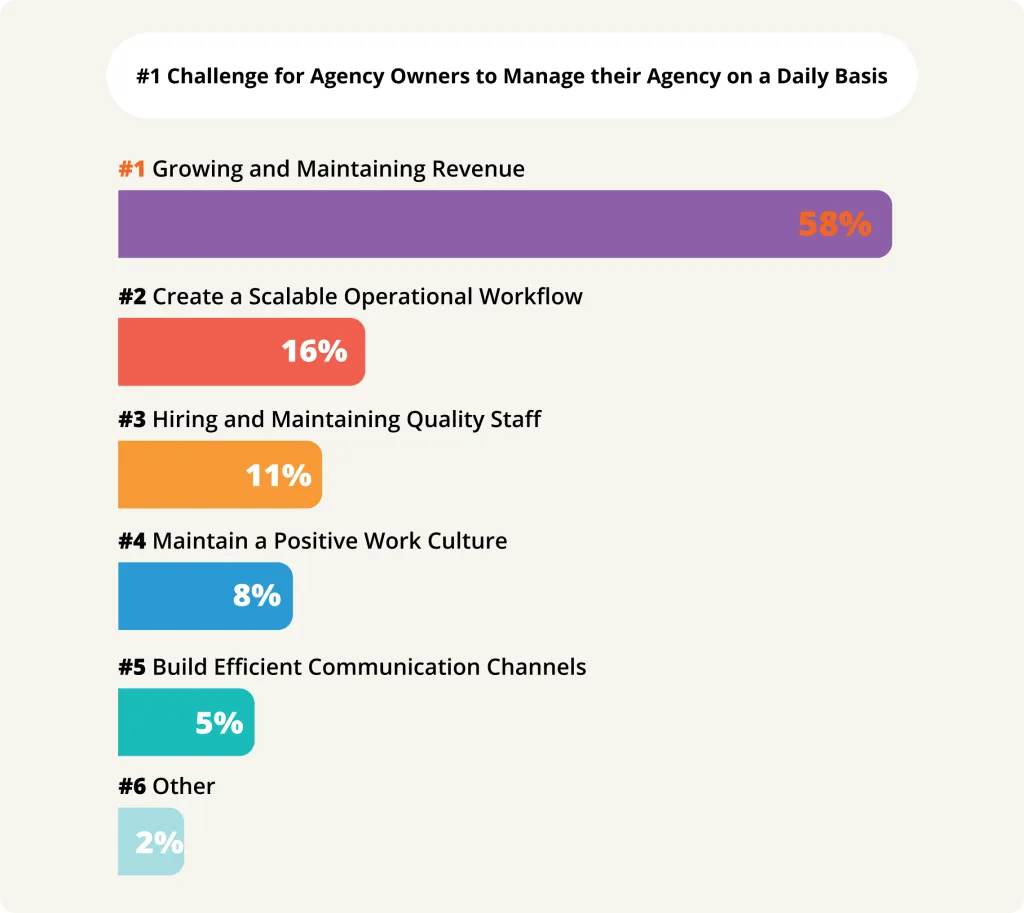
Image Source: Function Point
The solution is not simply hiring more people. It is creating systems that maintain consistency regardless of team size.
How White Label PPC Services Improve Operational Consistency?
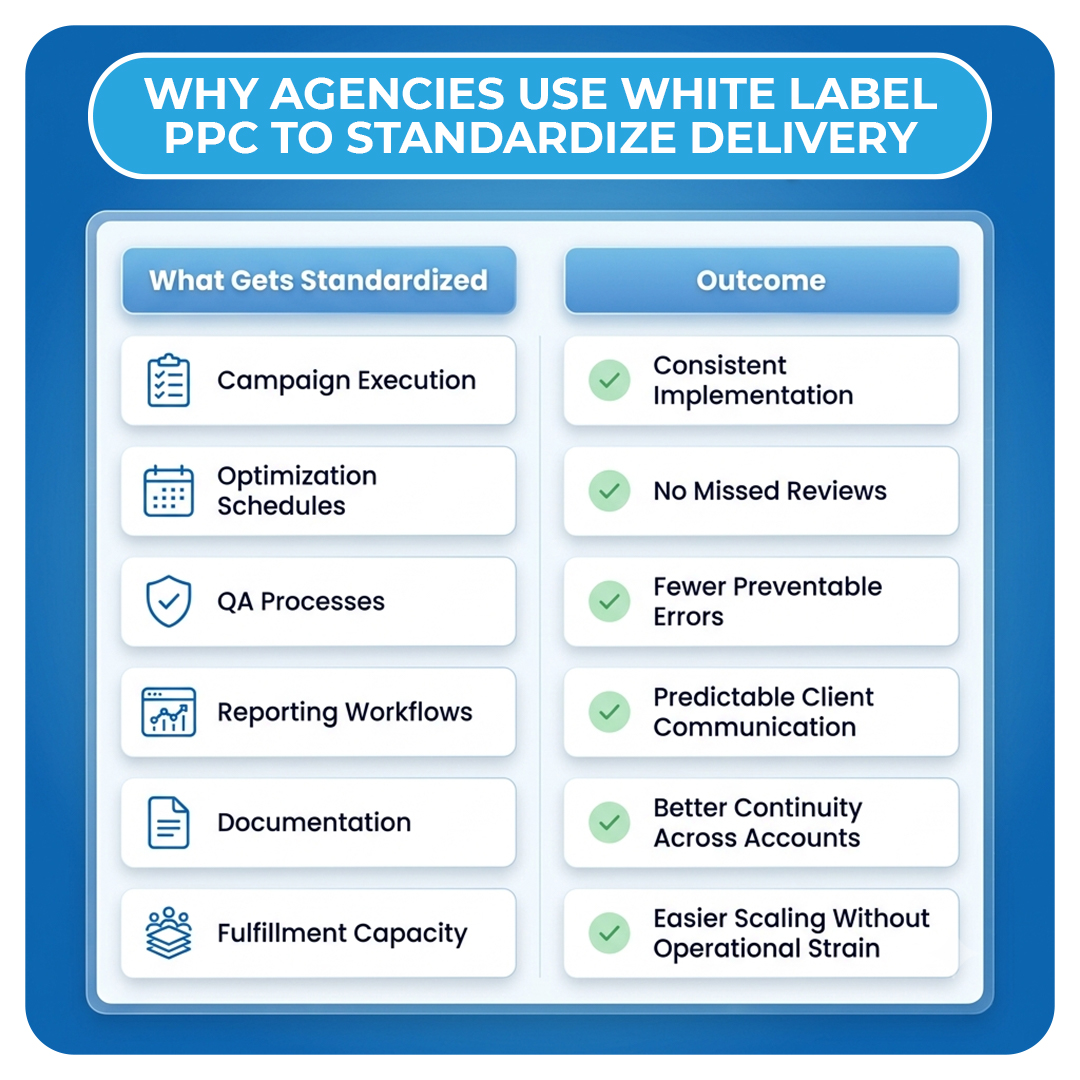
Building standardized PPC processes internally is possible, but maintaining them becomes harder as agencies scale. White label PPC services help agencies maintain consistent execution, improve efficiency, and support growth without expanding internal teams.
1. Standardized Campaign Management
White label PPC providers follow established workflows across every account they manage. This covers:
- Campaign setup completed according to documented standards
- Account structure organized consistently across client accounts
- Audience targeting applied based on campaign objectives
- Budget allocation aligned with client goals and performance data
- Ongoing campaign management handled through structured processes
Standardized execution reduces the inconsistencies that emerge when internal teams manage accounts differently.
2. Consistent Optimization Processes
A white label PPC agency operates on defined optimization schedules rather than reactive workflows. Routine processes include:
- Regular bid adjustments based on performance signals
- Search query reviews conducted on a fixed cadence
- Negative keyword management maintained across accounts
- Budget pacing monitored against targets
- Performance monitoring completed as part of an established routine
Consistency in optimization helps prevent the missed opportunities that silently reduce campaign performance over time.
3. Quality Assurance at Every Stage
Repeatable QA processes are one of the clearest advantages of working with a structured white label PPC provider. Documented checkpoints help agencies avoid:
- Tracking errors that distort reporting data
- Incorrect campaign settings that limit performance
- Budget allocation mistakes that waste client spend
- Ad policy issues that result in disapprovals
- Landing page mismatches that reduce conversion rates
4. Reliable Reporting and Client Communication
White label PPC support allows agencies to deliver reports on a consistent schedule, present performance data clearly, explain campaign changes in client-friendly language, and recommend next steps with confidence. Operational consistency at the fulfillment level strengthens the agency's relationship with each client.
5. Scalable Fulfillment Without Operational Bottlenecks
White label PPC services allow agencies to handle growing client workloads, maintain service quality across accounts, reduce operational strain on internal teams, and scale without immediately hiring additional PPC specialists. This gives agencies the flexibility to grow their client base without compromising the execution standards that client retention depends on.
While white label PPC services provide the operational framework for consistent execution, choosing the right fulfillment partner determines how effectively those processes translate into better client outcomes.
How DashClicks Helps Agencies Deliver Consistent PPC Performance?
DashClicks functions as a white label PPC agency designed to help agencies improve operational consistency and scale campaign fulfillment without building everything internally.
- White Label PPC Fulfillment: Campaign execution is managed under the agency's brand, maintaining consistent standards across every client account. Agencies retain the client relationship while the fulfillment team handles the operational work behind it.
- Experienced PPC Specialists: Agencies gain access to PPC specialists who follow established optimization workflows and consistent account management practices. This provides specialized expertise without absorbing the cost and time of internal hiring and training.
- Standardized Reporting: Clear, structured reports can be presented to clients with confidence. Consistent reporting formats make it easier to explain performance, highlight progress, and communicate next steps.
- Scalable Fulfillment: As agencies add clients, DashClicks supports the additional workload without requiring immediate internal expansion. Agencies can grow their revenue while maintaining the service quality their clients expect.
- Reliable Operational Processes: Proven workflows are applied across every account, helping agencies maintain quality and consistency as client volume increases. Documented processes reduce the risk of execution gaps that damage performance or erode client trust.
Ultimately, consistent PPC success is not created by isolated optimizations. It is built through reliable systems that make great execution repeatable.
Operational Excellence Is the Foundation of Scalable PPC Growth
Great PPC results require more than tactical expertise. Operational consistency ensures every campaign receives the same level of attention, optimization, reporting, and quality assurance, regardless of team size or client volume.
Standardized processes improve efficiency, strengthen client trust, and create more predictable performance outcomes. Agencies that invest in repeatable workflows are better equipped to scale without sacrificing the service quality that earns and retains clients.
White label PPC services support this by providing a scalable operational framework that maintains execution standards as demand grows. For agencies looking to grow without operational strain, the right fulfillment partner can be the difference between scaling successfully and losing quality in the process.
Operational excellence is a competitive advantage. With the right systems and the right fulfillment partner, agencies can consistently deliver stronger PPC outcomes while building a more scalable and resilient business.


.svg)


.svg)
.svg)
.svg)
.svg)
.svg)