

.svg)

.svg)
.svg)
.svg)
.svg)
.svg)
Publishing more blogs feels like progress. Clients can see the new posts. The content calendar stays full. Reports show consistent output month after month. For many agencies, that rhythm creates the impression that SEO is working.
The problem is that content volume and SEO performance are not the same thing. According to BrightEdge Organic Search Research, 53.3% of all trackable website traffic comes from organic search. Capturing that traffic requires far more than a steady stream of new articles. It requires optimized pages, a technically sound website, clean site architecture, and ongoing maintenance that keeps everything performing over time.
Many agencies fall into the trap of equating publishing activity with SEO progress. Content is easy to produce, easy to measure, and easy for clients to understand. Technical SEO is harder to explain and largely invisible. That imbalance often shifts agency resources toward content production while the deeper work gets deprioritized.
Content creates opportunities. SEO systems turn those opportunities into rankings. Without the systems, most of the content an agency publishes will underperform.
This article explains why more content is not a complete SEO strategy, what ongoing optimization work actually drives rankings, and how white label SEO outsourcing helps agencies deliver complete campaigns at scale without overextending internal teams.
Why Agencies Often Mistake Content Production for SEO Progress?
Content production is the most visible part of an SEO engagement. Clients can read new blog posts, share them on social media, and clearly see that work is happening. As a result, publishing content often becomes the easiest way for agencies to demonstrate progress.
Several factors contribute to this misconception:
- New Content is Highly Visible: Clients can immediately see published blogs, landing pages, and other website updates, making content feel like tangible progress.
- Publishing is Easy to Measure: Agencies can report the number of articles or pages created each month, giving clients a simple metric to track.
- Content Creates the Perception of SEO Success: As page count increases, clients often assume rankings and organic traffic will naturally follow.
- Reporting Reinforces the Belief: Monthly reports frequently highlight content production rather than improvements in technical SEO or search visibility.
However, technical SEO tells a different story.
Most optimization happens behind the scenes, making it less noticeable even though it has a significant impact on rankings. This work includes:
- Resolving Crawl Errors: Helps search engines discover and index important pages correctly.
- Fixing Canonical Conflicts: Prevents duplicate content from competing against itself in search results.
- Improving Internal Linking: Strengthens page authority and helps search engines understand the site's structure.
- Maintaining Site Health: Ongoing audits identify technical issues before they affect performance.
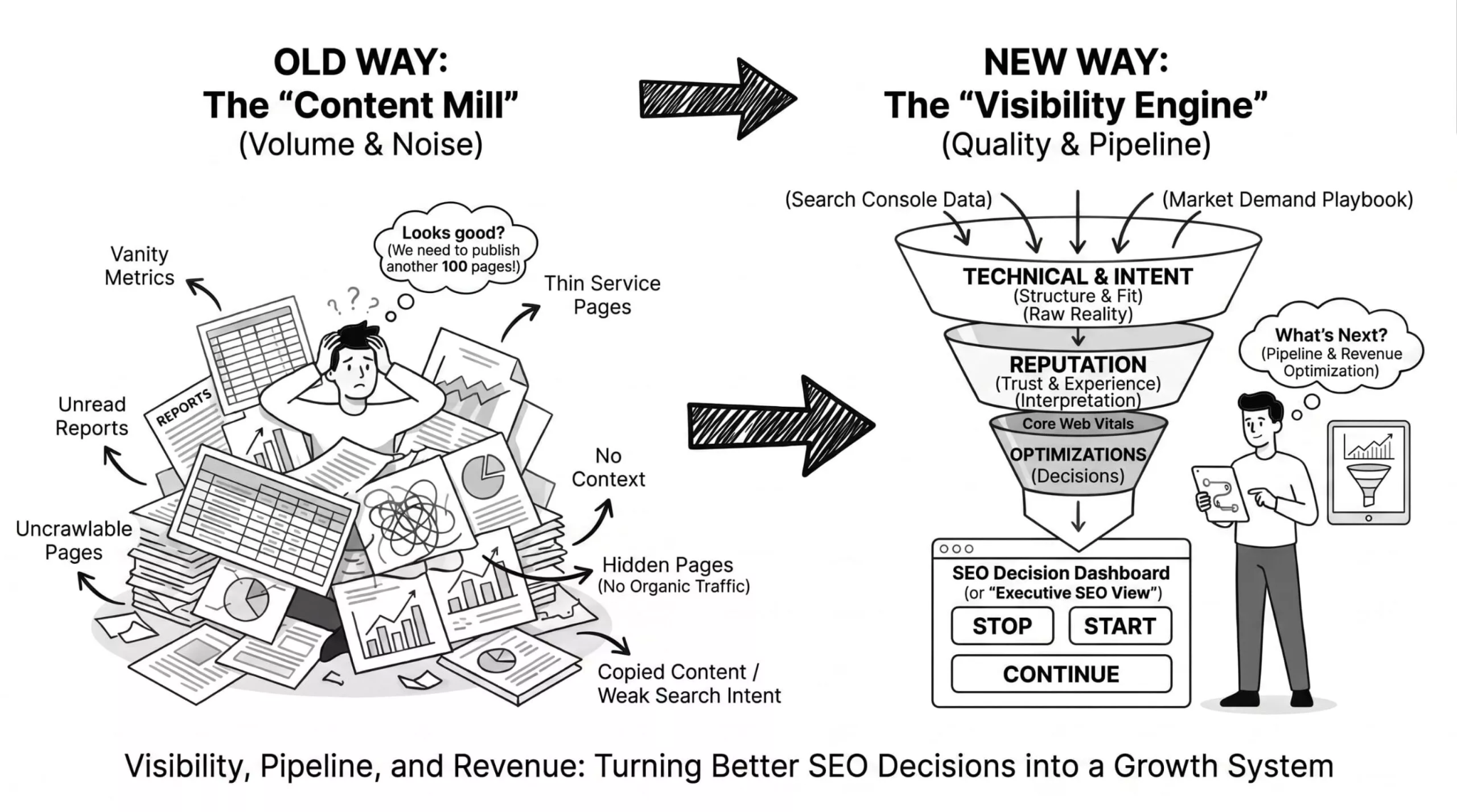
Image Source: dau
Limited internal bandwidth often makes the problem worse.
When agencies become busier, content production usually scales more easily than technical optimization because:
- Content Follows Predictable Workflows: Writing and publishing blogs is easier to standardize across multiple clients.
- Technical SEO Requires Specialized Expertise: Site audits, crawl analysis, and structural improvements demand more time and experience.
- Growing Client Rosters Reduce Optimization Time: Teams often prioritize visible deliverables over recurring maintenance work.
The result is that agencies begin measuring the wrong indicators. Content volume is not a reliable measure of SEO performance. A website with 300 indexed pages and unresolved technical issues is unlikely to outperform a competitor with 100 well-optimized pages built on a technically sound foundation.
Creating more content expands your opportunities to rank, but it cannot fix the underlying SEO issues that prevent existing pages from performing well.
More Content Doesn't Fix the SEO Problems Holding Rankings Back?
New content competes for rankings within whatever technical and structural environment already exists on a website. If that environment has unresolved problems, publishing more pages will not overcome them. Understanding which barriers are actually suppressing performance is the first step toward fixing them.
1. Technical SEO Barriers
Technical problems prevent search engines from properly crawling and indexing a website, regardless of how much content gets published. Common issues include:
- Crawl errors that block search engines from accessing important pages.
- Indexation issues that prevent content from appearing in search results.
- Broken internal links that interrupt crawl paths and dilute authority.
- Poor site architecture that buries important pages too deep for efficient crawling.
- Canonical issues that create duplicate content signals.
- XML sitemap problems that send incomplete or inaccurate signals to search engines.
2. On-Page SEO Problems
Even when a page is technically accessible, weak on-page SEO limits its ability to rank. Agencies frequently encounter:
- Weak metadata that reduces click-through rates and fails to signal relevance.
- Keyword cannibalization where multiple pages compete for the same terms.
- Thin commercial pages that do not satisfy search intent.
- Poor heading hierarchy that obscures content structure for both users and crawlers.
3. Performance Issues
Site performance affects both user experience and search rankings. Core Web Vitals are now a confirmed Google ranking factor, making performance optimization a direct SEO concern. Key issues include slow Core Web Vitals scores, mobile usability failures, and oversized image files that inflate load times.
4. Local SEO Issues
For clients with physical locations or service areas, local SEO problems limit visibility in map results and local search. These issues often involve Google Business Profile inconsistencies, citation inaccuracies across directories, and weak local relevance signals across the website.
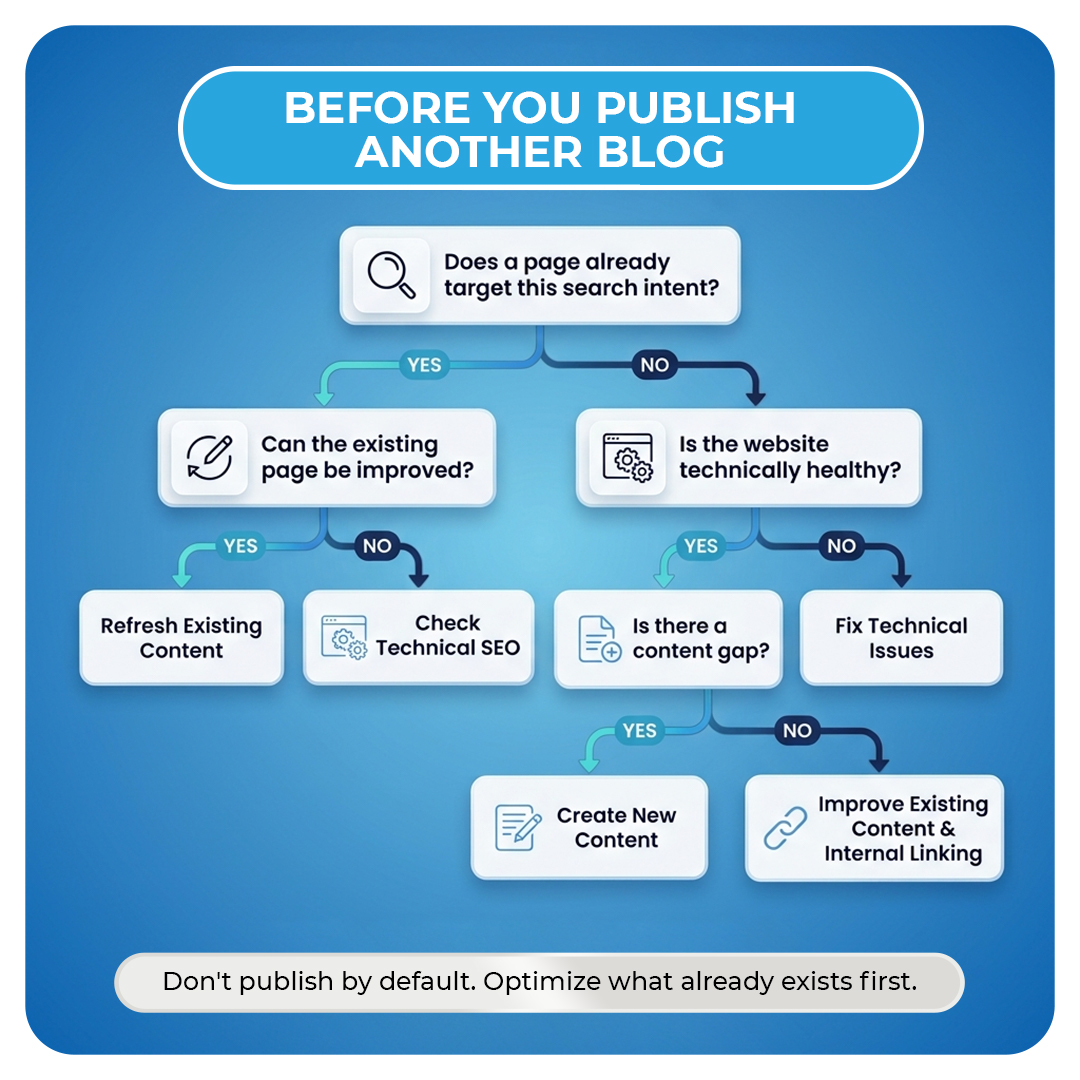
Publishing ten new articles will not solve the technical barriers preventing existing pages from performing. In many cases, improving what already exists delivers stronger results than constantly adding new pages.
Why Does Existing Content Often Deliver More ROI Than Publishing New Content?
Most established websites already have pages that rank somewhere on page two or three of search results. Those pages have existing authority, backlinks, and indexation history. With targeted optimization, many of them can move to page one without the effort required to build a brand-new page from scratch.
Content refreshes are often the highest-ROI activity in an SEO campaign, yet they remain consistently underused. Common refresh activities include:
- Updating outdated statistics to restore accuracy and credibility.
- Improving search intent alignment so the page better matches what users are actually looking for.
- Expanding topical depth to cover subtopics competitors are ranking for.
- Refreshing internal links to pass authority to related pages and improve site structure.
- Consolidating overlapping pages to resolve keyword cannibalization.
- Improving metadata to increase click-through rates.
- Adding schema markup to enhance search result appearance.
- Updating call-to-action to reflect current offers or funnels.
Refreshed content often outperforms newly published content because it builds on an existing foundation rather than starting from zero. Google Search Central recommends keeping content accurate, useful, and regularly maintained rather than simply increasing content volume. Frequent updates signal that a page remains relevant, which supports continued indexing and rankings.
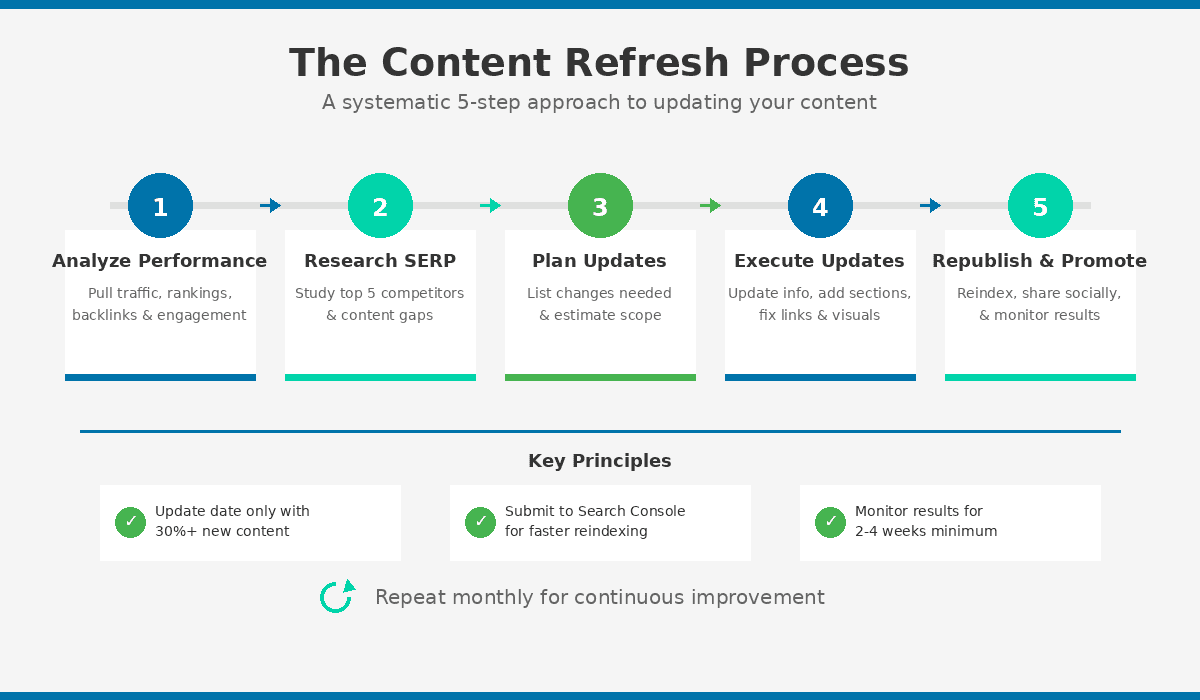
Image Source: Christopher Jan
While clients often notice new blog posts, much of the work that drives rankings happens behind the scenes.
The SEO Work Clients Never See (But Rankings Depend On)
Between every published blog post, there is a continuous set of operational tasks that keep a website performing. This work is rarely visible to clients, but it is what separates websites that sustain rankings from those that plateau.
The SEO Work Happening Between Blog Posts
Recurring optimization activities include:
- Technical Monitoring: Reviewing crawl data for new errors and accessibility issues.
- Crawl Reviews: Ensuring search engines can reach and process all important pages.
- Indexation Management: Confirming that published content is indexed and de-indexed content is properly excluded.
- Internal Link Audits: Identifying broken links, orphaned pages, and opportunities to strengthen authority flow.
- Redirect Maintenance: Managing redirect chains and resolving errors from site changes.
- Metadata Optimization: Updating titles and descriptions based on CTR data and ranking movement.
- Image Optimization: Compressing files and adding descriptive alt text.
- Schema Validation: Confirming that structured data is correctly implemented and error-free.
- Content Pruning: Removing or consolidating thin, outdated, or underperforming pages.
- Site Health Monitoring: Tracking overall technical performance across the site.
None of these activities produce a deliverable a client can read or share. But together, they maintain the foundation that allows published content to rank and hold its position over time.
This ongoing maintenance is what transforms SEO from a publishing activity into a long-term growth system.
SEO Isn't a Publishing Strategy - It's a Maintenance System
The most effective way to understand SEO is as infrastructure rather than output. A website's rankings depend on a combination of content quality, technical integrity, authority, and ongoing upkeep. Treating SEO as a content publishing schedule misses three of those four components entirely.
Sustainable SEO growth depends on recurring activities across multiple disciplines:
- Monitoring to catch technical issues before they affect rankings.
- Auditing to identify gaps in optimization across the site.
- Optimization to improve page-level performance continuously.
- Reporting to track what is working and identify new opportunities.
- Continuous improvement to respond to algorithm changes, competitor movements, and evolving search intent.
Agencies that focus only on publishing tend to become reactive. Rankings decline, a content push follows, and the cycle repeats without addressing the root cause. Proactive agencies treat SEO as a maintenance system, scheduling recurring optimization work alongside content production.
Maintaining this level of optimization becomes increasingly difficult as agencies grow.
The Operational Challenge: Why Agencies End Up Prioritizing Content Over SEO Maintenance
The shift toward content-heavy SEO is not usually a strategic choice. It is an operational outcome. As agencies scale, the pressure to deliver visible work to more clients increases, and content is the path of least resistance.
Several factors reinforce this pattern:
- Content Calendars Scale Easily: Adding a new blog post to a workflow is straightforward. Adding a monthly technical audit for each client is not.
- Technical SEO Requires Specialists: Not every team member can resolve crawl errors, manage schema markup, or diagnose Core Web Vitals issues.
- Growing Client Portfolios Reduce Optimization Time: More accounts mean less time per account for deep technical work.
- Reactive Work Replaces Proactive Maintenance: When something breaks, or rankings drop, the team responds. Scheduled optimization gets pushed.
- Multiple Specialists Create Fragmented Ownership: When content, technical SEO, and local SEO are handled by different people without clear coordination, recurring tasks fall through the cracks.
The result follows a predictable pattern:
More Clients → More Content Requests → Less Time for SEO Maintenance → Technical Debt Grows → Rankings Plateau
Operational bottlenecks create stagnant SEO performance not because agencies lack SEO knowledge, but because they lack the capacity to execute recurring optimization consistently across a growing client base.
A balanced SEO process allocates effort across multiple recurring optimization activities, not just content creation.
A Balanced SEO System Agencies Should Follow
Agencies that consistently deliver long-term SEO results treat content as one input in a broader system. Each month, work should cover multiple optimization activities that together support ranking performance and site health.
No single activity in this table can substitute for the others. New content without technical audits builds on an unstable foundation. Technical audits without content refreshes leave underperforming assets untouched. Reporting without optimization produces data that never gets applied.
Long-term SEO depends on cycling through these activities consistently rather than defaulting to whichever deliverable is easiest to produce or explain to a client.
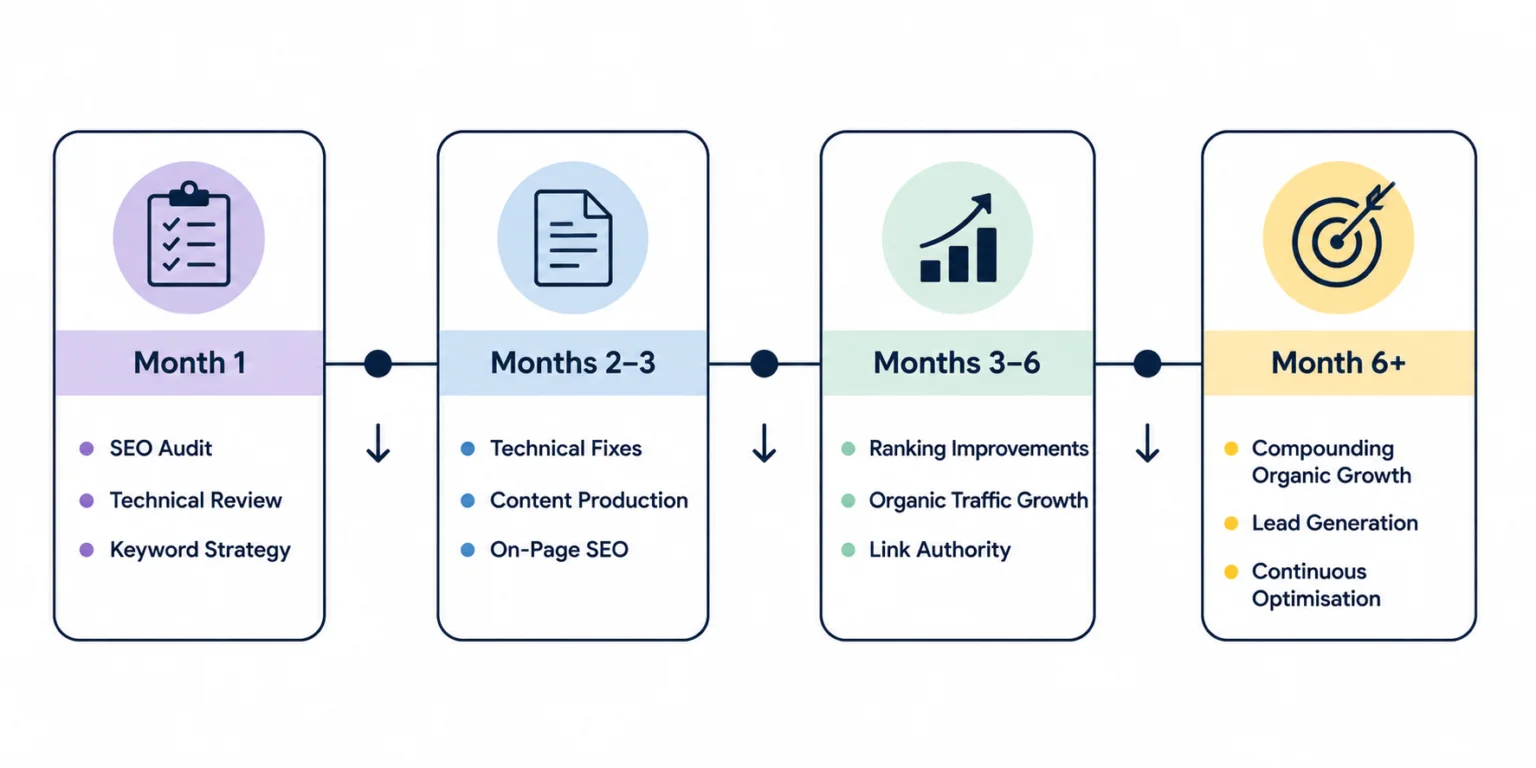
Image Source: Justwords
Delivering this complete SEO process consistently often requires additional operational capacity.
How White Label SEO Helps Agencies Go Beyond Content Production?
SEO outsourcing gives agencies the ability to deliver a complete SEO service without building every capability in-house. Rather than replacing agency strategy, a white label SEO firm expands fulfillment capacity so that recurring optimization work happens consistently alongside content production.
- Technical SEO Support: A white label agency handles the technical layer of optimization that many internal teams cannot sustain at scale. This includes conducting technical audits, monitoring crawl data, maintaining site health, and managing indexation reviews across client websites. These tasks require consistent time investment and technical expertise that is difficult to maintain across a growing portfolio without dedicated resources.
- Content Optimization: White label SEO outsourcing supports on-page optimization beyond initial content creation. Existing pages get reviewed for metadata improvements, internal linking gaps, search intent alignment, and opportunities to expand topical coverage. This work improves the performance of assets already indexed rather than relying on new content to carry all SEO growth.
- Local SEO: For clients with local visibility goals, a white label SEO firm manages Google Business Profile optimization and citation management across directories. Consistent and accurate local signals support rankings in map results and local search, areas that often get overlooked when agencies focus primarily on content production.
- Reporting: White label reporting keeps clients informed without adding reporting burden to internal teams. Reports cover completed optimization work, ranking movements, organic traffic trends, and upcoming priorities. This gives clients visibility into behind-the-scenes SEO activity, not just the content published during the month.
The right fulfillment partner helps agencies deliver every part of SEO consistently, not just content production.
How DashClicks Helps Agencies Deliver Complete SEO Campaigns?
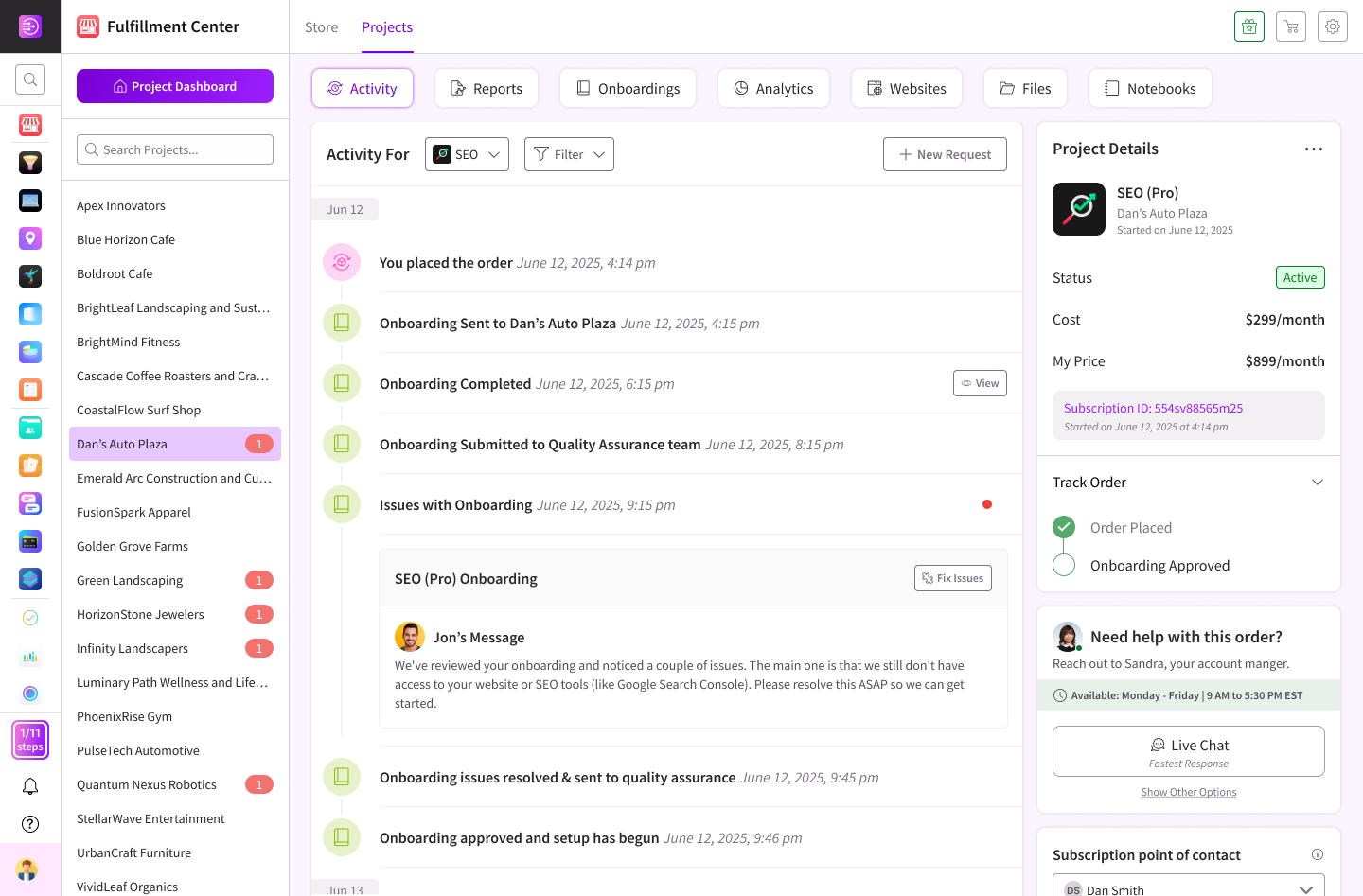
DashClicks is a white label SEO agency built to support digital marketing agencies with recurring fulfillment across every component of SEO. The goal is to handle the ongoing execution so agency teams can focus on client relationships and business growth.
- White Label SEO Fulfillment: The team manages recurring SEO optimization as a consistent, behind-the-scenes process. Fulfillment happens every month across technical, on-page, local, and reporting activities, giving agencies a complete SEO service without building a large internal specialist team.
- Technical SEO Maintenance: The fulfillment team conducts ongoing site audits to maintain crawlability, resolve indexation issues, and monitor site health across client accounts. Technical problems get identified and addressed before they escalate into ranking losses.
- On-Page Optimization: Metadata gets reviewed and improved based on CTR and ranking data. Internal linking is audited to strengthen authority flow across the site. Content optimization focuses on search intent alignment and expanding topical depth on existing pages.
- Local SEO Support: The team manages Google Business Profile optimization and citation management for clients with local SEO goals. Accurate and consistent local signals support visibility in map results and local search results.
- White Label Reporting: With white label reporting, agencies receive branded reports covering completed work, ranking performance, organic traffic trends, and identified opportunities. Reporting communicates the full scope of SEO activity to clients, including the work that happens between blog posts.
- Scalable Fulfillment: Agencies maintain direct client relationships while the fulfillment team supports the recurring execution behind the scenes. As an agency grows its client portfolio, DashClicks scales alongside it without requiring additional internal hiring or restructuring.
With recurring SEO work consistently managed, agencies can move beyond content production and deliver sustainable organic growth.
Publishing More Is the Start, Not the Strategy
Content creates opportunities for rankings. Optimization is what unlocks them. Technical SEO protects existing rankings from being lost to crawl errors, site structure problems, and performance issues. Ongoing maintenance sustains growth over time as search algorithms evolve and competitors continue to optimize.
Agencies that combine consistent publishing with recurring optimization deliver meaningfully stronger long-term SEO performance than those relying on content volume alone. The challenge is operational: doing all of this well requires more capacity than most growing agencies can sustain internally.
White label SEO outsourcing gives agencies a practical path to delivering complete SEO campaigns without increasing operational complexity. Successful agencies treat SEO as an ongoing system rather than a publishing schedule, and they build the fulfillment structure to support it.


.svg)


.svg)
.svg)
.svg)
.svg)
.svg)