

.svg)

.svg)
.svg)
.svg)
.svg)
.svg)
Every agency eventually inherits a problem they didn't create. A client hands over access to a campaign, the landing page goes dark three days after launch, and the entire paid traffic budget evaporates into a broken funnel. More often than not, the root cause traces back to something as overlooked as domain ownership.
Before any campaign goes live, agencies should conduct a basic Whois domain lookup to confirm who controls the domain, when it expires, and whether any flags exist on the registration. It takes minutes and can prevent weeks of damage.
Domain transparency isn't a technical formality. It's a core component of agency risk management, client onboarding, and campaign infrastructure stability.
The Hidden Risk Agencies Absorb at Onboarding
When an agency takes on a new client, the conversation typically centers on goals, KPIs, and deliverables. Rarely does it include a structured audit of the client's digital infrastructure. That gap is where avoidable failures originate.
A domain is the foundation of every digital campaign. It anchors the landing pages, email sender reputation, tracking pixels, and conversion events that agencies build performance around. If that foundation is unstable — expired, incorrectly registered, or controlled by a third party — everything built on top of it is at risk.
Agencies that skip infrastructure verification during client onboarding aren't just accepting operational risk. They're accepting reputational risk. When campaigns fail due to domain issues, clients rarely distinguish between their own infrastructure oversight and the agency's execution quality.
What Domain Ownership Verification Actually Reveals?
A domain registration record surfaces several data points that are directly relevant to campaign management.
- Ownership and Control: The registrant information confirms who legally controls the domain. In scenarios where a previous developer, vendor, or employee registered the domain under their own information, the client may not have full operational control. Launching campaigns on a domain the client doesn't fully own is a structural vulnerability that can escalate quickly.
- Expiration Timelines: Domain expiration is one of the most common and most preventable causes of campaign disruption. Agencies running paid media on a domain set to expire mid-campaign are operating without a safety net. A 30, 60, or 90-day expiration window should trigger an immediate conversation with the client before any budget is committed.
- Registration Status and Flags: Domain records can carry status indicators — holds, locks, transfer restrictions, or suspension flags — that signal technical or administrative issues. An agency reviewing these status codes before launch avoids activating a campaign on infrastructure that may already be compromised.
Funnel Integrity Depends on Infrastructure Stability
Modern agency campaigns don't run on a single page. They run on ecosystems: landing pages connected to CRMs, thank-you pages feeding automation sequences, ads pointing to conversion paths that depend on consistent domain resolution.
When a domain lapses or changes ownership mid-campaign, the entire ecosystem breaks simultaneously. Tracking data stops flowing. Lead capture halts. Retargeting audiences lose their anchor. Recovering from that scenario requires rebuilding across multiple platforms at once — a process that is time-intensive and often impossible to complete without data loss.
For agencies managing multiple client accounts at scale, even one domain failure can create cascading resource demands that affect other accounts. Infrastructure stability isn't just a client issue. It's an operational issue for the agency itself.
Domain Governance in White-Label Environments
White-label agencies face an additional layer of complexity. When services are delivered under a client's brand and domain, the agency's work is invisible but its exposure is not. A reseller or white-label provider delivering campaigns through a client-owned domain has no control over whether that domain remains active, properly configured, or correctly registered.
Establishing a clear domain governance protocol — including verification at onboarding, expiration monitoring, and control confirmation — protects the white-label provider from downstream failure they had no role in creating. It also demonstrates a level of operational maturity that strengthens client confidence in the engagement.
Building Domain Verification Into the Onboarding Process
The most effective agencies treat domain verification the same way they treat access credentialing or contract signing: as a non-negotiable step in the onboarding workflow.
A practical protocol includes:
- At Onboarding: Verify registrant ownership, confirm the client has administrative access to the registrar, and document expiration dates across all campaign-relevant domains.
- Before Campaign Launch: Cross-reference domain status and confirm no holds or pending transfers are active. Verify DNS resolution is functioning correctly for all landing pages and tracking URLs.
- Ongoing Monitoring: Build expiration date reminders into the account management workflow. A domain expiring within 60 days of a campaign period should trigger a renewal confirmation request before any new budget cycles begin.
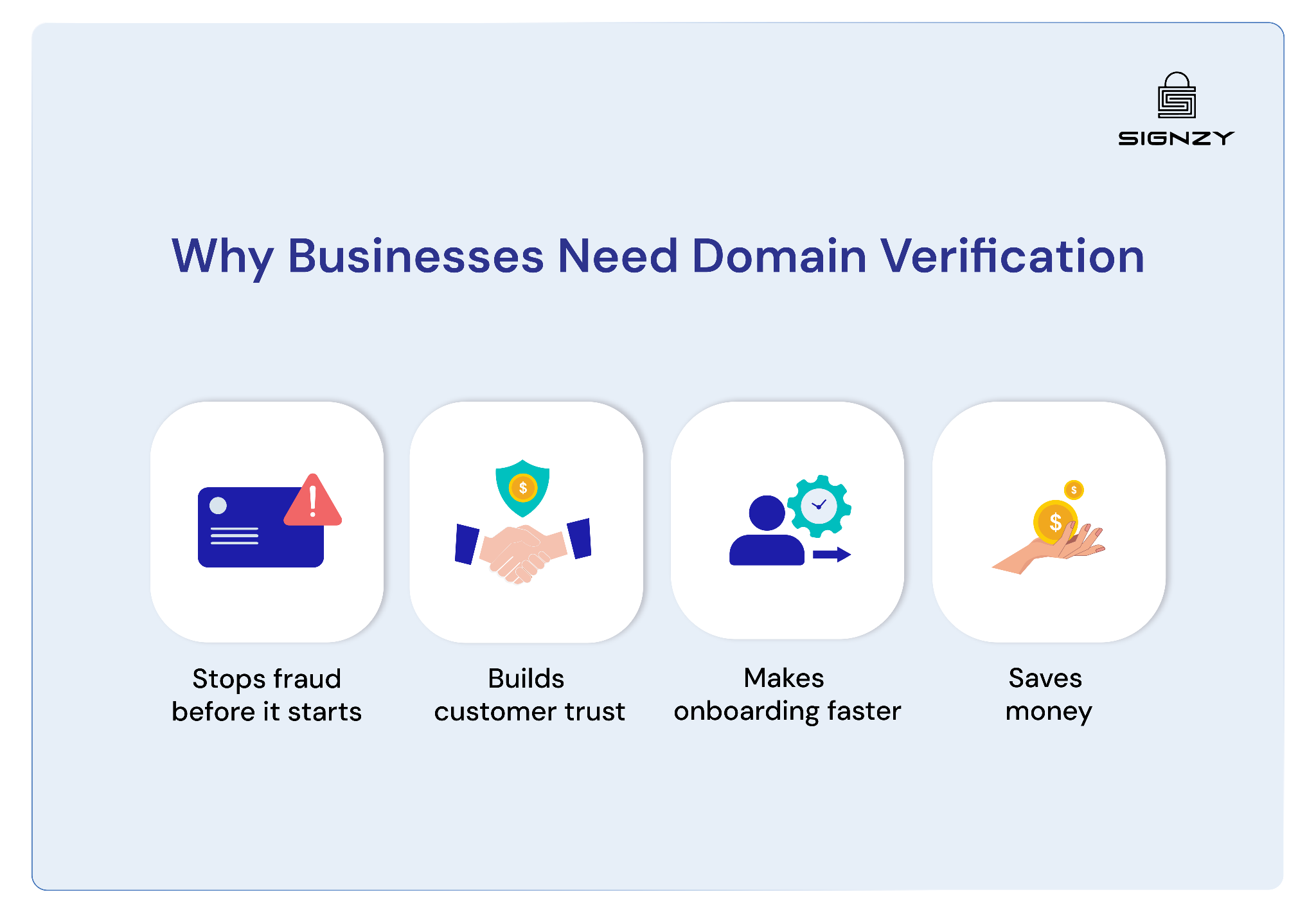
Image Source: Signzy
The Conversion Angle Agencies Overlook
Domain credibility also has a direct relationship with campaign performance. Browsers, ad platforms, and email clients all evaluate domain reputation when determining how to handle traffic, delivery, and display. A domain with a history of lapses, ownership changes, or suspicious registration patterns can accumulate trust deficits that suppress performance even when campaign execution is technically sound.
Beyond algorithmic scoring, end users make trust judgments based on domain signals. A domain that appears recently registered, inconsistently branded, or mismatched with the business it represents creates friction at the point of conversion. That friction costs agencies measurable results that are difficult to attribute without examining the full infrastructure picture.
How DashClicks Helps Agencies Maintain Infrastructure Control?
Agencies managing multiple campaigns across different clients rarely have the bandwidth to manually monitor every piece of infrastructure that supports those campaigns. Domain verification, expiration tracking, DNS checks, and launch readiness reviews can easily fall through the cracks when teams are focused on performance metrics and deliverables.
This is where platforms like DashClicks become valuable for agencies operating at scale.
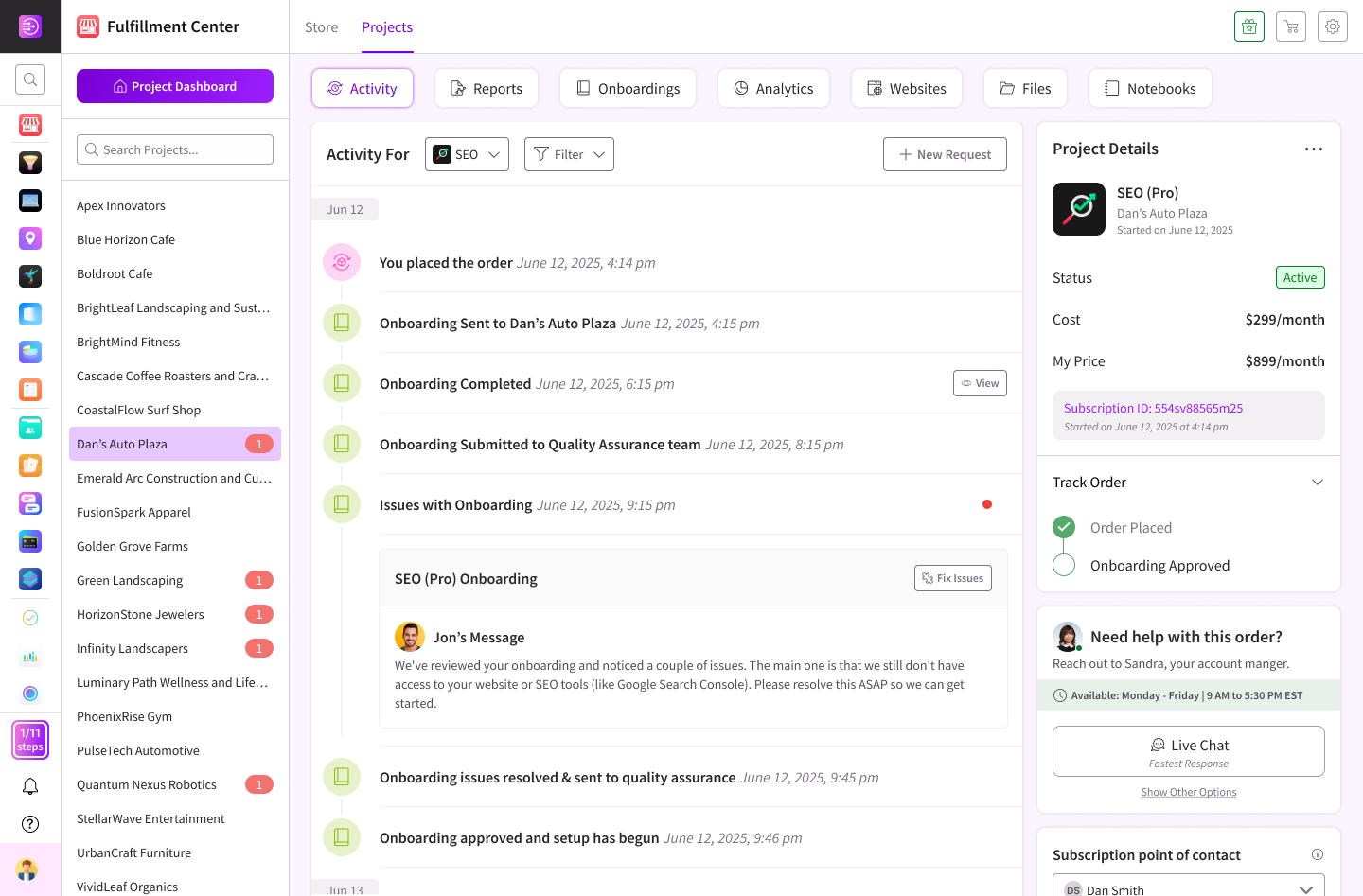
DashClicks provides agencies with a centralized environment to manage campaign infrastructure alongside marketing execution. Instead of treating domain oversight as a one-off technical task, agencies can incorporate it into a structured operational workflow tied directly to campaign management.
For agencies running white-label campaigns or handling multiple client accounts simultaneously, this level of centralized visibility helps reduce the risk of avoidable disruptions. When infrastructure oversight becomes part of the same system used to manage campaigns, reporting, and client deliverables, the likelihood of missed domain issues decreases significantly.
Rather than reacting to infrastructure failures after campaigns break, agencies can proactively maintain the stability of the digital environments their marketing depends on.
Operational Control as a Scalable Agency Advantage
Agencies that build infrastructure verification into their standard operating procedures gain a structural advantage. They reduce the frequency of avoidable disruptions, maintain more consistent campaign performance, and position themselves as strategic partners rather than tactical vendors.
Clients don't always know what they don't know about their own digital infrastructure. An agency that surfaces and resolves those gaps before they become problems demonstrates a depth of operational oversight that transactional competitors rarely match.
Domain transparency is one component of that larger operational posture. It requires no specialized technology, generates no additional cost, and takes minimal time to implement systematically. For the protection it provides — to funnels, to client relationships, and to agency reputation — it belongs in every agency's standard workflow without exception.


.svg)


.svg)
.svg)
.svg)
.svg)
.svg)