

.svg)

.svg)
.svg)
.svg)
.svg)
.svg)
For many years, SEO was judged mainly by rankings and traffic numbers. If a website showed steady growth in organic visits, the strategy was considered successful. That view no longer holds up. In 2025, traffic without action does not move the business forward. What matters now is how well that traffic converts once users land on the site.
Search engines have evolved to reflect this shift. Google has confirmed that page experience signals such as Core Web Vitals, mobile usability, and overall user satisfaction influence rankings. This means SEO is no longer just about visibility. It directly affects how users interact with a page and whether they take the next step. Studies from Think with Google show that as page load time increases from one second to three seconds, the probability of bounce rises by more than 30%. Slower pages do not just rank lower. They also convert fewer visitors.
At the same time, organic search remains one of the strongest acquisition channels. BrightEdge reports that more than 50% of website traffic still comes from organic search across industries. This makes SEO a primary driver of conversion rate optimization rather than a side activity.
The challenge for agencies is execution. Many understand that SEO and CRO should work together, but delivering both consistently requires time, expertise, and resources. This is where white label SEO becomes a practical solution. By using white label SEO services, agencies can deliver conversion-focused SEO strategies without building large internal teams. Instead of treating SEO as a traffic-only service, it becomes a system that supports on-site conversion goals from the first click to the final action.
The problem is not awareness. Most agencies know SEO matters. The issue is that much of SEO execution still stops at rankings instead of revenue.
Traditional SEO Often Undermines CRO
1. SEO Metrics That Don’t Translate to Conversions
One of the biggest mistakes agencies make is focusing on the wrong metrics. Traditional SEO reporting often highlights keyword rankings, traffic growth, and click-through rate. While these numbers are useful, they do not tell the full story.
What often gets ignored includes:
- How users behave after clicking through?
- How deeply they engage with content?
- Whether they move through a clear conversion path?
A page can rank well and attract thousands of visitors while producing very few leads or sales. This usually happens when traffic is not aligned with intent. High-traffic pages may have weak calls to action, poor internal linking, or content that answers a question without guiding users forward.
HubSpot data consistently shows that traffic alone does not correlate strongly with higher conversion rates. Without clear intent alignment and user guidance, SEO success looks good in reports but fails to support conversion rate optimization.
Research from Nielsen Norman Group also confirms that users abandon pages quickly when their expectations are not met. Even small mismatches between search intent and page content can cause rapid exits, which hurts both conversions and long-term SEO performance.
2. Intent Mismatch: The Silent Conversion Killer
Search intent is one of the most important factors in modern SEO. Many strategies still target high-volume keywords without clearly identifying whether the intent is informational, commercial, navigational or transactional.
This leads to common problems:
- Informational content ranking for commercial queries.
- Product pages targeting research-focused keywords.
- Blogs are attracting visitors who are not ready to convert.
The result is high bounce rates and low engagement. These users are not failing to convert because the offer is weak. They are leaving because the page does not match what they came to find.
Keyword search intent should determine:
- Page layout and structure.
- Content depth and tone.
- CTA placement and messaging.
When intent is misaligned, the entire conversion funnel breaks. Studies from Backlinko and Ahrefs show that pages ranking at the top of search results tend to satisfy user intent clearly rather than relying on keyword usage alone. Intent alignment improves both rankings and conversion performance.
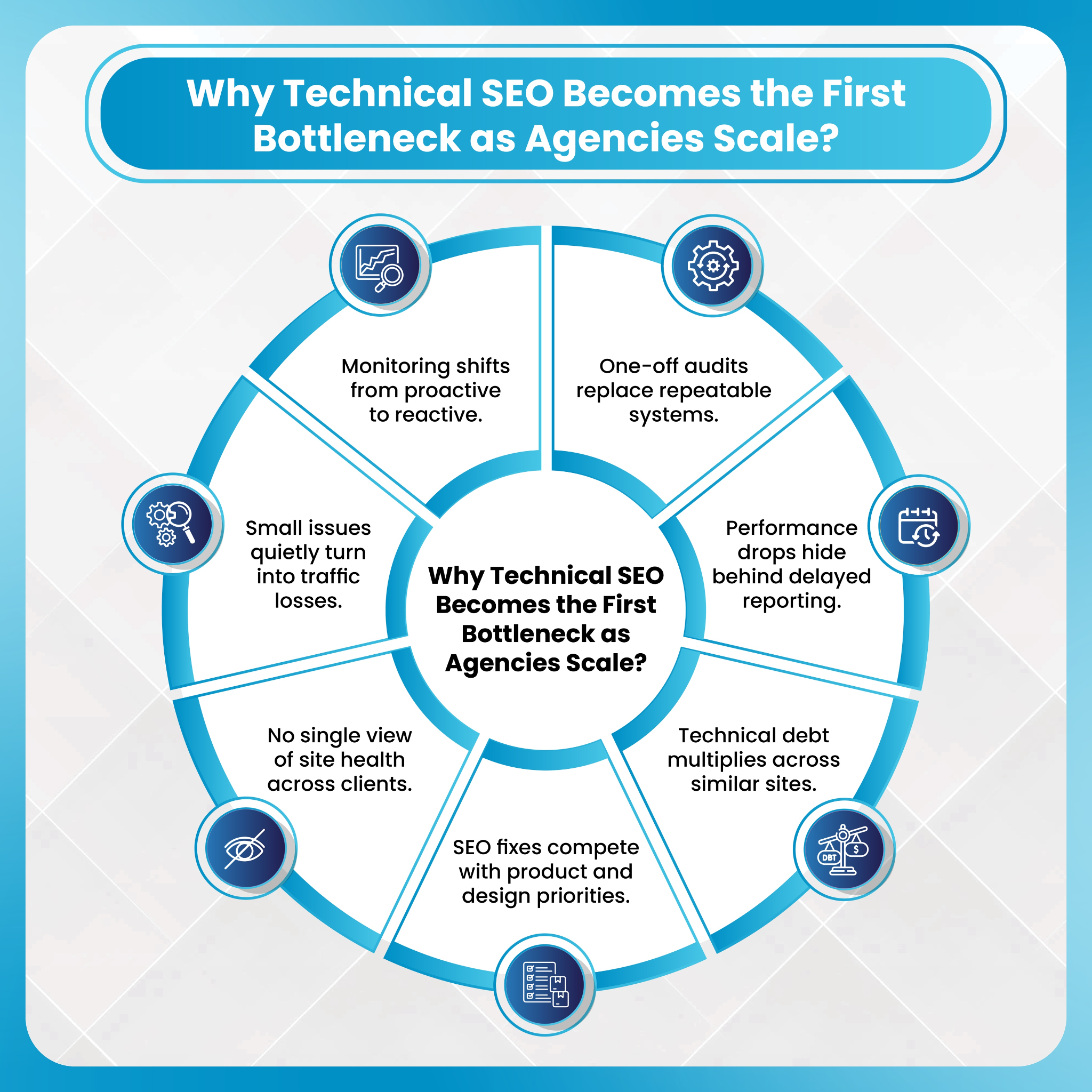
3. Technical SEO Gaps That Directly Impact Conversions
Technical SEO issues often block conversions long before content or design is considered. Common problems include slow page speed, poor mobile usability, layout shifts, and indexing pages that do not support revenue goals.
These issues have a direct impact on CRO:
- Slow pages increase bounce rates.
- Poor mobile experience reduces form completions.
- Layout shifts disrupt user trust.
- Wasted crawl budget pushes low-value pages instead of high-intent ones.
Google data shows that even a one-second delay in mobile load time can reduce conversions significantly. With mobile accounting for more than half of global web traffic, technical SEO has become a conversion issue, not just a ranking concern.
Many agencies struggle here because SEO and CRO teams often work in silos. Smaller teams may lack the technical depth needed to connect SEO fixes to conversion impact. As a result, technical improvements are delayed or ignored.
4. Operational Reality for Agencies
Most agencies face the same constraints. SEO teams are focused on deliverables and timelines. CRO requires data analysis, UX insight, and continuous testing. Hiring SEO strategists who truly understand CRO is expensive and time-consuming.
This creates a gap between strategy and execution. Agencies know what needs to be done but cannot always deliver it at scale. The challenge is not understanding CRO. It is executing SEO in a way that actively supports it across multiple clients.
White Label SEO as a CRO Support System
What CRO-Aligned White Label SEO Looks Like?
CRO-aligned SEO shifts the focus from rankings alone to user experience and conversion flow. It treats SEO as a system built around intent mapping, content experience, and technical performance.
This approach includes:
- Intent-based keyword targeting across the funnel.
- Content structured for readability and engagement.
- Clear paths that guide users toward action.
- Technical SEO focused on UX signals rather than checklists.
White label SEO services designed this way help agencies deliver consistent results without rebuilding their internal processes. SEO becomes part of the conversion strategy, not a separate service.
How White Label SEO Supports On-Site Conversion Goals?
1. Intent-Driven Content Optimization
Effective white label SEO maps keywords to specific funnel stages. Informational queries lead to educational content. Commercial intent keywords connect users to comparison or solution pages. Transactional searches guide users directly to conversion-focused pages.
This creates pages that:
- Answer the exact search intent.
- Build trust and clarity.
- Guide users to the next logical step.
When content aligns with intent, engagement improves naturally. Google uses engagement metrics as indirect quality signals, which support rankings while also improving conversions.
2. Technical SEO That Improves UX and Conversions
Technical SEO plays a major role in CRO when executed correctly. White label SEO agency often prioritizes:
- Core Web Vitals optimization.
- Mobile-first improvements.
- Indexing high-conversion pages over low-value content.
Google has publicly emphasized Core Web Vitals as both a ranking and experience factor. Faster, more stable pages correlate strongly with higher conversion rates across industries. These improvements benefit SEO and CRO at the same time.
3. Internal Linking and Site Architecture for Conversion Flow
Internal linking is often treated as a ranking tactic, but it also shapes user journeys. Strategic internal links help reduce drop-offs and push users toward high-intent pages.
This approach supports CRO without redesigning the site. It allows agencies to improve conversion flow using SEO-driven structure rather than expensive UX overhauls.
4. SEO Data That Feeds CRO Decisions
Organic search data is a powerful source of CRO insights. White label SEO teams analyze metrics such as high-exit pages, high-traffic low-conversion pages, and keyword paths.
These insights help agencies prioritize CRO tests where they matter most. Instead of guessing, decisions are based on real user behavior from organic traffic.
Why White Label SEO Works Better for Agencies?
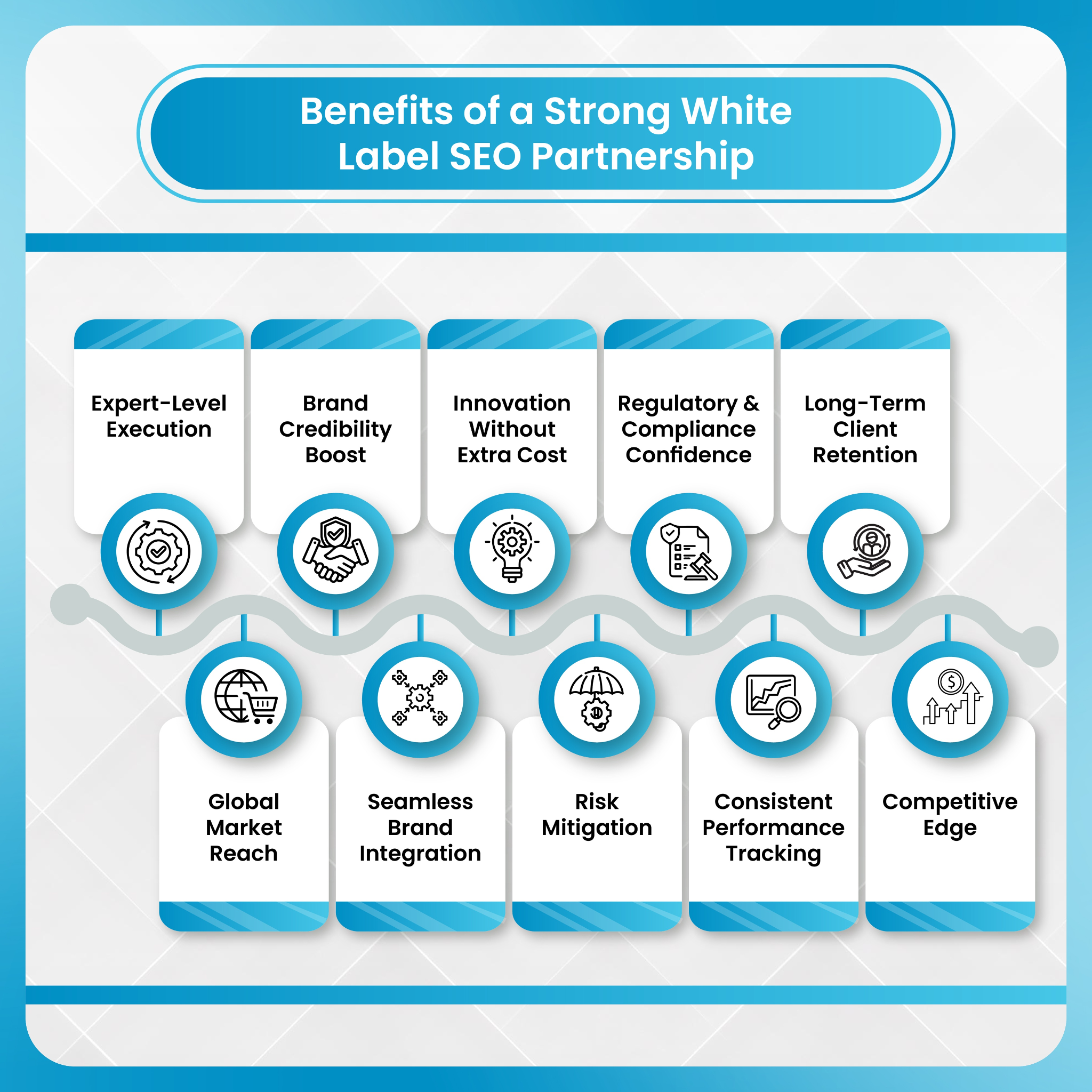
Agency Benefits
- Enables CRO-aware SEO delivery without hiring or training senior in-house specialists.
- Provides access to experienced SEO execution that understands how rankings connect to user behavior and conversions.
- Ensures consistent processes, quality standards, and optimization methods across all client accounts.
- Reduces the risk of uneven performance caused by stretched internal teams.
- Position SEO as a revenue-driving service rather than a traffic-only offering.
Scalability Advantages
- Supports growth across multiple clients without increasing operational complexity.
- Eliminates the need to manage additional staff, onboarding, or ongoing training.
- Allows agencies to expand SEO packages and recurring revenue with confidence.
- Keeps internal teams focused on strategy, client communication, and long-term relationships.
- Delivers reliable execution behind the scenes while the agency retains full brand ownership.
DashClicks’ White Label SEO Services for CRO and On-Site Conversions
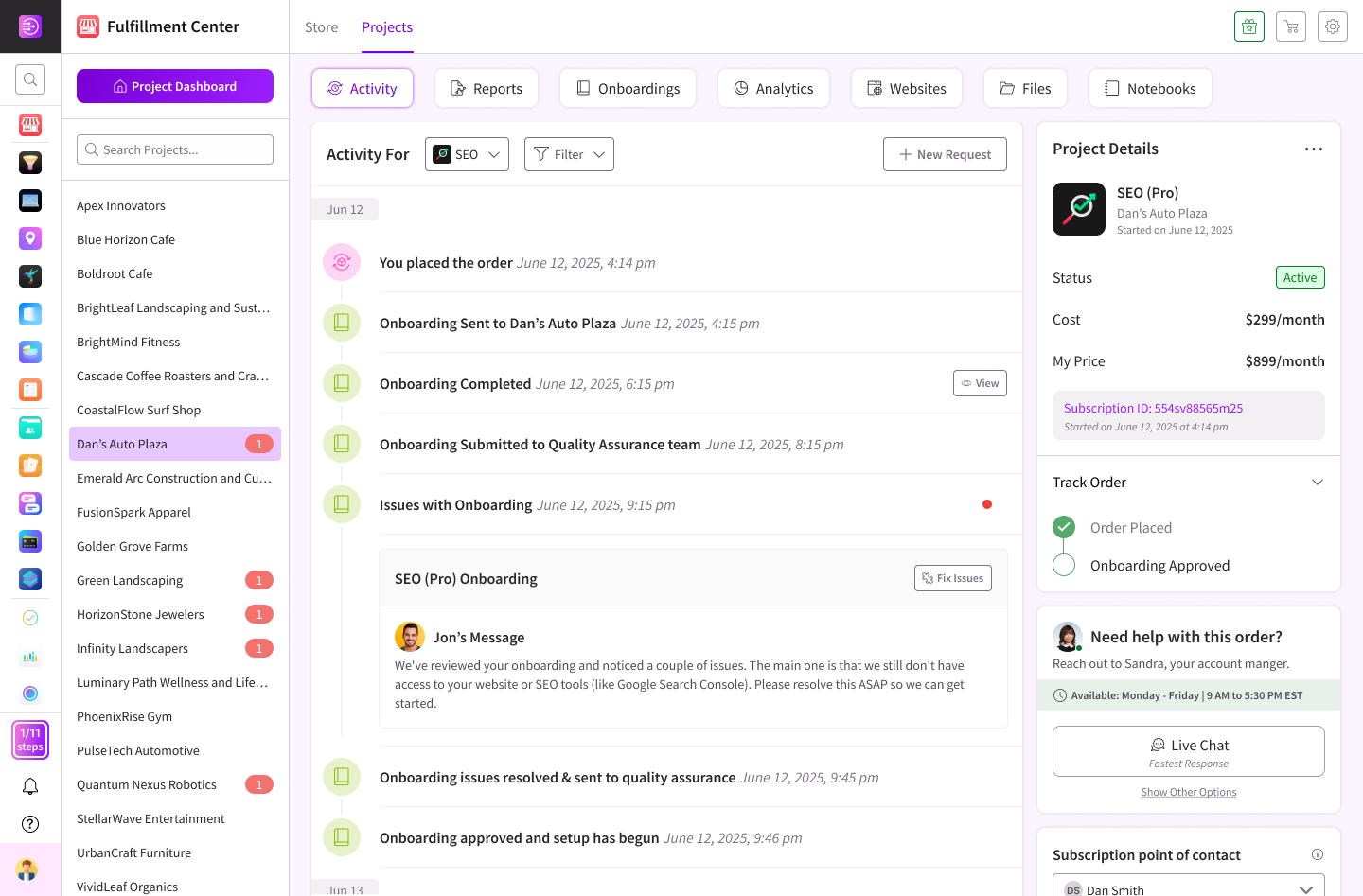
DashClicks delivers white label SEO services built to support real conversion goals, not just higher rankings. Instead of treating SEO as a traffic-only tactic, the focus stays on how search visibility translates into user action. Every part of the strategy is designed to align SEO execution with search intent, user experience signals, and measurable business outcomes.
This white label SEO approach supports agencies by managing the full execution layer while keeping delivery completely brand-neutral. The team conducts in-depth technical SEO audits that go far beyond surface-level checks, focusing on site performance, mobile usability, crawl efficiency, and structural issues that directly influence how users experience a website. Improvements in load speed, layout stability, and site architecture help reduce friction and support stronger conversion rates.
On-page optimization is handled with engagement and conversion behavior in mind. Rather than optimizing pages only for keywords, the execution team analyzes how users move through content, where drop-offs occur, and what prevents action. Page structure, headings, internal linking, and calls to action are refined to create clearer pathways and smoother user journeys.
Content improvements play a critical role as well. Existing pages are strengthened to better match search intent and guide users naturally through the funnel. This includes improving clarity, relevance, and flow, while ensuring every page serves a defined purpose within the broader conversion path.
Keyword targeting is aligned with funnel stages instead of vanity metrics. High-volume keywords are only pursued when they support a clear business objective. The emphasis remains on terms that attract users more likely to convert, whether that means submitting a lead form, booking a demo, or completing a purchase.
Rather than spreading effort across dozens of low-impact pages, DashClicks prioritizes high-value pages tied directly to lead generation and revenue. SEO specialists work behind the scenes to improve performance, structure, and content experience, while agencies retain full ownership of the client relationship and brand presence.
For agencies, this model delivers clear operational and strategic benefits:
- No need to hire or expand internal SEO teams.
- Consistent, scalable execution across multiple client accounts.
- SEis O positioned as a conversion and revenue multiplier, not a standalone tactic.
By aligning SEO execution with real conversion goals, DashClicks helps agencies deliver results clients can measure in lead quality and revenue impact, not just rankings and traffic charts.
SEO That Doesn’t Convert Is No Longer Enough
SEO now plays a direct role in how users experience a website and whether they take meaningful action. Agencies that continue to treat SEO and CRO as separate efforts often limit their impact. Rankings without engagement do not create growth, and traffic without conversions does not justify long-term investment.
White label SEO makes it possible to support CRO goals without adding operational strain. It allows agencies to improve user experience, align search intent with on-site content, and drive measurable outcomes at scale. When SEO is built as a foundation for conversion, it becomes far more valuable than a traffic-focused service.
Agencies that align SEO with CRO do more than rank well. They convert better, deliver stronger results for clients, and build longer-lasting relationships based on performance that truly matters.


.svg)


.svg)
.svg)
.svg)
.svg)
.svg)