

.svg)

.svg)
.svg)
.svg)
.svg)
.svg)
Client satisfaction has become one of the most important growth levers for agencies. According to HubSpot, acquiring a new customer can cost five times more than retaining an existing one, which means agencies that retain clients longer grow faster and more profitably than those focused entirely on acquisition. Yet many agency leaders continue to treat satisfaction as a byproduct of performance, assuming that rankings and traffic gains will keep clients happy on their own.
That assumption creates a serious blind spot.
Clients become dissatisfied for reasons that often have nothing to do with SEO performance. Delayed reporting, inconsistent communication, unclear progress updates, and unmet expectations all erode trust long before rankings become an issue. By the time a client raises a concern, the satisfaction score has often been declining for months.
White label SEO management gives agencies a structural way to address these challenges. By outsourcing fulfillment to a specialized provider, agencies can create more consistent delivery, improve progress visibility, and free up internal capacity for the relationship-building work that actually drives retention.
To understand how white label SEO improves satisfaction, agencies first need to understand why SEO clients become unhappy in the first place.
Why Agencies Struggle To Improve SEO Client Satisfaction Scores?
Most client satisfaction issues stem from gaps between expectations and delivery rather than the SEO strategy itself. Agencies often invest heavily in technical execution while underinvesting in communication, consistency, and progress transparency. The result is a client who feels uncertain about the campaign, regardless of how well the work is actually progressing.
1. Clients Cannot Easily See SEO Progress
SEO involves a significant amount of work that clients never directly observe. Technical audits, internal linking improvements, schema implementation, crawl optimization, and content refreshes all contribute to long-term performance. However, none of these activities produces immediately visible outcomes.
Clients evaluate what they can see. When deliverables are not clearly communicated, clients often assume:
- Nothing meaningful is happening
- The agency is moving slowly
- The campaign lacks direction or momentum
This creates a satisfaction problem that has nothing to do with strategy quality. SEO success and client satisfaction are not always correlated. An agency can execute a strong campaign and still lose a client because progress was never made visible.
Agencies that fail to address this visibility gap will continue to lose clients even when their SEO work is genuinely effective.
2. Expectations Grow Faster Than SEO Results
One of the most common and least discussed challenges in agency client management is what can be called the Expectation Escalation Problem. Client goals rarely stay fixed throughout a campaign.
A typical progression looks like this:
- Month 1: "We need more traffic."
- Month 4: "We need more leads."
- Month 8: "We need more revenue."
Campaign performance may improve consistently throughout this period, but satisfaction declines because the benchmark keeps shifting. Agencies that only address expectations during onboarding are particularly vulnerable to this pattern.
Managing client SEO expectations is not a one-time conversation. It requires ongoing communication, consistent framing, and proactive goal alignment throughout the engagement. Agencies must manage expectations continuously, not only during onboarding.
Without that ongoing management, even strong SEO performance can feel like underdelivery to a client whose expectations have quietly escalated.
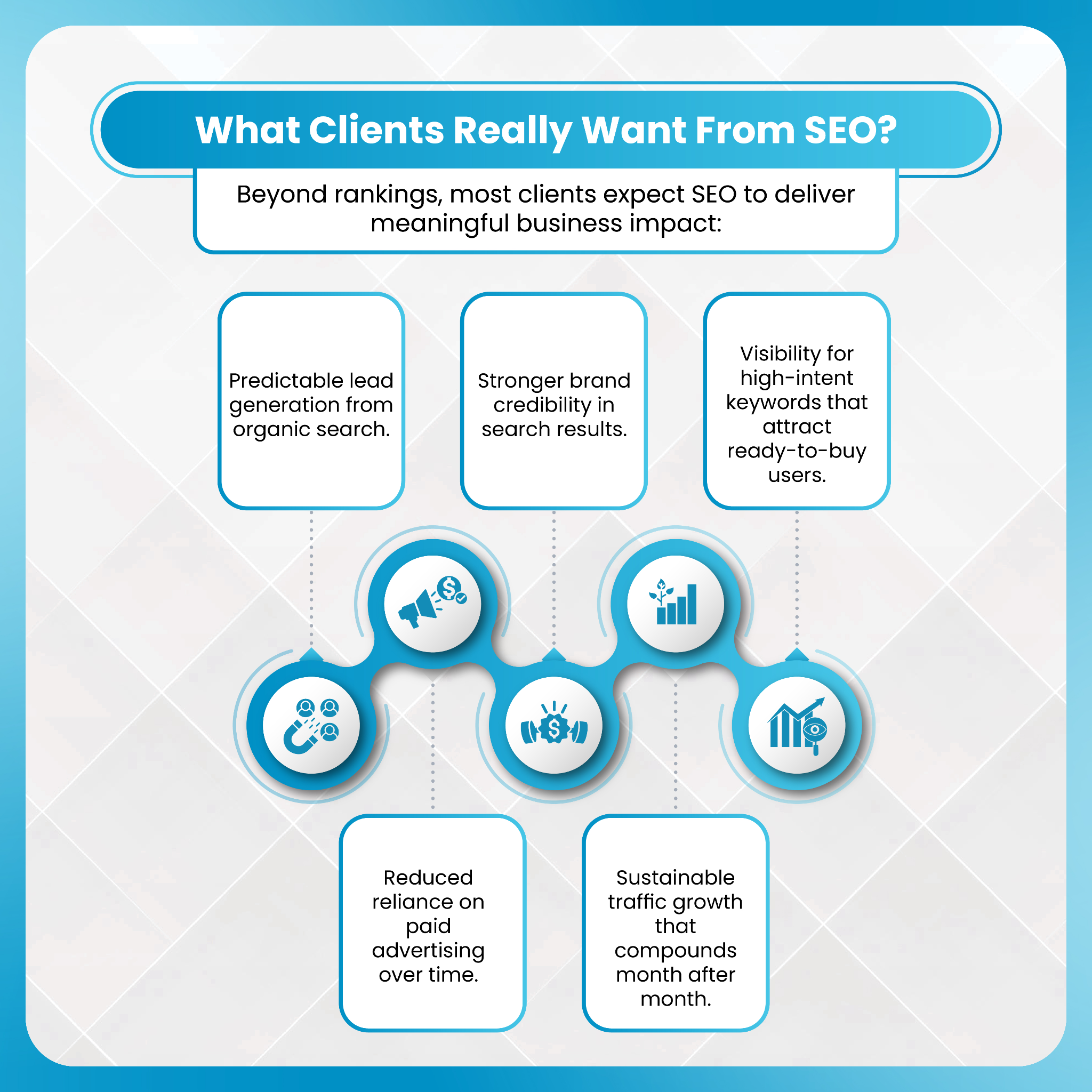
3. Agency Growth Often Creates Delivery Inconsistencies
Scaling creates a satisfaction problem that agencies rarely anticipate. This is the Scaling Satisfaction Gap, and it affects agencies across every size and specialization.
As agencies take on more clients without proportionally expanding fulfillment resources, several patterns emerge:
- Turnaround times increase
- Reporting becomes delayed or inconsistent
- SEO execution quality varies across accounts
- Client communication becomes reactive rather than proactive
Consider the difference between an agency managing 10 clients versus 50 clients using the same internal fulfillment resources. The first 10 clients likely receive thorough, timely, and consistent service. As the client roster grows, that consistency becomes harder to maintain without structural changes.
Clients notice inconsistency before they notice SEO problems. When delivery becomes unpredictable, trust erodes, and satisfaction scores follow.
How White Label SEO Helps Agencies Improve Client Satisfaction Scores?
White label SEO helps agencies improve satisfaction by solving operational bottlenecks that commonly damage client experiences. Rather than simply adding capacity, a well-integrated white label model changes how agencies deliver, communicate, and manage their client relationships at scale.
1. Creates Consistency Clients Can Feel
Clients may not fully understand keyword research, technical audits, or link acquisition strategy. They do understand whether an agency delivers on time, communicates clearly, and behaves predictably. Consistency is a satisfaction driver that agencies frequently undervalue.
When fulfillment is supported by a structured white label SEO provider, agencies can establish repeatable delivery processes across all accounts. Examples include:
- Content published on a predictable schedule
- Technical improvements completed within defined timeframes
- Reporting delivered consistently each month
- Communication touchpoints that happen proactively rather than reactively
Clients often judge agencies based on reliability rather than technical complexity. Repeatable fulfillment processes create the kind of predictable delivery experience that builds long-term client confidence.
Agencies that establish this consistency early in an engagement create a foundation that protects the relationship even during slower performance periods.
2. Makes SEO Progress More Visible
Many clients leave agencies not because SEO is failing, but because they cannot see that it is working. This is the Perceived Progress vs Actual Progress gap, and it is one of the most correctable causes of client churn.
This visibility gap matters because organic search remains one of the largest drivers of website engagement. BrightEdge reports that organic search drives more than 53% of trackable website traffic across industries, which means clients need clear reporting to connect ongoing SEO work with business outcomes.
White label SEO support gives agencies the capacity to document and communicate progress more effectively. Examples of visible momentum include:
- Content published and live on the client's website
- Completed on-page optimizations
- Technical fixes with before-and-after context
- Keyword growth tracked over time
- Ongoing activity summaries shared in regular reports
Visible momentum often improves satisfaction before major SEO wins occur. Clients who can see consistent activity and incremental progress are significantly less likely to question campaign value.
Progress communication is not just a reporting function. It is a retention strategy that best white label SEO services enable by handling the execution work that creates those visible milestones.
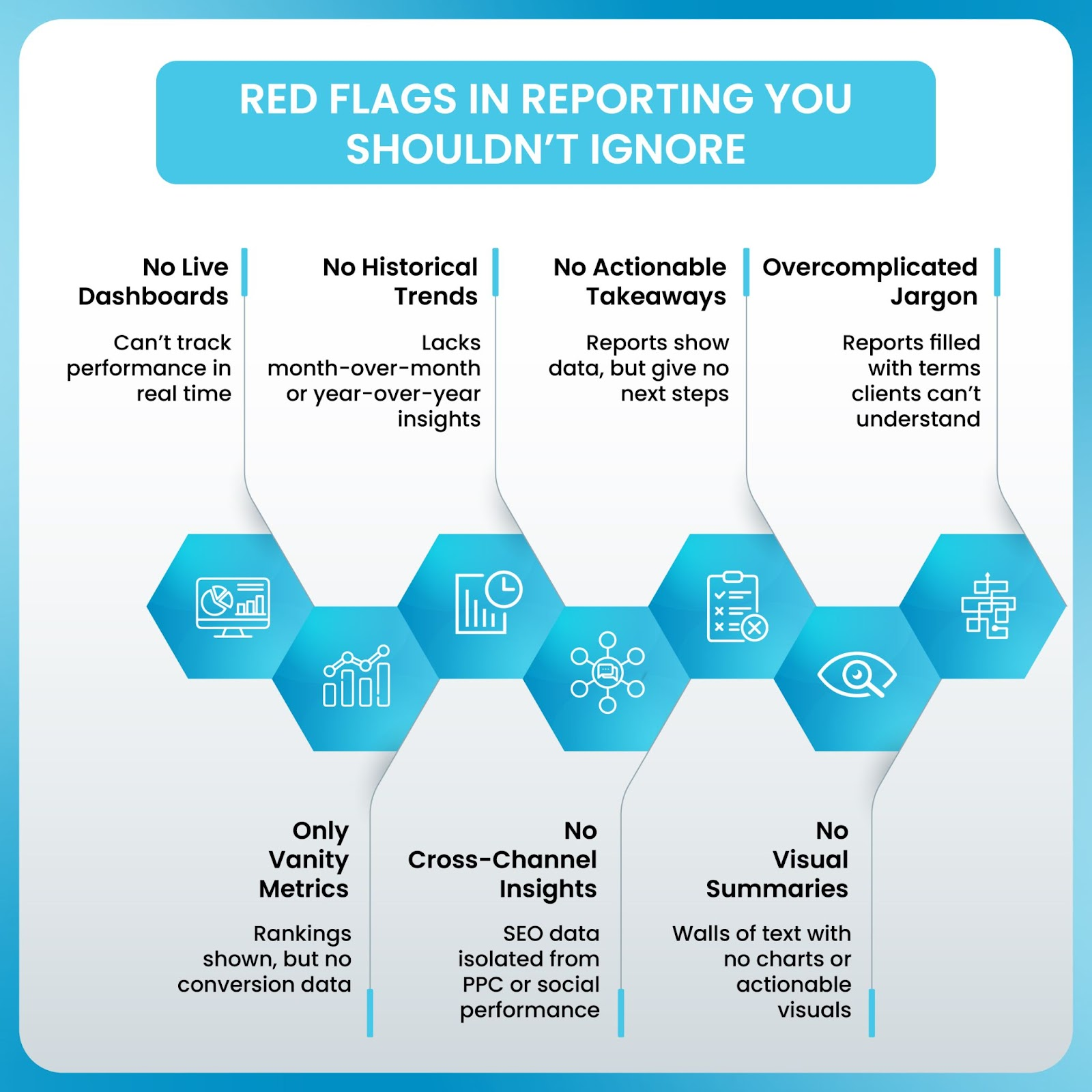
3. Gives Agencies More Time For Strategic Client Relationships
Most agencies spend a disproportionate amount of time managing deliverables, chasing deadlines, and coordinating specialist work. This leaves little room for the higher-value activities that actually strengthen agency-client relationship.
The time allocation problem is significant. When agency teams are consumed by fulfillment logistics, they spend less time:
- Advising clients on strategic priorities
- Explaining opportunities clearly
- Facilitating quarterly planning sessions
- Identifying growth initiatives before clients ask
White label SEO management creates capacity for these activities. With fulfillment handled externally, agency teams can reinvest time into strategy calls, client education, and forward-looking planning that clients genuinely value.
Clients often stay because of strategic guidance rather than deliverables alone. The agencies that become trusted advisors are typically those that have structured their operations to make that advisory role possible.
4. Helps Agencies Shift From Reactive To Proactive Service
The difference between reactive and proactive service is often the difference between a client who churns and a client who expands their engagement. Reactive agencies answer questions when clients ask them. Proactive agencies surface opportunities before clients think to raise them.
Examples of proactive service include:
- Flagging new content opportunities based on keyword trends
- Identifying technical issues before they affect performance
- Recommending funnel improvements tied to campaign data
- Proposing growth initiatives aligned with client business goals
This shift requires capacity, and capacity requires efficient fulfillment. A white label SEO agency model creates the operational foundation that makes proactive service scalable.
Proactivity is one of the strongest drivers of perceived agency value. When clients feel that their agency is thinking ahead on their behalf, satisfaction scores reflect that confidence.
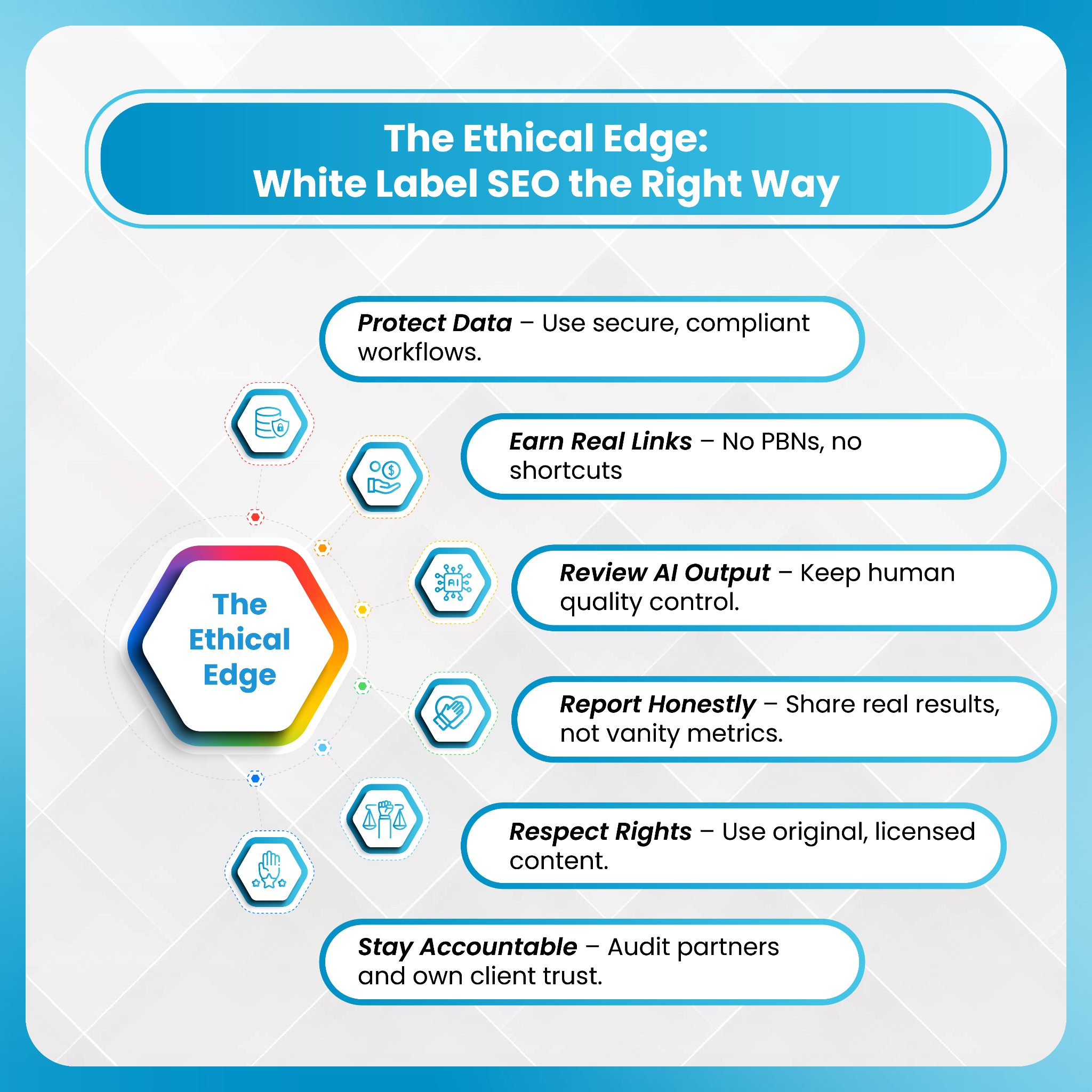
Improves The Four Signals Clients Use To Evaluate Agencies
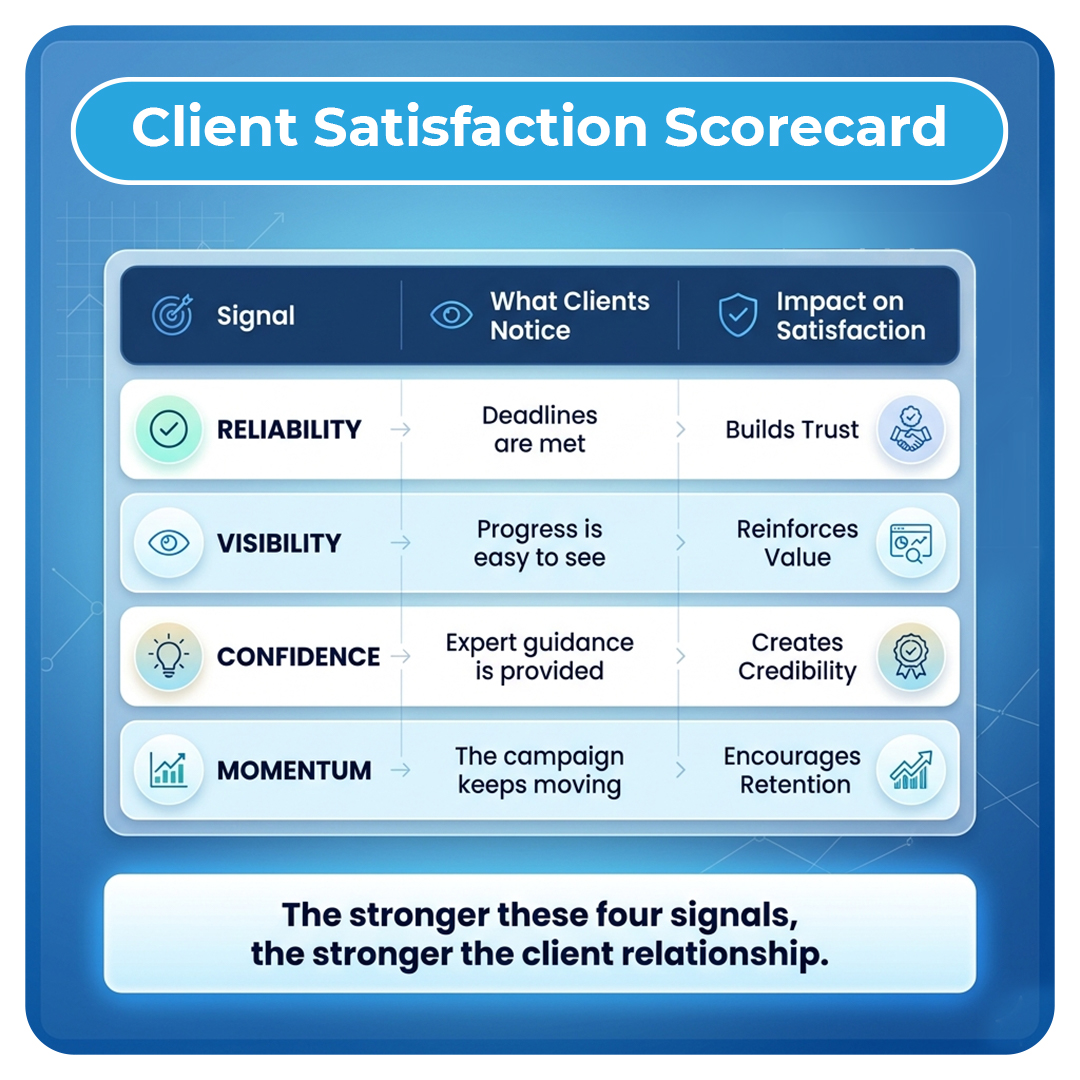
Client satisfaction is rarely measured through a formal scoring process. More often, clients evaluate their agency using four instinctive signals that collectively shape their overall perception of value. Agencies that understand these signals can address satisfaction more directly.
This is the Client Satisfaction Signals Framework.
1. Reliability
The Client Question: Do they consistently deliver?
Reliability is foundational. Clients need to trust that deliverables will arrive on time, reports will be accurate, and commitments will be honored. White label SEO management supports reliability by standardizing fulfillment processes across all accounts, reducing the variability that damages trust.
2. Visibility
The Client Question: Can I see progress?
Visibility answers the client's core concern about whether the investment is working. Agencies that use white label support can maintain consistent reporting cadences and document activity in ways that make progress tangible, even during periods where major ranking shifts have not yet occurred.
3. Confidence
The Client Question: Do they know what they are doing?
Confidence is built through clear explanations, proactive communication, and strategic recommendations. When agency teams are freed from fulfillment management, they can invest that time in educating clients and demonstrating expertise in ways that reinforce confidence and build strong long-term agency-client relationships.
4. Momentum
The Client Question: Does the campaign feel like it is moving forward?
Momentum is about perception as much as performance. Consistent content production, completed technical work, and regular activity updates all signal that the campaign is progressing. White label SEO fulfillment creates the steady output that generates this sense of forward movement.
Agencies that actively monitor and strengthen these four signals create a client experience that is harder to walk away from, regardless of where rankings currently stand.
Further Reading: The Impact of White Label Fulfillment on Client Satisfaction in Marketing Agencies
How DashClicks' White Label SEO Services Support Better Client Satisfaction?
DashClicks is a white label SEO agency platform built specifically to support agency growth and client delivery. Its services are designed to help agencies create more consistent fulfillment, improve reporting visibility, and scale without sacrificing the client experience.
1. Consistent SEO Fulfillment
DashClicks provides ongoing SEO execution through a standardized fulfillment model. Agencies receive structured delivery across technical SEO, content, and optimization tasks, reducing the inconsistency that often emerges as client rosters grow.
This standardization helps agencies maintain quality across all accounts, not just their highest-priority clients.
2. Better Visibility And Reporting
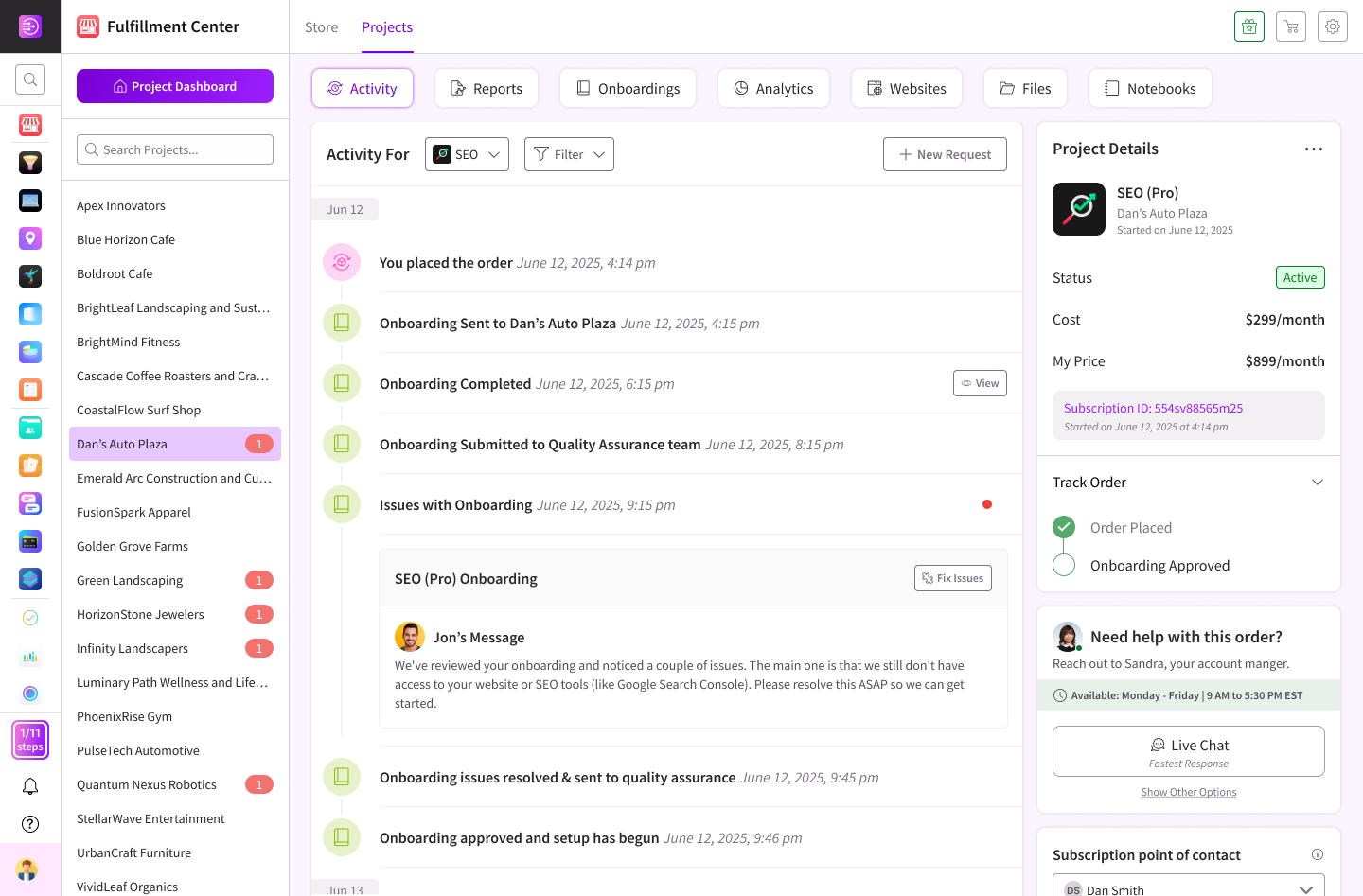
DashClicks offers reporting tools and campaign dashboards that give agencies a clearer view of progress across all active accounts. These tools make it easier to communicate campaign activity to clients in a structured and consistent format.
Better reporting infrastructure translates directly into better client communication, which is one of the strongest drivers of satisfaction.
3. More Time For Strategic Client Management
By handling SEO fulfillment, DashClicks creates capacity for agency teams to focus on strategic client work. That additional time can be directed toward advisory conversations, quarterly planning, and proactive opportunity identification that strengthens long-term relationships.
The operational relief that white label fulfillment provides is often what enables agencies to shift from transactional service to genuine strategic partnership.
4. Scalable Agency Growth
DashClicks supports agencies that are actively growing their client base. Its fulfillment infrastructure is designed to accommodate increased volume without requiring proportional increases in internal hiring or coordination overhead.
This scalability allows agencies to take on more clients while maintaining the consistency and communication standards that keep existing clients satisfied.
Agencies that build their growth model around scalable fulfillment infrastructure are better positioned to retain clients, expand engagements, and grow sustainably over time.
Client Satisfaction Is An Operational Problem, Not Just A Performance Problem
Many agencies approach client satisfaction as a rankings challenge. If performance improves, satisfaction will follow. That logic is understandable, but the evidence points in a different direction.
Dissatisfaction most commonly develops because of invisible SEO work, rising expectations that outpace results, inconsistent delivery as agencies scale, poor communication, and reactive account management. These are operational and relational problems, and SEO rankings alone cannot solve them.
White label SEO management addresses the root causes of dissatisfaction by creating more consistent fulfillment, improving progress visibility, and freeing agency teams to invest time in the strategic relationships that clients genuinely value. The agencies that retain clients longest are not always the ones generating the highest rankings. They are the ones delivering the most reliable, transparent, and confidence-building client experience.
That kind of experience does not happen by accident. It happens when agencies build the operational infrastructure to make it repeatable.


.svg)


.svg)
.svg)
.svg)
.svg)
.svg)