

.svg)

.svg)
.svg)
.svg)
.svg)
.svg)
SEO is not a one-time project. Every client account requires recurring deliverables such as technical SEO, on-page optimisation, content updates, internal linking, link building, local SEO, and monthly reporting. As an agency grows from five clients to fifteen or twenty-five, that workload can multiply quickly.
The challenge is that SEO specialists and account managers rarely focus on execution alone. They also handle client communication, strategy, reporting, approvals, research, and coordination. Unexpected requests add further pressure, whether it is a new service page, website redesign, technical issue, or competitor concern.
These requests do not pause existing deadlines. They compete with work that is already scheduled.
Missing an SEO deadline does not always indicate a lack of expertise. According to the Project Management Institute, organisations complete projects to their original goals and business intent only 73.8% of the time, showing that consistent delivery is a broader operational challenge across industries.
This is where white label SEO outsourcing can help. Working with a partner gives agencies additional execution capacity without requiring every task to pass through the same internal specialists.
The goal is not simply to complete SEO work faster. It is to create a fulfillment model that can keep pace with growing client demand while maintaining consistent quality and deadlines.
An agency can have the right SEO strategy and still struggle to deliver it on time when fulfillment capacity does not match workload.
Why SEO Deadlines Are Harder to Manage Across Multiple Clients?
As an agency's client portfolio grows, SEO deadlines become more difficult to manage because every account has different requirements, dependencies, and priorities. The following factors are some of the most common sources of scheduling pressure.
Every Client Has a Different SEO Workload
No two accounts require the same level of effort. A local service business with a stable website and limited competition has very different needs than an e-commerce brand in a saturated category managing hundreds of product pages.
Workloads vary based on industry, business goals, SEO maturity, technical conditions, content requirements, competitive environment, and the number of monthly deliverables outlined in the service agreement. A healthcare client may need consistent content production and compliance-sensitive review processes. A real estate client may require location-specific SEO across multiple markets.
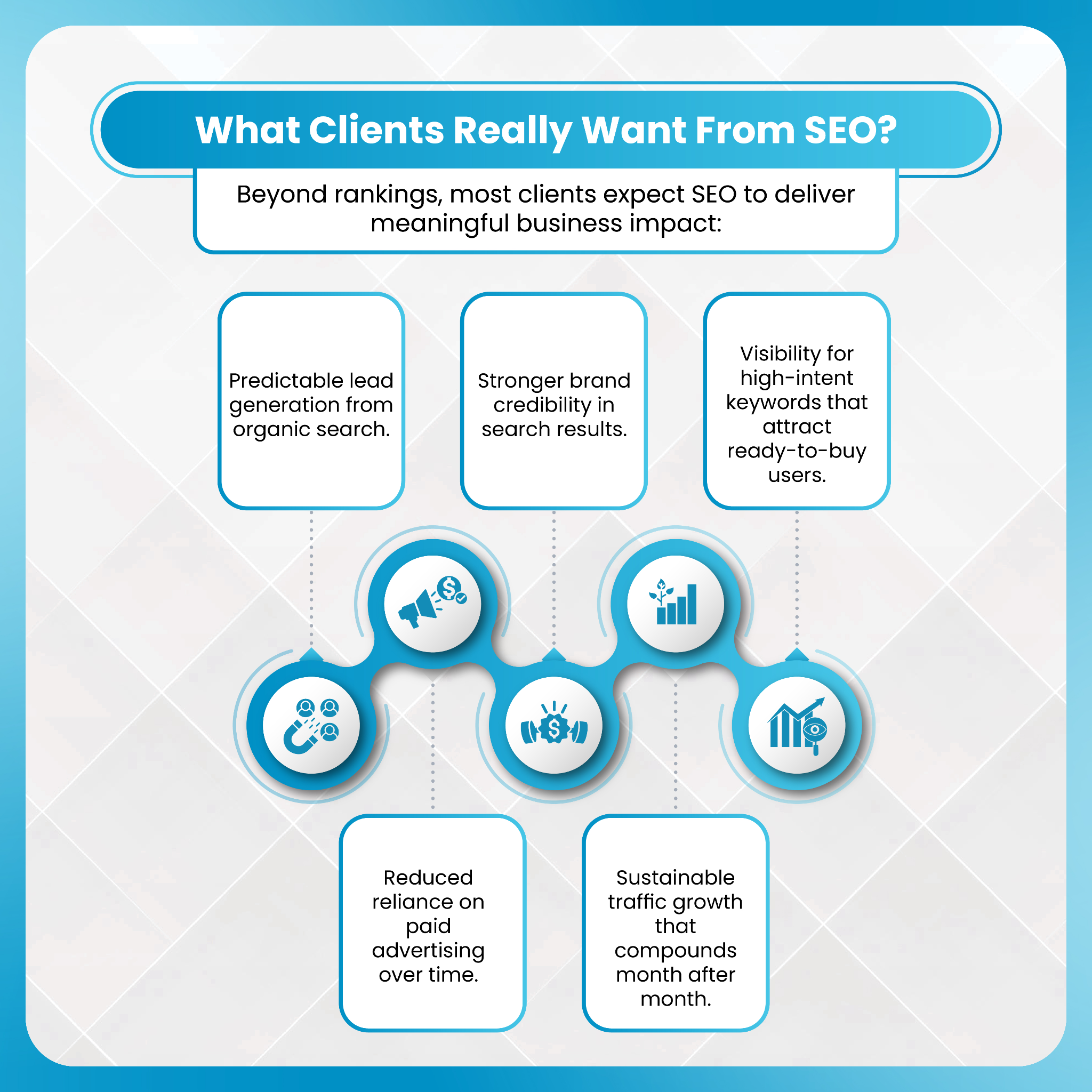
Agencies cannot simply apply one standardized workflow and timeline across every account. They need to plan capacity at the individual account level, which becomes increasingly difficult as the portfolio grows.
SEO Work Is Connected
SEO tasks rarely exist in isolation. A typical content workflow follows a logical chain:
Keyword research → Content brief → Content creation → Optimization → Publishing → Internal linking → Reporting
A delay at any stage shifts every stage that follows. If keyword research runs late, the content brief gets delayed. If the brief is delayed, the writer cannot start. If content is not published before the reporting window closes, the client sees incomplete execution on a deliverable they were expecting.
These dependencies make task sequencing critical. They also make delays more consequential than they appear on a task list.
Planned Work Competes With Unexpected Requests
Client requests that fall outside the planned monthly scope are common. New service pages need to be optimized before launch. A new location opening requires a local SEO setup. A site redesign introduces technical problems that need immediate attention. A competitor's rankings shift prompts a client request for fast action.
Each of these requests is legitimate. And each one pulls focus away from work that was already planned and scheduled.
SEO Teams Have Competing Responsibilities
Internal SEO specialists carry responsibilities beyond execution. Strategy development, client meetings, research, QA, and reporting all consume time that could otherwise be directed toward implementation.
Asana research found that U.S. workers spend approximately 61% of their time on coordination and administrative work rather than skilled tasks. For SEO teams, this pattern shows up in the form of status updates, briefing documents, approval requests, and internal meetings, all of which reduce the time available for actual optimization work.
The Types of SEO Deadlines Agencies Need to Manage
SEO deadlines do not come from a single source. Agencies are managing multiple types of commitments simultaneously, each with its own timeline and expectations.
- Recurring Monthly SEO Deadlines: These are the deliverables tied to standard monthly retainers. They include technical SEO checks and fixes, on-page optimization, content updates, internal linking, link building outreach and placement, local SEO maintenance, and performance reporting. They repeat every month without exception.
- Campaign-Specific Deadlines: These are tied to defined project milestones: a new website launch that must be technically clean before going live, a new location launch requiring local SEO setup, a seasonal campaign that must be indexed and ranking before the relevant period begins, or a large-scale content initiative with phased delivery requirements.
- Client-Driven Deadlines: These emerge from client business decisions. A new service gets added to the site. A client flags competitor activity and wants a response. A priority keyword is falling in rankings and needs immediate attention. These deadlines are often short-notice and difficult to absorb into an already full monthly plan.
- Reporting and Review Deadlines: Reporting has its own deadline, and SEO implementation needs to happen well before it. Agencies should not be completing that month's optimization work on the same day they are expected to report on it. When execution and reporting land on the same day, there is no time for QA, revisions, or unexpected complications.
What Happens When SEO Deadlines Are Missed?
A single missed task rarely creates an obvious problem on its own. The impact tends to build gradually, creating a chain reaction that becomes harder to manage with each passing month.
- Optimization Opportunities Get Delayed: Pages flagged for improvement stay as they are. Technical issues that were identified in an audit remain unresolved. Content gaps that were scheduled for the current month carry over into the next.
- Monthly SEO Cadence Becomes Inconsistent: A well-planned campaign follows a predictable execution rhythm. When deadlines are missed, that rhythm breaks. The campaign shifts from planned execution into catch-up mode, which is a harder and less effective way to operate.=
- Backlogs Start Growing: Incomplete tasks from one month roll into the next. The new month begins with an existing backlog competing against fresh priorities. Teams are no longer working a clean slate; they are managing an accumulating deficit.
- Teams Become More Reactive: As backlogs grow, teams spend more time responding to what is behind rather than executing what was planned. The focus shifts from proactive optimization to damage control.
Client Conversations Become More Difficult
Clients notice when deliverables are late. The questions follow:
- Why wasn't this completed last month?
- When will this recommendation actually be implemented?
- Why is the same task appearing on this month's plan again?
These conversations are not just uncomfortable. They erode the confidence clients have in their agency's ability to deliver.
The Cost of Delays Can Compound
A single delay rarely stays isolated:
Week 1: SEO issue identified
Week 2: Implementation delayed due to competing priorities
Week 3: Task pushed behind a more urgent client request
Month-end: Task remains incomplete
Next month: Team must absorb the backlog while handling new work
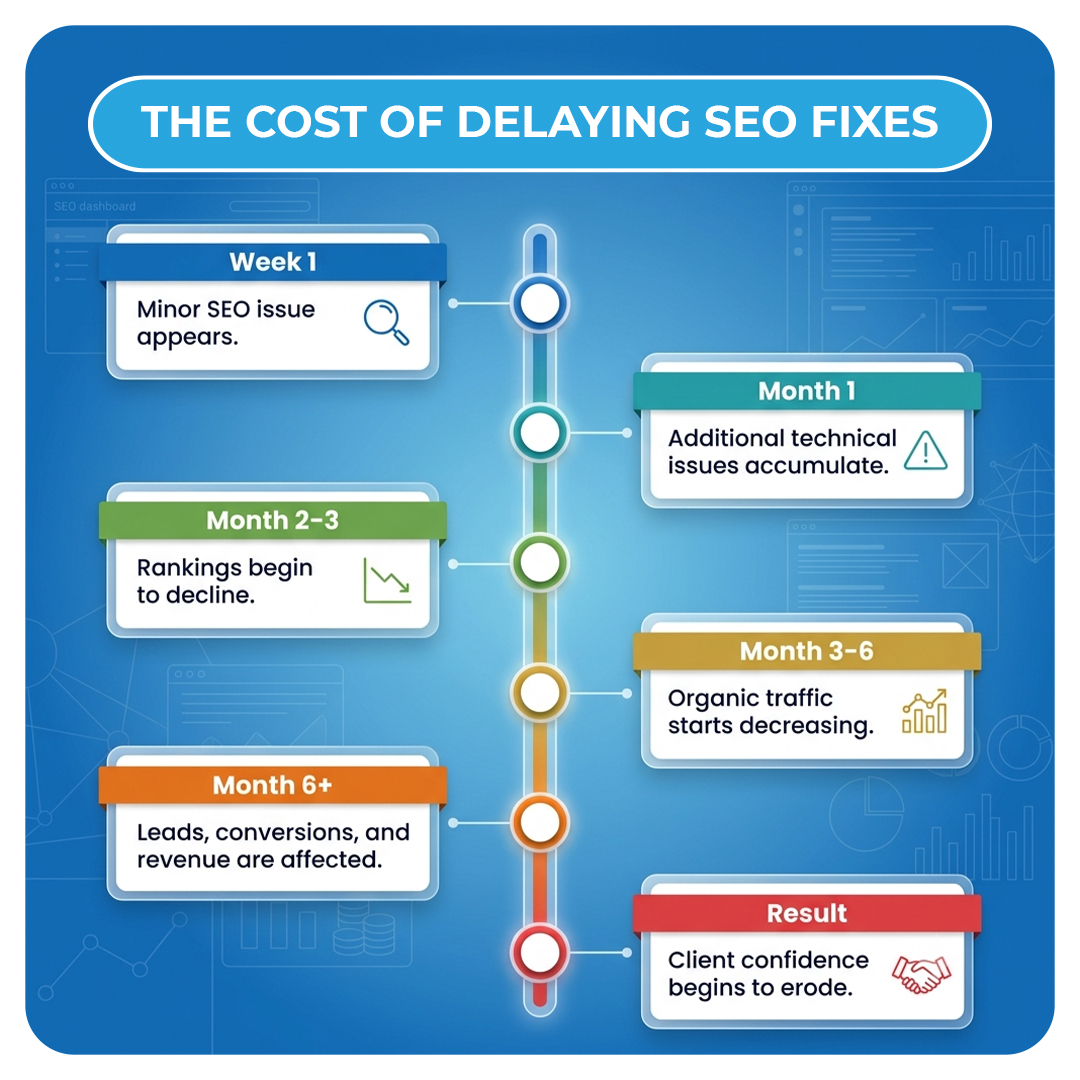
What began as a one-week delay becomes a recurring fulfillment problem that affects multiple accounts and reporting cycles.
Why Adding More Work to an In-House SEO Team Isn't Always the Answer?
The instinct to ask internal teams to work faster or take on more is understandable. The execution, however, often falls short.
Existing employees may already be working at full capacity. Assigning additional tasks without adjusting the overall workload does not create more output; it typically reduces quality and increases errors. Overtime is not a sustainable fulfillment strategy, and relying on it consistently leads to burnout and turnover.
Hiring is another option, but it takes time. Job postings, interviews, offers, onboarding, and training typically require weeks or months before a new employee contributes at full capacity. And if the workload spike is temporary, a new full-time hire may not align with actual long-term needs.
This is the core distinction:
Hiring adds permanent headcount. White label SEO outsourcing can add flexible execution capacity that scales with current demand.
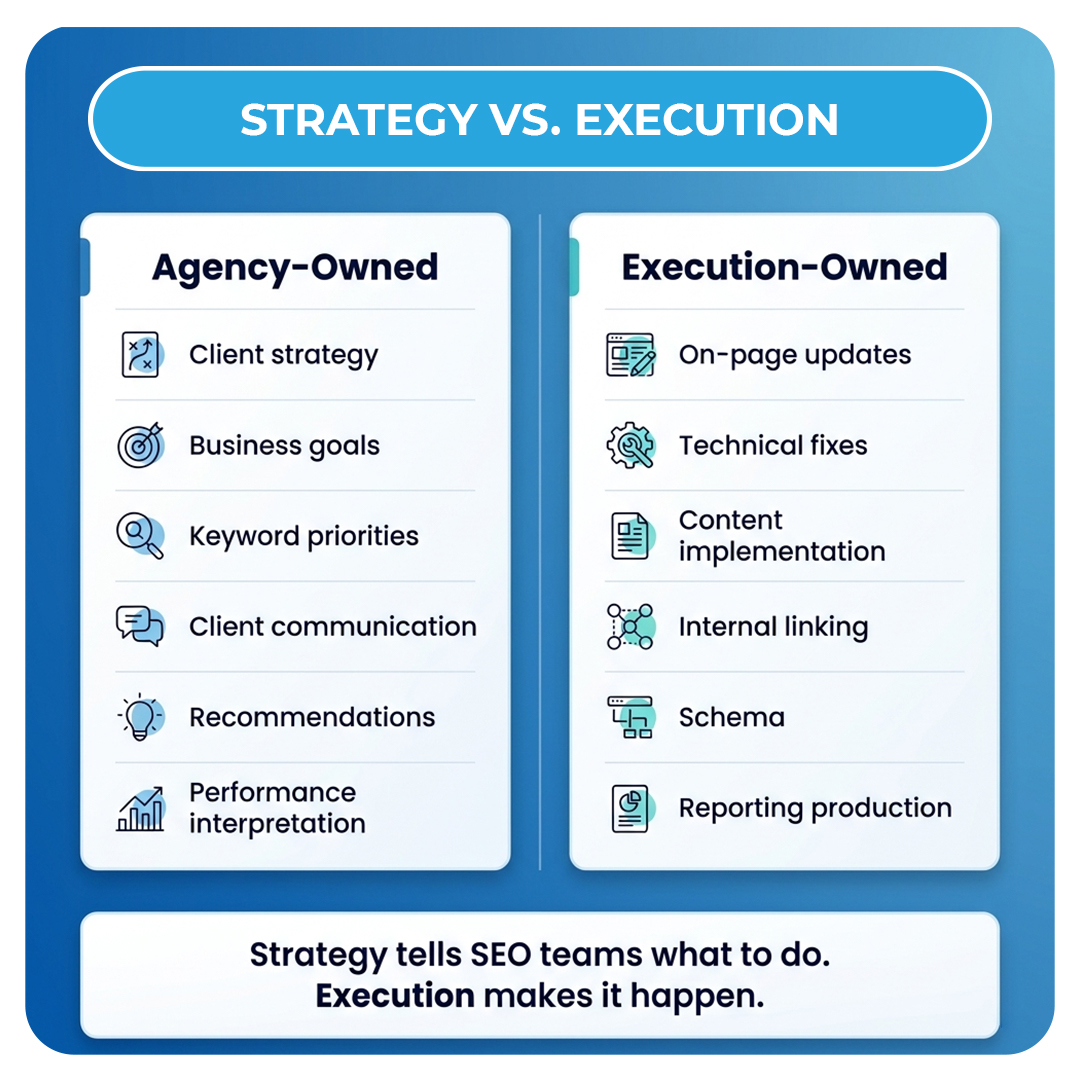
This flexibility is exactly why white label SEO fulfillment is worth considering as a structural solution rather than a last resort.
How White Label SEO Helps Agencies Meet Deadlines?
White label SEO is not about handing off work and hoping for the best. Its operational value comes from adding reliable, structured execution capacity that runs alongside an agency's internal team.
1. Adds Dedicated SEO Fulfillment Capacity
When a white label SEO agency handles implementation, internal strategists and account managers can focus on the work that requires direct client knowledge: strategy, priorities, communication, and relationship management. Execution continues without routing every task through already stretched internal resources.
This separation allows more work to be completed within a single reporting cycle, without requiring internal teams to operate beyond sustainable capacity.
2. Keeps Recurring SEO Work on Schedule
Recurring work requires recurring execution. Monthly optimization, technical maintenance, content updates, link building, and local SEO tasks all need to happen consistently, not just when internal bandwidth allows.
A reliable fulfillment partner provides the infrastructure to ensure these deliverables are completed on schedule every month, regardless of what else is happening internally.
3. Absorbs Temporary Workload Spikes
Several new clients onboarded at once. A seasonal campaign requiring additional content production. A large technical SEO project for an enterprise account. An employee absence that reduces available capacity for two weeks.
These situations are difficult to plan for. A partner provides a way to handle increased volume without requiring immediate hiring or stretching internal teams beyond their limits.
4. Reduces Internal Execution Bottlenecks
Bottlenecks often form when too much work flows through a single specialist. When that specialist is at capacity, tasks wait. SEO outsourcing allows agencies to route implementation work through a fulfillment partner instead of adding to an already full queue.
5. Creates Standardized Workflows
Effective white label SEO is built on defined processes: documented SOPs, clear task assignment, established quality standards, and recurring workflows. These structures make fulfillment repeatable and predictable, not dependent on individual effort or availability.
Repeatability is what allows an agency to scale without sacrificing delivery quality.
6. Provides an Additional Quality-Control Layer
A white label partner with established QA processes can review implementation before it reaches the agency. This adds a layer of oversight that internal teams often cannot maintain when they are managing high volumes of work under tight timelines.
Meeting a deadline should not require skipping quality review. A good fulfillment workflow builds both into the schedule.
7. Gives Agencies More Predictable Fulfillment
The clearest benefit of white label SEO outsourcing is the separation it creates between two distinct functions:
- Client strategy and communication remain with the agency.
- SEO execution and fulfillment are handled by the fulfillment partner.
When this separation is operational, agency teams can stay focused on client-facing responsibilities without falling behind on execution. Both sides of the business run concurrently rather than competing for the same internal resources.
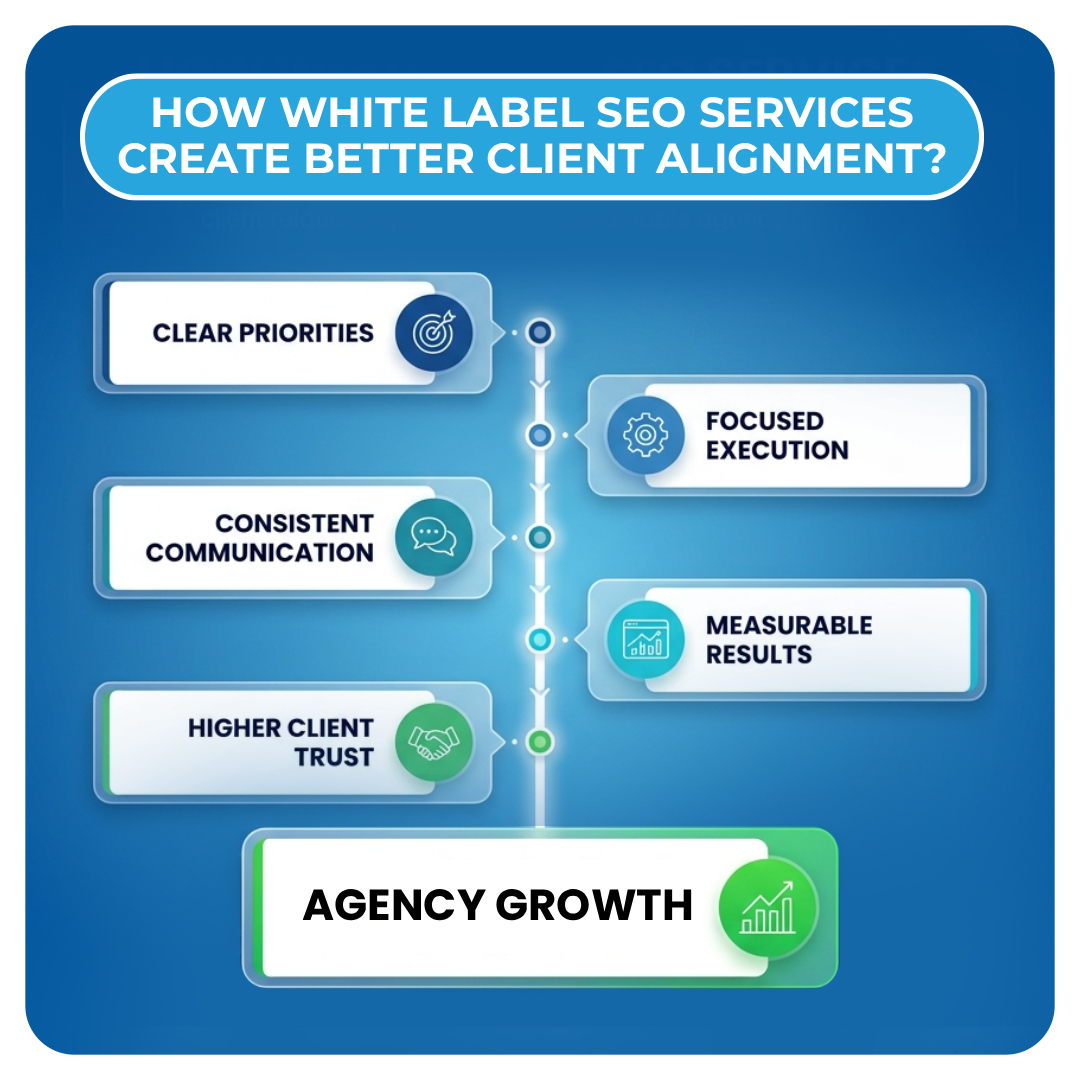
How to Build a Deadline-Friendly SEO Fulfillment Workflow?
Outsourcing SEO fulfillment alone does not create a reliable delivery system. Agencies still need clear workflows, defined responsibilities, and accountability structures to ensure that work moves through the pipeline consistently.
Step 1: Define Monthly Deliverables
Every account should have a documented list of what needs to be completed each month. Without this baseline, prioritization is reactive and deadlines are inconsistently enforced.
Step 2: Prioritize Work by Impact
Not every SEO task carries the same urgency. Categorizing work helps teams allocate time where it matters most:
- Critical: Technical issues affecting crawlability or indexation
- High priority: Content and optimization tied to active campaign goals
- Recurring: Standard monthly tasks with standing deadlines
- Opportunistic: Tasks that add value when capacity allows
Step 3: Set Internal Deadlines Before Client Deadlines
If a client report is due on Friday, internal completion should be targeted for Wednesday. Buffer time is not optional; it is where QA, revisions, and unexpected complications get resolved.
Step 4: Assign the Right Fulfillment Resources
Strategists handle priorities and direction. Account managers handle client communication. Internal SEO specialists handle the work that requires deep client context. White label fulfillment teams handle execution at scale.
Assigning the right work to the right resource is a structural decision, not a daily judgment call.
Step 5: Build QA Into the Timeline
Quality assurance needs to be scheduled, not added at the end when time runs out. Build review time into every workflow, including work that comes from fulfillment partners.
Step 6: Track Planned vs. Completed Work
Monitoring what was planned, what was completed, what was delayed, and what carried into the next month creates visibility into actual delivery performance. This data is more useful than client satisfaction surveys for identifying capacity problems early.
Step 7: Identify Recurring Bottlenecks
Patterns in delayed work usually point to a specific cause: a workflow approval process that slows execution, a specialist who is consistently over-allocated, or a type of deliverable that consistently gets pushed. Identifying these patterns allows agencies to address root causes rather than symptoms.
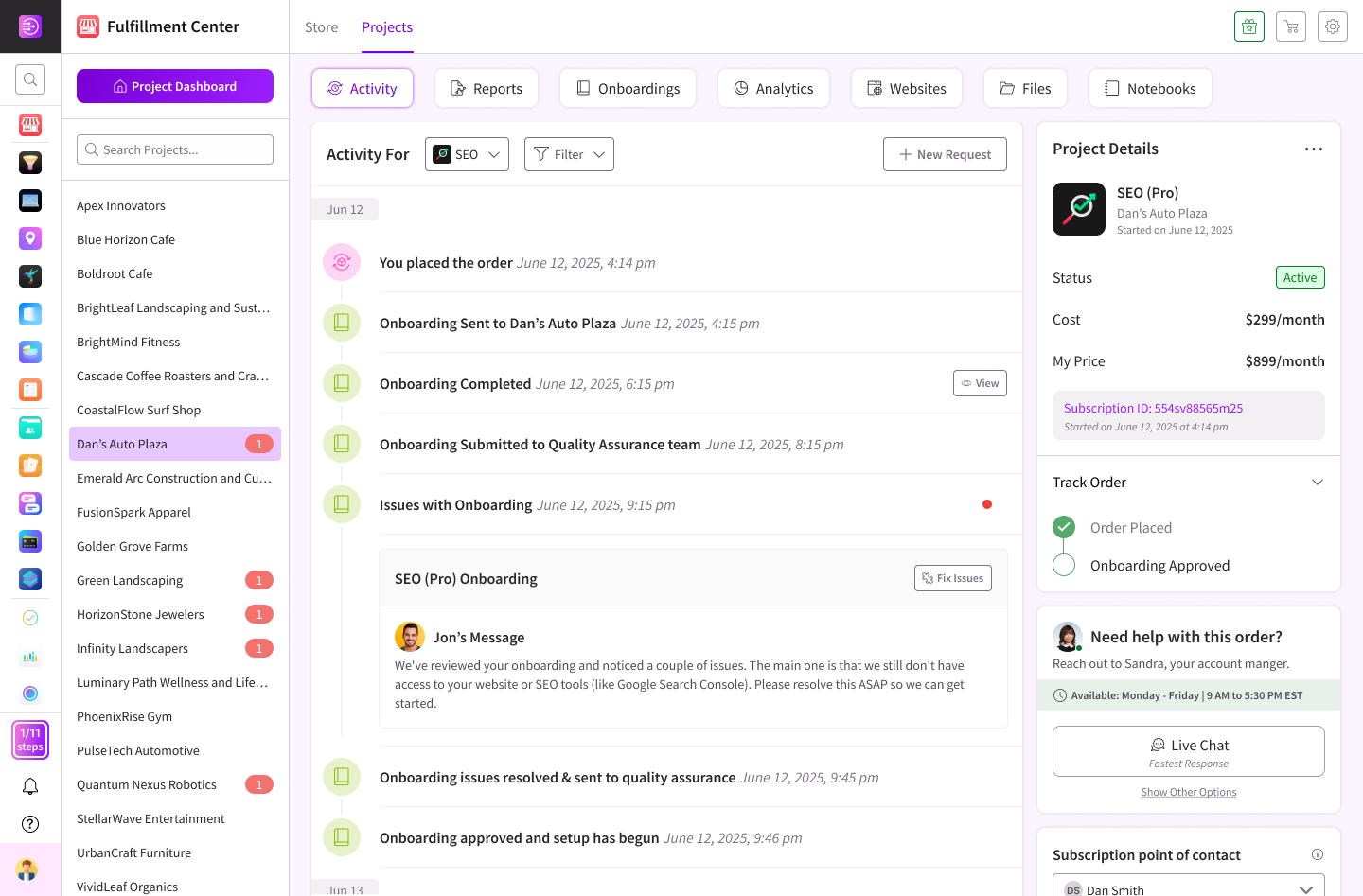
DashClicks' fulfillment dashboard, standardized SOPs, and structured workflows are built to support this kind of operational discipline within a white label SEO agency context.
When Should Agencies Consider White Label SEO for Deadline Management?
Not every missed deadline points to a capacity problem. But when delays become a pattern, the cause is worth examining.
Agencies may benefit from additional fulfillment capacity when:
- SEO tasks regularly roll into the following month
- Strategists spend significant time on implementation rather than strategy
- New accounts create immediate workload pressure that existing staff cannot absorb
- Client requests frequently disrupt planned monthly work
- Internal SEO specialists are consistently at full capacity
- Reporting deadlines arrive before the month's planned work is complete
- Technical fixes remain in the backlog across multiple months
- The agency is turning down SEO opportunities because current capacity cannot support additional accounts
- Employees rely on overtime regularly to keep up with deliverables
If missed deadlines are becoming a pattern rather than an exception, the problem may be fulfillment capacity, not project management.
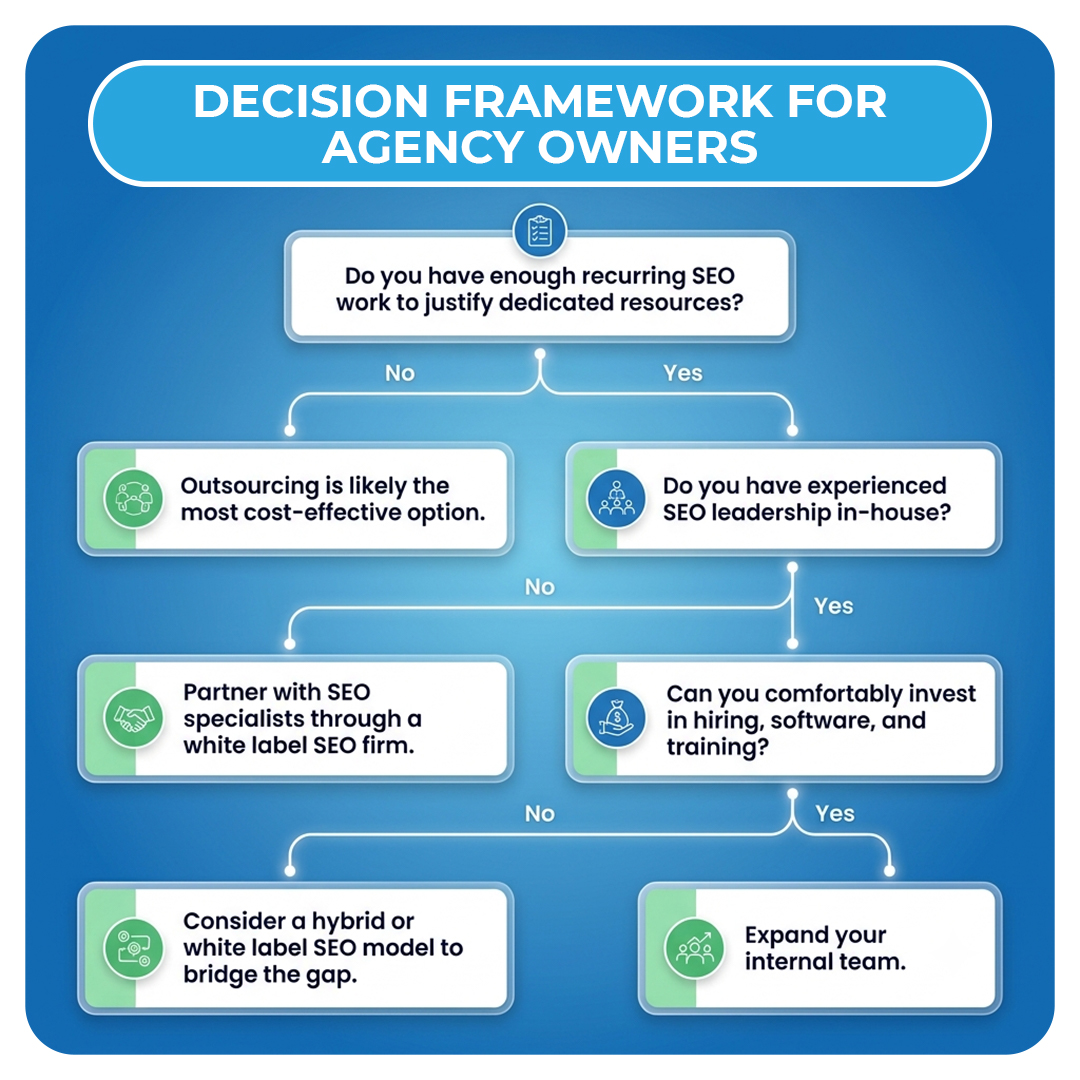
This does not mean every agency with an occasional missed deadline needs white label SEO. The right solution depends on workload volume, internal resources, the types of SEO services offered, and how the agency is currently structured.
How DashClicks Helps Agencies Maintain SEO Fulfillment?
DashClicks offers white label SEO services designed specifically to support agency operations. The goal is not to replace the agency's role but to extend its execution capacity.
Through DashClicks, agencies access:
- White label SEO fulfillment managed by dedicated specialists
- Standardized SOPs that ensure consistent execution across accounts
- A client dashboard for managing and monitoring active campaigns
- Rank tracking to monitor keyword performance over time
- White-labeled reporting that agencies can present directly to clients
The division of responsibility is clear:
The agency owns strategy, priorities, client communication, the client relationship, business context, and final recommendations.
DashClicks handles SEO execution, recurring deliverables, workflow implementation, and fulfillment processes.
This structure allows agency teams to remain focused on what they do best while ensuring that execution continues on schedule behind the scenes. The platform functions as a fulfillment partner, not a replacement for agency expertise.
Meeting SEO Deadlines Is About Capacity, Not Just Time Management
As client volume grows and campaign complexity increases, meeting SEO deadlines requires more than better organization. A well-structured project management system helps, but it cannot close a persistent gap between the volume of work that needs to be done and the resources available to do it.
Agencies need a reliable way to increase execution capacity that does not depend on constantly expanding internal headcount. White label SEO provides that option by adding dedicated fulfillment resources while the agency retains full ownership of strategy and client relationships.
The goal is not simply to complete tasks faster. The goal is to build a delivery model that is predictable, repeatable, and able to keep pace with agency growth.
The agencies that consistently meet SEO deadlines are not necessarily the ones with the largest teams. They are the ones with a fulfillment model that can keep pace with the work their strategies require.


.svg)


.svg)
.svg)
.svg)
.svg)
.svg)