

.svg)

.svg)
.svg)
.svg)
.svg)
.svg)
Modern digital agencies operate in a high-pressure environment. Clients expect more content, faster results, and clear proof that SEO efforts are driving growth. At the same time, search engines demand relevance, structure, and quality. Balancing all of this across multiple accounts is not easy, especially when content volume keeps increasing.
Programmatic content has become a practical solution to this challenge. It focuses on automated, data-driven content production that targets search demand at scale. Instead of creating every page manually, agencies use structured templates, keyword clusters, and repeatable workflows to publish hundreds or even thousands of optimized pages efficiently.
A scalable content strategy goes beyond volume. It aligns SEO performance with audience intent, conversion goals, and long-term ROI. When done correctly, it helps brands dominate search visibility while maintaining consistent quality across all assets.
This is where white label SEO plays a key role. By partnering with a specialized white label SEO agency, digital firms gain access to experienced teams, proven systems, and advanced tools without expanding their in-house staff. These partners handle research, technical SEO, content production, and optimization behind the scenes, allowing agencies to scale confidently.
The importance of scaling content is backed by data. According to the Content Marketing Institute, content marketing drives roughly 55% of website traffic on average for both B2B and B2C companies in 2024. As competition grows, agencies that cannot scale efficiently risk falling behind in visibility and performance.
White label SEO services help agencies bridge this gap by combining programmatic execution with consistent SEO standards. The result is a content engine that supports growth across multiple clients without sacrificing quality or control.
Why Agencies Struggle to Scale Content Strategies?
1. High Volume vs. Quality Conflict
Scaling content sounds simple on paper. Publish more pages, target more keywords, and grow traffic faster. In practice, this approach often creates tension between volume and quality. As output increases, teams are pushed to move faster, which can lead to shallow research, repetitive phrasing, and weaker on-page optimization.
Many agencies find it difficult to maintain SEO best practices across dozens or hundreds of pages at once. Elements like clear structure, intent alignment, and natural keyword usage are often rushed or overlooked. Readability can suffer as well, especially when multiple writers are working under tight deadlines without unified guidelines.
Search engines now place strong emphasis on experience, expertise, authority, and trust. Pages that lack depth, originality, or logical structure may still get indexed, but they rarely perform well over time. This directly affects key metrics such as:
- Organic traffic per page
- Average time on page
- Engagement and scroll depth
- Keyword ranking stability
When teams are stretched thin, inconsistency becomes unavoidable. A handful of pages may rank and perform well, while others fail to meet even basic SEO standards. Over time, this uneven performance weakens overall site authority and makes growth harder to sustain.
2. Lack of Technical SEO and Content Integration
Content does not exist in isolation. Even the most well-written page needs technical SEO support to rank effectively. Proper keyword mapping, internal linking, schema markup, clean URL structures, and optimized metadata all play a role in how search engines interpret and rank content.
Many agencies focus heavily on writing while treating technical SEO as a separate task or an afterthought. This disconnect creates gaps in execution. Pages may target overlapping keywords, lack internal links, or miss important schema signals that improve visibility in search results.
As content libraries grow, maintaining technical consistency becomes more complex. Small issues such as missing canonical tags, duplicate metadata, or broken internal links can quietly spread across hundreds of pages. Each issue may seem minor on its own, but together they dilute ranking potential and slow growth.
Without a structured SEO framework that ties content and technical elements together, even strong copy can struggle to gain traction. At scale, these gaps become more visible and more damaging.
3. Inefficient Processes and Manual Workflows
Many agencies rely on manual workflows that were never designed for scale. Research, writing, editing, and optimization often happen in silos, with little coordination between teams. Each new client or campaign requires rebuilding processes from scratch.
The lack of repeatable playbooks leads to inefficiency. Writers may follow different guidelines, editors may focus on different priorities, and SEO checks may happen inconsistently. This results in uneven quality and longer turnaround times.
Industry productivity studies show that marketing teams using automated workflows can reduce production time by up to 30%. Agencies that continue to rely on manual methods struggle to keep pace with growing content demands. As a result, deadlines slip, opportunities are missed, and team burnout becomes a real concern.
4. Difficulty in Data-Driven Content Planning
Effective scaling depends on smart planning, not guesswork. Agencies need to identify keyword clusters, understand search intent, and prioritize topics with clear traffic and conversion potential. This requires access to reliable data and the ability to interpret it correctly.
Many teams rely on limited keyword lists or intuition when planning content. Without structured analysis, content calendars often become reactive. Pages are created based on short-term requests rather than long-term strategy.
The lack of strong data insights leads to several issues:
- Low click-through rates due to poor intent matching
- Slower ranking improvements
- Content that competes internally instead of supporting each other
Over time, this weakens the overall content ecosystem and limits sustainable growth.
5. Limited Resources for Testing and Optimization
SEO content is never finished. Pages need regular updates, testing, and optimization to remain competitive. Search behavior changes, competitors publish new content, and algorithms evolve.
Research from Ahrefs shows that updating existing content can improve organic traffic by up to 106% in some cases. Despite this, many agencies focus almost entirely on publishing new pages.
The reason is simple. Most teams lack the time and resources to revisit older content. Audits, refreshes, and performance testing are resource-intensive, especially at scale. As a result, older pages become outdated, lose rankings, and stop contributing meaningful traffic.
6. Client Expectations vs. Operational Capacity
Clients expect clear results. They want consistent content output, measurable SEO ROI, and steady ranking improvements. As competition increases, expectations continue to rise.
Without scalable systems, agencies struggle to meet these demands. Missed deadlines, inconsistent performance, and unclear reporting create friction. Even strong relationships can suffer when execution falls short.
Over time, the gap between client SEO expectations and operational capacity becomes harder to manage. This often leads to dissatisfaction, increased churn, and pressure on margins. Scaling content without reliable support is not just inefficient. It becomes unsustainable for long-term agency growth.
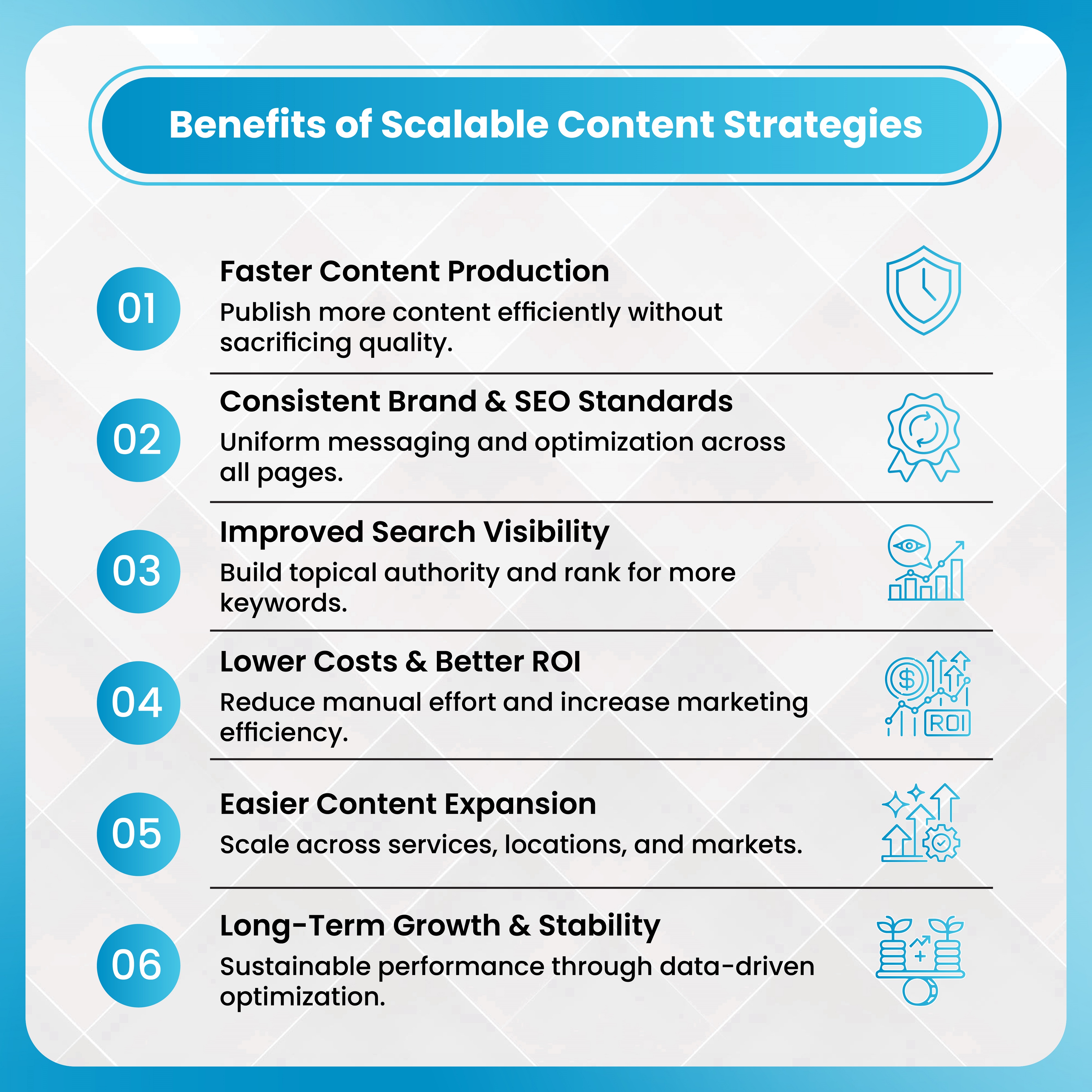
How White Label SEO Enables Programmatic & Scalable Content?
1. Content Research and Strategy at Scale
Scaling content starts with research that goes beyond basic keyword lists. White label SEO teams are built to handle large-scale analysis across multiple clients and industries. They use advanced SEO tools and structured frameworks to uncover keyword opportunities that align with real search demand.
This process includes topic clustering, search intent analysis, and competitor benchmarking. Instead of targeting isolated keywords, content is grouped into related themes that support stronger internal linking and clearer topical authority. This approach helps search engines understand site relevance while improving user experience.
Data-driven content calendars play a critical role at this stage. These calendars are aligned with seasonal trends, search engine result page gaps, and client-specific KPIs such as traffic growth or lead generation. Each piece of content is planned with a defined goal, reducing guesswork and improving performance predictability.
2. Template-Based and Programmatic Content Production
Programmatic content relies on consistency. White label SEO services use standardized frameworks that allow agencies to produce high volumes of content without sacrificing quality. These frameworks include optimized headings, metadata, internal links, and calls to action that follow SEO best practices.
Templates ensure every page meets baseline standards before publication. Writers can focus on relevance and clarity while technical elements are already built in. This reduces errors and speeds up production.
Modular content blocks make scaling even more efficient. Sections such as FAQs, service descriptions, or location details can be reused and adapted across pages. For example, ecommerce or local business websites can generate hundreds of product or location pages using the same structure without duplicating effort.
This structure supports fast expansion while maintaining consistency across large content libraries.
3. Technical SEO Integration
One of the biggest strengths of white label SEO is seamless technical integration. SEO checks are embedded into the content workflow rather than handled as a separate step. This includes schema implementation, canonical tag setup, internal linking, and indexation readiness.
By addressing technical requirements before content goes live, agencies reduce the risk of ranking issues. Pages are easier for search engines to crawl, understand, and index correctly.
This integrated approach improves key performance indicators such as:
- Indexing and crawl efficiency
- Site health scores
- Organic impressions and visibility
Over time, these improvements support more stable and predictable ranking growth.
4. Multi-Client Workflow Automation
Managing content for multiple clients requires systems that scale. White label SEO teams implement workflow automation through editorial calendars, CMS integrations, and approval pipelines. These systems reduce manual coordination and prevent bottlenecks.
Repeatable workflows ensure consistency across accounts. Tasks move smoothly from research to writing, editing, optimization, and publishing. This reduces errors and shortens turnaround times.
According to HubSpot data, companies using marketing automation see an average productivity increase of around 20%. For agencies, this means faster delivery without overwhelming internal teams or sacrificing quality.
5. Content Performance Monitoring and Optimization
Publishing content is only the beginning. White label SEO agencies track performance at the individual asset level. Metrics such as traffic, rankings, engagement, and conversions are monitored continuously.
Underperforming pages are identified quickly and improved through targeted updates. These updates may include keyword refreshes, internal linking improvements, content expansion, or structural adjustments. This iterative process helps content stay relevant as search trends evolve.
Key metrics guide optimization efforts, including:
- Organic click-through rate
- Bounce rate and time on page
- Conversion value and lead quality
This data-driven approach ensures content continues to deliver value long after it is published.
6. Scaling Across Formats and Channels
Scalable content strategies extend beyond blog posts. White label SEO supports a wide range of formats, including landing pages, FAQ sections, product descriptions, and structured data assets.
Content is optimized for mobile devices and different search intents, ensuring a consistent experience across platforms. Assets can also be repurposed for social media, email marketing, or paid campaigns, helping agencies support omnichannel strategies without creating everything from scratch.
This flexibility allows agencies to maximize the impact of each content asset.
7. Rebrandable Reporting and Client Communication
Clear reporting is essential for maintaining trust. White label SEO services provide rebrandable dashboards that present content performance in a clear and accessible way. Clients can see traffic growth, ranking improvements, and ROI without being overwhelmed by technical jargon.
These reports highlight progress and identify opportunities for further growth. Transparent communication strengthens client relationships and reinforces the value of scalable content strategies over time.
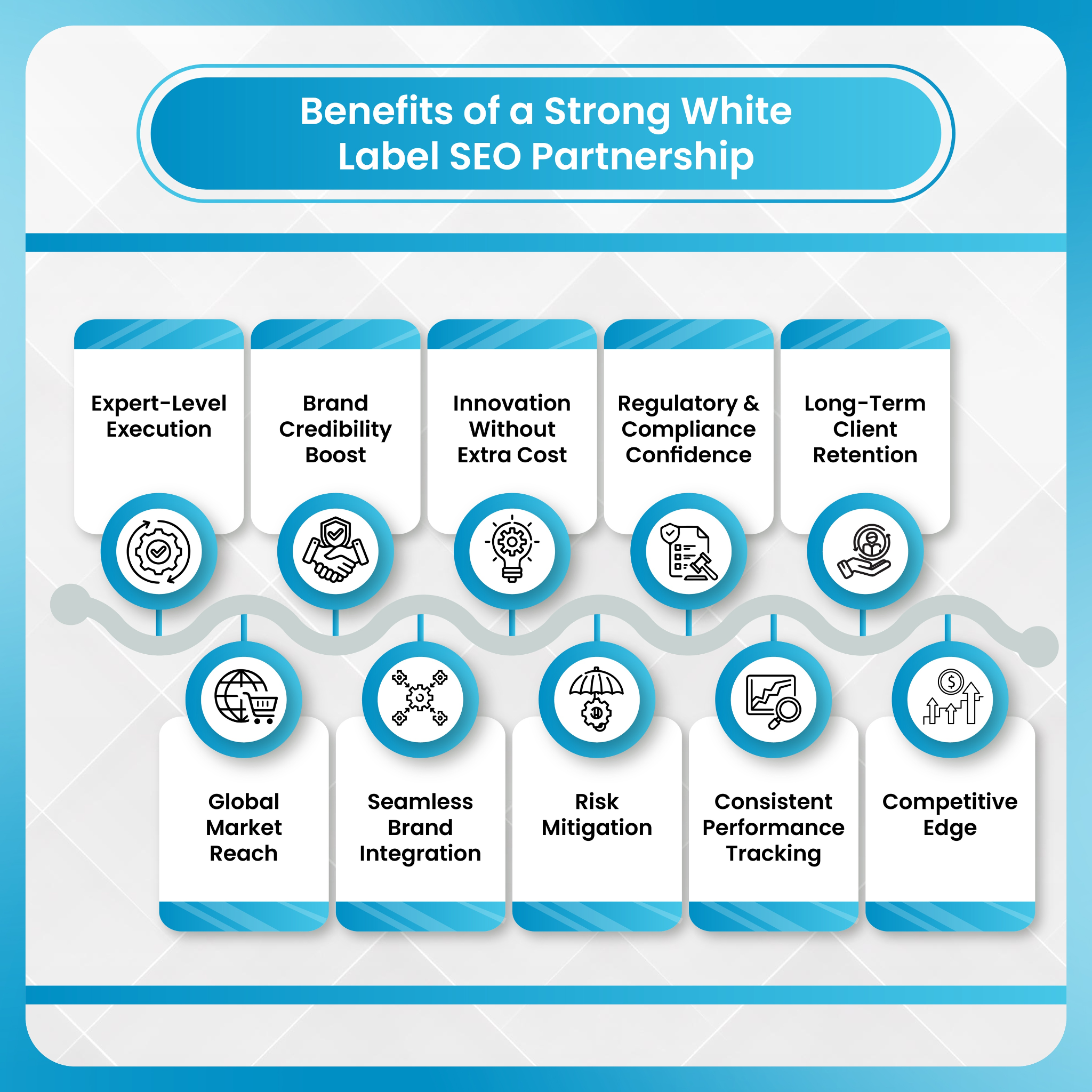
How DashClicks’ White Label SEO Services Enable Programmatic and Scalable Content?
DashClicks supports agencies that want to scale content without increasing operational complexity. Its white label SEO services are built for programmatic execution across multiple clients and industries.
DashClicks helps agencies plan and execute scalable content strategies using data-driven research and keyword clustering. High-opportunity topics are identified at scale, ensuring content aligns with real search demand and client goals.
Programmatic content production is supported through structured templates and modular SEO frameworks. This allows agencies to publish consistent, optimized pages across blogs, service areas, and landing pages without sacrificing quality.
Technical SEO is embedded into every workflow. Schema markup, internal linking, metadata optimization, and indexation support are handled as part of the process, reducing ranking risks.
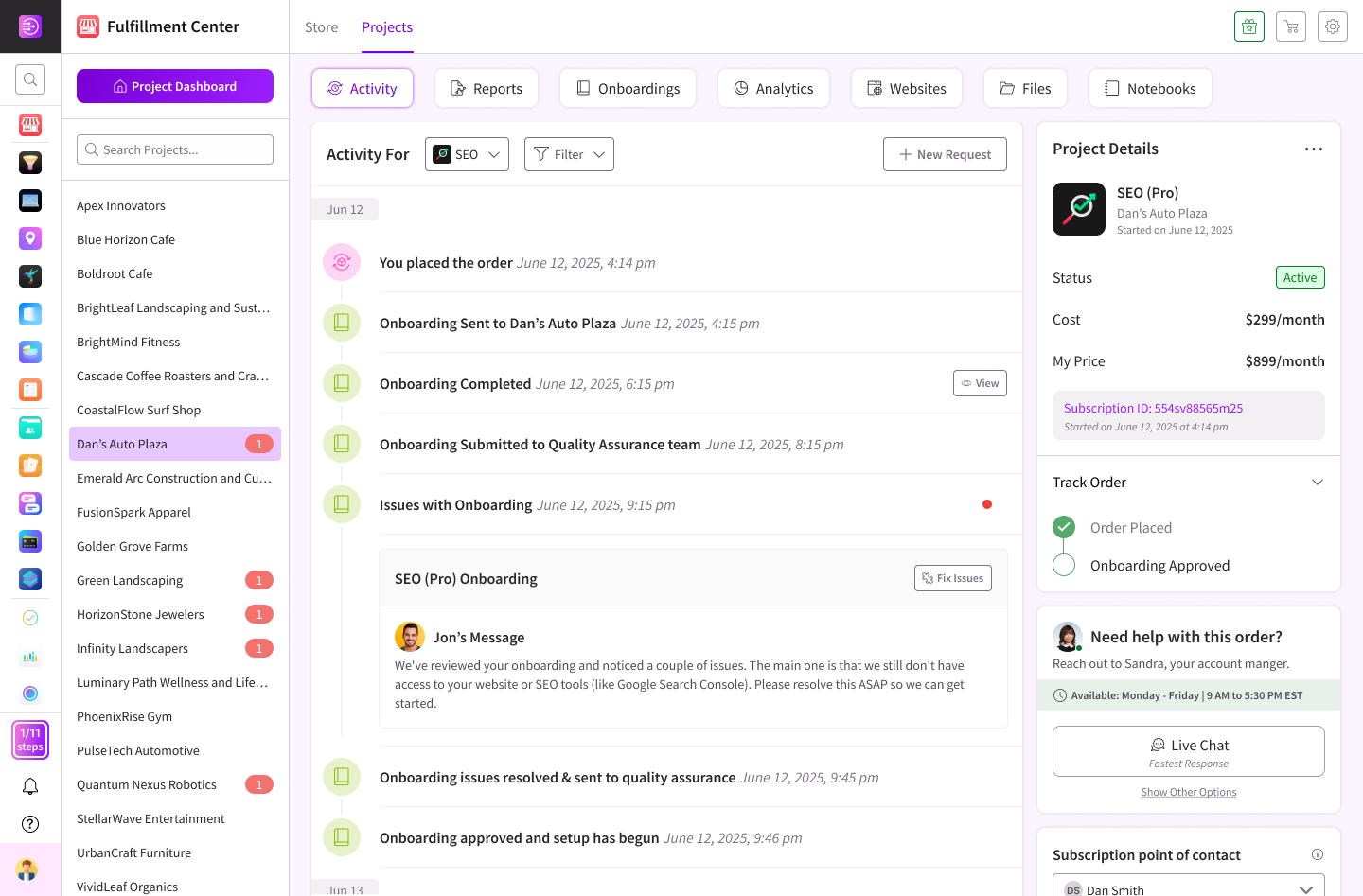
Performance monitoring is continuous. Agencies gain visibility into traffic, rankings, and engagement, allowing for regular updates and long-term improvements. Rebrandable dashboards make it easy to communicate results and ROI to clients.
By handling execution behind the scenes, DashClicks allows agencies to focus on strategy, relationships, and growth while maintaining full brand control.
Final Thoughts and Next Steps
Programmatic content is no longer optional for agencies aiming to scale. Search competition is increasing, and clients expect consistent growth backed by data. Without the right systems, scaling content becomes inefficient and risky.
White label SEO provides the expertise, tools, and operational support needed to deliver high-quality content at scale. With the right partner, agencies can meet client expectations while protecting margins and resources.


.svg)


.svg)
.svg)
.svg)
.svg)
.svg)