

.svg)

.svg)
.svg)
.svg)
.svg)
.svg)
Rapid agency growth is exciting. New clients, expanding service lines, and stronger revenue signals all point to success. Yet growth without a clear risk management strategy often leads to operational strain, rising costs, and unhappy clients. Many agencies discover this the hard way when SEO demand increases faster than their internal capacity.
Search engine optimization is no longer a single-discipline service. It now includes technical audits, content planning, link building, analytics, conversion tracking, and ongoing optimization tied to frequent algorithm changes. When agencies try to scale SEO too quickly without the right structure, cracks begin to show. Missed deadlines, inconsistent results, and unclear reporting can all damage client trust.
White label SEO services offer a practical way to reduce these risks. In simple terms, white label SEO involves outsourcing SEO fulfillment to a specialized partner while delivering the work under your agency’s brand. While some agencies view this as a shortcut, the reality is much deeper. White label SEO is a strategic risk-reduction tool that helps agencies grow without stretching internal teams or exposing themselves to unpredictable costs.
According to Google, its search algorithm changes hundreds of times each year, with several major core updates annually. Keeping up with this pace requires dedicated expertise and constant monitoring. For growing agencies, building and maintaining that level of specialization internally can be costly and risky.
This blog explores how white label SEO reduces operational, financial, and client retention risks for scaling agencies. You will see the common challenges agencies face as they grow SEO services, how white label SEO addresses those challenges, and why platforms like DashClicks play a key role in turning SEO into a stable, scalable offering rather than a liability.
The Risks Agencies Face While Scaling SEO Services
A. Operational Risk: Execution Breakdowns
Operational risk is often the first pressure point agencies feel when SEO services grow faster than internal infrastructure. Demand increases quickly, but processes, staffing models, and quality controls tend to lag.
1. Overextension of Internal Teams
One of the most common challenges is team overextension. As agencies onboard more SEO clients, existing staff are expected to manage multiple responsibilities at once. Strategy development, keyword research, technical audits, content alignment, link building, and reporting all compete for attention. When one person is responsible for too many moving parts, execution quality suffers. Small technical issues get missed, content recommendations are rushed, and optimization work becomes reactive rather than strategic.
2. Quality Inconsistency Across Accounts
Quality inconsistency becomes a natural byproduct of this strain. Without clearly defined roles or dedicated specialists, SEO outcomes vary widely between accounts. One client may benefit from strong technical fixes and steady content improvements, while another receives minimal attention beyond basic reporting. Over time, this uneven performance creates internal stress and external risk. Clients compare results, notice gaps, and begin to question the agency’s overall capability. The primary reason a client leaves an agency is often due to quality issues.

3. Failure to Keep Up with SEO Complexity
SEO complexity adds another layer of exposure. Search algorithms evolve constantly, and core updates can reshape ranking factors with little warning. Moz reports that Google releases major algorithm updates several times each year, often with meaningful ranking impacts. Agencies without dedicated SEO specialists may struggle to monitor early signals, test adjustments, or pivot strategies quickly. When rankings drop unexpectedly, the agency is left reacting under pressure rather than leading with confidence.
Example: A common growth scenario illustrates this risk clearly. An agency doubles its SEO client base within a year but adds only one additional generalist to the team. Deliverables begin slipping past deadlines. Technical audits take weeks instead of days. Proactive optimization is replaced with surface-level fixes. Clients start noticing slower response times and fewer strategic insights, which leads to frustration and increased churn risk.
B. Financial Risk: Costly Scaling and Overhead
Scaling SEO in-house comes with significant financial commitments that are often underestimated.
1. High Costs of Hiring and Training SEO Talent
Hiring experienced SEO professionals requires competitive salaries, benefits, and long onboarding cycles. According to Glassdoor data, mid-level SEO specialists in the United States typically earn between $60,000 and $80,000 per year, before factoring in benefits, payroll taxes, and bonuses.
Training represents another ongoing cost. SEO is not a static discipline. Tools change, best practices evolve, and algorithm updates require continuous learning. Agencies must invest in courses, certifications, conferences, and internal knowledge sharing just to maintain baseline expertise. Recruitment and onboarding can take months, slowing down service expansion and delaying revenue realization.
2. Burned Margins Due to Fixed Overhead
Fixed overhead compounds the risk. Salaries, software subscriptions, and reporting tools remain constant regardless of client volume. During seasonal slowdowns or client attrition, agencies still carry the same expenses. This puts pressure on margins and reduces financial flexibility. Leadership may become cautious about taking on new initiatives, testing new services, or investing in innovation.
3. Inefficient Allocation of Resources
When teams are split between SEO strategy and hands-on execution, resource efficiency often suffers. High-cost specialists may spend time on routine tasks rather than high-impact strategy, limiting return on investment.
This inefficiency becomes especially visible when workflow fluctuates. Agencies may hire expensive technical SEO talent only to experience inconsistent demand, leaving specialized resources underutilized while still on payroll.
Deloitte reports that talent shortages and rising hiring costs are among the top growth inhibitors for mid-sized agencies. When revenue growth does not keep pace with expanding overhead, profitability erodes. Agencies may find themselves working harder for slimmer margins, which increases stress at both the leadership and team levels.
C. Client Retention Risk: Inconsistent Results and Reporting
Client retention becomes fragile when SEO performance feels unpredictable or poorly explained. Even when work is being done, a lack of consistency, clarity, or proactive communication can quickly erode trust and increase churn risk.
1. Performance Volatility During Algorithm Shifts
Algorithm updates often introduce short-term volatility, but clients experience them as sudden ranking drops or stalled growth. When agencies are slow to adjust—or struggle to explain what’s happening—confidence declines.
Without proactive monitoring and strategic response, agencies are forced into defensive conversations. Instead of leading with insight, they react after performance dips occur. Over time, repeated volatility without clear explanations makes SEO feel risky rather than reliable.
2. Poor Communication and Unclear ROI
Clients expect more than traffic charts and keyword rankings. They want clear performance reporting tied to business impact—leads, conversions, and revenue.
Agencies without specialized SEO reporting frameworks often rely on generic dashboards or surface-level metrics. This creates misalignment. Clients see activity but not value, which leads them to question whether SEO is worth the investment. Even strong execution can be undermined by weak communication.
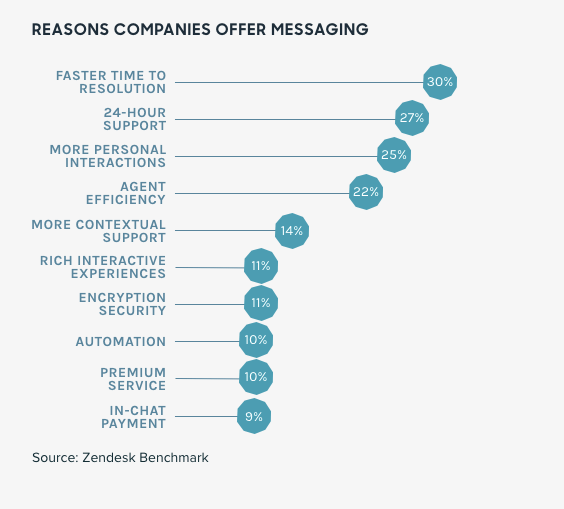
Image Source: Zendesk
3. Churn Risk from Failed Expectations
Inconsistent performance and unclear reporting directly increase churn. When progress feels slow or unpredictable, clients begin comparing providers and exploring alternatives.
HubSpot reports that consistent, transparent reporting can increase client retention by approximately 25–30%. When agencies fail to set clear expectations and demonstrate ongoing value, SEO becomes an easy line item to cut—especially under budget pressure.
Example: Confidence Breakdown
A client sees gradual ranking improvements but limited explanation of timelines or next steps. Months pass without a clear ROI context. The client questions the investment, grows frustrated with vague reporting, and ultimately moves to a competitor offering clearer deliverables and measurable outcomes.
How White Label SEO Reduces Risk?
A. Mitigating Operational Risk
1. Access to Specialized SEO Expertise
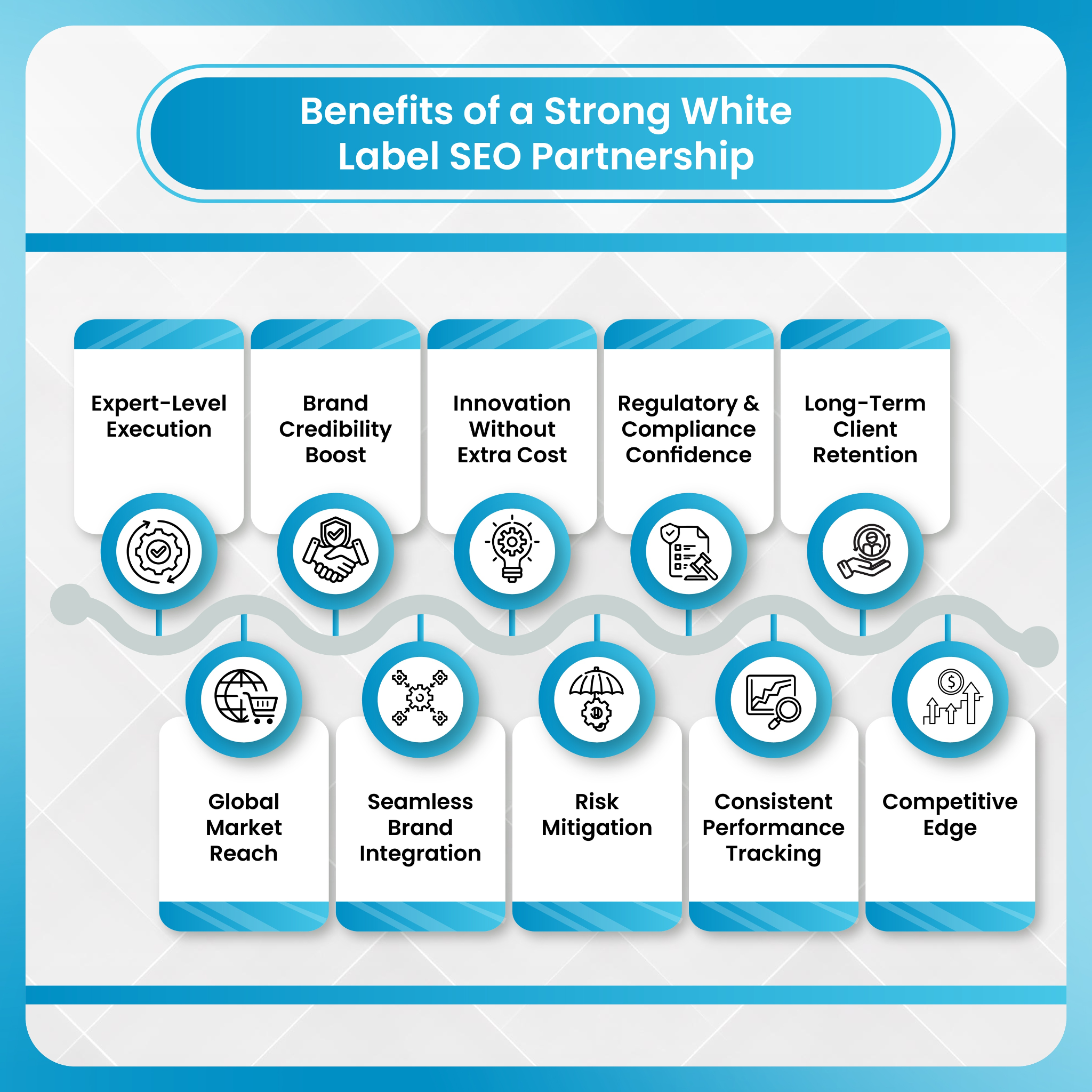
White label SEO allows agencies to reduce execution risk by gaining immediate access to specialized expertise. Rather than relying on generalists to manage every aspect of SEO, agencies work with teams structured around defined roles. These teams typically include technical SEO specialists, content strategists, link building experts, and analysts. Clear role ownership improves accuracy, accountability, and overall execution quality.
2. Faster Turnaround & Scalability
Speed is another major advantage. White label providers are designed to operate at scale, which allows agencies to onboard new SEO clients quickly without waiting through lengthy hiring and training cycles. This responsiveness prevents internal bottlenecks during growth phases and ensures new accounts receive proper attention from day one.
3. Standardized Processes & Quality Assurance
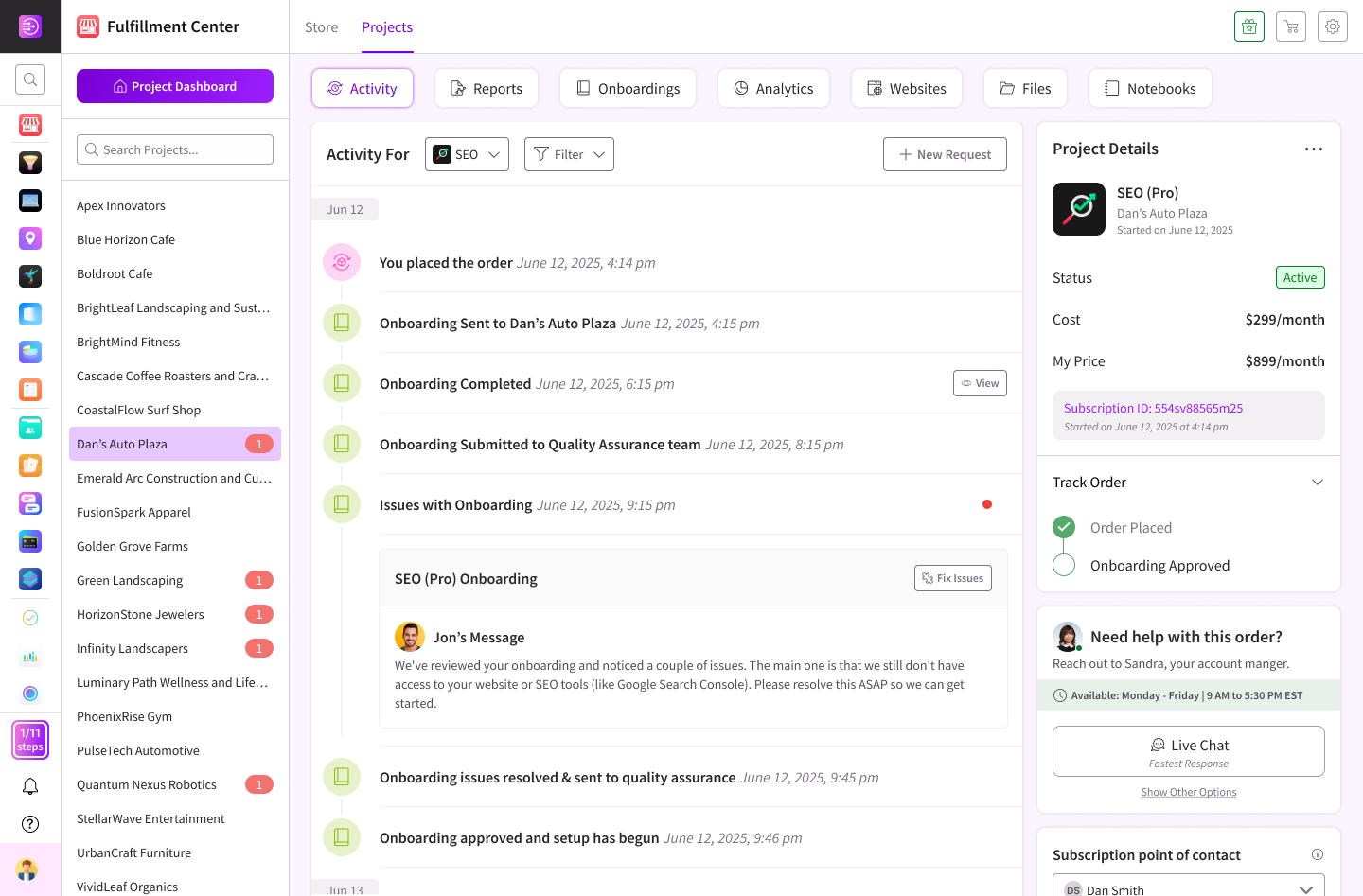
Standardized processes further reduce operational strain. Established white label partners follow proven workflows that guide each engagement from onboarding through ongoing optimization. These workflows are refined through experience across many accounts and industries, which reduces trial and error. Built-in quality assurance systems help ensure that work is delivered consistently across all clients, regardless of volume.
A typical white label SEO workflow often includes:
- Client onboarding and goal alignment
- Comprehensive technical and content audits
- Strategy development and approval
- Ongoing execution and optimization
- Regular reporting and performance reviews
This structured approach creates predictability. Teams know what happens next, deliverables are easier to manage, and fewer issues fall through the cracks. The result is smoother execution and lower operational risk.
B. Reducing Financial Risk
1. Shift from Fixed to Variable Costs
One of the most compelling financial benefits of white label SEO is the shift from fixed to variable costs. Instead of carrying full-time salaries and long-term overhead, agencies pay for fulfillment based on active client demand. This model aligns expenses more closely with revenue and helps protect profit margins as the business grows.
2. Economies of Scale
White label providers also operate with economies of scale. Because they support multiple agencies, they can invest in advanced SEO tools, data platforms, and research resources that would be cost-prohibitive for many individual firms. Agencies gain access to this infrastructure without absorbing the full licensing or maintenance costs.
3. Budget Flexibility
Financial flexibility improves as well. Agencies can scale services up or down as client needs change, which reduces exposure during slower periods or market uncertainty. This adaptability allows leadership to focus on growth and innovation rather than cost containment.
For example, an agency that previously hired a full-time technical SEO specialist can replace that fixed salary with white label support. This lowers overhead while expanding service capacity, enabling the agency to serve more clients without increasing internal headcount.
C. Protecting Client Retention and Reducing Churn
1. Consistent, Data-Driven Results
Client retention depends heavily on consistent performance and clear communication. White label SEO supports both by providing data-driven execution and ongoing optimization that helps stabilize results during algorithm changes.
Rather than reacting after rankings drop, white label teams continuously monitor performance signals and adjust strategies proactively. This reduces volatility and helps maintain steady progress, even when search environments shift.
2. Strategic Reporting Frameworks
Reporting also becomes more effective. White label SEO frameworks emphasize meaningful metrics such as organic traffic growth, conversion performance, and lead quality. Brandable dashboards allow agencies to present results in a clear, professional format that aligns SEO activity with business outcomes.
3. Client Communication Support
Communication tools further strengthen client relationships. Many white label providers offer structured reporting templates, performance summaries, and action plans that help agencies maintain consistent, proactive contact with clients. These tools make it easier to explain results, set expectations, and outline next steps.
Agencies that implement structured reporting and proactive optimization often experience stronger client confidence and longer retention cycles. While results vary, many see noticeable reductions in churn after integrating white label SEO into their service model.
DashClicks’ White Label SEO as a Risk-Reduction Engine
DashClicks plays a key role in helping agencies manage growth without taking on unnecessary risk. Its white label SEO services are designed to support agencies at every stage of scaling.
From an operational standpoint, their team provides end-to-end SEO fulfillment supported by proven systems. These systems adapt to algorithm changes and evolving best practices, which helps agencies maintain stability even as search landscapes shift.
Financially, the platform eliminates the need for hiring and expensive software investments. Agencies avoid long-term overhead while gaining access to experienced SEO teams and advanced tools. Costs remain predictable and scalable, making financial planning easier.
Client confidence improves through white-labeled reporting and proactive optimization. Agencies can present clear performance insights under their own brand, which strengthens trust and supports long-term relationships.
Most importantly, DashClicks enables scalable growth. Its plug-and-play infrastructure allows agencies to expand SEO services quickly without internal strain. This makes white label SEO not just a fulfillment option, but a strategic risk-management solution for growing agencies.
Conclusion and Next Steps
Agency growth without proper risk management often leads to execution gaps, financial pressure, and client churn. SEO, with its complexity and constant change, magnifies these challenges.
White label SEO directly addresses these risks by providing specialized expertise, structured workflows, flexible costs, and retention-focused reporting. It allows agencies to grow confidently without sacrificing quality or stability.
Rather than viewing white label SEO as outsourced labor, agencies should see it as a strategic layer that protects their business while supporting expansion. When implemented correctly, it transforms SEO from a potential liability into a predictable, scalable service.
Agencies considering this approach should evaluate partners based on experience, transparency, reporting quality, and scalability. Starting with a pilot engagement and clear success benchmarks can help ensure alignment.


.svg)


.svg)
.svg)
.svg)
.svg)
.svg)