

.svg)

.svg)
.svg)
.svg)
.svg)
.svg)
Paid advertising continues to be one of the most reliable ways for businesses to create predictable demand. What has changed is the way audiences behave. People move across platforms, consume more content, compare more options, and expect faster, more relevant experiences. At the same time, bidding systems grow more sophisticated, data privacy rules tighten, and cost-per-click increases across competitive verticals. All of this puts more pressure on agencies to manage the entire funnel with greater precision, not just the top of it.
Recent benchmark studies show that average Google Ads conversion rates vary widely by industry. For example, e-commerce search campaigns often hover around 2.8 percent, while blended averages across various sectors have reached roughly 7.5 percent, depending on the account mix. These numbers highlight a simple truth. When campaigns, audiences, and landing pages work together, the gap between a click and a conversion closes fast.
Many agencies know what needs to be done but struggle with capacity, specialist skills, and the ability to run tests at the speed the platforms demand. That’s where white label PPC management becomes a practical solution. More agencies are turning to PPC outsourcing to stay competitive, maintain quality, and keep their clients happy. Industry surveys show continued growth in outsourced paid media support, especially among small to mid-sized agencies.
This guide walks through the real reasons agencies lose conversions and how white label PPC services can improve funnel performance. It’s a tactical playbook, not a sales pitch. You’ll see the roadblocks, the capabilities you should expect, and the systems that turn paid traffic into revenue more consistently.
What Stops Agencies From Converting Clicks Into Predictable Revenue?
Agencies rarely struggle to drive traffic. The real challenge is converting that traffic into qualified leads or sales.
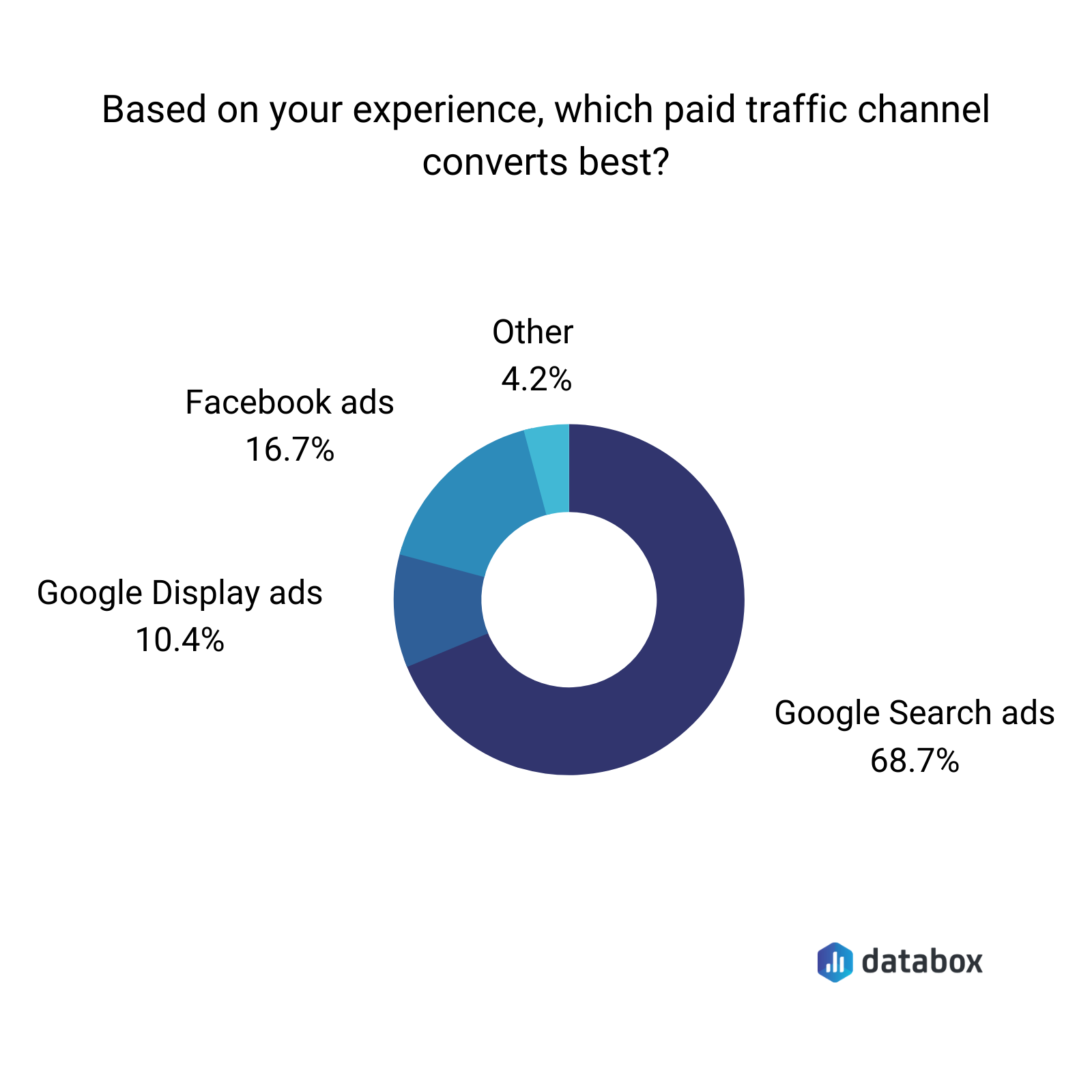
Image Source: Databox
Here are the most common issues that get in the way, along with examples of how they affect performance.
1. Limited Skills and Bandwidth When Scaling
Running high-performing paid campaigns across multiple networks requires different specialists. Search, Shopping, YouTube, Performance Max, Discovery, and retargeting all behave differently. Agencies with small teams can manage a few accounts well, but continuous optimization becomes difficult as the client list grows.
A common symptom is a slow A/B testing cadence. When an agency is stretched thin, creatives stay active for too long, click-through rates decline, and the account loses momentum. Without rapid rotation, quality scores drop, and CPCs climb.
2. Fragmented Workflows Between Campaigns, Landing Pages, and CRO
Many agencies focus heavily on the ad side and leave landing pages, design, and conversion rate optimization to separate teams or freelancers. This disconnect leads to mismatched messaging and poor user experience.
For example, an ad may promise a specific offer, but the landing page might lead with different benefits. Even small inconsistencies cause friction, reducing conversions and increasing bounce rates.
3. Tracking and Attribution Issues
Accurate tracking is a major bottleneck for many agencies. Common issues include:
- Misconfigured conversion actions
- Cross-domain tracking errors
- Missing event parameters
- Lack of server-side tracking
- Gaps in CRM integrations
When conversions are underreported or misattributed, agencies lose visibility into what actually drives results. That makes it hard to optimize, justify budgets, or prove ROI.
4. Slow Experimentation and Learning Cycles
Paid platforms reward advertisers who adapt quickly. When an agency updates ads slowly or tests one variable at a time over long periods, performance stagnates. This is especially painful when CPCs rise.
A slow testing process limits actionable insights, reduces lift, and delays improvements that could lower cost-per-acquisition.
5. Rising CPCs and Margin Pressure
Across many industries, CPCs have increased year over year. Agencies must extract more value from every click to sustain profitability. Without deep optimization and strong landing page performance, rising CPCs erode margins and frustrate clients.
6. Inconsistent Reporting and Misaligned Expectations
Clients don’t want reports full of impressions and clicks. They want clarity on leads, revenue, lifetime value, and return on ad spend. Agencies that provide surface-level dashboards often face churn because clients can’t see the true impact.
Each of these challenges aligns with the capabilities a strong white label PPC partner can provide. The following section breaks down the specific systems agencies should expect from a partner who truly supports full-funnel performance.
How White Label PPC Improves Funnel Performance?
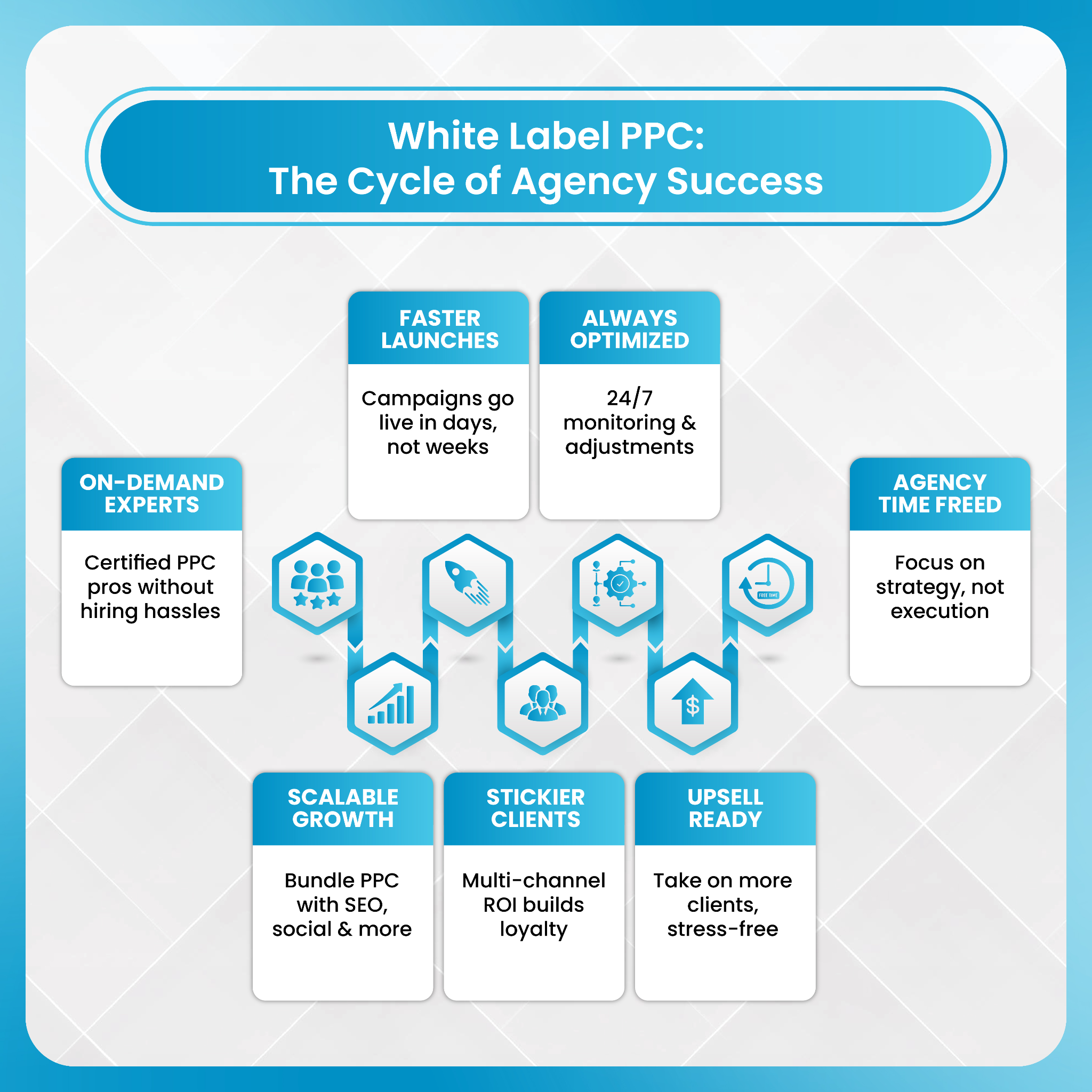
A strong white label PPC partner gives agencies access to specialized skills, faster testing cycles, more accurate tracking, and better reporting. Below are nine tactical capabilities that directly improve funnel results.
1. Full-Funnel Campaign Design
Strong PPC campaigns guide users from first touch to final conversion instead of treating every click the same. A well-built funnel assigns each campaign type to a clear role in the buyer journey. Discovery and YouTube work best for building awareness and introducing your offer to new audiences. Search and Shopping take over when people are actively comparing options and showing high intent. Remarketing steps in when someone is close to making a decision and just needs a final push.
When campaigns line up with user intent, budgets work harder, messaging feels more relevant, and conversion rates usually rise. A good partner will map out a full-funnel plan that outlines audience segments, creative direction, and budget recommendations for each stage so agencies can see exactly how the pieces fit together.
2. Rapid Creative and Copy Rotation
Creative fatigue can set in fast, especially on platforms with heavy impression volume. That’s why high-performing accounts rely on steady creative rotation. A strong partner should be able to produce and test 15 to 30 new ad variations each month for every funnel stage. This pace keeps campaigns fresh and drives steady improvement.
Regular rotation helps maintain healthy click-through rates, supports stronger quality scores, lowers CPCs, and often leads to better conversion performance. Ask for a creative testing log that shows when new ads were launched, how they performed, and which insights came from each round of testing.
3. Post-Click Optimization and CRO Support
A big share of lost conversions happens after the click, not in the ad itself. Landing pages that are slow, cluttered, or unclear make even the strongest campaigns struggle. A partner with dedicated conversion rate optimization expertise can help fix these issues before they hurt performance.
Support should include fast, conversion-focused landing page templates, personalization options that match user intent, structured A/B or multivariate testing, and form improvements that reduce friction. Even small gains in conversion rate add up. A lift of 5 to 15 percent on landing pages can sharply reduce CPA over time. A reliable partner will be able to show past CRO tests and the measurable improvements they produced.
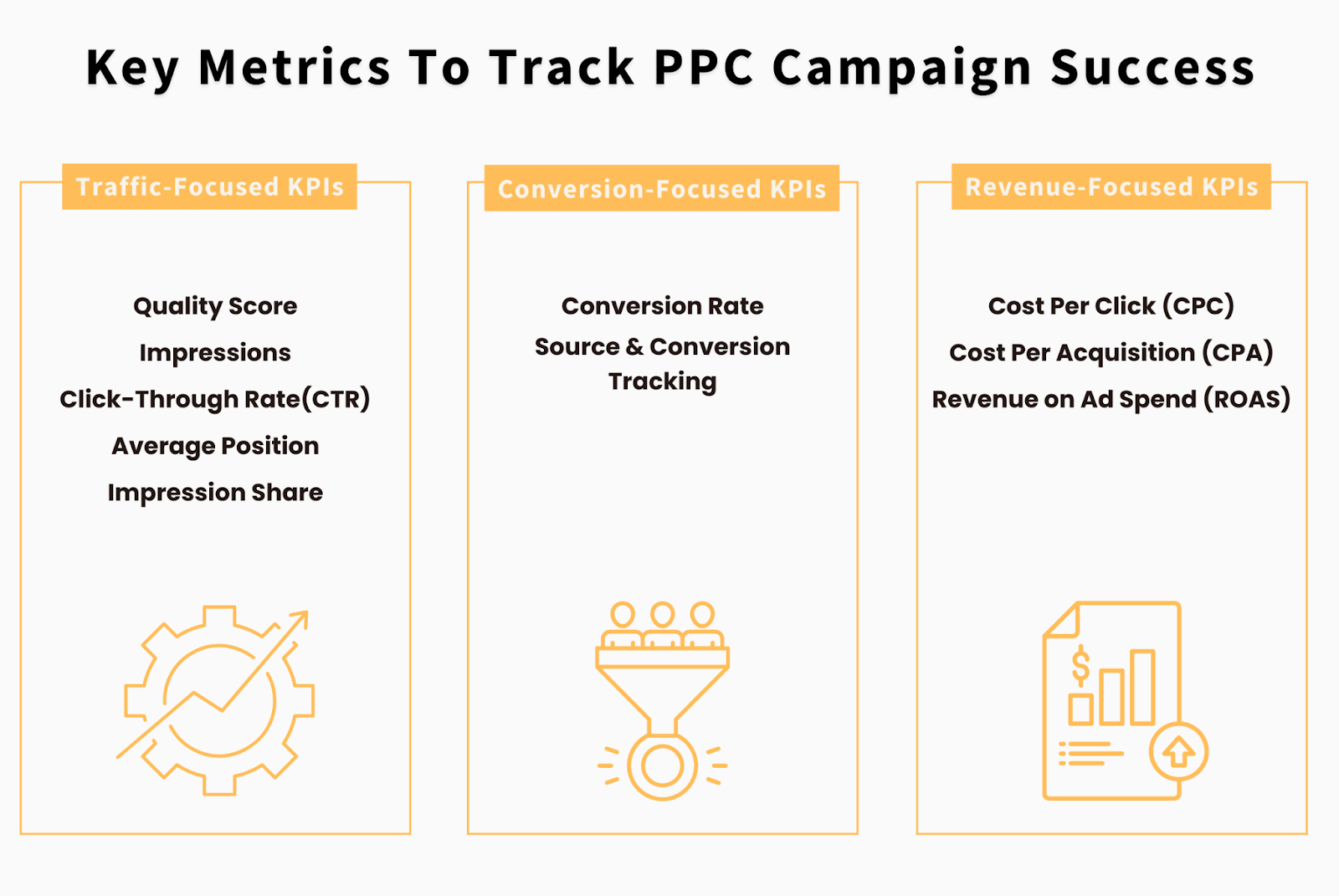
4. Advanced Measurement and Attribution
Accurate tracking is the foundation of effective PPC campaigns for agencies. A solid white label PPC partner should be able to manage server-side setups, build clean GA4 event architecture, configure conversion API integrations, and import CRM or offline conversions. They should also understand how to apply attribution modeling that reflects the full customer journey.
With the right measurement in place, agencies can focus on revenue-driving actions rather than surface-level numbers. A capable partner should be able to share a data architecture outline and a sample attribution model to show how each touchpoint is evaluated.
5. Audience Engineering and Remarketing Structures
Audience structure is one of the biggest levers for improving funnel performance. A strong partner will create layered audience stacks that include engagers, past converters, high-value lookalike groups, and structured sequential remarketing. These layers help connect the right message to the right user at the right time.
When audiences are aligned with intent, ROAS tends to rise naturally because every stage of the funnel becomes more efficient. A good partner should provide a clear target audience taxonomy and rules for how bids and budgets shift based on lifetime value or predicted intent.
6. Cross-Channel Media Coordination
Modern funnels rarely stay within one platform. Users move between search, social, video, and display, so messaging needs to stay consistent across all touchpoints. A reliable white label PPC partner will manage coordinated campaigns across Search, Performance Max, Discovery, YouTube, social retargeting, and Connected TV when it fits the strategy.
Cross-channel alignment shortens the path to purchase, strengthens brand recognition, and can even increase average order value. The goal is to guide users smoothly from first impression to final conversion, no matter where they interact with the brand.
Further Reading: Cross-Channel Marketing: What It Is, Major Benefits + How to Get Started
7. Programmatic Capability and Automation
Automation has become essential for keeping campaigns responsive. A strong partner knows how to use rules-based bidding, automated scripts, portfolio bidding, and programmatic placements to adjust quickly based on performance trends. These tools make campaigns more agile than manual changes alone.
With a proper automation framework, budgets shift toward winning segments faster, wasted spend drops, and overall efficiency improves. It’s reasonable to ask for an automation playbook that outlines how these systems are used and which indicators trigger adjustments.
8. Faster Experimentation and Regular Learning Cycles
High-performing accounts rely on steady testing. A white label PPC partner should run structured experiments each month and supply a testing calendar that shows what’s coming next. Each test should include a clear hypothesis, success benchmarks, and a summary of insights once results come in.
This steady learning cycle helps campaigns improve predictably instead of relying on guesswork. The more consistent the testing rhythm, the more reliable the long-term performance gains.
9. Reporting Built for Conversions
Reports should go beyond surface metrics and focus on what actually impacts revenue. That includes conversion paths, cohort-level CPA, lifetime value trends, incrementality testing, and lead quality indicators. These insights help agencies tell a clearer story about performance and guide better decision-making.
With reporting that highlights true business outcomes, agencies can build stronger client relationships and show a direct link between PPC efforts and growth.
Tactical Playbooks Agencies Can Use Immediately
Here are four quick playbooks agencies can implement with the support of a white label PPC partner.
1. Lower-Funnel CPA Rescue
Goal: Reduce acquisition costs
Tactics:
- Strong remarketing sequences
- Bidding focused on conversion value
- Dynamic search ads
Expected lift: Many accounts see CPA reductions between 15 and 35 percent within two months, depending on industry and volume.
2. Scaling Without Losing Lead or Sales Quality
Goal: Grow spend while maintaining ROAS
Tactics:
- Expand winning creative themes
- Build new lookalike audiences
- Use portfolio bidding strategies
- Run incrementality tests
Expected lift: Agencies often double budgets while stabilizing ROAS through improved targeting and cross-channel reinforcement.
3. Improving Lead Quality for Service Businesses
Goal: Reduce low-quality or unqualified leads
Tactics:
- Post-click form enrichment
- Lead scoring with CRM data
- Offline conversion uploads
- Negative keyword expansion
Expected lift: Higher qualified lead rates and better alignment between marketing and sales.
4. Increasing AOV and CLTV for Ecommerce
Goal: Raise transaction value and repeat purchases
Tactics:
- Bundled or tiered offers
- On-site personalization
- Post-purchase remarketing
- Cart recovery campaigns
Expected lift: Many ecommerce brands see an 8 to 20 percent uplift in average order value when combined with strong paid media and CRO.
Commercial and Operational Considerations for Agencies
Before partnering with a white label PPC services, agencies should think about operational details that protect client trust and preserve margins.
1. Pricing and Margins
Agencies typically choose between:
- Flat monthly retainer
- Percentage of ad spend
- Hybrid model
The right structure depends on client size, niche, and internal processes. Many resell white label PPC under a tiered package structure that includes CRO support and reporting.
2. Service Level Agreements and Workflow
A reliable partner will define:
- Turnaround times for creative and campaign updates
- Reporting schedules
- Escalation paths
- Quality standards
Clear SLAs prevent surprises and maintain consistency across accounts.
3. Data, Access, and Security
Agencies should ensure:
- Secure logins and access controls
- MCC-level management
- Compliance with privacy regulations
- Proper storage and handling of client data
These steps protect both the agency and its customers.
4. Packaging White Label PPC as a Value-Add
A well-designed white label PPC management program helps agencies offer more comprehensive services. Many bundle PPC with CRO, landing pages, analytics support, and content to create stronger recurring revenue.
How DashClicks Helps Agencies Improve Funnel Performance From Clicks to Conversions?
DashClicks provides white label PPC services designed to strengthen funnel performance across every stage, from awareness to decision. The platform combines strategy, execution, and reporting in one system so agencies can offer full-service PPC without hiring new staff. Agencies gain access to specialist teams who build campaigns aligned with user intent, optimize audiences and creative assets continuously, and monitor post-click behavior to improve conversion rates.
DashClicks integrates advanced tracking setups, conversion API support, and CRM connections so attribution remains accurate and transparent. The system also includes client-facing dashboards that highlight key insights such as CPA, ROAS, funnel movement, and lead quality.
With scalable white label support, agencies maintain full ownership of client communication and branding while relying on a dependable backend team to manage execution. This structure helps agencies deliver stronger results, shorten learning cycles, and keep clients satisfied with clear, measurable progress.
A Well-Rounded Ending That Brings It All Together
White label PPC gives agencies a practical way to turn clicks into measurable business outcomes. With rising costs and more complex user journeys, agencies need systems that cover creative testing, landing page optimization, accurate tracking, and smart reporting. A partner who delivers full-funnel planning, rapid experimentation, and consistent execution helps agencies maintain strong performance without expanding internal teams.
If you want support that improves conversion rates, stabilizes ROAS, and strengthens client retention, consider running a 90-day pilot with a trusted white label provider. It’s one of the simplest ways to evaluate real impact without major risk.


.svg)


.svg)
.svg)
.svg)
.svg)
.svg)