

.svg)

.svg)
.svg)
.svg)
.svg)
.svg)
Most PPC reports look impressive on paper. Clicks increase, impressions grow, and CTR improves. But local business owners often ask a different question: "How many customers actually came into my store because of these ads?" Traditional PPC metrics rarely provide that answer.
According to Google's How Mobile Search Connects Consumers to Stores study, 76% of people who search on their smartphone for something nearby visit a related business within a day, and 28% of those searches result in a purchase. This highlights why local businesses care more about store visits, calls, and appointments than clicks alone.
Google Ads is uniquely positioned to connect online searches with offline actions through features like location targeting, call assets, Google Maps placements, and store visit measurement. However, achieving these outcomes requires campaigns that are built and optimized around customer intent, not just traffic.
In this blog, you'll learn why local businesses need Google Ads beyond website traffic, which campaign types are most effective for driving store visits, how to structure campaigns for offline conversions, which metrics agencies should report, the common mistakes that limit local PPC success, and how white label Google Ads management helps agencies scale high-performing local campaigns without expanding internal teams.
Local PPC success is no longer measured by traffic alone. Agencies that connect advertising performance with real business outcomes create stronger client relationships, improve retention, and deliver greater long-term value.
Why Local Businesses Need Google Ads Beyond Website Traffic?
Click-based reporting made sense when websites were the final destination. For local businesses, the website is often just a waypoint. The real goal is a phone call, a store visit, a booked appointment, or a completed purchase. When agencies report only on traditional PPC metrics, they miss most of what actually matters to the client.
Consider an HVAC company running Google Ads. A campaign generating 800 clicks at a $2.50 CPC looks efficient. But if those clicks produced only three service call bookings, the campaign is underperforming regardless of what the dashboard shows. The business cares about booked jobs. Clicks do not pay the bills.
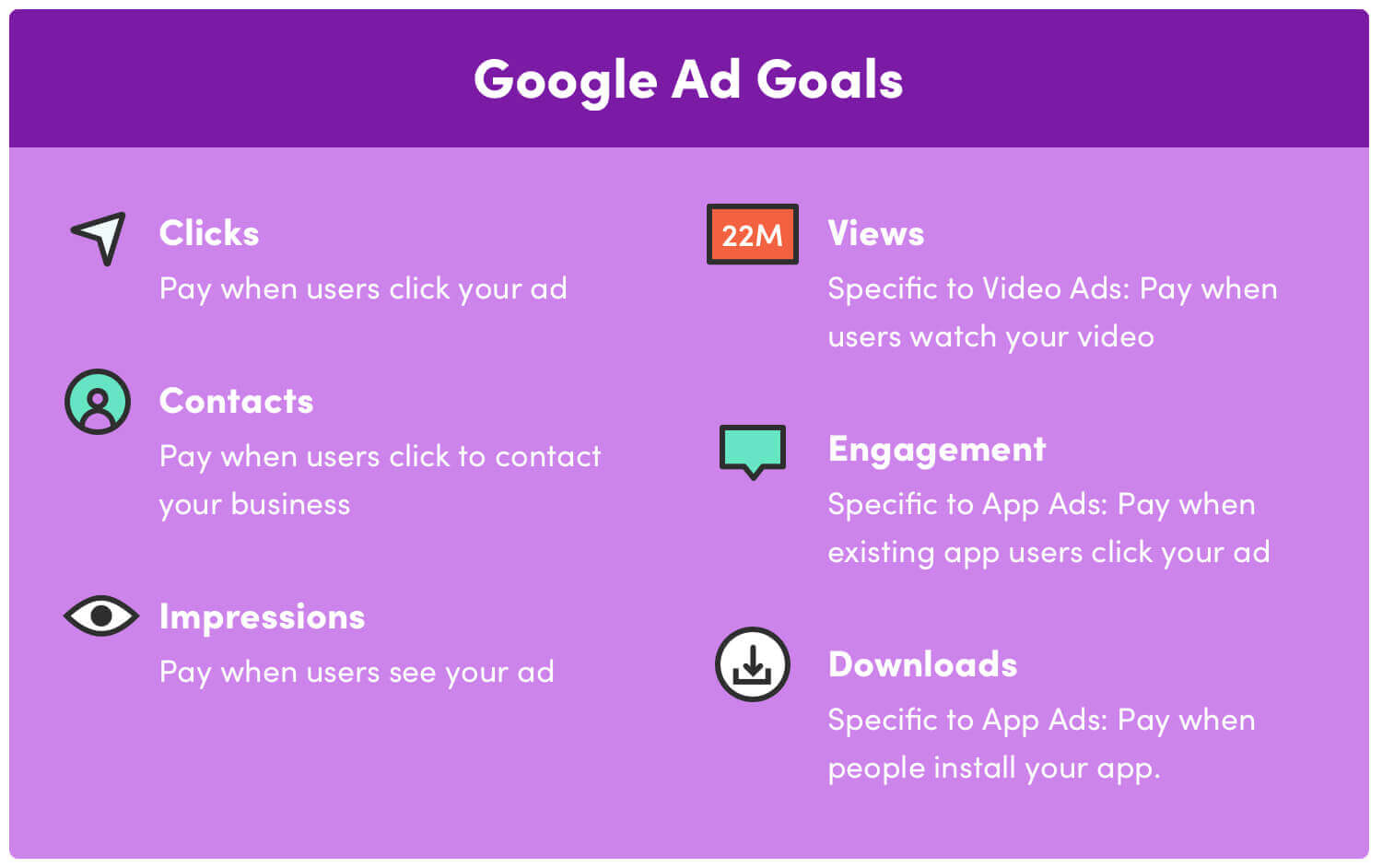
Image Source: Vital
The customer journey for a local business looks like this:
Search > Ad Click > Website or Call > Store Visit > Purchase
Every stage of that journey requires a specific optimization focus:
- Keyword Targeting: Capturing high-intent, local search queries.
- Ad Messaging: Communicating proximity, availability, and offers.
- Landing Pages: Delivering location-specific content and clear calls to action.
- Location Strategy: Ensuring ads appear where the audience is physically located.
- Conversion Tracking: Measuring actions that reflect real business outcomes.
Once agencies focus on the full customer journey instead of isolated click metrics, campaign selection becomes much more strategic. The right campaign type depends entirely on the offline action the business wants to drive.
The Google Ads Campaign Types Agencies Should Use to Drive Store Visits
Not every campaign type is equally effective at driving offline results. Agencies serving local businesses need to be selective and intentional about which formats they deploy, and why. Each Google Ads type plays a different role in connecting online searches with in-store activity.
1. Performance Max Campaigns
Performance Max (PMax) is Google's fully automated campaign type that runs across Search, Display, YouTube, Gmail, and Maps from a single campaign. For local businesses, PMax can be an effective tool for capturing audience intent across multiple touchpoints and driving store visit conversions.
PMax works best for:
- Multi-location retailers managing inventory across several stores.
- Restaurants running promotions or time-sensitive offers.
- Automotive businesses advertising services like oil changes or tire rotations.
- Healthcare practices promoting availability and appointment booking.
Running PMax campaigns effectively requires accurate conversion tracking, quality creative assets (images, headlines, descriptions, and video where possible), and strong business data fed through the Google Business Profile. Without these inputs, the algorithm has little signal to optimize against.
2. Local Search Campaign Strategies
High-intent local searches drive some of the strongest offline results in Google Ads. Queries like "coffee shop near me," "dentist open today," and "auto repair near me" signal immediate purchase intent. People searching these terms are usually ready to act, not just researching.
Optimizing for local search intent means prioritizing:
- Location Targeting: Radius-based targeting around the physical business location.
- Keyword Intent: Focusing on transactional, proximity-based queries.
- Call Assets: Making it easy to call directly from the search results page.
- Location Assets: Displaying the business address and linking to Google Maps.
These elements work together to lower the barrier between the search and the store visit. A shopper who sees your ad with an address, a phone number, and directions one tap away is far more likely to convert offline than one who has to navigate a generic website first.
3. Google Maps Visibility Through Location Assets
Google Business Profile integration is foundational to local PPC performance. When location assets are linked to a campaign, ads can appear directly within Google Maps, showing the business name, address, and distance from the searcher.
This placement captures navigational intent at the moment of decision. A user searching for a hardware store while they are already out running errands is not browsing. They are choosing. Appearing in that Maps result with directions one tap away is a direct driver of store visits.
Store visit measurement also depends on this setup. Google uses anonymized, aggregated signals from users who have location history enabled to estimate how many ad-attributed searches resulted in a physical store visit.
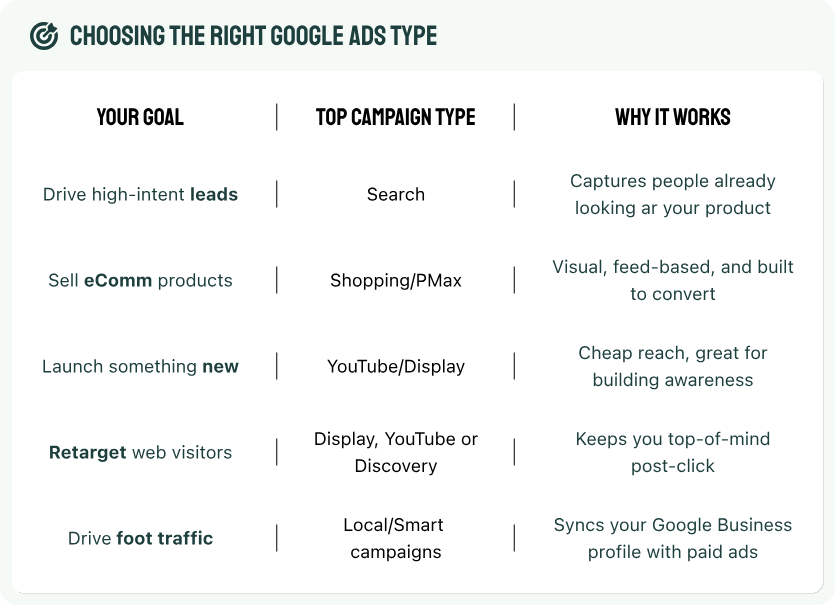
Image Source: Hitprobe
Selecting the right campaign type is only the beginning. How a campaign is structured ultimately determines how effectively it converts local intent into real store visits.
Further Reading: What Are the 22 Types of Google Ads (+ When & How to Use Them)
How Agencies Should Structure Google Ads Campaigns for Store Visit Optimization?
Campaign structure is where many local PPC campaigns fall apart. Grouping all keywords into a single campaign or using broad targeting without intent segmentation produces inconsistent results and makes optimization difficult. Structuring campaigns around customer intent solves both problems.
1. Build Campaigns Around Intent
A restaurant is a useful example. Rather than running one broad campaign covering every possible search term, a well-structured account separates intent into distinct campaigns:
- Campaign 1: Near me searches ("Italian restaurant near me," "dinner near me tonight")
- Campaign 2: Brand searches (the restaurant's own name and variations)
- Campaign 3: Competitor searches (capturing users searching for nearby alternatives)
- Campaign 4: High-value services ("private dining," "catering," "birthday dinner reservations")
Each campaign targets a different stage of decision-making and warrants different messaging, bidding strategies, and conversion goals. Mixing these intent layers into a single campaign makes it impossible to optimize each one effectively.
2. Prioritize High-Intent Keywords
Certain keyword modifiers consistently produce stronger offline results. These include:
- Near me searches that signal proximity as the primary deciding factor.
- Open now searches that indicate urgency and readiness to visit.
- Buy today or same-day keywords that suggest immediate purchase intent.
- City-specific searches that include the neighborhood, suburb, or city name.
These keywords typically convert at higher rates and generate more direct store visits than broader awareness-oriented queries. Prioritizing them in bidding and budget allocation concentrates spending where offline results are most likely.
3. Write Ads That Encourage Offline Action
Ad copy is one of the most underused levers in local PPC optimization. Many agencies write ads that describe the business but do not prompt the offline action the client needs.
Compare these two headline approaches for a furniture retailer:
Weaker approach:
- Affordable Furniture Store
Stronger approach:
- Visit Our Showroom Today
- Open Until 9 PM
- Same-Day Pickup Available
- Free In-Store Consultation
The second set of ads bridges online intent with offline action. They answer practical questions (hours, availability, what to expect) and give the searcher a concrete reason to visit rather than just browse. Every headline is an opportunity to reduce friction between the search and the store.
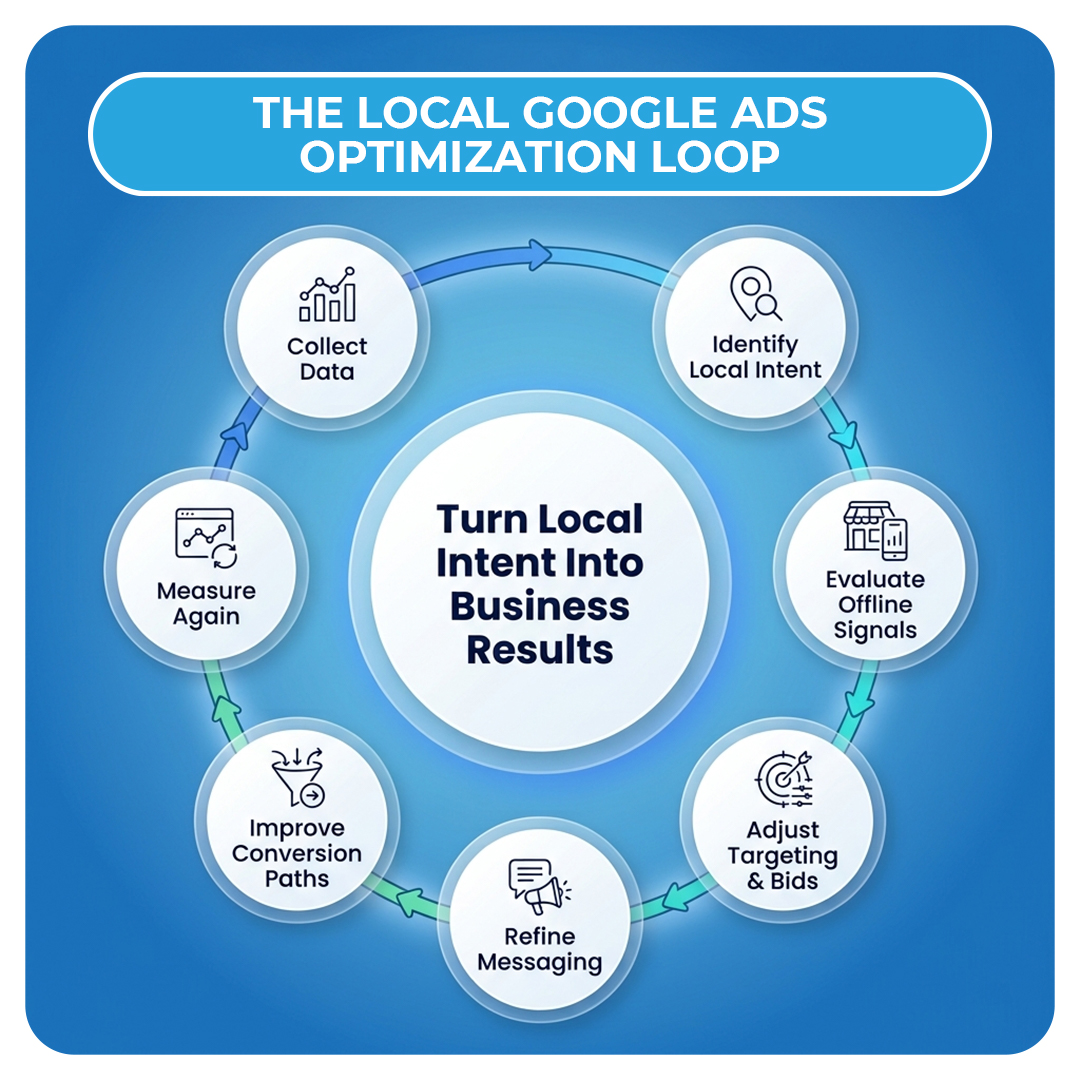
Strong campaign structures need equally strong reporting to demonstrate the business impact agencies are delivering.
Measuring Store Visit Performance: Metrics Agencies Should Report
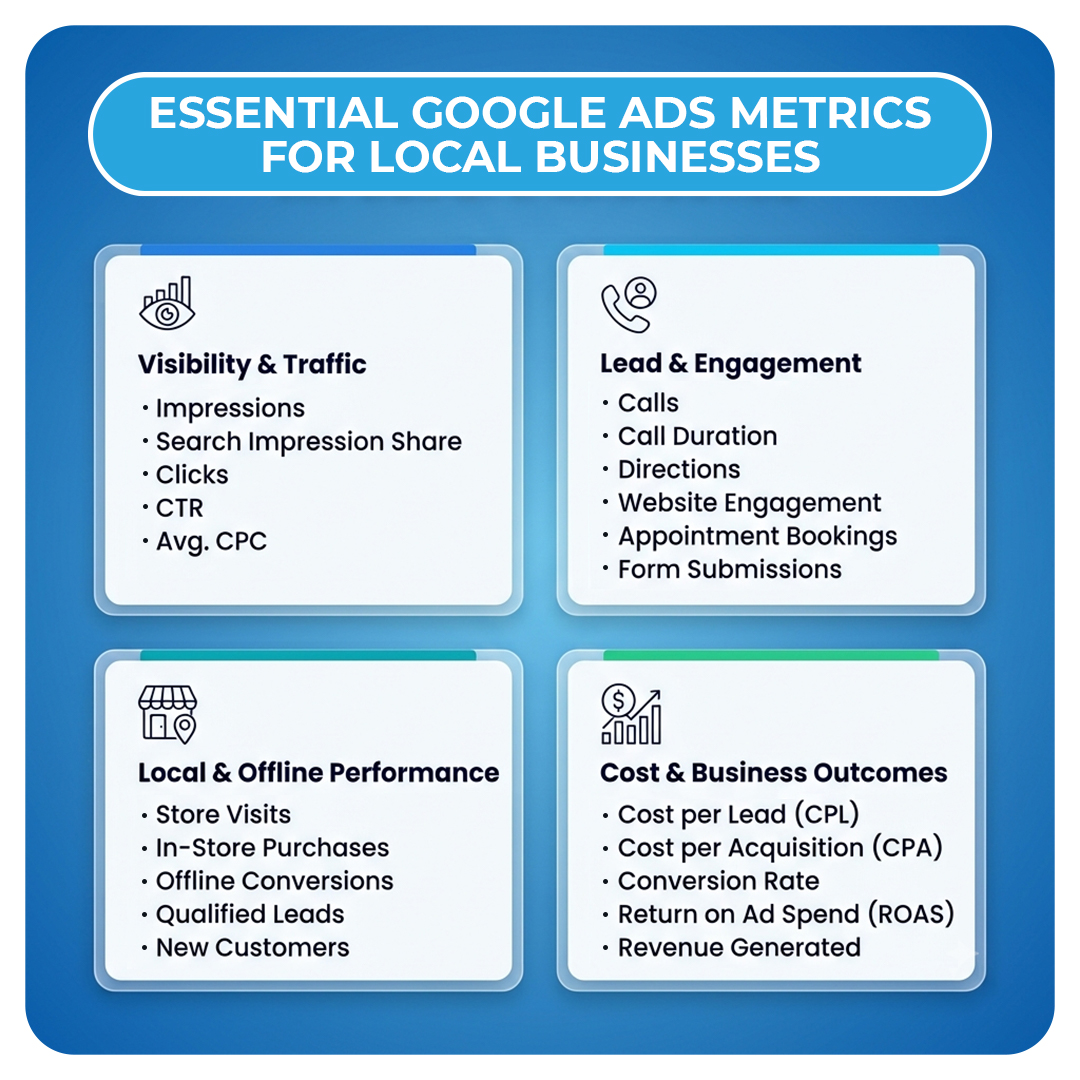
Reporting on local PPC campaigns requires a different mindset than traditional digital reporting. The goal is to show clients how advertising contributed to real business outcomes, not just digital activity.
1. Store Visits
Google's Store Visit Conversions feature estimates how many users clicked on an ad and then visited the physical location. This metric relies on aggregated, anonymized location data from users who have opted into location history. Eligibility requires sufficient campaign volume and location data to produce statistically reliable estimates.
Agencies should use store visit data for trend analysis rather than treating each number as an exact count. Directional movement over time is the meaningful signal.
2. Calls Generated
Call assets within Google Ads allow users to call the business directly from the search results page. Google's call reporting tracks the number of calls generated, call duration, and whether calls resulted in connections. These metrics help agencies assess lead quality beyond raw call volume.
Longer call durations often indicate more qualified conversations. Tracking which keywords and ad groups generate the most calls helps with ongoing PPC optimization.
3. Directions Requests
When users click a location asset to get directions to a business, that action indicates strong purchase intent. Someone requesting directions is not casually browsing. They have decided to visit, or are very close to that decision. Tracking directions requests alongside store visits gives agencies a fuller picture of offline engagement.
4. Conversion Actions
Beyond calls and visits, local campaigns should track:
- Appointment bookings through integrated scheduling tools.
- Form submissions for quote requests or consultations.
- Purchases tracked through offline conversion imports or point-of-sale integrations.
5. Attribution Limitations
Store visit data is modeled and aggregated. It reflects estimated behavior across a population of users rather than individual-level tracking. Agencies should communicate this clearly to clients and frame PPC reporting around trends and directional performance improvements rather than precise figures.
Google states that advertisers using Store Visit Conversions gain a better understanding of how online advertising influences offline customer actions.
Even with accurate tracking in place, agencies can undermine campaign performance through a handful of common and avoidable mistakes.
Common Google Ads Mistakes That Prevent More Store Visits
Local PPC campaigns fail in predictable ways. Understanding these mistakes helps agencies avoid them during setup and catch them during ongoing campaign optimization.
1. Optimizing for Cheap Clicks
Low cost-per-click is not a success metric for local businesses. A campaign generating 500 clicks at $1.00 each looks budget-efficient. But if those clicks came from low-intent queries with no connection to the local area or the service offered, that $500 produced nothing of value.
Optimizing purely for cheap clicks often means targeting broad, low-competition keywords that attract the wrong audience. A plumbing company in Chicago does not benefit from clicks generated by users in another city or by people researching plumbing DIY content. A budget spent on unqualified traffic is a budget not spent on customers who would actually call.
2. Ignoring Google Business Profile
Google Ads and Google Business Profile work together. A poorly maintained Business Profile undermines even well-structured campaigns. Issues that damage local ad performance include:
- Incorrect or outdated business hours
- Missing or low-quality photos
- Few or unresponded-to reviews
- Inaccurate address information
- Missing service descriptions or categories
Before running local PPC campaigns, agencies should audit and optimize the client's Google Business Profile. Location assets pull data directly from the Profile, so errors there surface in the ads themselves.
3. Sending Traffic to Generic Landing Pages
Sending local search traffic to a generic homepage is one of the most common campaign performance killers. A user searching for "emergency plumber Austin" clicks an ad and lands on a homepage with no mention of Austin, no phone number above the fold, and no way to book quickly. That user bounces.
Local PPC landing pages should include:
- Location-specific content that confirms relevance
- A prominent phone number and click-to-call functionality
- An appointment booking form or clear next step
- Business hours and address
The more directly the PPC landing page answers the searcher's intent, the more likely that click converts into a call or store visit.
4. Reporting Activity Instead of Business Results
Reporting clicks, impressions, and CTR to a local business owner is not enough. It may satisfy a monthly reporting requirement, but it does not demonstrate value. Clients who do not understand the business impact of their campaigns are more likely to reduce budgets or cancel.
Agencies should shift reporting to include:
- Calls generated and estimated lead quality
- Directions requests and store visit trends
- Appointment bookings and form submissions
- Revenue opportunities tied to tracked conversions
Framing results in business language rather than PPC jargon builds client trust and makes retention conversations easier.
Avoiding these mistakes becomes significantly easier when fulfillment is driven by standardized operational systems built for local PPC at scale.
How Does White Label Google Ads Help Agencies Scale Campaigns?
Growing a local PPC offering through in-house hiring is expensive and slow. Finding experienced PPC specialists, training them on local campaign best practices, and building consistent processes across a growing client base takes time that most agencies do not have. White label Google Ads management offers a faster path to scalable, high-quality fulfillment.
1. Access to PPC Specialists
When agencies partner with a white label provider, they gain access to experienced PPC professionals without adding headcount. This means agencies can sell local PPC services with confidence, knowing that campaign setup and optimization are handled by specialists. Client ownership stays with the agency. The partner works behind the scenes.
2. Consistent Campaign Setup
A structured white label fulfillment process covers every component of a well-built local campaign:
- Keyword research focused on high-intent, location-specific queries
- Campaign builds organized around customer intent
- Audience targeting using location radius and demographic filters
- Bid optimization aligned with offline conversion goals
- Negative keyword management to eliminate wasted spend
- Conversion tracking setup for calls, forms, and store visits
Consistency across these elements is what separates campaigns that produce results from those that simply run.
3. Better Reporting
A white label Google Ads provider typically deliver reporting that goes beyond raw performance data. Agencies receive performance explanations, optimization updates, and business-focused summaries they can share directly with clients. This kind of reporting makes client communication easier and helps retain accounts through clearer demonstration of value.
4. Scale Across More Clients
As an agency grows its local PPC client base, operational capacity becomes the limiting factor. White label fulfillment removes that constraint by providing:
- Standardized campaign workflows that reduce setup time
- Faster client onboarding without sacrificing quality
- Consistent performance quality across every account
- Greater capacity to take on new business without proportional cost increases
Structured fulfillment lets agencies focus on selling, strategizing, and building client relationships while campaign execution runs reliably in the background.
How DashClicks Helps Agencies Deliver White Label Google Ads Campaigns?
DashClicks provides white label Google Ads management built specifically for agencies that want to deliver measurable local results without managing campaign execution in-house.
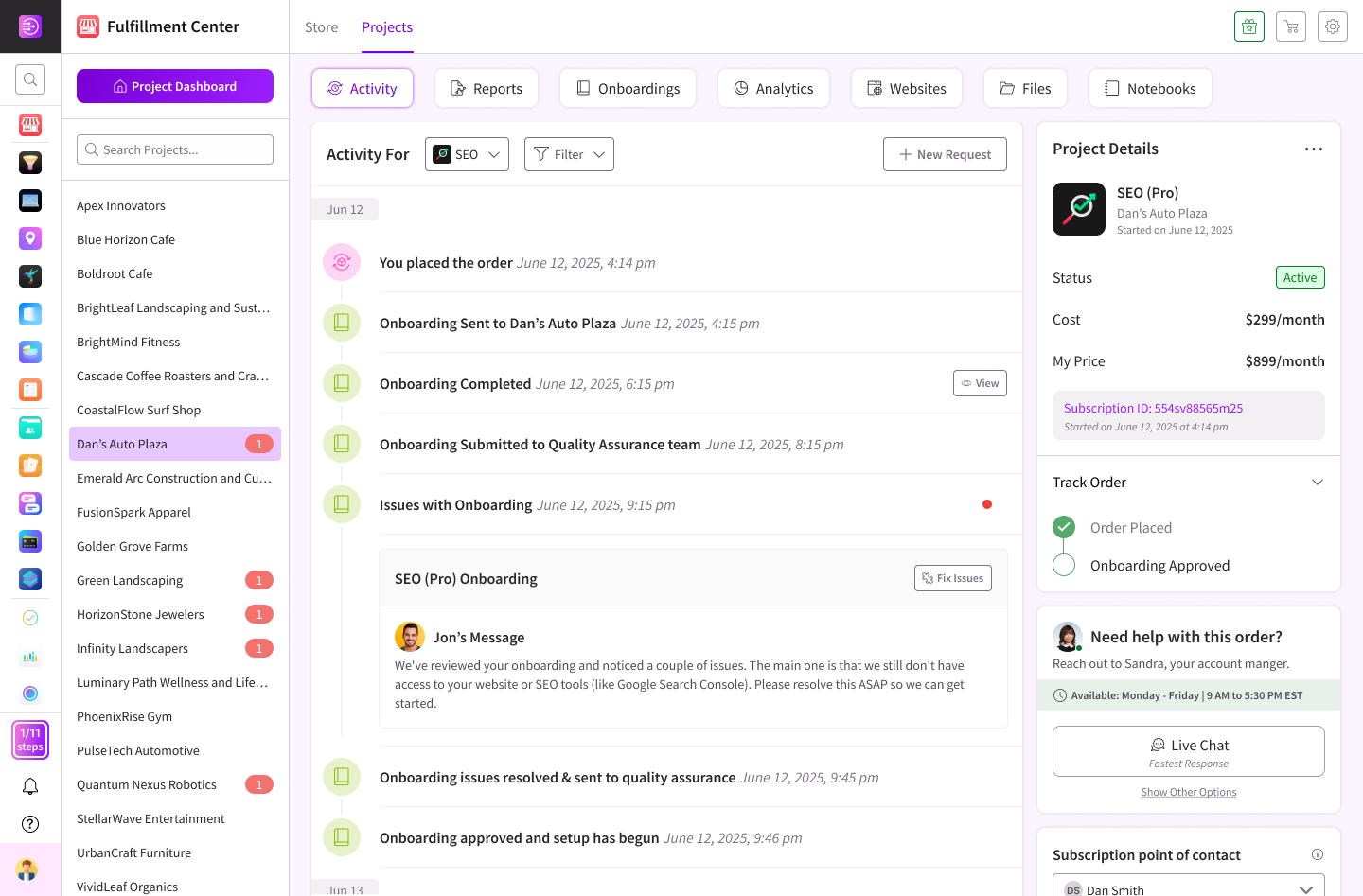
1. Google Ads Campaign Fulfillment
The team handles the full campaign lifecycle for agency clients. This includes initial strategy development, campaign setup, ongoing optimization, and continuous monitoring. Every campaign is built around the client's actual business goals, whether that means driving phone calls, increasing store visits, or generating appointment bookings.
2. Conversion Tracking and Reporting
Tracking offline results requires careful setup. The platform configures conversion tracking for calls, location asset interactions, form submissions, and store visit reporting where eligible. Agencies receive clear visibility into the KPIs that matter most to their clients, along with client-ready reporting that communicates results in business terms rather than platform metrics.
3. Scalable Fulfillment
The team manages recurring campaign fulfillment so agencies can keep their focus on the areas that drive business growth:
Agencies continue to own:
- Client relationships and communication
- Sales and new business development
- Strategy and account direction
- Growth planning
DashClicks manages:
- Campaign builds and optimization
- Performance monitoring and adjustments
- Reporting and fulfillment documentation
With structured fulfillment supporting every campaign, agencies can consistently connect digital advertising with measurable offline business growth.
Turning Local Searches Into Real Business Outcomes
Local businesses need customers, not clicks. Measuring Google Ads performance against store visits, calls, appointment bookings, and in-store purchases is not optional for agencies that want to deliver genuine value. It is the standard.
Campaigns optimized around offline outcomes require deliberate strategy at every level: the right campaign types, intent-based campaign structures, ad copy that drives action, and reporting that speaks the client's language. These are not complex concepts, but they do require operational discipline and consistent execution.
White label Google Ads management helps agencies deliver that consistency at scale. Rather than stretching internal resources or compromising on campaign quality, agencies can fulfill local PPC campaigns through experienced specialists while maintaining full client ownership and growing their book of business.
Agencies that connect digital advertising with real-world business results will build stronger client relationships, higher retention rates, and a more sustainable competitive position. The opportunity is clear. The infrastructure to act on it is available.


.svg)


.svg)
.svg)
.svg)
.svg)
.svg)