

.svg)

.svg)
.svg)
.svg)
.svg)
.svg)
The modern agency problem is no longer about finding clients. Agencies can often sell services much faster than they can fulfill them. Despite rising competition, Facebook Ads remain one of the fastest client acquisition channels available today. We are seeing a massive shift in the industry. Agency owners are moving away from building large internal teams and focusing instead on building scalable delivery systems. This is why many leaders are introducing white label Facebook advertising as a core growth infrastructure instead of treating it as mere outsourcing support. The reach of the platform continues to expand. Meta ads can now reach approximately 2.28 billion users globally.
The sheer scale of the network means the demand for Facebook ad services continues growing steadily. Furthermore, average Facebook Ads CTR for traffic campaigns increased to 1.71% in 2025, up from 1.57% in 2024.
This continuous engagement growth proves that effective campaigns still capture consumer attention. Additionally, 82% of Facebook advertisers are now using Meta’s Advantage+ AI automation tools.
Because of these platform automation changes, navigating the ecosystem requires highly refined execution systems. Agencies are not struggling to find demand. They are struggling to operationalize fulfillment at the speed modern clients expect.
The Hidden Agency Growth Ceiling: Fulfillment Capacity
Why Agencies Lose Momentum After Initial Growth?
Many agencies see rapid client growth early on, but that momentum often stalls when fulfillment cannot keep up. Onboarding delays are usually the first issue. New clients expect quick action after signing, and a slow setup can weaken trust from the start.
Hiring adds more pressure. Finding skilled media buyers takes time, pulls attention away from business development, and creates campaign launch delays. If the agency depends on a few key specialists, one overloaded or unavailable media buyer can disrupt the entire pipeline.
This often leads to founder burnout. Instead of focusing on growth, agency owners get pulled into daily campaign work to protect the agency-client relationship. The real issue is that human resources do not scale as easily as client demand. Once capacity is maxed out, growth slows.
The “Sales-to-Service Gap” Killing Client Acquisition
The sales-to-service gap happens when agencies close new clients faster than campaigns can launch. A strong sales team may bring in ten clients in a month, but if the fulfillment team can only launch three campaigns, a backlog builds fast.
Modern clients expect launch timelines in days, not weeks. When delays happen, churn risk starts before campaigns even go live. A client waiting weeks for a Facebook ad campaign may begin questioning the agency’s competence.
Speed-to-launch directly affects retention and referrals. A fast launch builds confidence. A slow launch creates doubt. For agencies trying to scale, closing this gap is essential.
Why In-House Facebook Ad Teams Become Expensive Too Quickly?
Building an in-house media buying team may seem logical, but costs rise fast. Experienced media buyers, ad tools, analytics software, and creative platforms can quickly reduce agency margins.
Management overhead also grows. Founders need to review campaigns, manage performance meetings, and handle training. Since Meta changes frequently, teams must keep relearning platform updates.
Agencies may hire junior buyers to control costs, but that can lead to inconsistent performance and costly mistakes with client ad spend. The result is higher risk, lower margins, and less cash available for growth.
The real scalability problem is not lead generation. It is operational latency.

This is where white label Facebook advertising changes agency economics entirely.
How White Label Facebook Ads Compress Client Onboarding Time?
Instant Access to Experienced Media Buyers
One immediate benefit of white label Facebook advertising is direct access to experienced media buyers. Agencies avoid long recruitment cycles, interviews, training, and hiring delays. The talent is already sourced, vetted, and ready to manage campaigns.
This gives agencies launch-ready specialists from day one. They know how to structure ad accounts, request access permissions, process creative assets, and move campaigns into setup without unnecessary back-and-forth. As a result, agencies expand fulfillment capacity quickly while staying focused on client relationships.
Standardized SOPs Reduce Delivery Friction
Fulfillment delays often happen when agencies lack clear operating procedures. White label teams reduce this friction through proven onboarding systems built from repeated campaign execution.
Their workflows usually include early ad account audits, policy checks, pixel setup, tracking validation, and audience research frameworks. These steps prevent reporting errors and speed up campaign activation. When every setup task follows a defined process, clients move from contract signing to active campaign delivery much faster.
Faster Launches Create Psychological Client Confidence
New clients want reassurance after signing. A fast launch helps validate their decision and builds early confidence in the agency. When ads go live quickly and initial traffic or leads begin appearing, client anxiety drops.
Traditional in-house onboarding can take 2 to 4 weeks because of internal bottlenecks. White label launch timelines can often reduce this to 3 to 5 business days. This faster activation makes clients feel prioritized instead of stuck in a queue.
Speed alone is not enough. Agencies also need campaigns that can perform in increasingly competitive ad auctions.
Why White Label Teams Often Launch Higher-Converting Campaigns Faster?
Specialized Teams See More Data Across Industries
The best white label Facebook ads teams have broader visibility across industries than most in-house media buyers. While an internal buyer may manage a handful of accounts, a white label team often works across hundreds of campaigns.
This gives them a stronger cross-industry learning advantage. They can spot winning patterns faster, adapt proven strategies from one niche to another, and identify early signals of a high-performing ad set. Shared campaign intelligence improves testing, optimization, and campaign quality across every account.
White Label Providers Already Understand Meta’s AI-Driven Ecosystem
Meta advertising now relies heavily on AI and machine learning. Advantage+ campaigns have changed how media buyers structure, test, and optimize campaigns.
White label providers usually adapt faster because they monitor larger campaign ecosystems. They understand creative diversification, broad targeting, first-party data, and conversion signal quality. Since AI now handles more targeting, creative variety becomes a major performance driver.
They can also test new Meta features earlier and observe how algorithm updates affect different accounts. This helps agencies avoid guesswork and launch with stronger campaign structures.
Faster Creative Iteration = Faster Performance Gains
Stagnant ads are the enemy of profitable campaigns. Agencies often fail because creative refresh cycles happen too slowly. When an internal team is bogged down by administrative tasks, they rarely have the time to produce and test new ad variations efficiently. Modern Meta campaigns require constant testing velocity. If you are not testing new angles, copy, and visuals weekly, ad fatigue will destroy your return on ad spend.
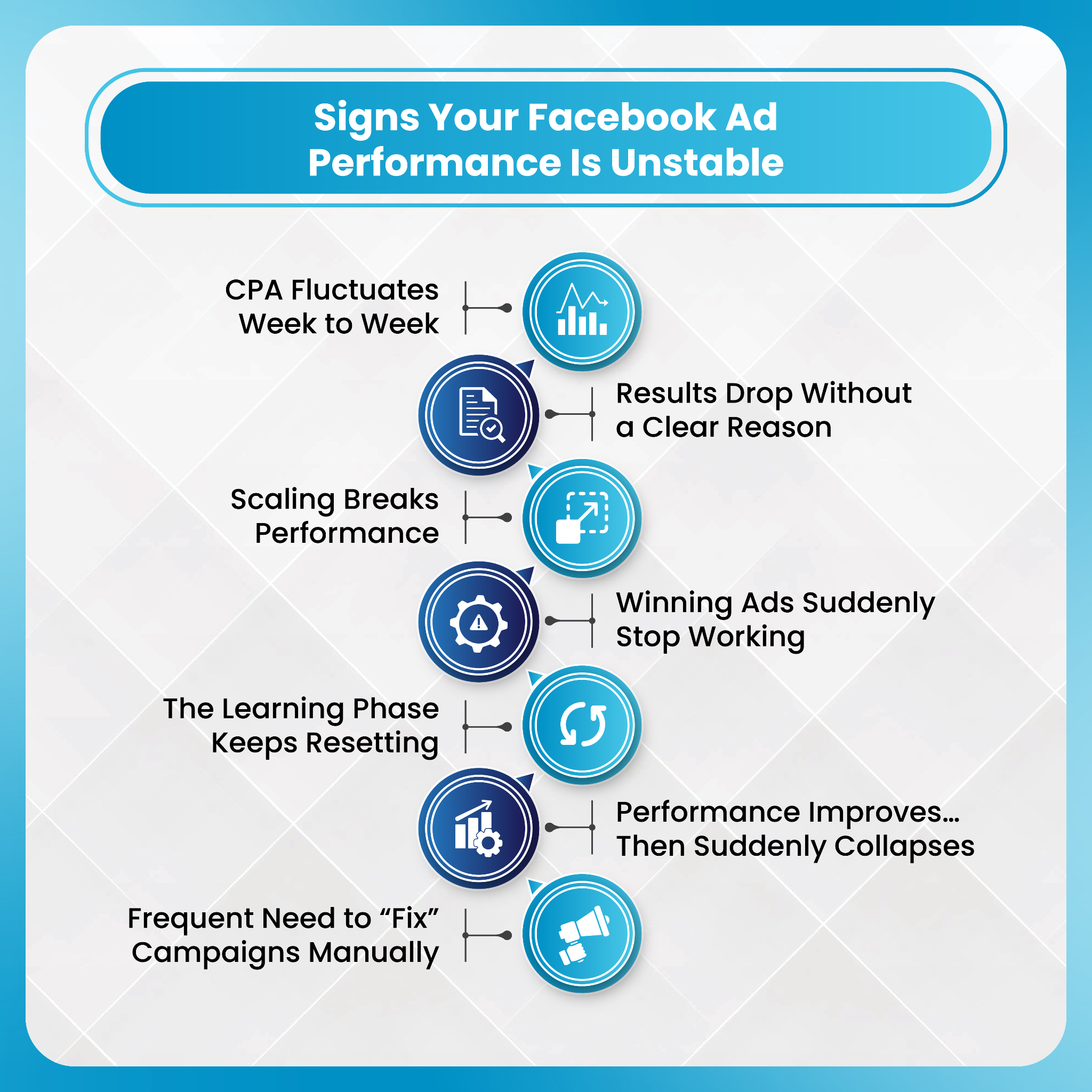
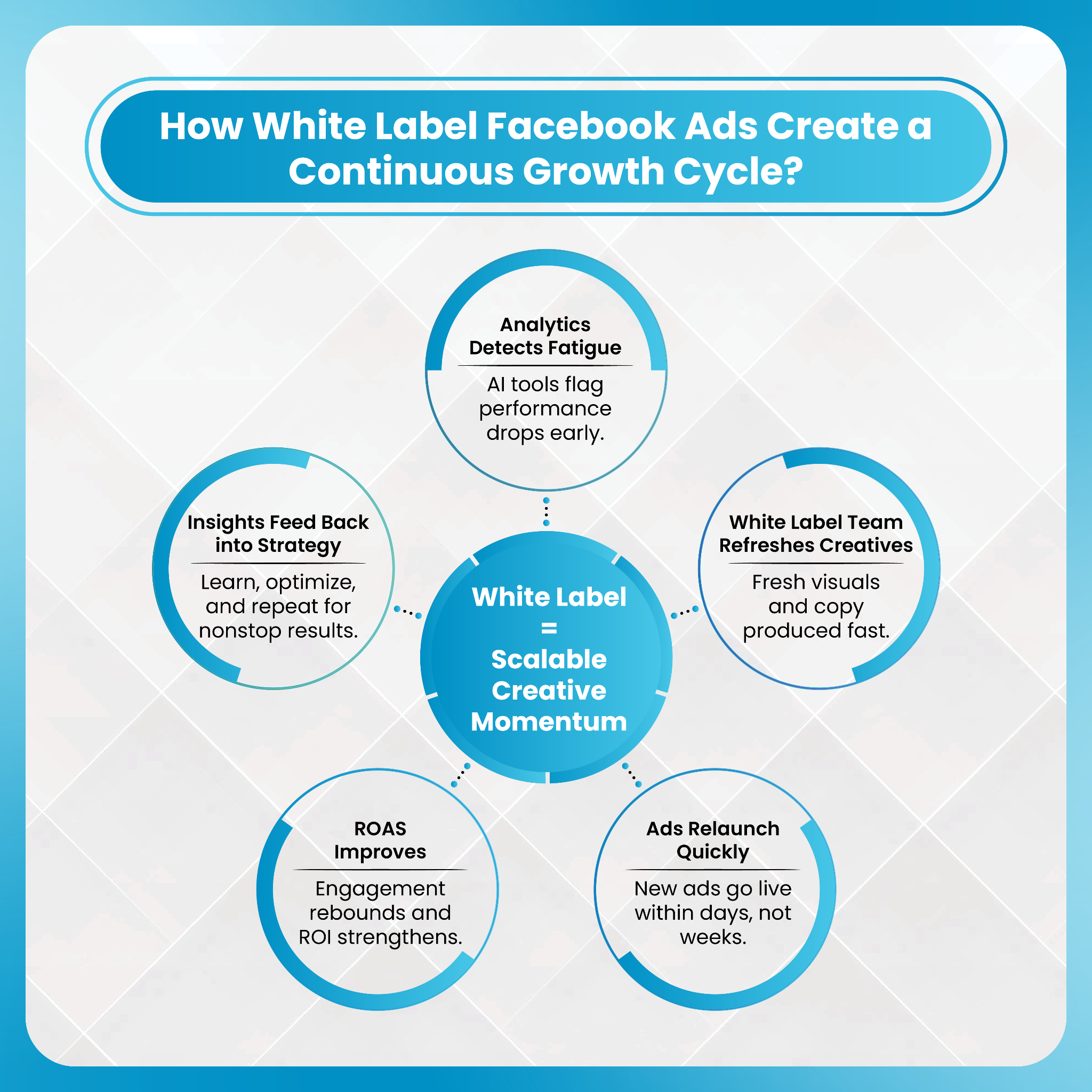
White label teams are structured specifically to handle high-volume testing. Meta’s AI ad improvements increased Facebook ad clicks by 3.5% and Instagram conversions by over 1%.
This improvement highlights that when you provide the platform with fresh, high-quality creatives rapidly, the algorithm rewards you with better engagement. White label partners have the streamlined workflows necessary to swap out underperforming assets without missing a beat. They analyze the data, kill the losing ads, and scale the winners seamlessly.
The best-performing agencies no longer treat Facebook Ads as media buying. They treat it as a creative testing engine.
When agencies consistently launch campaigns quickly and efficiently, client acquisition becomes significantly easier.
Using White Label Facebook Ads as a Client Acquisition Weapon
Agencies Can Sell Facebook Ads Without Operational Fear
Sales teams perform better when they trust the service they are selling. With a reliable backend partner, agencies can sell Facebook ad services without worrying about fulfillment capacity.
This gives sales teams stronger proposal confidence. They can pitch larger accounts, promise structured campaign delivery, and support bigger retainers without wondering if the internal team can handle the workload. For founders, it also removes the pressure of hiring quickly whenever a large deal closes.
Operational confidence improves sales effectiveness. When the agency knows delivery will happen on time, closing new clients becomes easier.
Faster Fulfillment Improves Sales Velocity
Faster fulfillment shortens the gap between deal closing and campaign launch. This helps agencies recognize revenue faster, improve cash flow, and create a smoother client experience.
Quick execution can also generate faster wins, stronger referrals, and better case studies. During sales calls, agencies can confidently mention faster launch timelines, which helps reduce prospect hesitation.
This creates a stronger growth loop. Fast launches lead to early results, early results support case studies, and case studies help bring in new clients.
White Label Support Enables “Capability Expansion”
White label support allows agencies to expand services without building new departments. For example, an SEO agency can start offering Facebook Ads without hiring media buyers or learning Meta campaign management from scratch.
This helps smaller agencies sell broader, higher-value marketing packages and compete with larger firms. Clients often prefer working with fewer vendors, so adding reliable Facebook Ads support can also improve retention.
White label Facebook ads fulfillment allows small agencies to appear operationally mature long before they build that maturity in-house.
But acquisition means little if agencies cannot retain clients profitably.
How Outsourced Facebook Fulfillment Improves Client Retention?
1. Consistency Beats Occasional Wins
In agency-client relationships, consistency matters more than one-time spikes. A viral campaign may create short-term excitement, but unpredictable results over the next few months can still lead to churn.
Clients need predictable reporting, steady optimization, and reliable performance patterns to forecast their own revenue.
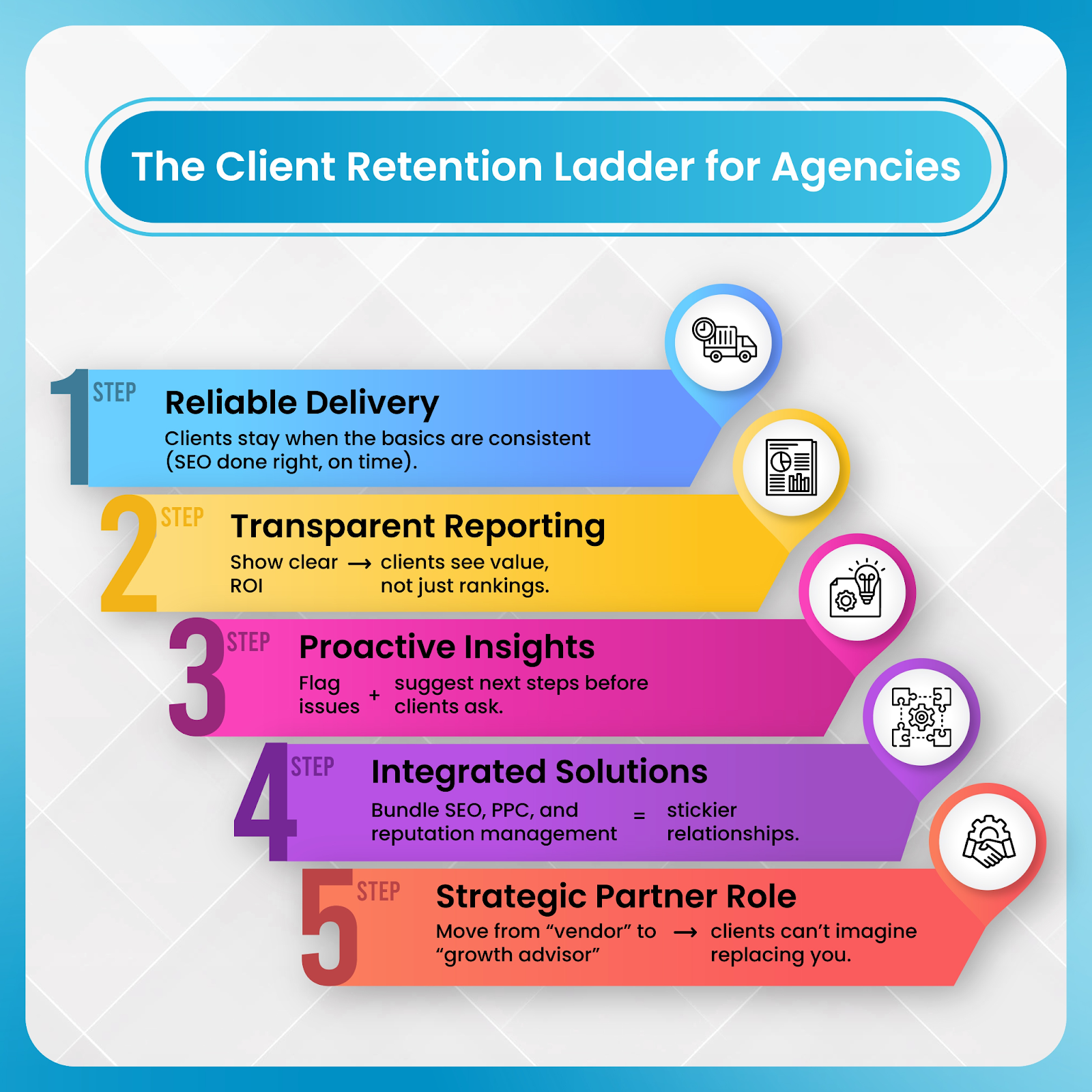
White label teams support this through daily account checks, structured bid adjustments, creative updates, and clear optimization schedules.
This steady approach builds trust. When clients know what baseline results to expect each month, they are less likely to look for another marketing partner.
2. Better Reporting Improves Client Trust
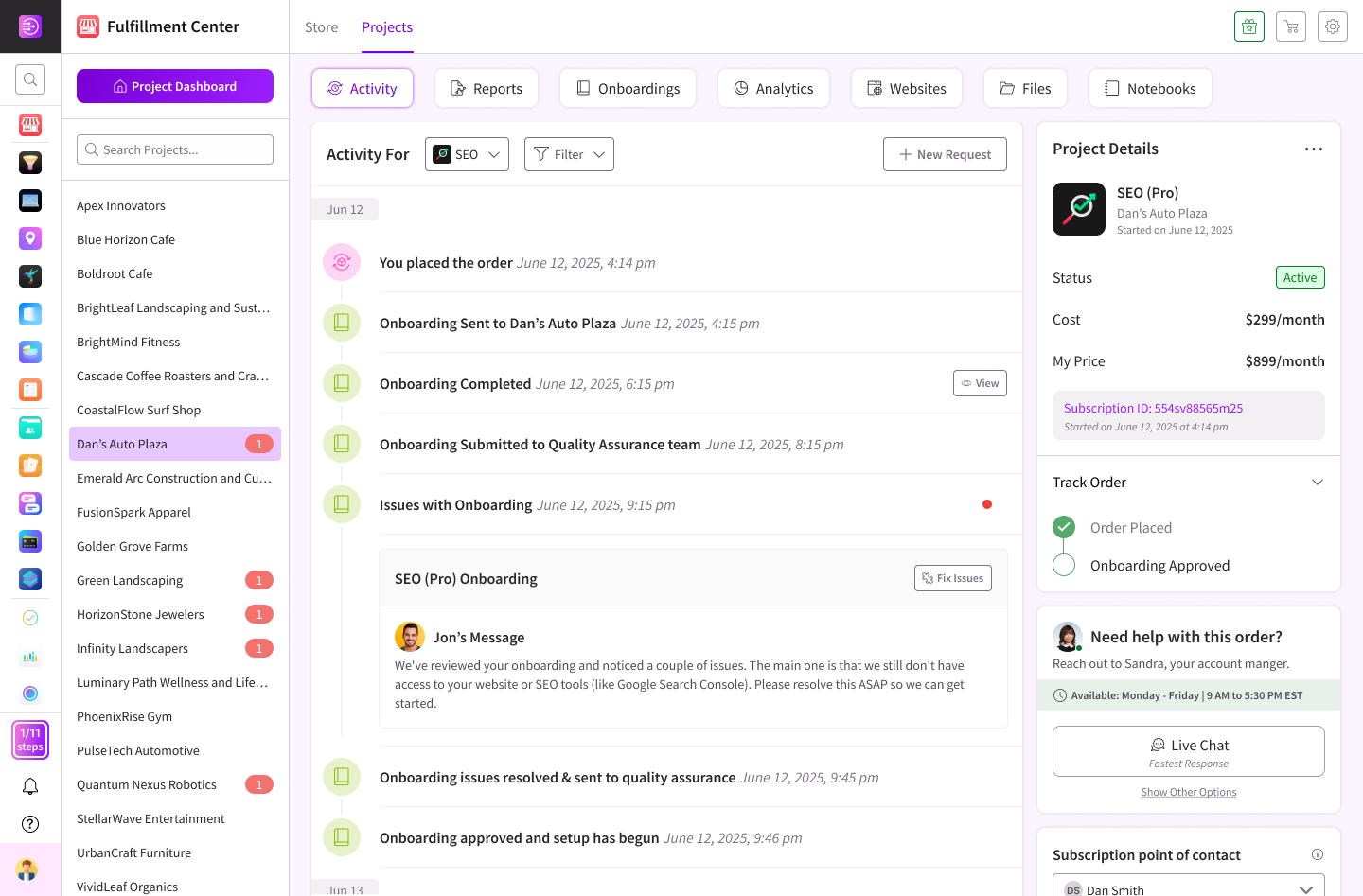
Better reporting gives clients visibility into how their ad budget is being used. Instead of spending hours on manual reports, agencies can rely on DashClicks’ white label client dashboard that shows campaign performance clearly.
This improves optimization transparency. Clients can see when budgets shift, weak ads are paused, and stronger campaigns receive more spend. It moves the conversation beyond vanity metrics and toward cost per acquisition, customer lifetime value, and revenue impact.
When clients understand the numbers and see ongoing effort, they feel more confident in the agency.
3. Reduced Founder Overload Improves Client Experience
A founder buried in fulfillment cannot deliver a premium client experience. Outsourced Facebook fulfillment removes daily media buying tasks from the founder’s plate.
This gives founders more time for client relationships, strategy calls, upsell conversations, and long-term planning. Instead of fixing ad disapprovals or tracking errors, they can focus on acting as a strategic marketing partner.
Better strategic attention improves retention and profitability. Keeping clients longer creates far more stability than constantly replacing churned accounts.
Client retention creates stability, but scalability requires agencies to expand into more competitive niches confidently.
Scaling Into Competitive Niches Without Building an Internal Media Department
Why Niche Expansion Usually Breaks Small Agencies?
As agencies grow, they often need to move beyond their original niche. This is where many small agencies struggle. Strategies that work for a local gym may not work for healthcare, legal, ecommerce, home services, or SaaS clients.
Each niche has its own rules. Healthcare involves compliance issues and restricted targeting. Legal ads have high CPCs and strict copy requirements. eCommerce requires catalog management and retargeting. SaaS and home services need specific lead generation workflows.
Without prior experience, agencies can burn client budgets quickly. Competitive niches add operational complexity, and without a proven playbook, the agency risks losing both results and reputation.
White Label Teams Reduce Niche Learning Curves
White label teams help agencies enter new niches with less risk. They already have experience across multiple industries and can apply proven campaign frameworks instead of starting from scratch.
These frameworks cover ad structures, audience testing, lead form strategy, landing page usage, negative keyword planning, and local angle testing. This reduces expensive trial-and-error cycles and helps campaigns move faster.
The client gets experienced execution, while the agency gets credit for delivering it. This allows smaller agencies to expand into profitable niches more confidently.
Agencies Gain Enterprise-Level Delivery Without Enterprise Payroll
Outsourced fulfillment helps agencies scale revenue without increasing payroll at the same pace. Agencies can offer advanced Facebook Ads delivery without hiring a large internal media team.
This protects margins, reduces management pressure, and makes scaling easier. Agencies know their fulfillment cost for each package, which helps maintain profitability as client volume grows.
Meta continues to dominate ecommerce ad spend, with brands allocating over 68% of paid social budgets to Meta platforms. Capturing that demand requires strong infrastructure. White label fulfillment gives agencies that infrastructure without enterprise-level overhead.
However, agencies that rely entirely on outsourcing without strategic control can still struggle to scale sustainably.
The Future of Agency Scaling: Lean Teams, Faster Execution, Better Margins
Why Traditional Agency Models Are Becoming Less Efficient?
Traditional agency models are becoming harder to sustain in a fast-moving, automated digital environment. Earlier, large teams were seen as a sign of growth. Today, heavy payroll structures can reduce flexibility and pressure margins.
Large internal teams also slow down adaptation. When platforms change, retraining staff takes time. Fixed costs remain high even during slower months, while clients expect faster results and stronger ROI.
This creates margin compression. Agencies may lower prices to win clients, but their internal costs stay the same. As a result, large teams can make agencies less agile.
The Rise of “Operationally Lean” Agencies
Operationally lean agencies are growing with smaller internal teams and stronger backend systems. Instead of hiring many media buyers, they keep strategic account managers, sales professionals, and client-facing leaders in-house.
White label infrastructure allows these agencies to handle more clients without increasing headcount. Campaigns can launch faster because the backend workflows are already tested and structured.
This model improves margins, reduces daily management stress, and gives founders more flexibility. The market now rewards agencies that deliver faster and more reliably, not just agencies with bigger teams.
Why White Label Facebook Ads Will Become a Competitive Requirement?
As automation and AI reshape advertising, execution speed will become a major differentiator. White label Facebook ads give agencies faster market entry, faster fulfillment, and better scalability economics.
Agencies can add Facebook Ads to their service stack quickly and sell it without building an internal department first. Since fulfillment costs are tied to active revenue, the model also protects margins better than fixed payroll.
Agencies that optimize for speed-to-execution will outperform agencies focused only on headcount growth.
The fastest-growing agencies today are not always the largest. They are the ones building the most efficient operational systems.
How DashClicks’ White Label Facebook Ads Services Support Scalable Agency Growth
To achieve this level of operational efficiency, agencies need a partner that provides more than just basic task completion. DashClicks offers comprehensive white label Facebook ads fulfillment designed specifically to support scaling agencies. By integrating the platform into your daily operations, you tap into highly refined campaign setup and optimization workflows. The system acts as your scalable backend delivery infrastructure, allowing you to bypass the friction of managing ad accounts directly.
The software provides intuitive reporting dashboards that keep both the agency and the client fully informed on campaign performance. This transparency is crucial for maintaining trust and proving value over time. DashClicks focuses heavily on workflow standardization, ensuring that every account receives the exact same high level of care and precision during the launch phase. Additionally, dedicated fulfillment support gives agencies the confidence to scale without fearing a drop in service quality.
Agencies using structured fulfillment systems can stabilize their onboarding speed, maintain reporting continuity, and ensure campaign execution quality. This scalable operational execution infrastructure stabilizes operational coordination and launch consistency across dozens of accounts. By utilizing a fulfillment support layer, internal teams can step away from technical campaign troubleshooting. This allows your in-house staff to focus more on overarching strategy, client acquisition, retention, upselling, and long-term business development.
Conclusion
The shift toward streamlined operations is reshaping how marketing firms operate. By utilizing white label Facebook ads services, agencies completely eliminate the roadblocks that traditionally choke growth. They achieve dramatically faster onboarding and execute much faster launches. This operational speed naturally translates into better client acquisition rates, as sales teams can confidently pitch rapid deployment to eager prospects.
Furthermore, the consistency and quality of the campaigns result in improved retention, keeping clients happily engaged for the long term. This creates an environment designed for easier scalability. Agency owners must reframe white label fulfillment from being viewed simply as outsourcing to recognizing it as a vital operational growth infrastructure. It is the engine that drives modern agency success.
The agencies growing fastest today are not necessarily the biggest. They are the most operationally efficient.
Operational speed, scalability, and fulfillment consistency now define modern agency competitiveness. Embracing these systems is the key to thriving in an on-demand market.


.svg)


.svg)
.svg)
.svg)
.svg)
.svg)