

.svg)

.svg)
.svg)
.svg)
.svg)
.svg)
Facebook advertising costs have climbed steadily over the past several years, even as Meta has introduced more sophisticated targeting tools, automation features, and campaign optimization options. More budget does not automatically translate into better results. Meta's auction system rewards advertisers that create positive user experiences, not simply those that outspend competitors.
Campaign quality has become one of the most important performance levers available to advertisers. Meta's platform is designed to prioritize ads that users find genuinely useful, relevant, and engaging. When campaigns fall short of those standards, advertisers pay more to reach fewer people, and results decline as a result.
This shift became more formalized when Meta replaced the legacy Relevance Score with three distinct Ad Relevance Diagnostics: Quality Ranking, Engagement Rate Ranking, and Conversion Rate Ranking. Each diagnostic measures a different dimension of campaign performance relative to competing ads targeting the same audience. Many agencies still refer to these metrics collectively as the "ad relevance score," but understanding each one separately is critical to improving them strategically.
White label Facebook advertising helps agencies meet Meta's quality expectations consistently across multiple client accounts. Rather than stretching internal teams across too many campaigns, white label fulfillment creates a dedicated optimization structure that focuses on creative quality, audience alignment, and conversion performance simultaneously.
Before agencies can improve ad relevance, they need to understand why relevance directly influences auction performance.
Why Ad Relevance Is Actually An Auction Advantage, Not Just A Reporting Metric?
Most agency conversations about Facebook advertising performance focus on bidding strategies, budget allocation, and campaign structure. Relevance diagnostics often get treated as reporting metrics reviewed after the fact, rather than active performance levers. That framing is a significant mistake.
Meta's ad auction does not simply reward the highest bidder. The auction evaluates three factors simultaneously: bid amount, estimated action rate, and ad quality. All three components influence which advertiser wins a given impression and at what cost.
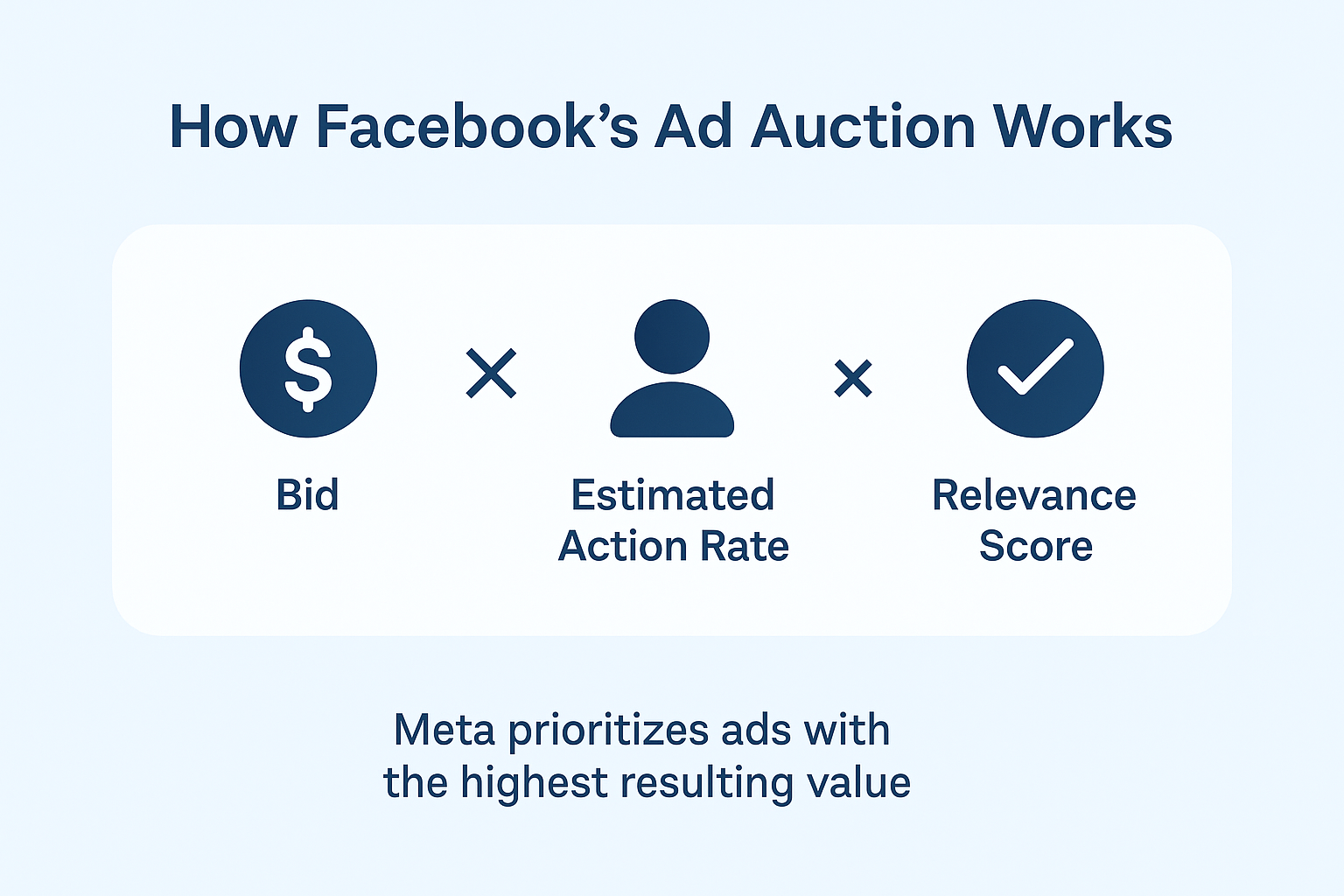
Image Source: LeadEnforce
Higher bids do not automatically win. An advertiser with a lower bid but a stronger quality signal can outperform a higher-spending competitor in the same auction. This has direct consequences for campaign economics:
- Higher relevance signals support lower CPMs
- Stronger engagement and quality rankings improve delivery efficiency
- Better conversion signals increase reach without requiring budget increases
- Poor relevance forces advertisers to bid higher just to maintain existing delivery
Many agencies overfocus on bidding strategies while underinvesting in quality improvements that would yield stronger auction performance at lower cost. Ad relevance should be understood as an auction competitiveness metric, not a post-campaign diagnostic.
Understanding relevance is straightforward. Maintaining it consistently across multiple client accounts is far more difficult.
Why Agency Teams Commonly Struggle To Maintain High Relevance Across Multiple Clients?
Even agencies with strong Facebook advertising expertise run into relevance problems at scale. The issue is rarely a lack of knowledge. It is an operational problem that grows alongside client volume.
Several factors contribute to declining relevance across client accounts:
- Creative fatigue: Ads that ran well for several weeks begin generating negative feedback as audiences repeatedly see the same formats and messaging.
- Recycled copy across industries: Teams managing multiple verticals often reuse messaging frameworks that do not reflect each client's specific audience.
- Limited audience research time: Proper segmentation, exclusion setup, and lookalike quality reviews require time most teams do not consistently have.
- Inconsistent landing page reviews: Conversion rate performance depends on post-click experience, which gets deprioritized when campaign management workloads are high.
- Junior media buyers managing too many accounts: Account quality suffers when less experienced team members make optimization decisions under volume pressure.
- Delayed optimization cycles: Creative refreshes and audience updates slow down when teams are managing more accounts than their capacity allows.
Even strong campaign strategies deteriorate when agencies scale without scaling their optimization capacity alongside account growth. This pattern is common enough that it has a name: the Agency Quality Bottleneck. As client volume increases, campaign quality declines because optimization resources fail to keep pace with account growth.
Most relevance problems are operational problems before they become advertising problems. Fixing them requires a structural solution, not just better tactics.
This is why many agencies adopt specialized fulfillment models designed around continuous optimization.
How White Label Facebook Ads Create A Specialized Optimization Workflow?
White label Facebook ads services provide agencies with a dedicated team focused entirely on campaign quality across creative development, audience management, and conversion optimization. Rather than dividing attention across dozens of accounts, white label partners build repeatable systems that maintain relevance at scale.
1. Creative Development Based On Audience Psychology
Generic creative does not perform at the same level as messaging developed specifically for a client's audience. White label teams build ads with audience psychology in mind:
- Industry-specific messaging that reflects how a particular audience thinks about a problem
- Native-looking creatives that integrate naturally into the feed rather than appearing overtly promotional
- UGC-inspired formats that mirror organic content and reduce ad fatigue
- Scroll-stopping hooks designed to capture attention within the first two seconds
Stronger creative improves how users perceive and respond to an ad, which directly improves Quality Ranking and Engagement Rate Ranking over time.
2. Audience Refinement
Better audience targeting supports stronger engagement and conversion signals across all three relevance diagnostics. White label teams approach audience management with a structured framework:
- Intent segmentation that separates cold, warm, and retargeting audiences into distinct campaign structures
- Behavioral exclusions that remove low-intent users from higher-cost conversion campaigns
- Customer list utilization for lookalike seed audiences and exclusion lists
- Continuous lookalike audience quality reviews to maintain signal accuracy
The result is that ads reach people more likely to engage and convert, which strengthens the engagement and conversion signals Meta uses to evaluate campaign quality.
3. Continuous Creative Testing
Creative testing should be built into campaign structure from the start, not treated as a response to declining performance. White label teams run systematic variation testing across:
- Multiple hooks to identify which opening messages generate the strongest response
- Multiple headlines to optimize for click-through and engagement rates
- Multiple CTAs to find which conversion prompts align best with audience intent
- Format variations including static images, carousels, and video assets
Continuous testing prevents creative fatigue from developing and keeps relevance diagnostics stable over longer campaign lifecycles.
4. Landing Page Alignment
Meta evaluates the entire user experience, not just the ad itself. Landing page performance is a direct input into Conversion Rate Ranking. White label services include post-click experience reviews focused on:
- Message consistency between ad copy and landing page content
- Faster load speeds to reduce bounce rates before conversion actions
- Matching offers so the user sees the same promise on both the ad and the destination page
- Reduced conversion friction by simplifying form fields, checkout steps, and calls to action
These workflow improvements directly influence the diagnostics Meta uses to evaluate campaign quality.
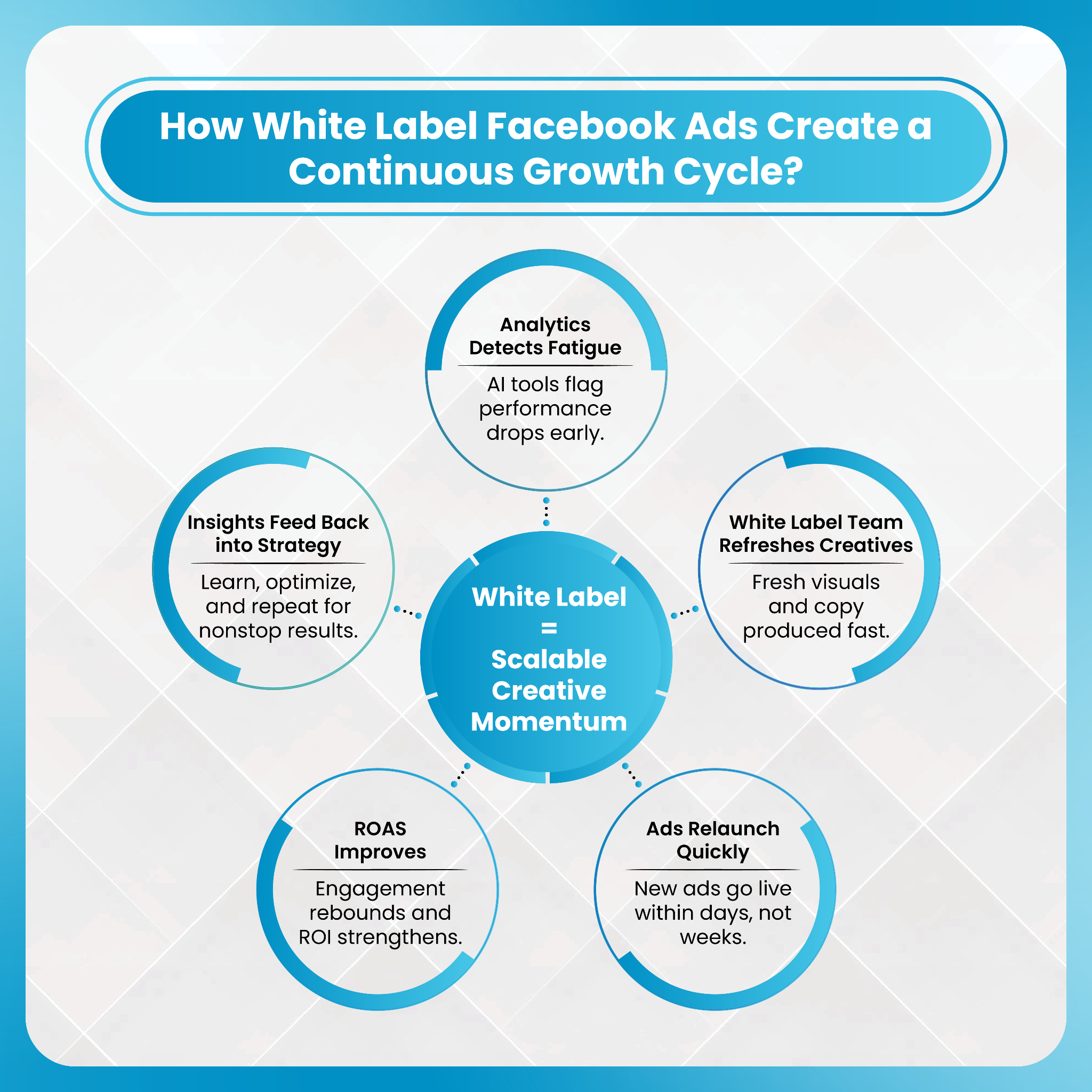
The Three Relevance Diagnostics White Label Experts Monitor
Meta replaced the legacy Relevance Score because a single number could not accurately reflect the complexity of ad performance. Three separate diagnostics provide a more actionable picture of where campaigns need improvement.
1. Quality Ranking
Quality Ranking measures how an ad's perceived quality compares to other ads competing for the same audience. Meta assesses quality based on user reactions, including positive engagement signals and negative feedback such as users choosing to hide an ad.
Factors that influence Quality Ranking include:
- Overall creative quality and visual presentation
- Authenticity of the messaging and offer
- Presence of clickbait, sensationalized language, or misleading claims
- User-reported negative feedback
White label services focus on elevating creative quality, using authentic messaging, removing engagement-bait tactics, and ensuring the ad experience is genuinely useful to the audience.
2. Engagement Rate Ranking
Engagement Rate Ranking measures expected engagement compared to other ads targeting the same audience. Engagement signals include comments, shares, saves, and click-through behavior.
White label teams improve Engagement Rate Ranking by focusing on:
- Stronger hooks that generate immediate interest
- Video-first creative formats that hold attention longer
- Native storytelling approaches that feel organic rather than promotional
- Interactive formats that invite responses and shares
3. Conversion Rate Ranking
Conversion Rate Ranking measures expected conversion performance against competing ads in the same auction. This diagnostic reflects the entire funnel, from ad click to completed conversion.
Factors that affect Conversion Rate Ranking include:
- Landing page relevance and consistency with ad messaging
- Offer quality relative to audience intent and expectations
- Funnel alignment between the ad and the conversion path
- Post-click experience quality
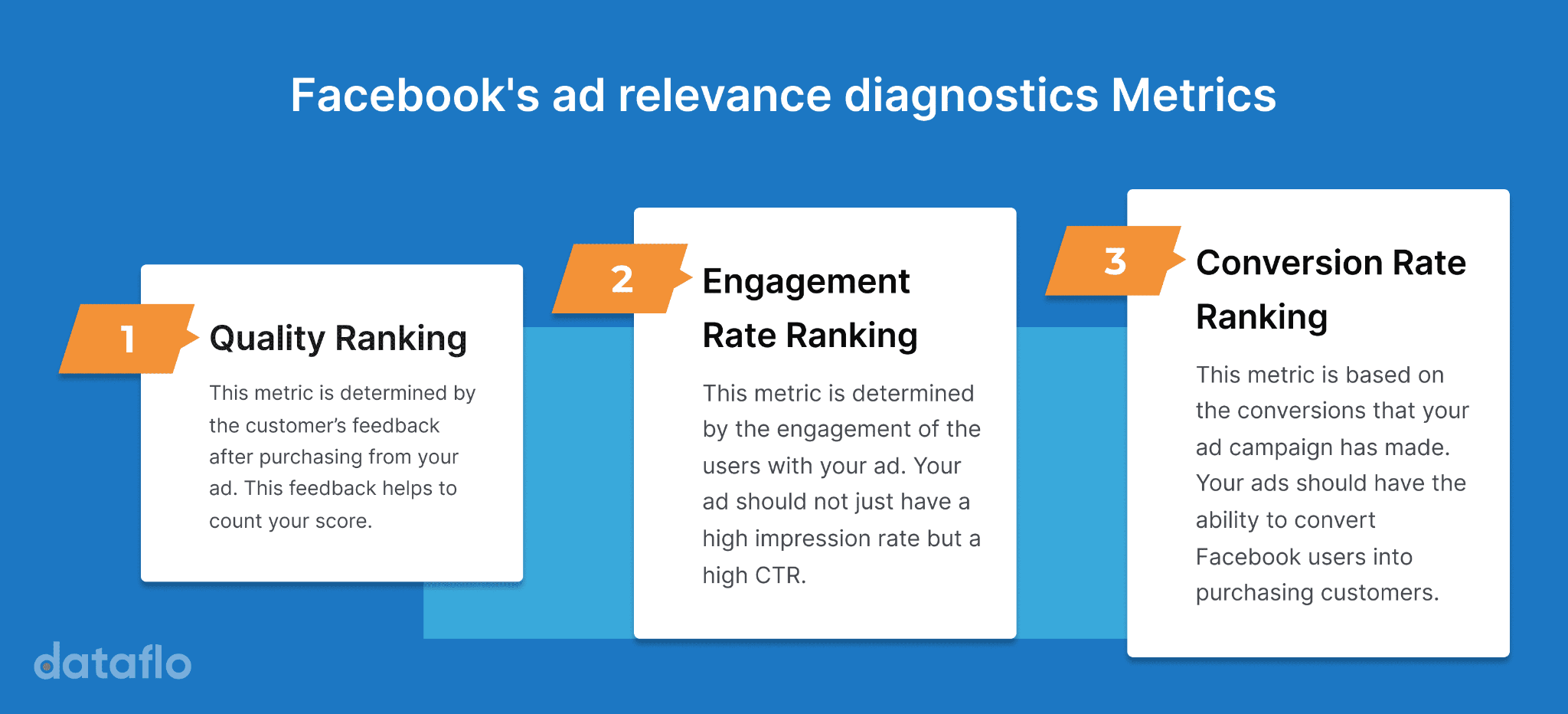
Image Source: Dataflo
According to Meta's Business Help Center, Ad Relevance Diagnostics compare an ad's quality, expected engagement, and expected conversion performance against competing ads targeting the same audience. White label teams optimize all three simultaneously, rather than addressing each one in isolation.
Of all the factors influencing relevance, one consistently has the greatest impact.
Why is Creative Production the Biggest Driver Of Ad Relevance?
Targeting strategy matters, but it does not determine whether an ad succeeds once it reaches the right person. Creative determines whether the audience pays attention, engages, and takes action.
Strong creative production directly influences Quality Ranking and Engagement Rate Ranking, which in turn affect auction competitiveness and delivery efficiency. Agencies that rely on limited creative libraries are consistently disadvantaged compared to campaigns running diverse, regularly refreshed assets.
White label Facebook ads services support creative production at a scale that most internal teams cannot maintain independently:
- Multiple creative angles were tested simultaneously across different messaging themes
- Industry-specific creative development that reflects each client's market and audience
- Seasonal refreshes that prevent audience fatigue during longer campaign periods
- UGC-style assets and video variations that improve organic feel and engagement
- Ongoing creative performance monitoring to identify and retire underperforming assets
Targeting determines who sees an ad. Creative determines whether they care. Agencies that invest in continuous creative production see reduced fatigue and stronger relevance signals over longer campaign lifecycles.
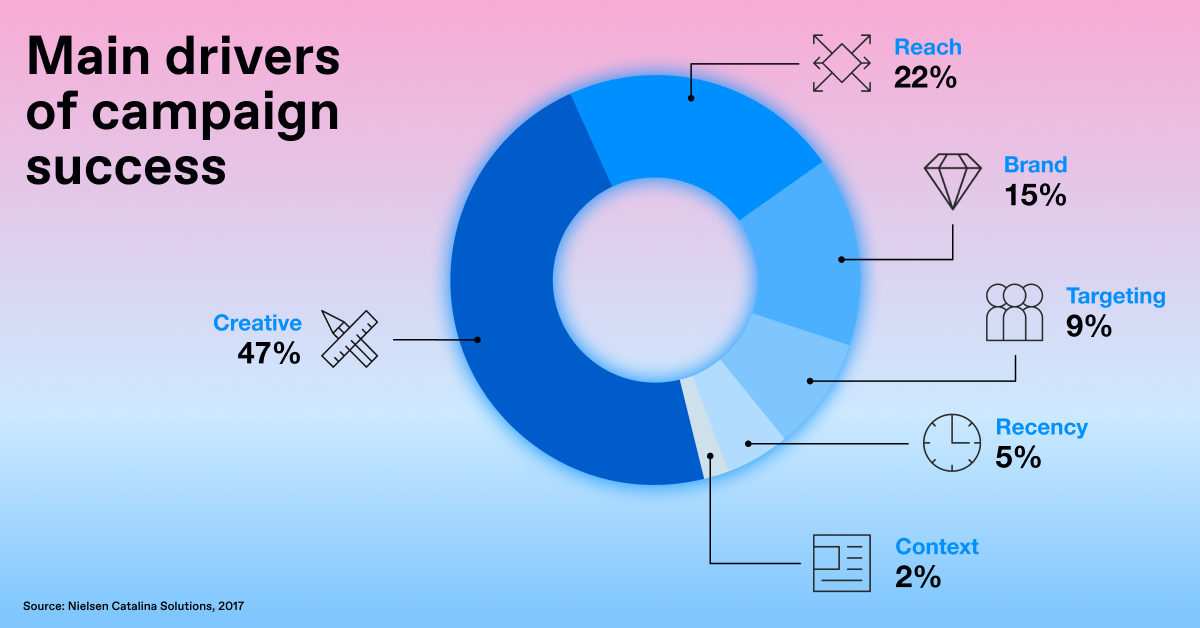
Image Source: Celtra
Improved relevance does more than strengthen campaign performance. It also improves agency-client relationships.
How Improved Ad Relevance Strengthens Agency-Client Relationships?
Clients notice when campaigns become less efficient. Rising CPMs, declining reach, and inconsistent conversion performance are hard to explain without a clear optimization framework. Ad relevance diagnostics give agencies a structured way to communicate what is happening and what is being done about it.
When relevance diagnostics improve, client reporting conversations shift from defending results to explaining optimization progress. Agencies can show clients exactly which diagnostics improved, why creative changes were made, and how audience refinements contributed to better performance.
The practical benefits clients experience include:
- Better budget efficiency with lower cost per result
- Reduced wasted spend on underperforming placements and audiences
- More consistent performance across campaign periods
- Clearer visibility into what is driving results
Consistent relevance improvements also reduce performance volatility, which is one of the most common sources of client dissatisfaction in Facebook advertising. White label partners help agencies replicate successful creative frameworks and audience strategies across accounts while maintaining the customization each client requires.
Improving ad relevance strengthens reporting transparency, client confidence, retention rates, and agency differentiation. Maintaining these standards becomes increasingly difficult as agencies grow.
Agency Scaling Without Sacrificing Campaign Quality
Adding new clients creates revenue opportunities, but it also creates operational strain. As account volume grows, internal teams face mounting pressure that affects campaign quality in predictable ways:
- Optimization cycles slow down as media buyers split attention across more accounts
- Creative refreshes get delayed when production capacity is fixed, and client volume increases
- Testing volume declines when team bandwidth is consumed by basic account management tasks
- Quality control becomes inconsistent when junior team members absorb overflow accounts
More clients often create operational problems before they create revenue problems. The gap between client acquisition and fulfillment capacity is where campaign quality degrades.
White label Facebook ads fulfillment helps agencies address this gap by extending optimization capacity without requiring proportional headcount increases. Agencies working with white label partners are able to:
- Maintain consistent optimization frequency across all client accounts
- Launch new campaigns faster without compressing setup and research timelines
- Deliver standardized reporting that supports client communication at scale
- Preserve campaign quality during high-growth periods when internal resources are stretched
Operational scalability directly influences advertising performance. Agencies that scale client volume without scaling optimization capacity will see relevance problems emerge across their account portfolio. This is where a structured fulfillment partner supports long-term growth.
How DashClicks' White Label Facebook Ads Services Help Agencies Improve Ad Relevance?
DashClicks provides white label Facebook ads services built around the optimization disciplines that directly improve Meta ad relevance diagnostics. The approach is designed to function as an extension of an agency's delivery team, not as a disconnected vendor relationship.
1. Strategic Campaign Management
DashClicks begins with structured audience research to identify targeting opportunities, segmentation strategies, and exclusion frameworks that support stronger engagement and conversion signals. Campaign setup is aligned with Meta's auction mechanics, ensuring that creative and audience decisions reinforce each other from launch.
Ongoing optimization is structured around the three relevance diagnostics, with regular reviews of Quality Ranking, Engagement Rate Ranking, and Conversion Rate Ranking across all managed accounts.
2. Creative Execution Support
Creative production is managed with audience psychology and platform behavior in mind. The team supports ad creation across multiple formats, develops systematic testing frameworks for hooks, headlines, and CTAs, and monitors performance data to identify when creative refreshes are needed before fatigue develops.
Agencies benefit from consistent creative output that keeps relevance diagnostics stable across longer campaign periods.
3. Conversion-Focused Optimization
The full funnel is reviewed, including landing page alignment, offer consistency, and post-click experience quality. Conversion Rate Ranking depends on what happens after the click, and optimization that stops at the ad level leaves significant performance improvements on the table.
Funnel alignment work ensures that the user experience from ad impression to conversion is consistent, relevant, and friction-free.
4. Scalable Fulfillment Infrastructure
Consistent execution is provided across agency accounts regardless of client volume. Agencies can onboard new clients without compressing setup timelines or reducing optimization frequency for existing accounts. Faster campaign deployment and standardized workflows support growth without the quality bottlenecks that typically accompany rapid scaling.
5. Reporting And Visibility
Performance tracking is built into the fulfillment model. DashClicks provides client-ready reporting that gives agency teams clear visibility into campaign performance, diagnostic improvements, and optimization activity. Stronger reporting supports better client communication and more productive strategy conversations.
The company operates as an extension of an agency's delivery team, providing the optimization depth and production capacity that sustained Meta advertising performance requires.
Sustainable Meta Advertising Performance Requires Consistent Quality
Improving ad relevance is not a one-time optimization project. It requires ongoing attention across creative development, audience management, landing page alignment, and conversion path quality. Every component affects how Meta evaluates campaign performance relative to competing advertisers in the same auction.
White label Facebook ads services help agencies build the optimization infrastructure that makes consistent relevance possible. By partnering with a specialized fulfillment team, agencies can improve campaign quality, strengthen Meta auction performance, reduce inefficiencies caused by creative fatigue and audience drift, and scale optimization efforts without proportional increases in internal headcount.
Sustainable growth in Meta advertising does not come from larger budgets alone. It comes from consistently delivering ads that resonate with the right audience, generate meaningful engagement, and create better user experiences across the entire customer journey. Agencies that prioritize relevance as a core performance metric will outperform competitors who treat it as a secondary concern.


.svg)


.svg)
.svg)
.svg)
.svg)
.svg)