

.svg)
.svg)
.svg)
.svg)
.svg)
.svg)
Facebook still commands the attention of billions of people every month. With more than three billion monthly active users, it remains one of the strongest digital channels for local lead generation. Even as new platforms rise, Facebook continues to offer unmatched reach, targeting precision, and creative flexibility for local service businesses.
For agencies, this creates a massive opportunity. Local companies depend on a steady stream of leads, and Facebook Ads has become one of the most reliable sources for affordable demand generation. The challenge is delivering consistent performance at scale. Many agencies want to offer Facebook ads services, but hiring senior talent, managing campaign complexity, and keeping up with creative testing can stretch teams thin.
This is where white label Facebook advertising steps in. It lets agencies provide high-performing, lead-focused campaigns without the burden of in-house fulfillment. In this guide, you’ll learn how agencies use the best white label Facebook ads to drive predictable results for local clients, plus tactical playbooks, KPIs to track, and packaging tips you can implement right away.
Why Small Agencies Struggle to Deliver Predictable Facebook Leads for Local Clients?
Running strong Facebook campaigns isn’t the issue; maintaining consistent performance for multiple clients is. Most small agencies juggle limited time, rising costs, and increasing expectations. Here’s why it becomes difficult to scale.
1. Limited Bandwidth for Ongoing Testing
Local lead campaigns require constant testing. Every market, city, and niche is different, and the only way to discover what works is through repeated experimentation. When one account executive handles ten or more clients, there’s no time to test new creatives, build new audiences, or fine-tune offers.
Imagine a single account manager responsible for plumbers, dentists, real estate teams, and cleaning services at once. Each niche needs unique messaging and fast iteration. Without enough hours in the week, campaigns slip into “maintenance mode,” and results eventually decline.
2. Tool and Creative Costs Escalate Quickly
Professional ad platforms, landing page builders, creative tools, call tracking, and optimization software add up fast. Producing steady creative variations also increases expenses. Local businesses usually have tight budgets, so agencies feel pressure to keep CPL low. According to WordStream, many local industries see average Facebook lead costs ranging from 15 to 60 dollars per lead. When CPL climbs, margins shrink.
3. Lack of Proven Local-Focused Creatives and Offers
Enterprise brands have huge creative libraries, but small agencies don’t. Local businesses rely on fast-turnaround content that feels authentic. A salon, roofing company, or home services provider needs visuals and offers that reflect local customer needs. Without a creative system, agencies end up reusing generic ads that fail to convert.
4. Inconsistent Tracking Setups Across Accounts
A solid tracking foundation is essential. Meta Pixel placement, event configuration, Conversions API, UTM structures, and lead quality checks often break when agencies grow too fast. If tracking is inconsistent, learning is limited, and optimization becomes guesswork.
5. Seasonal Demand and Cashflow Challenges
Local businesses often ride seasonal waves. HVAC, landscaping, tax preparation, and home maintenance all see spikes and dips. These businesses expect predictable lead costs year-round. Agencies without systematic testing and forecasting struggle to stabilize performance.
Further Reading: Seasonal Surge? How White Label Facebook Ads Teams Handle Holiday Promotions
6. Recruiting and Retaining Senior Paid Media Talent Is Expensive
Hiring skilled media buyers isn’t cheap. Research from CSVNOW shows agencies can save 15 to 30 percent by outsourcing specialized marketing functions. It’s difficult for smaller agencies to compete with larger teams on salary, training, and career growth. This becomes one of the biggest reasons agencies explore the best white label Facebook ads partners.
The result of all these challenges is simple: inconsistent performance. Agencies want to offer strong Facebook Ads services, but internal constraints make it hard to deliver at scale.
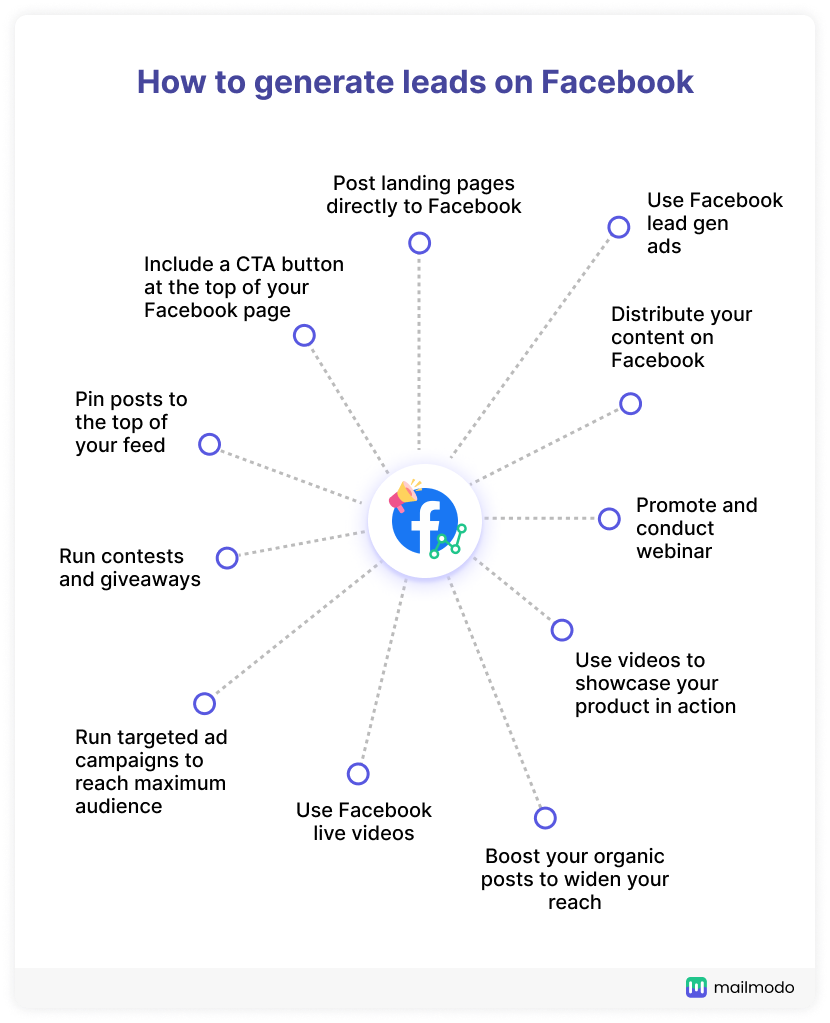
Image Source: MailModo
Here’s how white label Facebook Ads solves those problems.
White Label Facebook Ads Help Agencies Drive Leads for Local Businesses?
White label Facebook Ads fulfillment gives agencies the operational backbone they need to produce reliable results. Instead of worrying about hiring, training, or testing, agencies get a ready-made system managed by specialists.
Let’s break this down into capabilities, playbooks, measurement, and packaging.
A. Core Capabilities White Label Partners Provide
A strong white label partner becomes an extension of the agency. They provide:
- Dedicated Paid Media Strategists: Senior-level media buyers who understand local campaigns, testing cycles, and optimization priorities.
- Creative Production Support: Access to video, UGC, and static ad production tailored to local service niches.
- Audience Research and Buildouts: Custom audiences, lookalikes, interest stacks, radius targeting, and retargeting frameworks built for local intent.
- Technical Setup and Tracking: Meta Pixel, Conversions API, server-side events, and proper event mapping.
- Lead Quality Checks and CRM Integrations: Automated routing using tools like Zapier, LeadsBridge, DashClicks’ CRM software, or native APIs.
- Branded Dashboards and Reporting: White-labeled insights that the agency can share directly with clients, like DashClicks’ White Label Dashboard software.
These capabilities create predictable delivery, faster test cycles, and leaner operational costs. With outsourcing, saving 15 to 30 percent on specialized tasks, agencies maintain strong margins while delivering better performance.
B. Tactical Playbooks That Deliver Local Leads
Below are proven playbooks agencies can use through white label fulfillment partners. Each is designed to run efficiently across multiple clients.
1. Fast-Start Local Lead Funnel
Ideal for service-based businesses like cleaning companies, home repair services, or small clinics.
Steps:
- Build a radius-based target audience with local interest layers.
- Launch ads promoting a direct incentive, such as free estimates or small discounts.
- Use Instant Forms or a simple landing page.
- Push leads directly to CRM with auto-SMS follow-up.
KPIs:
- CTR Target: 1.5 to 3 percent
- CPL: benchmarked against WordStream industry averages
- Lead Response Time: under 5 minutes
Sprout Social reports that short-form video and mobile-friendly paid ads remain among the most effective formats for engagement, reinforcing the value of this funnel.
2. Appointment Push for High-Ticket Local Services
Used for dentists, chiropractors, med spas, and salons that rely on booked appointments.
Steps:
- Run a 45–60 second testimonial or demo video.
- Send traffic to a calendar booking page.
- Integrate automated reminders through SMS or email.
KPIs:
- CPL vs. CPA to book an appointment
- Appointment rate
- Cost per qualified lead (CPQL)
This playbook focuses less on sheer volume and more on qualified intent.
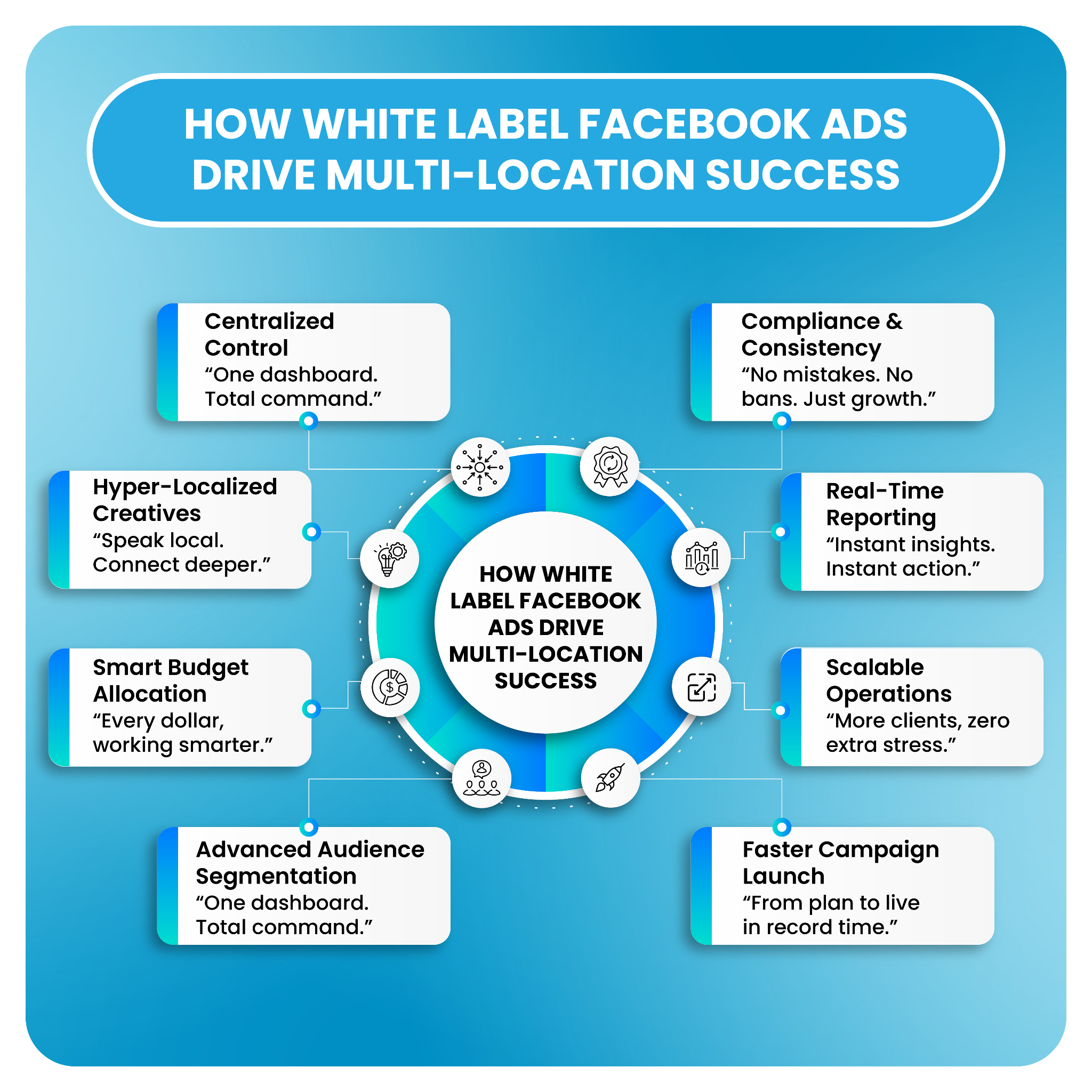
3. Multi-Location Rollout Playbook
Useful for franchises, multi-office businesses, and expanding brands.
Steps:
- Build geo-structured campaigns for each location.
- Use location-specific landing pages.
- Deploy bulk creative variations with local angles.
- Implement GA4 templates and consistent UTM naming.
Metric: CPL stabilizes within the first two weeks once the template is active.
4. Quick-Response Lead Routing
Best for industries where speed matters, such as towing, HVAC, or urgent care.
Steps:
- Push leads to reps instantly.
- Trigger auto-SMS within seconds.
- Set up real-time call routing.
Studies show that contacting a lead within five minutes increases the chance of conversion dramatically compared to a 10-minute delay.
In one modeled example, a three-location home services business boosted lead volume by 2.4 times while reducing CPL by 18 percent after implementing faster routing and structured templates.
C. Creative and Offer Frameworks that Convert Locals
Local audiences respond to clarity, authenticity, and relevance. Strong frameworks help agencies scale creative testing.
Local Proof Triggers:
- Reviews from neighborhood customers
- Before-and-after photos
- Local statistics or seasonal insights
Offer Templates:
- First-visit discounts
- Free mini-audits
- Limited-time local deal
Proven Hooks for Short Videos:
- “Most people in [city] don’t know this…”
- “Here’s how to fix this common issue at home…”
- “A quick tip from a local expert…”
WiserNotify reported that 65 percent of marketers used paid ads to drive leads in the last year, showing the ongoing importance of fresh creatives.
A simple A/B cadence might include three creatives across two audiences, refreshed weekly.
D. Tracking, Attribution, and Lead Quality
Accurate tracking ensures you aren’t optimizing blind.
Essential Setups:
- Facebook Pixel
- Conversion API
- Server-side events
- Offline conversions (especially for appointment-heavy businesses)
- CRM mapping
- Lead scoring
KPIs to Watch:
- Leads
- Qualified leads
- CPQL
- Appointment rate
- Lead response time
- Customer Lifetime Value per customer
- Campaign ROAS
According to WordStream’s industry benchmarks, Facebook is often cheaper for local lead gen compared to search ads, especially for home improvement, beauty services, and personal care.
Tracking should measure customer actions beyond the form submission. The real metric is cost per booked job or appointment.
E. Packaging, Pricing, and Margins for Agencies
A clear pricing structure helps agencies maintain healthy margins.
Common Service Tiers Include:
- Starter: basic campaign setup, simple creatives, monthly reporting
- Growth: ongoing testing, landing pages, advanced creative support
- Enterprise Local: multi-location support, frequent creative updates, CRM consultative support
Pricing Models:
- Flat Retainer
- Percentage of Ad Spend
- Hybrid Structure
Many agencies prefer a retainer plus spend pass-through because it keeps monthly revenue predictable.
Example: If white label fulfillment and creative cost $1,200 per month and the agency charges the client $2,400, the agency earns a solid margin while delivering premium service. Outsourcing savings help maintain a competitive price while still offering advanced capabilities.
F. Onboarding and Retention for Local Clients
Getting clients set up the right way reduces churn and sets expectations.
Onboarding Checklist:
- Access to Business Manager and CRM
- Local business market research
- Baseline audit
- 90-day plan with testing cycles
Retention Tips:
- Monthly reporting that explains outcomes in simple language
- Consistent creative refreshes
- Adding services like local SEO, SMS nurturing, or retargeting funnels
A clear roadmap keeps clients confident during seasonal fluctuations.
Case Study Walkthrough: A Modeled Local Lead Generation Example
A home renovation company serving a mid-sized city wanted more high-quality leads but struggled with rising CPC and inconsistent creative performance. Their initial CPL was 45 dollars, which put pressure on margins.
What the Agency Did with White Label Facebook Ads Support:
- Ran radius-based targeting focused on homeowners.
- Launched three new UGC video ads plus two static variations.
- Built a landing page with a limited-time estimate offer.
- Set up Conversions API for more accurate tracking.
- Integrated instant CRM routing with SMS follow-up.
- Implemented a five-minute lead response rule.
Results Over 90 Days:
- CTR increased from 1 percent to 2.8 percent.
- CPL dropped from 45 dollars to 32 dollars.
- Lead-to-appointment rate improved with faster response times.
- Conversion to paid jobs increased due to consistent follow-up.
These improvements aligned with WordStream benchmarks for home improvement lead costs, making the performance realistic and credible. With consistent creative testing and proper routing, the agency stabilized results and achieved predictable monthly lead flow.
Quick Tactical Checklist for Agencies
Here’s a simple list agencies can use immediately:
- Set up Meta Pixel and Conversions API correctly.
- Build two audiences to test every cycle.
- Launch at least three creative variations.
- Use a clean UTM structure.
- Ensure leads route to CRM within minutes.
- Set up SMS and email auto-responses.
- Build a local landing page with a clear offer.
- Refresh creatives every 7 to 14 days.
- Track leads past the form into actual appointments.
- Run a monthly analysis on performance by campaign and audience.
These steps help stabilize lead flow and improve long-term performance.
How DashClicks Helps Agencies Implement Effective Facebook Ads Campaigns?
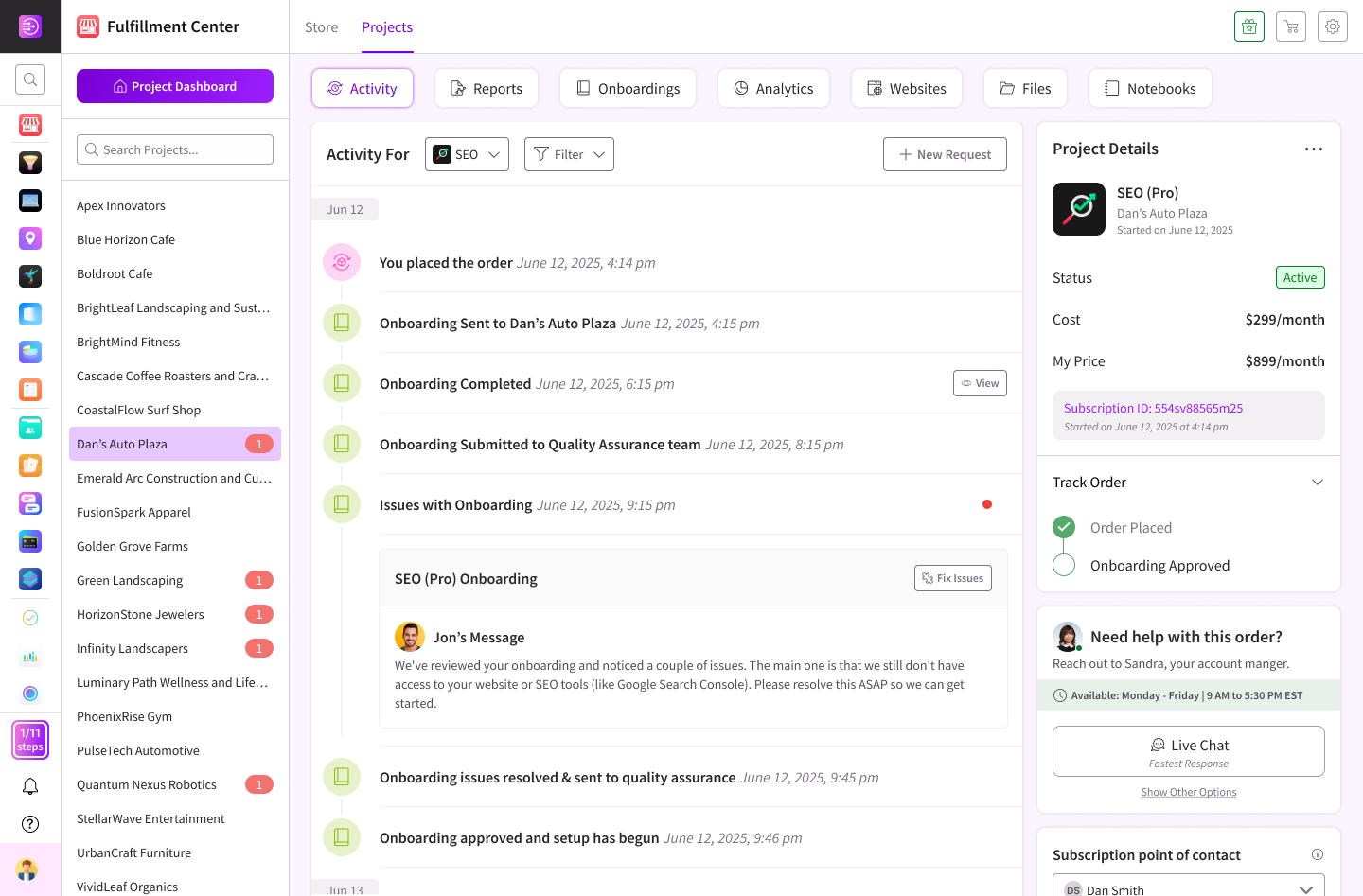
DashClicks gives agencies an end-to-end platform for managing, fulfilling, and scaling Facebook advertising campaigns for local businesses. Instead of juggling scattered tools, agencies get a central dashboard where everything from onboarding to reporting flows seamlessly.
The white label Facebook advertising team handles audience research, technical setup, creative production, campaign optimization, and performance reporting. This allows agencies to offer high-quality Facebook ad services without hiring in-house specialists or managing complicated workflows.
DashClicks also provides automated lead routing, conversion tracking, and CRM integrations so clients get fast follow-up and higher conversion rates. For agencies ready to expand their local lead generation services, DashClicks delivers a scalable fulfillment system backed by experienced media buyers and proven processes.
Conclusion
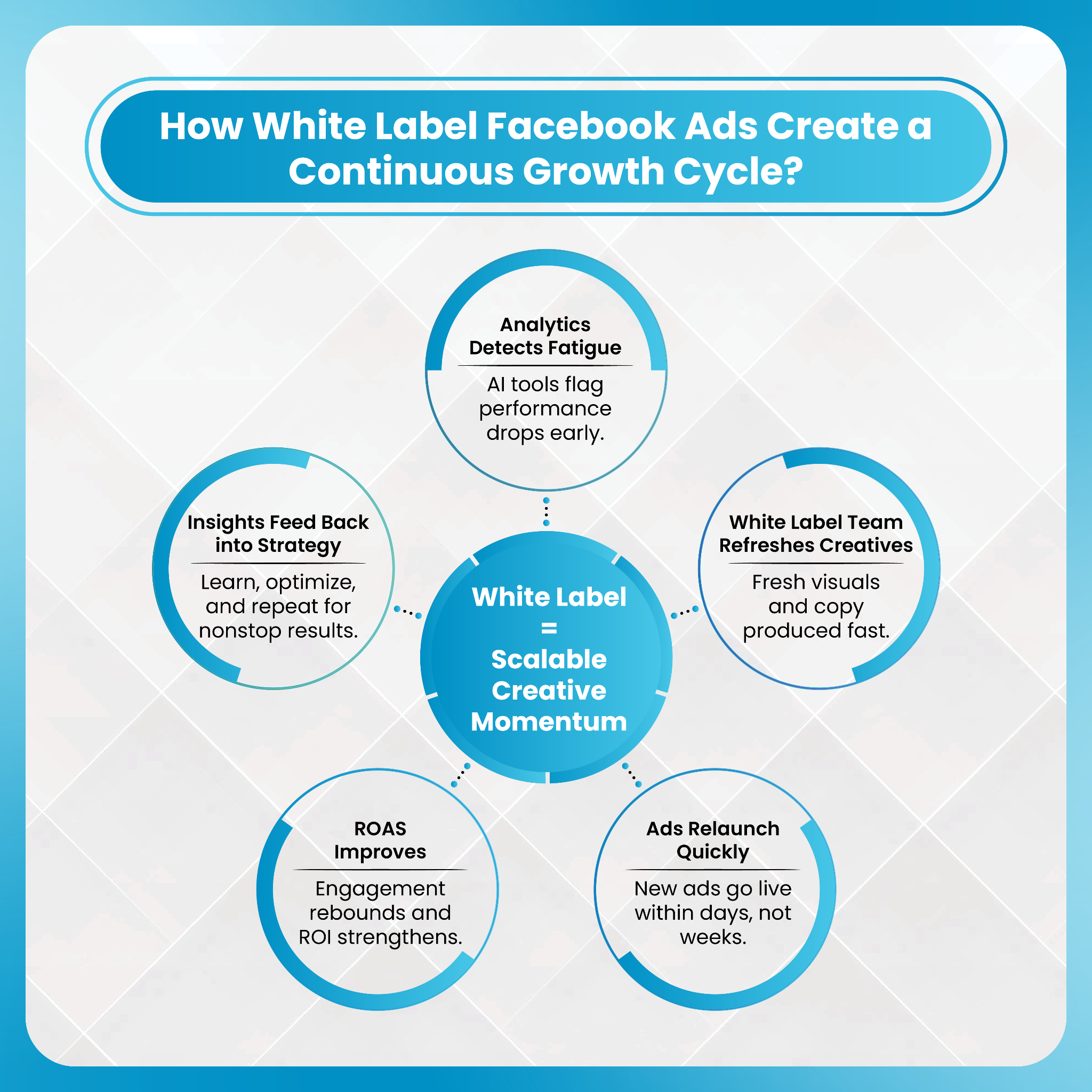
White label Facebook Ads give agencies a powerful way to deliver steady, scalable lead generation for local businesses without expanding internal teams.
By partnering with specialists, agencies gain access to expert optimization, fresh creative testing, better tracking, and a predictable operational system. This makes it easier to serve more clients, maintain strong margins, and offer high-quality results in competitive local markets.


.svg)


.svg)
.svg)
.svg)
.svg)
.svg)