

.svg)

.svg)
.svg)
.svg)
.svg)
.svg)
Managing multiple offers has become the norm for many agencies. As clients expand their services, launch new products, or operate across several locations, the need for complex, multi-offer campaigns grows. Facebook Ads is particularly well-suited to promote multiple offers at once, thanks to its targeting precision, robust audience segmentation, and flexible ad formats.
However, executing these campaigns effectively requires more than just creating ads—it demands structure, strategy, and constant optimization. Without the right system, agencies often face audience overlap, budget cannibalization, and inconsistent performance, which can reduce the overall return on ad spend and create operational headaches.
This is where white label Facebook advertising services shine. By leveraging a specialized team to manage multi-offer campaigns, agencies can support complex client accounts without scaling internal staff. Multi-offer management becomes an operational challenge, not a creative one, allowing agencies to focus on strategy, positioning, and growth.
According to Meta, advertisers who diversify their campaign structures see stronger long-term performance stability, proving that a thoughtful approach to multi-offer campaigns pays off. The average Facebook advertiser manages several active campaigns per account, and as offerings grow, efficient management—not just demand—is what separates high-performing accounts from underperforming ones.
Why Agencies Struggle With Multi-Offer Facebook Ad Campaigns?
Running Facebook Ads for multiple offers is more complex than simply duplicating a single campaign. Agencies often face several challenges when trying to scale campaigns across products, services, or different stages of the funnel. Each additional offer introduces new layers of complexity that can strain resources, reduce performance, and make reporting less reliable.
1. Campaign Structure Breaks Down at Scale
Single-offer campaigns are easy to manage, but as agencies try to run multiple offers simultaneously, campaign structures can quickly become unwieldy. Common issues include:
- Overloaded campaigns with too many ad sets, making it hard to track performance.
- Unclear naming conventions, which lead to confusion when reporting or optimizing.
- Poor separation between funnels, so high-performing and low-performing campaigns interfere with one another.
When campaigns lack organization, teams spend more time untangling setups than actually driving results. Optimization becomes slow and inefficient, and budget allocation often suffers as a result.
2. Audience Overlap and Internal Competition
Multiple offers targeting the same audience often end up competing in the Facebook auction.
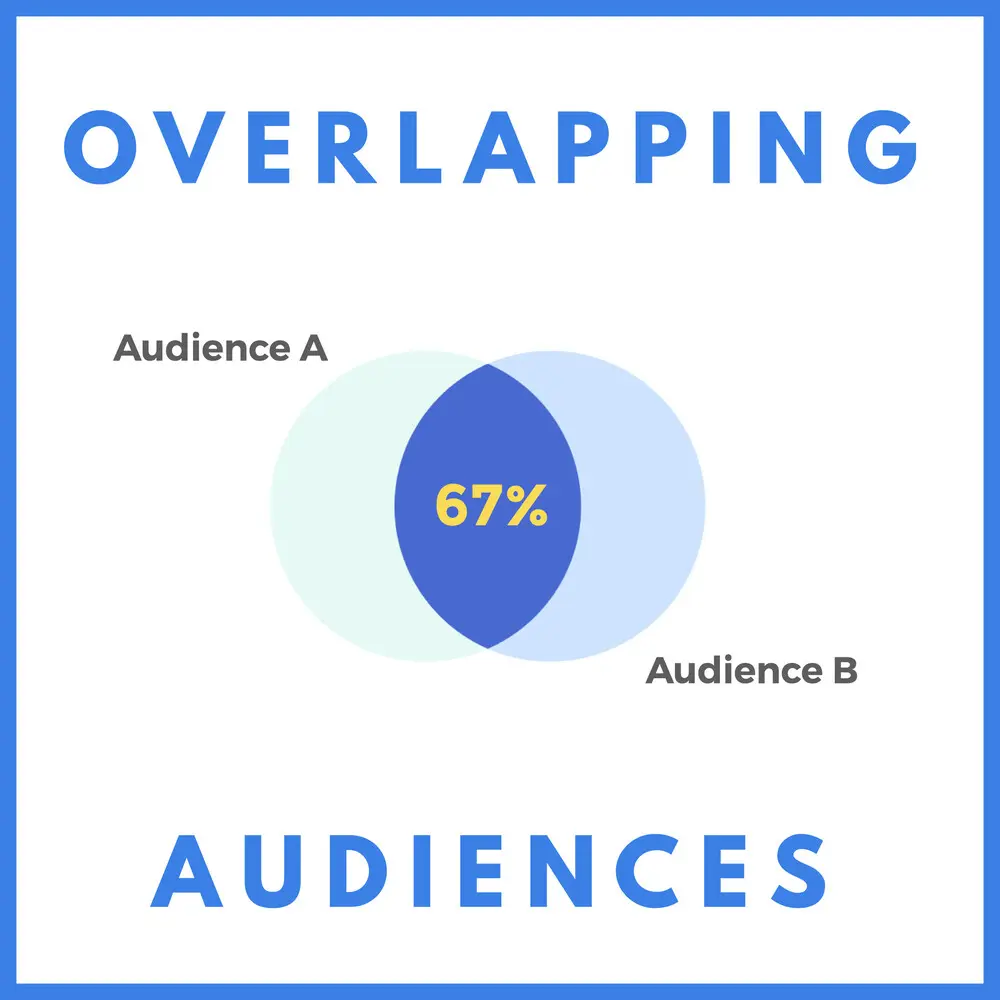
Image Source: Faye Chuah
This internal competition creates several problems:
- Rising CPMs because ads bid against each other.
- Saturated audiences lead to lower engagement and diminishing returns.
- Inconsistent attribution makes it difficult to identify which campaigns are truly driving value.
Key metrics like CPA, CPM, and blended ROAS can become misleading. Without proper audience segmentation, agencies are forced to make reactive decisions rather than strategic ones.
3. Budget Allocation Becomes Reactive Instead of Strategic
Managing budgets across multiple offers requires a clear plan and timely adjustments. Agencies often struggle to:
- Prioritize high-performing offers without starving other campaigns.
- Test new offers safely without jeopardizing existing performance.
- Shift budgets quickly in response to real-time results.
A reactive approach leads to missed opportunities, overspending, and slower adaptation to changing market conditions or audience behavior.
4. Creative Fatigue Accelerates Across Offers
Running multiple offers amplifies the risk of creative fatigue. When ads share similar visuals or messaging, performance tends to decline faster, resulting in:
- Lower click-through rates across campaigns.
- Reduced engagement that impacts overall campaign effectiveness.
- Difficulty keeping creative fresh, especially when testing resources are limited.
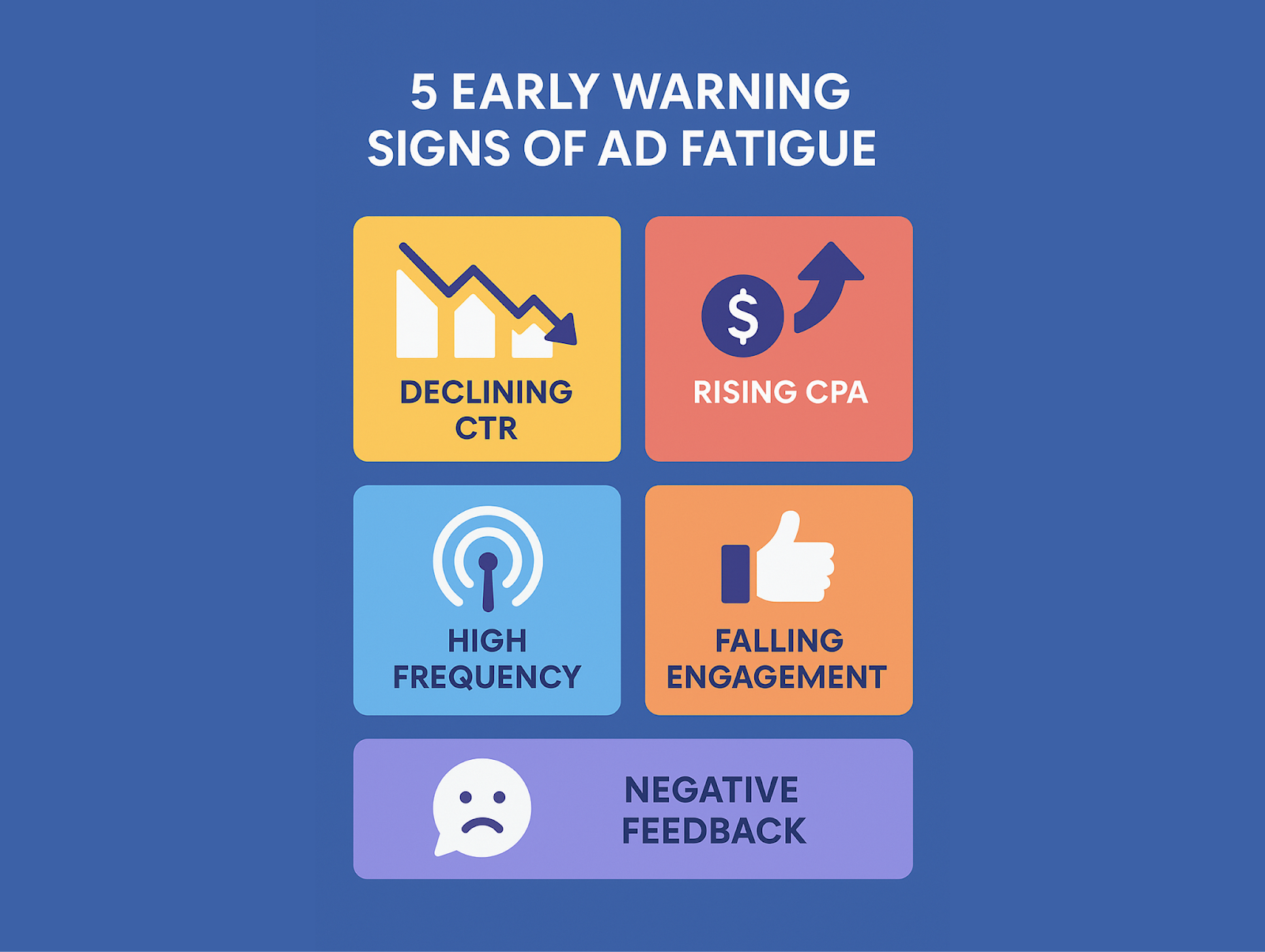
Image Source: LeadEnforce
Agencies must constantly innovate and rotate creatives to maintain target audience interest, which can be challenging when working with multiple offers simultaneously.
5. Reporting Lacks Offer-Level Clarity
As campaigns scale, performance data often becomes aggregated, leaving clients unsure which offers are delivering results. Without granular reporting:
- Agencies cannot identify the most profitable offers.
- Funnel inefficiencies go unnoticed until performance declines.
- Client confidence diminishes, increasing the risk of churn.
Detailed, offer-level reporting is essential for making informed decisions and demonstrating value to clients.
6. Internal Teams Get Overloaded
Managing multi-offer campaigns places significant strain on agency resources:
- Campaign setup and organization take much longer.
- Daily optimization becomes more time-consuming.
- Monitoring and troubleshooting require increased attention.
Agencies often reach a ceiling where growth stalls simply because internal teams are stretched too thin. Scaling successfully requires more than just adding more hands—it requires a structured system that streamlines execution.
How White Label Facebook Ads Help?
A white label approach provides agencies with a proven framework for managing multi-offer campaigns efficiently. By offering structure, automation, and dedicated expertise, Facebook ads services help:
- Reduce operational strain on internal teams.
- Improve campaign performance through better organization and targeting.
- Maintain clear reporting so clients understand which offers deliver results.
- Support creative testing at scale without overwhelming staff.
With the right system in place, agencies can scale multiple offers effectively, maximizing ROI while keeping internal workloads manageable.
White label Facebook ad services turn complex multi-offer campaigns into structured, scalable systems that drive measurable results. By combining advanced targeting, strategic budgeting, and rigorous optimization, agencies can manage multiple offers without sacrificing performance or overloading internal teams. Here’s how these solutions work:
1. Structured Campaign Architecture for Multiple Offers
White label teams build a clear, systematic hierarchy to manage campaigns at scale. This includes:
- Offer-specific ad sets that isolate performance metrics by product or service.
- Funnel-based segmentation, separating top-of-funnel (awareness), middle-of-funnel (consideration), and bottom-of-funnel (conversion) audiences.
- Rules to prevent audience overlap, ensuring campaigns don’t compete internally.
A structured architecture reduces confusion, simplifies optimization, and allows campaigns to scale effectively without wasted budget or effort.

Image Source: Birch
2. Offer Segmentation and Intent-Based Targeting
Targeting becomes more precise when each offer is mapped to the right audience. Facebook ads services typically include:
- Cold audiences to generate awareness for new offers.
- Warm retargeting pools for users who have engaged but not yet converted.
- Existing customers for upsells, cross-sells, or loyalty offers.
- Custom and lookalike audiences built from offer-specific performance data.
By matching offers to audience intent, campaigns reach the right people at the right time, improving efficiency and relevance.
3. Controlled Budget Allocation Across Offers
White label teams manage spend strategically, rather than reactively. Budget decisions are guided by:
- Performance thresholds for each offer and funnel stage.
- Funnel priorities, allocating more spend to areas driving maximum impact.
- Growth objectives, balancing testing new offers with maintaining stable revenue streams.
This ensures agencies can safely experiment with new offers while maintaining reliable campaign performance. Key metrics like offer-level CPA, incremental ROAS, and funnel-specific spend efficiency guide every decision.
4. Creative Systems Built for Multi-Offer Testing
Creative strategy is critical when running multiple offers simultaneously. White label teams implement structured testing through:
- Offer-specific messaging angles to speak directly to each target segment.
- Creative matrices that prevent duplication or audience fatigue across campaigns.
- Scheduled refresh cycles to keep ads fresh and maintain engagement.
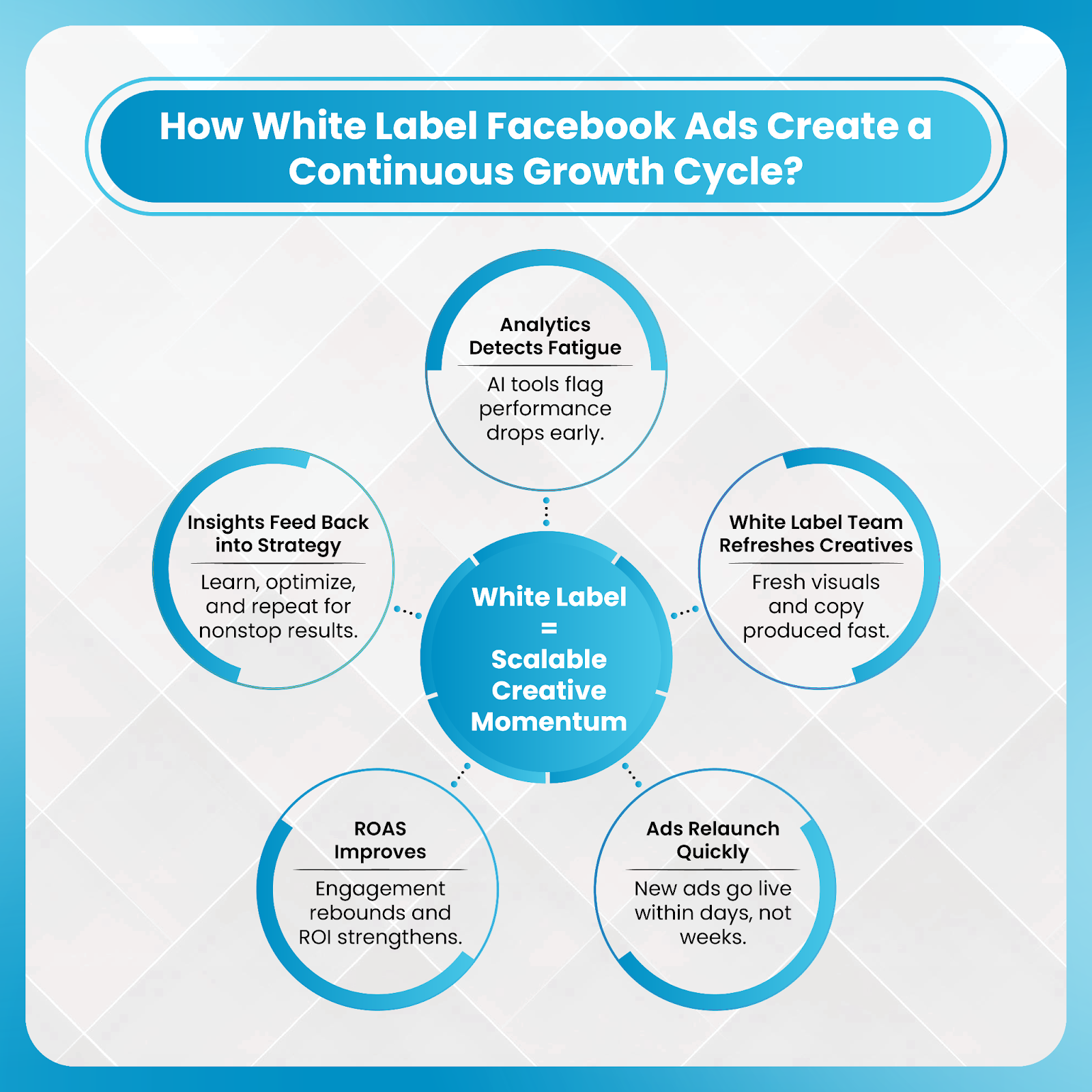
This approach reduces fatigue, stabilizes CTR, and supports sustainable campaign performance across all offers.
5. Advanced Tracking and Attribution by Offer
White label Facebook advertising provides precise, data-driven tracking to measure real performance:
- Conversion API integration ensures reliable data collection even with browser restrictions.
- Funnel-level attribution tracks which stage drives conversions.
- Offer-specific conversion tracking identifies the true ROI of each product or service.
Agencies gain clarity on what drives results, improving decision-making and client reporting.
6. Offer-Level Optimization and Scaling Playbooks
Teams use systematic, repeatable processes to manage offers:
- Underperforming campaigns are optimized or paused early.
- High-performing offers are scaled methodically.
- Data-driven decisions replace reactive or emotional adjustments.
This ensures resources are allocated efficiently, and campaigns grow sustainably over time.
7. White Labeled Reporting That Makes Complexity Simple
Custom dashboards break down results in ways clients can easily understand:
- Performance by offer
- Metrics by funnel stage
- Insights by audience type
Clients can see which offers succeed, which need improvement, and where to invest next, strengthening trust and supporting long-term engagement.
8. Reduced Operational Load for Agencies
Outsourcing execution to white label specialists frees internal teams to focus on strategy, growth, and client relationships. Agencies can:
- Concentrate on client positioning and campaign strategy.
- Expand service offerings without adding headcount.
- Confidently take on larger or more complex accounts.
This allows agencies to scale efficiently, maintain high-quality performance, and avoid operational bottlenecks.
How DashClicks’ White Label Facebook Ads Support Multi-Offer Campaigns?
DashClicks helps agencies manage the complexity of running multiple Facebook ad offers, turning what can be a chaotic process into a streamlined, high-performing system. Their white label Facebook ads are designed to scale campaigns effectively while reducing internal workload. Key features include:
1. Structured Campaign Architecture: DashClicks builds campaigns with clear hierarchies, offer-specific ad sets, and funnel-based segmentation. This structure prevents audience overlap and ensures each offer performs optimally without competing against others.
2. Dedicated Specialists for Setup, Optimization, and Scaling: Experienced teams handle every aspect of campaign management, from initial setup to ongoing optimization. They continuously monitor performance across products, services, and funnels, scaling high-performing offers while pausing or adjusting underperforming ones.
3. Offer-Level Budget Control: Budgets are allocated strategically to prevent cannibalization between offers. This ensures funds are invested where they drive the most ROI and allows agencies to test new offers without risking overall account performance.
4. Creative Testing Frameworks: DashClicks implements structured creative strategies that support multiple offers at once. By testing messaging, visuals, and calls-to-action across different segments, campaigns maintain engagement and minimize fatigue.
5. Advanced Tracking and White Labeled Reporting: Agencies gain transparent, actionable insights with offer-specific tracking and reporting. DashClicks provides dashboards that clearly show which offers drive results, which funnels need attention, and where growth opportunities exist.
By leveraging DashClicks’ expertise, agencies can scale multi-offer Facebook ad accounts efficiently, maintain consistent performance, and focus internal resources on strategy and client relationships rather than execution. Campaigns run more smoothly, results are easier to track, and agencies can confidently take on more complex accounts.
Turning Multi-Offer Complexity Into a Competitive Advantage
As businesses grow, running multiple offers through Facebook advertising is no longer optional—it has become a necessity. However, managing several campaigns simultaneously introduces a level of complexity that can quickly become overwhelming. Without a structured approach, overlapping audiences, inconsistent messaging, and unmonitored budgets can erode campaign performance and frustrate both agencies and clients.
This is where the best white label Facebook ads step in, transforming what could be a challenge into a competitive advantage. By leveraging the systems, tools, and expertise of experienced providers, agencies can manage multiple campaigns efficiently while maintaining high-quality results. Rather than struggling with campaign logistics, teams can focus on strategy, creative optimization, and client growth.
Agencies that master multi-offer execution position themselves to deliver superior outcomes. They can test different offers in parallel, identify top-performing campaigns faster, and optimize budgets dynamically to maximize ROI. This capability not only improves results but also strengthens client relationships, as businesses see consistent, data-driven growth. Moreover, by having reliable systems in place, agencies can scale operations without overburdening their internal teams, avoiding burnout while expanding service offerings.
Partnering with a trusted white label provider like DashClicks allows agencies to shift the heavy lifting to experts while maintaining control over strategy and client communication. With structured campaign architecture, offer-specific targeting, controlled budget allocation, and advanced reporting, agencies gain clarity and confidence in managing multiple offers simultaneously. This integration of technology and expertise ensures campaigns are executed efficiently, performance is optimized, and clients experience measurable success.
Ultimately, the ability to navigate multi-offer campaigns effectively becomes a differentiator. Agencies that embrace white label partnerships and structured execution turn complexity into opportunity, positioning themselves as reliable growth partners while freeing internal teams to focus on higher-level strategic initiatives. In a competitive digital landscape, this approach not only safeguards performance but also drives sustainable agency growth.


.svg)


.svg)
.svg)
.svg)
.svg)
.svg)