

.svg)

.svg)
.svg)
.svg)
.svg)
.svg)
A new website presents a fundamentally different SEO challenge from an established one. There is often little or no search visibility, a limited content footprint, minimal historical performance data, and few external signals such as backlinks or brand mentions. Most importantly, the agency may not yet know which pages, services, or topics deserve the most attention.
This uncertainty creates a real risk: agencies can overwhelm the first few months with technical fixes, extensive keyword research, content production, link building, and reporting, all launched at once without determining what matters most.
The central principle for this early stage is simple: SEO should first establish the foundation and direction that future work can build upon. Content strategy, link building, and ongoing optimization are more effective when the website has been properly assessed, structured, and prioritized.
BrightEdge's 2019 channel-share research found that organic search accounted for 53.3% of trackable website traffic at the time. This is a historical finding, not a current universal benchmark, as search behavior, algorithms, and channel mixes have changed considerably. However, it illustrates the long-standing importance of organic search and why foundational SEO work matters for a new website.
Before SEO fulfillment begins at scale, the agency should determine what the website already has, what it can realistically support, and where the biggest opportunities and obstacles lie.
Establish What the New Website Actually Has
Before assigning large volumes of SEO work, agencies need to understand the website's current condition. Skipping this step can waste fulfillment hours on pages or issues that aren't actual priorities.
1. Assess the Website Before Assigning SEO Work
Review the site's structure, page count, navigation, URLs, existing content, service or product coverage, and current SEO setup, including metadata, schema, and analytics.
First, determine whether the site is genuinely new or replacing an older website. A redesign or migration may involve existing rankings, redirects, or legacy issues that need to be preserved or resolved. Also identify any work the client has already completed, such as tracking setup, Google Business Profile optimization, or cornerstone content, so the agency can build on existing groundwork rather than starting over.
2. Confirm the Technical Foundation
Focus on the technical elements that affect discovery, crawling, and indexing:
- Crawlability and Indexability: Ensure important pages can be accessed and processed by search engines.
- Robots.txt and XML Sitemap: Confirm they support proper crawling and content discovery.
- Canonicalization: Check for appropriate canonical tags on duplicate or similar URLs.
- HTTPS and Mobile Usability: Verify the site is secure and works effectively on mobile devices.
- Status Codes and Redirects: Identify broken pages, redirect chains, and incorrect redirects.
- Internal Accessibility: Ensure priority pages are reachable through the site's navigation and aren't orphaned.
- Google Search Console: Confirm the property is verified and available for monitoring indexing and search performance.
Google Search Central emphasizes these foundational requirements and the use of Search Console to understand how Google crawls and indexes a site. These checks provide the baseline for subsequent SEO decisions.
3. Separate Critical Issues From Cosmetic Improvements
Not every issue requires immediate attention. Prioritize problems that can prevent important pages from being discovered, crawled, indexed, or understood. Minor formatting issues and non-essential refinements can wait when they compete with critical fixes for the same resources.
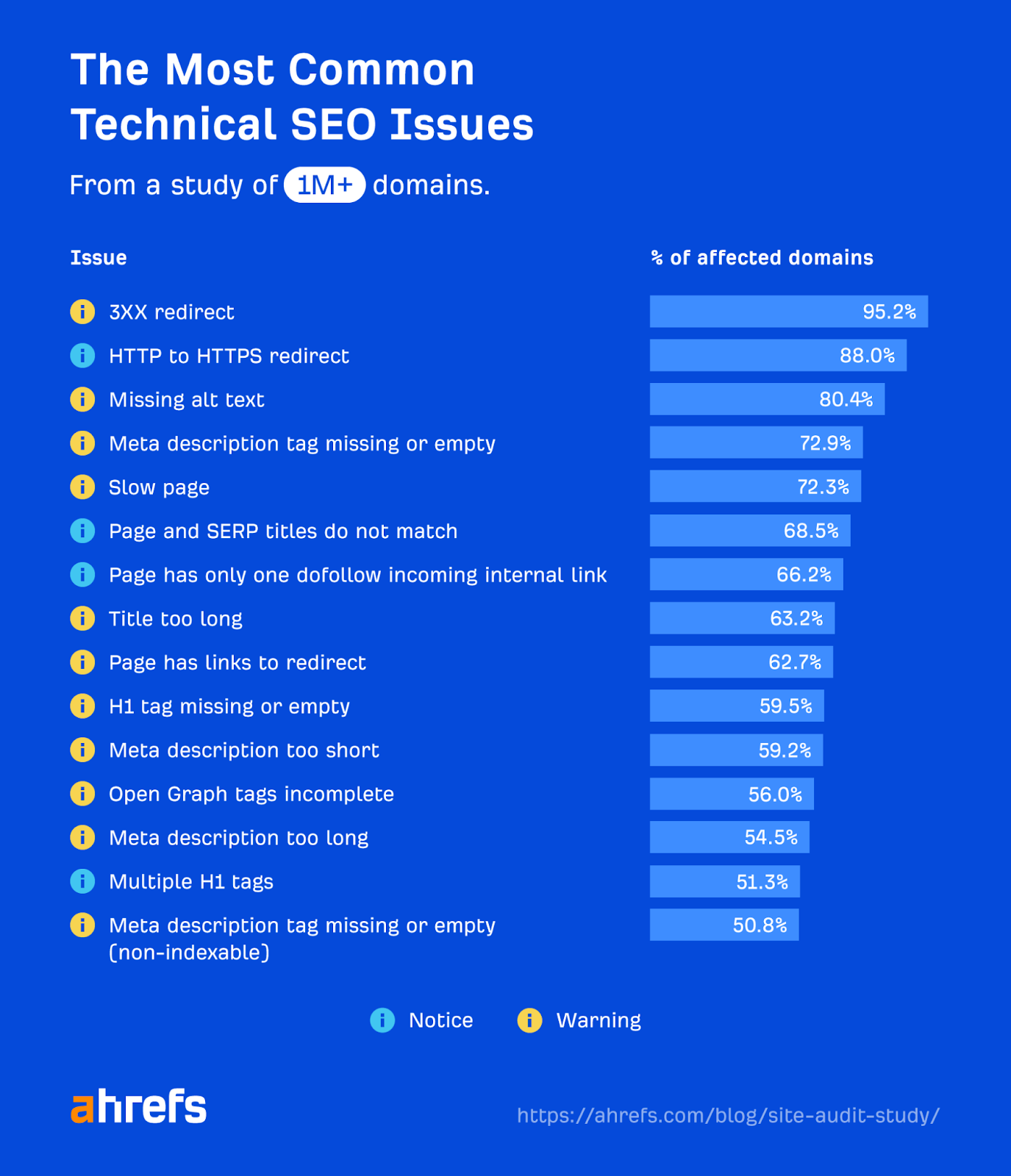
Image Source: Ahrefs
The initial SEO audit should therefore produce a prioritized action plan, not a checklist that treats every issue equally.
Define the Website's Search Priorities Before Expanding Content
Keyword research should guide resource allocation, not simply produce a long list of terms. For a new website, it should help determine which pages, topics, and search opportunities deserve attention first.
1. Start With Business Priorities
Identify the client's most important services, products, locations, and commercial goals before evaluating search volume. SEO targets should support these priorities rather than being chosen solely because they have high search volume. A popular keyword with little connection to the business may have limited value.
2. Map Search Intent to the Site Structure
Determine whether priority searches have commercial, transactional, or informational intent, then match them to the appropriate existing or planned pages. For example, a service-related search should generally lead to a relevant commercial page, while an educational query may be better suited to supporting content.
Create a keyword-to-page map to assign primary search themes, reduce the risk of multiple pages competing for the same intent, and identify topics that need new pages.
3. Prioritize Opportunities, Not Volume Alone
Evaluate potential targets based on relevance, search intent, competition, business value, and realistic ranking potential. A lower-volume keyword may be more valuable for a new site if it aligns closely with the business and offers a more achievable opportunity.
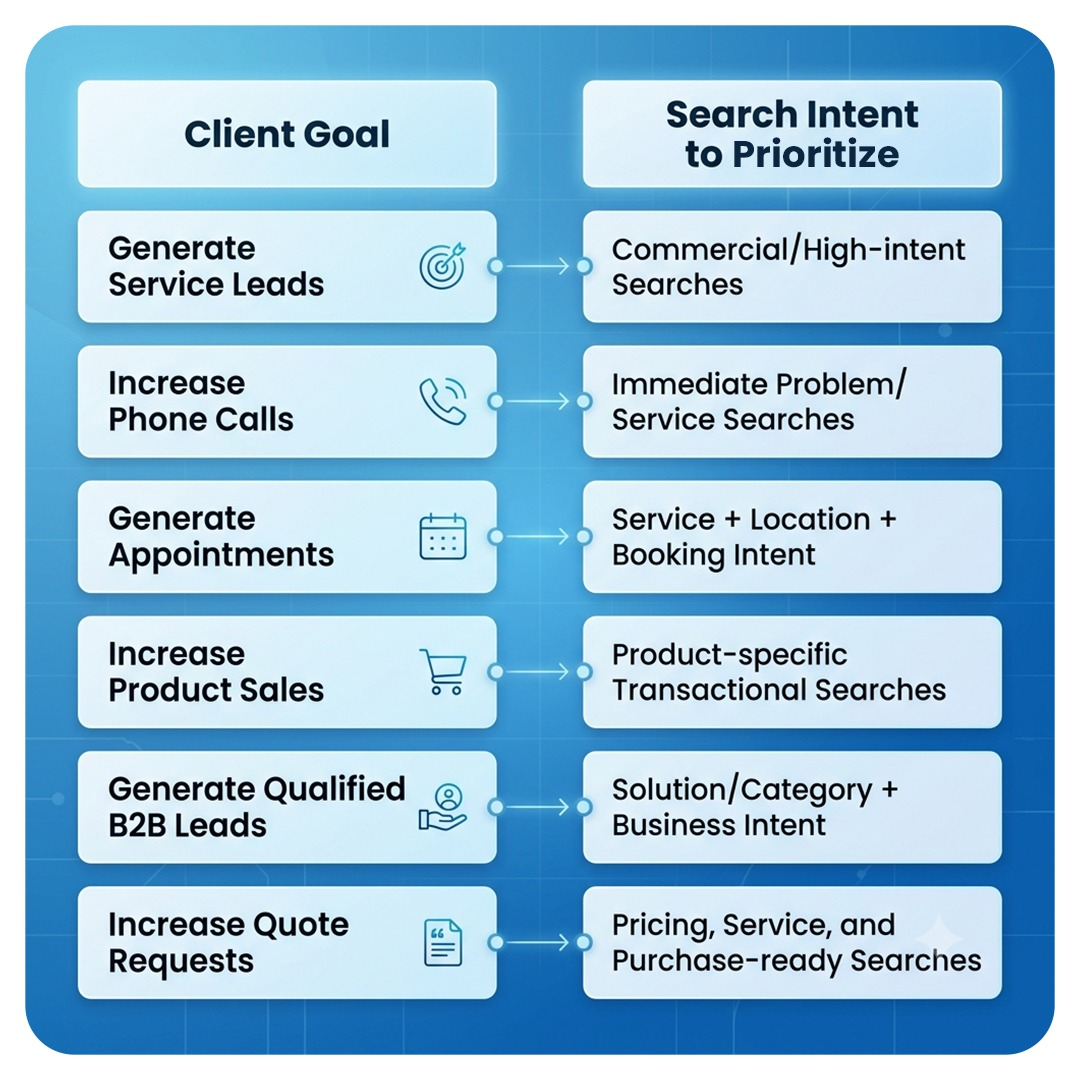
Ultimately, keyword research should answer one question: Which search opportunities deserve fulfillment resources first?
Build and Optimize the Pages That Matter Most
A new website should not automatically receive equal optimization effort across every page. Some pages carry far more commercial weight than others, and the early optimization budget should reflect that.
1. Prioritize Commercial Pages First
Core service pages, product and category pages, important location pages, and high-value landing pages typically deserve attention before lower-priority informational content. These are the pages most directly tied to conversions and revenue, which makes them the logical starting point.
2. Optimize the Page Around Its Actual Search Purpose
Effective on-page optimization considers title and H1 alignment with the target search intent, relevant supporting headings, coverage of what searchers actually need, useful supporting content, clear conversion paths, thoughtful internal links, and appropriate metadata. Optimization should reflect what the page is actually supposed to accomplish for the visitor and the business, not a generic checklist applied uniformly across the site.
3. Avoid Optimizing Every Page Equally
A new site with 30 pages does not necessarily need all 30 pages optimized at the same depth on day one. Agencies should prioritize the pages closest to revenue or strategic business goals, giving them the most thorough treatment first, while other pages receive lighter attention until resources allow for deeper work.
4. Establish Page-Level Baselines
Before optimization work scales up, it's worth recording initial indexing status, search impressions, search clicks, rankings where meaningful, and conversions where sufficient data exists. These baselines give the agency a way to measure change over time. Early ranking movement should not be presented as the sole measure of SEO progress, since indexing, impressions, and engagement often shift before rankings do.
Create Content to Fill Strategic Gaps, Not to Hit a Publishing Quota
A new website does not automatically need a high volume of blog content. Content should exist to serve a strategic purpose, not to satisfy an arbitrary publishing schedule.
1. Identify What the Priority Pages Cannot Answer
Priority commercial pages typically cannot address every question a potential customer might have. Supporting content can fill that gap by covering related questions, comparison topics, educational searches, problem-based searches, and industry-specific informational needs. These topics support the site's commercial priorities by capturing searchers earlier in their decision process and guiding them toward the pages that matter most.
2. Build Supporting Content Around Commercial Priorities
A useful way to think about this relationship: a core service page leads to a supporting topic, which links internally, which drives commercial intent. Supporting content built this way strengthens topical coverage while creating meaningful pathways back to priority commercial pages, rather than existing as an isolated blog post with no connection to the rest of the site.
3. Avoid Premature Content Expansion
Agencies should resist creating dozens of loosely related blog posts simply because the domain is new and needs "more content." Instead, each piece of content should be evaluated for topical usefulness, alignment with search intent, relevance to business priorities, internal linking opportunities, and the site's realistic ability to connect that content naturally to existing pages.
4. Use Realistic Expectations
Ahrefs' survey of 3,680 respondents found that SEO typically takes three to six months to show results, while also noting that there is no universal timeline. This finding should be attributed clearly to Ahrefs' survey research, not treated as a guaranteed outcome or applied uniformly to every new website. Some sites see earlier signals, others take longer, depending on competition, niche, and starting conditions.
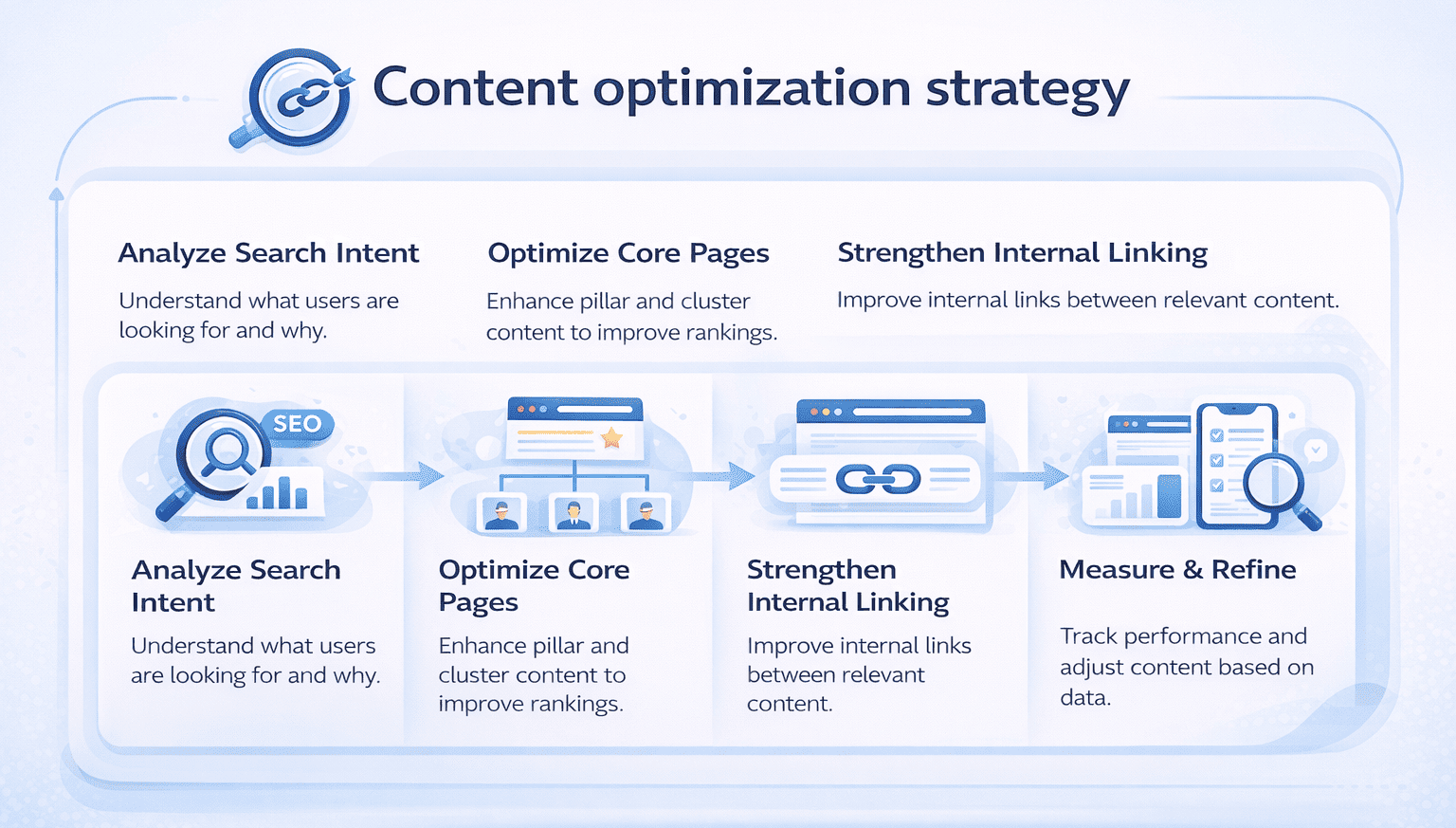
Image Source: Linkbuilding
This research reinforces why agencies should build a sustainable content roadmap rather than promising immediate ranking gains to clients eager for fast results.
Establish Internal Linking Before the Site Gets Large
Internal linking is easier to build correctly from the start than to retrofit after a site has accumulated dozens of pages.
1. Create a Logical Hierarchy
Structure the site so the homepage connects to primary commercial pages, which connect to supporting pages and relevant blog or resource content. This gives search engines and users a clearer path through the site's content as it grows.
2. Connect Related Pages Intentionally
Link new content to relevant commercial and supporting pages using descriptive anchor text rather than generic phrases such as "click here." Ensure important pages aren't orphaned and add internal links as content is published instead of leaving them for a later cleanup project.
Google's guidance indicates that descriptive anchor text helps users and Google understand linked pages. Internal linking isn't a standalone ranking solution, but it supports site structure, discoverability, and navigation.
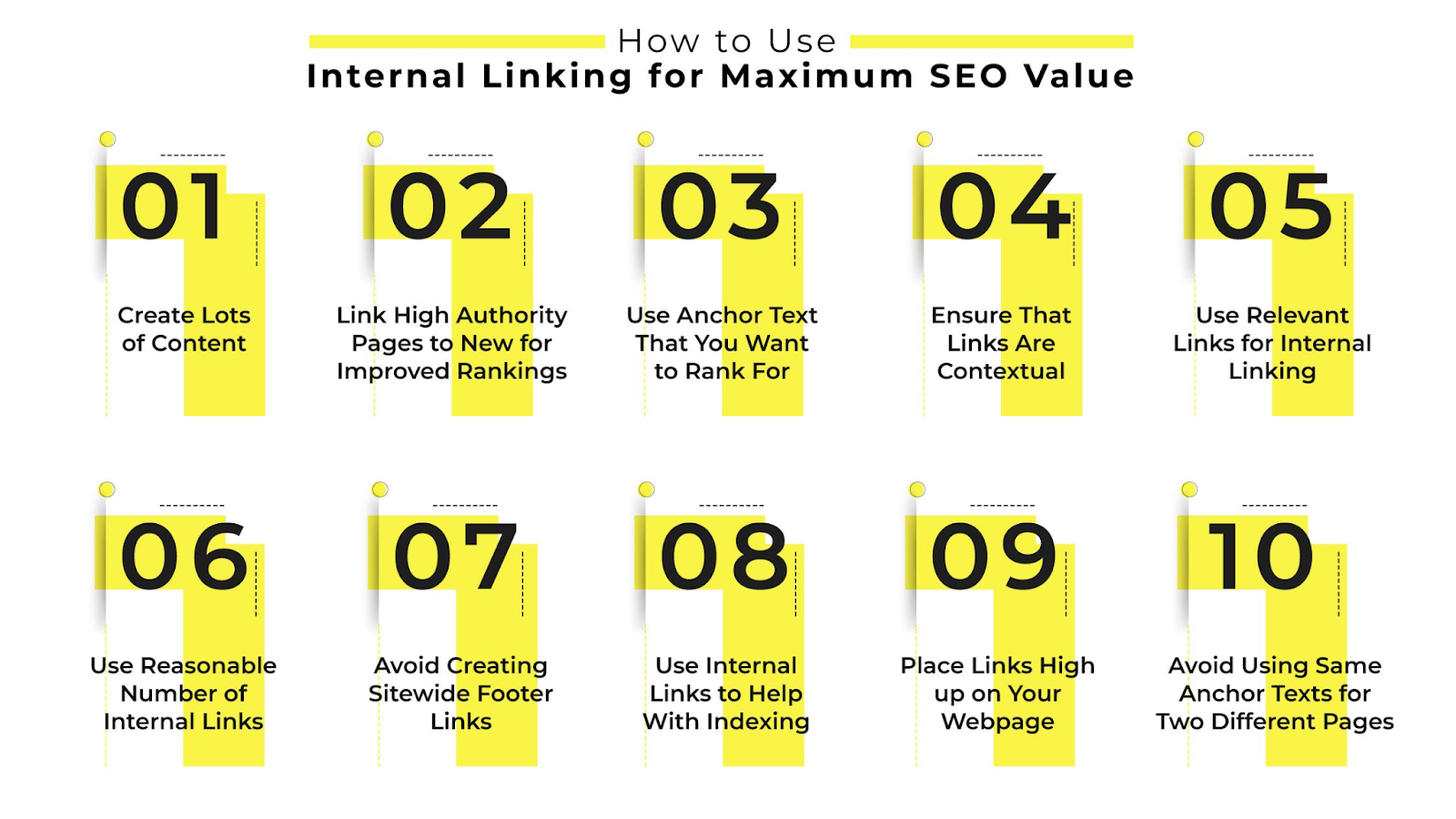
Agency Takeaway: Establishing the linking structure early reduces future rework and helps ensure every new page fits into the site's broader SEO strategy.
Don't Rush Into High-Volume Authority Building
Link building and authority development are valuable, but sequencing matters considerably for a new website.
1. Establish Something Worth Supporting First
Before scaling up link-building activity, agencies should confirm that priority pages actually exist, that content satisfies the intended search need, that the website's architecture is sound, that important technical issues have been addressed, and that the agency knows which pages actually deserve authority in the first place.
2. Make Authority Work Selective
Rather than pursuing links indiscriminately, agencies should focus on relevant opportunities, connect authority-building efforts to strategic pages, and avoid measuring progress by link volume alone. A handful of relevant, well-placed links often outperforms a large batch of low-quality ones.
3. Why Sequencing Matters?
A link pointing to a poorly targeted page does not solve the underlying page problem; it simply sends traffic and authority to something that isn't ready to convert it. Building authority before deciding which pages matter most can spread fulfillment resources too thin across a site that isn't yet structured to take advantage of it.
This isn't an argument against link building. It's an argument for building authority after the site has clear targets for that authority to support. Sequencing depends heavily on the specific website's condition, business model, competitive landscape, and priorities, so this is not a rule that applies identically to every situation.
Turn the First 90 Days Into a Prioritized Fulfillment Roadmap
The following is an example framework, not a rigid universal schedule that applies identically to every website.
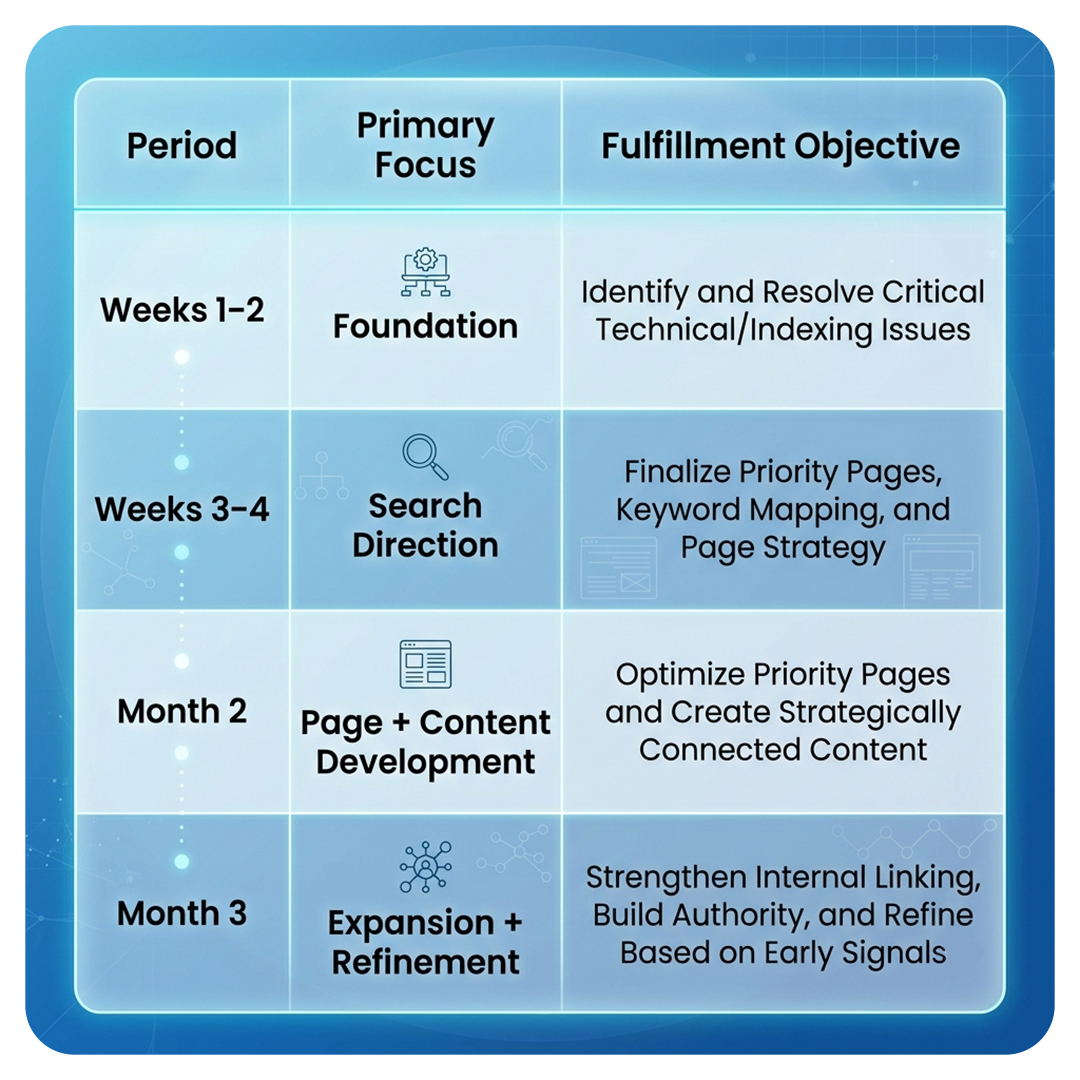
This roadmap should change based on the website's actual condition.
New websites do not all start from the same position. A technically broken website may require significantly more foundational work before it can move forward, while a well-built website may progress faster into content and authority development. Local businesses, ecommerce sites, SaaS companies, and service businesses can all have meaningfully different SEO priorities based on how customers search for and purchase from them.
What Agencies Should Report During This Period?
- Technical Issues Resolved: Show which foundational obstacles were identified and addressed.
- Pages Indexed: Monitor whether important pages are successfully entering Google's index.
- Priority Pages Published or Optimized: Track progress against the agreed-upon page strategy.
- Content Produced: Confirm supporting content is being created according to the roadmap, not on an arbitrary schedule.
- Internal-linking Improvements: Document meaningful structural changes as they happen.
- Search Impressions and Clicks: Use these as early visibility signals, since they often shift before rankings do.
- Ranking Movement Where Meaningful: Consider ranking changes alongside other indicators rather than in isolation.
- Leads and Conversions Where Sufficient Data Exists: Connect SEO activity to business outcomes once the data is mature enough to support the comparison.
This 90-day framework should never be presented as a promise that specific SEO results will occur within 90 days. It is a sequencing guide, not a guarantee.
How White Label SEO Helps Agencies Execute the Roadmap?
The challenge isn't knowing what to do; it's consistently getting it done. New websites can generate a substantial amount of fulfillment work across technical SEO, on-page SEO, content, internal linking, local SEO where applicable, link building, reporting, and quality assurance.
Internal specialists can quickly become a bottleneck when several new clients launch around the same time, especially at agencies without dedicated capacity for every discipline. This is where white label SEO services for agencies can play a practical role.
1. Use Fulfillment Capacity According to Priority
The division of responsibilities matters here. The agency determines strategy and sequence, deciding which pages, topics, and technical issues take priority based on everything discussed above. The fulfillment team then handles assigned execution, working through that prioritized roadmap rather than an undifferentiated task list.
2. Maintain Agency Ownership
Agency remains responsible for:
- Client goals
- Strategy
- Prioritization
- Recommendations
- Client communication
Fulfillment partner supports:
- SEO execution
- Specialist capacity
- Recurring implementation
- QA
- Reporting support
A white label SEO partner extends what the agency can execute; it does not replace the agency's strategic role in the relationship.
3. Avoid Promising Instant SEO Results
White label fulfillment increases execution capacity, but it does not eliminate the time required for SEO to develop naturally. As the Ahrefs survey research noted earlier, results typically take months to materialize, and outcomes should be evaluated according to the website's starting position, competitive landscape, search demand, implementation quality, and available data. A reliable white label SEO company can help an agency execute its roadmap consistently, but it cannot compress the underlying timeline that search engines operate on.

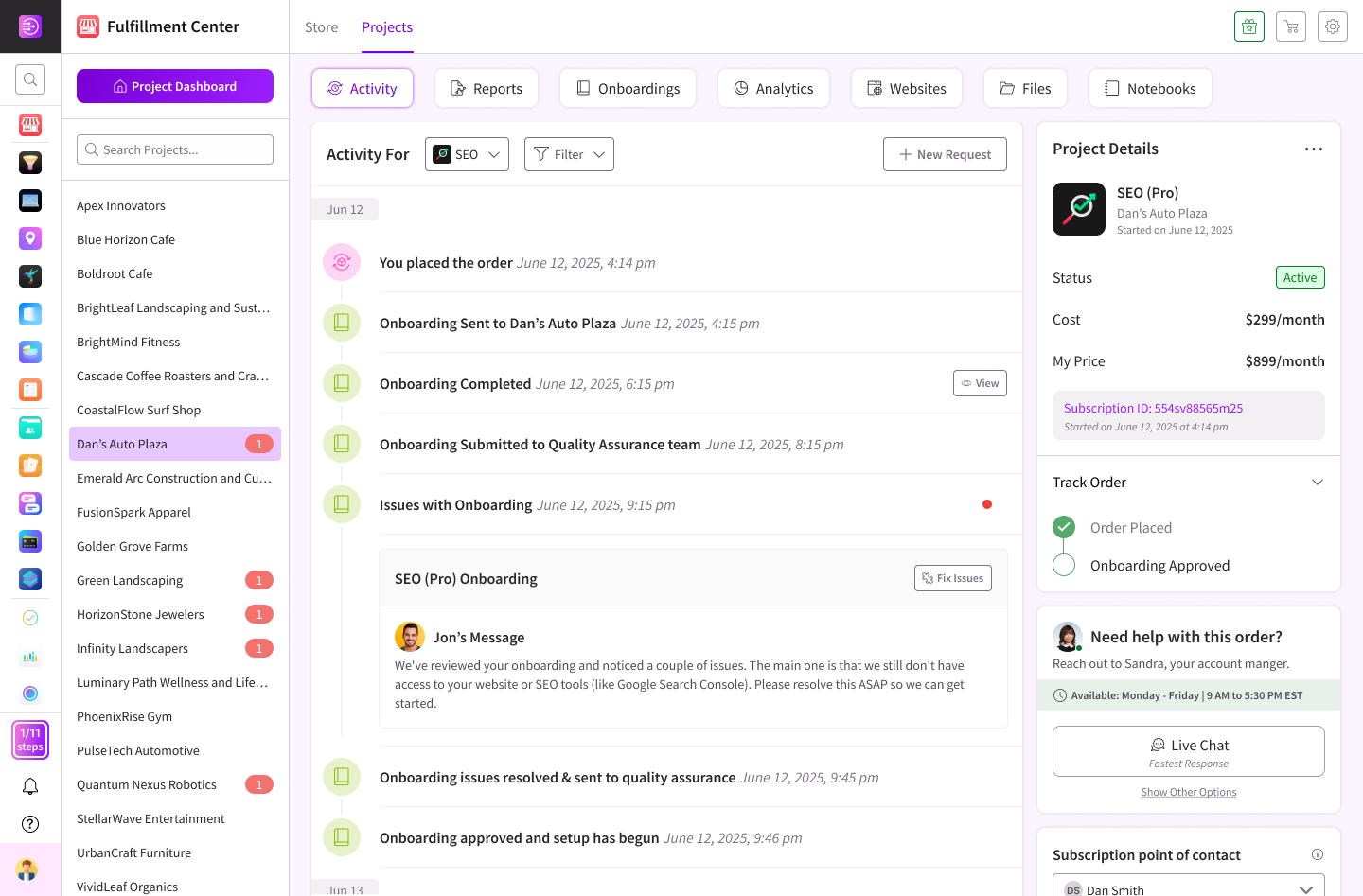
For agencies managing SEO across multiple new-site clients, DashClicks can serve as a fulfillment partner that supports the prioritization framework described throughout this article.
- Support New-Site SEO Without Expanding the Internal Team: DashClicks offers white label SEO services for agencies, including technical SEO support, on-page SEO support, content and other recurring SEO execution, and specialist support as account volume increases. Standardized processes, quality assurance, and branded or client-facing reporting capabilities can help agencies scale fulfillment without building out an entirely new internal department for every discipline.
- Position DashClicks Around the Article's Central Problem: The core idea connecting this article to white label fulfillment is straightforward: agencies decide what needs to happen first, and DashClicks can provide the fulfillment capacity to execute that roadmap. This is the most relevant connection between the SEO prioritization framework outlined above and a white label SEO partner model in general.
- Keep the Agency in Control: The agency retains ownership of the client relationship and strategic direction. DashClicks functions as an extension of the agency's fulfillment team, helping execute prioritized work according to the agency's roadmap.
The Foundation Determines What Comes Next
New websites don't need every SEO task happening simultaneously.
Agencies should first establish the technical foundation, understand what the site already has, and identify the pages and search opportunities most closely tied to business goals. From there, they can optimize priority pages, build supporting content and internal links, and introduce authority-building where it makes strategic sense.
White label SEO fulfillment can provide the capacity to execute this sequence consistently as client volume grows.
The goal isn't to make a new website look busy with SEO activity. It's to make every SEO task contribute to a foundation that can scale.


.svg)


.svg)
.svg)
.svg)
.svg)
.svg)