

.svg)

.svg)
.svg)
.svg)
.svg)
.svg)
Organic traffic is becoming harder to sustain due to AI Overviews, zero-click searches, and content saturation. Clients no longer want more blog posts simply to increase publishing volume. They increasingly expect SEO content tied directly to revenue outcomes, lead progression, and conversion visibility. However, many agencies still build SEO strategies primarily around rankings and traffic growth instead of funnel progression. As a result, most agency SEO strategies over-invest in top-of-funnel traffic while under-investing in middle- and bottom-funnel conversion content.
The problem is not that agencies lack content. The problem is that much of their SEO content remains disconnected from the buyer journey. According to Gartner, 67% of the B2B buyer's journey now occurs digitally, with search driving much of that research behavior.
At the same time, buyers are consuming significantly more content before making decisions. Research from FocusVision found that B2B buyers consume an average of 13 pieces of content before making a purchase decision.
More importantly, not all SEO content contributes equally to conversions. Research from Grow and Convert shows that content focused on evaluation intent, such as comparisons, alternatives, and implementation pages, often converts 1.5x–3x higher than purely informational content.
This shift is forcing agencies to rethink how they approach SEO execution. White label SEO is no longer just outsourced content production. It is increasingly becoming a funnel infrastructure for scalable organic growth. By leveraging structured white label SEO services, agencies can systematically support awareness, consideration, and decision stages without overwhelming internal teams. Agencies that continue treating SEO purely as a traffic-generation channel will increasingly struggle to prove ROI as search behavior becomes more fragmented and conversion journeys become longer.
Why Most SEO Content Strategies Break Down Mid-Funnel?
Most marketing agencies operate with strategies heavily focused on the top of the funnel. They prioritize producing informational blogs, targeting high-volume keywords, and developing broad educational content. While this approach is effective for generating initial traffic, it leaves significant gaps deeper in the buyer journey. These strategies frequently lack comparison pages, use-case pages, implementation content, objection-handling content, and sales-enablement SEO assets.
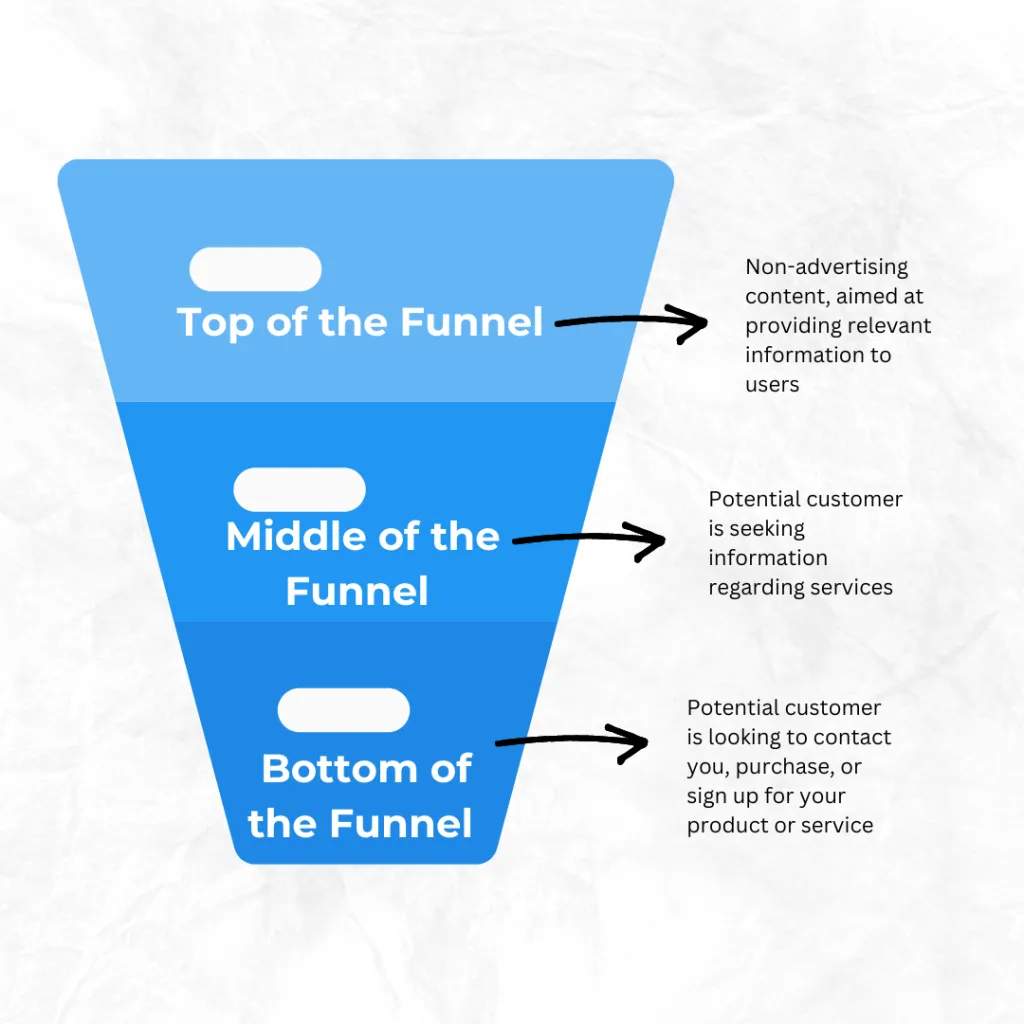
Image Source: RiZen Metrics
This situation creates what is known as a content funnel imbalance. Traffic successfully enters the top of the funnel, but insufficient content exists to move those users toward a conversion. There are several reasons why this imbalance occurs. Top-of-funnel traffic is generally easier to scale, and agencies often prioritize raw rankings over buyer progression. Internal SEO teams are frequently measured on traffic metrics instead of pipeline contribution. Additionally, creating bottom-of-funnel content requires deeper product knowledge, sales alignment, and a strong understanding of the ideal customer profile.
High traffic combined with weak funnel progression creates a multitude of problems for agencies. It results in lower lead quality, poor attribution visibility, and weaker retention conversations with clients.
Consider a SaaS client that successfully ranks for a broad term like "what is CRM software." If that client lacks CRM implementation guides, software comparison pages, pricing-focused SEO pages, and migration-related content, the traffic will grow, but the pipeline will stagnate. The visitors will simply find their educational answers and leave to evaluate competitors who provide deeper consideration content. Modern SEO success depends less on publishing volume and more on funnel-stage alignment.
SEO Content Must Match Search Intent Across the Entire Funnel
To effectively convert visitors into buyers, agencies must align their content strategy with specific search intents at every stage.
TOFU (Awareness)
The primary goal of top-of-funnel content is to capture problem-aware search behavior. Examples include educational blogs, industry explainers, trend articles, and statistics pages. Users at this stage are researching symptoms of a problem they face. TOFU content introduces brand awareness and builds initial trust, but it rarely converts directly into a sale. It serves as the entry point into the broader content ecosystem.
MOFU (Consideration)
Middle-of-funnel content aims to help users evaluate different approaches and solutions. Examples of this content include comparison pages, framework content, case studies, process explainers, and integration guides. At this stage, the searcher understands their problem and is actively exploring potential fixes. MOFU content builds evaluation confidence by demonstrating exactly how a specific solution addresses the user's operational challenges.
BOFU (Decision)
Bottom-of-funnel content is designed to reduce friction immediately before a conversion takes place. Examples include pricing pages, service pages, implementation content, migration pages, and ROI-focused landing pages. BOFU pages align directly with strong purchase intent. The user is ready to make a decision and simply needs final reassurance regarding costs, logistics, or operational deployment.
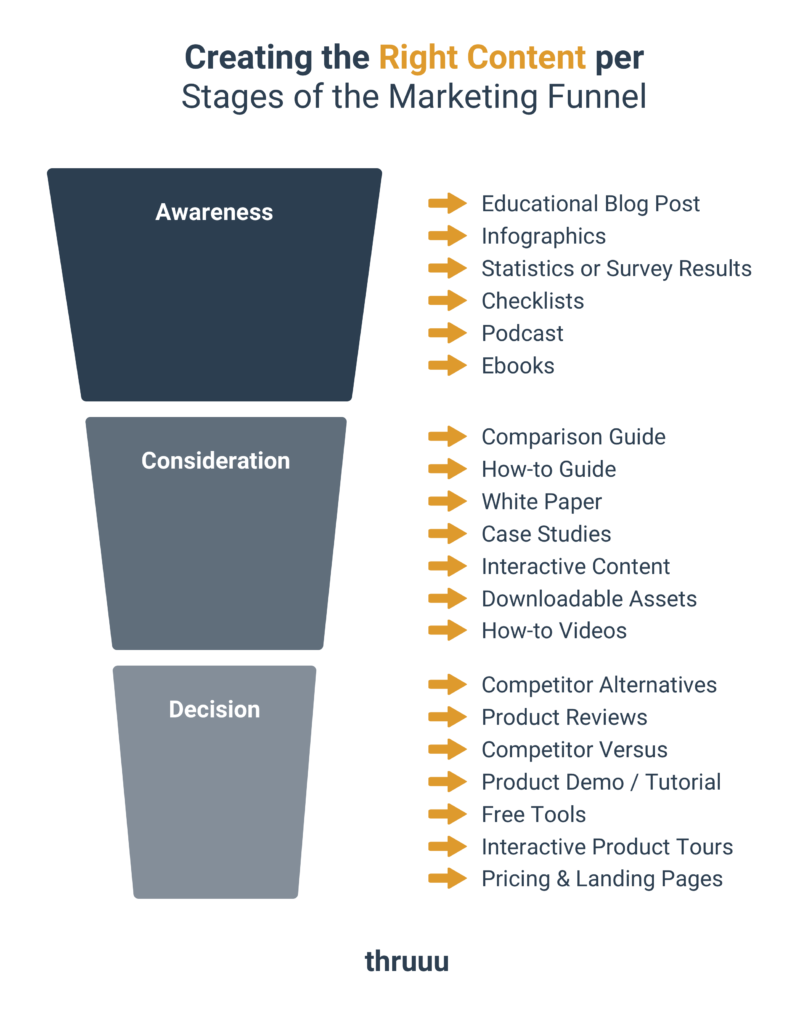
Image Source: thruuu
To connect these stages, agencies must implement intent sequencing. Intent sequencing occurs when SEO content intentionally moves users from one search intent stage to the next. Educational content must internally link to use-case content, comparison pages, and conversion-focused pages. Most agencies optimize pages individually. High-performing agencies optimize the transition between pages.
Implementation, pricing, and integration pages often convert significantly higher than informational pages because they align with late-stage buying intent. Building these interconnected pathways is critical, but executing full-funnel SEO becomes operationally difficult at scale.
Why Agencies Struggle to Execute Full-Funnel SEO Internally?
Building an interconnected content ecosystem requires resources that most agencies simply do not have in abundance. Operational bottlenecks consistently hinder execution. These bottlenecks include managing content production volume, coordinating SEO strategy planning, overseeing search intent mapping, finding writer specialization, maintaining editorial consistency, and ensuring technical SEO alignment.
Full-funnel SEO requires a highly specialized team. It demands strategists, technical SEOs, content writers, editors, conversion-focused copywriters, UX alignment professionals, and experts in internal linking strategy. Most agencies lack the bandwidth to scale all of these roles simultaneously. Hiring and training a full internal team to handle this level of complexity quickly erodes agency profit margins.
This reality introduces the concept of SEO execution debt. Agencies know exactly what content should exist across the funnel, but they cannot operationally produce and optimize it consistently. They become trapped between scaling client acquisition versus scaling fulfillment quality. When an agency brings on five new clients, the internal team must suddenly map and write highly technical, intent-driven content for five different industries. Execution debt accumulates as the agency defaults back to producing basic informational blogs just to meet monthly deliverables.
As AI-generated content increases saturation across the internet, generic top-of-funnel content becomes much less differentiated. This shifts the competitive landscape. It increases the importance of strategic funnel content, authority-building assets, conversion-focused SEO, and experience-driven content. Broader industry concerns around AI Overviews reducing clicks mean that higher-intent content is becoming exponentially more valuable. Agencies are realizing they must adapt. This is why agencies increasingly use white label SEO to operationalize funnel-stage content.
How White Label SEO Helps Agencies Build Full-Funnel Content Systems?
To overcome execution debt, agencies are shifting their perspective on fulfillment. They position white label SEO as a scalable funnel execution infrastructure. It is not viewed as outsourced blogging or cheap content production. It is a strategic mechanism to ensure every stage of the client's buyer journey is supported by high-quality content.
A. Scalable Content Production
White label SEO services help agencies produce content consistently without overwhelming internal teams. Agencies can maintain a reliable publishing cadence and scale white label SEO content across multiple funnel stages simultaneously. This infrastructure allows the agency to support multiple clients without worrying about writer capacity or missed editorial deadlines.
B. Specialized Funnel Content Expertise
Experienced white label SEO teams understand the nuances of search intent mapping. They know how to analyze SERP behavior, build complex internal linking structures, execute conversion-focused SEO, optimize for specific entities, and navigate AI-search visibility trends. This expertise enables search journey engineering. Modern SEO is no longer about isolated rankings. It is about engineering content pathways that guide users toward conversion.
C. Operational Flexibility
By leveraging an external fulfillment infrastructure, agencies gain massive operational flexibility. Agencies can expand their SEO offerings, support more diverse vertical markets, launch new campaigns faster, and reduce fulfillment bottlenecks. They achieve all of this without significantly increasing fixed overhead costs or spending months recruiting specialized talent.
D. Better Strategic Allocation
When production is handled by a trusted partner, internal teams spend less time chasing production deadlines, editing content, and managing fulfillment operations. Consequently, they spend more time on high-value activities like client strategy, retention conversations, upselling opportunities, and conversion rate optimization initiatives. This operational shift directly influences client impact and retention outcomes.
Full-Funnel SEO Creates Better Retention, Attribution, and Revenue Visibility
Client SEO expectations regarding SEO performance have evolved dramatically. Clients increasingly expect SEO to contribute to measurable pipeline growth, lead quality improvements, higher conversion rates, and clear revenue visibility. They are no longer satisfied with reports that simply show increased traffic or higher keyword rankings.
Full-funnel SEO improves attribution visibility, lead nurturing, conversion support, and sales alignment because content exists for every buying stage. This ecosystem creates revenue-supported SEO. This means the SEO content actively supports customer acquisition, continuous nurturing, competitive evaluation, direct conversion, and even sales enablement processes.
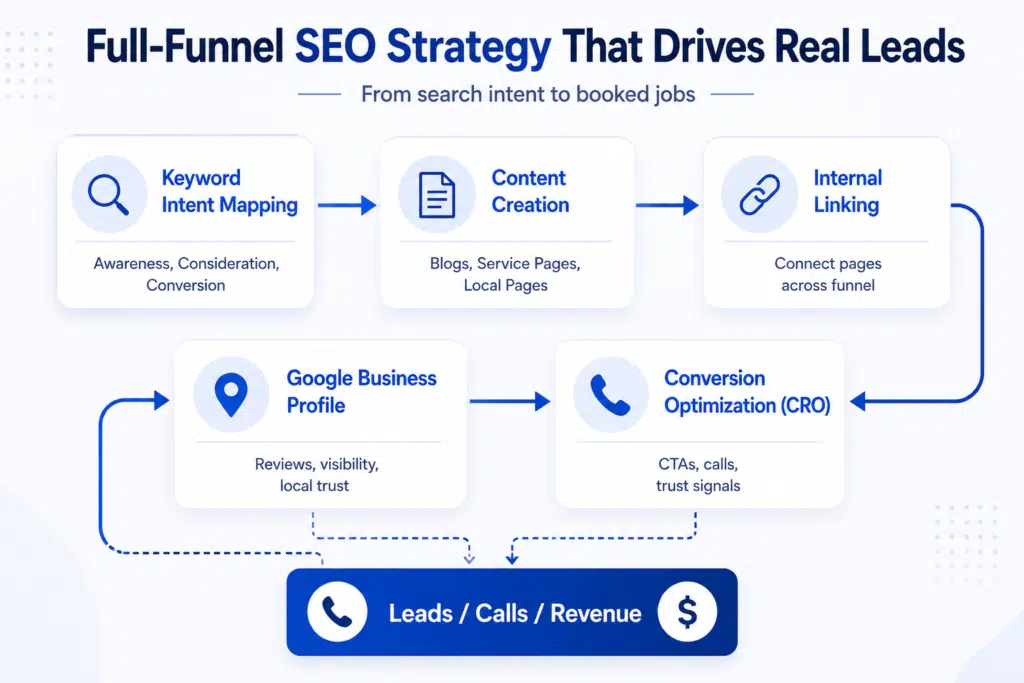
Image Source: Restoration Inbound
Consider a cybersecurity client that initially gains traffic through broad educational blogs about data privacy. If the strategy stops there, attribution remains muddy. However, after expanding the strategy into compliance guides, software comparison pages, implementation checklists, and migration content, the client experiences a major shift. The client begins generating higher-intent leads, longer session journeys, and improved demo conversions. The sales team uses the comparison pages to handle objections on calls. As a result, SEO becomes much easier to tie directly to revenue outcomes.
Evaluation-stage content and conversion-oriented pages consistently outperform informational content in lead conversion efficiency. When agencies provide this level of depth, clients see the financial impact of their marketing investment. This builds undeniable trust. It paves the way for long-term positioning around interconnected funnel ecosystems.
SEO Success Now Depends on Search Journeys
The future of SEO is shifting away from isolated keyword targeting, sheer content volume, and traffic-only reporting. The industry is moving rapidly toward search intent ecosystems, strict buyer journey alignment, and conversion-focused content architecture.
To adapt, agencies must implement SEO journey mapping. Agencies must think critically about what users search first, what they search next, and what exact piece of content will move them toward a final purchase decision. AI search experiences, zero-click behavior, mass content saturation, and rapidly evolving SERPs are drastically reducing the value of generic informational content alone.
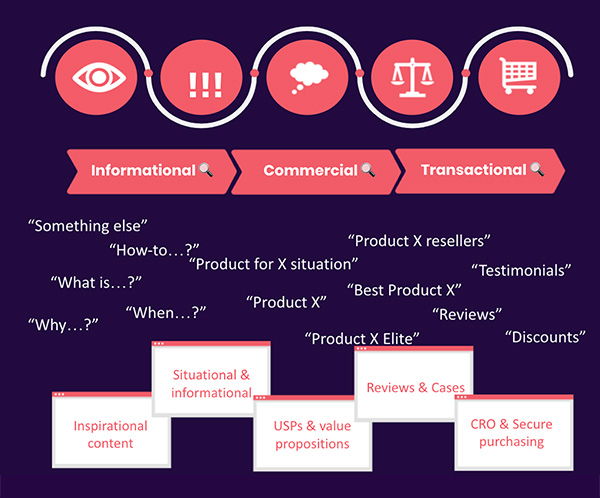
Image Source: Unikorn
If a user can get a basic definition from an AI overview, they will not click on a blog post. They will, however, click on a detailed comparison guide or a complex implementation checklist.
Agencies treating SEO as a mandate to simply "publish more blogs" will struggle to maintain ROI differentiation in this new landscape. Their clients will eventually churn due to a lack of tangible lead generation. Conversely, agencies building interconnected funnel content, deep authority assets, and logical conversion pathways will create significantly stronger long-term client value. The competitive advantage is no longer content quantity. It is strategic funnel orchestration.
How DashClicks’ White Label SEO Services Support Full-Funnel SEO Execution?
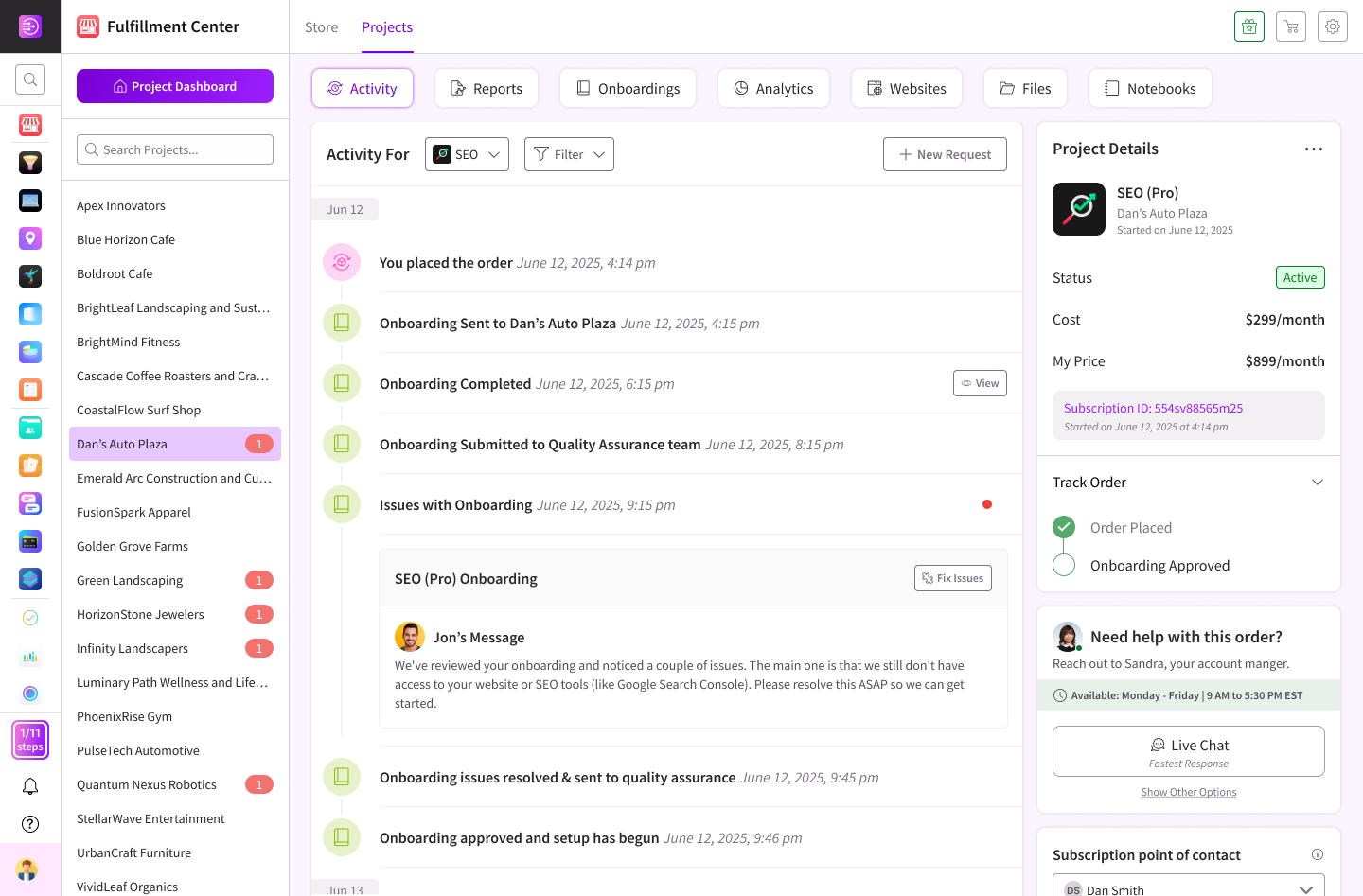
Executing a highly interconnected, full-funnel content strategy requires robust operational support. DashClicks provides marketing agencies with white label SEO services, fulfillment support, and powerful software to scale faster while eliminating backend operational work. Using a structured platform allows agencies to manage complex campaigns without losing visibility over the execution process.
The platform serves as a complete execution coordination system for agencies. Teams can seamlessly order, track, and manage SEO workflows under their own brand. The fulfillment infrastructure is designed to handle everything from initial setup to ongoing optimization. This backend coordination ensures that campaigns do not stall due to internal operational bottlenecks.
A major advantage of using structured fulfillment systems is the improvement in reporting continuity. DashClicks offers real-time analytics software that allows agencies to monitor all marketing campaigns in one place. Agencies can pull data into a unified client dashboard using pre-built widgets. This level of workflow standardization ensures that clients receive transparent, professional updates on their SEO progress.
Rather than functioning as a basic outsourcing solution, the system acts as a scalable operational SEO infrastructure. By utilizing this backend fulfillment support, agencies improve content production consistency and search intent alignment while freeing internal teams to focus more on strategy, retention, CRO, upselling, and client growth.
Conclusion
Modern SEO requires deep content alignment across the full buyer journey. The days of relying solely on top-of-funnel educational articles are over. Traffic alone is becoming less valuable without logical, intent-driven conversion pathways guiding the user forward. To remain competitive and prove ROI, agencies must adapt their methodologies to meet buyers exactly where they are in their decision-making process.
Agencies need scalable systems capable of producing, optimizing, and connecting funnel-stage content consistently. Relying on strained internal resources often leads to execution debt and missed opportunities in the middle and bottom of the funnel. White label SEO helps agencies scale content operations, improve search intent alignment, support lead progression, and strengthen attribution visibility. Most importantly, it allows agencies to tie SEO efforts more directly to actual revenue outcomes for their clients.
The agencies that win in modern SEO will not necessarily be the ones publishing the most content. They will be the ones building the most strategically connected search journeys across every stage of the funnel.


.svg)


.svg)
.svg)
.svg)
.svg)
.svg)