

.svg)

.svg)
.svg)
.svg)
.svg)
.svg)
SEO audits are often treated as diagnostic tools. Agencies use them to uncover technical gaps, content issues, and missed optimization opportunities. While this approach is technically sound, it leaves a major opportunity on the table. Too often, audits are delivered as static documents that explain what is wrong but fail to clearly show what comes next.
Industry data supports this challenge. According to surveys from tools like Ahrefs and Semrush, a large percentage of SEO engagements begin with an audit. However, agency benchmark reports consistently show that project-based SEO work generates less predictable revenue than retainers. Retainers provide stability, better forecasting, and stronger client relationships, yet many audits never convert into ongoing work.
The issue is not a lack of expertise. Most agencies deliver thorough and accurate audits. The problem is positioning. Clients often view audits as one-time reports instead of roadmaps tied to growth. Without clear prioritization, revenue impact, and execution planning, clients struggle to see why they should commit to a long-term engagement.
This is where white label SEO shifts the role of audits entirely. Instead of being endpoints, audits become the starting point of a long-term partnership. When audits highlight quick wins, quantify upside, and map out structured execution over months, retainers feel like a logical next step rather than a sales pitch.
Most agencies do not fail because their audits are incorrect. They struggle because their audits do not clearly explain what happens next. White label SEO provides the systems, structure, and scalability needed to turn audits into predictable, ongoing revenue.
Why SEO Audits Fail to Convert Into Retainers?
The problem isn’t audit quality — it’s audit positioning. When audits are framed as one-time evaluations, engagement ends. When they define ongoing risk, control, and accountability, retainers become the logical outcome.
.jpg)
1. Audits Are Too Technical and Not Value-Framed
Many SEO audits are built by experts for experts. They are packed with technical details like crawl errors, broken links, schema warnings, duplicate content, and page speed scores. While these elements are important, they rarely speak the client’s language. Most clients are not asking how many errors their site has. They want to know how SEO issues are affecting visibility, leads, and revenue.
When audits present long lists of problems without context, clients feel overwhelmed instead of informed. The report starts to feel like a technical checklist rather than a business growth plan. Clients see what is broken, but they do not clearly see what they gain by fixing it.
Another common gap is the absence of business-focused metrics. Many audits fail to clearly connect technical fixes to outcomes such as increased traffic, higher conversions, or improved sales performance. Without these links, the audit feels educational rather than strategic.
Key insights that are often missing include:
- Estimated traffic growth from fixing high-impact technical issues
- Revenue at risk due to poor rankings, slow pages, or indexation problems
- Conversion rate improvements tied to UX, mobile performance, and site structure
When audits lack this framing, clients struggle to justify ongoing investment. They may appreciate the analysis, but do not feel confident committing to a retainer because the business upside is unclear.
2. No Clear Separation Between Quick Wins and Long-Term Work
Another major reason audits fail to convert is poor sequencing. Many reports present every issue with equal urgency. From minor metadata tweaks to complex technical rebuilds, everything is grouped together without clear prioritization.
This creates confusion. Clients cannot tell which actions will produce results quickly and which ones require consistent effort over time. As a result, the path forward feels uncertain.
Momentum matters, especially early in an agency-client relationship. When clients cannot see what can realistically be achieved in the first 30 to 60 days, hesitation sets in. They worry that SEO will take too long to show value, even when that is not the case.
Without a clear breakdown between short-term wins and long-term initiatives, agencies miss a critical opportunity to demonstrate early value, build trust, and justify a retainer from the start. Clear differentiation helps clients feel progress is both measurable and achievable.
3. Audits End Without a Structured Execution Plan
Many SEO audits stop at diagnosis. They do a good job explaining what is wrong but fail to outline how the issues should be fixed, in what order, and over what timeframe.
This leaves clients with unanswered questions. Who is responsible for implementation? What should be addressed first? How long will each phase take?
Without timelines, ownership, and sequencing, execution feels vague. Clients are left unsure about scope and expectations, which makes ongoing engagement harder to sell. Agencies may hesitate to propose retainers because the work has not been clearly defined.
A lack of structure turns a valuable audit into an incomplete experience. Clients need clarity on next steps before they are comfortable committing to long-term SEO efforts.
4. Inconsistent Audit Quality Across Clients
In-house audits often depend heavily on who is doing the work. One strategist may focus deeply on technical SEO, while another prioritizes content gaps or backlinks. While both approaches have value, inconsistency creates problems at scale.
When audit depth and structure vary from client to client, it becomes difficult to standardize offerings. Sales teams struggle to explain what clients will receive, and delivery timelines become unpredictable.
This inconsistency also makes retainers harder to productize. If every audit is built from scratch, every retainer feels custom as well. Agencies find it difficult to scale because there is no repeatable system behind the service.
5. Weak Follow-Up and Poor Audit Presentation
How an audit is delivered matters just as much as what it contains. Many audits are shared as PDFs or spreadsheets with minimal explanation. After delivery, communication often slows or stops entirely.
Without a clear narrative, clients do not know how to interpret the findings. There is no story that connects issues, priorities, and outcomes. As a result, the audit is treated as a reference document rather than a proposal for growth.
When audits lack strategic presentation, clients may appreciate the information but fail to see it as the foundation for ongoing work.
6. Agencies Lack Time to Turn Audits Into Sales Assets
Even when audits uncover significant opportunities, agencies often lack the time to reframe those insights into sales-ready narratives. Strategists move quickly to the next audit or campaign, leaving little room for follow-up conversations that position retainers effectively.
This creates a missed opportunity. Audits already contain the value agencies need to sell ongoing services. Without a structured system to translate insights into execution plans, that value never fully materializes.
The core issue is not the audit itself. It is the absence of a clear, repeatable process that turns insight into action. This gap is exactly where white label SEO changes the model by providing structure, consistency, and execution clarity.
How White Label SEO Turns Audits Into Retainers?
SEO audits by white label SEO are structured with long-term engagement in mind. Instead of acting as technical checklists, they are designed to support ongoing strategy and execution. The focus shifts from identifying problems to prioritizing impact, business outcomes, and realistic implementation.
Rather than presenting a flat list of issues, these audits organize findings into clear, actionable categories that help clients understand progression over time:
- Immediate wins that can be addressed quickly and show early results
- Mid-term improvements that build consistency and momentum
- Long-term growth initiatives are tied to scalability and competitive positioning
This layered structure helps clients see SEO as a process, not a one-time fix. They gain clarity on what matters now, what comes next, and how each phase supports long-term performance. When improvements are framed as a journey instead of a repair list, retainers feel like a natural extension of the audit.

1. Clear Quick Wins That Prove Value Early
Early results play a major role in client confidence. Audits by White label SEO services are designed to surface fixes that can deliver measurable impact within the first 30 to 45 days. These quick wins demonstrate progress and reinforce the value of ongoing work.
Common early opportunities include:
- Indexation cleanup and crawl optimization
- Internal linking improvements that strengthen page authority
- Core Web Vitals and page speed enhancements
Google research consistently shows that faster-loading websites experience lower bounce rates, which directly influences engagement and conversions. Improvements in performance and accessibility often lead to visible gains faster than clients expect.
To support this momentum, audits highlight clear metrics such as:
- Time to visible impact
- Site health score improvements
- Early traffic stabilization or recovery
When clients see progress early, retainers become easier to justify. Trust builds faster, and long-term execution feels worthwhile.
2. Long-Term SEO Roadmaps That Naturally Extend Engagement
Strong audits do not stop at quick fixes. They include structured execution plans that typically span six to twelve months. These roadmaps provide a clear view of how SEO efforts compound over time.
Most long-term plans cover areas such as:
- Technical SEO enhancements to support site stability
- Content development and optimization for sustained visibility
- Authority building through structured link strategies
When clients review and approve an SEO roadmap during the audit phase, the retainer becomes the execution of a plan they already understand and agree with. This removes friction from the sales process and shifts the conversation from whether to invest to how soon work can begin.
3. Quantifying Opportunity and Risk
White label SEO also helps agencies translate findings into meaningful forecasts. Instead of presenting issues in isolation, teams estimate both upside and risk to frame SEO as a strategic investment.
This often includes:
- Potential traffic gains from ranking improvements
- Revenue loss tied to unresolved technical or content issues
- Competitive gaps in authority or topical coverage
By quantifying opportunity and risk, agencies position retainers as proactive and preventative. Ongoing SEO becomes a way to protect current performance while unlocking future growth, rather than an optional marketing expense.
4. Audit Insights Translated Into Client-Ready Narratives
One of the most valuable aspects of white label SEO services is interpretation. Complex technical findings are translated into clear, plain-language explanations that resonate with decision-makers.
Client-ready deliverables often include:
- Executive summaries focused on outcomes, not errors
- Prioritized action plans that clarify next steps
- Visual breakdowns that show impact and progress
This approach allows agencies to lead with strategy instead of diagnostics. Clients understand why actions matter, which builds confidence and supports long-term engagement.
5. Repeatable, Scalable Audit-to-Retainer Playbooks
Consistency is critical for growth. White label SEO introduces standardized audit templates that ensure every client receives the same depth and structure.
This repeatability enables agencies to:
- Deliver audits faster without sacrificing quality
- Upsell retainers more easily with predictable scope
- Set clear client SEO expectations across all engagements
With a reliable framework in place, agencies can scale confidently while maintaining consistent results.
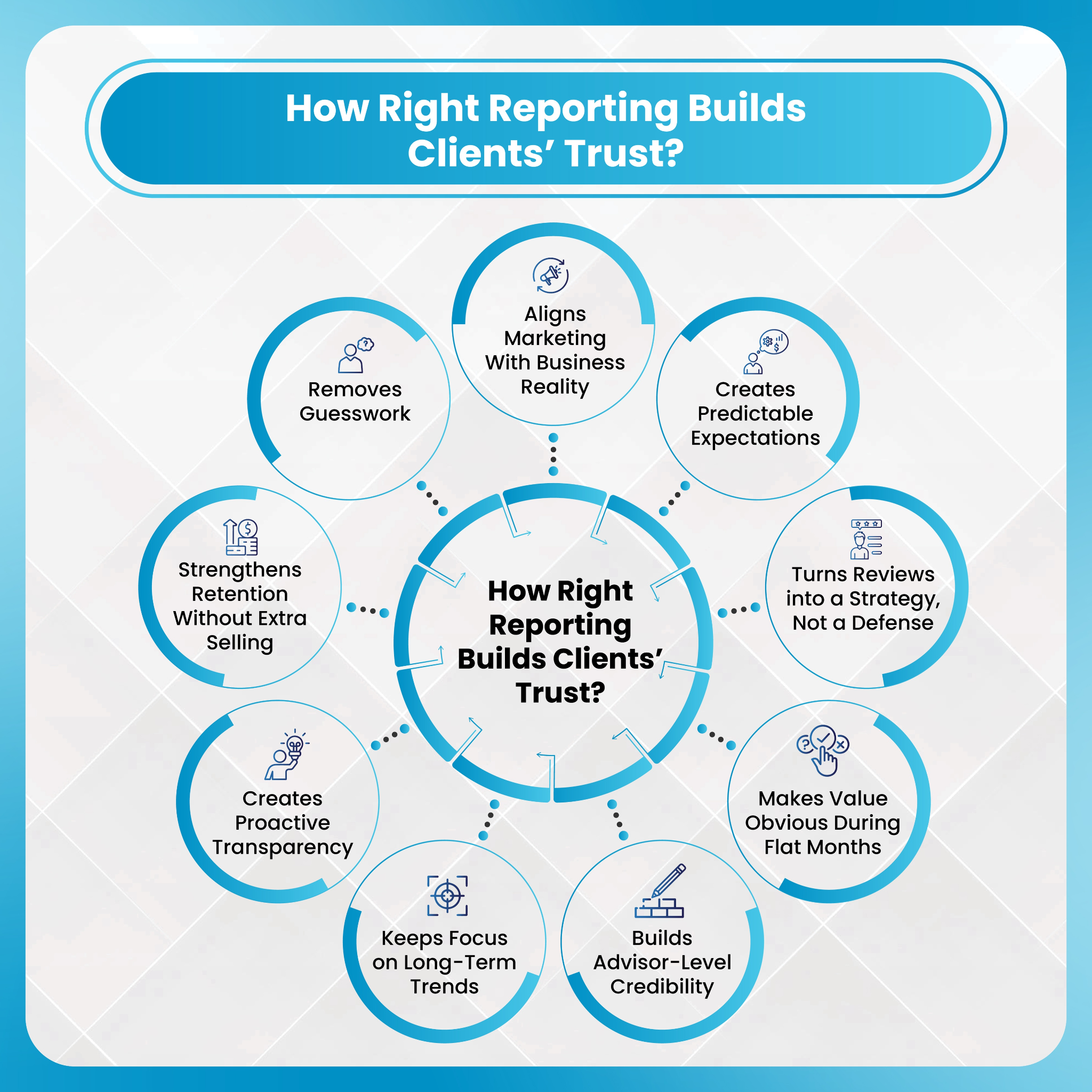
6. Reporting That Reinforces Ongoing Value
Monthly reporting plays a key role in retention. Reports tie progress directly back to the original audit, showing how identified issues are being resolved over time.
Reports commonly track:
- Issues resolved versus issues identified
- Organic traffic growth trends
- Ranking improvements for priority keyword clusters
- Overall technical health progression
This continuity reminds clients why the retainer exists and reinforces the value of continued investment month after month.
7. Allowing Agencies to Focus on Strategy and Client Trust
When execution and analysis are handled by a white label SEO agency, internal teams gain valuable time and focus. Agencies can shift attention away from technical production and toward higher-level responsibilities.
This allows teams to spend more time on:
- Client communication and education
- Strategic positioning and planning
- Retention and expansion opportunities
As a result, audits evolve from isolated deliverables into the foundation of long-term partnerships. Instead of closing a project, agencies open the door to sustained collaboration and predictable growth.
How DashClicks’ White Label SEO Services Turn Audits Into Retainers?
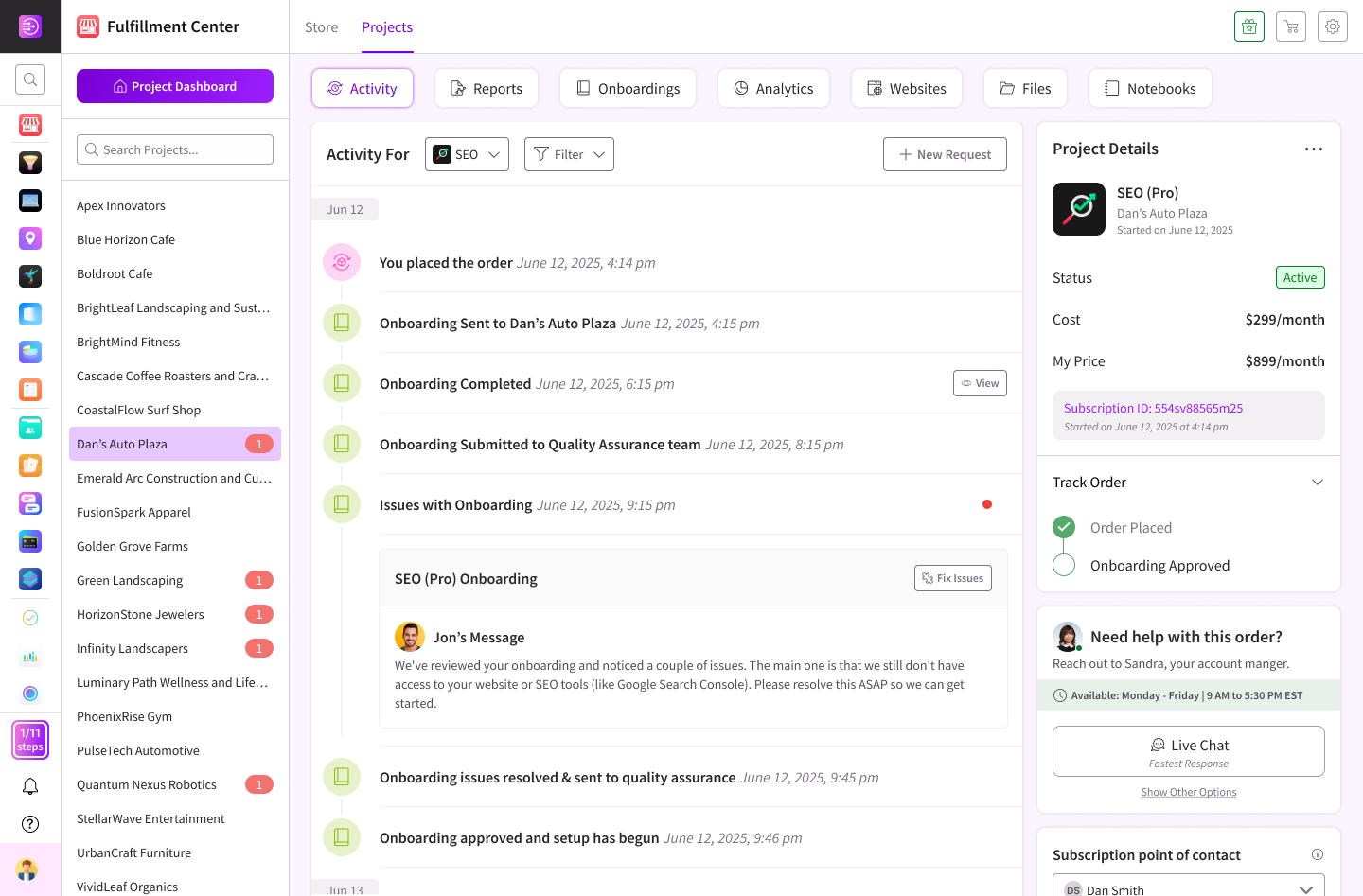
DashClicks plays a key role in helping agencies transform SEO audits into ongoing retainers through its structured and scalable approach. The platform offers white label SEO services designed specifically for agency growth and client retention.
Their platform provides retention-focused audits that go beyond technical checklists. Each audit highlights quick wins alongside long-term opportunities, giving clients a clear sense of progress and direction. Issues are prioritized based on business impact, helping agencies clearly explain why certain fixes matter more than others.
Execution-ready roadmaps are a core strength. Their platform delivers SEO plans that naturally extend audits into monthly retainers, removing ambiguity around scope and timelines. Ongoing optimization aligns closely with initial audit findings, which helps maintain continuity and trust.
All deliverables are white-labeled, allowing agencies to present insights and results as their own. This reinforces credibility while saving time and resources. With consistent reporting tied back to the original audit, agencies can clearly show progress and reinforce the value of ongoing engagement.
By handling execution and reporting, DashClicks enables agencies to focus on strategy, relationships, and growth while turning one-time audits into predictable recurring revenue.
From One-Time Audits to Predictable Retainers
SEO audits already contain the insights agencies need to sell retainers. The difference lies in how those insights are structured, prioritized, and executed.
White label SEO transforms audits into living roadmaps that guide long-term growth. Agencies that systemize their audit-to-retainer workflows see stronger retention, more predictable revenue, and higher client trust.


.svg)


.svg)
.svg)
.svg)
.svg)
.svg)