

.svg)

.svg)
.svg)
.svg)
.svg)
.svg)
Agencies today have access to more search data than ever before. Google Search Console, analytics platforms, rank trackers, backlink tools, and SEO audits generate a constant stream of findings about client website performance. Collecting data is the easy part. The harder challenge is identifying what matters, especially when agencies manage multiple client accounts with limited internal capacity.
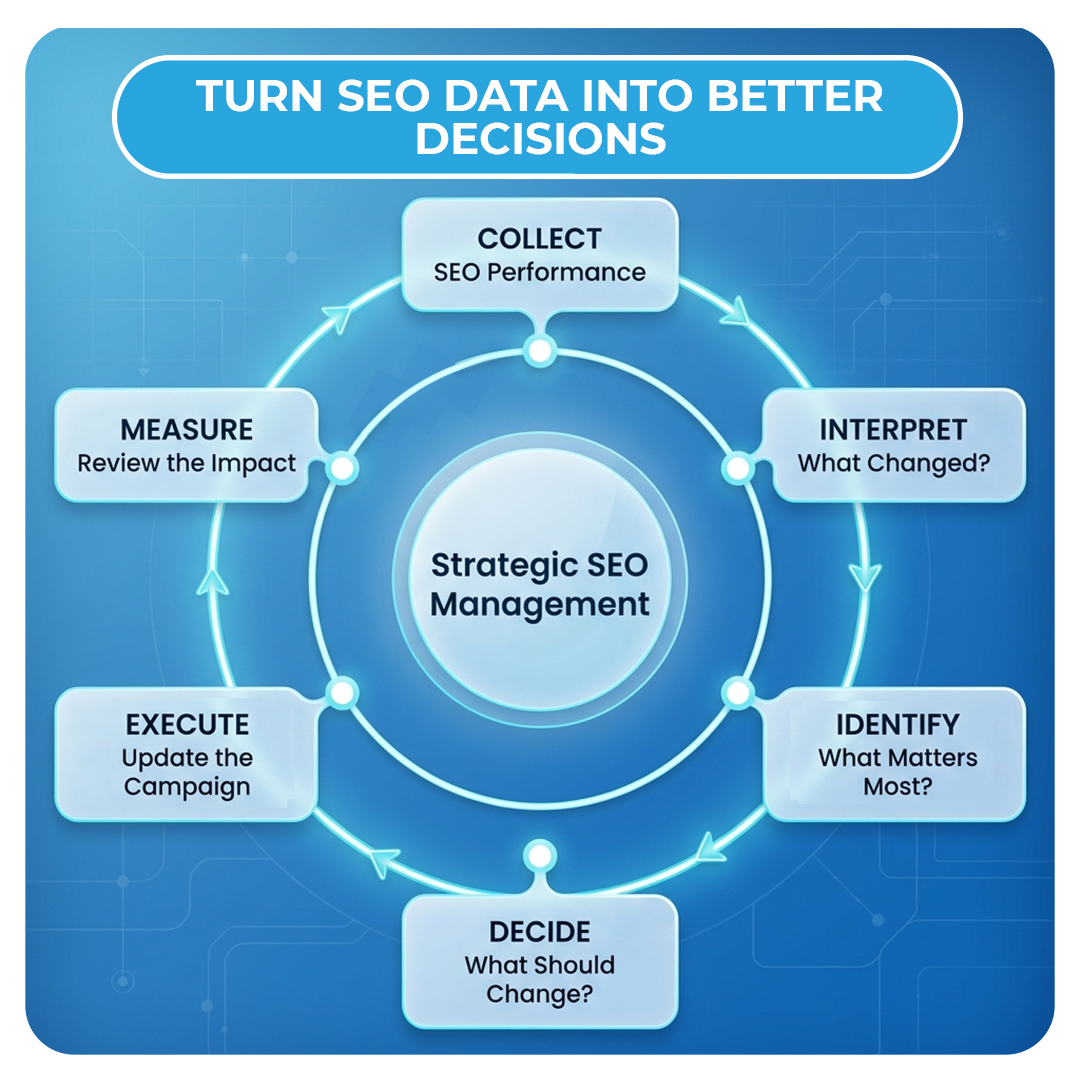
Search data should answer one practical question: What should we do next? A report full of keyword positions, traffic charts, and technical findings is only useful if it leads to action. The process is straightforward: search data becomes an insight, the insight is weighed against other priorities, the priority becomes a specific SEO action, and the action is measured to determine whether it worked.
Search data → Insight → Priority → SEO action → Measurement
This is where a white label SEO agency can play a meaningful role. Agencies that understand their clients' businesses and search performance still need the hands-on capacity to execute consistently across every account. White label SEO outsourcing provides that execution layer without requiring agencies to build every specialist function internally.
BrightEdge's 2019 channel research found that organic search accounted for an average of 53.3% of trackable website traffic across the industries studied. While this figure is several years old and should not be treated as a current universal benchmark, it illustrates the long-standing importance of organic visibility.
Search data becomes strategically useful when agencies consistently turn findings into prioritized SEO actions.
Why Search Data Alone Isn't Enough?
Having access to SEO data does not automatically produce a useful strategy. Data is raw material. It needs interpretation, context, and follow-through before it becomes something a client benefits from.
1. Large Volumes of Data Can Obscure Priorities
A single client account can generate a long list of findings: ranking changes, technical SEO issues, content opportunities, backlink gaps, traffic fluctuations, and shifts in search visibility. Multiply that across a dozen or more clients, and an agency can end up with dozens of potential issues and no clear sense of which ones deserve attention first. Without a filtering process, teams either try to fix everything at once or default to whatever seems most urgent that week, rather than what is actually most impactful.
2. Data Needs Business and Search Context
The same metric can mean very different things depending on the client. A ranking drop for a seasonal retailer in the off-season is not the same signal as a ranking drop for a service business during its busiest quarter. Interpretation depends on factors like industry, search intent, competitive pressure, seasonality, the website's history, the client's specific business goals, which products or services matter most, and who the target audience is. Search data without this context is just numbers on a screen.
4. Execution Determines Whether an Insight Creates Value
Identifying an SEO opportunity is only the first step. Agencies need to report what happened, understand why, decide what to do next, and complete the work. While many agencies handle the first three stages well, execution can become difficult with limited teams and multiple accounts.
White label SEO fulfillment helps agencies bridge this gap by handling approved SEO work while the agency retains control over strategy and client communication.
Turn Keyword and Ranking Data Into Concrete SEO Opportunities
Ranking reports full of keyword movements are common, but they rarely tell a client anything actionable on their own. Agencies add value by turning that raw movement into specific opportunities.
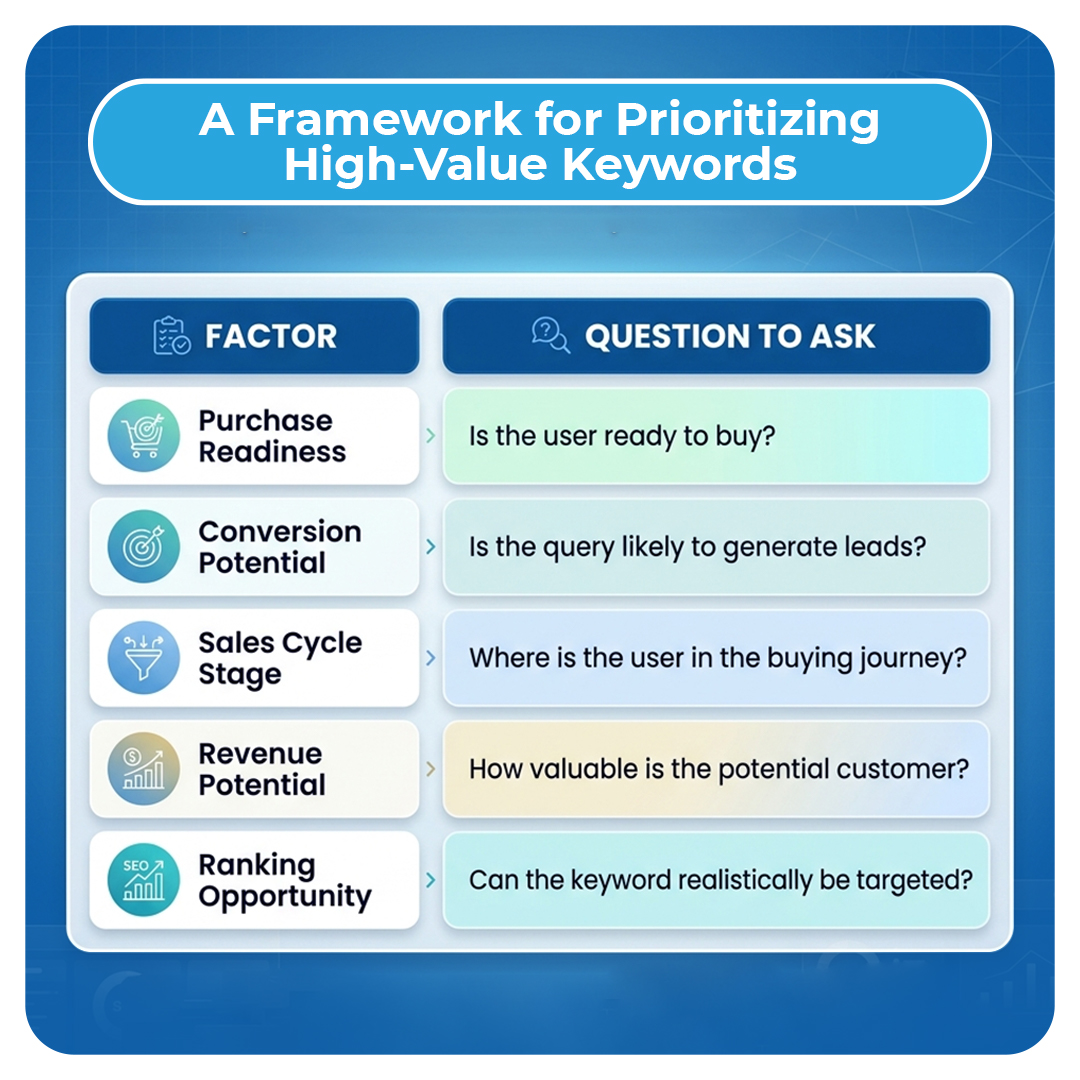
1. Identify Keywords With Existing Search Visibility
Some of the most useful opportunities come from keywords a page already has some visibility for. This includes queries where a page receives impressions but hasn't converted them into strong rankings, terms where there's clear room to move up, and search opportunities tied to a client's priority services or products. Not every keyword with visibility deserves investment. The point is to identify where existing traction could realistically be improved with focused work.
2. Find Relevant Queries That Do Not Match the Original Page Target
Pages often pick up impressions for queries that were never part of the original targeting. When this happens, it's worth checking whether the query matches the page's purpose, whether it reflects a relevant search intent, and whether it should be addressed through content expansion, a new supporting page, or an internal linking adjustment.
3. Investigate Declining Rankings
A ranking decline can point to several different needs: content updates, on-page optimization, stronger internal linking, better alignment with search intent, technical investigation, or additional authority-building work. Not every decline warrants a major response. Agencies should look at the scale of the drop, how long it has lasted, which pages are affected, and how important those pages are to the client's business before deciding on a course of action.
4. Identify Keyword Gaps Carefully
Keyword gap analysis, where a competitor ranks for a term the client doesn't, can surface real opportunities. But a gap is not automatically a priority. It needs to align with what the client actually offers, who they're trying to reach, their business objectives, the relevant search intent, and how much commercial value the term realistically holds.
5. Group Keywords by Search Intent
Rather than treating every keyword as its own isolated task, agencies get more value by grouping related queries according to intent, whether informational, commercial, transactional, or local. This helps consolidate work into fewer, more efficient content and optimization projects instead of a scattered list of one-off fixes.
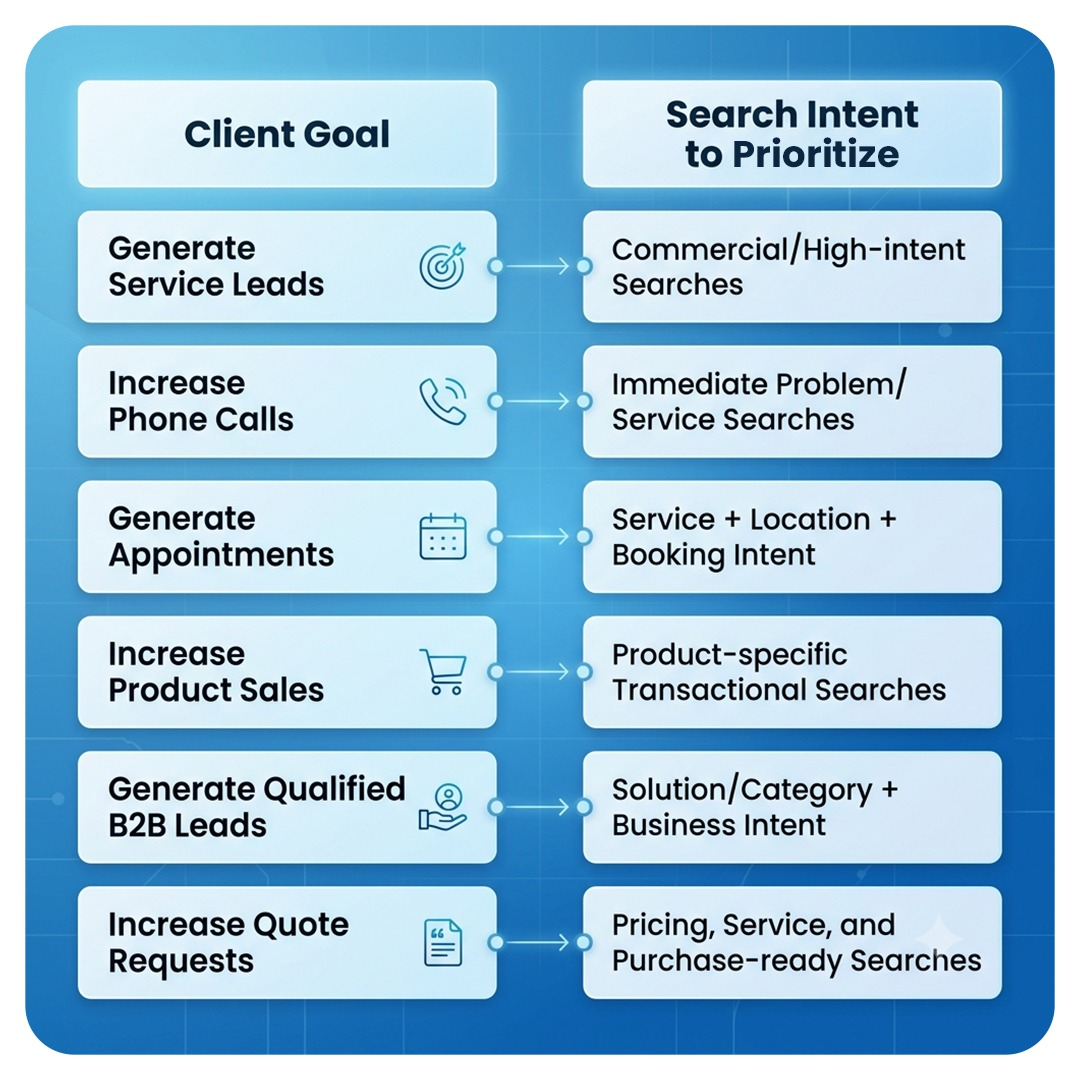
6. Convert Findings Into Specific SEO Actions
Once findings are organized, they can be translated into concrete tasks: refreshing an existing page, expanding topical coverage, creating a new supporting page, improving internal links, optimizing headings and metadata, building relevant backlinks, reassessing a page's intent, or consolidating overlapping content.
Instead of sending clients a spreadsheet of ranking changes each month, agencies can turn that same data into a prioritized SEO worklist, which is a far more useful deliverable for both the client and the team doing the work.
Use Search Visibility and CTR Data to Find Pages That Need Attention
Rankings only tell part of the story. Search behavior data reveals how people actually respond once they see a page in the results.
1. How Impressions, Clicks, CTR, and Average Position Work Together
Google Search Console's Performance report tracks impressions, clicks, click-through rate, and average position, and allows this data to be broken down by query, page, country, device, search appearance, and date. These metrics work together rather than in isolation, and none of them fully explains the entire customer journey on their own.
2. Identify Common Search Performance Patterns
Certain patterns tend to show up repeatedly and point toward areas worth investigating:
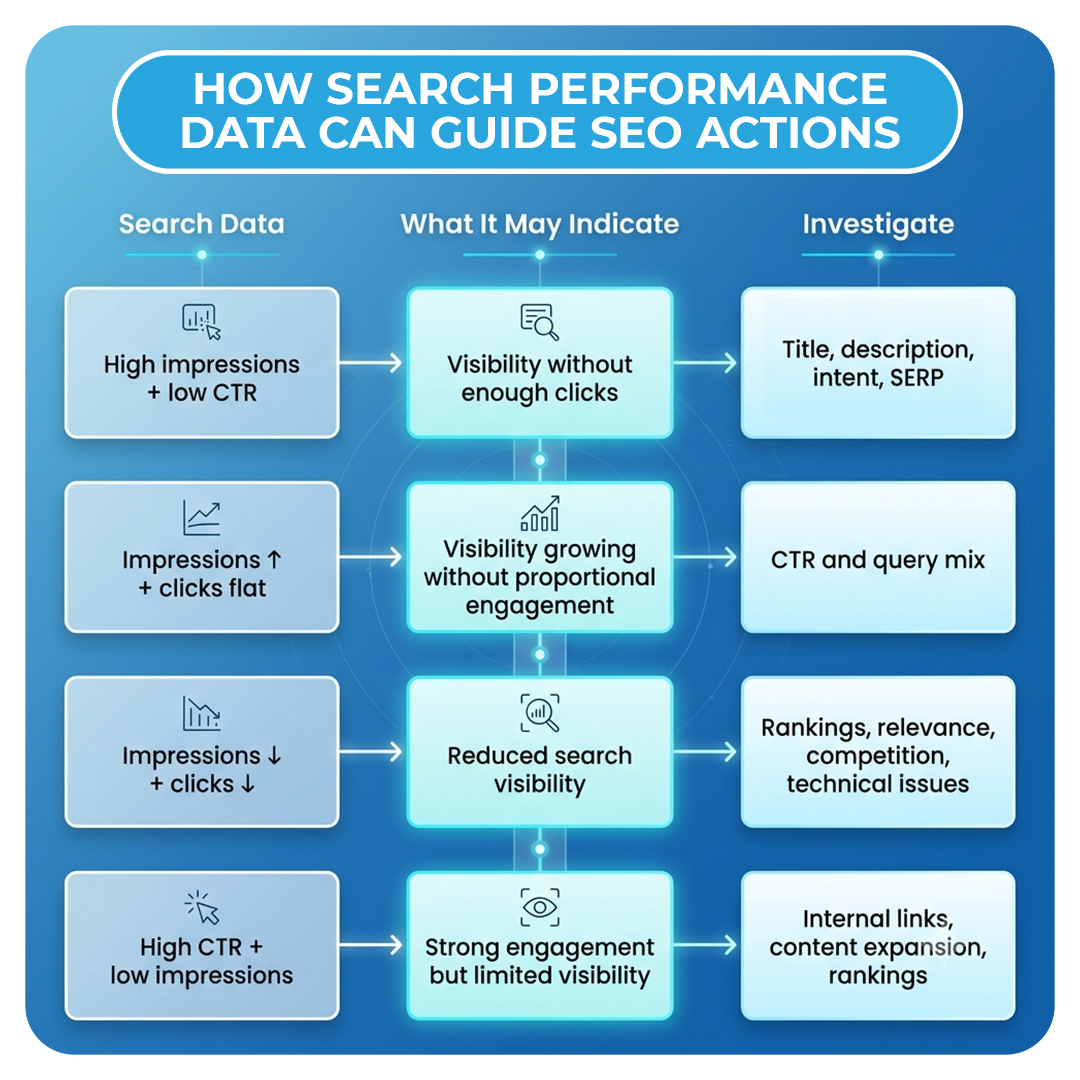
These patterns are starting points for investigation, not automatic diagnoses. The actual cause still needs to be confirmed before action is taken.
3. Interpret CTR in Context
Click-through rate should never be judged in isolation. Average position, search intent, the presence of SERP features, whether the query is branded or non-branded, device type, search appearance, query relevance, and page type all influence what a "good" CTR looks like for a given page. Google itself advises focusing on trends in impressions and clicks over time rather than relying heavily on average position alone when analyzing Search Console data.
4. Turn Search Behavior Findings Into Implementation Tasks
These findings can become real tasks: reviewing metadata, refining page messaging, improving content relevance, strengthening internal links, expanding visibility for pages that are already performing well, or investigating a shift in search appearance or query mix. It's worth being cautious here. No single change guarantees an increase in CTR or traffic, and agencies serve clients better by framing these as informed adjustments rather than certainties.
Turn Technical SEO Data Into a Prioritized Action Plan
Technical audits often generate long lists of issues. The real skill is not finding them but figuring out which ones matter most.
1. Why an Audit With 100 Issues Does Not Mean All 100 Need Immediate Fixes
Not every flagged issue carries the same weight. Agencies should assess findings based on potential search impact, how many pages are affected, severity, how much effort implementation will take, how important the issue is to the client's business, how it relates to current SEO priorities, and overall urgency. A minor issue on a high-revenue page may deserve attention before a larger issue on a page that barely gets traffic.
2. Convert Technical Findings Into Specific Actions
A few examples of how this plays out: important pages with indexing problems require an investigation into the cause, broken internal links need to be repaired to restore navigation pathways, missing or poorly structured headings call for improved content hierarchy, duplicate or weak metadata should be optimized on priority pages, poor internal linking needs strengthening between related pages, and crawlability concerns require a closer look at the affected sections to determine the right fix. Not every audit issue carries the same search impact, and treating them all equally wastes time.
3. Move From Audit to Implementation and QA
A practical workflow looks like this: audit, assigned task, implementation, QA, agency review. The agency decides which recommendations are worth acting on. A white label fulfillment team helps complete that approved work according to the agency's priorities and requirements. The real value in technical SEO isn't just fixing issues. It's deciding which issues get fixed first and why.
Local SEO Data Can Reveal Location-Specific Opportunities
For local and multi-location clients, agencies can use location-specific rankings, service queries, Google Business Profile performance, and local visibility data to identify priority areas. These findings can lead to actions such as improving location pages, strengthening internal links, updating local content, maintaining citation consistency, or refining Google Business Profile listings. The same prioritization process applies: assess business relevance, search intent, potential impact, and implementation effort before assigning the work.
How White Label SEO Turns Insights Into Execution
White label SEO functions as the execution layer between an agency's strategy and the completed work a client actually sees. The agency owns the interpretation of client goals and strategic priorities. Fulfillment support helps carry out the resulting work consistently across accounts.
Follow a Data-to-Execution Workflow
- Data Collection: The agency gathers relevant information from Google Search Console, analytics platforms, rank trackers, technical SEO audits, backlink tools, competitor research, and local SEO tools.
- Agency Assessment
The agency determines which findings matter most, based on client goals, market conditions, business priorities, search intent, affected pages, and available resources. - Strategy and Prioritization: The agency converts insights into a defined SEO action plan, deciding what should be done, why it matters, and how it fits into the client's broader objectives.
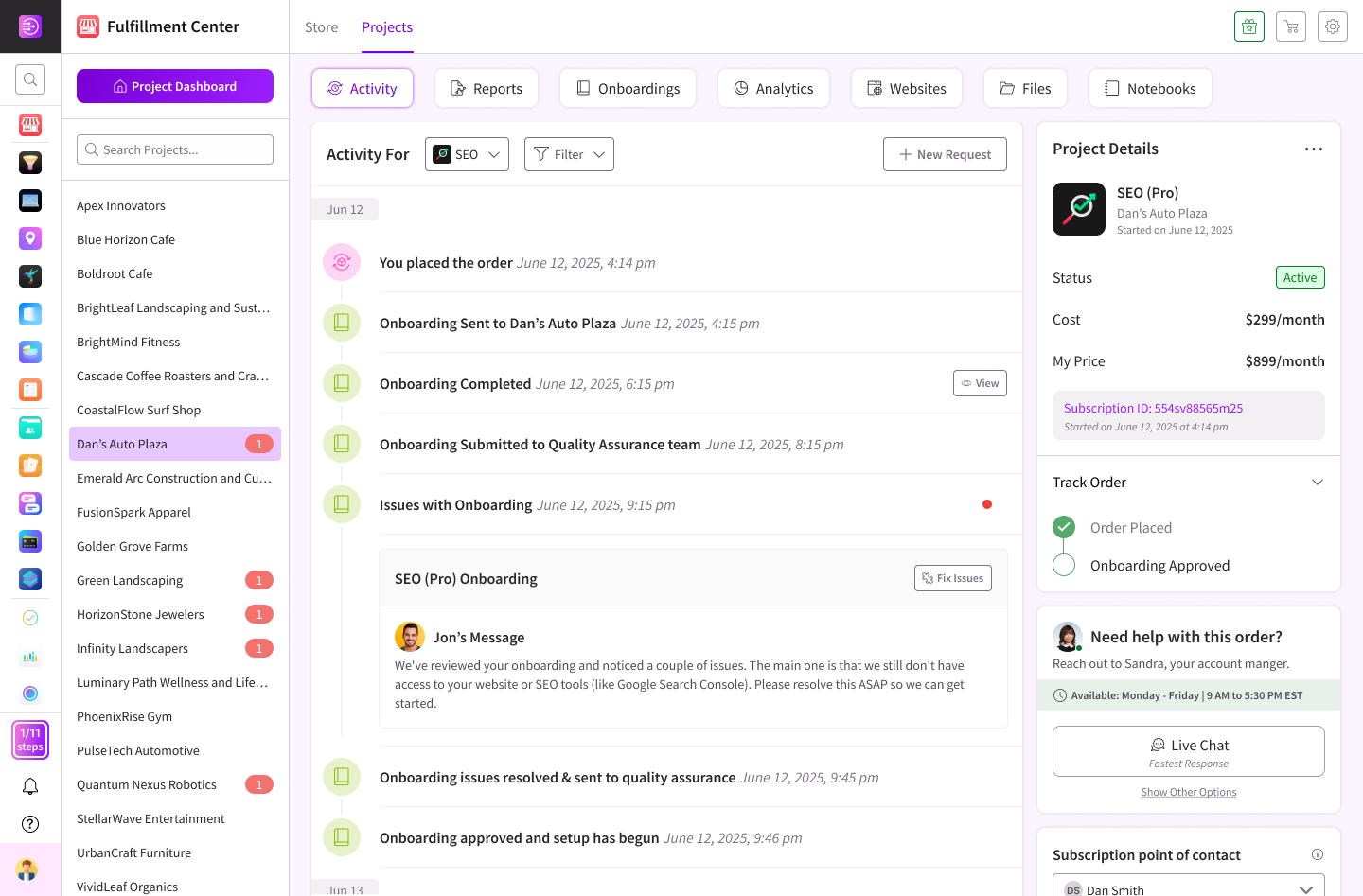
- Fulfillment Assignment: Approved tasks go to the white label SEO team, along with the agency's priorities, instructions, deadlines, and quality standards.
- SEO Execution: Specialists may support work such as on-page optimization, technical SEO, content optimization, keyword research, local SEO, link building, and SEO reporting.
- Quality Assurance: Completed work is reviewed to confirm it matches the original SEO strategy, client requirements, page-level priorities, technical requirements, and the agency's quality standards.
- Agency Review and Client Delivery: The agency reviews the finished work, maintains the client relationship, and delivers updates under its own brand. Fulfillment support does not remove the agency from strategic review or client communication.
- Performance Monitoring: New search data feeds into the next optimization cycle, connecting back to the same loop: data, insight, priority, action, measurement.
DashClicks: White Label SEO Services for Agencies
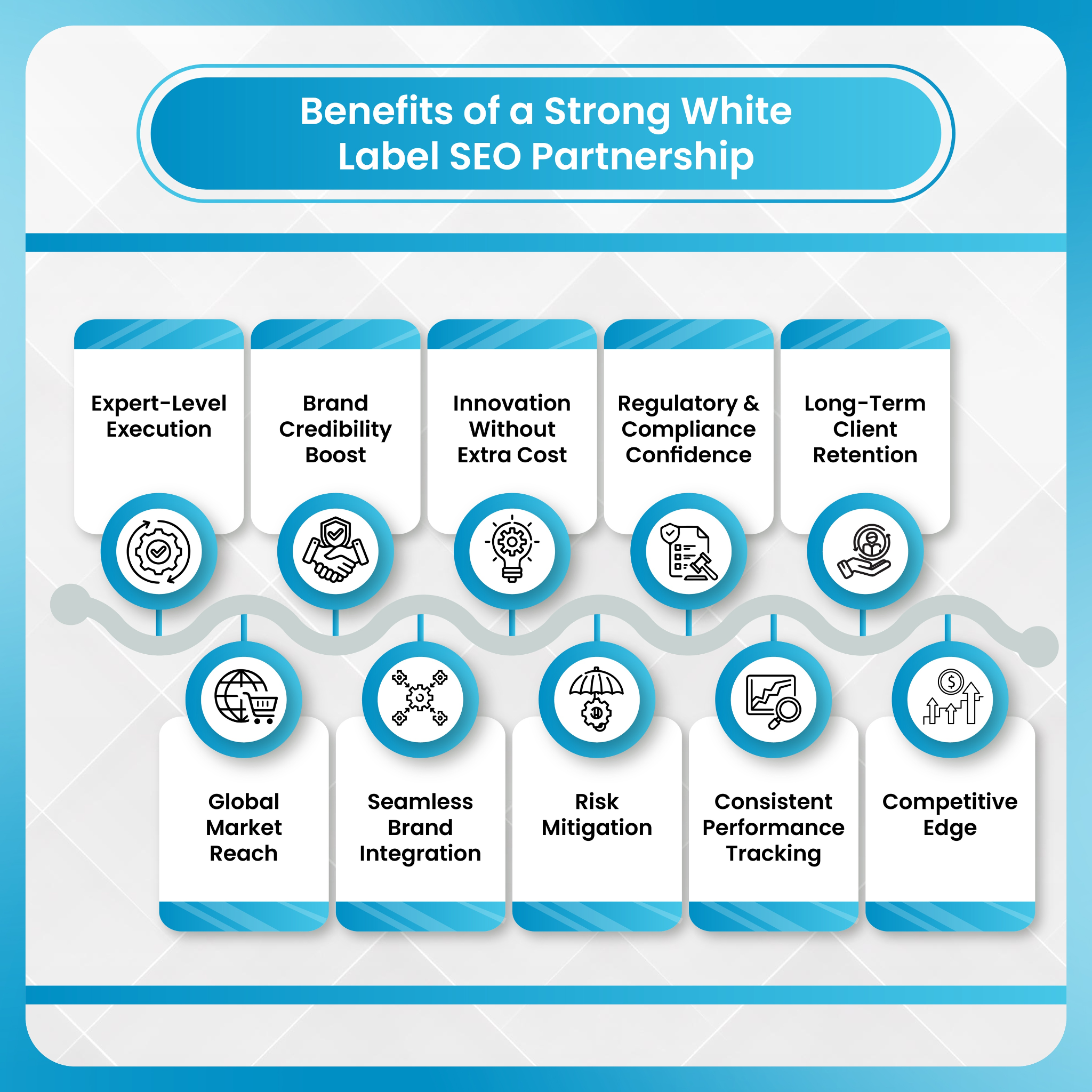
DashClicks helps agencies fulfill SEO work without building every specialist capability in-house. Agencies retain ownership of client relationships and strategic direction, while the platform supports execution across key SEO services.
Key benefits include:
- Specialist SEO Support: Assistance with technical SEO, on-page SEO, content optimization, local SEO, link building, and reporting, helping agencies manage multiple client accounts.
- Consistent Execution: Established fulfillment processes help agencies turn SEO insights into completed work, reducing the risk of priorities piling up.
- Branded Reporting: Client-facing reporting and infrastructure support agencies in presenting completed work under their own brand.
- Agency-Centered Fulfillment: DashClicks works as an extension of the agency's team, supporting execution while the agency retains control over strategy and client communication.
For agencies exploring white label SEO outsourcing, the goal is to find a fulfillment partner that complements their strategic capabilities, supports consistent execution, and works within their existing client relationships.
Build a Repeatable Data-to-Action SEO Process
Once agencies understand how to interpret search data, the next step is making that process repeatable across client accounts. A simple checklist can help teams consistently move from findings to completed SEO work.
- SEO Data-to-Action Checklist
- Review the latest search data
- Identify meaningful findings
- Add business context
- Prioritize opportunities
- Turn priorities into specific tasks
- Assign the work
- Complete implementation and QA
- Measure the next cycle
This checklist keeps the process focused on what happens after the data is collected. Instead of treating SEO reporting as the end of the process, agencies can use each reporting cycle as the starting point for the next round of decisions and execution.
Turning Data Into a Lasting Advantage
The competitive advantage in SEO was never simply about having access to more data. Most agencies today can pull similar reports from similar tools. The real advantage comes from what happens after the data lands: consistently interpreting findings, prioritizing the right opportunities, executing the resulting work, and measuring whether it made a difference.
White label SEO can help close the gap between strategy and execution, particularly for agencies juggling multiple client accounts with limited internal bandwidth. The agency still owns the strategy, the business objectives, the approvals, and the client relationship. What changes is the ability to reliably turn decisions into completed work, month after month, with the right fulfillment infrastructure behind it. DashClicks is one option agencies can turn to for that execution capacity, supporting the fulfillment side of SEO while agencies focus on strategy and client relationships.
Effective SEO strategy is not just about understanding what the data says. It is about deciding what the data requires the agency to do next, completing that work, and using the next set of findings to guide the following decision.


.svg)


.svg)
.svg)
.svg)
.svg)
.svg)