

.svg)

.svg)
.svg)
.svg)
.svg)
.svg)
Seasonal PPC campaigns are some of the most profitable opportunities for brands and agencies, but they are also the most demanding. From Q4 holiday shopping and Black Friday to Back-to-School, Christmas, and New Year sales, these short windows bring sharp spikes in search demand, intense competition, and fast-moving budgets.
During peak seasons, search volume can double or even triple in certain industries. Google data shows that retail-related searches often start climbing weeks earlier than expected, catching many advertisers off guard. When this happens, agencies face a familiar problem. Clients want quick results, higher conversions, and flawless execution, but internal teams are already stretched thin.
For agencies, the challenge is not knowing that seasonal campaigns matter. It is figuring out how to scale quickly without cutting corners or burning out staff. This is where white label PPC becomes a strategic advantage rather than a short-term fix.
This blog is for agencies that want to handle seasonal demand with confidence. It explains why seasonal PPC campaigns often fail, how white label PPC services help agencies scale without sacrificing quality, and how experienced providers execute high-volume campaigns behind the scenes. It also takes a closer look at how DashClicks supports agencies during peak seasons while protecting brand trust and performance.
The Seasonal PPC Challenge: Why So Many Campaigns Fail
Seasonal campaigns are different from everyday PPC efforts. They move faster, cost more, and leave less room for error.
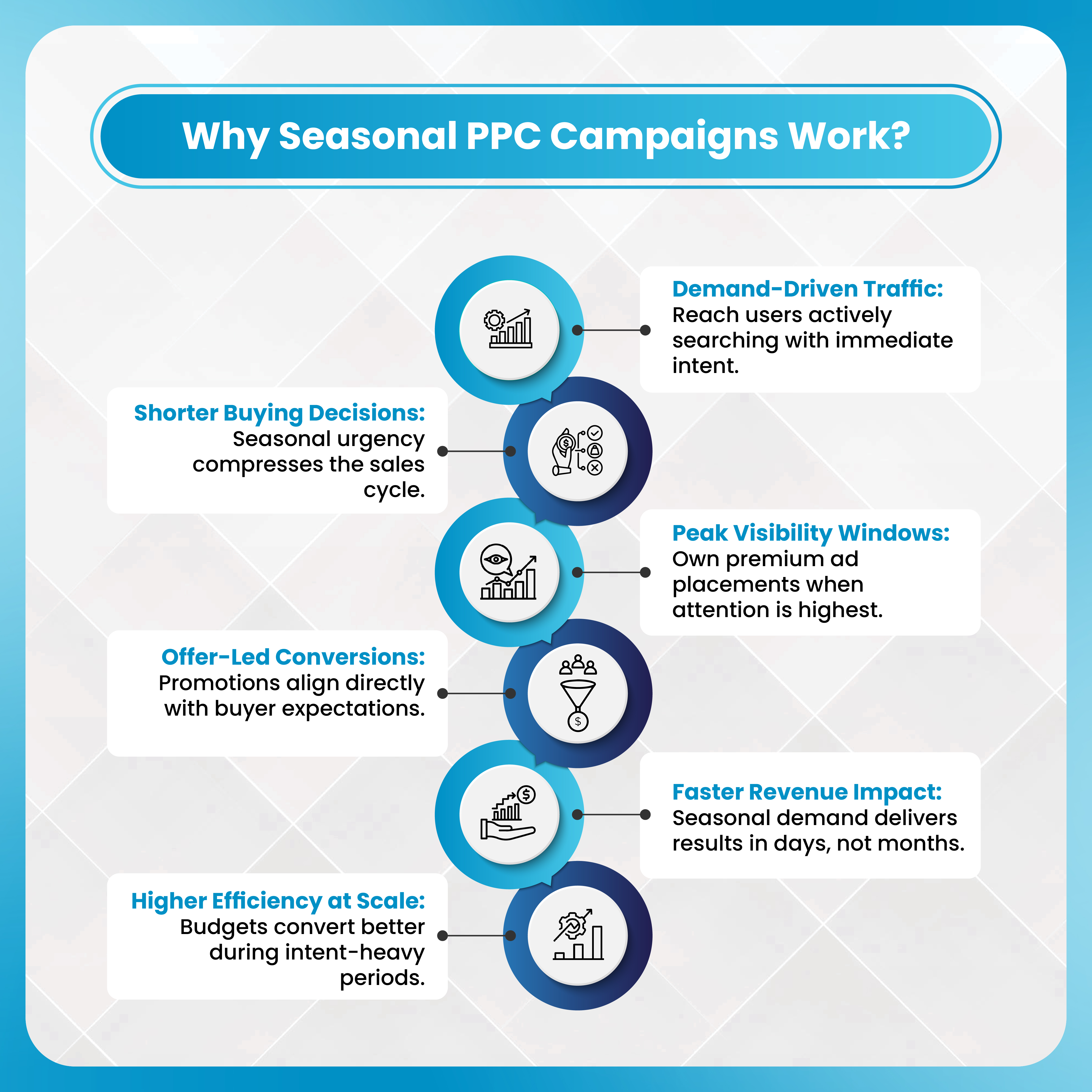
Yet many agencies approach them with the same processes they use year-round. This mismatch is one of the main reasons seasonal performance falls short.
1. Unrealistic Expectations vs. Resource Reality
Seasonal campaigns often come with aggressive goals. Clients expect exponential growth in traffic and conversions, sometimes with limited budgets or very short lead times. At the same time, internal teams are juggling multiple accounts that all need attention at once.
During major seasons like Black Friday or Q4, auction dynamics change quickly. Cost per click rises as more advertisers enter the market, and ad visibility becomes harder to maintain. Google has reported that holiday-related searches in recent years began rising as early as September, yet many advertisers still wait until October to adjust bids and budgets. Industry benchmark studies show that more than 60% of advertisers make bid changes after demand has already surged, which puts them at an immediate disadvantage.
Without enough hands on deck, teams struggle to keep up with these shifts. This gap between expectations and available resources creates rushed decisions and missed opportunities.
2. Poor Preparation and Timing
One of the most common mistakes in seasonal PPC is waiting too long to prepare. Many campaigns rely on last-minute changes instead of structured planning.
Typical preparation gaps include:
- Limited use of historical seasonal data
- No budget ramp-up strategy
- Delayed bid adjustments
- Minimal creative testing before peak demand
When optimization starts only after the season begins, performance often suffers. A common example is adjusting return on ad spend bidding during the week of Black Friday. By then, algorithms are already under pressure, and learning phases can disrupt delivery when it matters most.
Data from PPC industry surveys shows that campaigns planned at least four weeks in advance tend to achieve higher impression share and more stable cost per acquisition during peak periods.
3. Inadequate Scaling Framework
Scaling a seasonal campaign is not as simple as increasing budgets. Without proper controls, higher spend can quickly lead to wasted impressions and rising costs.
Effective scaling requires:
- Pre-tested creatives ready for rotation
- Predictive bidding strategies
- Audience expansion with safeguards
- Continuous negative keyword refinement
According to a 2024 industry PPC survey, 76% of professionals reported that scaling too fast without a structured framework increased CPA by 30 to 40%. This kind of spike can erase seasonal gains in just days.
4. Team Overload and Burnout
Seasonal demand multiplies daily tasks. Teams must manage ad creation, reporting, optimization, and client communication, often across dozens of accounts at once.
When teams are overloaded, quality suffers. Optimization becomes reactive instead of proactive, and quality assurance steps are skipped. One agency case study shared in a digital marketing forum noted an 18% increase in CPC during peak season due to delayed bid adjustments caused by limited staffing.
Burnout also affects long-term performance. Teams that push too hard during seasonal peaks often struggle to recover afterward, which impacts client retention.
5. Technology Gaps
Many agencies still rely on manual reporting or outdated dashboards. During seasonal spikes, this slows down response time.
Key challenges include:
- No automated alerts for performance anomalies
- Limited pacing and budget monitoring
- Delayed data updates during high traffic periods
Recent surveys indicate that more than half of PPC teams feel limited by a lack of automation tools during peak campaigns. When data lags behind reality, decisions are always one step late.
When these challenges repeat season after season, it becomes clear that the issue is not a lack of effort. It is a structural limitation. Solving seasonal PPC failures requires a scalable execution model, not more pressure on internal teams.
White Label PPC for Scaling Without Compromising Quality
White Label PPC is often misunderstood as simple outsourcing. In reality, it is a strategic way to expand capacity while maintaining control, consistency, and quality during high-demand periods.
What White Label PPC Really Is?
At its core, white label PPC involves partnering with a specialized provider that manages PPC execution on behalf of an agency. The agency retains full branding, client relationships, and strategic oversight.
The provider focuses on:
- Campaign setup and management
- Ongoing optimization
- Reporting and quality assurance
This structure allows agencies to deliver high-level service without adding internal headcount.
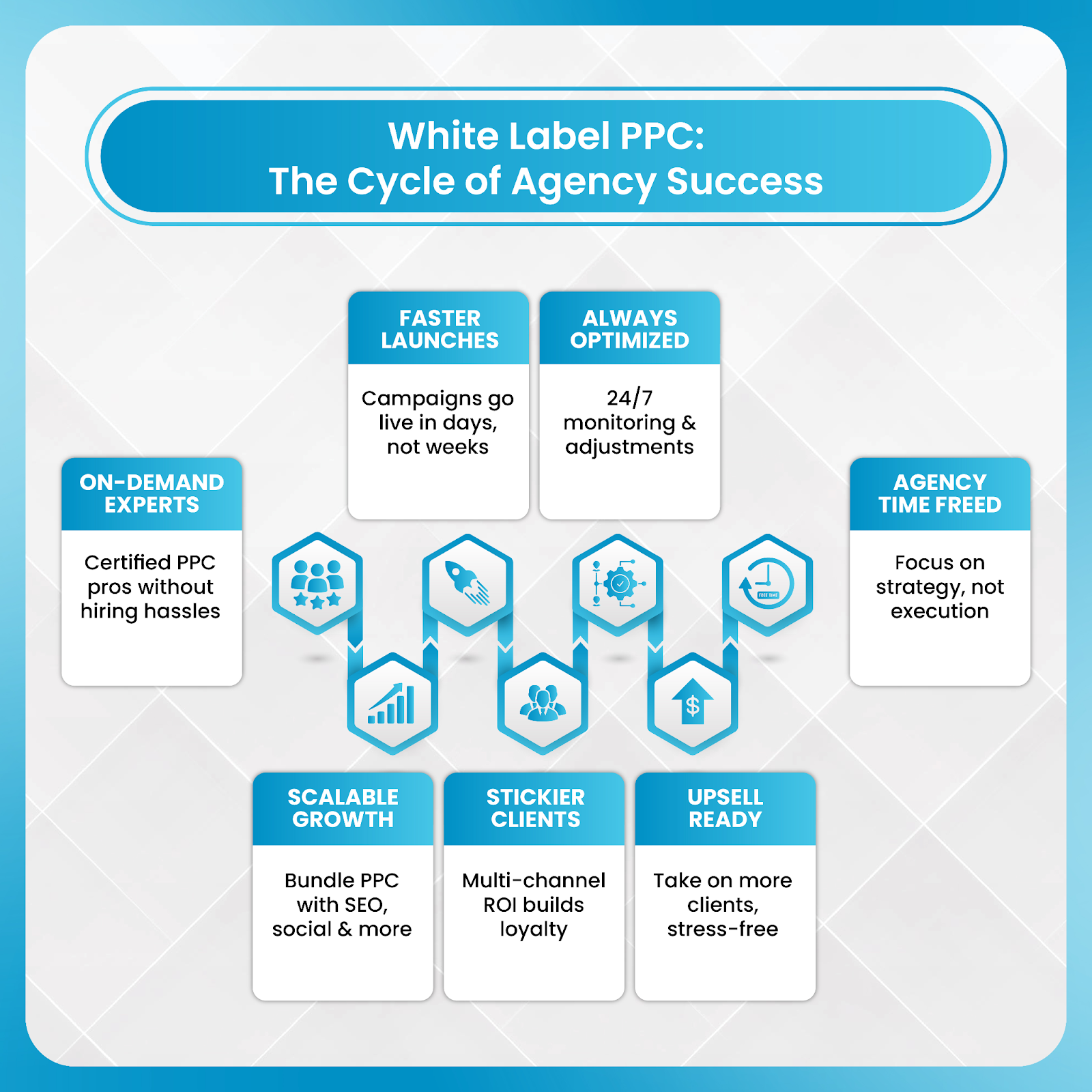
Core Benefits White Label Brings During Seasonality
1. Dedicated Expertise on Demand
Seasonal PPC requires specialists who understand bidding volatility, audience behavior shifts, and platform-specific nuances. White label partners focus exclusively on PPC, which gives agencies access to deep expertise exactly when they need it.
In one shared industry example, an agency using white label support adjusted holiday bids dynamically across multiple accounts. The result was a 26% reduction in CPA and a 48% increase in conversions compared to the previous season.
2. Rapid Scalability Without Overhead
Hiring temporary staff for seasonal demand is costly and time-consuming. Training alone can take weeks, which defeats the purpose of fast scaling.
With white label PPC services, agencies can scale up or down based on campaign volume. Industry data shows that agencies using white label support are able to handle two to three times more seasonal clients without increasing internal headcount.
3. Structured Seasonal Playbooks and Pre-Planning
Experienced white label partners bring proven seasonal frameworks. These often include:
- Pre-built campaign templates
- Auction and competitor insights
- Creative testing schedules
- Budget pacing models
Agencies that launch campaigns earlier using structured playbooks often see higher impression share and smoother performance during peak weeks.
4. Round-the-Clock Optimization and Support
Seasonal performance can change within hours. Bid landscapes shift, budgets deplete faster, and conversion rates fluctuate.
White label teams often combine automated alerts with manual checks by experienced specialists. Industry benchmarks suggest that most seasonal performance loss is due to delayed reactions. White label teams typically respond within 12 hours, compared to an industry average of nearly 48 hours.
5. Better Quality Assurance and Reporting
During high-volume periods, human error becomes more likely. White label teams reduce this risk through dedicated QA processes.
These include:
- Pre-flight ad checks
- Naming and testing standards
- Tracking and conversion validation
Studies show that error rates can be three times higher when teams are overloaded. Focused QA helps maintain consistency and trust.
6. Transparent SLAs and Predictable Delivery
Clear service-level agreements define turnaround times, optimization cadence, and reporting schedules. This predictability helps agencies stay in control and manage client expectations during peak seasons.
The real value of white label ppc lies in how it transforms seasonal execution from a reactive scramble into a structured, repeatable process.
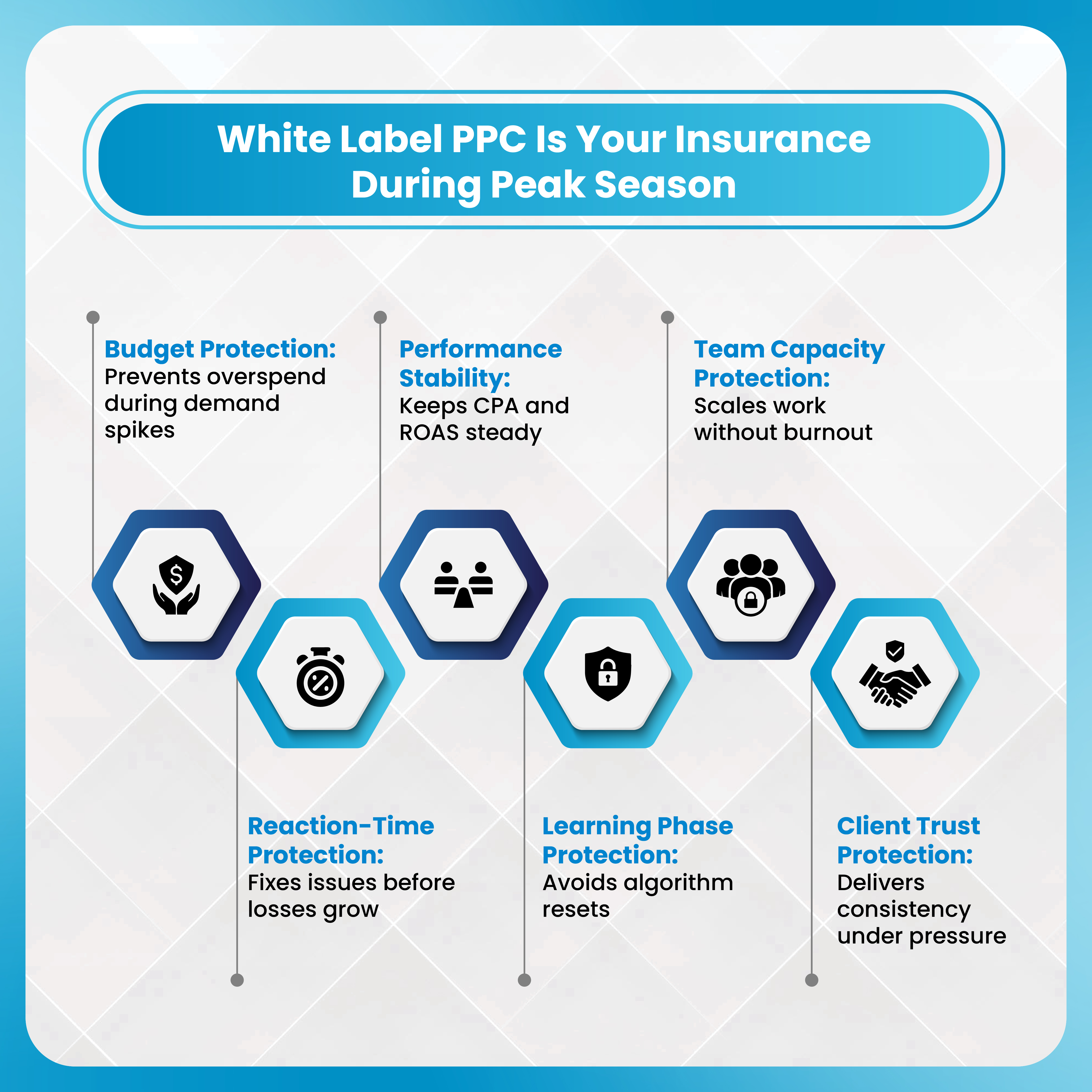
How White Label PPC Providers Execute Seasonal Campaigns Smoothly?
Understanding how white label PPC works behind the scenes helps agencies clearly see why it performs so well during high-pressure seasonal peaks. The strength of this model lies in preparation, structure, and disciplined execution long before traffic begins to surge.
1. Pre-Season Planning and Forecasting
Successful seasonal campaigns start weeks, not days, before the peak. White label PPC teams begin by reviewing historical performance data from previous seasons, year-over-year trends, and month-over-month changes. Auction insights are analyzed to understand how competitors behaved during similar periods, including how aggressively they increased bids and budgets. Keyword demand trends are also mapped early to identify when search interest typically starts rising, which often happens earlier than expected.
Based on this data, budget pacing models are built in advance. These models help determine how much to spend daily and weekly as demand increases, rather than reacting after budgets are already strained. High-intent keywords are identified early, allowing teams to prioritize terms most likely to convert when competition intensifies. This level of preparation minimizes rushed changes during peak weeks and gives agencies greater confidence in every decision.
2. Campaign Architecture Built for Scale
Seasonal traffic surges can quickly expose weaknesses in account structure. White label PPC providers design campaigns specifically to handle volume increases without losing efficiency. Seasonal campaigns are separated from evergreen efforts to prevent performance overlap and budget conflicts. Ad groups are built with a granular structure, which allows faster adjustments to bids, creatives, and targeting when conditions change.
Match types are expanded carefully instead of all at once, ensuring reach grows without sacrificing relevance. Negative keyword layers are also applied early to control wasted spend. When demand spikes, this clean structure helps campaigns remain stable and responsive rather than chaotic.
3. Creative and Asset Readiness
Creative preparation is another major advantage of white label PPC execution. Seasonal ad copy is written, reviewed, and approved well before peak demand hits. Instead of scrambling to create promotions at the last minute, teams prepare multiple variations in advance. This allows testing to happen early, so only the strongest messages are scaled when traffic increases.
Promotional extensions, countdown messaging, and season-specific offers are also configured ahead of time. Industry data consistently shows that ads aligned with seasonal intent perform better. Campaigns using timely, relevant messaging often see click-through rates increase by 15 to 25% compared to generic ads during peak periods.
4. Controlled Budget and Bid Scaling
Scaling spend during seasonal peaks requires discipline. White label PPC providers avoid sudden budget jumps that can disrupt performance. Instead, budgets are increased incrementally with daily and weekly caps in place. This protects campaigns from overspending while platforms adjust to higher volume.
Smart bidding strategies are closely monitored to ensure they do not reset learning phases at the worst possible time. Manual overrides are applied during volatile auction periods when automated systems need extra guidance. This controlled approach helps keep cost per acquisition stable even as overall spend grows significantly.
5. Real-Time Monitoring and Rapid Optimization
Seasonal campaigns can change direction within hours. White label PPC teams assign dedicated specialists to monitor performance multiple times throughout the day. Automated alerts flag unusual changes such as sudden CPC increases, drops in conversions, or budgets running out earlier than expected.
When issues are detected, adjustments are made quickly. Data shows that campaigns optimized within 12 hours of a performance dip recover far faster than those left untouched for two days or more. Rapid response prevents small issues from turning into costly problems.
6. Quality Assurance Under High Volume
High traffic increases the risk of human error, which is why quality assurance becomes even more critical during seasonal peaks. White label teams rely on pre-flight checklists before major launches or changes. Secondary reviews ensure bids, budgets, and targeting are correct before updates go live.
Conversion tracking is regularly validated, and landing pages are checked for consistency with ad messaging. This extra layer of oversight reduces costly mistakes and protects the overall user experience when volumes are at their highest.
7. Post-Season Analysis and Knowledge Retention
Once the season ends, the work does not stop. White label PPC providers conduct detailed performance audits to understand what worked and what did not. Insights are gathered on top-performing audiences, creative fatigue points, budget efficiency, and conversion trends.
These findings are documented and used to refine the next seasonal playbook. As a result, each new season starts with better data, stronger strategies, and fewer unknowns. Over time, campaigns become more efficient, more predictable, and more profitable for agencies and their clients.
White Label PPC in Action: How DashClicks Supports High-Performance Seasonal Campaigns?
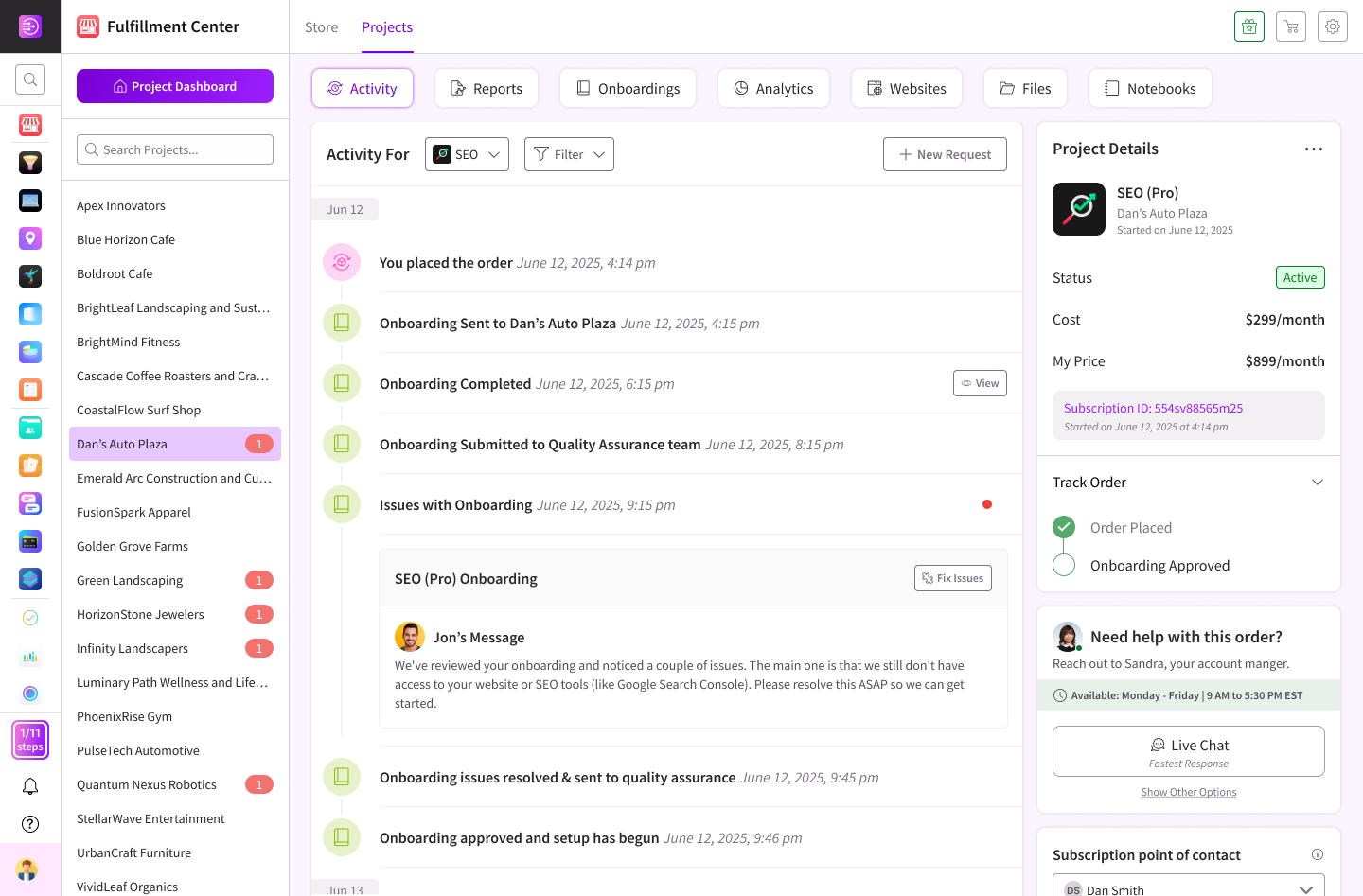
DashClicks plays a key role in helping agencies scale seasonal PPC campaigns without increasing internal headcount. As a trusted white label ppc agency, their team provides certified PPC specialists with hands-on experience managing high-volume seasonal campaigns across industries.
The platform supports agencies throughout the entire seasonal cycle. This includes pre-season planning, scalable campaign setup, and account structures designed to handle traffic spikes without performance loss. During peak demand, the team delivers real-time optimization, continuous monitoring, and strict quality assurance to reduce errors and protect ROI.
One of the most valuable aspects is fully white-labeled reporting. Agencies maintain full ownership of client relationships while delivering professional, transparent insights. This allows agencies to focus on strategy and growth, while DashClicks handles execution with precision.
By combining expertise, structure, and scalability, DashClicks enables agencies to approach seasonal campaigns with confidence instead of stress.
Conclusion
Seasonal PPC campaigns fail not because of a lack of opportunity, but because of limited preparation, capacity, and expertise. As competition intensifies and search behavior shifts earlier each year, agencies need a smarter way to scale.
White label ppc offers a proven solution. It allows agencies to expand execution capacity, maintain quality standards, and respond faster to performance changes without overloading internal teams. With structured planning, real-time optimization, and dedicated specialists, seasonal campaigns become predictable and profitable rather than chaotic.
Agencies that evaluate their current bottlenecks before the next peak season put themselves in a stronger position to win. The right white label ppc services can turn seasonal pressure into a growth advantage.


.svg)


.svg)
.svg)
.svg)
.svg)
.svg)