

.svg)

.svg)
.svg)
.svg)
.svg)
.svg)
For most digital agencies, client reporting is not just a monthly task. It is the moment where trust is either reinforced or quietly weakened. Reports are where strategy meets proof. They show whether the work being done is moving the needle or just creating noise. According to a 2024 survey by Databox, more than 70 percent of clients say clear reporting is the main factor that shapes their confidence in an agency. That makes reporting a business-critical function, not a simple deliverable.
Yet many agencies struggle here, even when their tools are solid. Dashboards look polished, data is available, and automation is in place. Still, reports feel confusing, inconsistent, or hard to explain. The hidden truth is that reporting problems are rarely caused by software. They are caused by execution gaps behind the scenes.
This is where white label SEO plays a deeper role than many agencies expect. It is often seen as a fulfillment shortcut, but its real value lies in operations. When SEO execution is handled by specialists using consistent processes, reporting becomes simpler, more accurate, and easier to defend. Transparency improves naturally because the data feeding the report is clean and reliable.
To understand why white label SEO has such an impact on client reporting, it helps to first look at why agency reporting breaks down in the first place.
Why Client Reporting Becomes Complex and Unreliable?
1. Reporting Complexity Is a Symptom, Not the Root Issue
Most agencies today are juggling multiple services at once. SEO, PPC, social media, CRO, content, and analytics often live under the same umbrella. On paper, this looks like a full-service offering. In practice, each service runs on its own metrics, timelines, tools, and processes. Over time, reporting becomes overloaded not because agencies want it to be, but because execution is scattered.
When work is split across internal teams, freelancers, and external vendors, there is no single source of truth. Data comes in from different platforms, updates arrive at different times, and priorities shift depending on who is working on what that month. Client Reporting grows bloated as agencies try to capture everything, even when not everything is aligned.
Account managers are usually the ones holding this together. They collect updates from multiple execution teams, interpret performance data, and attempt to turn it into a clear narrative for clients. Instead of focusing on strategy or growth conversations, they spend a large part of their time translating and reconciling information. This is where issues begin to surface.
When execution is not centralized or standardized, reporting cannot stay clean. It becomes reactive instead of structured. Reports explain what happened rather than clearly showing why it happened and what comes next. Over time, this lack of structure makes reporting feel heavier, slower, and less trustworthy.
Fragmentation also introduces a deeper problem that is harder to fix after the fact: accuracy.
2. Inconsistent SEO Execution Leads to Inconsistent Data
SEO is especially sensitive to inconsistency. Unlike paid media, where changes can be measured quickly, SEO performance builds over time and depends heavily on steady execution. When different freelancers, vendors, or junior team members handle SEO using different approaches, results become uneven.
One month may focus heavily on technical fixes. The next may prioritize content creation. The following month might shift toward link building. None of these activities are wrong on their own, but without a clear, continuous strategy, they fail to compound. KPIs start to move unpredictably because the strategy itself keeps changing.
Clients may not always understand the technical details, but they notice the pattern. Rankings improve and then stall. Traffic increases, but conversions do not follow. Reports start including longer explanations, qualifiers, and justifications. Over time, these explanations begin to sound uncertain or defensive.
HubSpot research supports this perception gap. Sixty-five percent of clients say inconsistent results make them question an agency’s expertise more than slow growth does. In other words, clients are often more patient with steady progress than they are with unpredictable performance.
This creates a clear chain reaction for agencies:
- Inconsistent execution leads to inconsistent results.
- Inconsistent results lead to difficult reporting conversations.
- Difficult reporting conversations push agencies into a defensive position.
Once SEO reporting becomes defensive, transparency starts to fade.
3. Transparency Breaks Down in Traditional Agency Reporting
When agencies lack confidence in execution, reporting often becomes overly simplified. Complex details are removed to avoid follow-up questions. Reports lean more heavily on surface-level metrics such as impressions, keyword counts, or ranking snapshots, while business outcomes like leads, conversions, and revenue receive less attention.
This shift is rarely intentional. It is a protective response. Agencies try to keep reports easy to digest, but in doing so, they remove the context clients actually care about. As a result, reports may look polished while still leaving clients confused about what is truly happening.
Clients lose confidence not only when results are weak, but when explanations lack clarity. A Google survey found that 58% of business owners value clear, understandable reporting more than short-term performance spikes. They want to know what work is being done, why it matters, and how it connects to their goals.
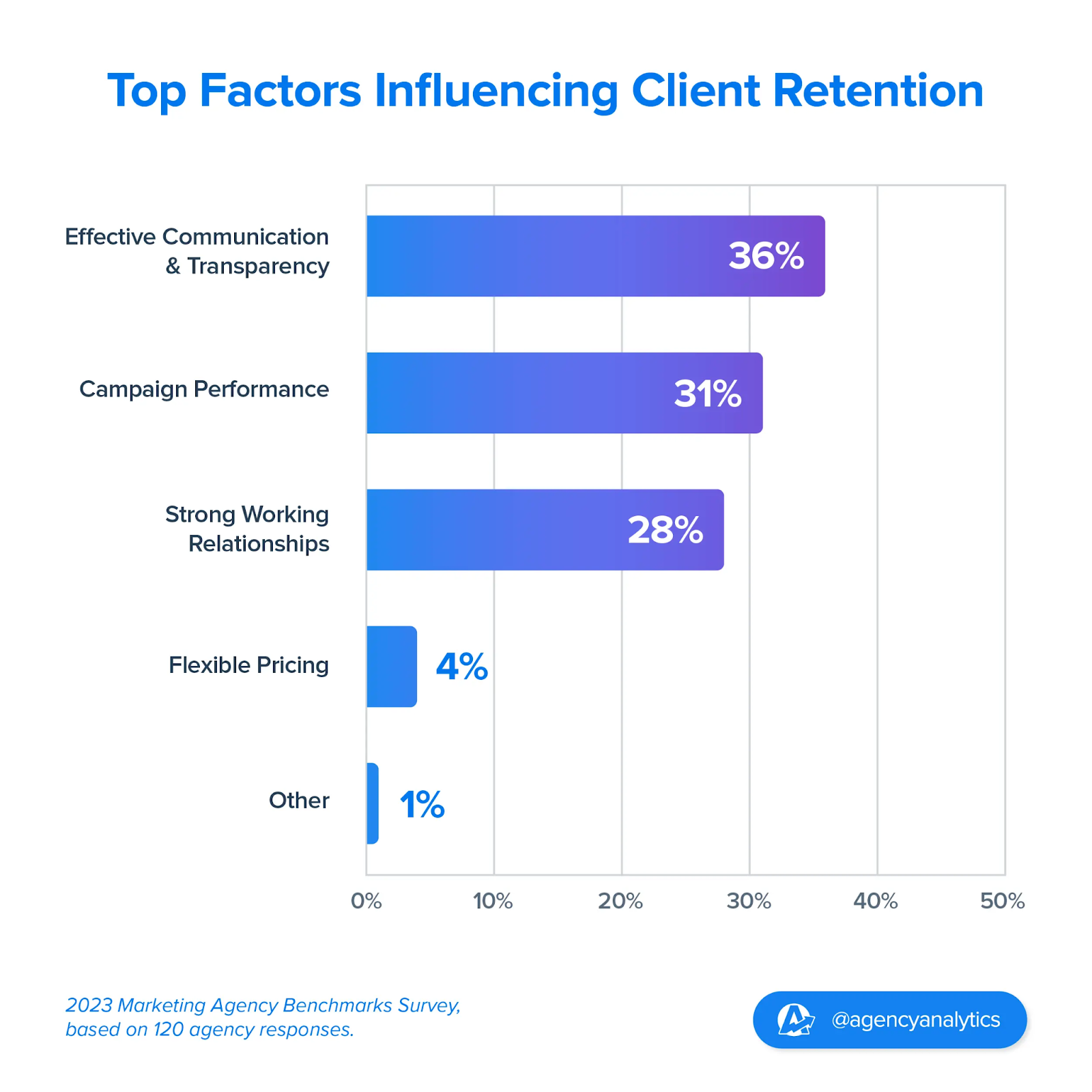
Image Source: AgencyAnalytics
When that clarity is missing, trust erodes quietly. Clients stop asking strategic questions and start questioning value. Reporting turns into a routine obligation instead of a tool for alignment and decision-making.
This is the point where many agencies assume the solution is better dashboards or redesigned reports. In reality, the issue runs deeper. This is exactly where white label SEO changes the equation. Not by polishing reports, but by strengthening the execution that feeds them.
How White Label SEO Simplifies Reporting at the Source?
1. Centralized SEO Execution Creates Cleaner Reporting Inputs
White label SEO partners operate on clearly documented SOPs and repeatable workflows. Instead of reinventing the process for every account, each campaign follows a proven strategic framework. Technical audits, on-page optimization, content planning, and link acquisition are executed in a deliberate, structured sequence.
This level of consistency has a direct impact on reporting quality. When execution follows the same framework across accounts, the data produced becomes easier to interpret. Performance trends are clearer. Anomalies stand out for the right reasons. Reporting shifts away from guesswork and toward pattern recognition.
Instead of asking whether a ranking change is a problem or an outlier, agencies can quickly connect performance movement to specific actions. When workflows are standardized, results become comparable across clients and time periods. That comparability is what turns raw data into meaningful insight.
A 2023 SEMrush study found that agencies using standardized SEO workflows reduced reporting errors by nearly 30% compared to those relying on ad hoc processes. Once execution is consistent, accuracy naturally follows.
2. Accuracy Improves Because Specialists Control the Process
White label SEO services focus exclusively on SEO. Their work is not divided between multiple services or competing priorities. This specialization allows them to control every step of the process, from implementation to validation.
These teams typically handle:
- Technical SEO audits and implementation
- On-page optimization aligned with search intent
- Link acquisition based on authority and relevance metrics
- Content performance analysis tied directly to rankings and organic traffic
Because fewer teams touch the work, there are fewer handoffs and fewer opportunities for miscommunication. The data used in reports comes directly from the actions performed, not from secondhand interpretations. Account managers are no longer piecing together updates from multiple sources or trying to reconcile conflicting metrics.
Instead, they can explain performance with confidence. The execution team has already verified the work, validated the data, and aligned it with the broader strategy. This confidence is what makes transparent reporting possible.
3. White Label SEO Enables Transparent, Defensible Client Conversations
When SEO execution is handled by specialists, agencies gain clarity in their client conversations. They can explain:
- What work was completed during the reporting period?
- Why were those actions prioritized over others?
- What impact is expected and over what timeframe?
There is no need to hide behind vague explanations or generic statements. Delays, plateaus, and fluctuations can be addressed directly, with context and supporting data. Transparency becomes a strength rather than a risk.
For example, instead of saying “rankings fluctuate,” agencies can explain the role of algorithm updates, competitive activity, or technical constraints, along with the corrective actions being taken. Clients may not love every answer, but they respect clarity.
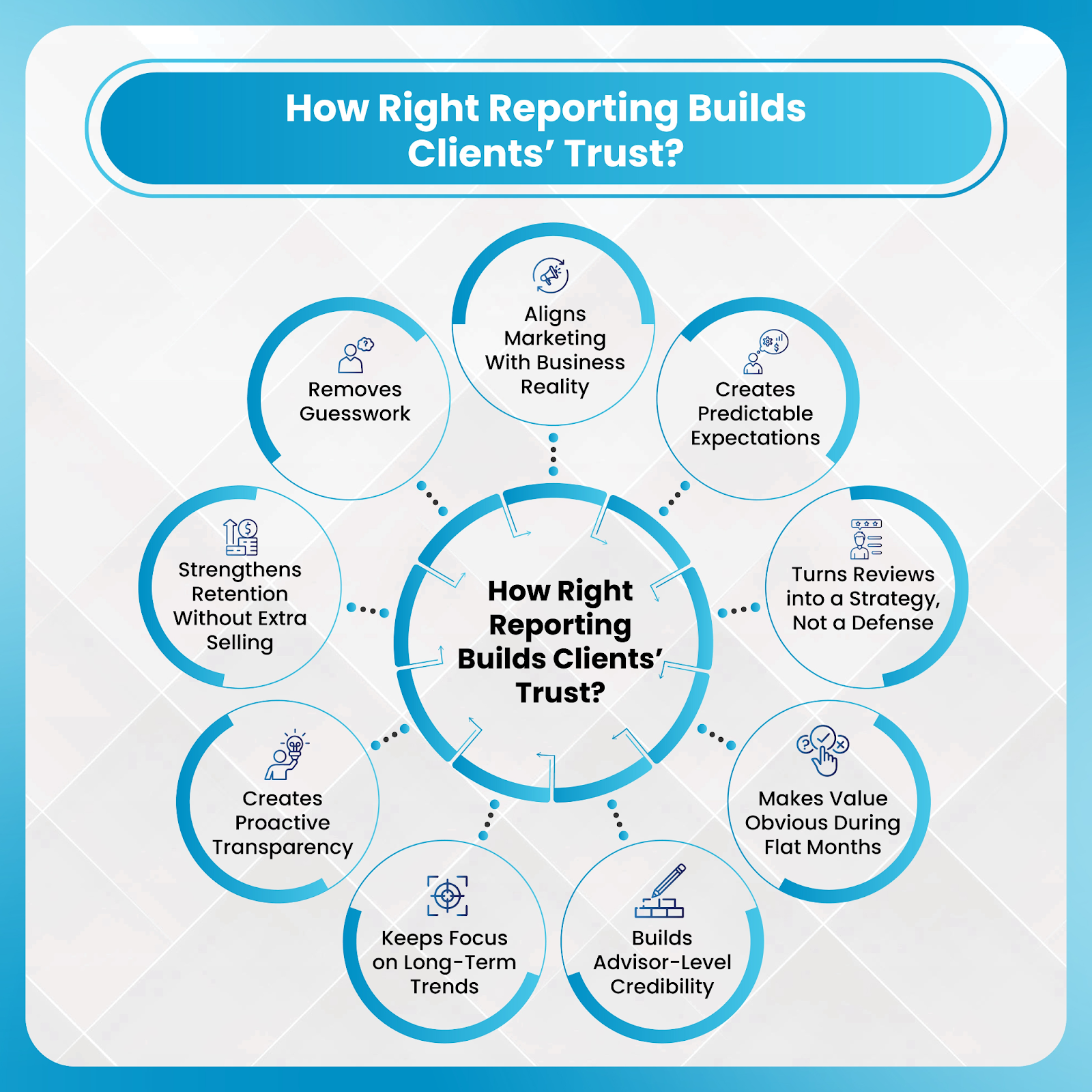
BrightLocal research supports this approach. Seventy-four percent of clients are more likely to remain with an agency that explains performance changes openly, even during downturns. White label SEO gives agencies the foundation they need to have those conversations with confidence.
Still, transparency alone does not solve the full challenge. Reporting also needs to scale as agencies grow.
4. White Label SEO Makes Reporting Scalable for Growing Agencies
As agencies add more clients, reporting complexity often increases faster than revenue. Each new account introduces more data, more deadlines, and more opportunities for inconsistency. Building in-house SEO teams to keep pace can be expensive and slow, especially when demand fluctuates.
White label SEO absorbs execution complexity without adding internal headcount. Because delivery follows a consistent model, reporting inputs remain stable even as client volume grows. Agencies do not need to reinvent reporting processes for each new account. The underlying execution stays the same.
Scalability is not just about automation. It is about removing operational friction upstream. When SEO delivery scales smoothly, reporting does not become a bottleneck. It remains predictable, efficient, and manageable.
This operational clarity also changes how agencies communicate their value to clients.
5. Better Execution Leads to More Strategic Reporting
When execution is reliable, reporting evolves naturally. The focus shifts from reactive explanations to forward-looking guidance. Reports move from: “Here’s what happened” to “Here’s what we’re doing next.”
Agencies spend less time defending performance and more time aligning strategy with client goals. Reporting meetings become planning sessions rather than performance reviews. Clients feel guided instead of updated.
Salesforce data shows that agencies positioning reports as strategic roadmaps see retention rates improve by up to 20%. The reason is simple. Clients stay when they understand the plan and trust the process.
Better execution produces cleaner data. Cleaner data creates clearer narratives. Clear narratives build long-term trust, which is ultimately what keeps client relationships strong.
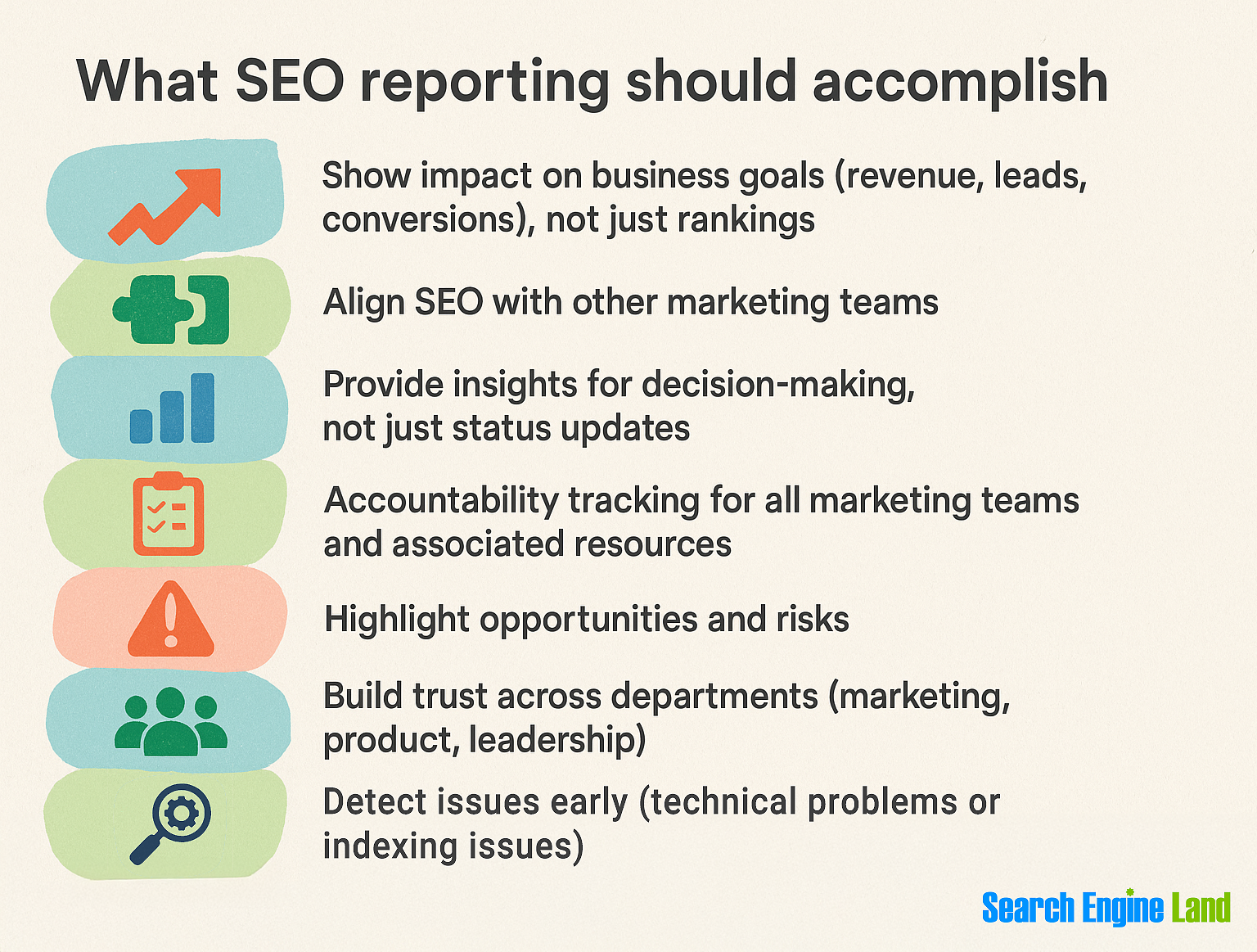
Image Source: Search Engine Land
How DashClicks White Label SEO Services Support Streamlined Client Reporting?
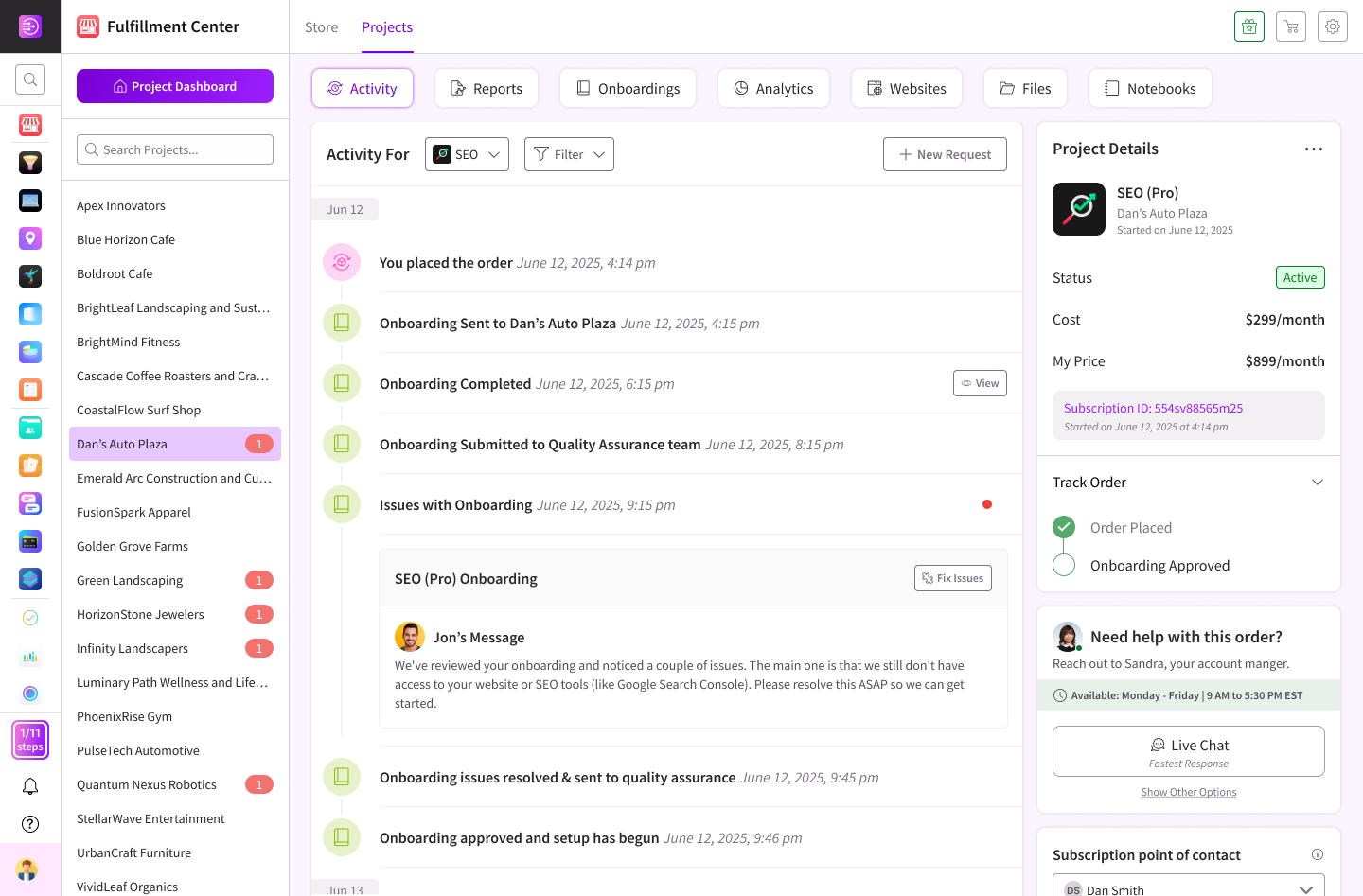
DashClicks approaches white label SEO as an operational foundation, not just a fulfillment layer. Its services are designed to support agencies that want consistent execution and reporting clarity. SEO delivery is standardized across technical SEO, on-page optimization, content, and link building. This ensures that every report is backed by structured work, not assumptions.
Because DashClicks relies on specialist-led delivery, data accuracy improves. Agencies receive clear insights tied directly to completed tasks and timelines. This makes it easier to explain performance without overcomplicating reports. Clear deliverables help agencies stay transparent and align reporting with real progress.
The scalable execution model also means agencies can grow without increasing reporting complexity. Whether managing a few clients or hundreds, the reporting narrative stays consistent. By fixing execution challenges at the source, DashClicks helps agencies simplify client reporting naturally and confidently.
Conclusion: White Label SEO Fixes Reporting by Fixing Execution
Many agencies assume reporting issues can be solved with new dashboards, more charts, or deeper data pulls. In practice, reporting problems are rarely about presentation. They are usually execution problems showing up downstream. When SEO delivery lacks consistency, reporting naturally becomes reactive, defensive, and harder to explain.
White label SEO does not replace reporting or mask performance. It simplifies reporting by strengthening what feeds it. Consistent workflows create cleaner inputs. Specialist-led execution produces more accurate data. Standardized processes make results easier to track, explain, and defend. The outcome is not just better-looking reports, but clearer stories that clients can actually understand.
With the right execution partner, agencies gain transparency instead of tension. Reporting shifts from damage control to strategic guidance. Conversations become more confident, expectations become clearer, and trust becomes easier to maintain.
For agencies that want better reports, the answer is not more metrics or more complexity. It is better executed. When delivery is solid, reporting takes care of itself.


.svg)


.svg)
.svg)
.svg)
.svg)
.svg)